Aphids on Heartleaf Philodendron: Causes, Checks & Fixes
Quick answer
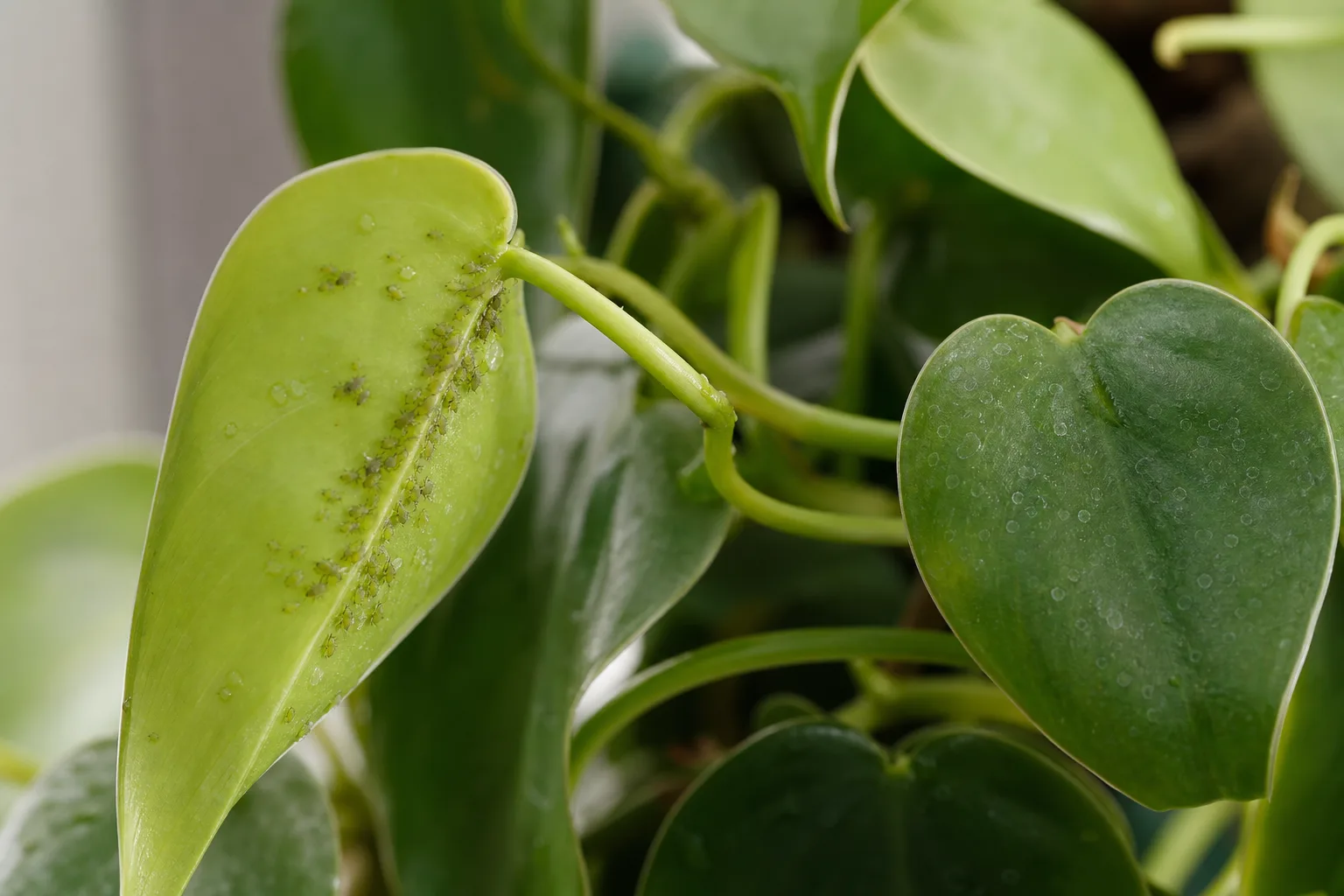
Aphids on Heartleaf Philodendron gather on the newest vine tips and tender leaf undersides, leaving sticky honeydew on glossy heart-shaped leaves. First step: isolate the plant and rinse aphids off with a firm stream of water before applying any spray.
Aphids on Heartleaf Philodendron: Causes, Checks & Fixes
This guide covers aphids on Heartleaf Philodendron. See also the general Aphids guide, watering, and light pages for this plant.
Aphids on Heartleaf Philodendron: Causes, Checks & Fixes
Quick answer
Aphids on Heartleaf Philodendron almost always show up on soft new growth-the pale unfurling heart-shaped leaves and stem tips where a fast trailing vine is actively extending. You may notice pinhead-sized green, yellow, brown, or black insects, sticky honeydew on glossy foliage, curled or yellowing new leaves, and sometimes ants on the pot rim farming the sugary residue below.
First step: isolate the plant and rinse aphids off with a firm stream of lukewarm water, targeting leaf undersides and every node along the vine. Hold the pot tilted or wrap the soil in plastic so you do not soak the mix repeatedly. Only move to insecticidal soap if rinsing fails to knock populations down after several inspections.
Do not reach for fertilizer or Heartleaf Philodendron repotting guide on day one. Aphids are a pest problem, not a root or nutrient crisis-though overfed, soft flushes of growth make the plant an easier target.
Why Heartleaf Philodendron gets aphids
Heartleaf Philodendron (Philodendron hederaceum) is a fast-growing trailing aroid that pushes new leaves steadily in spring and summer when light and temperatures are favorable. Missouri Botanical Garden notes that philodendron can host aphids among its common pest issues. Aphids feed on phloem sap from tender tissue, and a vine producing constant soft shoots offers more feeding sites than a slow-growing succulent would.
Several factors bring aphids onto philodendron in real homes:
New introductions. Aphids hitchhike on nursery stock, plant swaps, and open windows in warm weather. Skipping quarantine is the most common way they enter a collection.
Soft, nitrogen-rich growth. Aphids thrive on overly succulent plant tissue, often linked to high nitrogen feeding. Heartleaf philodendron fed heavily during active growth can push lush tips that attract aphids faster than evenly fed plants.
Sheltered feeding sites. Trailing vines hang with leaf undersides facing inward. Aphids cluster where stems meet leaves and along nodes-areas you may not see during a quick top-side glance.
Ant protection. Ants harvest honeydew and can protect aphid colonies from predators. Ant trails on basket hooks, shelf edges, or saucers often appear before you spot the aphids themselves on the vine above.
Outdoor summer exposure. Philodendron moved to shaded patios or porches in warm months can pick up aphids from garden plants. Inspect before bringing vines back indoors.
What aphids look like on Heartleaf Philodendron overview
Typical aphid signs on heartleaf philodendron:
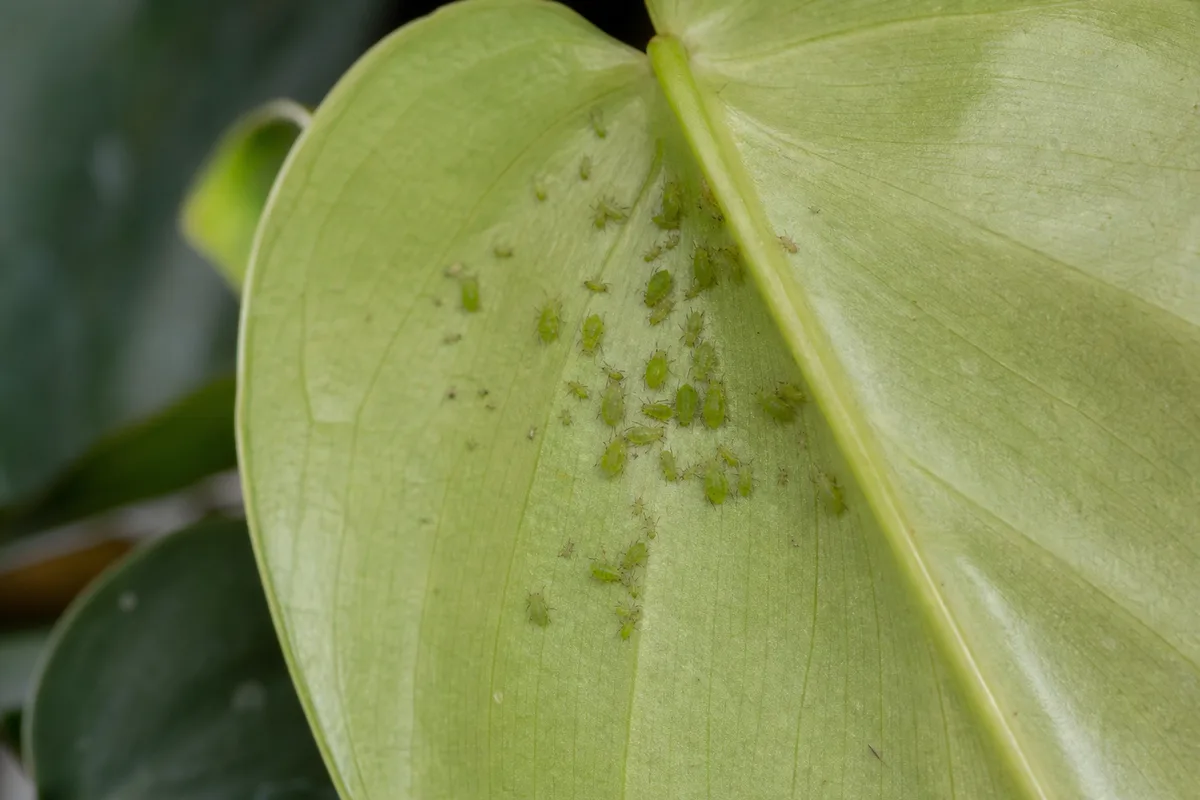
Aphids symptoms on Heartleaf Philodendron - compare with healthy tissue on the same plant.
- Clusters of small, pear-shaped soft insects on the newest leaves, stem tips, and leaf undersides
- Green, yellow, brown, red, or black color depending on species-most indoor aphids are wingless until populations surge
- Sticky, shiny honeydew on upper leaf surfaces where drips land
- Black sooty mold that wipes off with a damp cloth once honeydew is present
- New leaves curling, yellowing, or staying smaller than older growth
- Whitish cast skins left behind after molting
- Ant activity on the pot, trellis, or nearby surfaces
On a hanging heartleaf philodendron, damage often starts at the longest trailing tips where growth is youngest. Colonies can spread node to node within days on a fast vine because each leaf axil offers another soft feeding site.
How to confirm the cause
Work through these checks in order before treating:
- Location on the vine - Aphids concentrate on new tips and undersides. Yellow lower leaves with firm stems and dry soil point to overwatering on Heartleaf Philodendron, not aphids.
- Hand lens inspection - Confirm pear-shaped soft bodies with legs and antennae. Mealybugs look cottony; scale looks like fixed bumps; spider mites are pinpoint-sized with stippling, not clusters on tips.
- Honeydew test - Rub a finger on a shiny leaf patch. Sticky residue that attracts ants or grows sooty mold supports aphids. Dust alone is not tacky.
- Shake or tap test - Aphids stay clustered when disturbed; whiteflies fly up in a cloud. Thrips run quickly and leave silvery scrape marks, not round colonies.
- Ant trails - Ants marching up the hanger or pot strongly suggest honeydew producers on the vine above.
- Recent history - New plant purchase, outdoor summer stay, or open window near garden beds increases aphid likelihood.
If you find no insects, honeydew, or cast skins after checking several nodes, look elsewhere for the symptom-curling from underwatering on Heartleaf Philodendron, mealybugs in axils, or thrips scarring on mature leaves.
First fix for Heartleaf Philodendron
Move the plant away from other houseplants, then rinse aphids off with a firm stream of lukewarm water.
Take the philodendron to a sink, shower, or outdoor shaded spot. Spray leaf undersides and stem tips directly-aphids feed in dense groups and are knocked off by forceful washing. Support trailing stems so water reaches the backs of heart-shaped leaves. Tilt the pot or cover the soil surface with plastic so the mix does not stay saturated; heartleaf philodendron roots rot quickly in persistently wet soil.
Let foliage dry in Heartleaf Philodendron light guide the same day. Recheck every two to three days. This single step clears light infestations without chemicals and washes fresh honeydew before ants or sooty mold establish.
Do not apply insecticidal soap until you have confirmed live aphids remain after several rinses. Do not fertilize during active infestation-soft new flushes give aphids more tissue to colonize.
Step-by-step recovery
After the initial rinse:
- Repeat water sprays every two to three days until live aphids are gone on inspection along the full vine length.
- Apply insecticidal soap if colonies persist. Cover undersides thoroughly; soaps kill on contact with no residual effect, so repeat every four to seven days through at least one full pest generation.
- Prune heavily infested tips if aphids hide inside curled leaves that sprays cannot reach. UC IPM recommends pruning curled sections before spraying so contact treatments reach the insects.
- Manage ants on pot rims or shelves with barriers or bait stations so natural predators can reach aphids if the plant spends time outdoors in summer.
- Wipe sooty mold off glossy leaves with a damp cloth once honeydew production stops. Mold does not infect philodendron tissue-it grows on the sugary film.
- Inspect neighbors - pothos, monstera, and other aroids on the same shelf share pest risks. Treat or monitor anything touching the infested vine.
Keep the plant isolated until you see no live aphids for at least two weeks.
Recovery timeline
Water knockdown shows results within two to three days when colonies are small and confined to a few nodes. A full soap course may take one to two weeks with label-interval repeats. New heart-shaped leaves should unfurl flat and clean within one to three weeks once feeding stops.
Judge recovery by clean new tips, not old leaves that stayed curled or dull. Trailing philodendron replaces foliage quickly when roots are healthy-stalled new growth after treatment means aphids or ants are still present somewhere along the vine.
Lookalike symptoms to rule out
Mealybugs form white cottony masses in leaf axils, not tight pear-shaped clusters on open leaf surfaces. Alcohol dab dissolves their wax.
Spider mites cause fine stippling and webbing in hot dry conditions, not heavy stickiness. Confirm with a white-paper tap test.
Thrips leave silvery streaks and distorted leaves with dark specks of excrement. They run when disturbed rather than clustering visibly.
Scale insects attach as immobile bumps on stems and leaf midribs. They do not form moving soft clusters on new tips.
Overwatering yellows lower leaves with mushy stems and sour soil-no insects or honeydew. Underwatering wilts the whole vine evenly without sticky residue.
Mistakes to avoid
Do not ignore honeydew-it leads to sooty mold and ant farming that makes aphid control harder.
Do not over-fertilize while treating. High nitrogen produces succulent growth aphids prefer.
Do not return an isolated plant to a shared shelf after one rinse. Aphids reproduce quickly on soft philodendron tips.
Do not spray insecticidal soap in direct hot sun on wet foliage-test a small section first if leaves look stressed.
Wear gloves when handling cut stems or heavily sprayed vines. Philodendron contains calcium oxalate crystals toxic to pets-wash hands before touching pets or food surfaces.
Do not compost heavily infested clippings near other houseplants.
How to prevent aphids next time
Quarantine new philodendron and other aroids for two weeks before mixing them on a plant shelf. Inspect tops and undersides of leaves when you water-aphids are easiest to stop at one node.
Scout vine tips weekly from spring through early autumn when heartleaf philodendron grows fastest. Trailing growth hides undersides; lift stems or use a small mirror to check backs of new leaves.
Keep plants in bright indirect light with well-draining mix so growth stays vigorous without becoming overly soft. Water when the top 2–3 cm dries-not on a rigid calendar that leaves plants stressed or soggy.
Feed at half strength during active growth only. Avoid nitrogen spikes that push tender aphid-friendly shoots.
Wash dusty leaves occasionally with a damp cloth. Clean foliage makes early pest detection easier on glossy heart-shaped leaves.
If you summer philodendron outdoors, hose it down and inspect thoroughly before bringing it back inside.
When to worry
Treat as urgent when colonies cover most growing tips, winged aphids appear, ants swarm the pot daily, or new leaves stay distorted after two weeks of repeated rinsing and soap. A fast vine can lose vigor quickly when sap feeding is heavy across many nodes.
Replace or heavily cut back a philodendron that remains infested after thorough treatment if isolation is not possible and the vine touches many other plants. Starting from a clean propagated tip cutting is sometimes simpler than fighting entrenched colonies on a long trailing stem.
Light aphids on one or two new tips after a single rinse are not an emergency-confirm with inspection and repeat water knockdown before escalating to sprays.
Conclusion
Aphids on Heartleaf Philodendron are manageable when you catch them on soft new vine tips before they spread node to node. Isolate, rinse undersides first, and repeat until new heart-shaped leaves open clean. That path protects your trailing philodendron from unnecessary chemicals, stops honeydew before sooty mold and ants complicate control, and keeps neighboring aroids safe.
When to use this page vs other Heartleaf Philodendron guides
- Heartleaf Philodendron watering guide - Use for routine moisture checks before assuming aphids is the main issue.
- Heartleaf Philodendron problems hub - Browse all 16 common issues on this species.
- Mealybugs on Heartleaf Philodendron - Different entry point when symptoms overlap with aphids.
- Spider Mites on Heartleaf Philodendron - Different entry point when symptoms overlap with aphids.
- Yellow Leaves on Heartleaf Philodendron - Different entry point when symptoms overlap with aphids.