Brown Tips on Heartleaf Philodendron: Causes, Checks & Fixes
Quick answer
Brown tips on Heartleaf Philodendron usually mean dry air, inconsistent watering, or fertilizer salts-not disease. First step: check humidity at vine height and soil moisture at depth; raise local humidity toward 40–60% or leach salts before trimming or changing your watering rhythm.
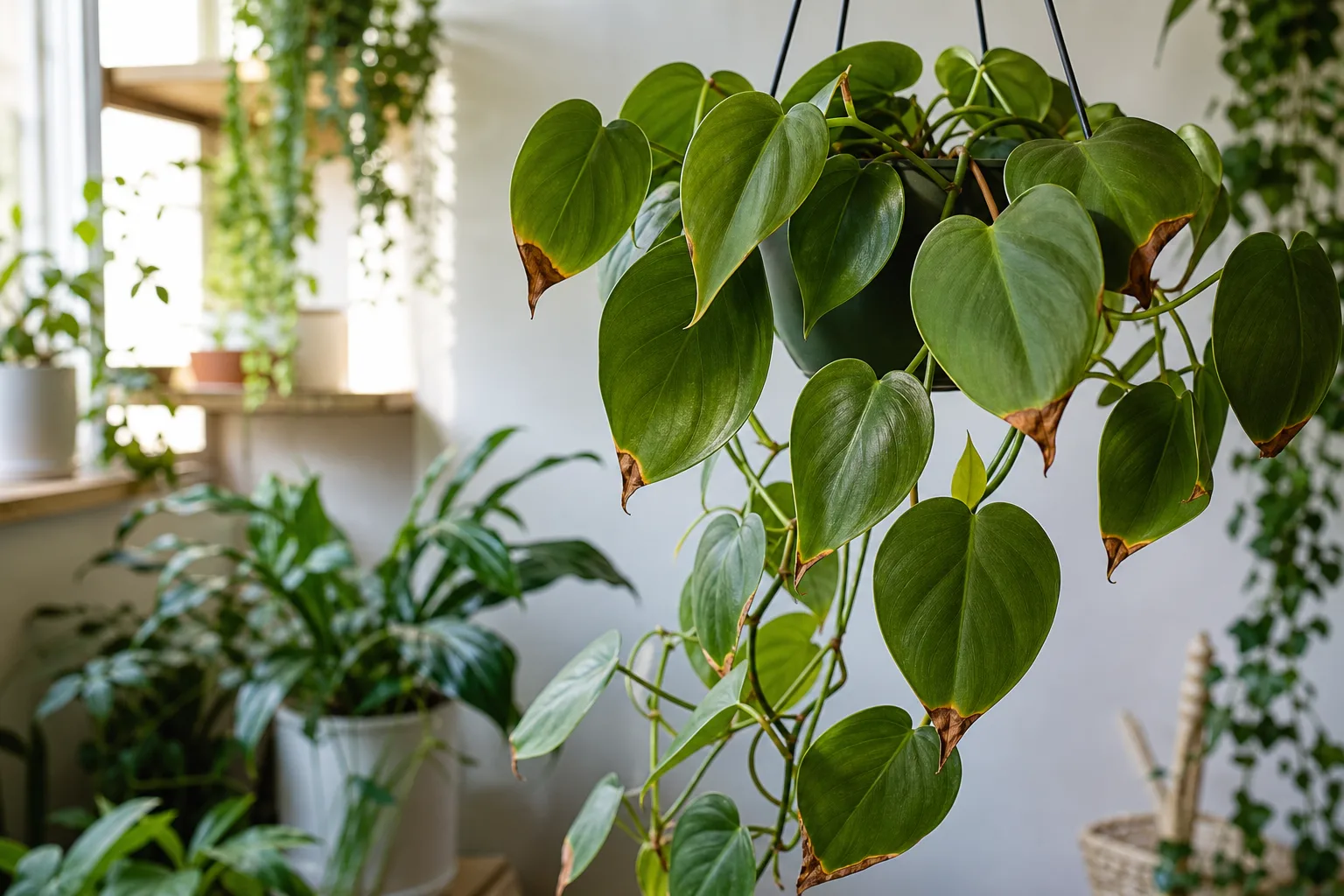
Brown Tips on Heartleaf Philodendron: Causes, Checks & Fixes
This guide covers brown tips on Heartleaf Philodendron. See also the general Brown Tips guide, watering, and light pages for this plant.
Brown Tips on Heartleaf Philodendron: Causes, Checks & Fixes
Quick answer
Brown tips on Heartleaf Philodendron (Philodendron hederaceum) are almost always environmental, not infectious. The glossy heart-shaped leaves make even small margin damage obvious-dry, papery tan or brown edges while the rest of the blade stays green and firm.
Crisp tips on firm green heart leaves usually mean dry air or dry-down stress-not rot. Soft stems with wet soil and yellow lower leaves mean switch to the root rot guide instead.
The usual triggers on this trailing vine are low humidity, inconsistent dry-down watering, fertilizer salt buildup, and placement above radiators or vents. Overwatering can also brown margins when roots fail, but that pattern comes with yellowing and wet soil-not isolated crispy tips on an otherwise healthy vine.
First step: measure humidity at vine height and check soil moisture 3–5 cm deep. If humidity reads below 40%, move the pot away from heating vents and run a humidifier until moisture near the plant stays in the 40–60% range. If white crust covers the soil surface, leach the pot with plain water before trimming or feeding again.
Scope note: This page covers tip and margin burn from multiple environmental causes. When dry winter air alone is the clear trigger, also see the low humidity guide for a focused dry-air workflow.
What brown tips look like on Heartleaf Philodendron
Tip burn on Heartleaf Philodendron has a recognizable pattern:
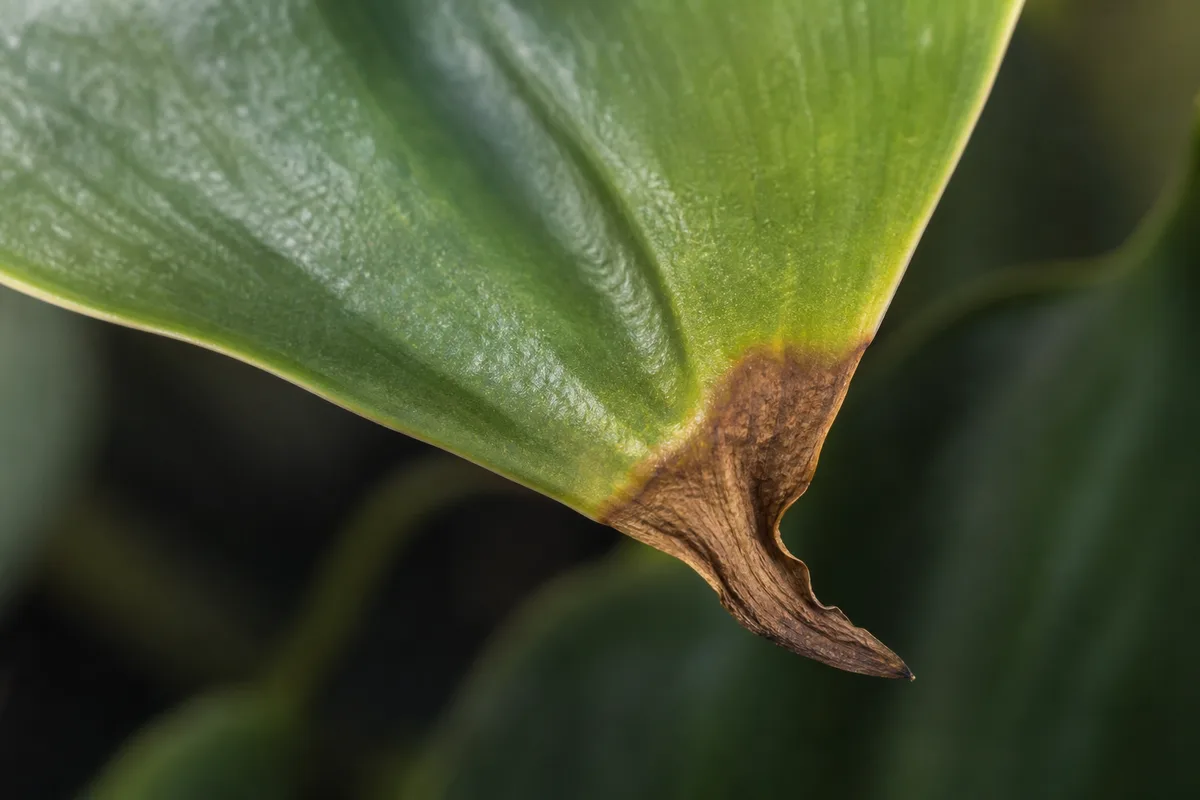
Brown Tips symptoms on Heartleaf Philodendron - compare with healthy tissue on the same plant.
- Dry, crispy tan-to-brown margins on heart-shaped glossy leaves
- Damage starts at the leaf tip or outer edge and creeps inward slowly-not overnight soft spots
- Leaf center stays green; tissue feels papery, not wet or mushy
- Older leaves at the base or end of long vines often brown first-the farthest tissue from roots dries out first
- No yellow halos, holes, or sticky residue typical of disease or sap-sucking pests
Heartleaf Philodendron is a glossy cordate-leaved climbing vine from tropical forests. Long trailing stems transpire steadily; thin leaf margins lose water faster than the root system replaces it when air is dry or watering is uneven.
This is usually a low-severity cosmetic problem. The vine rarely dies from brown tips alone. Left through a full dry winter without fixes, however, margins can spread, new leaves may emerge smaller or curled, and spider mites-which thrive in warm, dry air-can move in on stressed foliage.
Why Heartleaf Philodendron gets brown tips
Philodendrons evolved in warm, humid tropical understory with dappled light. Indoors, Heartleaf tolerates average homes better than velvet aroids, but leaf margins dry when humidity drops or watering swings. Several factors push this fast-growing trailing vine toward margin burn:
Low humidity and winter heating
Philodendrons grow best in high humidity yet tolerate low home humidity in winter quite well-until furnaces and forced-air vents pull room moisture into the 20–30% range. Indoor air commonly lacks sufficient humidity for healthy houseplants during heating season, and trailing vines lose moisture at leaf edges first.
Inconsistent dry-down watering
Letting the mix go bone-dry and then soaking heavily stresses feeder roots. Damaged roots deliver water unevenly; margins-the last tissue to receive moisture-dry first even when the leaf center looks fine. Heartleaf in hanging baskets dries faster than floor pots because warm air rises and baskets expose more leaf surface.
Fertilizer salt buildup on fast-growing vines
Each feeding adds soluble salts. Without periodic leaching, salts accumulate and cause brown leaf tips on houseplants. White crust on the soil surface or pot rim is a strong salt signal. Fast-growing Heartleaf vines in small pots show salt burn sooner than slow self-heading types.
Root stress from overwatering
Wet soil suffocates roots; the plant cannot hydrate evenly even when tips look dry. That pattern usually pairs with yellow lower leaves and soggy mix-see overwatering and root rot rather than treating tips as a humidity-only problem.
Placement above radiators and hot drafts
Hanging baskets near ceiling heat registers, pots on radiator covers, and vines pressed against cold winter glass all create microclimates drier than the rest of the room. Hot and cold air from vents can dry leaves and damage plant cells on philodendrons and closely related aroids.
Hard tap water and minerals
Municipal water carries dissolved salts and sometimes fluoride. As water evaporates from soil, minerals concentrate at the root zone and can scorch leaf tips when salt levels rise. Clemson HGIC notes that hard water can leave mineral deposits on leaves and soil on philodendron-family plants.
How to confirm the cause
Work through these checks before changing fertilizer, Heartleaf Philodendron repotting guide, or trimming heavily:
- Hygrometer at vine height - Place the sensor within 30 cm of foliage for 24 hours. Below 40% with crisp margins supports dry-air stress. Above 45% with ongoing tip burn points to water quality, salts, or watering rhythm instead.
- Soil surface inspection - White or tan crust on mix or pot rim suggests soluble salt buildup. Scrape off surface crust before leaching if present.
- Soil moisture at depth - Push your finger 3–5 cm into the mix. Even dry-down cycling with firm roots fits environmental tip burn. Soggy mix with yellowing leaves suggests overwatering; very dry mix throughout with a light pot points to underwatering layered on dry air.
- Watering history - Did tips worsen after heavy fertilizer, a skipped leaching month, or a long dry spell when the pot went very light?
- Season and placement - Symptoms appearing when heat first runs, or on the farthest trailing stems above a radiator, fit humidity and airflow stress.
- Pest check - Hold white paper under a leaf and tap the blade. Stippling, bronzing, or webbing means spider mites-not humidity alone.
- Light exposure - Bleached or scorched patches on the leaf face nearest a hot window suggest sun injury, not just dry margins. Heartleaf prefers part shade to bright indirect light indoors.
Confirmed environmental tip burn: firm stems, cycling soil moisture, pest-free leaves, and either low humidity, visible salt crust, uneven dry-down, or hot-draft placement matching when damage started.
Suspected but not confirmed: widespread yellowing with wet soil (root rot), whole-vine wilt with bone-dry mix (severe underwatering), or stippling with webbing (mites).
First fix for Heartleaf Philodendron
Move the pot or basket at least 60 cm from heating vents, AC returns, and hot window glass, then address the most likely trigger you confirmed:
- If humidity reads below 40%: Run a cool-mist humidifier until readings at vine height stay in the 40–60% range. Grouping plants raises local humidity a few points; leave air gaps so crowded trailing leaves do not stay wet against neighbors.
- If white salt crust is visible or you fertilize heavily: Leach the pot-water thoroughly until excess drains, wait five minutes, then water again so salts flush out.
- If the pot went very light and mix is dry throughout: Give one thorough soak, empty the saucer, then resume the watering guide dry-down rhythm-do not keep the soil constantly wet to “fix” dry tips.
Do not increase watering frequency because tips look dry while soil is already moist halfway down. Wet roots in dry air still produce crispy tips and invite root rot.
Step-by-step recovery
After the first fix, support recovery in this order:
- Stabilize for one week - Keep light, watering, and temperature steady. Heartleaf responds best when you change one variable at a time.
- Water on your normal dry-down schedule - Allow the top 1–2 inches of soil to dry before watering again, then soak until water runs from drainage holes. Empty the saucer so the pot never sits in runoff.
- Trim fully brown tips - Snip along the natural leaf contour with clean scissors. Keep vines away from pets when trimming; calcium oxalate crystals cause oral irritation if leaves are chewed.
- Hold fertilizer until new growth looks clean - Salts often caused the burn; feeding stressed foliage on salty soil worsens margins.
- Inspect for spider mites weekly - Dry winter air favors mites on trailing philodendron. Rinse leaf undersides and treat if webbing appears-humidity alone will not clear an active infestation.
- Hold repotting unless roots circle densely, mix never dries, or salt damage is severe after leaching fails.
Recovery timeline
Stabilization: Humidity, watering, or leaching fixes should stop new tip burn within one to two weeks. Existing crispy edges will not green up again.
New growth: Clean heart-shaped leaves with full margins emerging over two to four weeks confirm the environment is working. Smaller leaves or persistent curl mean humidity is still borderline, salts remain, or light is too weak.
Full vine appearance: Trim old browned leaves gradually over one to two months as new foliage fills in along trailing stems. Heartleaf grows steadily in bright indirect light once air moisture and watering stabilize.
Worsening signs: Margins browning despite humidity above 50%, many leaves yellowing while soil stays wet, or mite webbing spreading along trailing stems-recheck roots, salts, and pests.
Lookalike symptoms
- Low humidity alone - Even dry margins on multiple leaves, worse on farthest trailing stems near vents; fix with humidifier and placement-see also low humidity.
- Underwatering - Whole leaf wilt, light pot, mix dry throughout; deep soak once, then resume dry-down watering per the underwatering guide.
- Overwatering / root rot - Yellow leaves, soft stems, sour soil smell; reduce water and inspect roots-do not add humidity as the primary fix.
- Sun scorch - Bleached or brown patches on the leaf face nearest hot glass, not just margins; move to filtered indirect light per the light guide.
- Spider mites - Stippling, dull bronzing, and webbing on undersides in dry heat; treat pests and raise humidity together.
- Normal aging - One or two oldest leaves yellowing at the base while the rest of the vine is firm; not an emergency.
What not to do
Do not water more often because tips are crispy while soil is already moist-Heartleaf rots in wet mix.
Do not mist heavily once a day as your main humidity fix. Misting raises moisture briefly and can leave crowded trailing leaves wet too long in cool rooms, inviting fungal spots.
Do not increase fertilizer to “green up” browned tips-too much fertilizer can cause tips of leaves to curl and brown on philodendrons.
Do not trim deep into healthy green tissue while the environment is still wrong-new cuts on stressed leaves brown again quickly.
Do not assume disease when margins are dry, symmetrical, and the plant otherwise looks firm-fungal spots are usually wet, irregular, and spreading.
Brown tips vs. low humidity on Heartleaf Philodendron
These two pages overlap because dry winter air is the most common brown-tip trigger on Heartleaf Philodendron-but they answer different questions.
Use low humidity when you already know the room is dry-hygrometer below 40%, furnace running, basket above a radiator-and you want a focused humidifier-and-placement workflow.
Stay on this brown-tips page when the cause is unclear: tips appeared after a dry spell, salt crust is visible, watering has been inconsistent, or you need to rule out underwatering, overwatering, hard water, and pests before changing care.
Both pages target 40–60% humidity at the plant and the same dry-down watering rhythm from the watering guide. Fix the confirmed trigger first; do not stack every remedy on day one.
Heartleaf Philodendron care cross-check
Brown-tip fixes work best when the rest of the routine matches this plant:
- Light: Part shade to bright indirect light; avoid hot direct midday sun on indoor leaves.
- Water: Top 3–5 cm dry before watering; reduce frequency in cooler months per the watering guide.
- Soil: Well-draining aroid mix; let the medium dry between drinks-see the soil guide.
- Humidity target: 40–60% at the plant for steady margins; high humidity is ideal but low winter air is tolerated.
- Temperature: Comfortable at 18–29°C; keep away from cold window glass and heat blasts.
How to prevent brown tips next time
- Run a humidifier from first heating season through spring if room readings drop below 35%.
- Match watering to pot dry-down, not a calendar-Heartleaf in hanging baskets often needs checks twice weekly in bright light.
- Leach the pot every two to three months when you fertilize during active growth.
- Keep trailing vines away from ceiling vents, radiators, and hot window glass.
- Feed lightly in spring and summer only; reduce watering and feeding in fall and winter.
- Check a hygrometer monthly in winter-do not wait until half the vine has crisp edges.
- Inspect new growth along vine tips weekly during heating season.
When to worry
Brown tips alone rarely kill Heartleaf Philodendron. Escalate when:
- Many leaves yellow while soil stays wet-inspect roots for rot, not just air moisture.
- Spider mites spread with stippling and webbing despite humidity improvements.
- New growth stops entirely for more than a month in warm bright conditions after humidity and leaching fixes.
- Brown margins become soft, dark, and wet-that pattern fits rot or advanced injury, not dry tip burn.
Heartleaf is one of the most forgiving philodendrons, but a full winter of dry air plus salty soil or soggy roots can leave a long trailing plant looking thin until spring growth resumes. Fixing humidity and watering early costs less effort than rebuilding a mite-weakened or root-damaged vine later.
Conclusion
Brown tips on Heartleaf Philodendron announce stress on glossy heart-shaped margins long before the vine fails. Measure humidity at the plant, inspect for salt crust, leach or humidify as needed, and match watering to dry-down-not panic soaks. Old brown tissue will not heal-judge success by the next clean heart-shaped leaves unfurling at the growing tips. For related care, see the Heartleaf Philodendron overview, watering, and low humidity guides.
When to use this page vs other Heartleaf Philodendron guides
- Heartleaf Philodendron watering guide - Use for routine moisture checks before assuming brown tips is the main issue.
- Heartleaf Philodendron problems hub - Browse all 16 common issues on this species.
- Low Humidity on Heartleaf Philodendron - Different entry point when symptoms overlap with brown tips.
- Underwatering on Heartleaf Philodendron - Different entry point when symptoms overlap with brown tips.
- Overwatering on Heartleaf Philodendron - Different entry point when symptoms overlap with brown tips.
Related Heartleaf Philodendron guides
- Heartleaf Philodendron overview
- Heartleaf Philodendron watering
- Heartleaf Philodendron light
- Heartleaf Philodendron soil
- Low Humidity on Heartleaf Philodendron
- Underwatering on Heartleaf Philodendron
- Overwatering on Heartleaf Philodendron
- Yellow Leaves on Heartleaf Philodendron
- Heartleaf Philodendron problems