Leggy Growth on Heartleaf Philodendron: Causes, Checks &
Quick answer
Leggy Heartleaf Philodendron vines mean long internodes and small pale leaves from too little usable light, not a fertilizer shortage. First step: move the pot to brighter indirect light and acclimate over a week before you prune or feed.
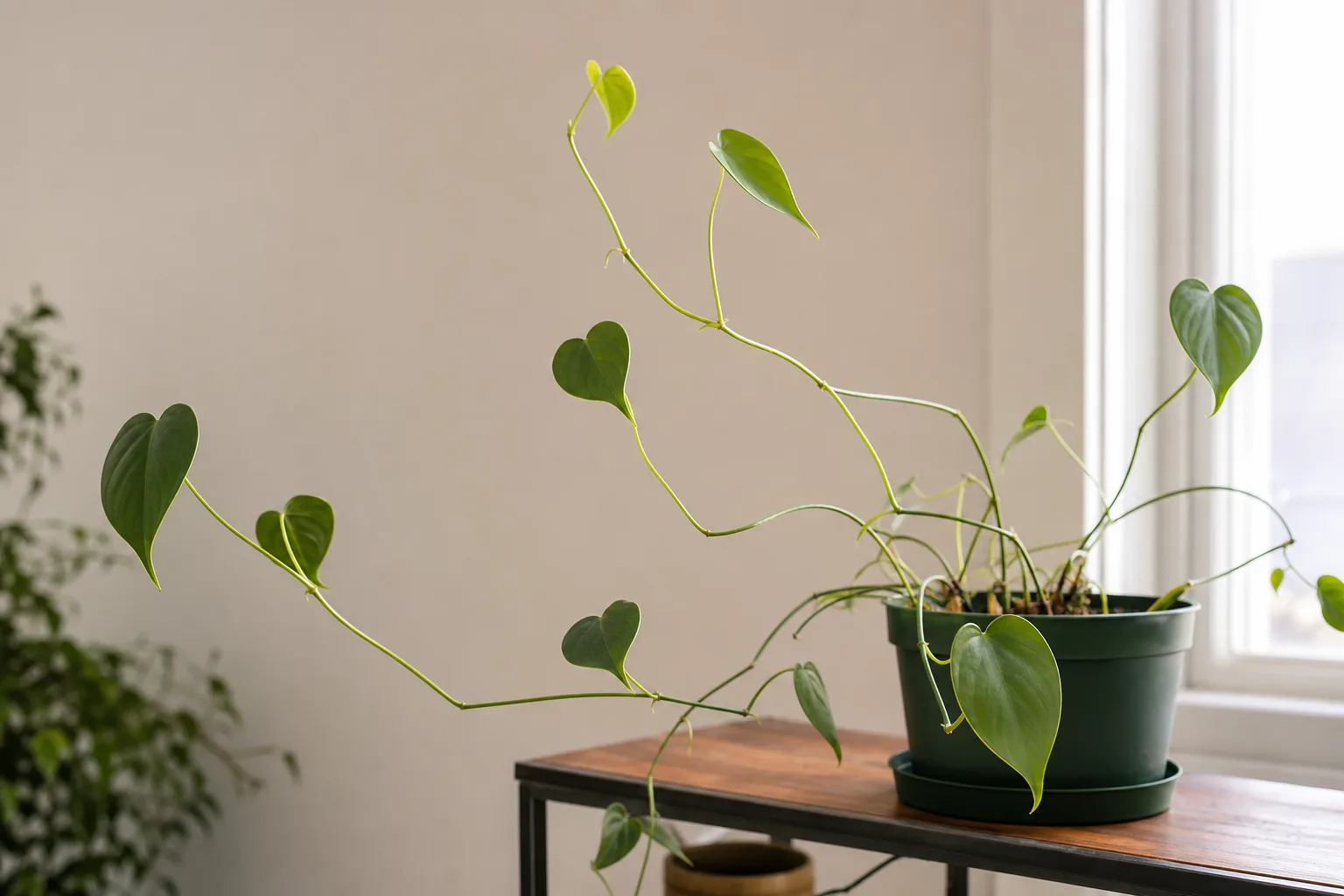
Leggy Growth on Heartleaf Philodendron: Causes, Checks & Fixes
This guide covers leggy growth on Heartleaf Philodendron. See also the general Leggy Growth guide, watering, and light pages for this plant.
Leggy Growth on Heartleaf Philodendron: Causes, Checks & Fixes
Quick answer
Leggy Heartleaf Philodendron (Philodendron hederaceum) is almost always a light problem. This trailing vine with glossy heart-shaped leaves tolerates shade indoors, but if conditions are too dark, stems become spindly with long bare sections between small pale leaves. That stretch is etiolation-the vine reaching for brighter photons, not asking for fertilizer.
First step: move the pot to brighter indirect light and acclimate over one to two weeks. Hold pruning and feeding until you see how the plant responds in better light. Jumping from a dim shelf to harsh direct sun can scorch leaves adapted to shade.
What leggy growth looks like on Heartleaf Philodendron
Healthy heartleaf vines carry glossy green heart-shaped leaves along stems that trail or climb. Leggy growth breaks that pattern:
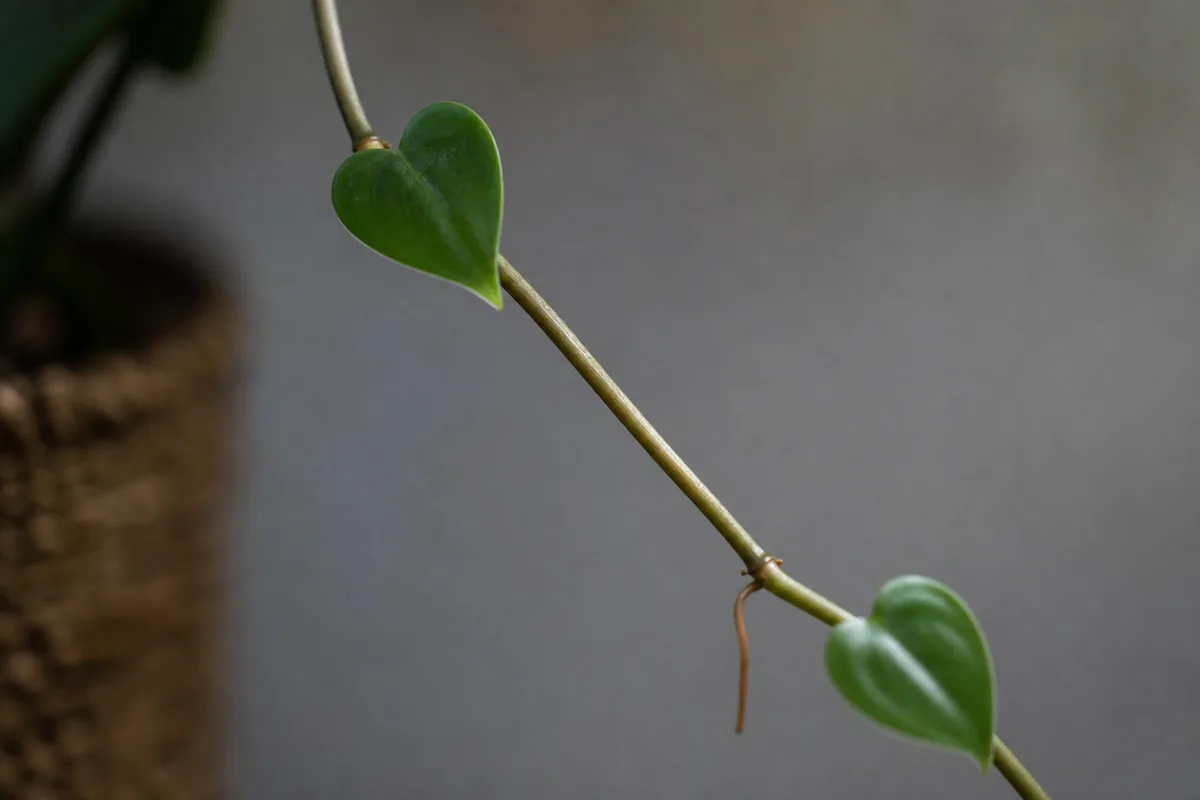
Leggy Growth symptoms on Heartleaf Philodendron - compare with healthy tissue on the same plant.
- Long internodes - gaps between leaves are noticeably longer than on older compact sections lower on the vine
- Smaller or paler new leaves - emerging heart-shaped blades look lighter green or thin compared with mature foliage
- One-sided lean - the whole plant or trailing stems bend toward the brightest window or lamp
- Bare lower stems - older leaves drop or thin out, leaving empty vine between occasional leaves
- Slow water use - pot stays heavy for days because the plant photosynthesizes less in dim light
Leggy heartleaf can still look alive and green. Many growers mistake rapid stem extension for vigor when the tissue is actually weak. Indoor plants become spindly or leggy as they stretch to reach for more light, and vines grown where light arrives from one direction often develop a lean.
Why Heartleaf Philodendron gets leggy
Insufficient light intensity (most common)
Heartleaf philodendron is marketed as a low-light survivor-and it is. It can tolerate very low light levels and even survive for long periods in extremely low light. Tolerating and thriving are different outcomes. In dim corners, the vine hangs on but stretches internodes to capture more photons. Most philodendrons prefer moderate to indirect light indoors, especially when you want full, compact trailing growth.
North-facing rooms, interior shelves far from windows, and crowded plant racks where taller neighbors shade trailing baskets are common triggers. Distance matters: a basket hung in the center of a room may receive far less than leaves pressed against glass.
Seasonal light drop
Winter short days reduce usable light even when window placement stays the same. Vines that looked tight in summer may push long pale shoots from November through February. Plants in less light grow more slowly and use less water-so the same Heartleaf Philodendron watering guide combined with weaker light can leave soil wet longer, compounding stress.
Uneven exposure on trailing baskets
Hanging heartleaf often receives strong light on the window-facing side while the back of the basket stays shaded. One-sided stretch is common. Without weekly rotation, stems lean and lower shaded sections grow even sparser.
Trailing without climb support
Heartleaf is a climbing or trailing member of the Arum family whose twining stems trail from a pot or climb up a column if given support. In habitat, climbing toward brighter canopy light produces larger leaves. A vine trailing from a shelf without a moss pole or trellis may stay in a juvenile form-longer internodes and smaller leaves-even when light is adequate. Missing vertical support can mimic low-light legginess on climbing philodendrons.
Over-fertilizing in low light
Excess nitrogen in dim conditions can push soft elongated shoots that cannot support dense foliage. This is less common than pure etiolation but shows up when growers feed heavily hoping to “green up” a dark-corner philodendron. Light must rise before fertilizer helps structure.
How to confirm the cause
Work through these checks before you prune or repot:
- Light at the pot - Compare placement to bright indirect light recommendations. MOBOT advises placing indoors in bright indirect light and avoiding full sun. If the vine sits more than a few feet from an unshaded window or only receives reflected room light, low light is the prime suspect.
- Internode pattern - Measure gap length between recent leaves. Etiolation shows progressive lengthening on new growth, not random bare patches.
- Lean direction - Strong lean toward glass confirms directional stretch. Rotate the pot and watch whether new tips reorient within days.
- Soil moisture rhythm - Push a finger 5–7 cm into the mix. Chronic wetness in a dim spot means the plant is not using water-often paired with low light, not independent overwatering on Heartleaf Philodendron.
- Support check - If light is already decent near an east or west window, ask whether the vine trails without a pole. Long juvenile stems on a climber can look leggy without a light deficit.
- Season timing - Winter stretch with otherwise adequate placement points to short photoperiod; consider supplemental lighting rather than more fertilizer.
If internodes are long, leaves pale, and the vine leans toward light with no mushy stems or pest residue, etiolation is confirmed.
First fix for Heartleaf Philodendron
Move the plant to the brightest indirect location available-within a few feet of an east or west window, or pulled back from a south window where direct sun is avoided.
Acclimate gradually if the vine lived in deep shade. Shift the pot closer over seven to fourteen days rather than jumping to a hot south windowsill. Watch new leaves: tighter spacing and richer green on fresh growth confirm the light upgrade is working.
Do not prune heavily on day one. Do not fertilize a stretched vine before light improves. Do not repot unless soil failure or root rot on Heartleaf Philodendron is confirmed-legginess rarely requires a new container.
Step-by-step recovery
After the light move:
- Rotate hanging baskets weekly so both sides of the trailing mass receive similar exposure and stems grow more evenly.
- Adjust watering - Better light dries the pot faster. Water when the top of the soil is dry rather than on a calendar tied to the old dim-corner rhythm.
- Pinch vine tips - Once compact new growth appears, pinch trailing stems to promote bushier growth by cutting just above a node. Use clean shears; heartleaf bleeds sap that can irritate skin.
- Cut back bare sections - If long empty stems dominate, prune back to a healthy node leaving several leaves on each remaining section. Stagger hard cuts on a weak plant rather than shaving the whole vine in one session.
- Add a moss pole or trellis - For climbers that trail without support, offer a column to attach to. Aerial roots on philodendron stems can grip moss and encourage larger leaves on ascending growth.
- Supplement winter light if needed - Sixteen hours of light and eight hours of darkness work for many indoor plants under artificial supplementation. Do not exceed sixteen hours daily-plants need a dark rest period.
- Propagate tip cuttings - Healthy sections from leggy vines root easily in water or perlite. Iowa State notes stem sections 3 to 6 inches long with lower leaves removed readily root. Replant cuttings in the same pot for a fuller display while the parent regrows.
Recovery timeline
Expect visible change on new growth within two to four weeks after a meaningful light upgrade during the active growing season. Internodes on fresh shoots should shorten and new heart-shaped leaves should look darker within that window.
Old stretched sections do not shrink-judge recovery by compact tips and side shoots, not by old bare stem length. A severely leggy basket may need one full growing season plus selective pruning to look full again. Winter recovery is slower under naturally short days even after a light move.
Lookalike symptoms to rule out
Slow growth from root rot pairs yellowing, mushy stems at the soil line, and foul soil-not uniform long internodes with firm green vines. Root rot can occur in overly wet soil.
Nitrogen deficiency can pale leaves but usually yellows older lower foliage first with relatively normal internode length, unlike etiolation where spacing stretches on new growth.
Mealybugs or scale cluster at leaf axils and stem joints with white cottony or brown crusty patches-leggy stretch without insect signs points to light.
Healthy fast growth in good light produces larger leaves on ascending stems. If leaves are big, dark, and spaced normally, the vine may simply be doing what a fast-growing rapid maintenance philodendron does-trail downward from a basket rather than look “leggy.”
Mistakes to avoid
Do not feed heavily in a dark corner hoping to bulk up the vine-soft nitrogen-driven shoots in low light stay weak.
Do not move straight from deep shade to direct midday sun. Avoid full sun on indoor heartleaf without acclimation.
Do not prune without improving light first; the vine will stretch again on the next growth flush.
Do not keep watering on a summer schedule when the pot sits in dim winter light-plants in low light use less water.
Do not assume all philodendron types behave identically. Self-heading hybrids need different support and light than trailing heartleaf.
Keep pruned vines away from pets; philodendrons are poisonous and contain calcium oxalate crystals that irritate mouths if chewed.
How to prevent leggy growth next time
Place heartleaf where medium light is realistic-east or west windows, or several feet inside a bright south exposure with sheer curtain diffusion. Rotate baskets weekly.
Scout vine tips monthly. When internodes start to gap, increase light or pinch tips early rather than waiting for bare stems.
Use grow lights in winter if the same stretch appears every cold season. Match photoperiod guidance: fourteen to sixteen hours of supplemental light, not continuous illumination.
Offer a moss pole if you want larger leaves and shorter internodes on a climber-vertical growth mimics the brighter canopy conditions this vine evolved under.
Match watering to how fast the pot dries in current light. Better-lit plants need more frequent drinks; dim plants need less.
When to worry
Leggy growth alone is not an emergency. Worry when spindly vines combine with wet heavy soil for weeks, mushy stems at the crown, or sour-smelling mix-low light slows water uptake and roots rot in persistently wet conditions.
Weak elongated stems snap when brushed or hung where pets tug trailing vines. That mechanical damage is cosmetic unless the break exposes a large open wound at the soil line.
If light is corrected but new growth stays pale and gapped for more than one active growing season, inspect roots and drainage before assuming the problem is still photons alone.
Conclusion
Leggy Heartleaf Philodendron is the plant telling you it needs more usable light-not more fertilizer. Confirm long internodes, pale small leaves, and window-leaning stems, then brighten placement gradually. Pinch and prune once new growth tightens, add support if the vine trails without a pole, and judge success by compact fresh shoots rather than old stretched sections. That path turns a sparse trailing cord into the full glossy cascade this classic houseplant is meant to be.
When to use this page vs other Heartleaf Philodendron guides
- Heartleaf Philodendron watering guide - Use for routine moisture checks before assuming leggy growth is the main issue.
- Heartleaf Philodendron problems hub - Browse all 16 common issues on this species.
- Not Enough Light on Heartleaf Philodendron - Different entry point when symptoms overlap with leggy growth.
- Slow Growth on Heartleaf Philodendron - Different entry point when symptoms overlap with leggy growth.
- Yellow Leaves on Heartleaf Philodendron - Different entry point when symptoms overlap with leggy growth.