Fungus Gnats on Heartleaf Philodendron: Causes, Checks &
Quick answer
Fungus gnats on Heartleaf Philodendron almost always mean the soil surface has stayed too wet too long. First step: stop watering until the top 2 inches of mix is fully dry, then set yellow sticky traps while you fix your watering rhythm.
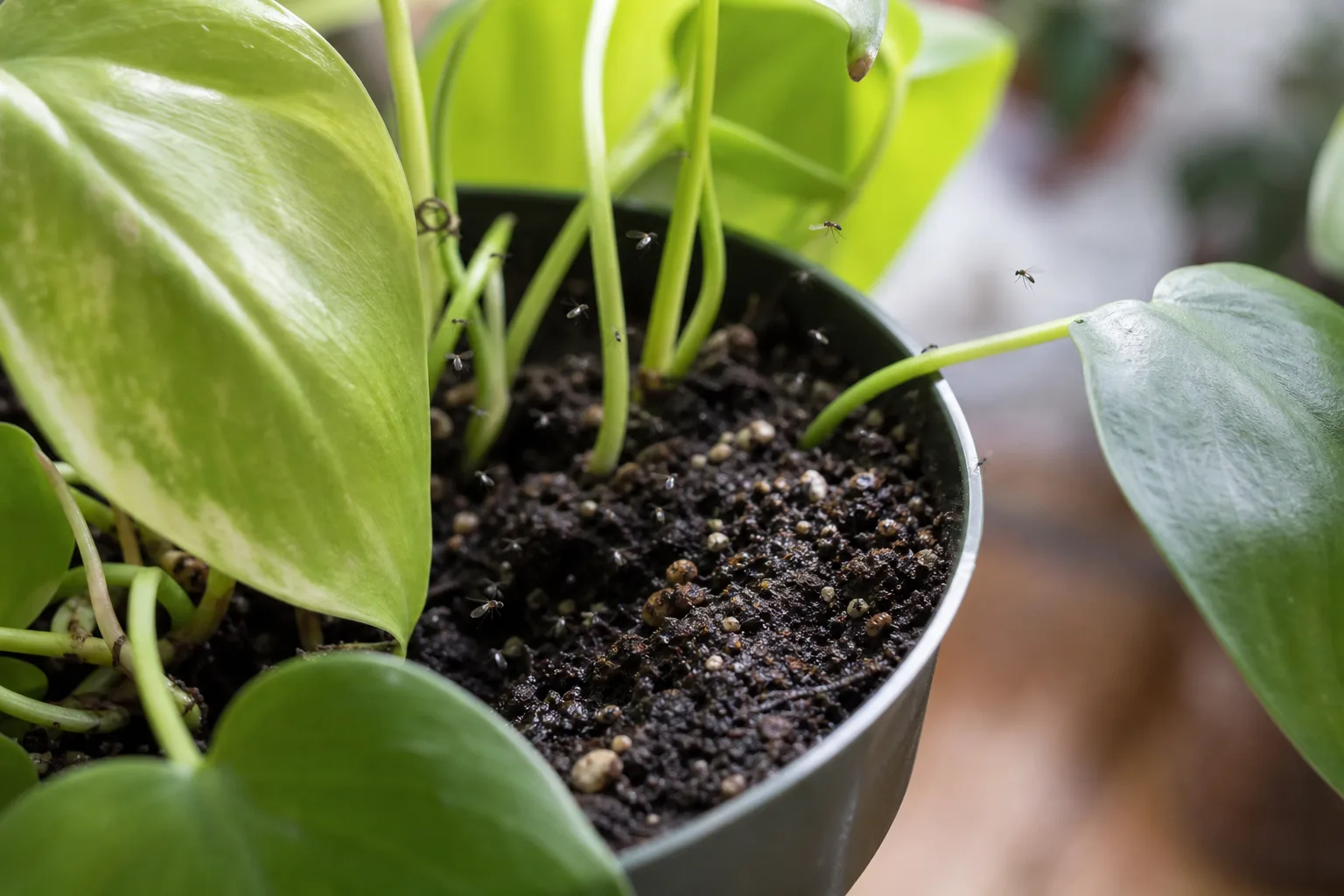
Fungus Gnats on Heartleaf Philodendron: Causes, Checks & Fixes
This guide covers fungus gnats on Heartleaf Philodendron. See also the general Fungus Gnats guide, watering, and light pages for this plant.
Fungus Gnats on Heartleaf Philodendron: Causes, Checks & Fixes
Quick answer
Fungus gnats on Heartleaf Philodendron (Philodendron hederaceum) are small dark flies breeding in moist organic potting mix-not in healthy, properly drying soil. Adults are mostly a nuisance, but larvae in the top 2–3 inches of mix feed on fungi, decaying matter, and tender roots, which can stress a trailing vine if the soil stays wet for weeks.
First step: stop watering until the top 2 inches of mix is completely dry. That single change breaks the life cycle larvae need and is safer for heartleaf roots than spraying adults while the soil stays soggy. Set yellow sticky traps at soil level at the same time to catch egg-laying flies-but drying the surface is the fix that matters most.
If gnats appeared after you moved a hanging basket to a dim corner or kept a winter watering schedule from summer, the underlying issue is almost always moisture rhythm, not a philodendron-specific pest. Cross-check the Heartleaf Philodendron watering guide once you confirm flies at the pot rim.
What fungus gnats look like on Heartleaf Philodendron
Adult fungus gnats are tiny, dark, mosquito-like flies about 1/8 inch long. On a heartleaf pot they usually show up when you:
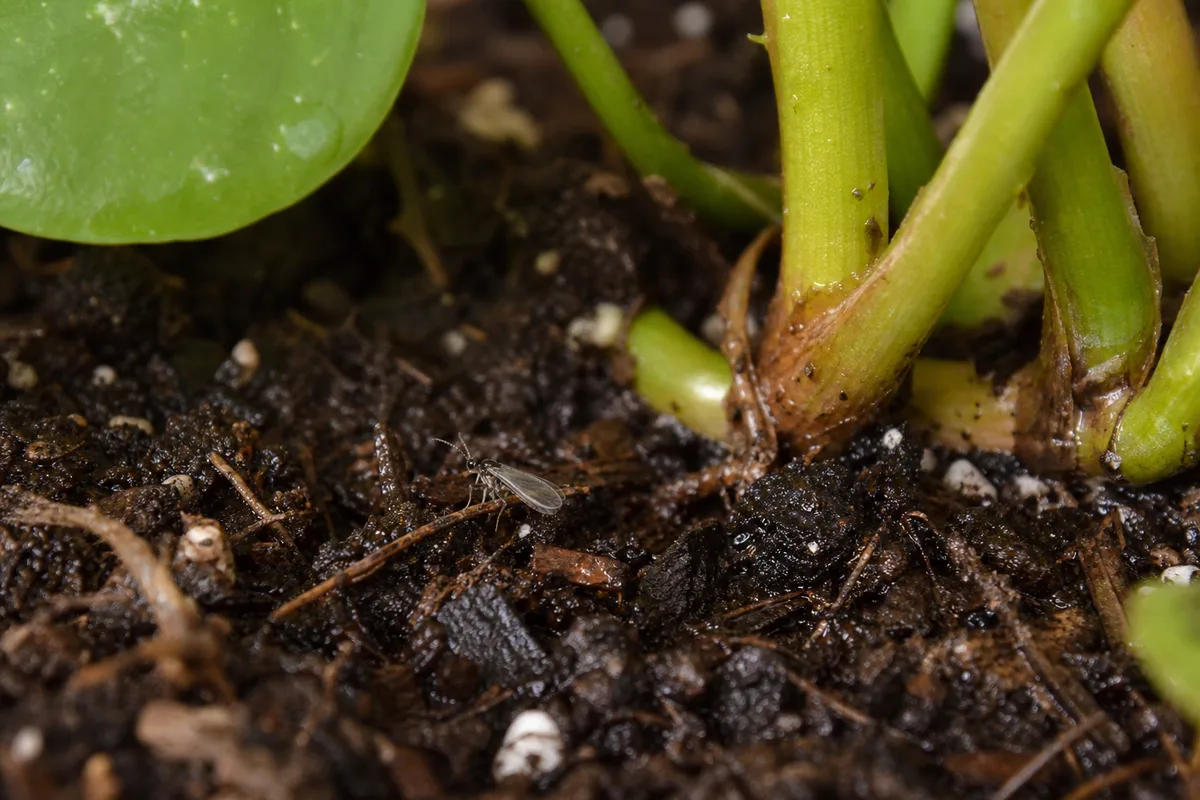
Fungus Gnats symptoms on Heartleaf Philodendron - compare with healthy tissue on the same plant.
- Water and see flies rise from the soil surface
- Disturb trailing vines or shift a hanging basket
- Notice insects clustering on nearby windows in the morning
The plant itself may look mostly healthy at first. Glossy green heart leaves stay perky while gnats breed below-do not assume the vine is fine just because foliage looks normal. That is the classic philodendron trap: growers water on habit while the vine still looks green, but roots that rot quickly in persistently wet soil are already losing airflow.
Larval signs in the pot:
- Translucent, worm-like larvae with dark heads in the top layer of mix
- Larvae clinging to a potato slice placed on the soil overnight
- Surface mold or algae in constantly damp peat
- Mix that never lightens in weight between waterings
Plant stress that can follow heavy infestations:
- Lower yellow leaves on an otherwise green vine
- New growth slowing despite adequate light
- Soft stems or sour-smelling soil (wet conditions, not gnats alone)
Gnats rarely cause dramatic wilt overnight on an established heartleaf. The pattern to watch is persistent flies plus soil that stays wet-that combination points to both pest habitat and rising root rot risk.
Why Heartleaf Philodendron gets fungus gnats
Fungus gnats are not philodendron-specific pests. Any houseplant in persistently moist potting mix can host them. They become common on Heartleaf Philodendron because of how this fast-trailing aroid is usually grown.
Overwatering before the top layer dries. Heartleaf should be watered when the top 2 inches of mix are dry-roughly every 7–10 days in active summer growth and every 14–21 days in winter per the watering guide. Watering on a fixed calendar without checking moisture leaves the surface wet, which attracts egg-laying females and supports larval development.
Dense, peat-heavy nursery mix. Many shop heartleaf plants arrive in moisture-retentive soil. Without adding perlite or Heartleaf Philodendron repotting guide into airier mix, the top layer can stay damp for days even when you reduce watering slightly.
Low light slows dry-down. Heartleaf tolerates medium indirect light, but vines in dim corners or crowded shelves use less water. The same watering that worked in a bright window keeps mix wetter in shade-and cooler fall and winter temperatures slow plant water use further, which is why gnat swarms often spike in winter if watering habits do not change.
Trailing habit and hanging baskets. Elevated pots in still air dry more slowly than plants in bright airflow. Saucers that hold runoff keep the bottom wet and wick moisture back up. A heartleaf cascade over furniture often sits in a north room where surface evaporation is slow.
Fresh cuttings and propagation jars nearby. Heartleaf roots easily in water or moist perlite. Gnats spread between pots in the same room; cuttings in constantly wet media are more vulnerable to larval root feeding than a mature vine.
Oversized pots and decorative cachepots. A pot much larger than the root ball holds excess wet mix around the root zone. A cachepot without drainage traps runoff and keeps the bottom saturated even when the surface looks less shiny.
The gnats are a symptom. The underlying problem is almost always too much moisture in the top layer of mix for too long-the same pattern covered on the overwatering guide.
How to confirm the cause
Work through these checks before reaching for sprays or repotting every plant:
- Fly test - Tap the pot rim or water lightly. Fungus gnats fly up from the soil surface. Fruit flies hover near kitchen fruit; shore flies prefer algae on wet surfaces-not the same pattern.
- Moisture at depth - Stick your finger 2 inches into the mix. If it feels cool and wet while flies are present, you have a moisture plus gnat habitat match.
- Pot weight - Lift the pot. A heavy pot days after watering means slow dry-down; gnats follow.
- Potato slice larval check - Place a 1 cm thick potato slice on the soil for 24 hours. Peel it back and look for tiny translucent larvae. Extension guides use potato slices to detect soil-dwelling larvae. This confirms larvae in the breeding zone.
- Yellow sticky trap count - Set a trap at soil level for three days. Yellow sticky traps capture adult fungus gnats and confirm active adults when catches are high.
- Root and smell check - If yellow leaves appear with sour odor, gently slide the plant partway out of the pot. Mushy brown roots mean wet-soil damage beyond gnats-treat moisture and roots per the root rot guide, not just flies.
- Room scan - Check other pots, propagation trays, and damp saucers. Gnats reinfest from any nearby wet soil.
If the top 2 inches is dry, traps catch nothing, and no larvae appear on a potato slice, look elsewhere-fruit flies, drain flies, or another pest may be the real issue.
First fix for Heartleaf Philodendron
Stop watering until the top 2 inches of mix is fully dry.
Heartleaf handles a short dry spell better than chronic sogginess. Allowing the top 1–2 inches to dry kills eggs and larvae in the surface layer and makes the pot less attractive for new egg laying. Use the finger test at 2 inches depth-the same checkpoint from the watering guide.
At the same time, place yellow sticky traps just above the soil surface on each affected pot. Traps reduce adult numbers and show whether your moisture fix is working over the next week. They do not replace drying the soil.
Do not repot on day one, drench with hydrogen peroxide, or soak the mix with fertilizer water unless you have confirmed severe root rot. Those steps add stress without fixing the breeding habitat if the core issue is simply wet topsoil.
Step-by-step recovery
Once the surface is dry and traps are set, work through these steps in order based on severity:
Mild infestation (few flies, firm roots, no yellowing)
- Maintain the dry-top rule for every watering going forward.
- Replace sticky traps weekly until catches drop to near zero.
- Scrape fallen leaf debris off the soil surface so larvae have less organic food.
- Empty saucers within 30 minutes of watering.
Moderate infestation (daily flies, damp mix for weeks, mix feels dense)
- Continue dry-top watering.
- Apply Bacillus thuringiensis subsp. israelensis (BTI) as a soil drench. Colorado State Extension notes BTI targets fungus gnat larvae when applied to growing medium. Soak mosquito bits or labeled BTI product in water per label directions, then water the soil surface with the strained liquid. Repeat on a 7–10 day schedule for three to four weeks to cover overlapping life stages.
- Consider bottom watering: set the pot in a water tray for 15–30 minutes so roots drink from below while the surface stays drier.
- If mix still feels spongy and wet a week after adjusted watering, repot into standard potting mix with perlite for drainage in a pot with drainage holes-only after you have a dry-down plan.
Heavy infestation (swarms, yellow leaves, sour smell, larvae on every pot)
- Isolate the worst pots from propagation stations and other houseplants.
- Dry the surface, deploy traps, and start BTI drenches on all infested pots in the room.
- Unpot and inspect roots. Trim mushy brown roots with clean shears, let cuts dry a few hours, and repot into fresh airy mix-dry, not soaking.
- Remove badly yellowed leaves after the vine stabilizes, not before you fix moisture.
Keep heartleaf in Heartleaf Philodendron light guide during recovery so the plant uses water at a predictable rate. Do not fertilize until new growth looks normal and gnat counts fall-feeding stressed roots in wet mix makes recovery harder.
When using soil drenches or BTI products, keep philodendron away from pets-Heartleaf Philodendron contains calcium oxalates that irritate mouths if chewed, and pets may investigate wet soil after treatment.
Recovery timeline
Expect two to six weeks for visible gnat suppression with consistent moisture control and larval treatment. The fungus gnat life cycle can complete in as little as three weeks at warm indoor temperatures, and multiple generations overlap in the same pot-so a four-day dry spell rarely ends the problem.
Signs you are winning:
- Fewer flies on traps each week
- Top 2 inches dries within expected days for your light and season
- No new larvae on potato slices
- New heart-shaped leaves opening at normal size and color
Signs the problem is worsening:
- Fly counts rising despite traps
- Yellow leaves climbing the vine while mix stays wet
- Sour smell or soft stems at soil line
- Larvae still abundant after four weeks of BTI and dry-top watering
Damaged leaves do not revert to perfect green, but new growth can look clean once roots sit in appropriately drying mix. If the stem base stays firm and new nodes produce leaves, the vine is recovering.
Lookalike symptoms
| What you see | Likely cause | How to tell apart on heartleaf |
|---|---|---|
| Tiny flies at one pot when watering | Fungus gnats | Flies rise from soil surface; larvae on potato slice |
| Flies near kitchen fruit or compost | Fruit flies | Hover away from plant pots unless food debris sits on soil |
| Flies over wet saucers or humidifier trays | Shore flies | Algae on standing water, not primarily philodendron mix |
| White fuzzy mold on soil | Wet organic mix | Often shares cause with gnats; drying surface helps both |
| Yellow lower leaves, wet heavy pot | Overwatering | Can appear with or without gnats-fix moisture either way |
| Stippling and webbing on leaf undersides | Spider mites | Dry, hot air habitat-opposite of fungus gnat conditions |
Fruit flies hover near kitchens, compost, and ripening produce-not primarily at a single houseplant pot unless you drop food debris on the soil.
Shore flies breed on algae in standing water or constantly wet trays. Check saucers, humidifier trays, and leaky planters.
Yellow leaves from overwatering can appear without gnats if mix is wet but not yet breeding flies. Treat the moisture problem either way-see the overwatering guide.
For the same pest biology on the variegated cultivar, the Philodendron Brasil fungus gnat guide covers shared P. hederaceum recovery steps with cultivar-specific notes.
Mistakes to avoid
- Spraying only flying adults while soil stays wet. Adults live about a week; new larvae keep emerging from moist mix.
- Watering on the same summer schedule through winter. Heartleaf uses less water in cool months-wet soil in January is a classic gnat trigger.
- Keeping saucers full “so the plant does not dry out.” Standing water wicks upward and keeps the root zone anaerobic.
- Stopping treatment after the first quiet week. Eggs already in the soil hatch in waves; stay with dry-top watering and BTI for a full month on bad infestations.
- Repotting into even heavier peat to “refresh” soil without adding perlite. You trade one moisture trap for another.
- Bottom-watering without ever letting the root zone breathe. Alternate methods so the whole column does not stay constantly saturated.
- Compensating for yellow leaves with extra water while fighting gnats-that deepens the wet-soil problem gnats signal.
Heartleaf Philodendron care cross-check
Use this quick audit so gnats do not return as soon as adults disappear:
| Checkpoint | Healthy target for Heartleaf Philodendron |
|---|---|
| Water timing | Top 2 inches dry before each drink |
| Season adjustment | 7–10 days in active growth; 14–21 days in winter |
| Mix | Standard potting mix plus 20–25% perlite |
| Light | Bright to medium indirect-enough to drive normal water use |
| Drainage | Pot holes open; saucer emptied after watering |
| Debris | Fallen heart leaves removed from soil surface |
Heartleaf is a vining heartleaf philodendron that forgives brief drought better than repeated sogginess. Align watering with how fast your specific pot dries in your room, not a generic houseplant calendar-the same principle in the watering guide.
How to prevent fungus gnats next time
- Check moisture before every watering-not the day of the week on your phone reminder.
- Amend dense shop soil with perlite at first repot, or refresh the top inch if repotting is not yet needed.
- Quarantine new heartleaf plants for two to three weeks with a sticky trap in the soil.
- Keep propagation stations separate from established pots, or use covers that keep cuttings humid without open wet soil breeding flies.
- Reduce watering automatically when you move a vine to lower light for aesthetic placement.
- Monitor with traps in winter and early spring when indoor heating and short days slow plant uptake but humans keep watering out of habit.
Prevention is habitat management. Dry surface cycles, airy mix, and realistic seasonal watering stop most heartleaf gnat problems before they start.
When to worry
Escalate care when:
- Gnats increase weekly despite dry-top watering and BTI
- Yellow leaves spread while soil smells sour-inspect roots for rot immediately per the root rot guide
- A newly propagated heartleaf cutting collapses with larvae visible in the mix
- Multiple plants in one room share swarms, suggesting a building-wide moisture source
Gnats alone on a firm, green, well-draining heartleaf pot are annoying but not an emergency. Wet soil plus spreading yellow leaves plus sour odor is the urgent combination-moisture is already damaging roots.
Conclusion
Fungus gnats on Heartleaf Philodendron tell you the soil surface has been too wet for too long-the same wet-dry cycle break that precedes overwatering and root damage on this trailing aroid. Confirm flies and larvae, dry the top 2 inches before the next watering, trap adults, and target larvae with BTI if needed. Fix the watering rhythm that suited summer growth but overwaters the plant in winter or shade. Heartleaf recovers well from brief larval stress when roots breathe again-judge success by dry-down timing, falling trap counts, and clean new heart-shaped leaves, not by whether a few old flies still wander the windowsill.
When to use this page vs other Heartleaf Philodendron guides
- Heartleaf Philodendron watering guide - Use for routine moisture checks before assuming fungus gnats is the main issue.
- Heartleaf Philodendron problems hub - Browse all 16 common issues on this species.
- Overwatering on Heartleaf Philodendron - Different entry point when symptoms overlap with fungus gnats.
- Mold on Soil on Heartleaf Philodendron - Different entry point when symptoms overlap with fungus gnats.
- Root Rot on Heartleaf Philodendron - Different entry point when symptoms overlap with fungus gnats.
Related Heartleaf Philodendron guides
- Heartleaf Philodendron overview
- Heartleaf Philodendron watering
- Heartleaf Philodendron light
- Heartleaf Philodendron soil
- Overwatering on Heartleaf Philodendron
- Mold on Soil on Heartleaf Philodendron
- Root Rot on Heartleaf Philodendron
- Slow Growth on Heartleaf Philodendron
- Heartleaf Philodendron problems