Leggy Growth on Philodendron Micans: Causes, Checks & Fixes
Quick answer
Leggy growth on Philodendron Micans is usually caused by insufficient light that stretches internodes and shrinks new leaves. First step: move the plant to medium-bright indirect light within 1–2 metres of an east or sheer-curtained window, then prune long bare stems after new compact growth appears.
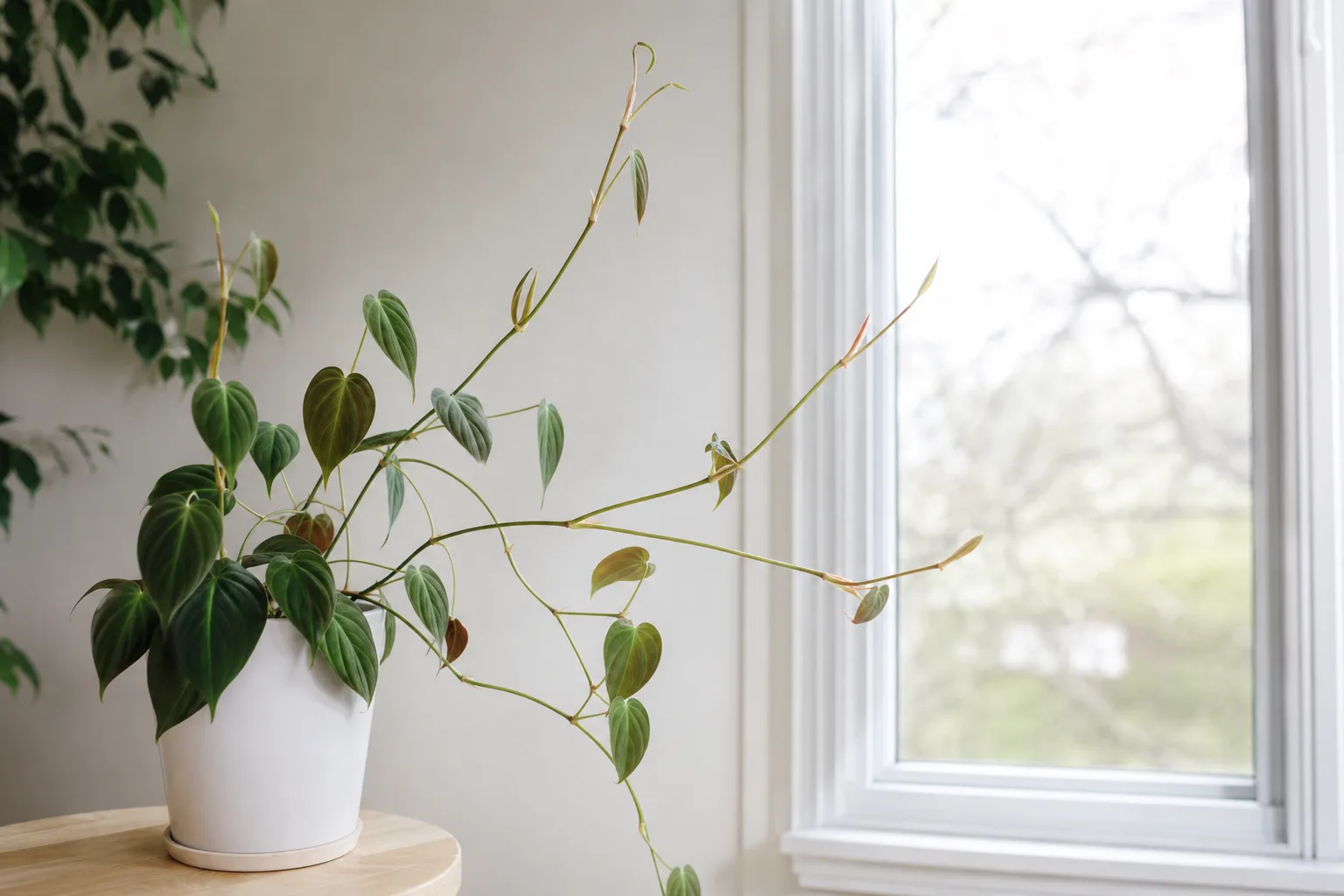
Leggy Growth on Philodendron Micans: Causes, Checks & Fixes
This guide covers leggy growth on Philodendron Micans. See also the general Leggy Growth guide, watering, and light pages for this plant.
Leggy Growth on Philodendron Micans: Causes, Checks & Fixes
Quick answer
Leggy growth on Philodendron Micans is usually caused by insufficient light that stretches internodes and shrinks new leaves. First step: move the plant to medium-Philodendron Micans light guide within 1–2 metres of an east or sheer-curtained window, then prune long bare stems after new compact growth appears.
Philodendron Micans (Philodendron hederaceum var. hederaceum) is a fast-growing velvet vine that naturally trails, but it should produce closely spaced leaves with iridescent bronze-green sheen-not long bare stems with tiny dull leaves. When light is too low, the plant etiolates: it stretches toward the nearest light source, lengthening internodes and reducing leaf size to survive on less energy. Micans in dim corners often looks “healthy” because it keeps growing-just farther and thinner than it should.
Why Philodendron Micans gets leggy growth
Insufficient light is the primary cause. Missouri Botanical Garden states that Philodendron hederaceum in too-dark conditions produces spindly stems. RHS guidance is explicit: philodendrons without enough light become leggy and produce fewer, smaller leaves. On Micans, that shows up as long gaps between small velvet leaves that lack the bronze-purple flash visible in brighter light.
Micans tolerates low light better than many houseplants-it can survive in dim rooms-but survival is not the same as good form. NC State Extension notes heartleaf philodendron tolerates low light but prefers medium light. In practice, Micans needs medium-bright indirect light to maintain compact internodes and full velvet color.
Distance from windows matters more than people expect. A plant on a shelf three metres from a north window may receive enough light to stay alive while etiolating steadily. Hanging baskets placed too high below ceiling level or blocked by lamp shades lose effective light even near a window.
Low light also slows water use, which indirectly worsens appearance-Micans in dim spots may yellow or droop from overwatering while also stretching. UF/IFAS recommends bright diffuse light for heartleaf philodendron; pairing adequate light with proper watering keeps vines both compact and firm.
Over-fertilizing in low light does not fix legginess-it can push weak stretched growth. Nitrogen without adequate light produces long soft stems with pale small leaves.
What leggy growth looks like on Philodendron Micans
Healthy Micans has closely spaced leaves along trailing vines. Leggy growth shows these patterns:
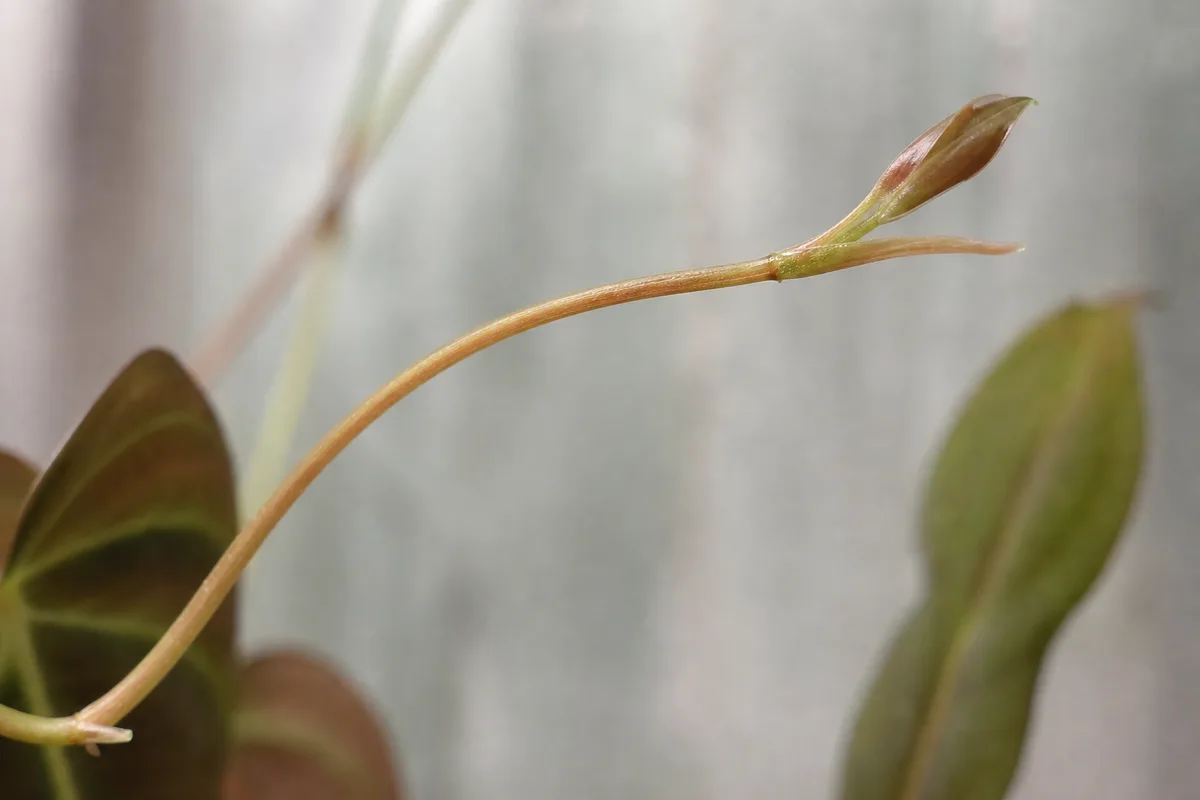
Leggy Growth symptoms on Philodendron Micans - compare with healthy tissue on the same plant.
- Internodes longer than 5–8 cm between leaf nodes on new growth
- New leaves noticeably smaller than older leaves from brighter periods
- Reduced bronze-purple iridescence-new leaves look plain olive or dull green
- Vines leaning strongly toward windows or light sources
- Thin, soft stems that feel less firm than older sections
- Faster length growth but sparse foliage-long trails with few leaves
Compare the newest section of vine with growth from when you first got the plant or from a brighter season. If internode length has doubled, light is the likely driver.
How to confirm the cause
Use this inspection sequence:
- Light duration and quality - Can you read comfortably near the plant during daylight without a lamp? If not, light is probably too low for compact Micans growth.
- Window distance and obstruction - Measure distance to the nearest window and note sheer curtains, tinted glass, or outdoor shading.
- Directional lean - Strong lean toward one window confirms the plant is reaching for light.
- Internode measurement - Mark the newest node and check spacing after two to three weeks of growth in the current spot.
- Leaf size trend - Smaller new leaves with less velvet sheen point to etiolation, not nutrient deficiency.
- Overlapping stress - Check pot weight and node firmness; leggy plus wet soil and yellow leaves suggest combined low light and overwatering.
Lookalike symptoms to rule out
Normal trailing growth on a mature Micans vine can have slightly longer internodes on very old sections-that is not etiolation if new tips stay compact. Overwatering causes limp yellow leaves with wet soil, not long bare stems with green but small leaves. Pest damage causes stippling and webbing, not uniform internode stretching. A recently propagated cutting may look sparse until it branches-that is juvenile form, not necessarily low light, if new growth after rooting is tight.
First fix for Philodendron Micans
Move the plant to medium-bright indirect light. Ideal placements include:
- Within 1–2 metres of an east-facing window
- 1–2 metres back from a south or west window with a sheer curtain
- Under a grow light if natural light is insufficient (14–16 hours daily at moderate intensity)
Avoid direct sun on velvet Micans leaves-sun scorches the thin foliage quickly. Missouri Botanical Garden advises bright indirect light and avoiding full sun for Philodendron hederaceum.
Make one move at a time. Do not simultaneously repot, fertilize, and prune when correcting light-let the plant respond to brighter conditions for three to four weeks first.
Rotate the pot a quarter turn weekly so all sides receive even light and the vine does not lean permanently to one direction.
Step-by-step recovery
After improving light:
- Wait three to four weeks for new growth at vine tips-internodes on new sections should shorten and leaves should enlarge.
- Once compact new growth appears, prune leggy bare stems back to a healthy node above a leaf using clean scissors.
- Root pruned cuttings in water or moist sphagnum-Micans propagates easily from trimmed sections.
- Pinch growing tips on compact vines during spring and summer to encourage branching and bushier form.
- Adjust watering to match faster growth in brighter light-the top 3–5 cm may dry faster than in the dim spot.
Optional: train remaining vines on a slim moss pole or trellis if you want larger leaves; Micans sized up with support often produces bigger velvet foliage in good light.
Recovery timeline
New compact growth usually appears within three to six weeks after a meaningful light upgrade. Existing long bare internodes will never sprout leaves-only nodes with leaves or aerial roots can regenerate. Full visual recovery may take two to three months of pruning and new trailing growth after the light fix.
If internodes stay long despite a brighter spot, the location may still be too dim-move closer to the window or add a grow light.
What not to do
- Do not place Micans in direct sun to fix legginess-velvet leaves burn quickly.
- Do not pile on fertilizer in low light hoping for bigger leaves-it produces weak stretched growth.
- Do not prune entire vines before improving light-you may remove the plant’s only active growth points.
- Do not assume a fast-growing vine is getting enough light-etiolated Micans can grow long while looking sparse.
- Do not ignore wet soil in dim spots; slow water use plus overwatering causes yellowing alongside stretching.
How to prevent leggy growth next time
Keep Micans in medium-bright indirect light year-round. When days shorten in winter, accept slightly slower growth rather than moving the plant to a darker “out of the way” spot. Use a grow light if the only available location is more than 2–3 metres from a bright window.
Rotate weekly, prune tips during active growth to encourage branching, and match watering to how fast the brighter location dries the pot. Refresh your mental model each season-light intensity at the same window changes significantly from summer to winter.
Keep Philodendron Micans out of reach of pets when pruning-trimmed stems contain irritant sap.
When to worry
Leggy growth is cosmetic and low severity on its own. Escalate if:
- Stretched vines also show soft nodes, sour soil, or widespread yellowing
- New leaves stay tiny and distorted despite adequate light-check for spider mites
- The plant collapses or wilts while soil is wet-inspect roots for rot compounded by slow water use in dim light
Those patterns need root-zone or pest diagnosis, not just a light move.
Conclusion
Leggy growth on Philodendron Micans means the plant is reaching for more light, not that it needs fertilizer or more water. Confirm with long internodes, small dull new leaves, and directional lean; fix by moving to medium-bright indirect light and pruning bare stems after compact new growth appears. Prevent it by keeping Micans within effective window light year-round and rotating the pot weekly. Judge success by tighter new growth with full velvet iridescence-not by old bare stems filling in on their own.
When to use this page vs other Philodendron Micans guides
- Philodendron Micans watering guide - Use for routine moisture checks before assuming leggy growth is the main issue.
- Philodendron Micans problems hub - Browse all 10 common issues on this species.
- Leaf Drop on Philodendron Micans - Different entry point when symptoms overlap with leggy growth.
- Yellow Leaves on Philodendron Micans - Different entry point when symptoms overlap with leggy growth.
- Plant Leaning on Philodendron Micans - Different entry point when symptoms overlap with leggy growth.