Plant Leaning on Philodendron Micans: Causes, Checks & Fixes
Quick answer
Philodendron Micans leans when velvet vines grow toward one-sided light, when long trailing stems outweigh a small pot, or when weak roots cannot anchor the plant. First step: check lean direction and stem firmness at the soil line-firm stems pointing at a window need brighter indirect light and weekly rotation; soft stems on wet mix need root inspection before staking.
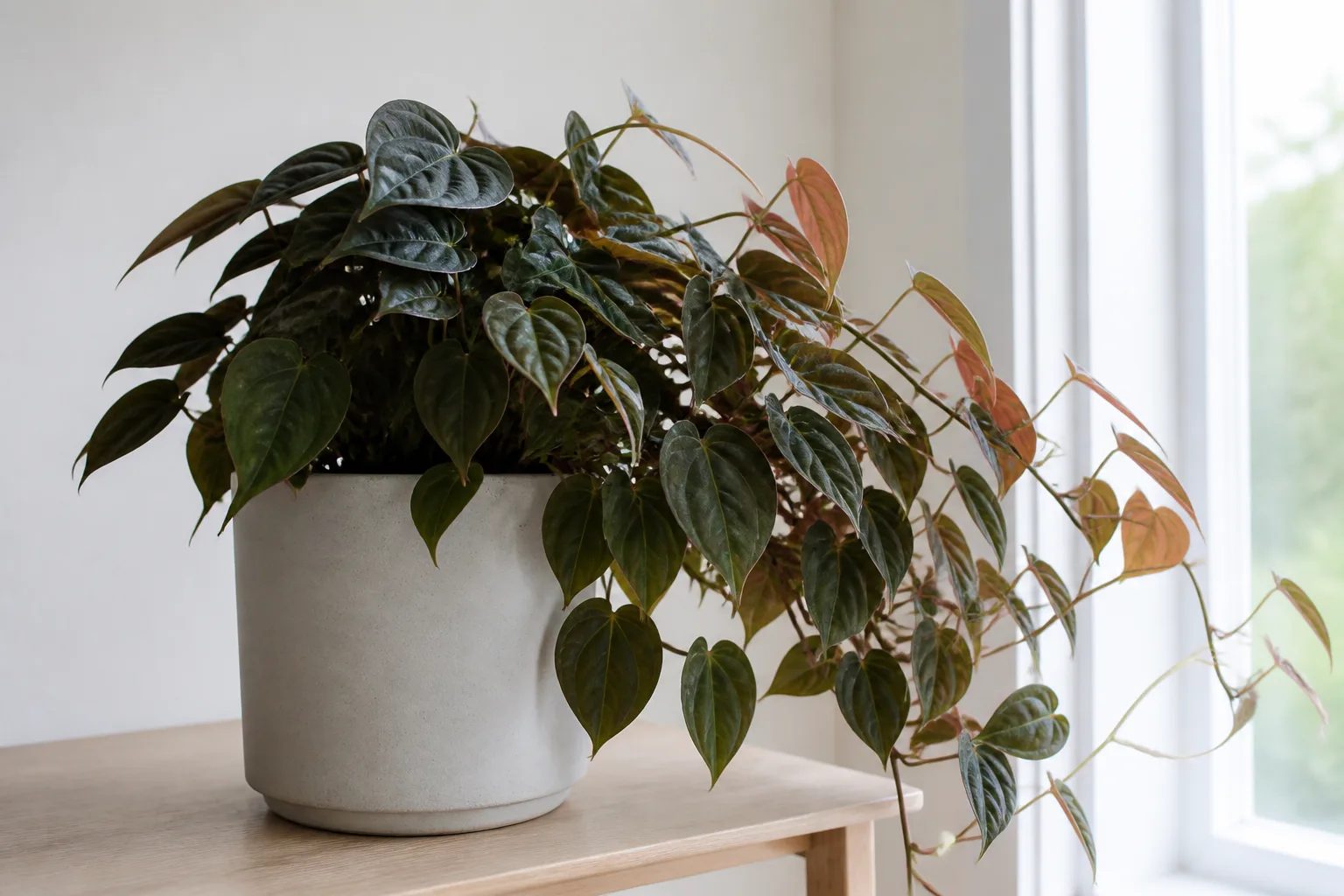
Plant Leaning on Philodendron Micans: Causes, Checks & Fixes
This guide covers plant leaning on Philodendron Micans. See also the general Plant Leaning guide, watering, and light pages for this plant.
Plant Leaning on Philodendron Micans: Causes, Checks & Fixes
Quick answer
Plant leaning on Philodendron Micans usually means velvet vines are reaching toward uneven light, listing from top-heavy trailing growth, or losing anchor strength when roots fail-not that your Micans suddenly wants to behave like a compact tabletop plant. This cultivar is a fast-growing trailing or climbing vine with iridescent bronze-green leaves. A gentle tilt toward the window is common; a plant flopped sideways with soft tissue at the base is a different problem.
First step: note lean direction and stem firmness at the soil line. Firm stems angled toward the brightest window need brighter indirect light and a quarter-turn rotation. Soft stems on wet, heavy soil need root inspection before you add a stake or moss pole.
What plant leaning looks like on Philodendron Micans
Healthy Micans sits upright in its pot while vines trail evenly from a shelf, hang from a basket, or climb a moss pole with closely spaced velvet leaves. The whole plant may lean slightly toward its light source without looking sick.
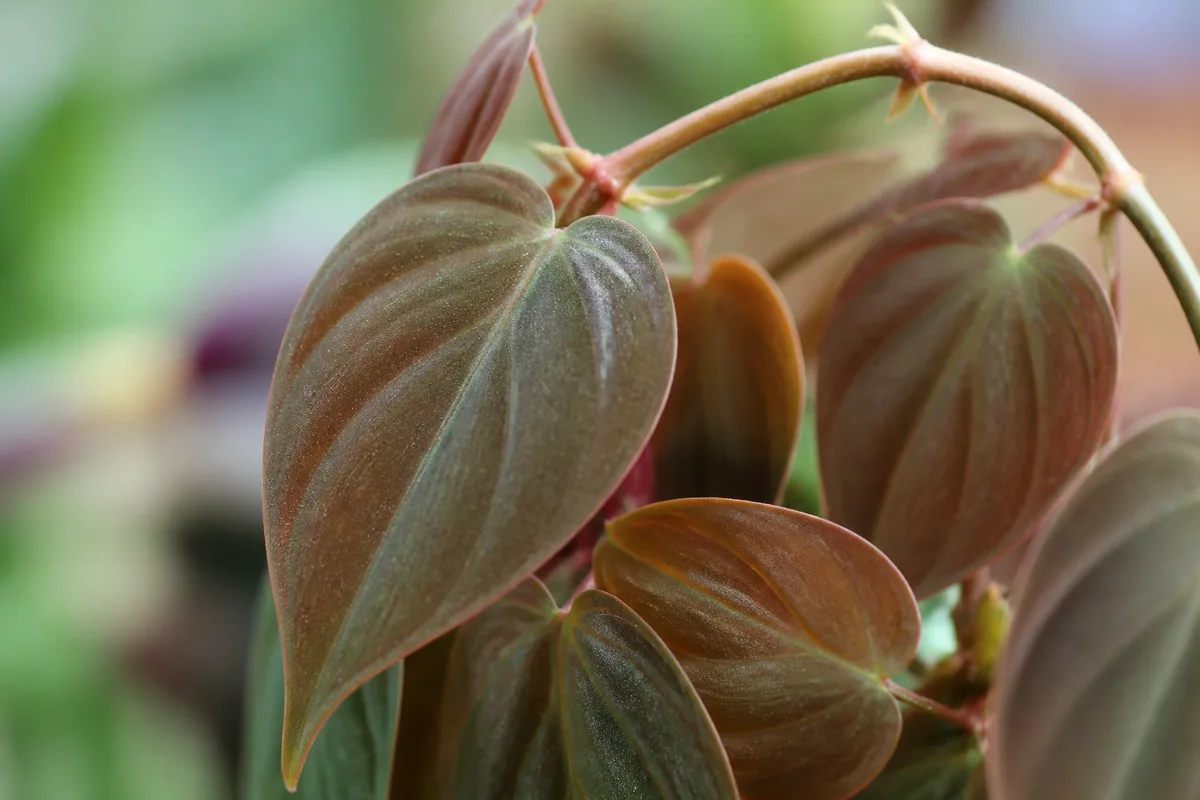
Plant Leaning symptoms on Philodendron Micans - compare with healthy tissue on the same plant.
Problem lean patterns include:
- Vine tips and newest leaves angled sharply toward one window while the shaded side stays sparse
- A hanging basket pulling to one side because long vines concentrate weight on one edge
- A formerly upright main stem bending mid-height after long gaps between leaves
- Sudden flop sideways with limp velvet leaves that do not recover overnight
- Soft, darkening tissue at the soil line while mix stays wet for days
- The plant resting against the pot rim or table because trailing length exceeds pot stability
Normal vs. abnormal: Micans is a rapid-growing vine that can extend several feet in a season-a modest window-side tilt on firm bronze-green tissue is not an emergency. Lean that worsens every week, pairs with limp leaves, or follows sour wet soil needs intervention.
Why Philodendron Micans leans
Light direction and insufficient brightness
Indoor light arrives from one window direction. Stems and leaves grow toward that source-a response called phototropism. When light is too dim, Micans also stretches with longer internodes trying to reach photons, which makes trailing vines top-heavy on one side. Plants grown where light reaches them from one direction can develop a lean, and heartleaf philodendron in too-dark conditions produces spindly stems.
Micans tolerates lower light better than many houseplants, but survival is not compact form. In dim corners, vines stretch toward windows with dull velvet texture and smaller leaves-classic etiolation that weakens the upright silhouette.
One-sided growth without rotation
Even in adequate light, growth accumulates on the window-facing side until the display lists. Micans is a climbing or trailing vine that needs rotation for balance when grown as a tabletop specimen, not just when hanging.
Top-heavy trailing growth without support
When past low-light stretch produced long internodes and heavy velvet leaves on one side, the weight acts like a lever. A small nursery pot supporting several feet of trailing vine from a high shelf creates mechanical lean even when roots are healthy. Micans produces adventitious aerial roots that naturally anchor to trees or moss poles-vines left to dangle without support list as weight accumulates at the tips.
Unsupported climbing habit
In nature, Micans climbs toward brighter canopy light. Indoors, a vine searching for something to climb may lean and stretch with wide internode gaps. A moss pole or trellis is not mandatory for survival, but it gives aerial roots a target and reduces sideways flop when you want upright growth.
Overwatering and root failure
Heartleaf philodendron prefers moist, well-drained mix-not soggy roots. Root rot can occur in overly wet soil. Damaged roots cannot anchor stems or hydrate tissue, so the plant slumps sideways even though you have been watering. Yellow lower leaves, a heavy wet pot, and sour smell from the drainage hole support this cause-not a light problem alone.
Low light compounds the risk: plants in dim conditions use less water and soil stays wet longer, so Micans in a dark corner can lean from weak roots while the mix never dries.
Underwatering and dry root balls
Chronic drought shrinks fine roots and reduces turgor pressure in stems. The vine may lean or collapse toward the pot edge. Dry soil at 3–5 cm depth and a noticeably light pot weight fit drought stress better than phototropism.
Unstable pot or poor anchoring
A top-heavy trailing vine in a narrow plastic nursery pot, a lightweight decorative cover pot without drainage, or a hanging basket with a narrow hook can tip even when stems are healthy. Check whether the lean started right after a repot, shelf move, or basket hang-height change.
How to confirm the cause
Work through these checks in order:
- Stem firmness - Firm green or bronze stems angled one direction fit light or rotation issues. Soft, darkening stems at nodes fit rot or severe drought.
- Lean direction - Toward the brightest window supports phototropism. Random tilt after repot or a bump supports mechanical instability.
- Light on leaves - Hold your hand where foliage sits. A soft shadow with clear edges suggests adequate indirect light; a faint shadow means too dim for compact velvet growth.
- New leaf pattern - Smaller leaves with dull velvet sheen on the leaning side fit stretch from low light; firm iridescent new growth on one side only fits uneven rotation.
- Soil moisture and smell - Wet heavy mix days after watering with yellow lower leaves points to root stress. Dry, pulled-back soil points to drought.
- Pot stability - Does the container rock on a flat surface? Does a hanging basket pull the hook to one side?
- Root peek if stem is soft - Slide the plant partly out of the pot. Healthy roots are firm and white or tan; mushy dark roots with odor confirm failure, not a light-only issue.
If stems are firm, new leaves show bronze-purple velvet flash, and lean tracks the window, you likely have a cultural balance issue-not disease.
The first fix to try
If stems are firm and lean toward a window: move Micans to medium-Philodendron Micans light guide where leaves receive several hours of diffuse illumination daily, and rotate the pot one quarter turn.
Good targets include an east-facing window or several feet back from a south- or west-facing window with sheer curtain filter. Heartleaf philodendron enjoys bright diffuse light-not deep shade and not harsh direct midday sun that scorches velvet tissue.
If the base stem feels soft and soil stays wet: stop watering, let the top 3–5 cm dry, and inspect roots before staking. Staking a rotting stem hides failure-it does not repair it.
Do not repot on day one unless roots fail inspection. Light balance and rotation fix most cosmetic lean on firm Micans vines.
Step-by-step recovery
After the first fix:
- Acclimate light gradually - If Micans came from a dim spot, increase brightness over 7–10 days to avoid bleaching velvet leaves.
- Rotate weekly - A quarter turn each week keeps trailing or climbing growth symmetrical as new leaves emerge.
- Match watering to light - Brighter rooms dry the pot faster; dim rooms stay wet longer. Check the top 3–5 cm before each drink instead of following a calendar from the old location.
- Add a moss pole if you want upright growth - Once roots and light are stable, install a pole during watering day, guide the main vine with soft ties at nodes, and keep moss damp so aerial roots can attach. Treat support as help for the climbing habit, not a permanent substitute for photons.
- Prune stretched sections after improvement - When the next two leaves show tighter spacing, cut leggy vines 1–2 cm above a node with clean shears. Micans often pushes a side shoot from the cut.
- Repot only if roots fail inspection - Trim mushy roots, refresh with airy aroid mix (potting soil, perlite, orchid bark), and use a pot only one size larger with drainage holes. Skip Philodendron Micans repotting guide if the issue was light-only and roots are healthy.
- Hold fertilizer until stable - Feed lightly at half strength only after two weeks of firm new growth. Feeding stressed Micans in marginal light pushes soft tissue that lists again.
Recovery timeline
Expect visible balance improvement within two to four weeks after corrected light and rotation-new leaves emerging more upright and velvet color strengthening are the signals that matter. A top-heavy trailing vine may need one to two months of weekly rotation plus optional staking or moss-pole training before the silhouette looks centered.
Old bent stem sections do not straighten. Elongated or angled tissue stays as-is even after conditions improve; pruning removes the worst lean. Judge success by new growth direction, not by old tissue reshaping itself.
Worsening signs: continued collapse after four weeks of brighter light and better watering, spreading yellow leaves with persistently wet soil, or soft stem tissue climbing above the soil line. Those point to advanced root failure and need more aggressive root surgery or may not be saveable if the crown is mushy.
Lookalike symptoms
- Leggy growth - Long internodes and dull velvet without full flop; same light fix, but focus on stretch pattern rather than pot tipping.
- Drooping leaves - Leaves hang limply while the stem may still be upright; often water stress. Check soil moisture before assuming lean.
- Not enough light - Fading iridescence and slow growth before dramatic tilt; move to brighter indirect light early.
- Wilting with wet soil - Overwatering in low light; fix drainage and light together.
- Repotting stress - Temporary wobble for 1–2 weeks after repot; keep conditions stable and avoid stacking changes.
Mistakes to avoid
Do not install a moss pole expecting instant balance without fixing light first-a pole does not replace photons for stretched internodes.
Do not stake heavily before checking roots when the base is soft and soil is wet.
Do not move straight from a dark corner into harsh direct south-window sun without acclimation; velvet leaves burn and crisp easily.
Do not keep watering on a bright-room schedule when Micans sits in dim light where soil stays wet-or the reverse, when brighter light dries the pot faster.
Do not choose décor placement over actual light on leaves; a shelf that looks good but receives only ambient glow guarantees one-sided lean.
Do not repot into an oversized container hoping stability improves; excess soil volume holds moisture and raises rot risk.
How to prevent leaning next time
Place Micans where medium-bright indirect light hits the leaves for most of the day, not just where the pot photographs well. East windows and filtered south or west exposures match heartleaf philodendron cultural guidance.
Rotate the pot weekly so trailing or climbing vines stay symmetrical. Supplement winter windows with a grow lamp before lean starts, not after the plant has already listed.
If you prefer upright growth, offer a moss pole or trellis early so aerial roots anchor before vines become top-heavy. For hanging displays, use a stable basket and hook sized for the vine length you allow.
Water when the top 3–5 cm of mix is dry, adjusting for season and room brightness. Micans prefers consistent moisture but not soggy roots.
When buying, choose specimens with firm stems and crisp velvet on the newest leaf; pass on nursery plants already stretched and listing in shade if you want a compact iridescent showpiece.
When to worry
Cosmetic window-side lean on firm Micans stems is a cultural issue first, not an emergency. Escalate when yellow leaves stack up while soil stays wet, the base feels soft, the pot or basket tips repeatedly, or the stem cracks under its own weight.
If four to six weeks of corrected light, rotation, and adjusted watering still produce limp collapse, inspect roots again or verify that a grow lamp delivers enough intensity. Some permanently stretched sections will not regain compact spacing; prune them if tight velvet form matters to you.
Conclusion
Philodendron Micans leaning is the plant telling you about light balance, vine weight, climbing support, or root strength-not asking for more water by default. Check stem firmness first, give medium-bright indirect light with weekly rotation, adjust watering to match your room, and add a moss pole or prune only after the real cause is fixed. Old angled stems will not straighten on their own, but new velvet leaves can rebuild the balanced trailing or climbing display Micans is meant to provide.
When to use this page vs other Philodendron Micans guides
- Philodendron Micans watering guide - Use for routine moisture checks before assuming plant leaning is the main issue.
- Philodendron Micans problems hub - Browse all 10 common issues on this species.