Watering Philodendron Micans: Schedule, Soil Checks &
Watering Philodendron Micans: Schedule, Soil Checks & Mistakes
Watering Philodendron Micans: Schedule, Soil Checks & Mistakes
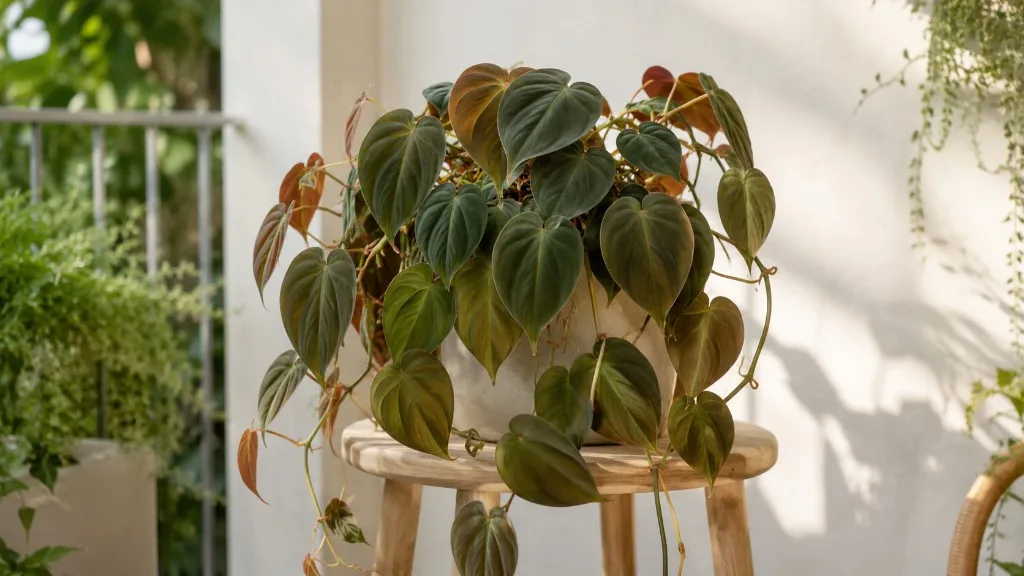
Philodendron Micans watering is not a weekly calendar habit. It is a check-and-respond rhythm built around how fast your specific pot dries in your specific room - with one extra constraint most heartleaf guides ignore: the velvet leaf surface shows every splash, fingerprint, and hard-water mineral mark permanently. Philodendron hederaceum var. hederaceum ‘Micans’ is a trailing hemi-epiphytic aroid from Mexico through Tropical America that behaves indoors like the forest-floor climber it is: fine roots in airy mix, a full soak followed by a real dry-down at the surface, and vines that can reach several feet in a hanging basket within one growing season.
The operational rule extension services converge on is simple: check soil moisture before you pour, water thoroughly, then let the top layer dry before the next drink. Illinois Extension advises watering when the top 3–5 cm (1–2 inches) of mix has dried - not on a blind schedule. Iowa State Extension adds the aroid-critical detail: do not let philodendrons sit in soggy soils or saucers of stale water. For Micans specifically, that means protecting velvet foliage from overhead splash while still giving roots a complete soak-and-drain cycle.
This guide walks through how often to check, the numbered moisture workflow, overwatering and underwatering signs with recovery steps, seasonal adjustments, bottom-watering technique, water-quality cautions, hanging-basket traps, and the mistakes that send readers from a shimmering trailing display to a root-rot rescue.
Quick answer: check the pot, not the calendar
Do not water Philodendron Micans because it is Tuesday. Water when moisture checks at the right depth say the top of the mix has dried enough for another thorough soak. In bright active growth, many indoor Micans pots need water roughly every 7 to 10 days as a starting range once the top 3–5 cm feels dry; in cooler, darker winter months that often stretches toward every 10 to 14 days or longer - always verified by touch, skewer, or pot weight, never by memory.
Fast decision check: If leaves look tired, check pot weight and root-zone moisture before reaching for the watering can. Limp velvet foliage with wet, cool soil points to overwatering or failing roots, not thirst - South Dakota State Extension notes both over- and underwatering can make philodendron leaves droop, which is why the soil check comes first. Limp foliage with a light, dry pot points to underwatering. Limp foliage with soil that feels correctly dry at depth but the plant still wilts suggests root damage, compaction, or a separate stress - inspect before adding more water.
| Soil check result | Pot weight feel | Action |
|---|---|---|
| Top 3–5 cm dry; skewer clean at depth | Noticeably lighter than after last soak | Water thoroughly until runoff; empty saucer |
| Top dry but skewer shows damp crumbs mid-pot | Still heavy | Wait 1–3 days; recheck - common after repot or in dim rooms |
| Surface wet or cool; skewer dark throughout | Heavy, no lift | Do not water - inspect for yellow leaves on wet mix |
| Mix shrunk from pot walls; finger goes in easily | Very light | Deep soak or bottom-water 10–15 minutes, then drain fully |
Why Micans watering is different from generic philodendron advice
Micans is not a self-heading floor philodendron and not a moss-pole melanochrysum. It is a velvet-leaf trailing heartleaf cultivar of Philodendron hederaceum var. hederaceum that most growers display in hanging baskets or high shelves where vines cascade downward. That display choice changes practical watering in three ways generic philodendron pages skip.
Velvet trichomes hold water droplets. Overhead watering or sink splashing leaves permanent dull spots and fingerprint marks on fuzzy leaves. Clemson HGIC describes Micans as a velvet-textured heartleaf philodendron - the surface is a quality signal, not decoration you can wipe clean without damage.
Trailing length shades the pot rim. As vines lengthen, they cover the basket edge and slow surface evaporation while roots at the bottom may still dry faster in terracotta or unglazed liners. The pot can feel “right” at the top while the core stays damp - or the opposite in plastic cachepots.
Fine roots punish stale wet mix faster than thick succulent roots. Micans wants evenly moist but not soggy conditions during active growth, which is the tension every aroid keeper navigates: moist deeper mix, dry top layer, never standing water. Pair watering with the right soil and light context. A bright Micans in perlite-amended mix drinks faster than the same plant in a dim corner with dense peat - and the dim plant is far more likely to rot if you keep a bright-window schedule.
Worked vignette - 15 cm (6 inch) hanging basket, east window: In July, this setup often dries enough to water every 6 to 8 days once the top 3–5 cm is dry and the pot feels moderately light. Move the same plant to a cool north room in January and the interval can stretch to 12 to 16 days without any change to mix or basket size - because lower light and temperature slow transpiration. The calendar did not change; the pot did.
How often to water Philodendron Micans
There is no honest universal interval for how often to water Philodendron Micans. Calendar ranges are starting frameworks you adjust after watching your pot through at least two full wet-to-dry cycles. UF/IFAS Gardening Solutions recommends watering heartleaf philodendron when the top inch of soil is dry - for Micans in metric-friendly homes, read that as the same top 3–5 cm dry-down Illinois Extension describes.
Use this decision order every time:
- Check moisture at depth (finger, skewer, or pot weight).
- If dry enough by extension-backed standards, water thoroughly until runoff drains freely - or bottom-water 10–15 minutes then drain.
- Empty saucers and cachepots so the plant never sits in stale water.
- Log how many days until the pot lightens again; that interval becomes your personal baseline.
Factors that shorten the interval: brighter light, warm rooms (18–29°C / 65–85°F), small terracotta pots, active summer growth, fast-draining chunky mix, root-bound plants that fill the pot quickly. Factors that lengthen it: low light, cool winter rooms, large plastic or glazed pots, fresh repot into oversized container, recently watered moss pole neighbors sharing humidity (less relevant for pure trailers, but matters if you train Micans on a slim support).
State the schedule once with qualifiers, not as a rule: 7–10 days in summer and 10–14 days in winter are common starting ranges for moderate-light indoor Micans in well-draining mix - then adjust by checks.
The moisture check workflow
Surface color lies. Peat-heavy mix can look pale on top while staying damp near roots, especially when trailing stems shade the rim. Use at least one physical check every time before watering.
Finger and knuckle test at 3–5 cm depth
Insert your finger or knuckle 3–5 cm (1–2 inches) into the mix. Cool cling or visible moisture on your skin means wait. Dry, loose mix at that depth means you can proceed with a full soak. On shallow hanging baskets under 15 cm tall, the finger test effectively reaches mid-root-zone - treat it seriously rather than guessing from vine turgor alone.
Chopstick or skewer probe for hanging baskets
Push a dry bamboo chopstick or wooden skewer toward the pot bottom through a gap in the trailing vines - not through leaves. Pull it out. Darkening, soil cling, or a cool wet feel means moisture remains. Clean, dry wood means the root zone has dried enough for another drink. This is the most reliable check when vines cover the soil surface and you cannot see color change.
Pot weight: light versus heavy on trailing vines
Lift the basket from the bottom, supporting the pot base rather than pulling vines. Compare weight to how it felt immediately after the last thorough watering. Experienced growers often trust weight over sight because it reflects moisture through the whole column. A Micans that looks slightly limp but still feels heavy and cool is not asking for water - it is asking you to investigate drainage, light, or root health.
Moisture meters can help if calibrated to your mix, but they misread chunky bark blends and may not reflect depth accurately. When tools disagree, trust skewer plus weight over a single probe reading.
Signs you are watering too much
Chronic overwatering is the fastest way to lose Micans. Velvet philodendrons show stress through yellowing lower leaves, soft stems, sour-smelling mix, and stalled new growth while soil stays wet - not through dramatic collapse on day one.
Watch for these patterns together:
- Multiple yellow leaves beyond normal old-leaf senescence, especially from the base upward on wet mix
- Soft or mushy stems near the soil line
- Mix that stays dark and cool many days after watering
- Fungus gnats hovering - surface that never dries breeds them
- Velvet leaves still limp after watering because roots cannot function in anaerobic soil
- White mold or algae on mix surface in dim corners
Overwatering is more likely when well-draining mix is paired with low light, pots lack drainage holes, decorative cachepots hold runoff, or daily shallow top-ups keep the surface wet while the core suffocates.
What to do when overwatering or root rot is suspected
Speed matters. At the first cluster of signs:
- Stop watering immediately. Do not “give it a little drink to perk it up.”
- Confirm moisture at depth with a skewer. If wet throughout, move the plant to brighter indirect light and improve airflow modestly - not hot sun.
- Empty any saucer or cachepot reservoir.
- If smell turns sour or yellowing spreads within a week, unpot and inspect roots. Healthy roots are firm and whitish; rotting roots are brown, black, or mushy.
- Trim rotten tissue with clean scissors, let the root ball air briefly, and repot into fresh airy mix in a clean pot with drainage - see the dedicated root-rot page for full recovery timing.
- Wait 7–14 days before the first cautious re-watering on trimmed plants; one soak, full drain, then return to check-first rhythm.
If several signs appear together, pause feeding as well - fertilizer on failing roots accelerates damage.
Signs you waited too long
Underwatering is usually more forgiving on Micans than overwatering, but repeated drought still damages fine roots and creates hydrophobic dry pockets where water runs down the pot sides without rewetting the core.
Early underwatering signals:
- Velvet leaves curl slightly inward and feel less supple before dramatic wilt - Micans often curls before the whole vine collapses
- Mix pulls away from pot walls and feels dusty on top
- Pot feels very light; skewer is dry throughout
- Leaf edges crisp on newest growth in very dry air - pair with humidity context from the overview
Recovery: One deep soak-and-drain cycle, or bottom-water 10–15 minutes until the surface moistens, then lift and drain fully. Do not compensate with daily small sips - that swings the problem to overwatering within a week. If water runs straight through without absorbing, bottom-water twice in one session or poke shallow aeration holes in compacted surface crust.
Seasonal watering changes: summer active growth versus winter rest
Micans usually needs more frequent checks in warm, bright months and longer pauses in cool, dim winter - not smaller daily cups year-round.
| Season | Light and growth context | Typical check interval (starting range) | Volume principle |
|---|---|---|---|
| Spring–summer | Active vine extension, brighter windows | Every 7–10 days once top 3–5 cm dry | Full soak until runoff; empty saucer within 30 minutes |
| Fall transition | Slowing growth, shorter days | Stretch checks toward 10–12 days | Same full volume; fewer wet-dry cycles |
| Winter | Cool room, low light, minimal new leaves | Every 10–14 days or longer - verify by skewer | Reduce frequency, not to daily shallow splashes |
In winter, reduce frequency before you reduce volume. The goal is fewer complete wet-dry cycles through cold, dim months. Daily shallow watering keeps the surface wet and the core starved of oxygen - the pattern that produces fungus gnats and root rot simultaneously. University of Maryland Extension emphasizes that watering frequency depends on light, temperature, humidity, and pot size - season changes all four indoors.
After repotting in spring, expect slower dry-down until roots fill the new volume - do not keep the old summer calendar on a bigger pot.
How to water cleanly without spotting velvet leaves
The goal is a full drink followed by appropriate dry-down, not permanently damp soil - delivered without showering fuzzy foliage.
Top watering with a long-spout can: Direct water onto the soil surface under the vine canopy, circling the pot until excess runs from drainage holes. Avoid splashing leaves. If drops land on velvet, blot gently with a soft cloth - do not rub.
Drainage discipline: Illinois Extension instructs growers to empty saucers so plants do not sit in drained water. Empty twice if needed - immediately and again after ten minutes as more water exits. Cachepots are the silent killer: water pools, wicks back through holes, and recreates anaerobic conditions.
Monthly flush in tap-water homes: Run plain water through until runoff runs clear to reduce salt buildup from fertilizer and hard water - especially important when using top watering as your primary method.
Bottom-watering Philodendron Micans
Bottom-watering is not a replacement for occasional top flushing, but it is the cleanest routine method for protecting velvet leaves from splash and fingerprint damage.
Protocol:
- Place the draining nursery pot in a bowl, sink, or tray of room-temperature water deep enough to reach halfway up the pot side - not over the rim.
- Let the mix wick upward for 10–15 minutes until the surface feels lightly moist.
- Lift the pot out, let it drain freely in the sink for several minutes, and empty any outer cachepot.
- Return to bright indirect light.
University of Maryland Extension describes bottom watering as setting the container in water so mix draws moisture up, then emptying excess - never leaving the plant sitting in water. Use bottom-watering for routine velvet-friendly irrigation and for rehydrating hydrophobic dry pockets after a missed check. Alternate with an occasional top soak every four to six weeks to flush salts if you bottom-water exclusively.
Water quality, hard water, and mineral marks on velvet foliage
Tap water is acceptable for soil irrigation on Micans when drainage and dry-down rhythm are correct. The velvet surface, however, magnifies mineral residue - hard-water droplets on leaves dry into permanent pale spots unrelated to disease.
Practical rules:
- Water the soil, not the foliage, as default
- Use room-temperature water - cold tap shocks warm roots in heated rooms
- If white crust builds on mix or spots appear after overhead accidents, try filtered or rainwater for soil and keep splashes off leaves entirely
- RHS philodendron guidance notes philodendrons appreciate rainwater when possible - helpful for salt-sensitive growers, secondary to fixing overwatering first
Do not mist Micans as a humidity strategy. The effect lasts minutes, water sits on velvet inviting fungal spotting, and you create the thumbprint problem yourself. Humidity belongs in the air via grouping, pebble trays, or humidifiers - covered on the Micans overview.
Common Philodendron Micans watering mistakes
Watering on a fixed weekly schedule without soil checks. Fix: calendar reminder to check, not to water.
Overhead sink splashing on velvet leaves. Fix: long-spout can or bottom-water; blot accidental drops without rubbing.
Chronic small top-ups instead of soak-and-drain cycles. Fix: one thorough drink, then full dry-down at the top 3–5 cm.
Leaving runoff in cachepots or hanging-basket liners. Fix: empty reservoirs after every watering; confirm liner holes are clear.
Watering a wilting plant without checking moisture - especially when roots are rotting. Fix: skewer first; wet plus wilt equals pause, not pour.
Keeping summer frequency through winter in a cool room. Fix: lengthen interval as light and temperature drop.
Daily shallow watering in winter to “keep it moist.” Fix: fewer full soaks, not more sips.
Pairing low light with aggressive watering because leaves look pale. Fix: improve light or wait longer between drinks - pale growth in dim corners is often a light problem misread as thirst.
Ignoring pot material. Terracotta dries faster; glazed ceramic and plastic retain moisture longer. Adjust checks, not just the calendar.
Each fix returns you to the same principle: check the top 3–5 cm, soak thoroughly, drain completely, protect velvet from splash, then wait until dry enough again.
Micans versus climbing philodendrons: watering differences
Both are Philodendron hederaceum derivatives that prefer dry-down between soaks, but display form changes the calendar and technique.
Trailing Micans in hanging baskets exposes more leaf surface relative to pot volume, often drying faster in bright summer than a compact shelf pot - yet slower at the shaded rim once vines cover the edge. Water at the soil line; avoid wetting the cascade.
Climbing philodendrons on moss poles - including velvet climbers like melanochrysum - add a second moisture zone: aerial roots gripping damp sphagnum may drink from the pole while pot mix is dry, or stay dry while the pot is wet if you only splash the surface. Micans on a slim trellis may develop a few aerial roots, but most indoor specimens are pure trailers without pole moisture to consider.
Self-heading floor philodendrons hold larger soil volumes that hide wetness longer; Micans pots are usually smaller and show stress faster on both extremes. The same check-first principle applies; do not port a floor-philodendron interval to a 15 cm hanging Micans without watching the basket dry.
Related Philodendron Micans care guides
- Philodendron Micans overview - full care picture including humidity, toxicity, and trailing display
- Soil and potting mix - perlite-amended blend that makes dry-down predictable
- Light needs - brightness directly changes how fast your basket dries
- Propagation - different moisture rules for cuttings versus established vines
- Overwatering - early warning signs and pause-water triage
- Root rot - when to unpot, trim, and repot
- Yellow leaves - separate thirst from rot on wet mix
Conclusion
Philodendron Micans watering succeeds when you treat it as a velvet trailing heartleaf in a specific pot, not a generic tropical on a weekly timer. Check the top 3–5 cm of mix per Illinois Extension, then soak, drain, and empty saucers - using bottom-watering when splash-free irrigation protects leaf quality. Expect roughly 7 to 10 days between drinks in bright active growth and longer pauses in winter, always adjusted by skewer, finger, and pot-weight signals. Pause and inspect when leaves yellow on wet mix or wilt without dry soil. Pair this rhythm with airy soil and appropriate light, and Micans keeps the iridescent trailing display that made you choose this cultivar - without a recurring overwatering rescue project.