Brown Tips on Philodendron Micans: Causes, Checks & Fixes
Quick answer
Brown tips on Philodendron Micans are usually caused by low humidity that dries out velvet leaf edges and fades the soft bronze-green texture. First step: raise humidity to 55% or higher with a humidifier or pebble tray, keep the plant away from heating vents, and avoid misting leaves directly.
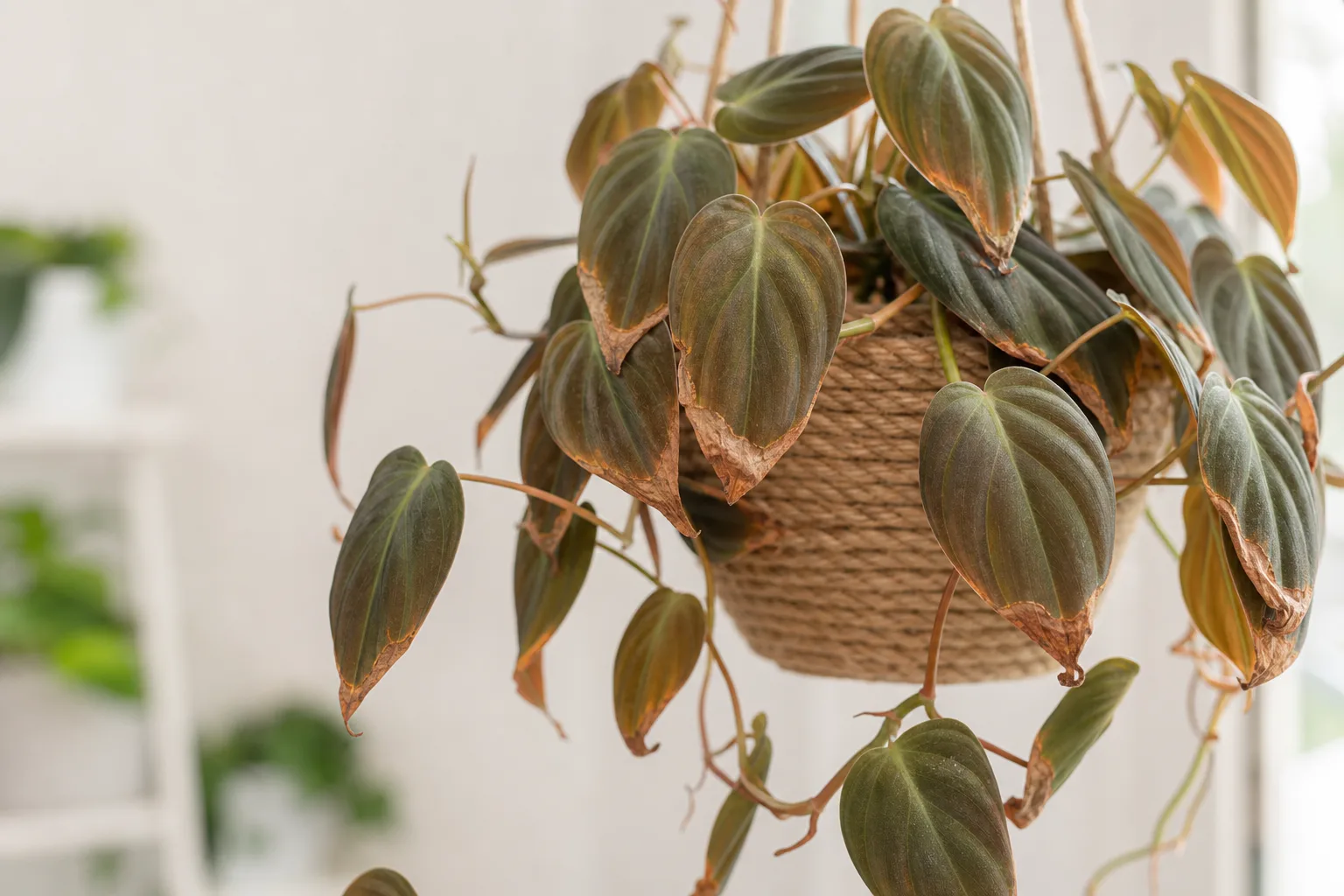
Brown Tips on Philodendron Micans: Causes, Checks & Fixes
This guide covers brown tips on Philodendron Micans. See also the general Brown Tips guide, watering, and light pages for this plant.
Brown Tips on Philodendron Micans: Causes, Checks & Fixes
Quick answer
Brown tips on Philodendron Micans are usually caused by low humidity that dries out velvet leaf edges and fades the soft bronze-green texture. First step: raise humidity to 55% or higher with a humidifier or pebble tray, keep the plant away from heating vents, and avoid misting leaves directly.
Philodendron Micans (Philodendron hederaceum var. hederaceum) has thin velvet leaves that show air-moisture stress faster than glossy heartleaf philodendron on the same shelf. The velvety surface that gives Micans its iridescent bronze-green look also loses water from leaf margins quickly when indoor humidity drops-especially in winter when heating runs and humidity falls below 40%. Brown tips are often the first sign before the whole leaf dulls. The Philodendron Micans overview covers year-round care; this page routes you to the right fix once you know which cause fits.
Brown tips vs. low humidity: which guide fits?
Micans growers often land on two related pages. Use this slug-choice guide before you change watering or humidity:
| Your situation | Read this page | Read low humidity instead |
|---|---|---|
| Tips are brown but you are unsure whether cause is dry air, salt, fertilizer, or tap water | Brown tips (here) | - |
| Brown tips appeared right after heavy feeding or white mineral crust on soil | Brown tips (here) | - |
| Hygrometer below 45%, soil moisture normal, winter heating running | - | Low humidity |
| You know air is dry and want humidifier placement, ceiling-hanging risks, and room-level fixes | - | Low humidity |
| Tips are crisp but the pot is bone dry and the whole vine droops | Underwatering | - |
Brown tips is the multi-cause symptom hub-margin damage may come from humidity, salt burn, fertilizer, water quality, pests, or placement. Low humidity is the deep dive when a hygrometer confirms dry air is the primary problem. Both pages share humidifier advice; start here when the complaint is brown edges but the cause is still unclear.
Why Philodendron Micans gets brown tips
Low humidity is the primary cause on this cultivar. While philodendrons tolerate average household humidity, Micans performs best at moderate to high humidity around 50–60%. Below that range, especially with active heating, cold-window drafts, or air conditioning, leaf edges desiccate and the velvet texture looks flat or papery rather than softly luminous.
UF/IFAS notes that heartleaf philodendron prefers high humidity but tolerates low household levels-Micans sits between those extremes. It survives average rooms but punishes dry blasts more than basic green philodendrons because the velvety cuticle holds less surface moisture. Clemson HGIC describes Micans as a velvet-textured heartleaf philodendron that needs the same warm, evenly moist conditions as glossy relatives but shows drought on leaf margins faster. A glossy heartleaf on the same shelf may look fine while Micans tips crisp first-that is normal for velvet foliage, not a sign your Micans is weaker.
Placement near heating vents, radiators, or frequently opened exterior doors accelerates tip burn. Trailing Micans in hanging baskets near ceiling heat registers is a common setup that produces crisp brown margins on the newest leaves first-the warmest, driest air layer in the room. NC State Extension lists medium relative humidity among preferred conditions for Philodendron hederaceum. Maine Extension warns that browning of leaf tips and margins may occur if humidity is low on tropical houseplants.
Overwatering and excess fertilizer can also brown tips, but the pattern differs. UF/IFAS warns that too much fertilizer can cause leaf tips to brown and curl on heartleaf philodendron, and too much water causes broader yellowing-not isolated dry crisp edges. On Micans, rule out humidity first when tips are dry and papery but the pot is appropriately dry and roots are firm. Wet soil with limp leaves points to overwatering or root rot instead.
Direct misting on velvet leaves often makes things worse. Water droplets leave permanent spots on Micans foliage and do not reliably raise humidity for more than minutes. A humidifier or pebble tray targets the air without marking the leaf surface. Enclosed grow cabinets or terrariums can hold humidity above open-room targets, but stagnant wet air without airflow invites mold-use them only with ventilation and monitor leaves weekly.
What brown tips look like on Philodendron Micans
Tip burn on velvet Micans has recognizable traits:
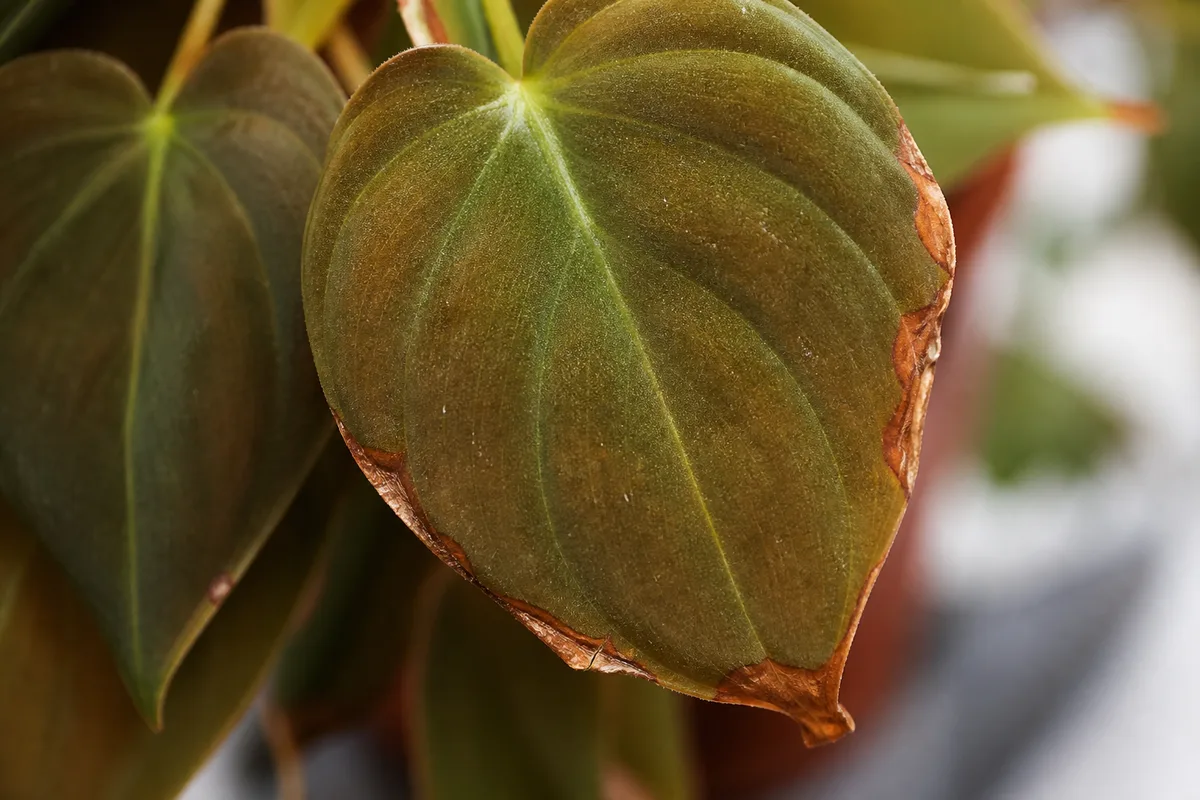
Brown Tips symptoms on Philodendron Micans - compare with healthy tissue on the same plant.
- Dry, crisp brown edges at leaf tips or margins, sometimes starting on one side
- Velvet texture looks dull, thin, or slightly papery on affected leaves
- New leaves unfurl with brown or torn edges when humidity is too low during unfurling
- Iridescent bronze-green sheen fades on older leaves near damaged tips
- Damage concentrates on leaves closest to heat sources or draft paths
- Leaf centers stay green while only edges brown-unlike overwatering yellowing that affects whole leaves
Compare affected leaves with those on the opposite side of the pot or farther from vents. Asymmetric tip burn strongly points to localized dry air rather than root problems.
Example: winter heat above a radiator
In a dry January room, a hanging Micans above a radiator often shows this pattern: hygrometer at basket height reads 38%, newest unfurling leaves have crisp brown edges while lower stems stay greener, and soil moisture is normal when you lift the pot. After moving the basket away from the heat register and running a humidifier to 58% for three weeks, the next two velvet leaves unfurl with clean margins and full iridescent sheen-old brown tips stay brown, but new growth proves the fix. That timeline matches what most indoor growers see once winter humidity is offset.
Cause comparison: humidity vs. thirst vs. salt vs. pests
Use this table before you mist, water heavily, or repot. Most winter tip browning on Micans is dry air, but the first fix differs sharply by cause.
| What you see | Likely cause | Soil / humidity cue | First action | Deep dive |
|---|---|---|---|---|
| Crisp dry tips, stable soil moisture, hygrometer below 45% | Low humidity | Pot weight normal; tips only | Run humidifier; target 55–60% at canopy | Low humidity |
| Limp leaves, light pot, dusty dry top 3–5 cm (1–2 in.) | Underwatering | Bone dry throughout; whole vine droops | Deep soak; empty saucer | Underwatering |
| Yellow lower leaves, heavy wet pot, sour smell | Overwatering / root stress | Wet center; soft stems possible | Stop watering; inspect roots | Overwatering |
| Brown tips after heavy feeding; white crust on soil | Salt / fertilizer burn | Moisture adequate; recent feed | Flush pot; pause fertilizer | This page + fertilizer guide |
| Stippling, fine webbing, dusty bronze leaves | Spider mites | Often worse in dry air | Rinse undersides; treat pests | Spider mites |
| Bleached patches on sun-facing leaf faces | Direct sun scorch | Damage on one side only | Move to filtered light | Light guide |
| Torn velvet on brushed trailing stems | Physical wear | No soil or humidity pattern | Reposition vine; trim torn tissue | - |
How to confirm the cause
Work through this order:
- Hygrometer reading - Place a meter near the plant for 24 hours. Sustained readings below 45% support low humidity as the cause; if confirmed, see the low humidity deep dive for humidifier placement on hanging Micans.
- Placement audit - Note distance from heating vents, radiators, fireplaces, and drafty windows. Ceiling height matters for hanging baskets.
- Tip texture - Dry, papery brown tips suggest humidity stress. Soft, dark brown tips with limp leaves and wet soil suggest rot or overwatering.
- Season timing - Tip burn that appears or worsens when heating starts is a strong humidity clue.
- New leaf check - If the newest unfurling leaf has damaged edges, humidity was too low during leaf expansion-not a past problem already fixed.
- Fertilizer history - Recent heavy feeding plus brown curling tips may implicate salt burn; flush the pot if you fertilized heavily in the last month per the fertilizer guide.
Lookalike symptoms to rule out
Overwatering causes yellow or limp whole leaves with heavy wet pots, not isolated crisp tips on otherwise firm leaves. Sun scorch produces bleached or brown patches on the side facing direct sun-move to medium-bright indirect light per the light guide. Spider mites leave stippling and fine webbing on leaf undersides with dusty-looking bronze leaves, often worse when air is dry. Physical damage from brushing trailing vines against shelves causes torn velvet-not gradual tip crisping. Normal aging affects entire oldest leaves slowly, not just tips on multiple vines at once.
First fix for Philodendron Micans
Raise humidity to 55% or higher near the plant. The most reliable method is a small humidifier running several hours daily in the same room-not occasional misting on velvet leaves. That target is a Micans velvet heuristic-extension sources cite general philodendron humidity preference without a separate Micans percentage, but it sits above the ~50% level Maine Extension recommends for philodendrons.
Quick improvements that help:
- Move the pot away from heating vents and cold window panes
- Group Micans with other plants to create a slightly more humid microclimate
- Use a pebble tray filled with water below the pot (pot sits above the water line, not in it)
- Run a humidifier on a low setting and verify with a hygrometer
Do not mist Micans leaves directly; water spots permanently mark velvet and do not solve chronic dry air. Do not increase watering because tips look dry-wet roots will not fix humidity-driven tip burn and may cause yellowing. Match watering to the top 3–5 cm (1–2 in.) dry-down rule in the Micans watering guide.
Make one change at a time. Give humidity corrections two to three weeks before judging new leaf quality.
Step-by-step recovery
After raising humidity:
- Leave existing brown tips in place until new growth looks healthy-premature trimming removes tissue the plant may still be using.
- When new leaves unfurl with clean edges and full velvet sheen, trim old brown tips with clean scissors for appearance.
- Maintain medium-bright indirect light so the plant grows steadily without scorching-see the light guide for placement.
- Water when the top 3–5 cm (1–2 in.) of mix dries-stable root moisture supports clean new leaves per the watering rhythm.
- Check the hygrometer weekly in winter and adjust the humidifier as heating cycles change.
If tips keep browning despite 55%+ humidity, inspect for spider mites on leaf undersides and review whether fertilizer or tap-water salts are accumulating in the mix.
Recovery timeline
Humidity corrections show in the next one to two new leaves-typically three to six weeks depending on growth speed. Existing brown tips will not revert to green velvet. Mild cases stabilize once winter heating is offset; chronic cases in very dry rooms may need a humidifier running most of the day year-round. If heavy feeding preceded curl-and-brown tips, flushing the pot and pausing fertilizer for four to six weeks often yields clean new iridescent leaves within five weeks on an otherwise healthy vine.
What not to do
- Do not mist velvet leaves directly-water spots mar Micans permanently.
- Do not increase watering to fix dry tips; that risks root problems.
- Do not place Micans in direct sun to “dry out” tips-sunburn worsens damage.
- Do not fertilize heavily while tips are browning; salts can burn margins further.
- Do not trim every leaf before fixing humidity-you will not see whether new growth improves.
- Do not read this page and the low humidity guide as conflicting-brown tips routes causes; low humidity owns the dry-air fix path.
How to prevent brown tips next time
Target 50–60% humidity for best velvet texture on Micans. Use a humidifier in heated rooms, keep trailing vines away from vents, and monitor with a hygrometer through winter. Pair humidity with medium-bright indirect light and watering when the top 3–5 cm (1–2 in.) dries so new leaves expand in stable conditions.
Avoid crowded shelves where leaves get brushed constantly-physical wear on velvet looks like tip damage. Refresh mix every one to two years if salt buildup from fertilizer or hard water is suspected, and follow the soil guide for a well-draining aroid mix.
When trimming brown tips on trailing vines, keep cuttings and fallen leaves away from pets. Philodendron Micans contains insoluble calcium oxalate crystals like all philodendrons-the ASPCA lists heartleaf philodendron as toxic to cats and dogs with oral irritation, drooling, and difficulty swallowing if chewed. Sap on scissors or discarded leaves can irritate mouths if pets investigate trimmings on the floor.
When to worry
Brown tips alone are low urgency on Micans. Escalate if:
- Whole leaves turn yellow or limp while soil is wet-possible root rot
- Brown spreads from tips into large soft patches on multiple vines within days
- Stippling, webbing, or sticky residue appears on leaf undersides-treat spider mites promptly
- New leaves stay small and distorted despite good humidity
Those patterns point to root rot, pests, or fertilizer burn-not humidity alone.
Philodendron Micans care cross-check
Brown tips sit at the intersection of humidity, watering, light, and soil on this cultivar. The overview ties those pieces together: bright filtered light keeps growth steady so new leaves can use added moisture; the watering guide prevents the overwatering misread that makes dry tips worse; airy soil lets roots drink on rhythm instead of sitting wet while you chase humidity. If your room already holds 50%+ at basket height but tips still crisp, check ceiling heat layers or pest pressure before buying a second humidifier.
FAQs
Are brown tips on Micans from low humidity or underwatering?
Dry crisp tips on firm velvet leaves with normal pot weight point to low humidity-especially when a hygrometer reads below 45% near the plant. Underwatering adds a light pot, dusty dry top 3–5 cm (1–2 in.), and often limp leaves before tips crisp. Check soil moisture and pot weight before you water more or run a humidifier.
Should I cut off brown tips on my Philodendron Micans?
Trimming is cosmetic only-brown tissue will not turn green again. Wait until humidity or watering is stable for two to three weeks, then snip dead tips with clean scissors if they bother you. Leave tips in place while you are still diagnosing the cause so new growth shows whether the fix worked.
Can I mist my Micans to fix brown tips?
No-misting rarely raises room humidity for more than minutes and can leave permanent water spots on velvet leaves. A humidifier or pebble tray targets the air without marking the foliage. If you must mist, use distilled water sparingly in the morning with good airflow, but humidifier-first is the reliable fix for chronic tip burn.
When should I worry about brown tips on Philodendron Micans?
Brown tips alone are low urgency. Escalate if tips spread rapidly into large soft patches, leaves feel limp with wet soil, or you see stippling and webbing on undersides-those patterns suggest root rot or spider mites rather than dry air alone. See the linked guides below before repotting or spraying.
How do I keep Philodendron Micans tips from browning again?
Hold 50–60% humidity with a humidifier through winter, keep trailing vines away from ceiling heat registers, and water when the top 3–5 cm (1–2 in.) dries per the Micans watering rhythm. Avoid heavy fertilizer on stressed plants, and group Micans with other plants only after humidity is stable-not as a substitute for a humidifier in very dry rooms.
Related Philodendron Micans guides
- Philodendron Micans overview - full care hub including humidity, light, and trailing display
- Low humidity - dry-air deep dive when hygrometer confirms the cause
- Watering - dry-down rhythm that prevents the overwatering misread
- Underwatering - dry soil + crisp edges lookalike
- Overwatering - wet wilt and yellow leaves when tips look dry
- Root rot - soft stems and wet soil escalation
- Spider mites - pests that surge in dry air
- Light - brightness affects growth speed and water use
- Fertilizer - salt burn and flush timing after heavy feeding
- Soil - perlite-amended mix for predictable dry-down
Conclusion
Brown tips on Philodendron Micans usually mean the air is too dry for velvet foliage, not that the plant needs more water-but salt burn, underwatering, pests, and sun scorch can mimic margin damage. Confirm with hygrometer readings below 45%, crisp dry edges, and damage near heat sources; fix by raising humidity to 55%+, using a humidifier, and keeping leaves away from vents. Judge success by new leaves with clean iridescent edges-not by old brown tips turning green. When you confirm a single cause, use the Related Philodendron Micans guides above for the next step.