Aglaonema Silver Bay Care Guide
Aglaonema commutatum 'Silver Bay'
Aglaonema Silver Bay is one of the easiest indoor plants, tolerating low light and drought. Its silver-green leaves brighten any dim room.
Aglaonema Silver Bay Care Guide
Start with wateringThe most common care mistake for Aglaonema Silver BayWatering guide →Aglaonema Silver Bay care essentials
Light
medium indirect light, low light, bright indirect light
Water
Water when the top half of soil dries; very tolerant of underwatering.
Soil
Well-draining potting mix with perlite.
Humidity
Average household humidity (40–60%)
Temperature
18°C to 27°C (65–80°F)
Fertilizer
Feed lightly during active growth. Use monthly in spring and summer..
About Aglaonema Silver Bay
Aglaonema Silver Bay has a upright growth habit.
| Detail | Information |
|---|---|
| Growth habit | Upright |
| Scientific name | Aglaonema commutatum 'Silver Bay' |
Aglaonema Silver Bay Care Guide
Aglaonema ‘Silver Bay’ is one of the easier Chinese evergreens to keep looking good indoors, but it rewards the right kind of neglect. It handles filtered light, average room humidity, and the occasional missed watering better than fussier tropicals. What it does not forgive well is a pot that stays wet in dim light for week after week.
By Sai Ananth
Use this page to get the whole-plant picture first. If your plant already has a specific issue, jump from here to the matching problem guide instead of guessing.
What Silver Bay actually is
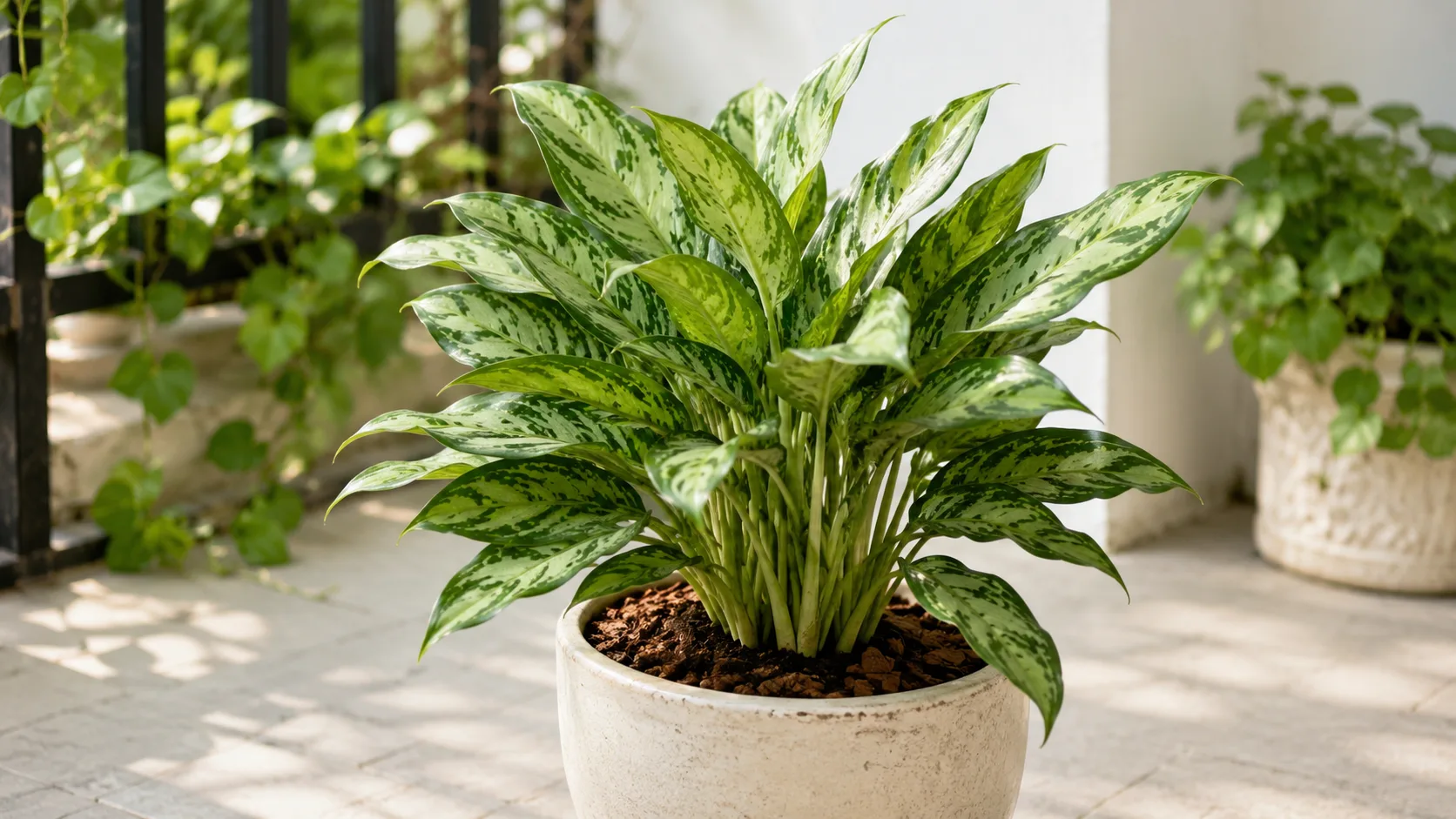
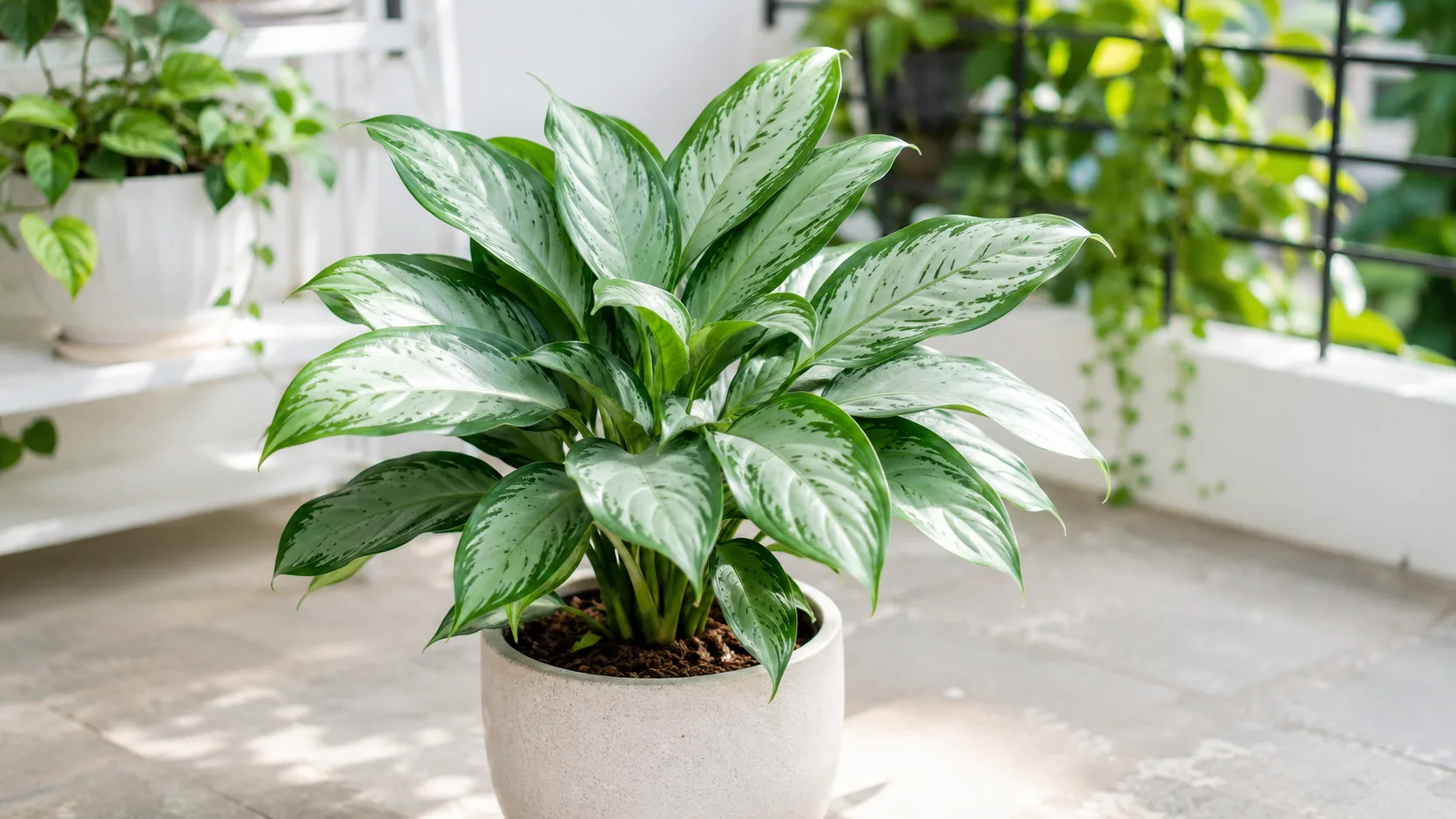
Silver Bay is a cultivated Aglaonema commutatum type grown for broad leaves with a pale silver center and dark green margins. University of Arkansas Extension notes that the cultivar was selected for larger size, strong basal branching, and interiorscape durability. That matters in practice: it is sold as a decorative foliage plant because it keeps a full look under indoor conditions that would flatten many other variegated houseplants.
Like other Aglaonemas, Silver Bay is an aroid from a tropical understory lineage. Missouri Botanical Garden and NC State Extension both place the genus in shaded, humid forest conditions, which explains its preference for bright filtered light, stable warmth, and evenly aerated soil rather than direct sun or long cold spells.
What makes Silver Bay different from pink or darker Aglaonemas
Silver Bay sits in a useful middle ground. It is more forgiving of lower light than pink or red cultivars such as Red Valentine, but its broad silver center still washes out faster than the darker, greener office types when the room is too dim. Think of it as a foliage cultivar that tolerates moderate compromise, not a plant that wants to be forgotten in a hallway.
That difference shows up in two ways:
- In weak light, Silver Bay usually declines slowly: longer gaps between leaves, a softer silver center, and a pot that stays wet too long.
- In excessive direct sun, the pale center is the first tissue to bleach or scorch.
If you understand that light-water link, most of the rest of the care guide becomes simpler.
The right light indoors
Clemson HGIC describes Chinese evergreens as low- to moderate-light foliage plants and warns that direct sun can scorch the leaves. For Silver Bay, the most dependable home placement is bright indirect light or steady moderate light: near an east window, a few feet back from a brighter south or west window with a sheer curtain, or in a well-lit office with consistent overhead lighting.
Silver Bay can survive lower light than pink cultivars, but the tradeoff is slower drying and slower growth. If the room is dim enough that the pot stays cold and wet for long stretches, the plant is not really thriving even if it is still alive.
Practical signs the light is working:
- New leaves emerge firm and open to a clear silver center.
- The plant stays compact instead of stretching toward one side.
- The mix dries at a steady pace instead of staying swampy.
Practical signs it needs adjustment:
- Leaves get smaller or farther apart.
- The silver center looks flatter and duller on new growth.
- The plant stops producing new leaves during warm weather.
If that sounds familiar, go straight to the light guide or not enough light page.
Watering: dry partway, then water thoroughly
The most useful Silver Bay rule is simple: let the upper part of the mix dry before watering again. UF/IFAS FP025 and Clemson HGIC both describe partial drying between waterings for Aglaonema rather than constant wetness.
That does not translate into one universal schedule. A Silver Bay in brighter light uses water faster than one in a dim room. A plant in terracotta dries faster than the same plant in plastic. A warm apartment in summer dries faster than a cool room in winter.
What works better than a schedule:
- Push a finger into the mix far enough to check below the surface.
- Lift the pot after watering and again when it feels due; the weight difference becomes obvious with repetition.
- Water thoroughly until excess drains, then empty the saucer.
What usually goes wrong:
- The plant is moved into lower light but watered on the old schedule.
- The pot is too large for the root ball and stays wet for too long.
- The grower sees yellow leaves and adds more water before checking the soil.
If your Silver Bay is struggling, start with overwatering, underwatering, or yellow leaves before changing several care variables at once.
Soil and pots matter because they control drying speed
UF/IFAS EP160 describes Aglaonema media as porous, aerated, and slightly acidic. That does not mean you need a specialty mix, but it does mean a heavy, fine, waterlogged potting soil is the wrong starting point.
A practical home mix is:
- quality indoor potting mix as the base
- extra perlite, pumice, or bark for air space
- a pot with drainage holes
Silver Bay is slow enough that overpotting causes more trouble than slight root crowding. Move up one pot size at a time, not several. If the plant is sitting inside a decorative cachepot, dump any trapped runoff after watering so the lower roots are not soaking in it.
The soil guide and repotting guide go deeper if the mix is already breaking down or repotting is overdue.
Temperature and humidity: steady beats tropical perfection
Silver Bay is easier about humidity than calatheas, but it is still a tropical aroid. Clemson HGIC places Aglaonema comfortably in normal indoor temperatures, and University of Arkansas Extension warns against sustained exposure below about 55°F.
That means:
- normal living-room temperatures are usually fine
- cold glass, drafty doors, and AC blasts are not
- average household humidity is acceptable, but dry winter air can still crisp tips
You do not need to chase rainforest humidity. If brown tips keep appearing, check the simpler causes first:
- Is the mix staying too wet or drying too hard?
- Is the plant in vent-blown air?
- Is there salt buildup from fertilizer or hard water?
Then use the low humidity page if the room is genuinely dry.
Fertilizer and repotting should stay conservative
Silver Bay is not a heavy feeder. UF/IFAS EP160 notes that excessive fertilizer can burn foliage, which matches the houseplant reality: too much feed on a slow-growing plant gives you salt stress faster than better growth.
For most homes:
- feed lightly only during active growth
- skip fertilizer when the plant is stressed, newly repotted, or barely growing
- flush the mix occasionally if mineral crust builds up
Repot when the structure of the mix has broken down, roots are crowding badly, or the plant dries far too fast for the pot size. Do not repot as a reflex on the first day home unless the current setup is clearly failing.
Propagation and pruning
UF/IFAS EP160 identifies division of basal shoots and stem cuttings as standard Aglaonema propagation methods. At home, division at repotting is usually the cleaner option because each section already has roots. Stem cuttings work too, but they root more slowly and ask for steadier warmth and moisture control.
Pruning is simpler. Silver Bay usually needs cleanup more than shaping:
- remove fully yellow or damaged leaves
- cut spent flower stalks if you prefer foliage
- shorten a leggy cane only after checking that light is the real issue
Use the dedicated propagation and pruning guides when you are ready to do either one on purpose rather than improvising.
Pet safety is not optional
ASPCA lists Chinese evergreen as toxic to cats and dogs because of insoluble calcium oxalate crystals. That usually means oral irritation, drooling, and vomiting rather than a mild inconvenience. Silver Bay should be treated as a plant to keep away from chewing pets, not as a low-risk decorative floor pot.
If a pet is likely to chew leaves, choose a different location or a different plant. For this cultivar, prevention matters more than reaction.
The failure patterns Silver Bay owners actually see
Most Silver Bay problems are not mysterious. They usually start with one of these patterns:
Wet soil plus yellow leaves
This is the classic low-light overwatering problem. The plant does not use water fast enough, the root zone stays oxygen-poor, and lower leaves begin to yellow or stems soften. Start with overwatering and root rot.
Washed-out center plus stretched growth
This usually means the plant is surviving in light that is too weak for attractive new growth. See not enough light or leggy growth.
Brown tips on otherwise firm leaves
Think salts, dry air, or inconsistent watering before you assume disease. The brown tips and low humidity pages are the right next checks.
Stippling or webbing
Spider mites show up fastest in dry indoor air and on dusty foliage. Jump to spider mites if the silver center starts looking dotted or dull.
Buying and the first month at home
When buying Silver Bay, pick the plant with:
- firm new growth
- clean leaf undersides
- no sour smell from the pot
- no collapsed crown or mushy lower stems
The first month home should be boring on purpose. Put the plant in suitable light, learn how quickly the pot dries in your space, and avoid stacking repotting, fertilizer, pruning, and relocation in the same week. If the plant declines right after purchase, the cause is often old nursery moisture plus a new light level, not a need for more products.
Related Silver Bay guides
- Aglaonema Silver Bay light
- Aglaonema Silver Bay watering
- Aglaonema Silver Bay soil
- Aglaonema Silver Bay repotting
- Aglaonema Silver Bay propagation
- Aglaonema Silver Bay pruning
- Yellow leaves on Aglaonema Silver Bay
- Brown tips on Aglaonema Silver Bay
Conclusion
Silver Bay does best when you treat it as a slow, tolerant foliage plant rather than a miracle low-light survivor. Give it filtered light, let the mix dry partway before watering, keep the roots in an airy medium, and stay conservative with fertilizer and repotting. If something goes wrong, check moisture and light first. That solves more Silver Bay problems than any rescue product does.
How to care for Aglaonema Silver Bay?
How much light does Aglaonema Silver Bay need?
medium indirect light, low light, bright indirect light
- medium indirect light, low light, bright indirect light - medium indirect light, low light, bright indirect light.
When should you water Aglaonema Silver Bay?
Water when the top half of soil dries; very tolerant of underwatering.
- Check top 2 inches - Water when the top half of soil dries; very tolerant of underwatering.
- Drain excess water - Water when the top half of soil dries; very tolerant of underwatering.
What soil works best for Aglaonema Silver Bay?
Well-draining potting mix with perlite.
- Well-draining mix - Well-draining potting mix with perlite.
Grower notes for Aglaonema Silver Bay
What matters most with Aglaonema Silver Bay
Aglaonema Silver Bay should be judged by color stability and firm new leaves, not fast growth. Variegated aglaonemas often grow slowly, so a compact plant with clean crowns is better than a tall soft plant pushed in low light. In practice, the care checkpoint is simple: medium indirect light, low light, bright indirect light. Pair that with well-draining potting mix with perlite, and avoid changing water, pot size, and placement all at once.
Best placement in a real home
Aglaonema Silver Bay belongs where medium indirect light, low light, bright indirect light is realistic for most of the day, not only where the pot looks good. Water when the top half of soil dries; very tolerant of underwatering. If the pot stays wet longer than expected, move the plant into better light or reassess the mix before watering again. Humidity target: Average household humidity (40–60%).. Temperature comfort zone: 18°C to 27°C (65–80°F).
Before you buy this plant
Choose Aglaonema Silver Bay with firm new growth, clean leaf undersides, and soil that does not smell sour or feel compacted. Be cautious if you see yellow-leaves, sticky residue, collapsed crowns, or a pot that is wet in poor light. Cosmetic old-leaf damage is less worrying than weak roots or active pests.
First month after bringing it home
Do not repot Aglaonema Silver Bay on day one unless the mix is failing or pests are obvious. Quarantine it, learn how fast the pot dries, and keep care boring while it adjusts. Watch especially for yellow-leaves and brown-tips. If problems appear, correct the condition first rather than stacking fertilizer, repotting, and pruning together.
Safety note for Aglaonema Silver Bay
Aglaonema Silver Bay is not a plant to keep within reach of pets or children. Treat it as an inaccessible display plant. Use gloves if sap or plant tissue is irritating, and pick a pet-safe alternative for floor pots or low shelves.
How to tell Aglaonema Silver Bay is settling in
If you plan to multiply it later, common methods include Stem cuttings and Division. If brown-tips shows up early, inspect light, watering, and roots before assuming the plant is permanently weak.
Is it pet safe?
Aglaonema Silver Bay is toxic to cats and dogs.
Toxic - contains calcium oxalate crystals causing oral irritation.
Watering Aglaonema Silver Bay
Water when the top half of soil dries; very tolerant of underwatering.
Soil & potting for Aglaonema Silver Bay
Well-draining potting mix with perlite.
Humidity & temperature for Aglaonema Silver Bay
Aglaonema Silver Bay prefers average household humidity (40–60%), though normal home humidity is usually fine. Keep temperatures around 18°C to 27°C (65–80°F).
| Detail | Information |
|---|---|
| Humidity | Average household humidity (40–60%) - normal home humidity is fine. |
| Ideal temperature | 18°C to 27°C (65–80°F) |
Fertilizer & pruning for Aglaonema Silver Bay
Use feed lightly during active growth. Use monthly in spring and summer.. for Aglaonema Silver Bay.
| Detail | Information |
|---|---|
| Fertilizer type | Feed lightly during active growth. Use monthly in spring and summer.. |
Common problems on Aglaonema Silver Bay
Yellow Leaves
MediumLikely cause: Overwatering.
Quick fix: Allow soil to dry more between waterings.
Full fix guide →Brown Tips
LowLikely cause: Low humidity or tap water minerals.
Quick fix: Boost humidity slightly and use filtered water.
Full fix guide →Root Rot
MediumLikely cause: Common on this plant type; confirm with recent watering, light, and root checks.
Quick fix: Inspect the plant and correct the most likely care stressor before stacking treatments.
Full fix guide →Overwatering
MediumLikely cause: Common on this plant type; confirm with recent watering, light, and root checks.
Quick fix: Inspect the plant and correct the most likely care stressor before stacking treatments.
Full fix guide →Underwatering
MediumLikely cause: Common on this plant type; confirm with recent watering, light, and root checks.
Quick fix: Inspect the plant and correct the most likely care stressor before stacking treatments.
Full fix guide →Spider Mites
MediumLikely cause: Common on this plant type; confirm with recent watering, light, and root checks.
Quick fix: Inspect the plant and correct the most likely care stressor before stacking treatments.
Full fix guide →Mealybugs
MediumLikely cause: Common on this plant type; confirm with recent watering, light, and root checks.
Quick fix: Inspect the plant and correct the most likely care stressor before stacking treatments.
Full fix guide →Aphids
MediumLikely cause: Common on this plant type; confirm with recent watering, light, and root checks.
Quick fix: Inspect the plant and correct the most likely care stressor before stacking treatments.
Full fix guide →Leggy Growth
MediumLikely cause: Common on this plant type; confirm with recent watering, light, and root checks.
Quick fix: Inspect the plant and correct the most likely care stressor before stacking treatments.
Full fix guide →Slow Growth
MediumLikely cause: Common on this plant type; confirm with recent watering, light, and root checks.
Quick fix: Inspect the plant and correct the most likely care stressor before stacking treatments.
Full fix guide →Wilting
MediumLikely cause: Common on this plant type; confirm with recent watering, light, and root checks.
Quick fix: Inspect the plant and correct the most likely care stressor before stacking treatments.
Full fix guide →Drooping Leaves
MediumLikely cause: Common on this plant type; confirm with recent watering, light, and root checks.
Quick fix: Inspect the plant and correct the most likely care stressor before stacking treatments.
Full fix guide →Low Humidity
MediumLikely cause: Common on this plant type; confirm with recent watering, light, and root checks.
Quick fix: Inspect the plant and correct the most likely care stressor before stacking treatments.
Full fix guide →Not Enough Light
MediumLikely cause: Common on this plant type; confirm with recent watering, light, and root checks.
Quick fix: Inspect the plant and correct the most likely care stressor before stacking treatments.
Full fix guide →Fungus Gnats
MediumLikely cause: Common on this plant type; confirm with recent watering, light, and root checks.
Quick fix: Inspect the plant and correct the most likely care stressor before stacking treatments.
Full fix guide →Mold on Soil
MediumLikely cause: Common on this plant type; confirm with recent watering, light, and root checks.
Quick fix: Inspect the plant and correct the most likely care stressor before stacking treatments.
Full fix guide →Curling Leaves
MediumLikely cause: Common curling leaves pattern on Aglaonema Silver Bay under indoor care stress.
Quick fix: Inspect roots, watering, light, and pests; adjust one variable and monitor new growth.
Full fix guide →Brown Leaves
MediumLikely cause: Common brown leaves pattern on Aglaonema Silver Bay under indoor care stress.
Quick fix: Inspect roots, watering, light, and pests; adjust one variable and monitor new growth.
Full fix guide →Black Spots
MediumLikely cause: Common black spots pattern on Aglaonema Silver Bay under indoor care stress.
Quick fix: Inspect roots, watering, light, and pests; adjust one variable and monitor new growth.
Full fix guide →Holes in Leaves
MediumLikely cause: Common holes in leaves pattern on Aglaonema Silver Bay under indoor care stress.
Quick fix: Inspect roots, watering, light, and pests; adjust one variable and monitor new growth.
Full fix guide →Pale Leaves
MediumLikely cause: Common pale leaves pattern on Aglaonema Silver Bay under indoor care stress.
Quick fix: Inspect roots, watering, light, and pests; adjust one variable and monitor new growth.
Full fix guide →Distorted Leaves
MediumLikely cause: Common distorted leaves pattern on Aglaonema Silver Bay under indoor care stress.
Quick fix: Inspect roots, watering, light, and pests; adjust one variable and monitor new growth.
Full fix guide →Scale Insects
MediumLikely cause: Common scale insects pattern on Aglaonema Silver Bay under indoor care stress.
Quick fix: Inspect roots, watering, light, and pests; adjust one variable and monitor new growth.
Full fix guide →Thrips
MediumLikely cause: Common thrips pattern on Aglaonema Silver Bay under indoor care stress.
Quick fix: Inspect roots, watering, light, and pests; adjust one variable and monitor new growth.
Full fix guide →Whiteflies
MediumLikely cause: Common whiteflies pattern on Aglaonema Silver Bay under indoor care stress.
Quick fix: Inspect roots, watering, light, and pests; adjust one variable and monitor new growth.
Full fix guide →Leaf Miners
MediumLikely cause: Common leaf miners pattern on Aglaonema Silver Bay under indoor care stress.
Quick fix: Inspect roots, watering, light, and pests; adjust one variable and monitor new growth.
Full fix guide →Caterpillars
MediumLikely cause: Common caterpillars pattern on Aglaonema Silver Bay under indoor care stress.
Quick fix: Inspect roots, watering, light, and pests; adjust one variable and monitor new growth.
Full fix guide →Nitrogen Deficiency
MediumLikely cause: Common nitrogen deficiency pattern on Aglaonema Silver Bay under indoor care stress.
Quick fix: Inspect roots, watering, light, and pests; adjust one variable and monitor new growth.
Full fix guide →Iron Deficiency
MediumLikely cause: Common iron deficiency pattern on Aglaonema Silver Bay under indoor care stress.
Quick fix: Inspect roots, watering, light, and pests; adjust one variable and monitor new growth.
Full fix guide →Magnesium Deficiency
MediumLikely cause: Common magnesium deficiency pattern on Aglaonema Silver Bay under indoor care stress.
Quick fix: Inspect roots, watering, light, and pests; adjust one variable and monitor new growth.
Full fix guide →Potassium Deficiency
MediumLikely cause: Common potassium deficiency pattern on Aglaonema Silver Bay under indoor care stress.
Quick fix: Inspect roots, watering, light, and pests; adjust one variable and monitor new growth.
Full fix guide →Calcium Deficiency
MediumLikely cause: Common calcium deficiency pattern on Aglaonema Silver Bay under indoor care stress.
Quick fix: Inspect roots, watering, light, and pests; adjust one variable and monitor new growth.
Full fix guide →