Underwatering on Aglaonema Silver Bay: Causes, Checks &
Quick answer
Underwatering on Aglaonema Silver Bay makes the pot feel light, leaves go limp or crisp at the edges, and the mix is dry well below the surface. First step: soak the root ball thoroughly until water drains freely-one deep drink beats repeated shallow sips.
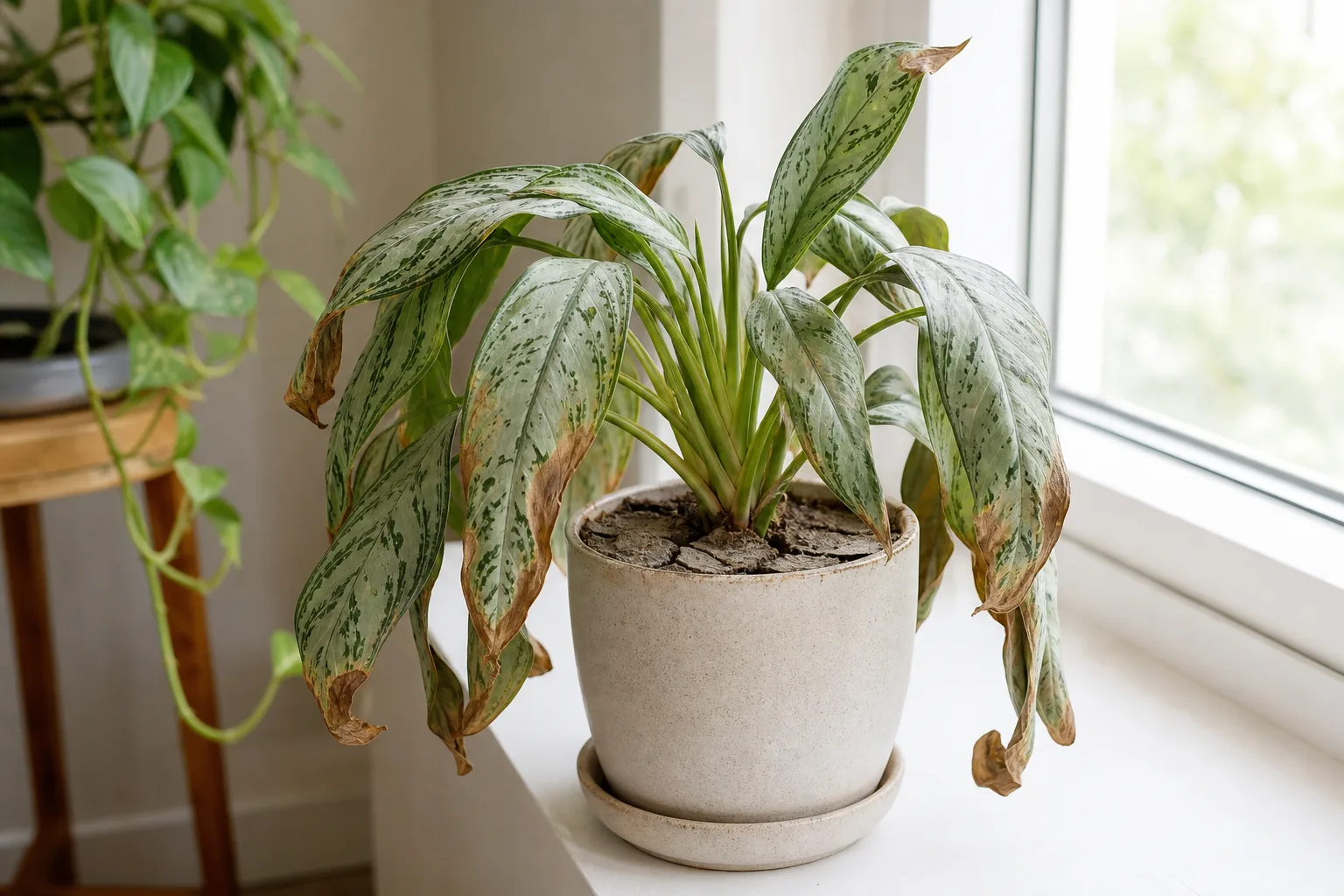
Underwatering on Aglaonema Silver Bay: Causes, Checks & Fixes
This guide covers underwatering on Aglaonema Silver Bay. See also the general Underwatering guide, watering, and light pages for this plant.
Underwatering on Aglaonema Silver Bay: Causes, Checks & Fixes
Quick answer
Underwatering on Aglaonema Silver Bay (Aglaonema ‘Silver Bay’) means the root zone has gone too dry for too long. On this broad-leafed Chinese evergreen with silver-splashed foliage, drought shows as a lightweight pot, limp or papery leaves, and mix dry well below the surface-sometimes with soil pulled away from the pot edge.
Silver Bay is more forgiving than thin-leafed cultivars because its slightly thicker cuticle and dense root system tolerate missed drinks-but that same resilience hides chronic dryness until multiple leaves wilt at once. Owners who corrected past overwatering sometimes swing too far and let the pot stay dry for weeks.
First step: give one thorough soak until water runs freely from drainage holes, then empty the saucer. Do not sprinkle the surface or mist leaves-that does not rehydrate dry roots in a root-bound pot. See the Silver Bay watering guide for the long-term dry-check standard: top 1–2 inches dry before the next drink.
What underwatering looks like on Aglaonema Silver Bay
Silver Bay’s wide silver-splashed leaves normally feel firm and slightly waxy. Underwatering changes texture before the whole plant collapses.
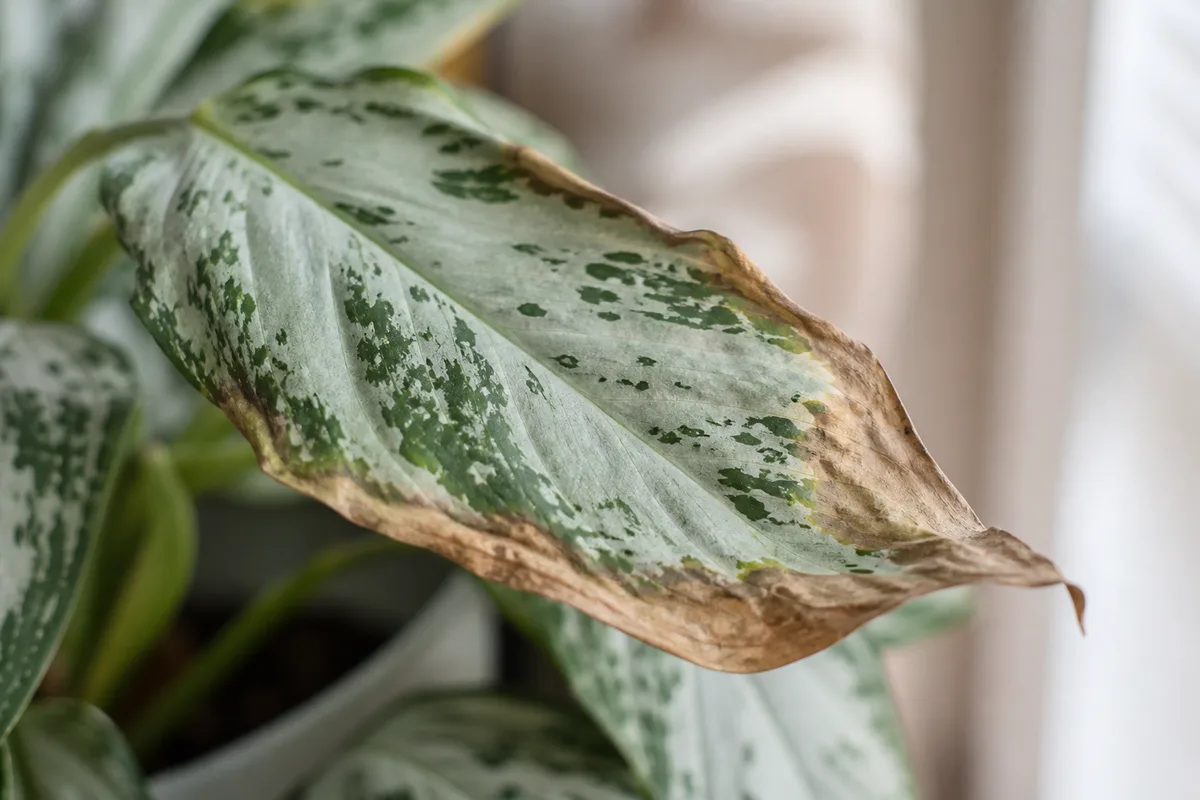
Underwatering symptoms on Aglaonema Silver Bay - compare with healthy tissue on the same plant.
Typical signs:
- Limp or drooping leaves on Aglaonema Silver Bay - Blades lose turgor and hang down even without recent watering. Lower leaves often droop first.
- Dry, lightweight pot - Lifting the nursery pot feels noticeably lighter than after a full drink. Mix may look pale and dusty.
- Soil pulling from pot walls - Chronic dryness shrinks peat-heavy mix, leaving a gap water runs down without soaking roots.
- Crisp brown leaf edges or tips - Margins turn papery and brown while much of the blade stays green. Fluoride burn can look similar-check whether soil was dry when edges failed.
- Thin, papery leaf feel - Underwatered tissue feels less turgid than healthy Silver Bay foliage.
Worry when: the entire crown wilts, soil is dust-dry through the root ball, and the plant sits in hot sun or near a heating vent-that combination damages fine roots quickly.
Not underwatering:
- Yellow lower leaves on wet soil - Overwatering or root rot
- Brown tips on new growth with moist soil - Fluoride or salt sensitivity; Silver Bay is sensitive to fluoride in tap water
- Gradual fade in dim rooms - Not enough light slows growth and mimics stall, not drought wilt
Why Aglaonema Silver Bay gets underwatered
Tolerant-cultivar dry-down misread. Clemson HGIC advises letting the top 1–2 inches dry before rewatering. Silver Bay sits in moisture slightly longer than ‘Silver Queen’ or pink cultivars-but “tolerant” does not mean “ignore for a month.” Brief dryness is survivable; repeated long dry cycles stress roots and crisp margins.
Overcorrection after overwatering. Many Silver Bays arrive with root damage from soggy retail mix. Owners learn to wait-and then wait too long, especially in winter when the plant uses less water but still needs periodic deep drinks.
Hydrophobic old mix. Peat that stays dry for weeks repels water. You water, water runs down the wall gap, and roots stay dry while you believe you watered “enough.”
Root-bound pots in bright windows. A dense root ball in a small pot dries the center fast in spring sun. Surface may look slightly damp while the core is parched.
Heat and AC airflow. Dry air and heat stress houseplants near vents. Silver Bay near a sunny window or heating register loses leaf moisture faster than roots replace it when soil is already dry.
How to confirm the cause
Work through these checks before soaking or Aglaonema Silver Bay repotting guide.
- Pot weight - Compare to how heavy the pot feels one hour after a known full watering. Noticeably lighter strongly supports drought.
- Moisture at 1–2 inches - Use a finger or skewer. Bone-dry with limp leaves confirms underwatering. Cool damp soil with wilt means look elsewhere.
- Stem at soil line - Firm and green fits drought. Soft or mushy on wet mix means rot.
- Leaf pattern - Crisp edges with dry soil fit drought. Even tip bands on newest leaves with moist soil suggest water quality.
- Recent care history - Long vacation, new “wait until dry” routine, or switch to a dim room without adjusting checks.
| Sign | Pot weight | Soil 1–2 inches | Stem base | Likely cause |
|---|---|---|---|---|
| Limp, crisp edges | Light | Dry | Firm | Underwatering |
| Yellow lower leaves | Heavy | Wet | Firm or soft | Overwatering |
| Tip bands on new leaves | Normal | Moist | Firm | Fluoride/salt |
| Slow fade, no crisp | Normal | Normal | Firm | Low light |
First fix for Aglaonema Silver Bay
Give one thorough top-water or bottom-water soak until the entire root ball rehydrates.
- Top water: Pour slowly until excess drains freely. If water runs down sides, pause, let it absorb, and repeat.
- Bottom water (rescue): Set the pot in 1–2 inches of room-temperature water for 20–30 minutes until the surface moistens, then drain completely-same method as the watering guide recommends for hydrophobic mix.
Empty the saucer within 30 minutes. Do not fertilize until leaves firm and new growth appears-usually one to two weeks.
Step-by-step recovery
- Rehydrate once fully - As above. Do not drip small daily sips.
- Trim fully dead tissue - Remove blades that are entirely brown and papery. Partial green leaves can stay.
- Relocate if needed - Move out of hot direct sun until turgor returns.
- Repot only if hydrophobic - If mix repels water repeatedly, repot into fresh well-draining soil when the plant stabilizes-not on day one of wilt.
- Resume dry-check rhythm - Water when top 1–2 inches dry, per IFAS and NC State Aglaonema guidance.
Recovery timeline
- Mild wilt: Leaves perk within 24–48 hours after a proper soak.
- Crisp edges: Old damage remains; new silver-splashed leaves emerge in one to three weeks.
- Severe drought: Root recovery may take four to six weeks; some lower leaves may not return.
Judge success by turgid new growth from the center-not by old crisp margins re-greening.
Lookalike symptoms
- Brown tips on moist soil - Often fluoride; use filtered water.
- Fungus gnats - Wet soil problem, opposite of drought.
- Wilting on wet soil on Aglaonema Silver Bay - Root rot; do not add more water.
Mistakes to avoid
- Do not drench daily after one dry spell-that swings to overwatering.
- Do not assume Silver Bay “doesn’t need water” because it is tolerant-check the top 1–2 inches on a schedule.
- Do not use cold water on stressed roots-room temperature only.
- Do not confuse fuzzy-leaf advice from unrelated species; Silver Bay has smooth waxy foliage.
How to prevent underwatering next time
Build a check habit every five to seven days: probe the top 1–2 inches, water only when dry, log results until you learn your home’s rhythm. In bright warm months that often means every 7–10 days; in cool winter low light, every two to three weeks. Use filtered water if fluoride burns tips. Keep Aglaonema Silver Bay light guide so the plant uses water steadily without baking in direct sun.
For full species context, see the Aglaonema Silver Bay overview.
When to use this page vs other Aglaonema Silver Bay guides
- Aglaonema Silver Bay watering guide - Use for routine moisture checks before assuming underwatering is the main issue.
- Aglaonema Silver Bay problems hub - Browse all 16 common issues on this species.
- Wilting on Aglaonema Silver Bay - Different entry point when symptoms overlap with underwatering.
- Brown Tips on Aglaonema Silver Bay - Different entry point when symptoms overlap with underwatering.
- Yellow Leaves on Aglaonema Silver Bay - Different entry point when symptoms overlap with underwatering.
Related Aglaonema Silver Bay guides
- Aglaonema Silver Bay overview
- Aglaonema Silver Bay watering
- Aglaonema Silver Bay light
- Aglaonema Silver Bay soil
- Wilting on Aglaonema Silver Bay
- Brown Tips on Aglaonema Silver Bay
- Yellow Leaves on Aglaonema Silver Bay
- Overwatering on Aglaonema Silver Bay
- Drooping Leaves on Aglaonema Silver Bay
- Aglaonema Silver Bay problems