Aglaonema Silver Bay Propagation: Division and Stem Cuttings
Aglaonema Silver Bay Propagation: Division and Stem Cuttings
Aglaonema Silver Bay Propagation: Division and Stem Cuttings
Reviewed by the LeafyPixels Review Board. Methodology: recommendations are checked against botanical and extension references, LeafyPixels plant-care data, and practical indoor growing constraints before publication.
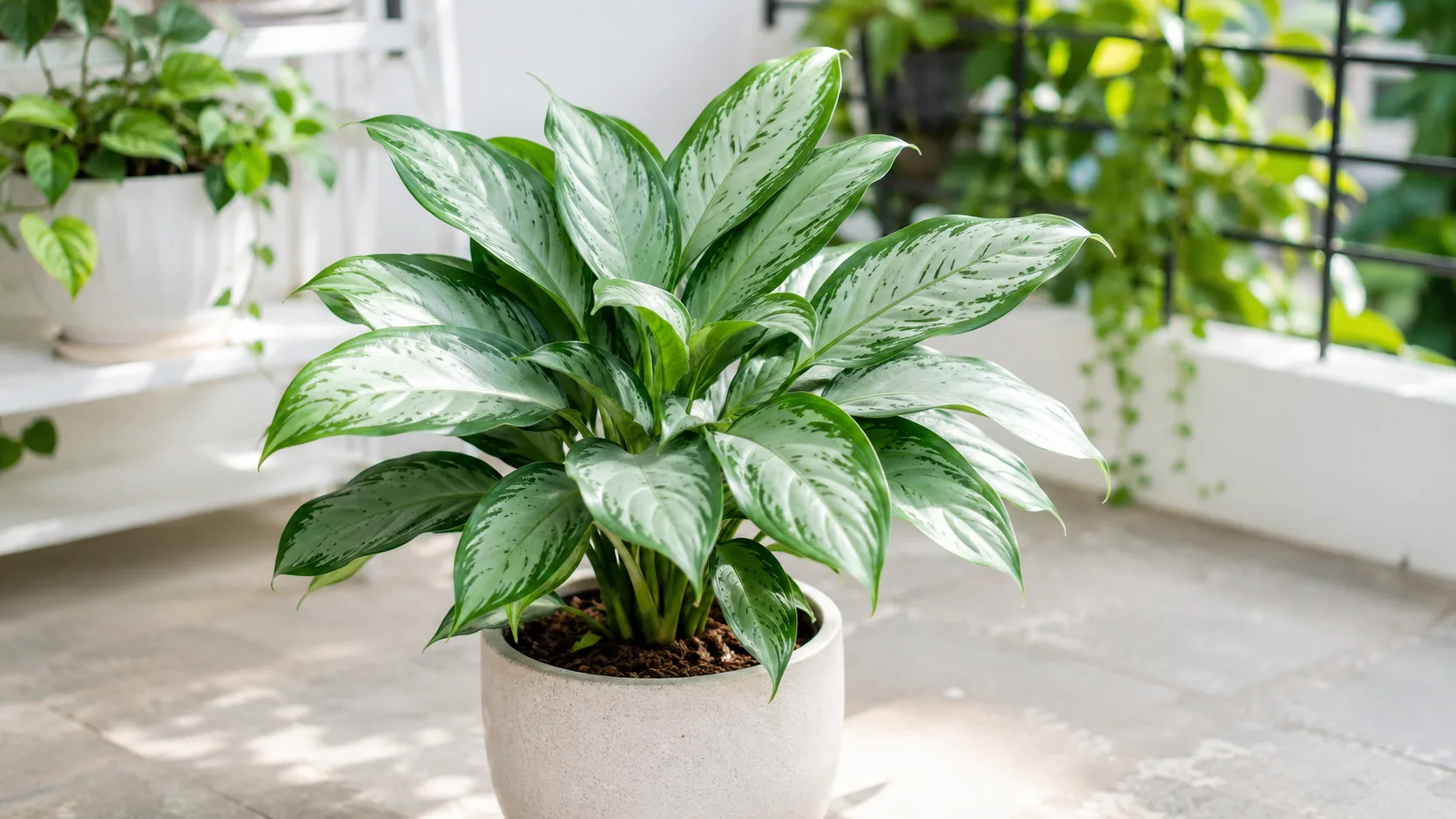
Aglaonema ‘Silver Bay’ is a 1992 University of Florida IFAS release (Henny, Poole, and Conover, HortScience 27:1238), bred at the Mid-Florida Research and Education Center in Apopka for interior durability, silver-variegated foliage, and an upright, boxy habit, as documented in the UF/IFAS ‘Diamond Bay’ cultivar release EP340. The IFAS cultivar table in EP160 describes ‘Silver Bay’ as a plant that “suckers heavily” with an upright, boxy habit and lower-light tolerance - exactly the trait profile a home propagator wants. Heavy suckering means the mother plant produces natural offsets with their own root systems, which makes division fast and forgiving. The same IFAS production guide identifies the rooting of cuttings and division of basal shoots or suckers as the two principal Aglaonema propagation routes, because micropropagation has not been successful with this genus. The methods that work in a commercial nursery are the same methods that work in a living room.
The parent species, Aglaonema commutatum, is a herbaceous evergreen perennial in the Araceae (arum) family, native to the Philippines and northeastern Sulawesi (Missouri Botanical Garden Plant Finder). Its biology gives ‘Silver Bay’ two propagation advantages. First, every healthy stem segment carries dormant axillary meristems (nodes) capable of producing adventitious roots and new shoots when conditions are right. Second, the plant regenerates slowly but reliably, so a cutting that drops leaves during rooting usually pushes a new one once roots are established. NC State Extension lists division and stem cutting as the recommended propagation strategies for the genus and notes that Chinese evergreen is among the easiest houseplants to grow indoors.
The practical implication is simple. You do not need a misting bench, a propagation dome, or hormones to multiply ‘Silver Bay’ at home. You need a clean blade, a warm spot, and a clear understanding of the three methods that work: division of suckers, stem cuttings in water, and stem cuttings in soil.
Quick Answer: Three Methods Compared
There are three practical approaches for ‘Silver Bay’. Division is the fastest when the pot already contains several rooted suckers, because each division begins with roots and foliage. Direct-to-medium stem cuttings avoid the water-to-soil transition entirely and are often the most efficient choice for a healthy cane. Water-rooted stem cuttings let you watch root development, but they require careful handling and a gradual move into potting mix.
| Method | Best for Silver Bay when… | Speed to usable plant | Skill level | Main risk |
|---|---|---|---|---|
| Division of suckers | Pot has 3+ rooted clusters at soil line | Fastest - roots already present | Beginner | Root damage during separation |
| Stem cutting in soil | You want to skip water-to-soil transfer | Moderate - 4 to 8 weeks typical | Intermediate | Hidden rot under surface |
| Stem cutting in water | You want visible root progress | Moderate - roots in 2 to 4 weeks, then transition | Beginner-friendly start | Water-to-soil shock at transplant |
For the lowest-risk result on a crowded retail pot, divide a well-rooted basal shoot while repotting. For a tall or bare-stemmed plant, take a top cutting and retain the rooted stump, which may activate dormant buds on the cane. Do not rely on a detached leaf alone - Aglaonema is a stem-propagated plant, and a leaf without viable stem tissue and a growth point cannot produce a complete new plant.
When to Propagate ‘Silver Bay’ for the Fastest Roots
The single biggest factor in propagation speed is whether the mother plant is actively growing. ‘Silver Bay’ follows a tropical growth pattern: a strong push from spring through early summer, slower but active growth in late summer and early fall, and a near-dormant period in winter. Extension guidance consistently places the best window for division or cuttings in mid-spring through early summer, when the plant is producing new leaves and days are long enough to support rapid root formation (Clemson HGIC Chinese evergreen guide; UF/IFAS EP160).
The IFAS production guide recommends propagation media temperatures of 70 to 80 °F, root-zone pH 5.5 to 6.5, and soluble salts 1.0 to 1.5 dS/m. At home, that translates to starting propagation when indoor temperatures hold steady in the 70 to 85 °F (21 to 29 °C) range and the plant has been pushing at least one new leaf per month for several weeks. If your ‘Silver Bay’ is sitting still in December, wait for the first sign of a new spear emerging from the central crown, then divide or take cuttings within the next two to three weeks. See the Silver Bay overview for how growth season ties to light and watering rhythm.
There is a second, less obvious reason to time propagation carefully. Dividing or cutting a plant forces it to repair tissue, restart root-soil contact, and push new leaves. A ‘Silver Bay’ already pushing two or three active leaves has the energy reserves to recover from the stress and feed the new cuttings. A plant that has been sitting still for months will limp through propagation and may not produce strong offsets until the next active season, even if the cut surfaces heal correctly. Do not propagate during active pest treatment with systemic chemicals, and postpone optional division when the plant is already adjusting to a move or recovering from root rot.
Tools, Sanitation, and Safe Handling
Almost every failed ‘Silver Bay’ propagation can be traced back to one of three things: a dull blade that crushed the stem, a jar that was not cleaned between water changes, or a pot with no drainage hole. The right setup is unglamorous but effective. You need a sharp, sterilized cutting tool, a clean working surface, fresh water or fresh rooting medium, small pots with drainage holes, and a bright spot with no direct sun.
Sterilize the cutting tool with 70 percent isopropyl alcohol or a 1:9 bleach-to-water dip, then let it air dry. The goal is to avoid transferring bacteria or fungal spores from a previous cut into a fresh wound. IFAS production guidance warns that “cuttings should always be carefully inspected before sticking, as conditions during shipping may spread plant pathogens,” and the same logic applies at home.
Use small containers for propagation rather than reusing the mother plant’s pot. A 4-inch terracotta or nursery pot with a drainage hole is ideal for divisions and soil cuttings. For water propagation, a clear glass jar is best because it lets you see the water level and watch root development. A wide-mouth jar works better than a narrow bottle because you can slide the cutting out without snapping fresh roots. If you do not have a clear container, mark the water line with tape so you can top it up correctly during weekly changes.
The propagation environment matters as much as the tools. Bright, indirect light is the right baseline: direct sun heats the water in a jar to lethal temperatures and bakes the leaves of a cutting that has no roots to replace lost moisture. A spot two to three feet from an east- or north-facing window, or the same distance back from a shaded south-facing window, is the sweet spot. If your home runs cool (below 65 °F overnight), a seedling heat mat set to 75 °F under the propagation pot can warm the root zone. UF/IFAS EP160 targets 70 to 80 °F for propagation media, and cooler rooms extend rooting timelines noticeably.
Wear Gloves and Keep Pets Away
Like other aroids, Aglaonema contains calcium oxalate crystals. Sap from fresh cuts may irritate skin, and the plant is toxic to cats and dogs if chewed (Pet Poison Helpline - Chinese evergreen; ASPCA toxic plants list). NC State Extension notes that calcium oxalate crystals can cause oral irritation and contact dermatitis in humans and animals. Wear gloves if your skin is sensitive, keep cut pieces off food-preparation surfaces, and propagate on a counter pets cannot reach. This is a handling precaution during routine propagation, not a reason to avoid multiplying a healthy plant.
How to Read the Plant: Nodes, Eyes, Offsets, and Cane
Before you cut anything, learn to read the plant. ‘Silver Bay’ exposes its anatomy clearly once you know what to look for, and most propagation mistakes come from cutting the wrong piece.
A node is a stem region that can produce a leaf, a shoot, or a root. On a ‘Silver Bay’ stem, a node is a slight ring, ridge, or scar where a leaf petiole attaches or once attached. The space between two nodes is an internode, which cannot produce new growth on its own. That distinction is the single most important thing to internalize. A leaf cut above a node may stay green for weeks in water, but without a node attached to viable stem tissue, it cannot produce a new plant. The Missouri Botanical Garden entry for Aglaonema commutatum describes the species as having erect, sometimes branched stems with leaves clustered at the top - exactly the structure you are looking at when you identify a node.
A basal shoot or sucker is a young plant that arises from the base of the mother plant’s crown or from an underground rhizome-like stem. Suckers usually have their own leaves and, once they are at least 4 to 6 inches tall, their own roots. The IFAS cultivar table notes that ‘Silver Bay’ produces more suckers than many other commercial cultivars, with heavy-suckering types producing more than four per pot. In a typical 8-inch retail pot, expect three to five clear clusters you can separate. Look for suckers emerging at the soil line, slightly to the side of the main stem. Each one is a potential new plant.
A cane is what develops as the plant matures. As lower leaves age and drop, the upright stem becomes visible above the soil line. On older specimens, the cane can reach 6 to 10 inches of bare stem before the leafy top. The cane carries dormant nodes along its length, often called “eyes” in aroid literature. When the leafy top is removed or the cane is cut back, one or more of these dormant eyes usually activates and pushes new shoots. That is the basis for cane propagation and the recovery of a leggy mother plant. Old leaf scars are not always viable nodes, so when in doubt, choose a section of stem with at least one clearly raised node rather than a flat scar.
Method 1: Division of Offshoots and Suckers (Step-by-Step)
Division is the highest-success method for ‘Silver Bay’ because each new piece comes with its own root system. A division does not have to build a root system from scratch; its main job is to repair the small amount of root damage that happened during separation. UF/IFAS EP160 notes that cultivars producing the most suckers are grown in larger numbers because more propagules are available for division - and ‘Silver Bay’ sits firmly in that heavy-suckering group.
Removing the Mother Plant Without Tearing Roots
Stop watering two to three days before you plan to divide. Slightly dry soil holds together better and is easier to brush away from the roots. Tip the pot on its side, support the base of the plant with one hand, and gently tap or roll the pot to loosen the root ball. Slide the plant out. If it resists, run a clean knife around the inside rim to free the outer roots, then try again. Do not yank the plant out by its stems. The petioles tear easily and the central crown can snap if forced.
Once the plant is out, shake off the loose soil and lay the root ball on a clean surface. You should be able to see the natural divisions: separate clusters of stems, each with their own white or pale tan roots. Heavy-suckering ‘Silver Bay’ plants often show three to five clear clusters in a single 8-inch pot.
Separating the Offsets and Potting Divisions
Use your fingers to tease the clusters apart gently, working from the bottom of the root ball upward so you can see the natural separation points. If two clusters share a thick root that does not want to come apart, use a sterilized knife to make a single clean cut through the connecting tissue rather than tearing it. Tearing crushes root cells and leaves jagged wounds that invite rot. Trim away any black, mushy, or sour-smelling roots with sterilized scissors, cutting back to firm white tissue. Each division needs at least three to four healthy roots of two or more inches to re-establish quickly; smaller divisions survive but settle more slowly.
Pot each division in a clean 4- to 6-inch container with drainage holes. Use roughly 60 percent peat-based potting soil, 20 percent perlite, and 20 percent orchid bark - the same aerated blend described in the Silver Bay soil guide. The IFAS commercial guide recommends a propagation mix with 10 to 20 percent air space, 50 to 75 percent total porosity, and pH 5.5 to 6.5; this blend hits those numbers. Do not bury the crown any deeper than it was originally growing; planting too deep is a leading cause of crown rot in newly potted aroids.
Water each division lightly to settle the mix around the roots, then let the top inch dry out before watering again. Place the pots in bright, indirect light at 70 to 80 °F. Skip fertilizer for the first four to six weeks; the fresh mix carries enough nutrients, and unfertilized roots establish faster. New leaf emergence within four to six weeks is the clearest sign the division has re-established. For potting depth and recovery timing, see the repotting guide.
Method 2: Stem Cuttings in Water (Step-by-Step)
Water propagation is the most beginner-friendly method for ‘Silver Bay’ because you can watch the roots form in real time, which removes a lot of the anxiety around “is it working?” The trade-off is that water roots are structurally different from soil roots, and the move from water to soil is the highest-risk moment of the entire process.
Choosing, Cutting, and Maintaining the Jar
Select a healthy, mature stem that is at least 4 to 6 inches long, with two or three leaves and at least one or two clearly defined nodes. Avoid stems that are yellowing, soft, or showing any sign of rot or pest damage. A healthy mid-stem section with viable nodes works just as well as a tip, and using it can simultaneously shorten a leggy mother. UF/IFAS EP160 recommends cuttings with four to five leaves for commercial production, with three-leaf cuttings generally rooting and growing less well after potting - at home, a compact section with two or three healthy leaves is easier to stabilize than an oversized top.
Sterilize your cutting tool, then make a single clean cut about a quarter inch below a node. A 45-degree angle increases the cut surface area slightly. Remove the lowest leaf or two so the submerged portion of the stem has no foliage, because leaves sitting below the water line rot quickly and foul the water. For a thick, mature cane, allow the cut surface to dry and callus for 30 to 60 minutes in open air; for a thin juvenile stem, you can skip the callus period.
Fill a clear glass jar with room-temperature filtered, distilled, or 24-hour-aged tap water. Tap water with high chlorine or fluoride can damage emerging root tissue. Submerge only the node and about half an inch to one inch of stem, keeping all leaves above the water line. Place the jar in bright, indirect light at 70 to 80 °F and change the water every three to five days, rinsing the jar and refilling with fresh water at the same temperature. Stagnant water loses oxygen and invites bacterial growth, which is the leading cause of stem rot in water propagation.
Healthy water roots appear as small white nubs emerging directly from the node within two to three weeks, then lengthen into pale, slightly translucent threads. Brown, black, slimy, or hollow roots are signs of rot; trim back to firm white tissue, sterilize the jar, and refresh the water. The plant is ready to move to soil when the roots are at least 2 to 3 inches long and beginning to branch. Transplants at 2 to 3 inches generally re-establish faster than longer, more brittle water roots.
Moving from Water to Soil Without Shock
Water-formed roots are delicate. They developed in a fully saturated environment and must adapt to a medium with more air pockets and less continuous moisture. Rushing this step is the most common reason a healthy-looking water cutting wilts within days of potting.
Prepare a small 4-inch pot with drainage and a light, airy mix - two parts fine indoor potting mix to one part perlite works well, matching the principles in the soil guide. Moisten the mix thoroughly, then squeeze out excess so it is damp but not dripping. Poke a hole with a pencil, support the stem with one hand, and guide the roots into the hole without forcing them through dry, compact mix. Firm the medium gently around the stem so the cutting stands upright at the same depth it sat in water.
Water thoroughly once to settle the mix, then let excess drain fully. For the first two weeks, keep the medium slightly more evenly moist than you would for an established plant - check every two to three days rather than waiting for a deep dry-down. Do not place the pot in direct sun during this transition. Skip fertilizer until you see sustained new growth.
If the cutting wilts briefly but the stem remains firm, maintain stable light and moisture rather than repotting again. If wilting worsens while the mix stays wet, unpot gently and inspect for broken or rotting roots. Trim damaged tissue, repot into fresh airy mix, and correct the watering pattern. Most water-to-soil failures are mechanical - snapped roots, dry pockets in the mix, or an oversized pot holding too much unused wet medium - not a sign that water propagation failed.
Method 3: Stem Cuttings in Soil (Step-by-Step)
Soil propagation skips the water-to-soil transition entirely, which is its main advantage. Soil-grown roots are structurally similar to the roots the plant will use for the rest of its life, so the cutting does not have to convert from water-root to soil-root physiology. The trade-off is that you cannot see what is happening under the surface, so you have to rely on environmental cues and gentle resistance checks rather than visual confirmation.
Mix, Potting, Humidity, and Bottom Heat
Use a small pot, ideally 4 inches in diameter, with a drainage hole. A clean nursery pot or terracotta pot works well. A 50/50 blend of peat moss and perlite is a classic, simple mix that holds light moisture while preserving air pockets. Alternatively, use 60 percent peat-based potting soil, 20 percent perlite, and 20 percent orchid bark for a slightly more forgiving long-term medium. The unifying principle is that the mix should feel like a damp sponge, not a soggy potting soil.
Moisten the mix thoroughly, then squeeze out the excess so it is damp but not dripping. Poke a hole with a pencil or chopstick, insert the cutting so the node is buried about a quarter inch to a half inch deep, and gently firm the mix around the stem so the cutting stands upright on its own. Avoid tamping the mix down hard; you want the air pockets around the buried node preserved.
A ‘Silver Bay’ cutting in soil loses moisture through its leaves but cannot replace it through roots until those roots form. Bridge that gap with humidity. Place a clear plastic bag loosely over the pot, using sticks or a small wire frame to keep the plastic off the leaves, and open it for five to ten minutes every two to three days to refresh the air and prevent fungal growth. Bottom heat in the 70 to 80 °F range is the single biggest speed-up available to a home propagator when room temperatures run cool. UF/IFAS EP160 targets that root-zone range for commercial propagation; without bottom heat in a high-60s room, expect rooting to take toward the longer end of the timeline.
Keep the mix lightly moist, never bone dry and never soggy. Rooting hormone is optional for ‘Silver Bay’ - healthy stems can root without it - but a light dusting of powdered hormone on a fresh cut may help older, thicker cane sections. Skip hormone for water propagation, where it leaches out quickly.
Knowing When Soil Cuttings Have Rooted
Do not tug the cutting every few days. Repeated pulling tears new root hairs. Instead, watch for sustained new leaf movement, a swelling bud at the node, or roots visible at drainage holes if you used a clear nursery cup inside an opaque cachepot.
After four to six weeks under warm conditions, you can perform a single gentle resistance check: grasp the stem base lightly and feel for slight anchoring. Firm resistance with a stable stem suggests roots have formed. New leaf growth from the buried node is the most reliable sign that the cutting has rooted, although a cutting can push one leaf from stored energy before it has a full root system - judge by whether the stem stays firm and the leaf remains turgid over the following two weeks.
Once rooted, remove the humidity bag gradually over three to five days rather than all at once. Pot up only if the cutting has outgrown its container; otherwise transition to normal watering based on how quickly the small pot dries. Skip fertilizer for the first four to six weeks after rooting is confirmed.
Aftercare for New Silver Bay Propagations
New propagations need stability more than stimulation. Place them in bright, indirect light with stable warmth - the same placement logic as an established Silver Bay, without direct midday sun on a rootless or recently transplanted cutting. Very low light slows photosynthesis and keeps the mix wet longer; direct sun dehydrates leaves faster than immature roots can replace moisture.
Judge watering by the small pot, not the mother plant’s old schedule. Check moisture with a finger or pot weight. Rewater when the upper layer begins losing moisture but before the entire rooting zone becomes bone dry. Never let the pot stand in drained water. Do not add fertilizer while the cutting has no established roots; mineral salts do not create roots and can stress injured tissue.
Skip fertilizer for the first four to six weeks after division, water-to-soil transfer, or confirmed soil rooting. When you resume feeding, use a diluted houseplant fertilizer at half the label rate during active growth, following the fertilizer guide for seasonal timing. Avoid stacking stresses - do not repot, fertilize, and move to a brighter window in the same week.
One yellowing old leaf on a cutting is not automatic failure; the plant may reallocate stored resources. Rapid yellowing combined with a soft stem or sour smell requires inspection. Remove a yellow leaf when it detaches easily or begins decomposing, but avoid stripping healthy foliage preemptively.
Rooting Timeline by Method
There is no honest universal number of days. Warmth, stem maturity, node viability, light, method, and parent health all affect rooting. Treat the ranges below as observation windows, not guarantees.
| Method | First visible progress | Typical usable root system | New leaf on propagation |
|---|---|---|---|
| Division | Immediate - roots already present | 1 to 2 weeks to settle | 2 to 6 weeks |
| Water cutting | White nubs at node in 2 to 3 weeks | 2 to 3 inch roots in 3 to 5 weeks | After soil transfer, 2 to 4 weeks |
| Soil cutting | Often none visible above soil | 4 to 8 weeks in warm conditions | 4 to 10 weeks |
UF/IFAS EP160 states that commercial Aglaonema production keeps a root-zone temperature of 70 to 80 °F to produce roots in roughly 4 to 6 weeks, with cooler conditions extending that timeline. Record the date and method on a label so normal slow development does not feel endless.
Troubleshoot Propagation Problems
Most failures trace to poor starting tissue, excess water with too little air, dehydration, cold, or contaminated tools. Rot usually begins as a soft dark area that expands. Dehydration produces limp leaves and a wrinkled stem, but severely rotted roots can create similar wilting because they cannot absorb water. Check the stem and medium before automatically adding more water.
Stem rot in water - Trim back to firm white tissue, sterilize the jar, refresh water, and keep only the node submerged. If rot reaches above the last viable node, that section cannot produce a complete plant.
Stalled but firm cutting - Improve light and temperature within safe limits and verify the medium is not continuously saturated. Do not solve every delay by recutting; each wound consumes stored reserves.
Wilting after water-to-soil transfer - Usually snapped roots, dry pockets in the mix, or an oversized pot. Repot into a smaller container with fresh airy mix if the stem is firm but leaves collapse.
Yellowing during rooting - One old leaf yellowing may be normal. Widespread yellowing with wet, sour mix points toward overwatering or early root rot. Unpot, trim mushy roots, and repot into fresh mix.
Leggy mother after top cutting - Leave two to three inches of cane above the soil line on the mother plant. Dormant eyes on the cane usually activate and push one or more new shoots within several weeks when the plant is warm and the soil is lightly moist. Skip fertilizer for at least a month. For very tall, sparse plants, cane sections with visible nodes can be laid horizontally on moist medium or rooted upright with at least one node buried.
Conclusion
Successful Aglaonema Silver Bay propagation begins with method selection. Divide a naturally rooted sucker for the quickest, least uncertain start - ‘Silver Bay’ rewards this approach more than most cultivars because it suckers heavily. Root a healthy stem section in airy soil to avoid a later water-to-soil transition, or use water when visible root development helps you monitor progress. Every method still depends on a viable node, clean tissue, stable warmth, indirect light, and moisture that does not exclude oxygen.
Use the plant’s condition as your schedule. Firm stems, branching roots, stable leaves, and new growth matter more than a promised number of days. If you make clean cuts, preserve roots during division, and resist overwatering slow cuttings, ‘Silver Bay’ is a forgiving plant to multiply. When propagations are established, return to normal care using the overview, watering, and soil guides - the result is an independently rooted plant prepared for long-term indoor growth.
When to use this page vs other Aglaonema Silver Bay guides
- Aglaonema Silver Bay overview - Start here for whole-plant context before deep-diving this topic.
- Aglaonema Silver Bay problems hub - Jump to symptom-specific fix guides when this care topic does not resolve the issue.