Aglaonema Silver Bay Repotting: When, How & Soil Mix
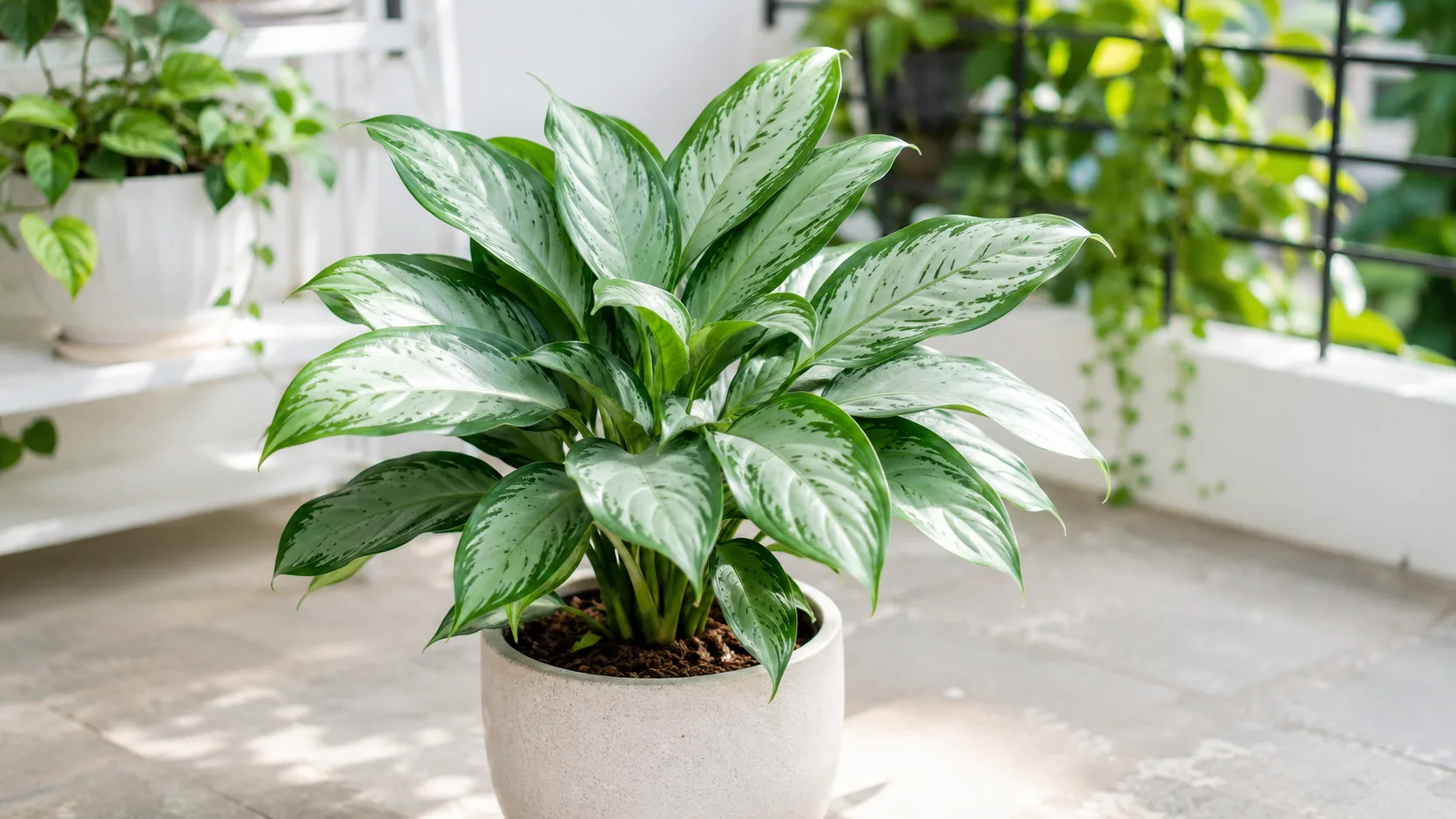
Aglaonema Silver Bay Repotting: When, How & Soil Mix
Aglaonema Silver Bay Repotting: When, How & Soil Mix
Most Aglaonema Silver Bay plants that “suddenly” start sulking - yellowing lower leaves, drooping despite moist soil, or refusing to push out new growth - are not sick. They are outgrowing their pot, sitting in broken-down soil, or quietly rotting in a mix that no longer drains the way it did on day one. Repotting is the single most underrated reset for Aglaonema Silver Bay overview, and doing it at the right time, in the right mix, makes almost every other care problem easier to manage.
Silver Bay is a cultivar of Aglaonema, a genus in the arum family (Araceae) that originated in the tropical and subtropical forests of Southeast Asia and New Guinea. Missouri Botanical Garden’s Plant Finder describes it as a tough, low-light tolerant foliage plant that prefers a “rich, well-drained, peaty potting mixture.” Clemson’s Home & Garden Information Center and NC State Extension both echo the same cultural profile: durable, tolerant, and easy to overwater. The job of repotting is to keep that hardiness intact by giving the roots air, drainage, and a slightly acidic substrate that mimics the loose forest floor the plant evolved on.
This guide walks through the entire process, from the first warning signs to the sixth week of aftercare, and includes a soil recipe, a pot material comparison, a root-rot rescue protocol, and a 4–6 week no-fertilizer rule grounded in aroid-care literature and university extension guidance.
Why Aglaonema Silver Bay Needs Repotting
In the wild, an Aglaonema’s roots creep through loose, leaf-litter-rich soil that drains fast and breathes well. Indoors, that same root system eventually meets a container wall, and over months the substrate compacts, the organic matter breaks down, and the drainage that felt crisp on day one turns sluggish. Repotting refreshes the air pockets around the roots, restores the drainage profile, and gives the plant a modest amount of new space to grow into.
There is a secondary reason. Aglaonema Silver Bay is a slow-to-moderate grower, and like most aroids it actually prefers to be slightly crowded. That means the plant rarely needs a repot for space alone - it usually needs one because the soil itself has degraded. After two to three years in the same container, peat and bark begin to decompose, fine particles migrate downward, and a perched water table can form at the bottom of the pot. The plant is still alive, but its roots are slowly drowning in a substrate that no longer does its job.
A fresh pot and a fresh mix correct all of that in a single afternoon. The plant keeps its familiar light, humidity, and Aglaonema Silver Bay watering guide, but it gets the airy, slightly acidic foundation its roots were designed for.
How Often to Repot Aglaonema Silver Bay
The short answer: every 2 to 3 years, with a few well-defined exceptions. Patch Plants, Simplify Plants, the Almanac Chinese Evergreen guide, and Clemson HGIC all converge on the same rhythm. Silver Bay is not the kind of plant that asks for a new pot every spring, but it is not the kind of plant you can ignore for five years either.
If your plant has been in the same pot for two growing seasons and you are not seeing any of the warning signs below, you can wait another year. If it has been three years and you have never refreshed the soil, the substrate is almost certainly the limiting factor on new growth. If the plant is severely root-bound, sitting in decomposed peat, or showing yellow leaves with soggy soil underneath, repot immediately regardless of how long it has been.
In practice, “every 2–3 years” means most growers do it once every other spring. Younger plants in smaller nursery pots may need it sooner because the substrate-to-root ratio tips faster. Mature, slow-growing plants in 6- to 8-inch pots can stretch to year three and still look fine.
Six Telltale Signs Your Silver Bay Wants a New Pot
Roots and soil will tell you what a glossy leaf will hide. Watch for these six signals.
- Roots circling the pot or poking out of drainage holes. A few visible roots at the bottom are normal. A dense mat of white roots wrapping the root ball is a clear “I am out of room.”
- Water running straight through. If water zips out of the bottom almost immediately, the soil has broken down to the point where it cannot hold moisture around the roots, and the plant is dehydrating even though you are watering.
- The plant lifting itself out of the pot. A top-heavy Silver Bay whose crown is rising above the rim is being pushed up by a compressed, root-bound mass below.
- Soil drying out unusually fast. A pot that used to need water every 7–10 days now demands it every 3–4 days. That usually means there is more root than soil.
- Stalled growth despite good light and feeding. When a healthy-looking Aglaonema refuses to push a new leaf over an entire growing season, restricted roots or exhausted soil are the most common causes.
- A stale, compacted, or sour-smelling substrate. If the top of the soil has crusted over, pulled away from the pot wall, or smells sour, the organic matter is breaking down anaerobically and the roots are sitting in the wrong chemistry.
Any one of these signs is a fair argument for repotting. Two or more, and the plant is telling you it is overdue.
Best Time of Year to Repot Aglaonema Silver Bay
Timing matters more than people think. Aglaonema Silver Bay is a tropical plant, and its root system responds to two things: warmth and light. Repot when both are in your favor, and the plant bounces back in weeks. Repot when they are not, and the same plant can stall for a season.
Why spring and early summer win
Spring and early summer are the active growing months for Aglaonema. New leaves are emerging, root tips are pushing, and the plant has the energy reserves to recover from the inevitable root disturbance of a repot. Multiple aroid-care sources, including Simplify Plants and the Almanac guide, recommend this window because divisions and transplants establish faster when the plant is already in motion.
The practical sweet spot is once nighttime temperatures in your home are consistently above 60°F (about 16°C) and the plant is starting to push new growth at the crown. That usually lands somewhere between mid-spring and early summer in most temperate climates.
Emergency repots that override the calendar
There are two situations where you repot on the spot, no matter the season. The first is severe root rot on Aglaonema Silver Bay - black, mushy, foul-smelling roots combined with wilting leaves and saturated soil. Waiting for spring to “do it properly” will cost the plant. The second is a catastrophically broken or root-bound pot that is actively killing the plant. In both cases, repot now, use a fresh dry mix, and accept that recovery will be slower than a spring repot would have been.
If you must repot in fall or winter, plan to give the plant more warmth, more time, and a stricter no-fertilizer discipline. Do not “make up” for the off-season timing by fertilizing early.
Choosing the Right New Pot - Size, Material, and Drainage
The new pot does not need to be impressive. It needs to be 1 to 2 inches wider in diameter than the old one, made of a material that matches your watering habits, and have a drainage hole that actually drains.
Sizing up the right way (1–2 inches wider)
The single most common repotting mistake is oversizing. A pot that is 3 or 4 inches wider feels generous, but it holds a much larger volume of soil than the root system can drink from. The result is a slow-evaporating mass of damp substrate around the roots, which is exactly the environment that triggers root rot in Aglaonema. Clemson HGIC, NC State Extension, and most aroid-care guides all converge on the same rule: go up only 1 to 2 inches (roughly 2.5–5 cm) in diameter at a time.
For a 6-inch pot, the next size up is an 8-inch. For an 8-inch, it is a 10-inch. If your plant is in a 4-inch nursery pot, an honest 6-inch is plenty. There is no growth benefit to a much larger pot, and there is real risk in it.
Terracotta vs. plastic vs. glazed ceramic
Pot material affects how fast the substrate dries, which matters more for Aglaonema than for most tropicals because the genus is famously intolerant of soggy roots.
- Terracotta (unglazed clay) is porous. Air moves through the walls, water evaporates from the sides, and the substrate dries faster overall. This is the safest choice if you tend to overwater, if your home runs humid, or if the plant is in a low-light spot where the substrate stays wet longer. The trade-off is that terracotta dries out faster, so if you tend to underwater, you may need to water more frequently.
- Plastic (nursery pot) is non-porous. It holds moisture longer, is light and cheap, and works well if you are a forgetful waterer or live in a dry climate. The risk is that plastic gives you very little margin for error on overwatering on Aglaonema Silver Bay, because the walls do not help dry the soil.
- Glazed ceramic is the middle ground. It looks like a decorative pot, holds moisture like plastic, and is heavy enough to anchor a top-heavy Silver Bay. Make sure the bottom has a drainage hole - a “decorative ceramic” with no hole is a cachepot, not a pot.
The honest decision rule: choose terracotta if you have a habit of overwatering or if your home runs humid; choose plastic if you often forget to water or if you live somewhere dry; choose glazed ceramic for looks and a top-heavy plant, but only with a drainage hole. All three must have at least one drainage hole at the bottom - without one, no soil mix will save the plant.
The Best Soil Mix for Aglaonema Silver Bay
Aglaonema Silver Bay wants a well-draining, slightly acidic, peat-based potting mix that holds enough moisture to keep the roots hydrated but releases excess water quickly. Missouri Botanical Garden describes the ideal substrate as “a rich, well-drained, peaty potting mixture.” Clemson HGIC recommends a “commercially available, standard soilless mix with extra humus.” Aroid-care literature narrows that further: the substrate should have visible air pockets, fast drainage, and a pH between 5.5 and 6.5, the range UF/IFAS EP160 recommends for quality Aglaonema production.
A dense, peat-heavy, or water-retentive mix is the leading cause of yellowing leaves, stem softening, and fatal root rot in indoor Aglaonemas - especially in low-light, low-airflow rooms. The point of building a mix is to keep the root zone airy even after the peat has absorbed its fill of water.
A reliable DIY aroid mix you can blend in 10 minutes
A practical, repeatable blend for one 8-inch pot’s worth of substrate is:
- 2 parts high-quality peat-based potting soil (or coco coir as a more sustainable alternative with near-neutral pH).
- 1 part coarse perlite or pumice (#3 horticultural grade, 3–6 mm, not the fine beads that float and compact).
- 1 part medium-grade fir orchid bark (¼″–⅜″ pieces, not pine or cedar, never dyed or aromatic).
- ½ part worm castings or compost (slow-release fertility and beneficial microbes).
- Optional: ½ part horticultural charcoal, which buffers pH and helps keep the substrate fresh.
Adjust to your environment. In a dry, low-humidity home, lean a little more toward peat or coco coir. In a humid home with a heavy hand on the watering can, lean a little more toward perlite and bark. A simple home pH test kit will tell you if you are in the 5.5–6.5 range; if the mix is too alkaline, add a little sphagnum peat to lower the pH, and if it is too acidic, a pinch of dolomitic lime will bring it back up.
If you prefer a commercial option, choose a mix labeled for aroids or tropical foliage, then add extra perlite or bark if it feels too dense in the bag. Two commercial blends that consistently pass independent drainage tests are Fox Farm Ocean Forest and Espoma Organic Potting Mix, but both benefit from a 20–30% boost of perlite and bark for Aglaonema.
Prepping Your Plant 24–48 Hours Before Repotting
A smooth repot starts the day before. Water the plant thoroughly 24 to 48 hours beforehand. A lightly moist root ball slides out of the pot more easily, holds together better during inspection, and gives the roots some resilience against the dry air of indoor repotting. Do not water immediately before repotting - saturated roots tear more easily and stay wetter than they should after the move.
Lay out your supplies before you start: the new pot, fresh substrate, a clean pair of pruning shears, rubbing alcohol or hydrogen peroxide for sanitizing, a sheet of newspaper or a tarp, and a chopstick or wooden skewer for working soil into the gaps. If you suspect root rot, also have a bucket of 1-part-hydrogen-peroxide-to-3-parts water ready for rinsing.
Step-by-Step: How to Repot Aglaonema Silver Bay
Once the plant is prepped and your supplies are ready, the actual repot is quick.
- Unpot the plant. Tip the pot on its side, support the base of the stems with one hand, and gently slide the root ball out. If it is stuck, run a long knife around the inside of the rim to free the roots rather than yanking the stems.
- Loosen the root ball. Use your fingers to gently tease apart the outer roots. If the root ball is a tight, hard mass, score the sides lightly with a clean knife or use a chopstick to pull old soil out of the gaps. Healthy roots are firm and white or pale tan; rotted roots are black, mushy, and may smell sour.
- Trim only what needs trimming. Cut away dead, mushy, or circling roots with sterilized shears. Reserve more aggressive root pruning for the dedicated section below; for a routine repot, less is more.
- Add a base layer of fresh mix. Pour enough of the aroid blend into the new pot so the crown of the plant will sit at the same depth it was growing before. Never bury the stems deeper than they were - buried stems are a fast route to rot.
- Position the plant. Center the root ball in the new pot and hold it at the right depth with one hand while you backfill with fresh mix.
- Fill and settle. Add substrate around the root ball, working it into the gaps with a chopstick. Do not press down hard; you want the substrate to remain airy. Lightly tap the pot on the table to settle the mix.
- Water lightly to settle. Give the plant a small initial watering - just enough to wet the substrate and remove large air pockets. Do not flood the pot. Let the excess drain freely.
- Place in bright, indirect light and leave it alone. Skip the fertilizer, skip the direct sun, and resist the urge to fuss. The plant needs two to four weeks of quiet recovery.
Root Pruning - When and How to Trim Safely
Routine repotting does not require aggressive root pruning. Aggressive root pruning is a separate decision, reserved for two situations: the plant is severely root-bound and the only fix is to keep it in the same pot, or the root ball is so compacted that loosening it would cause more damage than trimming it.
If you do need to root-prune, follow the standard horticultural rule: remove no more than 25–30% of the total root mass in a single session, in the active growing season (spring through early summer), with clean, sterilized shears. Cut away the densely circling outer layer of the root ball, untangle what remains with your fingers, and replant in the same pot (or only one size up) with fresh substrate.
A useful but easy-to-overlook rule: if you remove 25% of the roots, remove a roughly proportional amount of top growth. The plant’s roots and leaves are in balance, and pruning one without the other puts the other under stress. A Silver Bay that has had its roots cut back by a quarter does not need a hard prune, but a few of the oldest, lowest leaves can come off without harm.
Dealing With Root Rot During Repotting
Root rot in Aglaonema is most often a soil or watering problem, not a pathogen problem. The fungi that finish off the roots - Pythium, Phytophthora, Fusarium, Rhizoctonia - are opportunistic. They live in soil that stays wet long enough to go anaerobic, and they attack roots that are already weakened, as described in the University of Wisconsin Extension Root Rots on Houseplants article. The fix is mechanical, not chemical: get the plant out, cut out the dead tissue, and replant in a substrate that actually drains.
If, during repotting, you find black, mushy, or foul-smelling roots, treat it as a root-rot rescue rather than a routine repot.
- Unpot immediately and gently shake or rinse off the old soil so you can see the roots clearly.
- Inspect every root. Healthy roots are firm, white to cream, and smell like fresh soil. Rotted roots are slimy, dark brown or black, and smell sour or of decay. Some sources note that advanced root rot can also produce a faintly alcoholic or rotten-egg smell.
- Trim aggressively. Use sterilized shears to cut away every mushy root, cutting back into firm, healthy tissue. Be willing to remove a third of the root mass if that is what the rot demands. Black, hollow, or papery roots have to go.
- Sterilize what remains. Rinse the healthy roots in a 1:3 hydrogen-peroxide-to-water solution, or spray them with 3% hydrogen peroxide, to kill lingering fungal spores.
- Replant into fresh, dry, sterile substrate. Do not reuse the old soil. Use a clean pot or a freshly washed one, and resist the urge to water heavily - a light drink to settle the mix is enough.
- Hold off on fertilizer for 6–8 weeks. A recovering root system cannot absorb nutrients safely. Fertilizing a freshly rescued plant is a fast way to finish what the rot started.
If more than half the root system is gone, the plant is in serious trouble. Prop up whatever healthy top growth remains and treat the recovery as a long game. New white root tips are the first sign the plant has turned the corner.
Aftercare - The First 4–6 Weeks
The first month and a half after a repot is the time when the plant is most vulnerable and most often mishandled. The three rules below are the most important ones in the whole article.
Watering after repotting. Give the plant a light initial drink to settle the substrate, then let the top 1–2 inches of soil dry out before watering again. Silver Bay in fresh substrate does not need the same volume of water it needed in broken-down old mix. New aroid mix drains faster and holds more air, which is the point, but it also means you may notice the surface drying out faster than you expect. Check the soil with a finger, not on a calendar.
Light and location after repotting. Place the plant in bright, indirect light and keep it out of direct sun for at least a week. The leaves are not the only thing recovering - the roots are, too - and direct sun on a freshly repotted plant is a fast route to wilting and leaf scorch. NC State Extension and Clemson HGIC both note that Aglaonema prefers diffused or indirect light at all times, but a freshly repotted plant is more sensitive than usual. Once the plant shows new growth, you can move it back to its normal spot.
Humidity and temperature. Aglaonema Silver Bay prefers 65–80°F and average to moderate humidity. Do not place the freshly repotted plant near a cold window, an air-conditioning vent, or a heating register. Cold drafts below 55°F are damaging even to established plants and are especially hard on a recovering root system.
The no-fertilizer window
Do not fertilize for 4 to 6 weeks after repotting. Fresh substrate already contains starter nutrients, and the root system is in a stressed, partly damaged state. Fertilizer salts can burn those tender new root tips before they have a chance to establish. Multiple aroid-care sources, including GrowTropicals and Simplify Plants, all converge on this rule. When you do resume feeding, start with a balanced, water-soluble houseplant fertilizer diluted to half strength, applied every 4–6 weeks during the active growing season only.
A mild droop or a brief pause in growth for 1–2 weeks is normal. New growth within 3–4 weeks is the cleanest signal that the plant has settled in.
Common Repotting Mistakes to Avoid
A short list of the most common ways a Silver Bay repot goes wrong, with the fix in the same sentence.
- Oversizing the pot. A pot 3 or 4 inches wider than the old one does not “give the plant more room” - it gives the roots a swamp. Go up only 1–2 inches.
- Using dense, peat-heavy, or standard garden soil. A heavy mix compacts around the roots and suffocates them in low light. Use a chunky aroid blend with perlite and bark.
- Skipping the drainage hole. A pot with no drainage hole is a pot of standing water. If you love a cachepot, keep the plant in a functional plastic pot inside it and empty the cachepot after every watering.
- Repotting in winter “to get it over with.” Off-season repots stall the plant. Unless it is a root-rot emergency, wait for spring or early summer.
- Fertilizing too early. The 4–6 week no-fertilizer rule is not optional. Fertilizer on a freshly repotted root system is a chemical burn in slow motion.
- Burying the stems deeper than they were. Buried stems rot. Keep the crown at the same depth it was in the old pot.
- Compacting the new soil. Pressing the substrate down with your thumb pushes out the air pockets the roots need. Tap the pot to settle it instead.
- Waterlogging the fresh pot. A heavy first watering in fresh substrate, before the roots have re-established, is a recipe for rot. Light drink only.
- Putting the freshly repotted plant in direct sun. Sun plus transplant stress equals scorched leaves. Bright, indirect light for the first week or two.
Conclusion
Repotting Aglaonema Silver Bay is not a difficult job, but it is a job with a handful of small decisions that, taken together, decide whether the plant thrives or sulks for the next two years. The core rules are simple: repot every 2 to 3 years, in spring or early summer, into a pot that is only 1–2 inches wider with a drainage hole, using a well-draining, slightly acidic aroid mix of peat, perlite, and orchid bark. Hold off on fertilizer for 4–6 weeks, keep the plant in Aglaonema Silver Bay light guide, water lightly, and let the top of the substrate dry before the next drink. If the plant comes out of the old pot with black, mushy roots, treat it as a rescue, trim aggressively, rinse with dilute hydrogen peroxide, and replant into fresh dry substrate.
Done right, a Silver Bay repot is a quiet, once-every-couple-of-years reset that keeps the plant’s natural hardiness intact. Done wrong, it is the moment a perfectly healthy Aglaonema first meets the soggy, compacted conditions that turn into root rot six months later. The plant is doing its part. The repot is yours.
When to use this page vs other Aglaonema Silver Bay guides
- Aglaonema Silver Bay overview - Start here for whole-plant context before deep-diving this topic.
- Aglaonema Silver Bay problems hub - Jump to symptom-specific fix guides when this care topic does not resolve the issue.
- Root Rot on Aglaonema Silver Bay - Escalate here when repotting adjustments are not enough.