Aglaonema Silver Bay Soil Mix: DIY Aroid Recipe + Best Buys
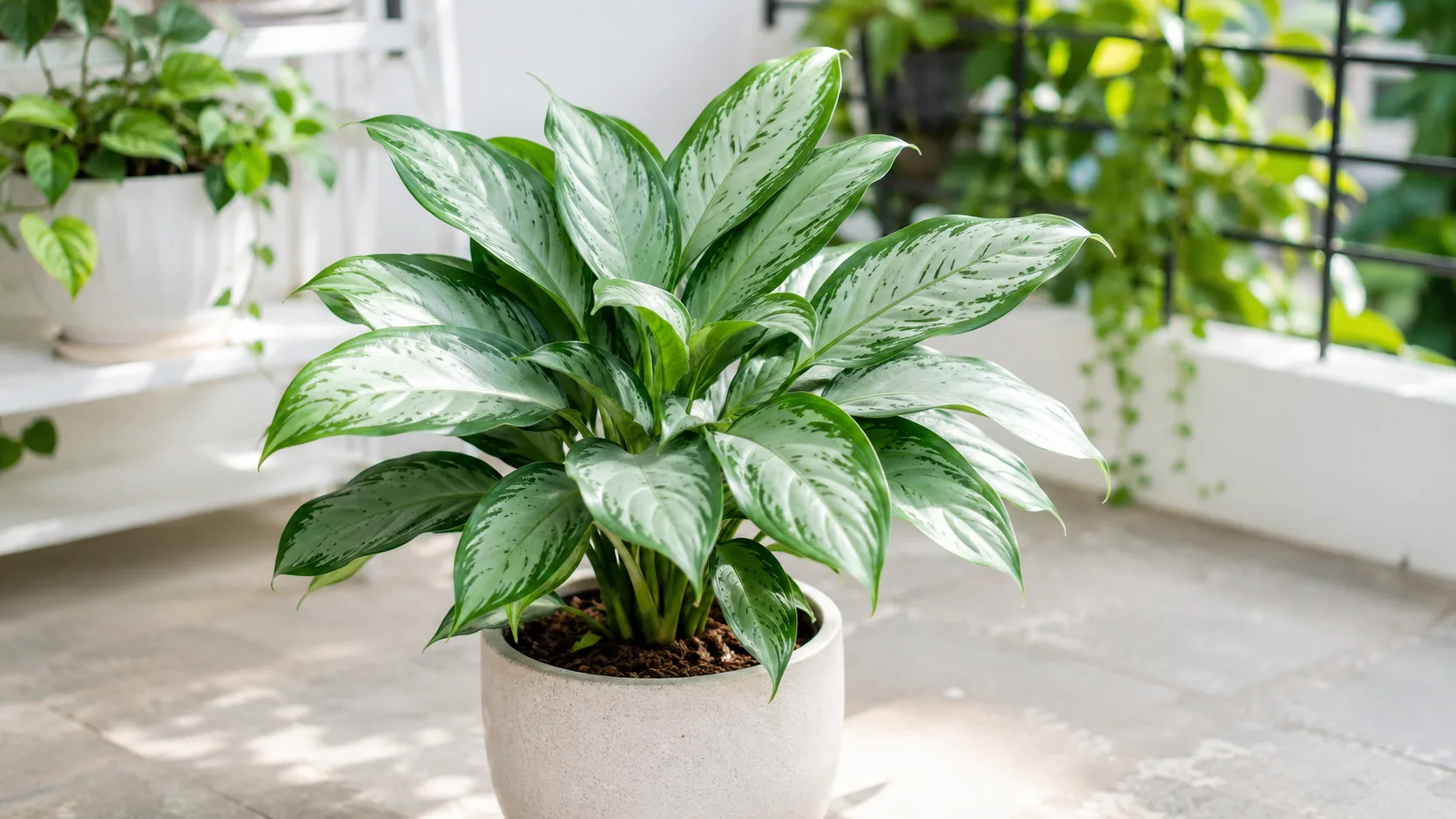
Aglaonema Silver Bay Soil Mix: DIY Aroid Recipe + Best Buys
Aglaonema Silver Bay Soil Mix: DIY Aroid Recipe + Best Buys
What Makes a Good Soil for Aglaonema Silver Bay
A good soil for Aglaonema Silver Bay is a chunky, airy, well-draining mix that holds just enough moisture to keep the roots hydrated between waterings, but not so much that the root zone ever goes stagnant. Silver Bay is sold as a low-light, beginner-friendly houseplant, and it is forgiving in many ways, but its roots are still tropical aroid roots. They evolved to grow in the loose, leafy debris of a forest floor where rain drains away in seconds and air moves freely between the particles. The closer your potting mix gets to that texture, the less you’ll fight yellow leaves, soft stems, and the dreaded root rot on Aglaonema Silver Bay.
Most general “houseplant potting mix” bags are too fine and too water-retentive on their own. They were engineered for a wide range of plants in a wide range of conditions, and they tend to compact within a year. Silver Bay tolerates being a bit root-bound and tolerates low light, but it does not tolerate a heavy, slow-draining substrate. The right fix isn’t an exotic product. It’s a small set of common ingredients blended in roughly the right ratios, with attention to pH and pot drainage.
Why Silver Bay Hates Wet Feet (the Root Rot Reality)
Aglaonemas are described by the Missouri Botanical Garden as preferring a “well-drained, peaty potting mixture,” and the same plant profile warns that “rots may occur if plants are over-watered.” University of Wisconsin Extension’s houseplant root-rot guide goes further: it identifies Pythium, Phytophthora, Rhizoctonia, and Fusarium as the most common fungi that destroy houseplant roots, and notes that “most root rot fungi prefer wet soil conditions.” The simplest way to keep those fungi away from a Silver Bay is to make sure the soil never stays saturated for long.
A soggy root zone suffocates roots because water fills the air pockets that roots need to take up oxygen. Once that happens, the roots soften, turn brown, and stop delivering water and nutrients to the leaves, even when the soil is wet. The first visible sign is usually yellowing lower leaves or a sudden wilt on a well-watered plant. By the time you see those signs above the surface, the damage below is already significant, which is why prevention through soil choice is so much easier than recovery through emergency Aglaonema Silver Bay repotting guide.
The other problem with constantly wet soil is salt buildup. Fertilizer salts and mineral salts from tap water accumulate in the root zone as water evaporates from the surface. In a chunky, fast-draining mix, those salts are flushed out the next time you water. In a dense, slow-draining mix, they concentrate in the root zone and burn root tips, which then become entry points for the fungi mentioned above. A well-built soil is a root rot prevention system, a salt-flushing system, and an aeration system in one.
The Four Jobs Your Soil Has to Do
If you strip away the brand names and the marketing, every good Silver Bay soil mix is doing four jobs at once. When you evaluate a bag of mix or design your own, you can score it against these four jobs and immediately see where it will fall short.
Drain fast, hold some moisture
The mix has to let excess water escape quickly through the drainage holes, but it also has to hold enough water in its pores to keep the roots from drying out between waterings. The way you reconcile those two goals is by using components that are themselves porous. Coco coir, peat moss, and pine bark absorb water and hold it in their fibers. Perlite and orchid bark create big channels that let gravity pull water out. A mix of the two types gives you the “drains fast but stays lightly damp” feel that Silver Bay loves.
Keep air around the roots
Air-filled porosity, sometimes abbreviated AFP, is the volume of the pot that is occupied by air rather than water or solid particles at any given moment. Mature tropical houseplants do best in a mix with roughly 40–55% air-filled porosity after drainage. Regular potting mix sits closer to 15–20%, which is why it suffocates Silver Bay over time. Bark, perlite, pumice, and chunky coco chips are the main tools for raising AFP without sacrificing too much water retention.
Hold enough nutrition
Silver Bay is not a heavy feeder, but its soil does need to hold onto some nutrients long enough for the roots to absorb them. Coco coir and peat moss both have a useful ability to hold positively charged nutrient ions (calcium, magnesium, potassium, ammonium) on their surfaces and release them slowly. A small amount of worm castings adds gentle, slow-release nutrition along with beneficial microbes. Horticultural charcoal adds a tiny bit of nutrient buffering as well. None of these need to be present in large quantities; the goal is to keep the mix from being a sterile, empty shell.
Stay slightly acidic
Aglaonema prefers a slightly acidic pH, generally in the 5.5 to 6.5 range, which is also the range most peat-based and coco-based mixes sit in naturally and the UF/IFAS EP160 recommendation for Aglaonema production. This matters because pH controls which nutrients are actually available to the plant, even when those nutrients are physically present in the soil. Outside that range, the plant can show deficiency symptoms even in a well-fertilized pot. A pH meter or test strip is worth keeping on hand, but most growers who use a peat- or coco-based mix with a balanced liquid fertilizer never need to chase pH numbers.
The Ingredients That Actually Work
You can build a Silver Bay mix from scratch with five categories of ingredient, and most of them are easy to find at garden centers or online. None of them are exotic, and you can scale up or down depending on how many plants you have.
Peat moss and coco coir (moisture)
Peat moss and coco coir are the moisture-retention backbone of most Silver Bay mixes. They absorb several times their weight in water and release it slowly to the roots. Peat moss is the traditional choice, slightly acidic, and very widely available. Coco coir, made from coconut husks, is a renewable alternative with a more neutral pH and a slightly faster drainage profile. If you are buying a pre-made peat-based houseplant mix, peat is already in there. If you are mixing from scratch, coco coir is easier to rewet, less hydrophobic when it dries, and more sustainable for ongoing use.
Perlite and pumice (aeration)
Perlite is the classic aeration ingredient: a lightweight, white, porous volcanic glass that creates air pockets and never decomposes. Pumice is a heavier, more porous volcanic rock that does the same job but with more weight and a higher capacity to hold and slowly release nutrients. Perlite floats to the top of pots over time and breaks into dust, while pumice stays put. For Silver Bay in a small to medium pot on a shelf, perlite is usually fine. For larger pots that need ballast, or for growers who want a longer-lasting substrate, swapping some or all of the perlite for pumice is a meaningful upgrade.
Pine bark and orchid bark (structure)
Pine bark and orchid bark (which is usually pine or fir bark graded for orchid growers) are the chunky structural pieces in the mix. They create large air channels, resist compaction far longer than peat or coir, and break down slowly enough that the mix stays open for two to three years. The “medium” grade of orchid bark is the sweet spot for Silver Bay: big enough to create real gaps, small enough to work into a normal pot. Fine pine bark fines, by themselves, are too small and tend to mat down; they are better used as a small addition rather than the main structure.
Horticultural charcoal (freshness)
Horticultural charcoal is a chunky, low-dust form of biochar added at about 5–10% of the total mix volume. It does not feed the plant, but it does three useful things. Its porous structure adsorbs organic compounds that can build up in a closed pot, it buffers pH slightly toward neutral, and it helps the mix stay “fresh” longer between repots by reducing the swampy smell that a stale mix can develop. It is genuinely optional, and the plant will not die without it, but it is a small upgrade that pays off over the life of the pot.
Worm castings (gentle feed)
Worm castings are the user-friendly slow-release fertilizer in this style of mix. Added at about 5–10% of total volume, they give young Silver Bays a steady, low-strength feed of nitrogen, micronutrients, and beneficial microbes without burning tender roots. Mature plants still benefit from a diluted liquid fertilizer during the growing season, but the castings take a lot of the urgency out of feeding.
The Best DIY Aroid Mix for Silver Bay
The cleanest DIY recipe that works for almost every Silver Bay in a normal indoor environment is a 3-2-2-1-½ ratio by volume. Use any container as your “part” measure, but be consistent.
- 3 parts orchid bark (medium grade)
- 2 parts coco coir (pre-soaked and drained) or peat-based potting mix
- 2 parts perlite or pumice, or a 50/50 blend of both
- 1 part worm castings
- ½ part horticultural charcoal
This produces a mix that is visibly chunky, light in the hand, and slightly damp after you saturate it. To check it, do the wet squeeze test. Grab a fistful of the finished mix after you’ve run water through it. Squeeze. A good Silver Bay mix will hold its shape loosely, then crumble when you poke it. If water streams out freely and the ball collapses immediately, you can add a small amount more coir or peat. If the ball stays tight and muddy, add more bark and perlite. The mix should feel like a wrung-out sponge, not a soaked one.
If you want a faster-draining version, push the orchid bark to 4 parts and drop the coir or peat-based component to 1 part. If you want a slower-drying version (useful in dry winter homes, in heated apartments, or for plants in low light), push the coco coir to 3 parts and the bark to 2 parts. The 3-2-2-1-½ ratio is a reliable default, not a fixed rule.
If you don’t want to source five ingredients, a simpler 2-1-1 mix also works: 2 parts peat-based potting mix, 1 part perlite, 1 part orchid bark. This is the recipe recommended in many aroid guides and produces a lighter, faster-draining version of the standard “potting soil” you would otherwise use. The chunkier 3-2-2-1-½ mix is the better long-term option because it holds structure for two to three years instead of one.
Pre-Made Mixes Worth Buying (and How to Upgrade Them)
Not everyone wants to blend their own soil, and the good news is that several pre-made mixes work well for Silver Bay with a small amount of amending.
- FoxFarm Ocean Forest is rich, well-aerated, and loaded with organic amendments. Out of the bag, it is slightly too dense and too nutrient-rich for a Silver Bay in a small pot. Mixing 2 parts Ocean Forest with 1 part perlite and 1 part orchid bark gives you a long-lasting, ready-to-use Silver Bay mix.
- FoxFarm Happy Frog is a similar high-quality peat-based mix with a strong microbial package. It holds its structure longer than cheaper bagged mixes, but it still benefits from the same 2-1-1 amendment with perlite and bark.
- Miracle-Gro Indoor Potting Mix is an inexpensive, easy-to-find option. On its own, it is too dense and is formulated with slow-release fertilizer prills that can burn Silver Bay roots. Amend it 1:1 with perlite and add a generous handful of orchid bark to bring it into the right range.
- Espoma Organic Cactus Mix is a surprisingly good base for aroids if you are willing to add a moisture-retentive component. Mix it 1:1 with coco coir to bring the water-holding capacity up to Silver Bay’s preference.
- Aroid-specific mixes sold by specialty sellers (often on Etsy or from small plant shops) are usually ready to use out of the bag. Read the ingredient list; the better ones contain bark, perlite or pumice, coco coir, and often charcoal, with little to no actual “dirt.”
The upgrade rule of thumb for any pre-made mix is: if the bag feels heavy and the contents look like dark, fine soil, add at least 30–40% by volume of chunky material (perlite, pumice, or bark) before using it for a Silver Bay. If the bag feels light and you can see bark pieces, you can use it as is, or add a small amount of coco coir if your home is dry.
What Soil to Avoid
A small number of substrates cause most of the Silver Bay problems home growers run into.
Garden soil is the single most common mistake. Outdoor garden soil, including screened topsoil, is built of very fine mineral particles held together by clay and organic matter. In a pot, those fine particles compact within weeks, the air pockets collapse, and the perched water table at the bottom of the pot never drains. University of Wisconsin Extension specifically recommends using “a pasteurized commercial potting mix, NOT soil from your garden” for houseplants, in part because garden soils often contain root-rot fungi. The same caution applies to bagged “raised bed soil” and to most “garden soil” products at big-box stores, which are designed for in-ground use and behave badly in containers.
Moisture-control potting mixes that contain polymer crystals or are marketed as “holds water for a week” are the wrong fit for Silver Bay. The plant’s main failure mode is too much water, not too little, and these mixes are designed to keep water in the root zone longer. A Silver Bay in a moisture-control mix will look great for a month and then decline as the root zone goes anaerobic.
Pure peat moss or pure coco coir also isn’t a soil on its own for Silver Bay. Both are too moisture-retentive and too low in air-filled porosity without aeration and structural components. They are excellent as one part of a mix, and a poor choice as the whole mix.
Used soil from another plant is risky. The University of Wisconsin Extension root-rot guide is explicit: “do not reuse potting mix from your houseplants, or water that has drained from your plants, as both potentially can contain root rot fungi.” If you are repotting because the previous plant had root rot, do not reuse that soil on your Silver Bay.
Unsterilized outdoor compost can introduce fungal pathogens, fungus gnats, and other pests into the indoor environment, where they have no natural predators. If you want to use compost in a Silver Bay mix, use a hot, fully finished commercial compost that has been heat-treated.
When to Refresh or Repot
Silver Bay is a slow grower and is happy being slightly root-bound, so it does not need frequent repotting. The general schedule is every two to three years, and the best window is spring or early summer when the plant is pushing new growth. Spring repotting gives the roots a full active growing season to recover before winter, when light levels drop and the soil dries more slowly.
That said, there are a few physical signs that mean it’s time to refresh the soil or move up a pot size even if the calendar says otherwise. Roots circling the surface of the soil or poking out of the drainage holes are the classic signal. Water running straight through the pot the moment you pour it is another, and it usually means the mix has broken down and gone hydrophobic. Soil that stays wet for more than ten days after a normal watering, on the other hand, has compacted too far and is suffocating the roots. A Silver Bay that wilts within hours of being watered, despite moist soil, is almost always telling you that the roots have begun to rot and the mix needs to be replaced.
When you do repot, go up only 1 to 2 inches in pot diameter. Oversized pots hold a lot more soil than the roots can use, and that extra soil stays wet for too long, which is the exact condition Silver Bay cannot handle. Freshen the mix every two years even if the pot size is fine. Organic components like bark and coco coir slowly break down, and a mix that drained beautifully in year one can go dense and slow by year three.
If you suspect root rot, repot immediately regardless of season. Slide the plant out, shake or rinse off the old soil, and cut away any black, mushy, or foul-smelling roots with clean scissors. Repot into a fresh, dry, well-draining mix and hold off on watering for a day or two so the cut root tips can callus over. Withhold fertilizer for six to eight weeks.
Common Soil Mistakes That Kill Silver Bays
A few patterns show up over and over in failed Silver Bay pots, and they are all soil-related.
The first is the “nice bag of potting mix, used as is” mistake. Regular houseplant potting mix, including the moisture-control versions, is too dense for Silver Bay without amendments. Using it straight works for a year or so, and then the plant mysteriously starts dropping leaves.
The second is overpotting. Putting a small Silver Bay into a large decorative pot is almost a guarantee of root rot. The unused soil holds water the roots cannot reach, and the mix never dries between waterings. The plant looks fine for a few weeks, then yellows and wilts.
The third is watering on a schedule instead of by soil feel. Even the best Silver Bay mix will rot if you water it every Saturday regardless of whether the top inch is dry. The job of the soil is to give you a clear answer about when to water: stick a finger in an inch or two. If it’s dry, water. If it’s still damp, wait.
The fourth is using a pot without drainage. Cache pots are fine as long as the plant is in a nursery pot with holes inside them, and you empty the cache after every watering. A Silver Bay planted directly into a decorative pot with no drainage hole is a slow-motion root rot.
The fifth is never refreshing the mix. A two-year-old Silver Bay in the same peat-heavy mix that it came home in has usually compacted to the point where water pools on the surface and drains in a thin trickle through the bottom. Top-dressing with fresh bark and perlite helps, but at some point the whole mix needs to be replaced.
Conclusion
A good Aglaonema Silver Bay soil mix is a chunky, fast-draining, slightly acidic blend that mimics a tropical forest floor: a moisture-retentive base of coco coir or peat, a structural layer of orchid bark, a generous helping of perlite or pumice for air, and small additions of worm castings and horticultural charcoal. The Missouri Botanical Garden’s general guidance of a “well-drained, peaty potting mixture” is the right starting point, and the 3-2-2-1-½ DIY ratio turns that guidance into a workable recipe. If you’d rather not blend, amend a quality peat-based mix like FoxFarm Ocean Forest or Happy Frog with perlite and orchid bark, or buy an aroid-specific mix from a reputable seller. Avoid garden soil, moisture-control mixes, and pots without drainage, refresh the substrate every two to three years, and water by feel rather than by the calendar. Get the soil right, and the rest of Silver Bay care becomes much easier to get right too.
When to use this page vs other Aglaonema Silver Bay guides
- Aglaonema Silver Bay overview - Start here for whole-plant context before deep-diving this topic.
- Aglaonema Silver Bay problems hub - Jump to symptom-specific fix guides when this care topic does not resolve the issue.
- Root Rot on Aglaonema Silver Bay - Escalate here when soil adjustments are not enough.
- Mold on Soil on Aglaonema Silver Bay - Escalate here when soil adjustments are not enough.