Not Enough Light on Aglaonema Silver Bay: Causes, Checks &
Quick answer
Aglaonema Silver Bay survives dim rooms but stops looking like itself-stems stretch, silver centers dull, and new leaves shrink. First step: move the pot to the brightest indirect spot within reach, then watch the next leaf for tighter spacing.
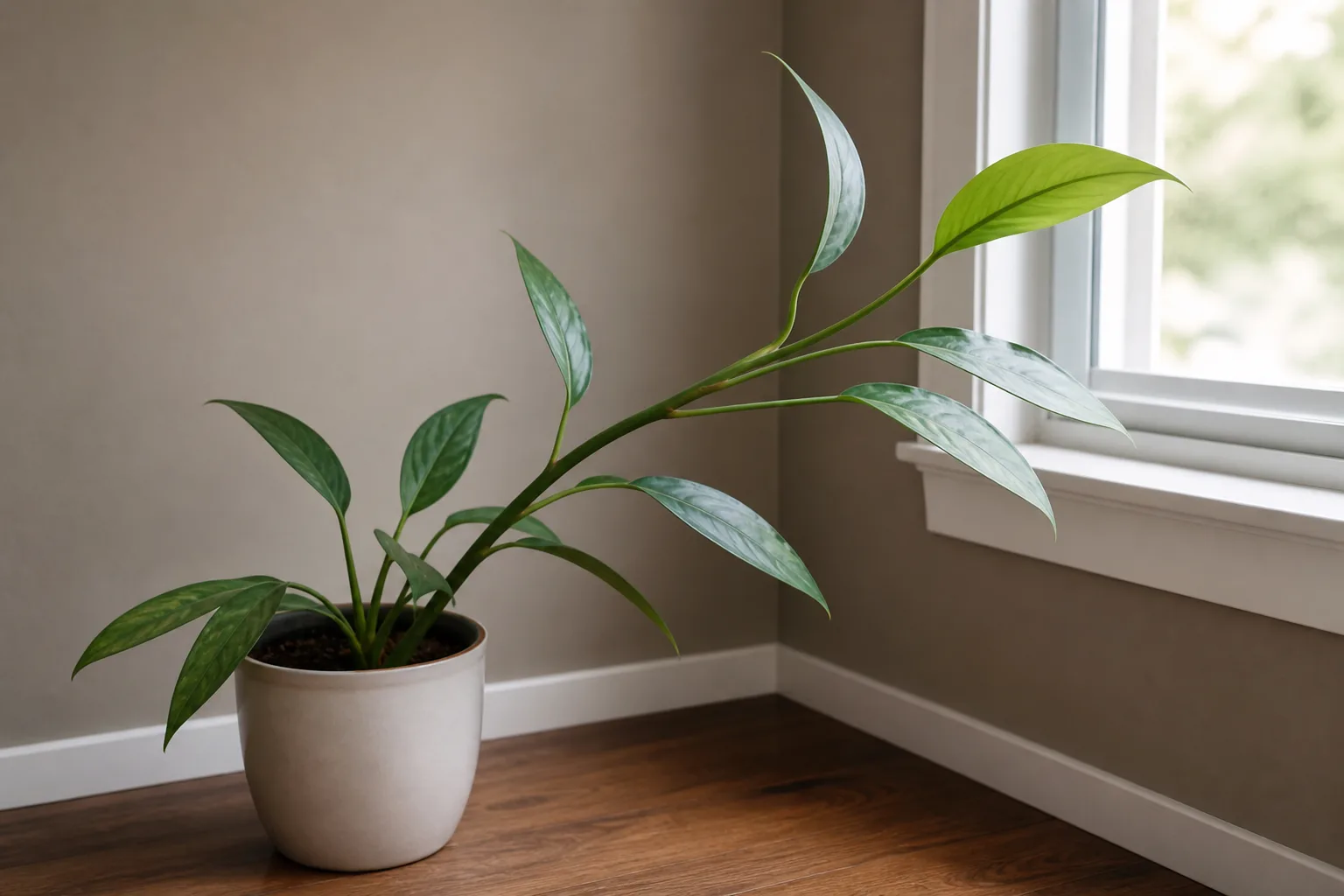
Not Enough Light on Aglaonema Silver Bay: Causes, Checks & Fixes
This guide covers not enough light on Aglaonema Silver Bay. See also the general Not Enough Light guide, watering, and light pages for this plant.
Not Enough Light on Aglaonema Silver Bay: Causes, Checks & Fixes
Quick answer
Aglaonema Silver Bay (Aglaonema commutatum ‘Silver Bay’) is marketed as a low-light houseplant, and it does tolerate dim corners better than most foliage plants-but low-light tolerant is not the same as no light. In a genuinely dark spot-an interior hallway, a shelf far from windows, or a north room in deep winter-the plant survives by stretching toward whatever light it can find. Stems lengthen, the broad silver centers dull toward flat green, and new leaves arrive smaller and farther apart.
First step: move the pot to the brightest indirect location you can offer today. For most homes that means within a few feet of an east- or north-facing window, or several feet back from a south or west window behind sheer fabric. Do not repot, fertilize, or prune heavily on the same day. Give Silver Bay two weeks in the new spot and read the next leaf-tighter spacing and a sharper silver pattern confirm you found enough light.
What not enough light looks like on Aglaonema Silver Bay
Silver Bay’s signature is silver-gray central zones on lance-shaped leaves framed by dark green margins. Under insufficient light, that contrast is often the first thing to slip-not because the plant is dying, but because it is rationing energy toward survival rather than variegation.
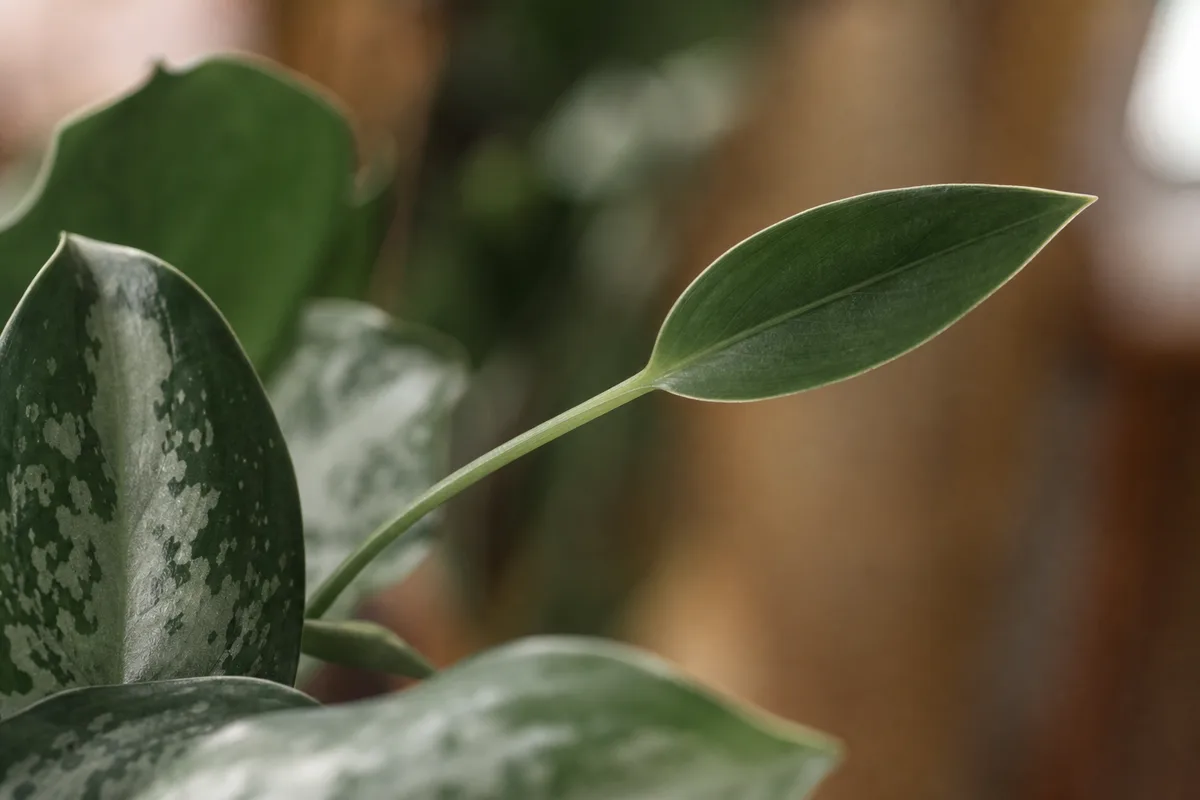
Stretched petioles and dull silver-green leaves - Silver Bay losing its signature variegation in low light.
Typical signs on this cultivar:
- Etiolation - petioles and stems elongate, and the whole plant leans toward the brightest direction in the room
- Smaller new leaves - the newest leaf is noticeably shorter or narrower than leaves from when the plant was well placed
- Dull or fading silver - the pale central splash looks less crisp; foliage overall reads as uniform dark green instead of silver-and-green
- Slow or stalled growth - Silver Bay is naturally slow, but in good light you should still see occasional new leaves during warm months; months with zero new growth in an unchanged spot suggest light is the limiter
- Lower leaf yellowing and drop - the plant sheds older shaded leaves to favor growth closer to the light source
- Wet soil that lingers - in dim conditions Silver Bay uses less water; the same Aglaonema Silver Bay watering guide that worked in brighter light leaves the mix damp too long
What low light usually does not look like on Silver Bay: bleached white or tan patches on leaf surfaces (that pattern fits direct sun scorch), sticky residue or webbing (pests), or sudden collapse with mushy stems while soil is soggy (root rot on Aglaonema Silver Bay-often worsened by low light plus overwatering on Aglaonema Silver Bay, but the primary issue is wet roots).
Why Aglaonema Silver Bay runs out of light
Chinese evergreens evolved under tropical forest canopies, where light is filtered-not absent. Silver Bay sits in the variegated cultivar group: Clemson Extension notes that variegated types need low to moderate indirect light, while solid-green cultivars tolerate lower levels in the same corner. The silver zones contain less chlorophyll than the green margins; in dim rooms the plant compensates by producing greener, less patterned foliage.
Several home situations push Silver Bay past its comfort zone:
Distance from windows. Indoor light falls off quickly with every foot from glass. University of Maryland Extension classifies Chinese evergreen among medium-bright foliage plants suited to east- or west-facing windows-not deep interior shelves. A spot that feels “bright” to your eyes may still leave Silver Bay stretching.
Seasonal daylight drop. Winter shortens day length even when the pot never moves. The same east window that carried Silver Bay through summer may not deliver enough energy from November through February.
Decor-first placement. Silver Bay is often sold for offices and bedrooms and ends up on a desk facing a wall, in a bathroom with frosted glass only, or on a shelf mid-room. Those locations can be darker than the nursery bench where growth looked compact and silver was vivid.
Dirty or blocked glass. Sheers, tinted film, overhangs, and grimy panes cut the light that reaches leaves. Dust on Silver Bay’s broad foliage has the same effect-it blocks photosynthesis on the surface that matters most.
Misreading “low-light tolerant.” Silver Bay handles dim conditions better than a fiddle-leaf fig or succulent, but tolerating low light means maintaining the plant, not thriving. Prolonged deprivation produces the leggy, green-dominant plant many owners blame on fertilizer or Aglaonema Silver Bay repotting guide.
How to confirm the cause
Work through these checks before changing water, food, or pot size:
-
Window relationship - Identify the nearest window direction (north, east, south, west) and estimate distance in feet. Within about two to four feet of an unobstructed east or north window usually qualifies as low to medium indirect light for Aglaonema. More than six feet back, or in a room with no window at all, is suspect.
-
Growth direction - If stems lean or new leaves emerge on the side facing one window, the plant is actively seeking light. That is strong evidence-not a random watering glitch.
-
Leaf-size and color trend - Compare the newest leaf to one from six months ago (or a photo from purchase). Shrinking size with wider stem spacing and less silver points to etiolation.
-
Soil dry-down speed - Stick fingers into the top half of the mix. Silver Bay is very tolerant of underwatering on Aglaonema Silver Bay, but if it used to dry on your normal schedule and now stays damp for ten days or more without wilting, reduced light may have slowed transpiration. Pair that with stretchy stems before blaming the soil mix alone.
-
Two-week placement test - Move Silver Bay to the brightest indirect spot available-never into direct midday sun. After two weeks, inspect the next unfolding leaf. Tighter internodes, firmer texture, and clearer silver centers confirm light was the bottleneck.
-
Rule out lookalikes - Yellow leaves with sour-smelling wet soil suggest overwatering. Crispy tips with a light pot and dry mix suggest underwatering. Webbing, dots, or sticky leaves suggest pests. None of those patterns replace the lean-and-stretch signature of low light, but they can overlap if Silver Bay has been sitting in dim, damp conditions.
Lookalike symptoms on Aglaonema Silver Bay
| What you see | More likely cause | Quick differentiator |
|---|---|---|
| Stems lean toward one window; wide spacing between leaves | Not enough light | Growth direction and etiolation; soil may stay wet longer |
| Yellow lower leaves; soggy mix; sour smell | Overwatering / root stress | Wet soil persists; no strong lean toward light |
| Drooping with very dry, lightweight pot | Underwatering | Soil dry through top half; stems not unusually elongated |
| Bleached or tan patches on leaf faces | Too much direct sun | Damage on sun-exposed side; often after a sudden move to a sill |
| Slow growth but compact shape, crisp silver centers | Normal Silver Bay pace | No stretch; variegation still vivid |
| Webbing, stippling, or sticky residue | Spider mites or other pests | Inspect undersides with magnification |
Low light and overwatering often travel together on Silver Bay because a plant that is not photosynthesizing strongly drinks less. Fixing light without adjusting water can leave roots in stale moisture-watch dry-down after you move the pot.
First fix to try
Move Aglaonema Silver Bay to the brightest indirect location in your home.
Practical targets:
- East-facing window - Silver Bay typically handles the full indirect day without scorch; one to three feet from the glass is ideal
- North-facing window - Often sufficient for maintaining silver variegation; pull closer in winter
- South or west window - Stay three to six feet back or behind sheer curtains; Aglaonema does not tolerate direct sunlight on foliage
If no window spot passes the two-week leaf test, add a full-spectrum LED grow light six to twelve inches above the canopy for twelve to fourteen hours daily. Silver Bay also performs under fluorescent office lighting when the fixture is close enough and runs long enough each day.
Increase light gradually if Silver Bay is coming from a very dark corner-sudden jumps to intense indirect light can stress leaves. A week of slightly brighter placement, then the final spot, is enough acclimation for Aglaonema Silver Bay overview.
Do not fertilize, repot, or heavily prune on the same day you move the plant. Let Silver Bay respond to light first.
Step-by-step recovery
Once Silver Bay is in better light:
-
Adjust watering to match new dry-down - Brighter exposure usually means faster water use. Check the top half of the mix before every drink rather than following an old calendar schedule.
-
Dust the leaves - Wipe both sides with a damp, soft cloth (no leaf shine products). Clean foliage captures more light and helps you spot pests early.
-
Rotate the pot a quarter turn weekly - Even growth prevents one-sided lean and keeps silver patterning visible on all sides.
-
Prune only after new growth looks healthy - Cut leggy stems just above a leaf node with clean scissors. The stub often pushes a tighter side shoot. Old elongated petioles will not shorten; remove them if they ruin the shape.
-
Hold fertilizer until growth stabilizes - Feed lightly during active growth only after two to three firm new leaves appear. Fertilizer cannot substitute for photons.
Recovery timeline
Expect to read improvement on the next one or two leaves, not on leaves already stretched. Under adequate indirect light during spring or summer, tighter new foliage with sharper silver often shows within two to three weeks. Winter recovery may take four to six weeks because day length is shorter.
Signs Silver Bay is recovering:
- New leaves closer together on the stem
- Clearer silver centers on fresh foliage
- Upright or evenly rounded habit instead of a strong lean
- Soil drying on a predictable rhythm again
Signs the problem is worsening or another issue is involved:
- Continued stretch after four weeks in a clearly brighter spot (the location may still be too dim-add a grow light)
- Yellowing spreads while soil stays wet (inspect roots for rot)
- Brown crispy patches on leaf faces (too much direct sun-pull back from glass)
Stretched stems and old small leaves do not revert-judge recovery on compact new growth instead. A compact Silver Bay after recovery may still carry some long older petioles until you prune them.
Mistakes to avoid
-
Assuming Silver Bay needs zero light because it is “low-light tolerant” - Windowless rooms and deep interior corners fail even hardy Aglaonema over time.
-
Jumping to direct sun to fix legginess - Silver Bay scorches in hot direct rays. Bright indirect light is the target.
-
Overwatering a slow plant in shade - Less light means less water use. Wet soil in a dim corner invites root problems.
-
Fertilizing heavily to “wake up” a dull plant - Without adequate light, extra fertilizer can salt-burn leaf edges.
-
Repotting into a larger container - A bigger wet root zone is the wrong response to etiolation. Fix placement first.
-
Stacking repot, prune, move, and feed on one weekend - You will not know which change helped or hurt.
How to prevent low-light stress next time
Place Silver Bay where low to medium indirect light is realistic all year-not only where the pot complements the room. Before buying a new Silver Bay, identify that spot; if the only available space is more than six feet from any window with no supplemental lamp, plan on a grow light from day one.
Seasonal habits that help:
- Move Silver Bay slightly closer to glass in late autumn, or extend grow-light hours in winter
- Clean windows and leaf surfaces when daylight shortens
- Rotate the pot weekly for even exposure
- Re-check dry-down whenever you move the plant or change clocks for daylight saving time
Judge success by color stability and firm new leaves, not fast height. A compact Silver Bay with crisp silver centers in moderate indirect light is healthier than a tall soft plant pushed in a dark corner.
When to worry
Low light alone rarely kills Aglaonema Silver Bay quickly-it degrades appearance first. Escalate care when:
- Soft stems, blackening base, or sour wet soil - Unpot and inspect roots; dim light plus chronic moisture can progress to rot
- No improvement in new leaf spacing after four to six weeks in a spot you believe is bright-verify with a light meter or add a dedicated lamp
- Pest explosion - Spider mites sometimes flare on stressed, dusty plants in dry heated air; low light is not the pest, but weakened Silver Bay may recover slower
If the plant is mostly elongated stems with bare lower trunk and only a tuft of small leaves at the top, you can often salvage it by cutting back to healthy tissue after light improves, or by dividing during repotting if multiple stems remain firm at the base.
When to use this page vs other Aglaonema Silver Bay guides
- Aglaonema Silver Bay watering guide - Use for routine moisture checks before assuming not enough light is the main issue.
- Aglaonema Silver Bay problems hub - Browse all 16 common issues on this species.
- Leggy Growth on Aglaonema Silver Bay - Different entry point when symptoms overlap with not enough light.
- Slow Growth on Aglaonema Silver Bay - Different entry point when symptoms overlap with not enough light.
- Yellow Leaves on Aglaonema Silver Bay - Different entry point when symptoms overlap with not enough light.