Yellow Leaves on Aglaonema Silver Bay: Causes, Checks &
Quick answer
On Aglaonema Silver Bay, yellow leaves most often mean the soil has stayed wet too long-especially in cool, dim months when this slow grower barely drinks. First step: probe the top half of the mix. If it feels cold and damp, stop watering until it dries.
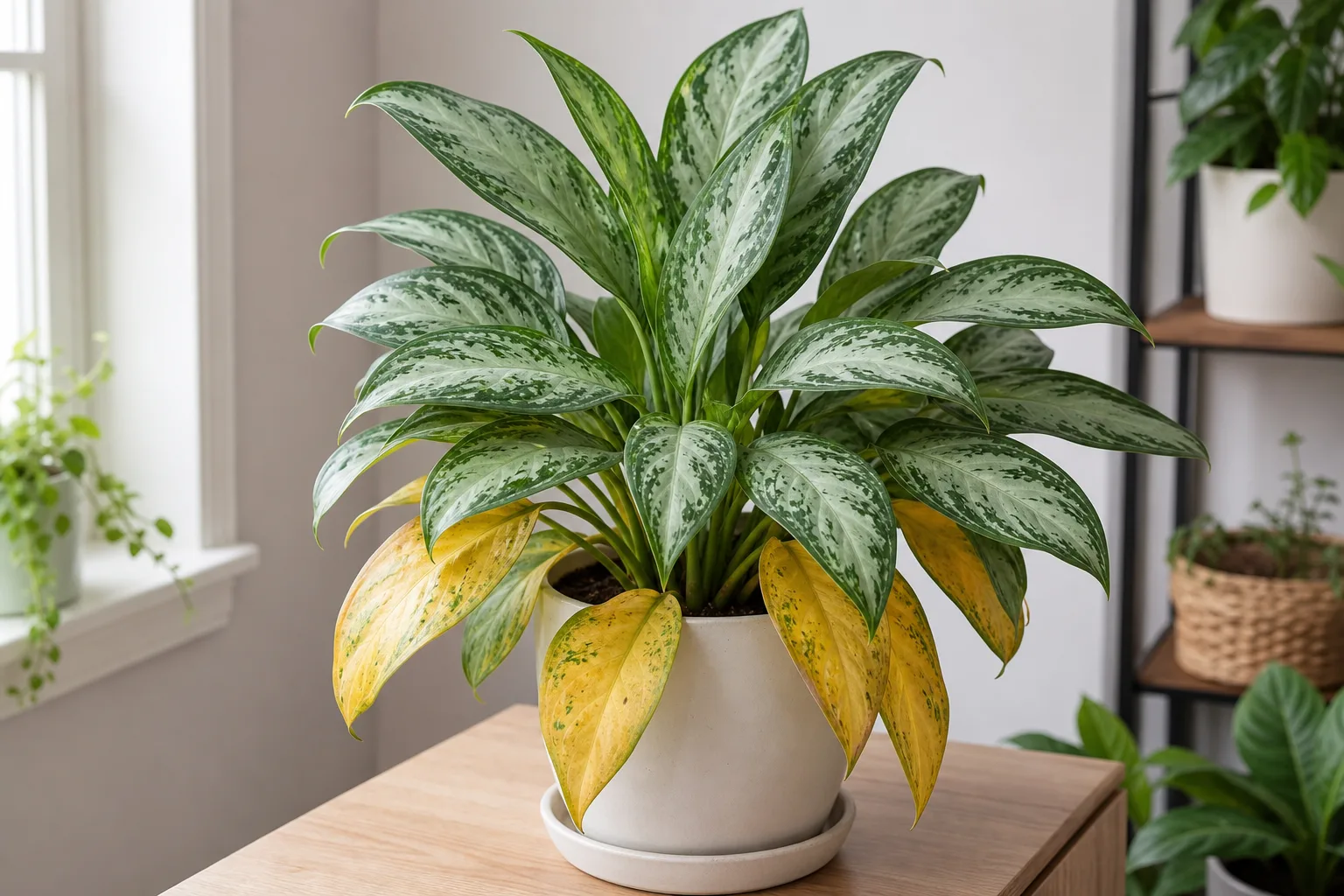
Yellow Leaves on Aglaonema Silver Bay: Causes, Checks & Fixes
This guide covers yellow leaves on Aglaonema Silver Bay. See also the general Yellow Leaves guide, watering, and light pages for this plant.
Yellow Leaves on Aglaonema Silver Bay: Causes, Checks & Fixes
Quick answer
Yellow leaves on Aglaonema Silver Bay are a stress signal, not one diagnosis. This cultivar is marketed as forgiving-and it is-but that tolerance cuts both ways. Silver Bay’s broad, silver-splashed leaves and dense root system hold moisture longer than thinner Chinese evergreens, so owners often overwater a plant that would survive a missed drink for weeks. Because drought tolerance is real, limp leaves are often read as thirst when the mix is already wet-the fastest path to yellow lower leaves and eventual rot.
The most common trigger is soil that stays wet too long, especially in winter when lower light slows water use and cold air slows evaporation from the pot. Overwatering decreases oxygen available for root growth and is the most frequent cause of yellowing on houseplants. For wet-soil-only cases, the overwatering on Silver Bay guide goes deeper on dry-down rhythm and drainage fixes.
First step: check moisture at root depth before you change anything else. Push your finger into the top half of the mix or use a skewer to the midpoint of the root ball. If it feels cold and damp, stop watering until that zone dries. If the surface is dust-dry and the pot is lightweight, underwatering may explain the pattern-but on Silver Bay that is less common than chronic wet soil.
Separate normal lower-leaf aging from stress yellowing before you reach for fertilizer or repot.
What yellow leaves look like on Aglaonema Silver Bay
Silver Bay carries broad, silver-splashed leaves on short upright stems. Yellowing shows up in distinct patterns that point to different causes:
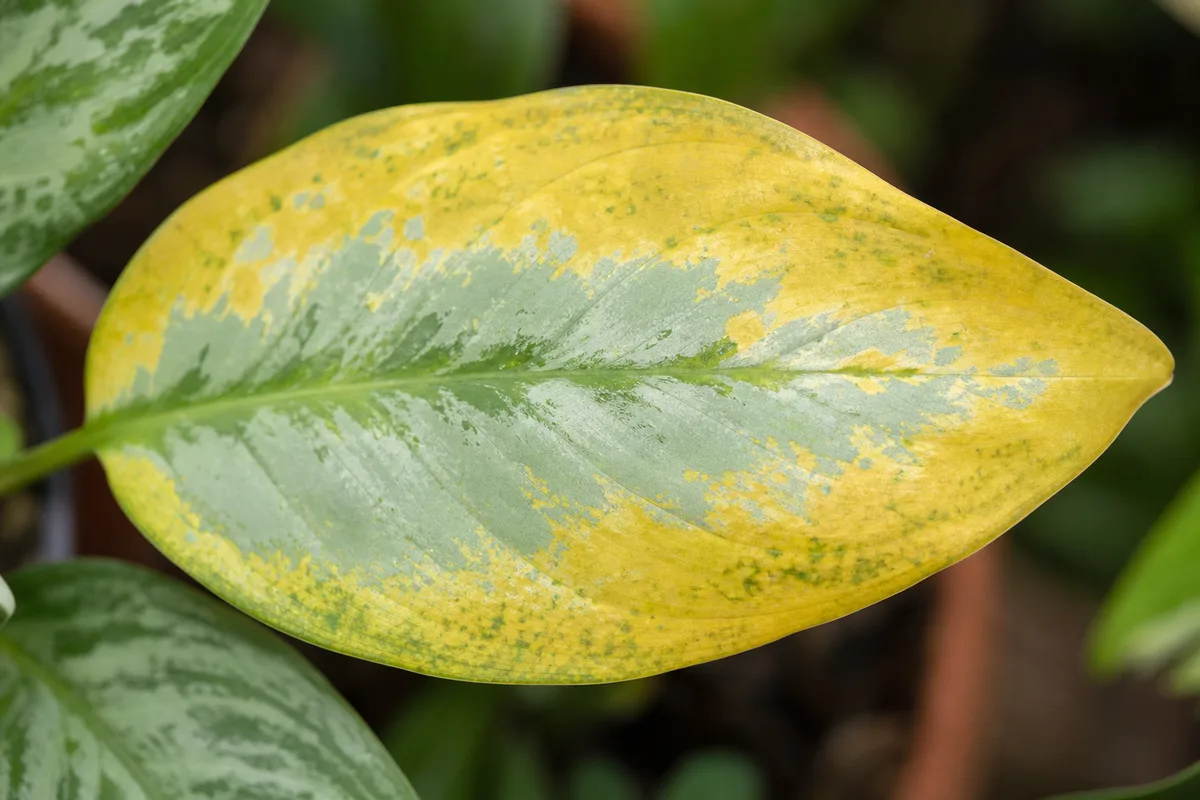
Yellow Leaves symptoms on Aglaonema Silver Bay - compare with healthy tissue on the same plant.
- Normal aging - One or two oldest bottom leaves fade from silver-green to yellow over weeks or months while new center leaves stay firm and colorful. On a slow-growing cultivar, losing a lower leaf now and then is expected turnover, not a crisis.
- Overwatering stress - Multiple lower leaves turn uniform yellow or pale green. Leaves may feel limp even though soil is wet. The pot stays heavy days after watering, and you may notice a sour smell from the mix.
- Cold damage - Yellowing can appear suddenly on leaves touching a cold window, near an AC vent, or after a drafty night. Leaf tissue may look water-soaked along veins before turning yellow or brown.
- Direct sun bleaching - Silver Bay’s variegated foliage placed in direct sunlight often shows pale or washed-out yellow patches on the sun-facing side while the shaded side keeps darker green. The silver markings fade first.
- Underwatering - Less common on Silver Bay, but chronic drought yellows leaf edges first, then whole blades. Soil pulls away from the pot sides and feels bone-dry through the root ball.
Silver Bay rarely yellows from a single missed watering. Worry when the pattern spreads up the plant, pairs with wet soil, or hits new growth.
Yellow leaves vs lookalikes (quick check)
| Pattern you see | Most likely issue | Fast differentiator |
|---|---|---|
| One or two oldest bottom leaves fade slowly | Normal senescence | New center growth firm; pot dries on schedule |
| Multiple uniform yellow lower leaves + heavy wet pot | Overwatering | Sour smell possible; see overwatering |
| Patchy pale yellow on sun-facing side only | Direct sun bleaching | Shaded side keeps color; move per light guide |
| Sudden yellow after cold night or AC blast | Cold + wet soil combo | Leaf near vent or glass; mix still damp |
| Crispy brown tips, minimal whole-leaf yellow | Fluoride, salt, or low humidity | See brown tips |
| Mushy stem base + sour mix + crown collapse | Root rot | Escalate to root rot same week |
| Long stems + washed-out new leaves | Too little light | Overlaps with wet soil; see not enough light |
If wet soil and multiple yellow lower leaves appear together, treat watering and drainage first-not fertilizer or repotting.
Why Aglaonema Silver Bay gets yellow leaves
Overwatering is the leading cause
Silver Bay prefers evenly moist soil-not constant sogginess. When the mix stays saturated, roots lose oxygen and stop functioning. The plant sheds older leaves first because it cannot support them, which shows up as lower leaves turning yellow while the crown still looks intact.
This pattern worsens in cool, dim conditions. Silver Bay grows slowly in winter and uses much less water than in summer. Watering on the same summer schedule in December keeps the root zone wet for days-a common path to yellow leaves and eventually root rot. Because this cultivar tolerates drought well, owners sometimes compensate with extra water after a dry spell, which pushes an already damp root zone past its limit.
Heavy potting mix, blocked drainage holes, oversized pots, and saucers or decorative cachepots left full of runoff all keep roots wet longer than Silver Bay tolerates. Office plant sleeves that hide standing water after bottom-watering are a frequent hidden cause-the top half may feel acceptable while the bottom sits submerged. Root rot on Chinese evergreen usually results from slow-draining mix or overwatering.
Cold temperatures and drafts
Silver Bay is tropical foliage. Sustained exposure to temperatures below about 15°C (60°F) disrupts root function and leaf metabolism. Chinese evergreen is sensitive to chilling below about 55 °F and grows best around 68–80 °F. Cold windowsills, frequently opened doors, and air-conditioning vents blowing directly on the pot are frequent triggers in homes.
Cold stress often pairs with wet soil in winter-the combination that pushes a forgiving plant into rapid decline. Yellowing can appear within days when chilled roots sit in saturated mix, not over the gradual timeline of normal lower-leaf aging.
Too much direct light
Silver Bay needs low to moderate indirect light but burns in direct sun. Sun bleaching looks like yellow or washed-out patches on exposed leaf surfaces, not the uniform lower-leaf fade of overwatering. The silver variegation is especially prone to fading in harsh light.
Natural lower-leaf senescence
Because new leaves emerge from the center of each crown, the oldest leaves at the bottom eventually yellow and drop. On a healthy Silver Bay, this happens gradually-one leaf at a time-with firm new growth above. Removing fully yellow leaves keeps the base tidy and reduces hiding spots for mealybugs.
Low light compounding wet soil
Silver Bay tolerates low light better than most houseplants, but very dim placement slows photosynthesis and water use. Soil that would dry in a week under brighter indirect light may stay damp for two weeks in a dark corner-making a normal watering habit effectively become overwatering. Aglaonema has low water requirements and it is important not to overwater, which may trigger other problems including yellow foliage. Pair dim placement checks with the not enough light guide when new growth looks leggy and pale.
Tap-water fluoride, salt buildup, and nutrient stress (less common)
Aglaonema is sensitive to fluoride and excess salts in tap water, which more often cause brown tips and edge burn than whole-leaf yellowing-but chronic salt stress can yellow or pale foliage over time. If tips brown while only occasional whole leaves yellow, review water quality and feeding before assuming root failure. Detail lives in the brown tips on Silver Bay guide.
Repeated long dry cycles can yellow and crisp leaf edges. Nutrient deficiency usually follows years in the same depleted mix and more often causes pale new growth than random yellowing on an otherwise well-fed plant. Do not assume fertilizer is the fix until moisture and light are stable.
How to confirm the cause
Work through this inspection in order:
- Moisture through the top half - Dry means you can water soon; cold and damp means pause watering. Bone-dry mix with a lightweight pot suggests underwatering.
- Pot weight and drainage - Lift the pot before and after watering. A heavy pot days later confirms slow dry-down. Check that drainage holes are open, cachepots are empty, and saucers are not holding water.
- Which leaves are affected - Bottom only, slowly = aging likely. Multiple lower leaves quickly + wet soil = overwatering likely. Sun-facing patches = light stress. New center growth yellowing = more serious root or nutrient stress.
- Temperature placement - Is the pot on a cold windowsill, near AC, or in a draft? Night temperatures below 15°C support cold stress.
- Light exposure - Direct sun on variegated leaves? Very dark corner with wet soil? Both patterns have distinct fixes.
- Root spot-check (if wet soil + spreading yellow) - Gently slide the plant partway out of the pot. Firm pale roots support a dry-down fix. Mushy brown roots confirm rot-open the root rot guide for trim-and-repot steps.
Confirmed overwatering shows at least two signs: wet mix at depth, yellowing lower leaves, and a heavy pot that is not drying on schedule.
First fix for Aglaonema Silver Bay
Stop watering until the top half of the mix is dry.
That single pause breaks the wet cycle that causes most Silver Bay yellow leaves. Do not compensate with fertilizer, misting marathons, or an immediate repot unless roots are already mushy.
After the mix dries:
- Water thoroughly until runoff exits the drainage holes, then empty the saucer within 30 minutes. Never let houseplants stand in a saucer of water.
- Move the plant to low or medium indirect light if it sits in deep shade with chronically wet soil-slightly brighter light helps the pot dry predictably without exposing variegated leaves to direct sun.
- Move away from cold windows and AC drafts if leaf yellowing appeared after a temperature drop.
Remove fully yellow leaves at the base with clean scissors. Partially green leaves can stay-they still photosynthesize while the plant recovers.
Make this one correction first. Wait two weeks before stacking repotting, feeding, or pest treatments unless roots are clearly rotting.
If roots are mushy
When a spot-check finds brown, slimy roots and sour-smelling mix, escalate to root rot recovery on Silver Bay: unpot, trim dead roots, let cut surfaces dry briefly, and repot into fresh well-draining mix with perlite. Do not water for seven to ten days after repotting. That path is for confirmed rot-not for a single aging bottom leaf.
Step-by-step recovery
Match follow-up steps to what you confirmed:
Overwatering (wet soil, firm crown):
- Let the top half of mix dry fully between waterings per the Silver Bay watering guide.
- Adjust winter frequency-Silver Bay often needs water every 14–21 days in cool months versus every 7–10 days in active summer growth.
- Improve airflow around the pot and ensure drainage holes are clear.
- Watch for new center leaves staying silver-green for two consecutive weeks.
Cold stress:
- Move to a stable 18–27°C (65–80°F) spot away from vents and cold glass.
- Remove severely damaged leaves; do not water heavily while the plant is cold-stressed.
- Allow normal dry-down before the next drink.
Direct sun bleaching:
- Shift to bright indirect light per the light guide-never direct rays on variegated foliage.
- Trim fully bleached leaves if they are mostly yellow; new leaves should show stronger color in correct light.
Normal aging:
- Snip off fully yellow bottom leaves.
- No watering or light change needed if new growth stays firm and the pot dries on a healthy schedule.
Recovery timeline
Fully yellow leaves do not turn green again. They drop or can be removed. Judge recovery by healthy new leaves, not old leaf color. Recovery is measured by new growth from the center:
- Mild overwatering - Yellowing often stops within one to two weeks once soil oxygen returns. New leaves emerge green within two to three weeks.
- Cold shock - Damaged leaves may drop; new growth resumes after stable warmth within two to four weeks.
- Advanced root rot - Recovery takes longer and may be partial. If the crown softens or new leaves keep yellowing after a dry-down and root trim, the plant may not be saveable.
Signs of improvement: pot weight drops on a normal schedule, new leaves hold their color, and yellowing does not climb toward the center. Signs of worsening: sour smell, soft stems, yellowing on new growth, or soil that never dries.
What not to do
Do not water more because leaves look limp when soil is already wet-that deepens root stress.
Do not fertilize a yellowing, wet-rooted plant. Salt buildup from overfeeding can also yellow foliage and burn leaf edges on Aglaonema.
Do not repot on day one unless roots are mushy or drainage has failed. Repotting a waterlogged plant into a bigger pot often makes drying slower.
Do not move Silver Bay into direct sun to “help it recover.” Bright indirect light is the ceiling for this variegated cultivar.
Do not ignore cold placement while fixing watering. Wet soil plus cold air is the fastest route from yellow leaves to crown rot on this plant.
How to prevent yellow leaves on Aglaonema Silver Bay
Prevention comes down to matching water to how fast the pot actually dries in your home:
- Water on dryness, not calendar - Check the top half of mix every time. Summer may mean every 7–10 days; winter often means every 14–21 days.
- Use well-draining mix - Standard potting compost with perlite; avoid dense garden soil in a decorative pot without drainage.
- Keep temperatures stable - Above 15°C (60°F) always; ideal range 18–27°C (65–80°F).
- Place in low to medium indirect light - Silver Bay handles dimmer spots well but needs enough light for the pot to dry predictably; never direct sun on variegated leaves.
- Empty cachepots and saucers - After every watering, not just occasionally.
- Remove spent lower leaves promptly - Keeps the base clean and makes new problems easier to spot early.
When to worry
Treat yellow leaves as urgent when:
- Many leaves yellow within a week, not one bottom leaf over months.
- Soil smells sour or stems feel soft at the soil line.
- New center growth yellows while older leaves also decline.
- The plant collapses despite moist soil-roots may be failing to absorb water.
A single yellow bottom leaf on an otherwise stable Silver Bay with normal dry-down is routine. Widespread yellowing with wet soil is not-inspect roots the same week and open root rot on Silver Bay if tissue is mushy.
Aglaonema Silver Bay care cross-check
If yellow leaves keep returning after you adjust watering, compare your routine to what this cultivar actually needs:
| Checkpoint | Healthy target | Yellow-leaf risk when wrong |
|---|---|---|
| Soil moisture | Top half dry before watering | Wet mix for days after each drink |
| Seasonal rhythm | Less water in cool, dim months | Summer schedule all year |
| Light | Low to medium indirect | Deep shade + wet soil, or direct sun on variegated leaves |
| Temperature | 18–27°C (65–80°F), above 15°C minimum | Cold windowsills and AC drafts |
| Pot and mix | Drainage holes open; light, airy mix with perlite | Oversized pot, cachepot water, heavy soil |
Fix the condition that fails this check before adding fertilizer, repotting for size, or treating for pests you have not confirmed.
How this guide was verified
Recommendations were checked against Clemson Cooperative Extension, UF/IFAS Gardening Solutions, Missouri Botanical Garden, and LeafyPixels Silver Bay overview data. Inline citations sit next to the claims they support; unresolved contradictions are flagged for review rather than silently rewritten.
Author: sai-ananth · Reviewer: LeafyPixels Review Board · Reviewed: 2026-06-17 · Claims validated: 2026-06-17 (see metadata below)
Related Silver Bay guides
Problem pages: overwatering · root rot · underwatering · brown tips · not enough light
Care cluster: overview · watering · light · soil
Yellow leaves on Silver Bay usually trace to wet roots, cold drafts, sun bleaching, or normal lower-leaf aging-each needs a different response. Check the top half of the mix, let wet soil dry, and judge recovery by firm new silver-green growth from the center.