Wilting on Aglaonema Silver Bay: Wet Soil, Office Light
Quick answer
Wilting on Aglaonema Silver Bay is most often a wet-soil problem, especially in cachepots and dim offices where this cultivar can survive on less light but use water slowly. First step: lift the pot, check whether the mix is still wet, and inspect the crown before watering again.
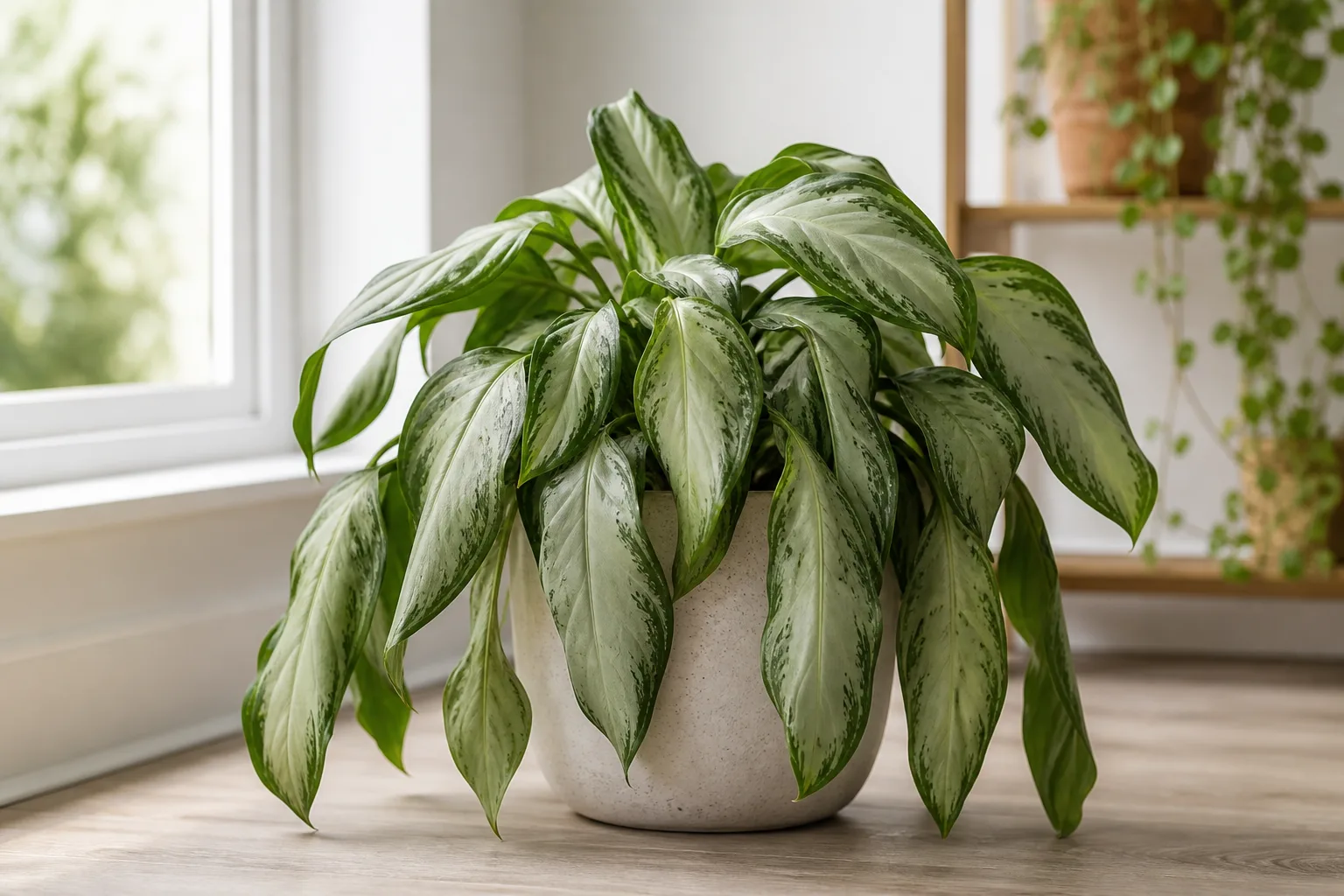
Wilting on Aglaonema Silver Bay: Wet Soil, Office Light, or True Thirst?
This guide covers wilting on Aglaonema Silver Bay. See also the general Wilting guide, watering, and light pages for this plant.
Wilting on Aglaonema Silver Bay: Wet Soil, Office Light, or True Thirst?
Quick answer
Silver Bay is one of the easiest Chinese evergreens to keep alive in lower indoor light, but that strength creates its most common wilt problem: the plant survives in dim rooms while the pot dries slowly, so owners keep watering long after the roots needed air. Clemson and NC State both describe Aglaonema as durable but still prone to overwatering injury (Clemson HGIC; NC State Extension).
First step: lift the pot and check whether the mix is actually dry. A light pot with dry topsoil suggests true thirst. A heavy wet pot with limp broad leaves, especially in a decorative cachepot or dim office, points to wet-root stress instead.
What wilting looks like on Silver Bay
Silver Bay usually carries broad, heavy leaves with a silvery center and dark green margin. That means wilt often shows as a general sagging of large blades rather than a quick curl on small leaves.
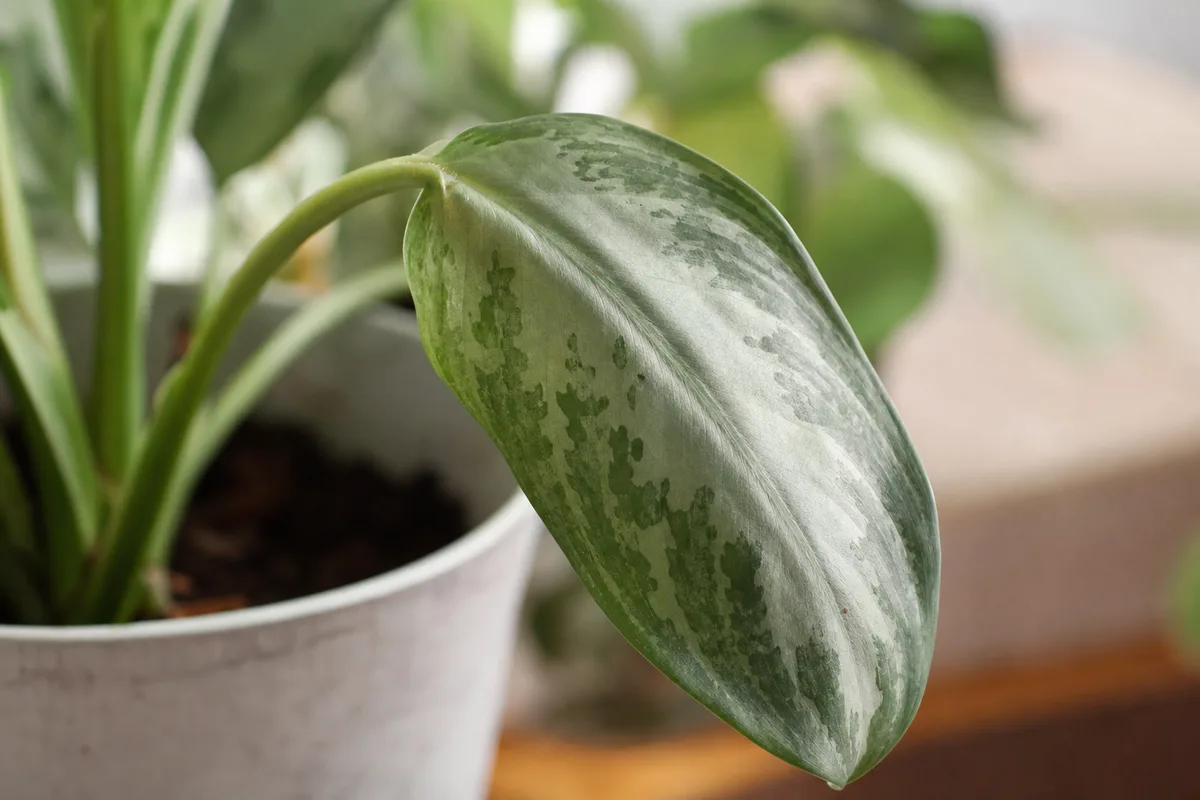
Silver Bay often shows wet-root wilt as broad, heavy leaves losing support while the pot still feels cool and saturated.
Typical patterns:
- Wet-soil wilt: heavy pot, dark cool mix, limp lower leaves, possible yellowing
- Dry wilt: lighter pot, thinner-feeling leaves, mild curl, dry surface
- Dim-office decline: softer growth, slower drying, faded silver contrast, chronic mild limpness
- Cold-draft collapse: sudden downturn after vent or window exposure
Silver Bay is different from Pink Dalmatian here. It can tolerate lower light better, which means many failures happen because the pot stays wet in a room the plant can survive, but not thrive, in.
Why this cultivar wilts
1. Wet roots in low-light interiors
Silver Bay is routinely sold for offices and darker homes because it holds up better than brighter-colored aglaonemas in medium to lower light (UF/IFAS). That makes overwatering more likely, not less, because water use slows in those interiors.
2. Cachepots and decorative containers
This cultivar is often kept in a nursery pot dropped inside a cover pot. If runoff sits at the bottom, broad leaves wilt even though the owner thinks the plant “just got watered normally.”
3. Real drought still happens
Silver Bay is drought tolerant by houseplant standards, but it can still wilt if the root ball goes too dry, especially in a small pot near brighter light or warm airflow. The point is not that drought never happens. It is that wet-soil wilt is the more common mistake here.
How to confirm the cause
- Pot weight. This is the fastest fork in the road.
- Top-inch moisture. Dry supports thirst. Wet pushes you toward root stress.
- Cachepot check. Lift the nursery pot out and look for trapped runoff.
- Crown check. Softness raises urgency.
- Placement check. A dim cubicle or dark shelf changes the watering math.
Quick split:
| Clue | Most likely branch | First move |
|---|---|---|
| Heavy pot, wet mix, lower yellowing | Wet-root wilt | Stop watering, drain cachepot, reassess |
| Light pot, dry mix, mild curl | Dry wilt | Water once, then watch recovery |
| Damp mix plus dim office and soft stretched growth | Low-light plus overwatering | Brighten placement and lengthen dry-down |
First fix
Empty trapped water and stop watering until the pot tells you it is ready.
On Silver Bay, that often means pulling the nursery pot out of the decorative container, dumping any standing water, and letting the mix dry to the top inch or slightly beyond before the next watering. If the pot is already dry and light, then give one thorough drink and stop there.
Recovery by cause
Wet-root wilt
- remove standing water from the cachepot or saucer
- pause watering
- give brighter indirect light if the room is very dim
- inspect roots only if decline continues as the mix dries
Dry wilt
- water thoroughly until runoff drains
- empty all excess water
- expect some rebound within 24 to 48 hours if roots are healthy
Low-light softening
- move the plant gradually toward brighter indirect light
- keep watering conservative during the transition
- judge progress by firmer new growth and more normal dry-down speed
What not to do
- Do not water again just because the leaves look limp.
- Do not leave runoff hidden in a cover pot.
- Do not assume “low-light tolerant” means “likes wet soil in low light.”
- Do not repot on day one unless rot or failed soil is obvious.
Recovery timeline
Silver Bay often improves once the root zone gets oxygen back. If the crown is firm and roots are not rotten, wet-soil wilt can stabilize over one to three watering cycles. Dry wilt rebounds faster. Light-related chronic softness is slower and depends on better placement plus a corrected watering rhythm.
The best signs are:
- a pot that starts drying predictably again
- broad leaves no longer sagging after each watering
- firm crown and intact new growth
When to use this page vs other Silver Bay guides
- Aglaonema Silver Bay watering guide - for long-term moisture rhythm
- Overwatering on Aglaonema Silver Bay - when the pot is clearly wet
- Underwatering on Aglaonema Silver Bay - when the pot is clearly dry
- Root Rot on Aglaonema Silver Bay - when the roots or crown are failing
- Aglaonema Silver Bay overview - for complete cultivar care