Aglaonema Silver Bay Pruning: When, How, and Mistakes
Aglaonema Silver Bay Pruning: When, How, and Mistakes to Avoid
Aglaonema Silver Bay Pruning: When, How, and Mistakes to Avoid
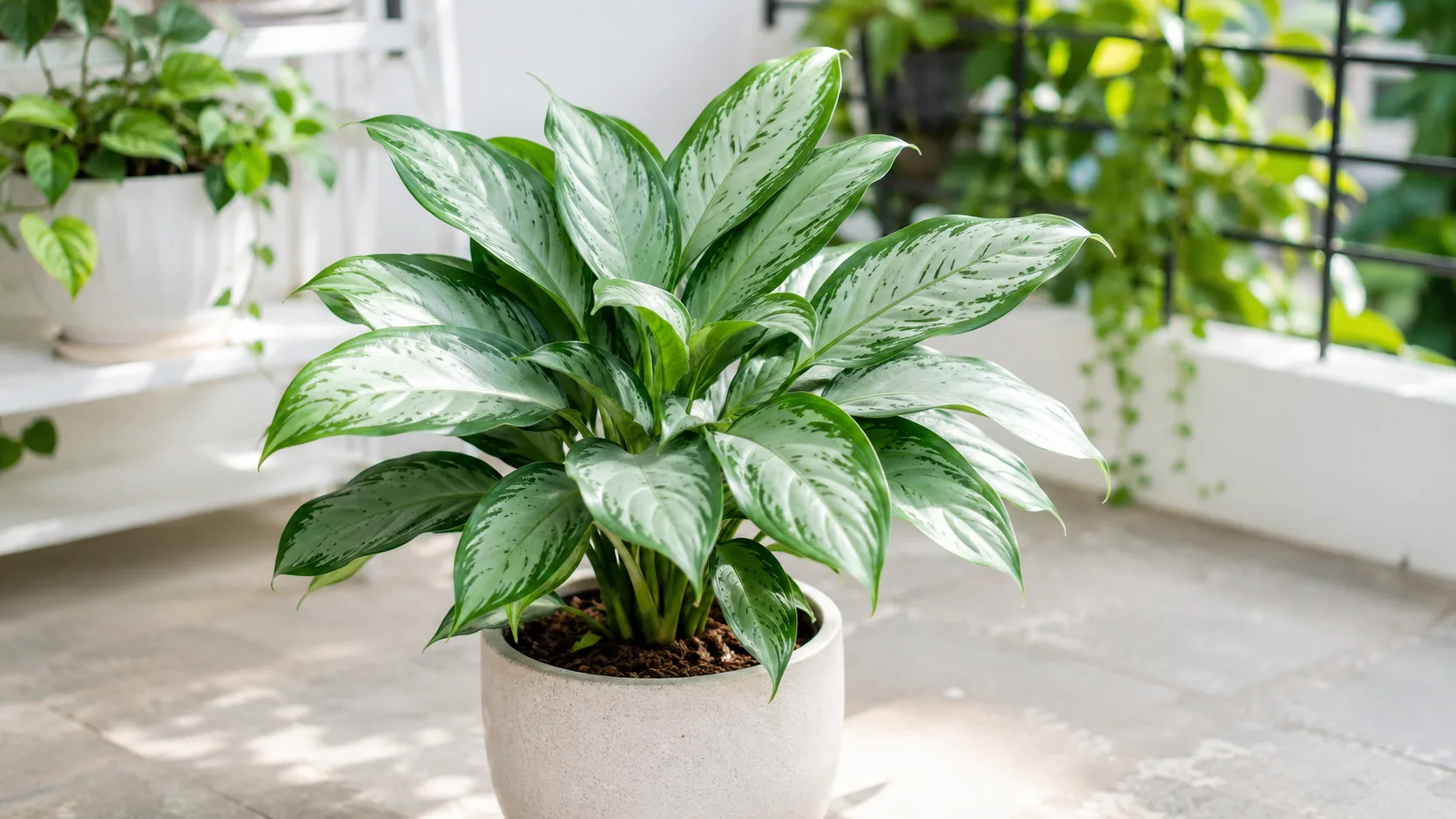
Start by removing only fully dead, diseased, or pest-heavy leaves with clean sharp scissors - not healthy silver-green tissue because the pattern looks uneven. Aglaonema Silver Bay (Aglaonema commutatum ‘Silver Bay’) is grown for its broad silver-and-green leaves and tolerance of lower light, not for frequent shaping. The Royal Horticultural Society lists no pruning required for several Aglaonema cultivars under normal conditions, and UF/IFAS states that pruning is not necessary for the genus beyond removing dead or yellowing leaves. That guidance matters for Silver Bay because variegated foliage grows slowly; every healthy leaf you remove reduces photosynthetic capacity for weeks. Aglaonema Silver Bay pruning should be selective - groom what no longer serves the plant, correct awkward legginess when light and roots support recovery, and resist trimming for tidiness alone.
Silver Bay differs from faster plain-green Chinese evergreens in one practical way: the pale silver sectors on each leaf are stable variegation, not damage. Removing leaves because the silver pattern looks patchy wastes useful tissue. Prune when you see dead, diseased, or pest-heavy material; when a cane has stretched in dim light and carries foliage only at the top; or when a torn leaf blocks inspection of the stem base. Pruning does not fix chronically wet soil, cold drafts, or root rot on Aglaonema Silver Bay - diagnose those first, then cut.
Why Silver Bay Rarely Needs Scheduled Pruning
Chinese evergreens naturally maintain a dense crown of leaves on upright stems. Silver Bay’s silver-green pattern stays stable when light is adequate; faded or smaller new leaves usually signal placement, not a need for scissors. Clemson Cooperative Extension describes Aglaonema as a low-maintenance foliage plant that needs little more than removal of old leaves in most homes. That matches Silver Bay’s slow growth habit: a plant on a dim office shelf may go years with only occasional yellow-leaf cleanup.
Legginess still happens. When Silver Bay sits far from a window, internodes lengthen and lower leaves yellow with age, leaving a bare cane topped by a small cluster. Pruning can reset that silhouette - but brighter indirect light must accompany the cut, or replacement growth will stretch again within a season.
Variegation Is Not a Pruning Trigger
Do not cut leaves because silver sectors look pale next to green margins. Compare questionable foliage with newer leaves on the same plant. Stable silver patterning is normal Silver Bay coloration. Chlorotic yellowing usually affects whole leaves or progresses rapidly across several at once. When uncertain, photograph the leaf and reassess after several days before making an irreversible cut. Cosmetic symmetry is a poor reason to defoliate a slow variegated grower.
What to Inspect Before You Cut
Pause and read the whole plant before opening scissors. Check which leaves are affected, how quickly symptoms appeared, whether stems feel firm, and whether the potting mix smells sour. A single old lower leaf yellowing gradually tells a different story from six leaves yellowing in a week. Dry brown edges point toward different causes than soft water-soaked patches.
Probe the soil below the surface. If it stays saturated, the pot feels unexpectedly heavy, or drainage smells off, widespread yellowing may reflect root stress - not a pruning deficit. Examine leaf undersides, petiole bases, and stem joints for mealybugs, scale, webbing, or sticky residue. Assess light: a Silver Bay several feet from a shaded window may survive while producing weak, widely spaced growth. Pruning without correcting those conditions merely removes evidence of the problem.
Yellow Lower Leaves vs Rapid Collapse
One yellow leaf at the base of an otherwise vigorous plant is usually normal senescence. Older lower leaves eventually lose chlorophyll and die. You can wait until a leaf is fully yellow before removing it, especially when the rest of the plant is firm. Multiple yellow leaves demand a root-cause check: chronically wet mix, poor drainage, cold exposure, abrupt light changes, root damage, and some pests can all produce yellowing. If six leaves yellow in a week, inspect roots and soil moisture before pruning - cutting symptoms off a waterlogged plant does not solve the underlying problem.
Leggy Canes and Bare Stems
A leggy Silver Bay has elongated internodes, a crown carried well above a bare lower cane, or stems leaning far outside the pot. Age produces some bare stem naturally, but inadequate light often accelerates open growth. Move the plant toward brighter indirect light before or soon after structural cuts, but avoid an abrupt transfer into harsh direct sun that can bleach silver sectors. When the lower stem is bare but the top is healthy, you can root the top as a tip cutting or shorten the cane and let the base attempt to sprout - success depends on warmth, healthy roots, and absence of rot.
When to Prune Aglaonema Silver Bay
Minor grooming - dead leaves, spent flower stalks, stable brown tip edges - can happen any time. Structural cuts that shorten canes or remove multiple healthy leaves belong in late spring through early summer, when warmth and longer days support bud break. Avoid heavy reshaping immediately after Aglaonema Silver Bay repotting guide, shipping, or a cold shock; let the plant stabilize first.
Remove fully yellow or brown leaves whenever you notice them. Wait on partly yellow lower leaves if the rest of the plant is vigorous and the change is gradual senescence, not rapid collapse. Flower removal is optional: cut spent inflorescences near the base when they decline or complicate pest inspection, but flowering itself is not proof the plant needs pruning.
Tools, Sanitization, and Sap Safety
Use sharp bypass pruners or fine scissors for petioles and slender stems; thicker mature canes may need a clean knife. Iowa State University Extension recommends wiping blades with 70% isopropyl alcohol before use and between cuts when disease is suspected. Remove visible sap and debris first because disinfectants work best on a clean surface.
Wear gloves. Silver Bay sap contains insoluble calcium oxalates that irritate sensitive skin. The ASPCA lists Chinese evergreen as toxic to cats and dogs, with oral irritation, drooling, and vomiting possible after ingestion. Bag trimmings and keep them off floors where pets explore. Do not compost suspicious diseased material casually indoors.
How to Remove Dead and Damaged Leaves
Follow the petiole from the leaf blade to its base on the main stem. Cut close to the stem in one clean motion without nicking neighboring tissue. Do not pull a firmly attached petiole - tearing can damage the cane. Hold the dead leaf gently so its weight does not twist tissue during the cut.
If a fully dead lower leaf releases with almost no resistance, it may come away cleanly by hand; stop if you feel the stem twist. After the cut, look at the petiole base: firm pale or green tissue is reassuring; brown mush or odor warrants investigation before you continue.
Brown Tips on Silver-Green Foliage
Dry brown tips on otherwise green leaves are mainly cosmetic. Trim only the dead margin following the leaf contour with sanitized scissors, or leave the tip if most of the blade is still useful. A small dry tip does not require whole-leaf removal - the green portion still benefits the plant. Remove the whole leaf when more than half is dead, when soft water-soaked patches expand, or when mealybugs hide in the petiole fold and treatment requires removal.
Shortening Leggy Silver Bay Canes
When the lower stem is bare but the top is healthy, choose one of two paths. Option one: cut the top as a tip cutting and root it; Clemson Extension identifies tip and stem cuttings as established propagation methods for Chinese evergreen and notes that when lower leaves drop and a bare stem develops, the leafy top can be removed and rooted. Option two: shorten the cane to just above a lower node and let the rooted base attempt to sprout. Stagger work if several canes are leggy - shorten one or two stems, wait for recovery, then reassess.
Cut 5–10 mm above a visible node, angled slightly. The node is where leaves attach or dormant buds wait. Exact bud break varies; do not promise symmetrical branching from every cut. Preserve enough healthy rooted growth for recovery whenever possible.
Rooting the Top vs Sprouting from the Base
A tip cutting needs a healthy crown and enough firm stem to handle. Keep the cutting warm, in Aglaonema Silver Bay light guide, and in lightly moist - not saturated - medium. Track which end was originally lower if you divide a long cane. The rooted base may activate lower nodes, but response speed depends on root health, warmth, and light. Retain a healthy parent base even when rooting the top, because cuttings are not guaranteed to succeed.
How Much Foliage Is Safe to Remove
Remove no more than one-quarter to one-third of healthy foliage per session. Silver Bay’s variegation means slower regrowth than plain green Aglaonema; aggressive defoliation leaves a sparse plant for months. Dead tissue does not count toward the limit. Remove less when the plant is recently stressed, kept in weak light, or showing root problems.
If several canes need shortening, spread major rejuvenation across two or three sessions spaced several weeks apart. A vigorous specimen in warm bright indirect light can recover from more, but there is rarely a cosmetic reason to test the limit on a slow variegated cultivar.
Aftercare and Recovery Timeline
After pruning, return the plant to bright indirect light - not direct sun, which can bleach silver sectors. Hold fertilizer until new growth appears. Water when the top half of the soil dries, the same rhythm as before; a smaller canopy may need water less often. Do not water automatically on the old schedule if the mix stays wet longer than expected.
Normal recovery may include a pause of several weeks before new leaves emerge on a slow variegated plant. Signs pruning worked: firm stems, no spreading discoloration at cut sites, and eventually a new leaf or shoot from a node. Worsening wilt, cane collapse, or continued rapid yellowing means the underlying care problem remains unresolved. Watch cut sites for softening or odor, and inspect for pests weekly for several weeks.
Common Silver Bay Pruning Mistakes
Pruning without improving light produces new stretched shoots. Removing too many leaves for symmetry strips a slow grower of reserves. Cutting through rot without tracing back to firm tissue spreads decay. Pulling leaves tears cane tissue. Pruning and repotting together stacks stress Silver Bay tolerates poorly when already weakened. Trimming silver variegation because it looks uneven wastes healthy tissue. Leaving trimmings accessible to pets risks ingestion of toxic material.
Another mistake is forcing geometric symmetry. Silver Bay grows as a living clump, not a manufactured sphere. Rotate the pot, improve light distribution, and let new growth contribute before another round of cuts. A slightly irregular clump with abundant healthy silver-green leaves beats a geometrically even plant stripped of useful foliage.
Conclusion
Aglaonema Silver Bay pruning is mostly restraint: groom dead tissue, trim cosmetic brown edges only when they bother you, and shorten bare canes when a structural reset is genuinely useful. Use sanitized tools, protect yourself from sap, and keep trimmings away from pets. Correct moisture, light, and pest problems that caused the symptom - then prune with a clear purpose. A compact Silver Bay with clean silver-green crowns and firm stems rarely needs scissors beyond occasional yellow-leaf cleanup.
When to use this page vs other Aglaonema Silver Bay guides
- Aglaonema Silver Bay overview - Start here for whole-plant context before deep-diving this topic.
- Aglaonema Silver Bay problems hub - Jump to symptom-specific fix guides when this care topic does not resolve the issue.
- Leggy Growth on Aglaonema Silver Bay - Escalate here when pruning adjustments are not enough.
- Slow Growth on Aglaonema Silver Bay - Escalate here when pruning adjustments are not enough.
- Brown Tips on Aglaonema Silver Bay - Escalate here when pruning adjustments are not enough.
Related Aglaonema Silver Bay guides
- Aglaonema Silver Bay overview
- Aglaonema Silver Bay watering
- Aglaonema Silver Bay light
- Aglaonema Silver Bay soil
- Aglaonema Silver Bay propagation
- Aglaonema Silver Bay fertilizer
- Leggy Growth on Aglaonema Silver Bay
- Slow Growth on Aglaonema Silver Bay
- Brown Tips on Aglaonema Silver Bay
- Aglaonema Silver Bay problems