Low Humidity on Aglaonema Silver Bay: Causes, Checks & Fixes
Quick answer
Low humidity on Aglaonema Silver Bay shows as papery brown tips on oldest leaves-often on silver-gray margins first-while soil moisture stays normal near heating vents in winter. First step: move the pot off forced-air vents and radiators, then check ambient RH with a hygrometer before you change watering.
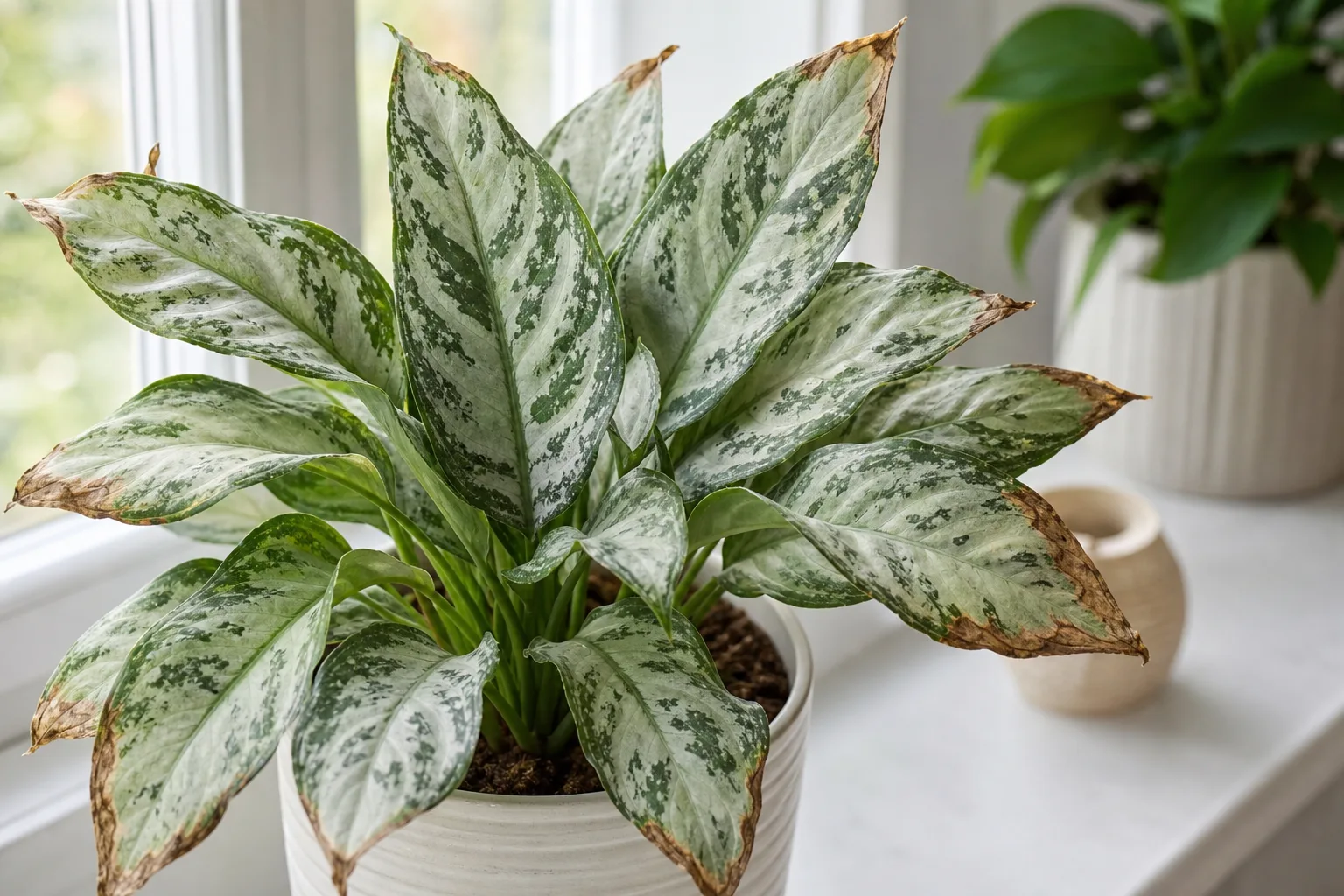
Low Humidity on Aglaonema Silver Bay: Causes, Checks & Fixes
This guide covers low humidity on Aglaonema Silver Bay. See also the general Low Humidity guide, watering, and light pages for this plant.
Low Humidity on Aglaonema Silver Bay: Causes, Checks & Fixes
Quick answer
Aglaonema ‘Silver Bay’ (Aglaonema commutatum ‘Silver Bay’) is a remarkably tolerant Chinese evergreen that handles low light, dry air, and missed waterings better than most tropical houseplants-but it is not immune to furnace-season dryness. Clemson HGIC notes the genus tolerates low humidity while preferring moderate levels, and NC State Extension warns leaves may turn brown in very dry air or a drafty location.
First step: move the pot away from heating vents, radiators, and cold drafty windows, then check ambient RH with a hygrometer beside the foliage. Dry forced-air heat is the most common trigger for papery brown tips on silver-gray leaf margins while the top inch of soil still feels appropriately cool and damp. Do not flood the pot to compensate for dry air-Silver Bay is sensitive to excess moisture and root rot when roots sit wet in a room where transpiration has already slowed.
Does Aglaonema Silver Bay need high humidity?
No-but it needs more than many heated winter rooms provide. Silver Bay evolved in the tropical and subtropical forests of Southeast Asia and New Guinea as an understory plant where ambient moisture stays well above typical indoor levels.
In practice, Silver Bay is more forgiving than calatheas, ferns, or prayer plants. Nebraska Extension lists Chinese evergreen among houseplants that tolerate low humidity well, which matches its reputation as an office and low-light survivor. That tolerance has limits: prolonged RH below about 40% in winter often produces cosmetic brown tips on outer leaves, especially on the silver-gray zones where the leaf has less photosynthetic tissue to subsidize moisture loss.
A useful target band for Silver Bay:
| RH range | What to expect on Silver Bay |
|---|---|
| 25–35% (common heated winter rooms) | Survives; oldest leaf tips often crisp; growth slows |
| 40–50% | Acceptable for most homes; occasional winter tip browning near vents |
| 50–60% | Comfortable target; clean margins on new growth |
| Above 70% | Usually fine with airflow; watch for fungal leaf spot in stagnant corners |
Aim for 50–60% at foliage height when tips keep browning. Below 40%, expect slower growth and papery margins even when watering looks correct. See the Silver Bay watering guide for the full humidity-versus-watering distinction.
What low humidity looks like on Silver Bay - symptom patterns
Dry-air stress on Silver Bay usually appears on the most exposed foliage first-leaves nearest floor registers, radiators, sunny winter glass, or the direct path of AC airflow. Typical patterns:
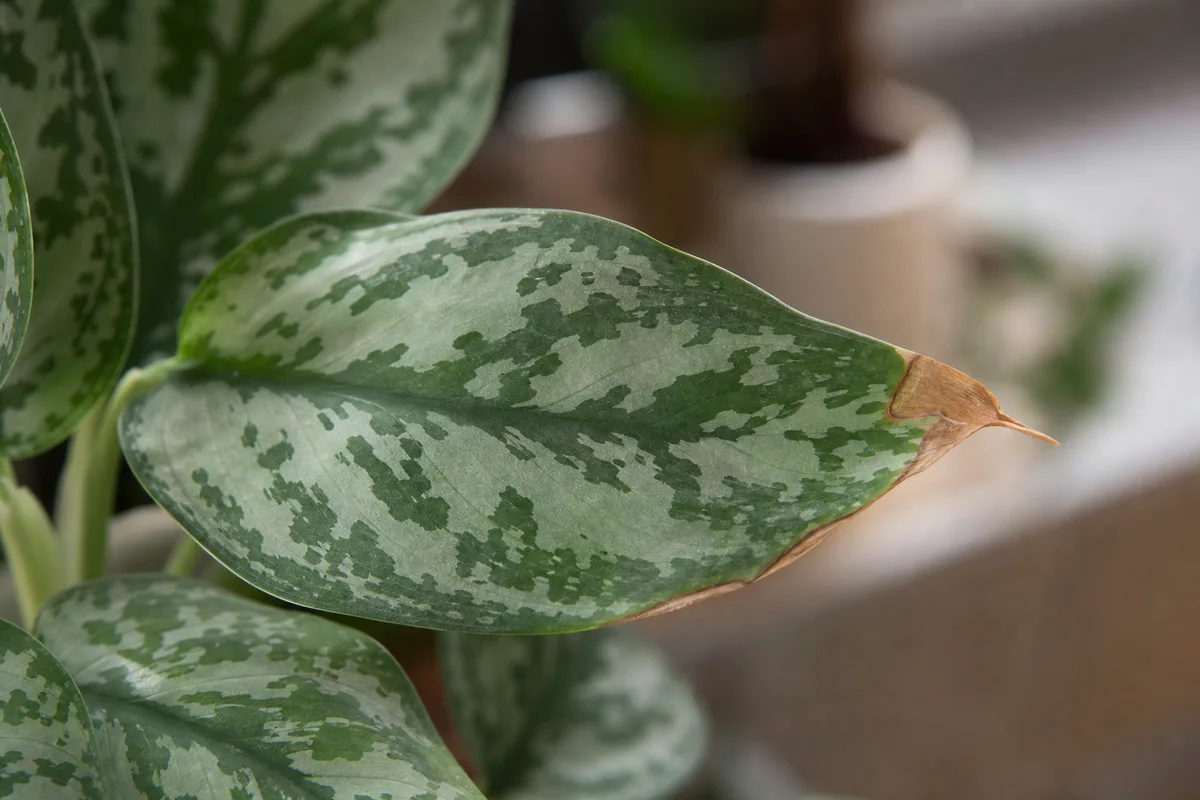
Low Humidity symptoms on Aglaonema Silver Bay - compare with healthy tissue on the same plant.
- Papery brown tips on oldest leaves - Lower, outer leaves brown at the apex and along silver-gray margins while the deep green edge may stay intact longer. NC State notes brown leaves in very dry air or drafty placement on Aglaonema generally.
- Silver margins crisp before center chlorosis - The pale silver center has fewer chloroplasts than the green margin, so dry air often shows on the variegated zone first rather than uniform whole-leaf yellowing.
- Location-specific damage - Only the side facing a heat register or hot afternoon window crisps first; the shaded side stays greener longer.
- Winter timing - Symptoms worsen between October and March when indoor air tends to be excessively dry and relative humidity is low as furnaces warm air without adding moisture.
- New growth stays clean briefly - The crown may push out healthy leaves while older outer tips brown, which helps separate dry air from fertilizer burn that hits new foliage first.
- Spider mite overlap - Spider mites thrive in dry, warm conditions; fine stippling and webbing on leaf undersides alongside tip browning mean dry air and pests may need parallel fixes.
Crispy brown tissue on old leaves does not re-green. Judge recovery by stable new growth at the crown once humidity and placement improve.
Why Silver Bay struggles in dry indoor air
Silver Bay is built for rainforest understory humidity, not furnace-season living rooms-but it is tougher than many tropicals sold beside it on the shelf.
Winter heating strips humidity. Cold outdoor air holds little moisture; indoor heat raises temperature without adding water, so relative humidity stays fairly low in winter and moisture is drawn from foliage. Many heated rooms sit near 25–35% RH while Silver Bay grows best with local moisture closer to 50–60%.
Forced-air vents create microclimates. A pot three feet from a floor register may sit in a stream of very dry air while a wall hygrometer reads higher across the room. Keep plants away from heat vents, radiators, and outside doors before treating foliage alone.
Hot, dry, bright windows compound stress. A Silver Bay on a winter windowsill loses leaf moisture through transpiration faster when sun hits glass and the heater runs. The combination of dry air plus strong indirect light browns silver margins faster than the same RH in a dim corner. See the Silver Bay light guide for placement that avoids scorch plus dryness.
Drought-tolerant roots mask underwatering briefly - Silver Bay tolerates missed waterings, so growers see brown tips and assume thirst. In true low-humidity stress, the top 1 to 2 inches of mix is often appropriately cool and damp and the pot feels normal weight. Adding water without raising RH worsens the wrong problem and risks rot.
Silver Bay vs. calathea expectations - If you moved from caring for a calathea, Silver Bay will look healthier in the same dry room-but brown tips near vents still mean the air is too dry for clean foliage, not that the plant is dying.
How to confirm dry air vs. other causes
Work through these checks before you change watering, fertilizer, or Aglaonema Silver Bay repotting guide:
- Room and microclimate RH - Use a digital hygrometer near the foliage for 24 hours. Most houseplants prefer 40–60% RH; Silver Bay tolerates lower but shows tip stress when winter rooms sit near 30–40%.
- Vent, radiator, and AC draft check - Note distance to heating vents, radiators, fireplaces, AC returns, and cold window glass. Keep plants away from heat vents and radiators before treating foliage alone.
- Soil moisture vs. air dryness - Push your finger into the top 1 to 2 inches. Cool, slightly damp mix with papery brown tips points to low humidity. Dusty dry mix and a light pot point to underwatering instead.
- Leaf age pattern - Oldest outer leaves with silver-margin crisping fit dry air. Browning concentrated on newest leaves suggests salt, fluoride, or fertilizer burn-see brown tips.
- Salt and water quality - White crust on the pot rim with browning on newest leaves suggests hard-water or fertilizer salts. Humidity fixes alone will not clear salt burn.
- Pest check - Examine leaf undersides with a hand lens. Fine webbing, stippling, or moving specks on white paper mean spider mites-dry air favors outbreaks and needs pest treatment alongside humidity work.
- Seasonal timeline - Symptoms that appear when heat kicks on strongly support environmental dryness rather than sudden root failure.
If soil stays wet for days, roots smell sour, or yellowing spreads with wilting, treat as overwatering or root rot-not humidity.
Symptom lookalike table
| Pattern | Likely cause | Quick check |
|---|---|---|
| Papery tips on oldest leaves, moist soil, near vent | Low humidity | RH below 40%; obvious heat source |
| Limp leaves, light pot, dry top 1–2 inches | Underwatering | Deep soak perks foliage in 12–24 h |
| Stippling + webbing on undersides | Spider mites | Tap test on white paper |
| Brown tips on newest leaves, white pot crust | Salt / fluoride burn | Hard tap water; recent fertilizer |
| Wilting, heavy pot, wet mix, sour smell | Overwatering / root rot | Soft brown roots when unpotting |
| Sharp brown tips after feeding, crust on soil | Fertilizer burn | Recent feed; see fertilizer guide |
Low humidity vs. underwatering - Both can brown leaf margins on Silver Bay. Humidity stress keeps soil appropriately moist and roots firm; drought pairs brown tips with dry mix and dramatic pot weight loss. Run both checks before you pour.
Low humidity vs. salt or fluoride burn - Tap-water salts often affect newer growth with crust on the rim while placement away from vents looks fine. Humidity browning is more symmetrical on older leaves and tracks dry winter air or vent proximity.
Low humidity vs. spider mites - Dry air invites mites on Aglaonema. Humidity alone without pest treatment fails when webbing is visible. Raise RH and rinse or treat if mites are confirmed.
First fixes for low humidity on Silver Bay
Move the pot away from heating vents, radiators, and drafty window glass, then measure RH at the plant’s new location.
Even a shift of three to six feet off a floor register can stop active tip browning within days because you remove the driest microclimate. Place the hygrometer beside the foliage before deciding the room is “fine.” Grouping plants together raises local humidity as they transpire-use that after relocation, not instead of leaving the pot in the vent stream.
Do not respond to papery tips by watering more when the top inch is already moist. Root rot usually results from overwatering or poorly draining mix; flooding a humidity-stressed Silver Bay is a common mistake in dry winter rooms.
Raise local humidity (humidifier, grouping, pebble tray)
After relocation and RH measurement, add moisture in this order-one change at a time so you can read the plant’s response:
- Pebble tray - Set the pot on a shallow tray of pebbles with water kept just below the stone tops so the container never sits in standing water. Pebble trays under pots can help a little in the immediate pot zone; they rarely fix whole-room dryness alone.
- Group with other plants - Cluster broadleaf tropicals on one shelf so shared transpiration bumps local RH. Placing more plants together can expand the microclimate effect.
- Cool-mist humidifier - Run a small humidifier near the plant until RH holds roughly 50–60% at foliage height. Portable humidifiers offer the most benefit, particularly in larger rooms, and may need to run several hours daily during furnace season.
- Bright bathroom or kitchen trial - If light is adequate, a bathroom with natural light often carries higher ambient moisture from showers. Move only if the plant still gets bright indirect light for several hours daily per the overview.
- Trim fully dead tissue cosmetically - Snip papery brown tips following the natural leaf shape if they bother you; leave any green tissue that can still photosynthesize while new growth fills in.
What not to do (overwatering, daily misting with hard tap water)
Do not overwater to compensate for dry air when the top 1 to 2 inches are already moist-root rot is harder to fix than brown tips on this aroid.
Do not rely on misting alone in heated winter rooms; misting is not an effective solution for significantly raising ambient humidity and wet foliage in stagnant air can invite spotting.
Do not mist with hard tap water daily if fluoride spotting is already an issue-switch to filtered water and fix room RH instead. See brown tips for water-quality overlap.
Do not leave the plant on a window ledge touching cold glass while heat runs-temperature swings and dry drafts compound stress.
Do not fertilize stressed plants before humidity and watering are stable; salt buildup worsens tip burn.
Do not stack repotting, hard pruning, and pesticide on the same day as your first humidity fix-make one environmental correction, wait a week, then escalate.
Recovery timeline
Days 1–7: Relocating off vents often stops new tip browning quickly if RH at the new spot is meaningfully higher. Existing brown tissue stays brown.
Weeks 2–4: Fresh leaves should emerge with clean silver margins during spring and summer active growth once RH stabilizes and watering stays appropriate. In winter, recovery may be slower but halted edge spread is the first sign of success.
Weeks 4–8: A stable crown pushing new foliage every few weeks in good light tells you humidity and placement are working. Old papery tips will not regain color.
When to worry: Browning accelerates after humidity fixes, webbing spreads despite treatment, wilting appears with wet soil, or the crown softens-these point to pests, rot, or underwatering, not humidity alone.
How to prevent dry-air stress next winter
- Place the humidifier before heat season starts - Do not wait until half the leaf edges are crisp.
- Check RH weekly with a hygrometer at foliage height, not across the room on a wall.
- Keep Silver Bay at least 60 cm (2 ft) from radiators and floor vents - the dry zone around forced air is sharper than whole-room readings suggest.
- Rotate pots a quarter turn weekly so one side does not bear all vent or window exposure.
- Group Silver Bay with other leafy plants on one shelf to buffer transpiration loss.
- Inspect weekly for early tip browning and mite stippling when furnaces run.
- Maintain consistent watering from the watering guide-humidity fixes fail if roots alternate between drought and flood.
When to worry
Escalate when brown tips spread rapidly despite RH above 45% and good placement, when fine webbing coats new growth, or when wilting and mushy roots appear with wet soil. Those patterns overlap wilting, root rot, and pest issues more than simple dry air.
Low urgency: gradual winter tip browning on outer leaves, firm roots, moist appropriate soil, and damage concentrated near an obvious heat source. Relocate, humidify, and watch for two weeks before heavier intervention.
Related problems
- Brown tips on Aglaonema Silver Bay - salt burn, fluoride, and humidity overlap on leaf margins
- Underwatering on Aglaonema Silver Bay - dry soil and light pot with limp foliage
- Spider mites on Aglaonema Silver Bay - stippling and webbing favored by dry indoor air
- Aglaonema Silver Bay care overview - full humidity, light, and watering baseline
- Aglaonema Silver Bay watering guide - humidity vs. watering confusion
Conclusion
Low humidity on Aglaonema Silver Bay is a real winter problem for a rainforest understory plant sold as an easy office survivor-not a watering mistake by default. Move the pot off heating vents, confirm RH near the foliage, then raise ambient moisture with a humidifier, grouping, or a pebble tray before you soak the roots. Brown tips on old silver margins will not re-green; clean new leaves tell you the fix is working.
When to use this page vs other Aglaonema Silver Bay guides
- Aglaonema Silver Bay watering guide - Use for routine moisture checks before assuming low humidity is the main issue.
- Aglaonema Silver Bay problems hub - Browse all 16 common issues on this species.
- Brown Tips on Aglaonema Silver Bay - Different entry point when symptoms overlap with low humidity.