Aphids on Aglaonema Silver Bay: Causes, Checks & Fixes
Quick answer
Aphids on Aglaonema Silver Bay cluster on the newest silver-green shoots at the crown. First step: move the pot away from other plants and rinse those tender leaves with lukewarm water until you see no live insects moving.
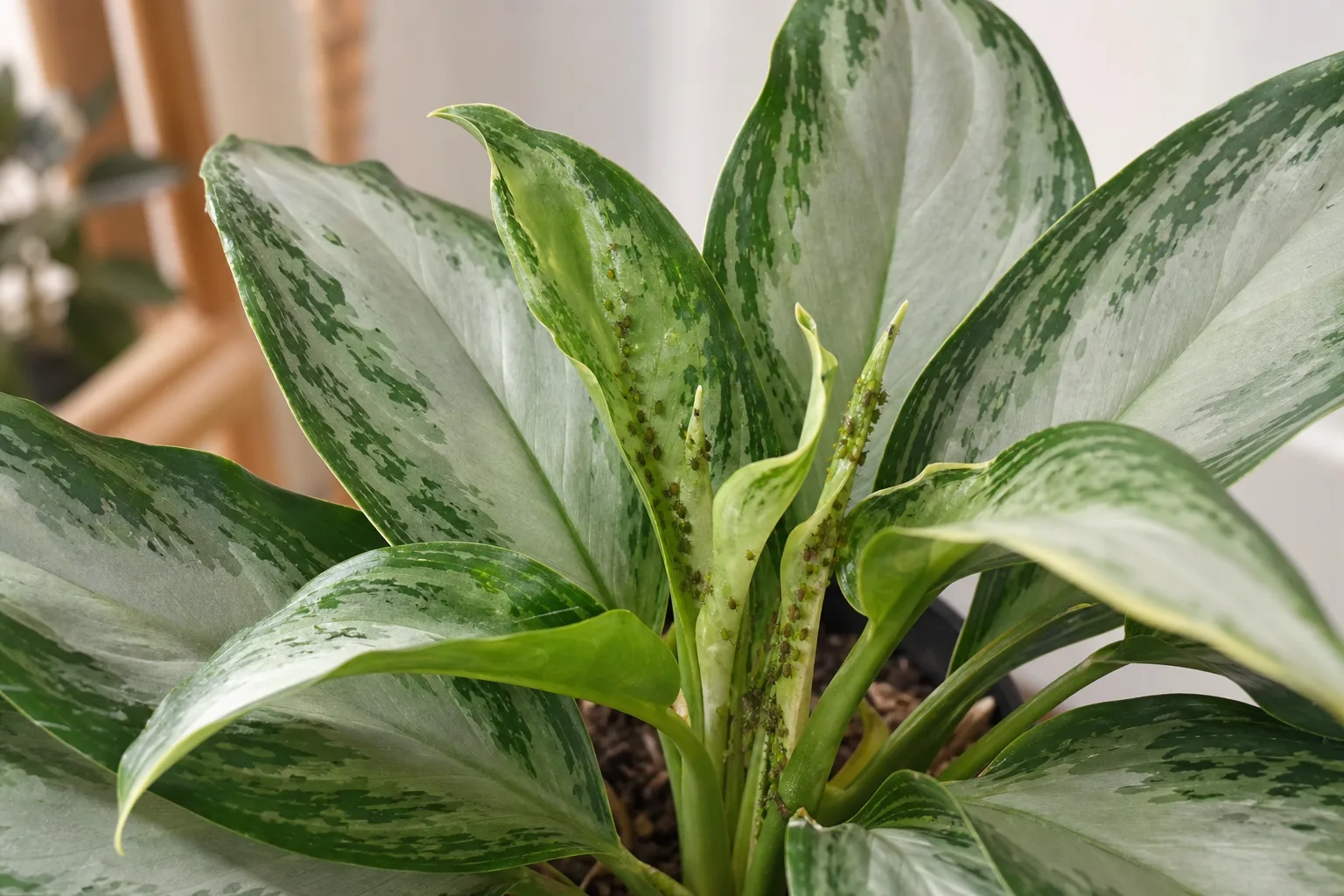
Aphids on Aglaonema Silver Bay: Causes, Checks & Fixes
This guide covers aphids on Aglaonema Silver Bay. See also the general Aphids guide, watering, and light pages for this plant.
Aphids on Aglaonema Silver Bay: Causes, Checks & Fixes
Quick answer
Aphids on Aglaonema Silver Bay (Aglaonema commutatum ‘Silver Bay’) are small sap-sucking insects that pile onto the softest new leaves at the crown. On this slow-growing Chinese evergreen, even a modest colony can stunt the only fresh shoots the plant produces for weeks.
First step: isolate the pot and rinse the crown thoroughly with lukewarm water. Tilt the plant, support the stems, and direct water into the unfurling leaves where aphids hide. You need to see insects wash off or stop moving before reaching for sprays. Aglaonema has broad, smooth foliage that shows honeydew fast-sticky silver patches and ants are your cue that feeding is active, not old damage.
What aphids look like on Aglaonema Silver Bay
Aphids are small, soft-bodied, pear-shaped insects roughly 1/16 to 1/8 inch long. They are usually green but can be pink, brown, black, or yellow. On Silver Bay, they almost always gather on:
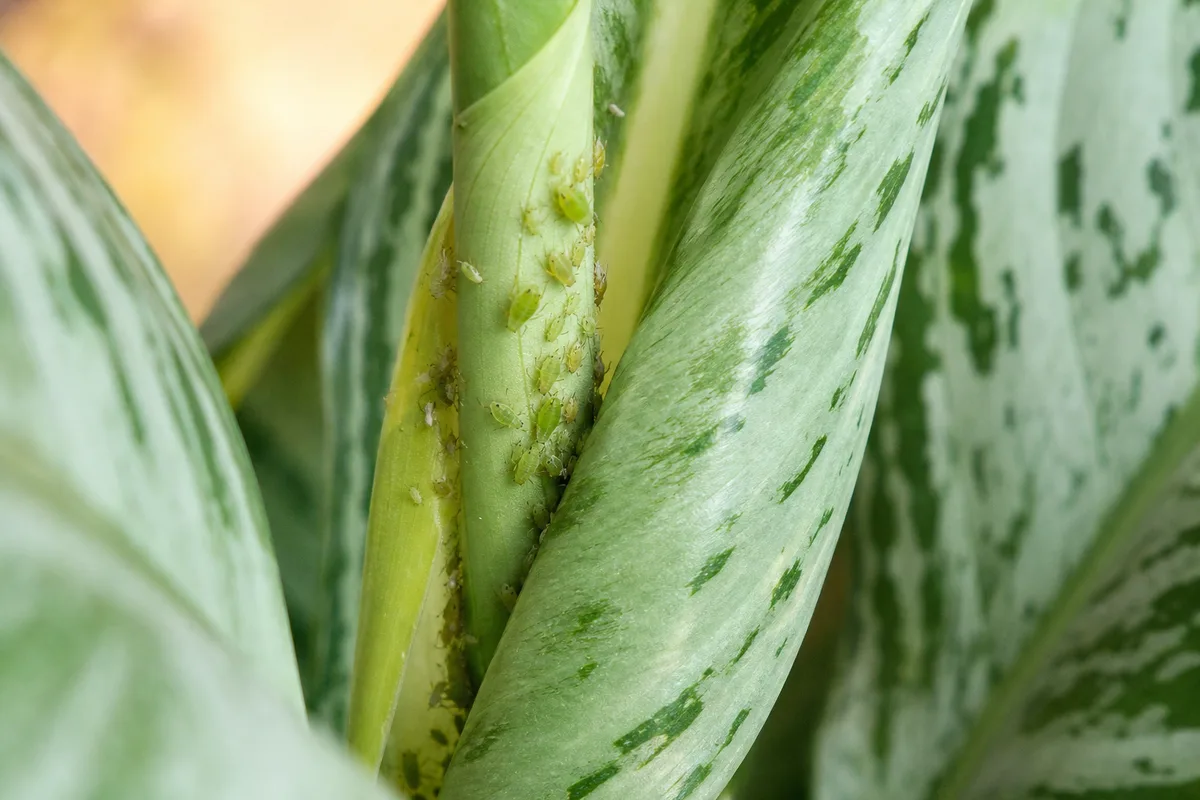
Pear-shaped aphids clustered on a tender new Silver Bay shoot at the crown - inspect unfurling leaves first.
- New leaves still rolled at the center crown
- Tender petioles where leaves join the stem
- Undersides of the youngest silver-green blades
- Occasional flower stalks if the plant is blooming indoors
Feeding causes leaf curling, yellowing, and stunted new growth. Because Silver Bay produces few new leaves at a time, even light damage looks dramatic on the variegated silver centers.
The telltale secondary sign is honeydew-a shiny, sticky secretion that coats leaf surfaces and nearby shelves. Honeydew can lead to sooty mold, black fungal patches that dull the silver pattern. You may also see whitish cast skins left behind after aphids molt, especially along veins.
Winged aphids sometimes appear when a colony outgrows its spot. They are a warning that insects may already be moving to your pothos, philodendron, or other nearby plants.
Why Aglaonema Silver Bay gets aphids
Aglaonema is a durable low-light plant, but aphids are listed among its common pests alongside mealybugs, scale, and mites. Infestations rarely appear from bad luck alone. These paths are most common indoors:
Hitchhiking on new plants. Aphids enter collections on nursery stock, cut flowers, or pots that summered outdoors. Most houseplant pests arrive on newly purchased plants or those brought inside after warm weather. Skipping quarantine is the fastest way to find aphids on a Silver Bay that was clean last month.
Soft, nitrogen-rich new growth. Aphids feed on new growth and undersides of leaves. Heavy fertilizer or a sudden move to brighter light can push a flush of tender shoots-prime food on a cultivar that otherwise grows slowly. That soft tissue is easier to pierce than mature, firm leaves.
Crowded, still air around the crown. Silver Bay’s upright rosette holds humidity at the leaf bases. Dusty foliage and tight plant groupings reduce airflow, making it easier to miss early clusters during casual watering.
Plant stress without outright decline. Aglaonema tolerates low light and dry spells, but chronic overwatering on Aglaonema Silver Bay, cold drafts below 55°F, or a pot that stays wet too long weakens growth. Stressed plants tend to be more susceptible to pests even when leaves still look mostly fine.
Aphids do not live in Aglaonema soil the way fungus gnat larvae do. If you see insects only on foliage, Aglaonema Silver Bay repotting guide is not your first move.
How to confirm the cause
Work through these checks before spraying anything:
- Crown inspection with magnification. Use a 10x hand lens on the newest unfurling leaf. Aphids have visible legs and antennae and move slowly when disturbed. If insects jump or fly, suspect thrips or whiteflies instead.
- Honeydew test. Wipe a suspicious leaf with a white paper towel. Sticky residue that later turns sooty confirms sap feeders. Mineral dust or hard water spots wipe dry and powdery.
- Distinguish from mealybugs and scale. Mealybugs look cottony in leaf axils. Scale forms immobile brown or tan disks on stems. Aphids stay soft-bodied and cluster in groups.
- Rule out cultural damage. Cold injury below 50°F browns leaf edges on Aglaonema. Overwatering yellows lower leaves with wet soil, not clustered insects. Nutrient burn shows crisp margins after feeding, not moving bugs.
- Check the collection. Examine plants on the same shelf, especially those with fresh growth. Aphids spread plant to plant once winged forms appear.
Confirmed aphids: live insects plus honeydew or shed skins on new Silver Bay growth. Suspected only: sticky leaves but no insects-rinse and re-check in three days before chemical treatment.
First fix for Aglaonema Silver Bay
Isolate the plant and wash aphids off with lukewarm water.
Move the pot to a sink, shower, or outdoor shade if weather is mild. Support the stems with one hand and rinse the crown and leaf undersides with a gentle but firm stream. Spraying a sturdy plant with water removes many pests when you cover all surfaces. Small plants can be inverted and swished through a bucket of tepid water with the soil covered in foil.
Aglaonema leaves are smooth-not fuzzy like African violet-so rinsing is safe when water drains off and the plant returns to indirect light. Let foliage dry before evening. Do not follow the rinse immediately with oil or soap the same day unless the label allows it; give the plant overnight to recover.
After rinsing, pat dry excess water from the crown so moisture does not sit in the rosette for days. Your goal is zero live aphids on the new shoots you can reach.
Step-by-step recovery
Once the first rinse is done, escalate only as needed:
Days 1–14: physical removal plus contact sprays
- Re-rinse or wipe individual insects with a cotton swab dipped in rubbing alcohol for stubborn clusters in tight crown folds.
- If live aphids remain after two rinses, apply insecticidal soap labeled for houseplants. Coat stems, leaf undersides, and new growth until solution drips. Soaps are contact killers only-they work while wet.
- Repeat every four to seven days for at least two to three cycles. Eggs and aphids tucked inside curled young leaves survive the first pass.
Ongoing: treat the plant, not the room
- Bag the pot loosely during indoor spraying if ventilation is poor. Aglaonema is toxic to pets-keep cats and dogs away until sprays dry.
- Avoid applying soap or neem in hot direct sun or above 90°F; high temperatures increase phytotoxicity risk.
- Prune only heavily distorted new leaves you cannot open to spray. Sterilize scissors between cuts.
If colonies persist after three weekly treatments
- Inspect every nearby plant again. Hidden reservoirs restart the problem.
- A systemic soil treatment containing imidacloprid can control aphids on houseplants, but use it cautiously and only per label directions-it is long-lasting and inappropriate if you move plants outdoors where bees visit flowers.
Do not repot, fertilize, or prune heavily on day one. Each adds stress while the plant is losing sap.
Recovery timeline
With consistent control, you should see fewer live aphids within one week and no new honeydew within two weeks. Silver Bay grows slowly, so expect three to four weeks before a clean new leaf fully unfurls and tells you the crown is clear.
Signs recovery is working:
- New shoots open without curling tightly
- No fresh sticky residue on silver leaf centers
- Ants disappear from the pot area
- Sooty mold stops spreading (wipe old mold off with a damp cloth)
Signs the problem is worsening:
- Yellowing spreads to mature leaves while soil moisture is normal
- Winged aphids appear on multiple plants
- New growth stops entirely for more than a month after treatment
- Sooty mold coats most of the foliage despite rinsing
Heavily damaged mature leaves will not regain perfect variegation. Let the plant keep them until you have two clean new leaves, then trim for appearance.
Lookalike symptoms
| What you see | More likely cause | Why on Silver Bay |
|---|---|---|
| Sticky leaves, no insects | Recent honeydew dried; check again | Aphids may have moved or been rinsed off |
| White cottony clusters in axils | Mealybugs | Same honeydew, different pest-alcohol dab, not rinse alone |
| Tan bumps on stems | Scale | Immobile shells; scrape test vs soft aphid bodies |
| Silvery leaf streaks, no honeydew | Thrips | Scraping damage, not sap clusters on new growth |
| Yellow lower leaves, wet soil | Overwatering | No insects on crown; soil stays heavy |
| Brown crisp edges in winter | Cold draft or low humidity | Tissue damage without pest colonies |
Mistakes to avoid
- Spraying pesticides before isolating and rinsing. You spread aphids to neighboring pots and miss insects inside curled new leaves.
- One soap application and done. Contact sprays need repeats because eggs hatch and hidden aphids survive the first round.
- Homemade dish soap mixes. Do not mix homemade soap products-they can burn Aglaonema leaves. Use products sold as insecticidal soap.
- Fertilizing to “help” a stressed plant. Soft nitrogen-rich shoots attract the next wave. Hold feed until new growth is clean for a month.
- Returning the plant to the shelf after one clear day. Isolate until you see no new activity for at least two weeks after the last treatment.
- Ignoring ants. Ants farm aphids for honeydew and protect them from predators. Wipe ant trails and move the pot if ants persist.
How to prevent aphids on Aglaonema Silver Bay
Prevention fits Aglaonema Silver Bay overview’s slow, low-maintenance rhythm:
- Quarantine new plants two weeks before placing them near your Silver Bay. Inspect crowns weekly during isolation.
- Wash smooth leaves every two to three weeks during active growth. Routine washing discourages pest infestations and keeps silver variegation bright.
- Check the crown every time you water. Aglaonema’s watering cue-dry top half of soil-makes a reliable weekly inspection schedule.
- Feed lightly during spring and summer only. Half-strength balanced fertilizer monthly is enough; avoid pushing lush soft shoots in dim rooms.
- Keep stable indirect light and airflow. Move plants off heating vents. Group pots loosely so leaves do not touch.
- Screen open windows in warm months if plants sit nearby. Aphids can drift in from outdoor gardens.
A healthy Silver Bay with firm new leaves and clean undersides is your best defense. When you catch a cluster on the only new shoot the plant has, fast isolation and a thorough rinse usually restore the crown without drama.
When to use this page vs other Aglaonema Silver Bay guides
- Aglaonema Silver Bay watering guide - Use for routine moisture checks before assuming aphids is the main issue.
- Aglaonema Silver Bay problems hub - Browse all 16 common issues on this species.
- Mealybugs on Aglaonema Silver Bay - Different entry point when symptoms overlap with aphids.
- Spider Mites on Aglaonema Silver Bay - Different entry point when symptoms overlap with aphids.
- Yellow Leaves on Aglaonema Silver Bay - Different entry point when symptoms overlap with aphids.