Dischidia Plant Care: Light, Water & Mounts
Dischidia spp.
Dischidia is epiphytic - it needs orchid bark mix, very infrequent watering (every 10–14 days), and bright indirect light. Mist foliage between waterings. Never use standard potting soil.
Dischidia Plant Care: Light, Water & Mounts
Start with wateringThe most common care mistake for DischidiaWatering guide →Dischidia care essentials
Light
bright indirect light, medium indirect light, gentle direct morning sun
Water
Water sparingly every 10–14 days; allow mix to dry almost completely. Mist foliage between waterings.
Soil
Orchid bark-based epiphytic mix with perlite and a small amount of sphagnum moss.
Humidity
50–70%
Temperature
18–27°C (65–80°F)
Fertilizer
Feed lightly during active growth. Use monthly in growing season at very dilute strength.
About Dischidia
Dischidia has a upright growth habit.
| Detail | Information |
|---|---|
| Growth habit | Upright |
| Scientific name | Dischidia spp. |
Dischidia Plant Care: Light, Water & Mounts
What Dischidia Is, and Why It Behaves Differently
Dischidia is not a standard potting-soil houseplant. It is a group of mostly epiphytic vines in the dogbane family, the same broad family that includes Hoya. Kew and NParks both describe cultivated Dischidia species as plants that naturally grow on trees or other supports rather than in deep ground soil. That single fact explains most of the care logic.
If you grow Dischidia as though it were a pothos in dense mix, the roots stay wet too long and problems start quietly. If you grow it like an airy epiphyte with short wet-dry cycles, it is usually much easier to read.
Common plants sold under the name include:
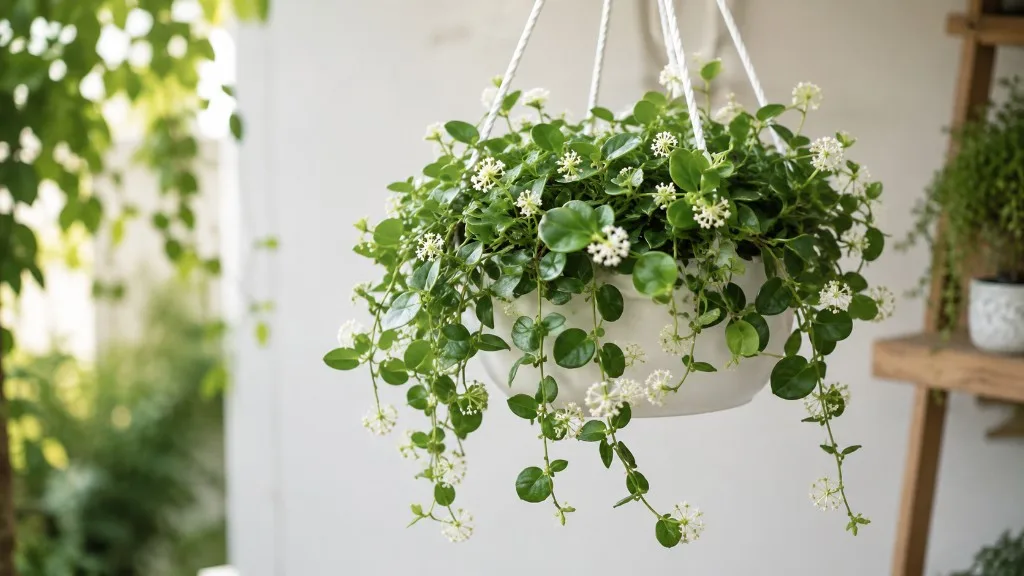
- Dischidia nummularia, often sold as String of Nickels
- Dischidia ruscifolia, often sold as Million Hearts
- Dischidia ovata, sometimes sold as Watermelon Dischidia
- Ant-associated species such as Dischidia major, which can form pouch-like leaves
Those plants do not all behave identically, but they do share three broad traits:
- roots that want air
- foliage that stores at least some moisture
- faster decline from stale wet media than from a slightly missed watering
The Real Decision: Mounted or Potted
Before worrying about fertilizer brands or humidity percentages, decide how you want to grow the plant.
Mounted Dischidia
Mounted plants are the closest match to how many species live in nature. The roots sit against cork, wood, or another support with a thin layer of moss or airy material. This setup gives excellent airflow and sharply lowers the chance of chronic soggy-root problems.
Mounted Dischidia is a good fit if you:
- already check plants often
- can soak or thoroughly rinse the mount when it dries
- want shingling or clinging species to grow naturally
- have bright, stable humidity and decent air movement
Mounted Dischidia is a bad fit if you travel often or want a plant that can be ignored for two weeks at a time.
Potted Dischidia
A shallow pot or basket is usually easier for beginners. It gives you a little more moisture buffer and makes it easier to inspect the root zone with a skewer or by lifting the pot. The tradeoff is that a potted plant is easier to overwater if the mix is too fine or the container is too deep.
Use a pot only slightly larger than the root mass. Oversized containers stay wet in the middle long after the surface seems dry.
Light: Bright, Filtered, and Consistent
Most Dischidia does best in bright indirect light with some tolerance for gentle morning sun. Think east window, bright north exposure, or filtered south or west light rather than a dark shelf or a blazing afternoon sill.
The most useful light cues are in the new growth:
- Good light: compact growth, normal leaf size, steady new tips
- Too little light: long gaps between leaves, smaller pale foliage, slow drying after watering
- Too much direct sun: bleached patches, crisp edges, sudden collapse on exposed leaves
Thin-leaved and shingling species usually demand more consistency than thick, trailing types. A plant can survive in weaker light, but weak light often creates a second problem by slowing water use so much that otherwise reasonable watering becomes overwatering.
Temperature and Humidity
Dischidia is a warm-climate plant. Stable indoor temperatures around 65 to 80 degrees Fahrenheit are usually comfortable. Cold drafts, chilled window glass, and abrupt HVAC blasts are not.
Humidity matters, but not in the simplistic “the higher the better” way people often assume.
- Thick-leaved trailing forms can often manage in average indoor humidity if roots stay airy.
- Thin-leaved or ant-associated forms usually perform better with steadier humidity.
- Very high humidity without airflow can be worse than moderate humidity with good airflow.
If you use a cabinet, terrarium, or clustered display, make sure air still moves around the foliage and mount. Stale wet air is where rot and spotting start.
Soil and Media: Air First, Water Second
The safest rule for Dischidia is simple: if the mix looks like regular houseplant soil, it is probably too dense.
For potted plants, use an epiphytic blend that dries quickly and leaves air pockets around the roots. A practical starting mix can include:
- medium orchid bark
- perlite or pumice
- a small amount of sphagnum or coco husk for moisture retention
For mounted plants, use only enough sphagnum or airy material to hold the roots in place and buffer drying. More material is not automatically better. A thick wet pad can suffocate the roots as effectively as heavy potting soil.
This is also why root rot on Dischidia is usually a media problem before it is a watering-frequency problem.
Watering: Thorough, Then Mostly Dry
University of Maryland Extension recommends checking the medium instead of watering by date, and that approach matters even more for Dischidia than for typical foliage plants.
When you water, do it thoroughly:
- soak or saturate the mount
- or water the pot until the medium is fully wet and drains freely
Then let the root zone dry most of the way before watering again.
That does not mean bone-dry for days on every cycle. It means the mix or moss should no longer feel cool and wet inside when you check it. On some setups that is a week. On others it is much longer.
Useful watering cues
- The pot or mount feels noticeably lighter
- Moss is dry to the touch and no longer cool inside
- Leaves lose a little firmness without turning limp or yellow
Dangerous watering cues
- Watering because it is “watering day”
- Watering because one leaf looks less plump while the medium is still damp
- Watering lightly and frequently instead of soaking and draining
Dischidia usually forgives a short dry spell better than repeated wet-root cycles.
Fertilizer: Keep It Modest
This genus does not need aggressive feeding. University of Maryland Extension guidance on indoor plants supports the conservative approach: diluted fertilizer only while the plant is actively growing, and never as a fix for a plant whose roots are already stressed.
For most growers, that means:
- use a balanced liquid fertilizer at reduced strength
- feed only during active growth
- skip fertilizer on freshly stressed, newly mounted, or suspiciously wet plants
Do not treat fertilizer as a substitute for better light or better root conditions. If the plant is pale, stalled, and sitting in dim wet media, more fertilizer is more likely to add salt stress than solve the problem.
Pruning and Propagation
Dischidia rarely needs heavy pruning. Most of the time you are only removing:
- dead tips
- damaged stems
- overlong runners you want to shape
Make cuts just above a node so the plant has a clear point to branch from. If you are trimming for shape, avoid taking large portions off an already stressed plant.
Propagation is straightforward when the parent plant is healthy. Take a cutting with one or more nodes, remove any leaf that would sit in the rooting medium, and root it in lightly moist sphagnum or a very airy propagation mix. Warmth, bright filtered light, and patience matter more than elaborate products.
The Most Common Problems Are Cultural, Not Mysterious
Most Dischidia problems reduce to one of four causes:
Roots staying wet too long
This is the biggest one. The plant may show yellow leaves, soft stems, stalled growth, or wrinkling that seems like thirst but is actually failed root uptake.
Light too low
Dim light produces thin growth and also slows drying, which creates a second-order overwatering problem.
Airflow too poor
Especially in cabinets or terrariums, damp stagnant air can push the plant toward rot and fungal spotting.
Media breaking down
Bark and moss do not stay ideal forever. Once the center turns fine, compacted, or sour-smelling, the root zone changes even if your watering habits do not.
If you are troubleshooting symptoms already, move from this hub to the more specific problem pages rather than making three changes at once.
Pet and Handling Safety
This is one area where the old version of the page was too casual.
Dischidia is not a genus with clean, comprehensive pet-safety coverage from one authoritative source. Some species pages from NParks note toxic upon ingestion or caution around the milky sap. Because of that uncertainty, the safest guidance is:
- keep the plant away from pets and children that chew foliage
- avoid getting sap on skin if you are sensitive
- wash hands after pruning or remounting
That is more defensible than claiming the whole genus is broadly safe.
Who Dischidia Is Best For
Dischidia is a strong choice if you want a plant that:
- looks different from standard trailing houseplants
- rewards careful observation
- fits bright shelves, hanging displays, or mounts
- benefits from an airy epiphyte setup
It is a weaker choice if you want a plant for:
- dark rooms
- large decorative cachepots with no drainage
- fixed weekly watering
- homes where pets routinely chew hanging vines
Conclusion
The most important thing to understand about Dischidia is that it is an epiphyte first and a “houseplant” second. If you give it bright filtered light, a fast-draining root environment, and a real dry-down between waterings, it is usually straightforward. If you give it dense soil and routine watering without checking the roots, it declines fast and often looks confusing while it does.
Start by getting the setup right: mount or shallow pot, airy media, stable warmth, and no stale wet core. Once those pieces are in place, the rest of care becomes much easier to read.
Related Dischidia guides
- Dischidia light for placement and grow-light decisions
- Dischidia watering for dry-down checks and seasonal changes
- Dischidia soil for bark mixes, moss, and mount setup
- Dischidia propagation for step-by-step cutting guidance
- Yellow Leaves on Dischidia when symptoms point to root or light stress
- Root Rot on Dischidia when the root zone has already stayed wet too long
How to care for Dischidia?
How much light does Dischidia need?
bright indirect light, medium indirect light, gentle direct morning sun
- bright indirect light, medium indirect light, gentle direct morning sun - bright indirect light, medium indirect light, gentle direct morning sun.
When should you water Dischidia?
Water sparingly every 10–14 days; allow mix to dry almost completely. Mist foliage between waterings.
- Check top 2 inches - Stick a finger or knuckle into the soil; water only when the top layer feels dry.
- Drain excess water - Water sparingly every 10–14 days; allow mix to dry almost completely.
What soil works best for Dischidia?
Orchid bark-based epiphytic mix with perlite and a small amount of sphagnum moss.
- Well-draining mix - Orchid bark-based epiphytic mix with perlite and a small amount of sphagnum moss.
Grower notes for Dischidia
What matters most with Dischidia
Dischidia stores more water than it looks like it does. Treat soft leaves, wrinkling, and stalled growth as signals to check both moisture and light before watering again. In practice, the care checkpoint is simple: bright indirect light, medium indirect light, gentle direct morning sun. Pair that with orchid bark-based epiphytic mix with perlite and a small amount of sphagnum moss, and avoid changing water, pot size, and placement all at once.
Best placement in a real home
Dischidia belongs where bright indirect light, medium indirect light, gentle direct morning sun is realistic for most of the day, not only where the pot looks good. Water sparingly every 10–14 days; allow mix to dry almost completely. Mist foliage between waterings. If the pot stays wet longer than expected, move the plant into better light or reassess the mix before watering again. Humidity target: 50–70%. Temperature comfort zone: 18–27°C (65–80°F).
Before you buy this plant
Choose Dischidia with firm new growth, clean leaf undersides, and soil that does not smell sour or feel compacted. Be cautious if you see root-rot, sticky residue, collapsed crowns, or a pot that is wet in poor light. Cosmetic old-leaf damage is less worrying than weak roots or active pests.
First month after bringing it home
Do not repot Dischidia on day one unless the mix is failing or pests are obvious. Quarantine it, learn how fast the pot dries, and keep care boring while it adjusts. Watch especially for root-rot, slow-growth, and yellow-leaves. If problems appear, correct the condition first rather than stacking fertilizer, repotting, and pruning together.
Safety note for Dischidia
Dischidia is not a plant to keep within reach of pets or children. Treat it as an inaccessible display plant. Use gloves if sap or plant tissue is irritating, and pick a pet-safe alternative for floor pots or low shelves.
How to tell Dischidia is settling in
If you plan to multiply it later, common methods include Stem cuttings pressed onto moist sphagnum and Layering. If slow-growth shows up early, inspect light, watering, and roots before assuming the plant is permanently weak.
Is it pet safe?
Dischidia pet safety is not clearly verified; treat it as unconfirmed around pets.
This review did not confirm a species-specific ASPCA or other primary veterinary listing for Dischidia. Avoid routine chewing and treat the plant as unverified rather than labeling it safe or toxic without species-level confirmation.
Watering Dischidia
Water sparingly every 10–14 days; allow mix to dry almost completely. Mist foliage between waterings.
Soil & potting for Dischidia
Orchid bark-based epiphytic mix with perlite and a small amount of sphagnum moss.
Humidity & temperature for Dischidia
Dischidia prefers 50–70%, though normal home humidity is usually fine. Keep temperatures around 18–27°C (65–80°F).
| Detail | Information |
|---|---|
| Humidity | 50–70% - normal home humidity is fine. |
| Ideal temperature | 18–27°C (65–80°F) |
Fertilizer & pruning for Dischidia
Use feed lightly during active growth. Use monthly in growing season at very dilute strength. for Dischidia.
| Detail | Information |
|---|---|
| Fertilizer type | Feed lightly during active growth. Use monthly in growing season at very dilute strength. |
Common problems on Dischidia
Root Rot
HighLikely cause: Standard potting soil or too-frequent watering retains excess moisture for epiphytic roots
Quick fix: Repot into dry orchid bark mix; allow to dry fully before first watering
Full fix guide →Slow Growth
LowLikely cause: Insufficient light or too-dense a growing medium
Quick fix: Move to brighter indirect light; switch to bark-based mix
Full fix guide →Yellow Leaves
MediumLikely cause: Overwatering or too little light
Quick fix: Reduce watering frequency significantly; improve light
Full fix guide →Brown Tips
MediumLikely cause: Common on this plant type; confirm with recent watering, light, and root checks.
Quick fix: Inspect the plant and correct the most likely care stressor before stacking treatments.
Full fix guide →Overwatering
MediumLikely cause: Common on this plant type; confirm with recent watering, light, and root checks.
Quick fix: Inspect the plant and correct the most likely care stressor before stacking treatments.
Full fix guide →Underwatering
MediumLikely cause: Common on this plant type; confirm with recent watering, light, and root checks.
Quick fix: Inspect the plant and correct the most likely care stressor before stacking treatments.
Full fix guide →Spider Mites
MediumLikely cause: Common on this plant type; confirm with recent watering, light, and root checks.
Quick fix: Inspect the plant and correct the most likely care stressor before stacking treatments.
Full fix guide →Mealybugs
MediumLikely cause: Common on this plant type; confirm with recent watering, light, and root checks.
Quick fix: Inspect the plant and correct the most likely care stressor before stacking treatments.
Full fix guide →Aphids
MediumLikely cause: Common on this plant type; confirm with recent watering, light, and root checks.
Quick fix: Inspect the plant and correct the most likely care stressor before stacking treatments.
Full fix guide →Leggy Growth
MediumLikely cause: Common on this plant type; confirm with recent watering, light, and root checks.
Quick fix: Inspect the plant and correct the most likely care stressor before stacking treatments.
Full fix guide →Wilting
MediumLikely cause: Common on this plant type; confirm with recent watering, light, and root checks.
Quick fix: Inspect the plant and correct the most likely care stressor before stacking treatments.
Full fix guide →Drooping Leaves
MediumLikely cause: Common on this plant type; confirm with recent watering, light, and root checks.
Quick fix: Inspect the plant and correct the most likely care stressor before stacking treatments.
Full fix guide →Low Humidity
MediumLikely cause: Common on this plant type; confirm with recent watering, light, and root checks.
Quick fix: Inspect the plant and correct the most likely care stressor before stacking treatments.
Full fix guide →Not Enough Light
MediumLikely cause: Common on this plant type; confirm with recent watering, light, and root checks.
Quick fix: Inspect the plant and correct the most likely care stressor before stacking treatments.
Full fix guide →Fungus Gnats
MediumLikely cause: Common on this plant type; confirm with recent watering, light, and root checks.
Quick fix: Inspect the plant and correct the most likely care stressor before stacking treatments.
Full fix guide →Mold on Soil
MediumLikely cause: Common on this plant type; confirm with recent watering, light, and root checks.
Quick fix: Inspect the plant and correct the most likely care stressor before stacking treatments.
Full fix guide →