Overwatering on Dischidia: Causes, Checks & Fixes
Quick answer
Overwatering on Dischidia shows as yellowing leaves, mushy stems, and a heavy wet pot or sodden moss mount on an epiphytic succulent that needs the root zone to dry between drinks. First step: stop watering and confirm the mix or moss is dry throughout before the next soak.
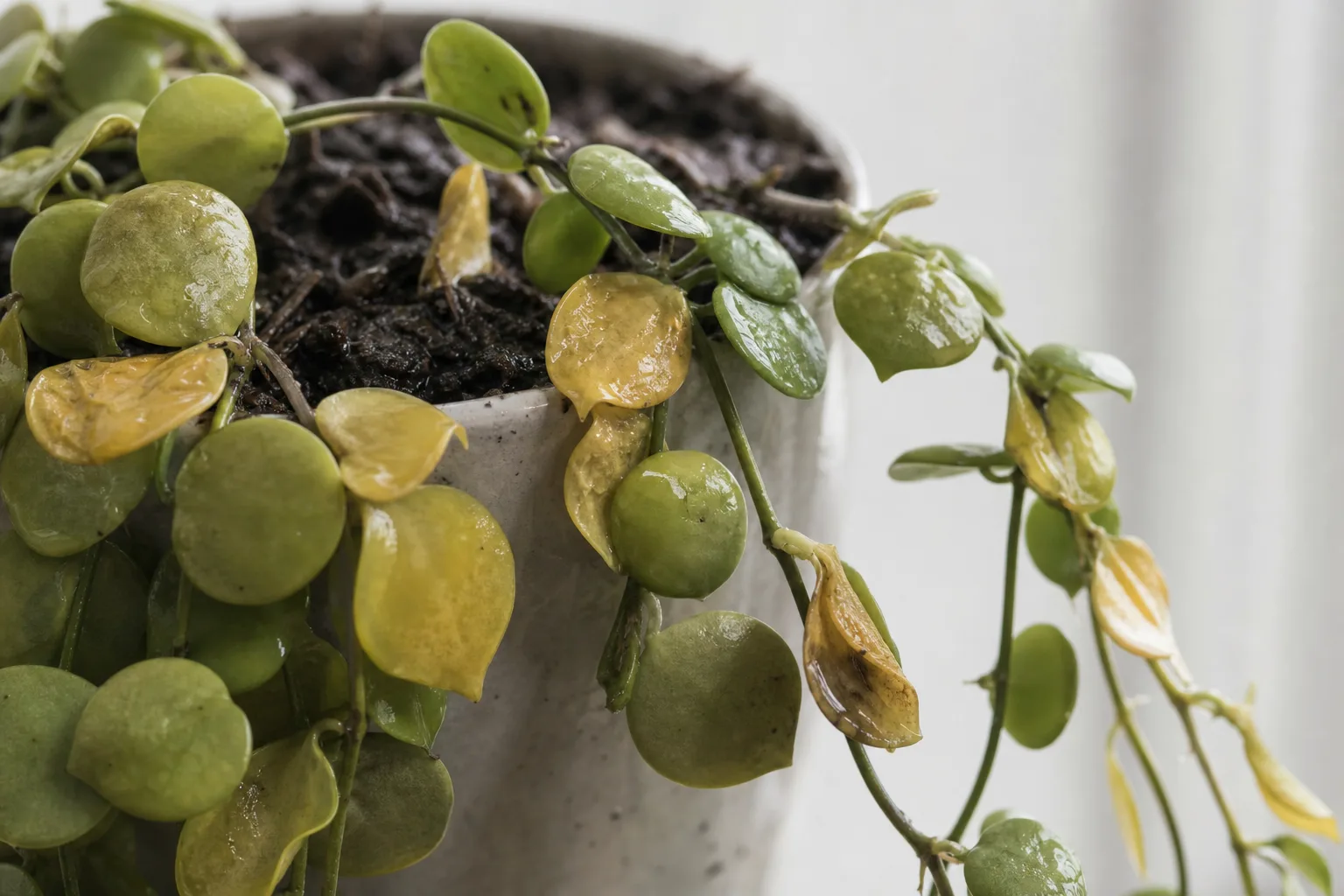
Overwatering on Dischidia: Causes, Checks & Fixes
This guide covers overwatering on Dischidia. See also the general Overwatering guide, watering, and light pages for this plant.
Overwatering on Dischidia: Causes, Checks & Fixes
Quick answer
Overwatering on Dischidia kills more plants than underwatering. These epiphytic trailing vines in the dogbane family grow on tree bark in nature-they want brief soaks separated by full dry-down, not the constantly moist soil rhythm that suits tropical ferns. When moss or bark stays wet, leaves yellow, stems go mushy, and fine roots rot in oxygen-starved media while the pot or mount still feels heavy.
First step: stop watering immediately. Do not soak again because trailing stems look limp on wet media-that is failed roots, not thirst. Confirm dryness throughout the root zone before the next drink.
For species context and mount-vs-pot culture basics, start with the Dischidia care overview. For watering rhythm detail, see our Dischidia watering guide.
Overwatering vs. underwatering on Dischidia
| Signal | Overwatering | Underwatering |
|---|---|---|
| Leaf texture | Mushy, yellowing, may drop | Shriveled, firm, slightly wrinkled |
| Media | Damp for days; cool and heavy | Dry throughout; light pot or mount |
| Stem | Soft, darkening at base | Firm, slightly limp only |
| Smell | Sour from wet moss/mix | None |
| After light soak | No improvement; more yellow | Leaves plump within 24–48 hours |
Dischidia stores water in thick succulent leaves, so it tolerates drought better than saturation-opposite of many moisture-loving houseplants. When the table points to drought instead, see underwatering on Dischidia.
What overwatering looks like on Dischidia
Dischidia is an epiphytic and lithophytic vine with fine adventitious roots-not a terrestrial rosette that holds moisture evenly in peat. Overwatering signs differ between potted bark culture and moss mounts, but the wet-media wilt paradox is the same.
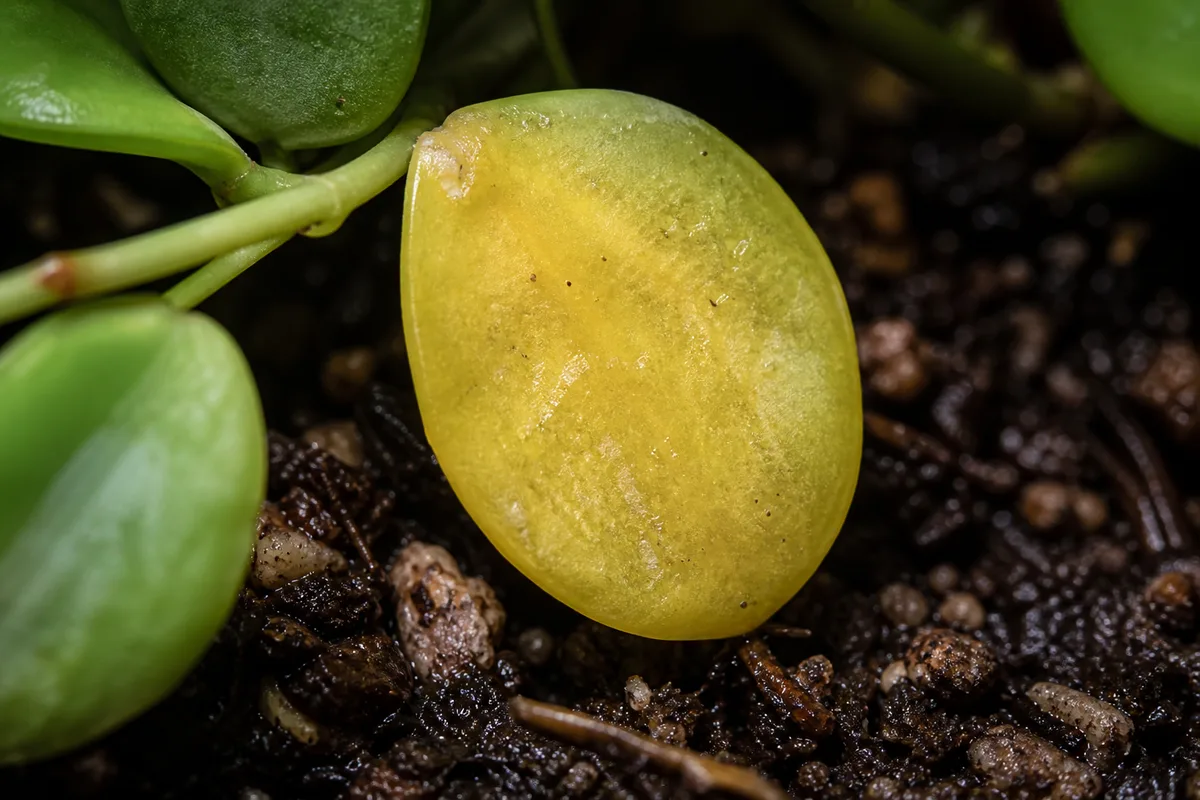
Overwatering symptoms on Dischidia - compare with healthy tissue on the same plant.
Potted Dischidia
Early signs in orchid-bark mix:
- Leaves yellow or soften while bark stays damp many days after watering
- Lower leaves drop from trailing stems
- Pot feels cool and heavy when lifted
- Fungus gnats near constantly wet surface mix
- Water runs through instantly but bark below stays dark and soggy-anaerobic pockets in decomposed media
Progressive potted signs: wilting on wet bark, mushy stem bases at the soil line, sour smell from drainage holes, brown slimy roots on inspection, and blackening tissue climbing stems.
Mounted Dischidia
Early signs on cork, hardwood, or kokedama:
- Trailing stems limp while moss pad feels cool and spongy behind the plant
- Surface moss looks pale-dry but core stays dark green and wet when pressed
- Silvery-green aerial roots turn brown or black and slimy along the vine
- Lower coin leaves on Dischidia nummularia or D. ruscifolia yellow while mount weight stays high
Progressive mounted signs: sour smell from the moss ball, stems collapsing at the pad line, and entire sections of vine detaching when the root pad has rotted through.
Damaged mushy leaves do not recover cosmetically. Judge success by firm stems and new leaf pairs along trailing growth-not old yellow tissue re-greening.
Why Dischidia gets overwatered
Treating it like a tropical foliage plant. Dischidia roots onto bark with constant airflow in nature. Packed in dense peat and watered weekly like a fern invites rot. Epiphytes need porous, bark-based media-not moisture-retentive potting soil as the main ingredient.
Mounted setups and kokedama holding water. Moss balls and wrapped mounts look dry on top while the core stays wet for weeks-the most common hidden overwatering trap for hanging Dischidia.
Low light slowing dry-down. Dim corners keep moss or bark damp long after a soak. Bright filtered light speeds the dry cycle these vines need; see not enough light on Dischidia when slow dry-down pairs with stretch.
Frequent misting plus soaking. Owners mist for “humidity” while also soaking on schedule-double moisture load on epiphytic roots that already store water in succulent leaves.
Cachepots and no drainage. Potted Dischidia in sealed decorative containers cannot release excess water. Standing water in saucers drives out oxygen and keeps roots saturated.
Winter calendar watering. Cool slow-growth season needs far fewer drinks than summer trailing growth phase-yet many growers keep the same weekly soak through winter.
Closed terrariums. Dischidia in sealed glass with saturated sphagnum at the base combines high humidity with zero root-zone drying-a fast path to yellow mushy leaves on otherwise “well cared for” vines.
Kokedama and moss mount unwrap walkthrough
The wet-core trap is the reason mount-grown Dischidia fails more often from overwatering than from drought. Surface moss can look acceptable while the pad behind the plant stays sodden for two or more weeks.
When to unwrap: Yellow mushy leaves on a heavy mount, sour smell from the moss ball, or limp trailing stems despite wet-feeling moss at the core.
Step-by-step inspection and rescue:
- Remove the mount from its hook and note weight compared to a fully dry reference-heavy means wait before any soak.
- Press behind the plant, not only on the visible front face. Spongy, cool moss deep in the pad confirms saturation even when the outer layer looks pale.
- Soak the moss ball briefly (five to ten minutes in room-temperature water) only to loosen wrapping-not hours of submersion. Long soaking makes overwatering worse.
- Unwrap fishing line, twine, or mesh carefully and peel moss away from the root pad until you can see root color. Healthy roots are firm and pale; rotted roots are brown, black, translucent, or slimy.
- Trim all mushy roots and soft stem tissue with a clean blade. Let cut surfaces air-dry 24–48 hours in a warm, airy spot out of direct sun.
- Discard compacted, sour-smelling moss entirely. Reusing the old pad reintroduces anaerobic pockets.
- Remount on clean cork or hardwood with a thin pad of fresh long-fiber sphagnum (about one inch)-not a dense wet plug. Secure nodes with clear fishing line.
- Hang at an angle so water runs off after the first cautious soak. Wait until the moss pad feels light throughout before soaking again.
- Never seal wet moss in plastic immediately after watering-that recreates the core-wet trap within days.
For full remount mix ratios and bark culture, see Dischidia soil and mounts. When rot is already advanced, escalate to root rot on Dischidia.
Photo note: Compare a healthy dry mount (light weight, firm stems, pale moss core) with an overwatered kokedama (heavy ball, yellow lower leaves, dark wet core when unwrapped). Original symptom photos are pending for a future update.
How to confirm overwatering
Run these checks in order before you change culture:
- Media depth check - Probe moss or bark near pot edge or behind the mount pad. Damp throughout on a heavy container confirms saturation-not surface color alone.
- Pot or mount weight - Lift before every soak. Heavy days after the last drink means wait.
- Leaf feel with context - Mushy yellow on wet media vs. firm shrivel on dry media.
- Stem base press - Squishy tissue at the media line means inspect roots the same day.
- Smell - Sour odor confirms anaerobic breakdown in moss or decomposed bark.
- Root color on inspection - Slide potted plants out or unwrap mounts. Firm pale roots support a dry-down fix; slimy brown roots need trim-and-remount per the root-rot guide.
First fix for Dischidia
Stop watering until moss or bark is dry throughout.
Improve airflow around the mount or pot-gentle fan circulation helps dry-down without blasting leaves.
Mild case (some yellow lower leaves, firm stems above, no sour smell):
- Withhold water 1–2 weeks
- Resume with light soak or brief dip for mounts only when media is fully dry
- Expect new leaf pairs along stems within several weeks
Moderate case (mushy base, sour smell, brown roots):
- Unpot or unwrap mount per the walkthrough above
- Trim rotten roots and mushy stem tissue with clean blade
- Remount in fresh airy orchid bark and sphagnum per our soil guide, or repot in chunky epiphyte mix
- Wait 5–7 days before first cautious soak
Severe stem rot - propagate firm stem sections per our propagation guide if base is lost.
Recovery timeline
- Weeks 1–2: No new mush; media dries fully between checks
- Weeks 3–6: New succulent leaf pairs on firm stems after cautious resumption
- Months: Trailing length rebuilds
Damaged yellow leaves rarely return to perfect form-watch for firm new growth instead.
Escalate to root rot assessment if black tissue spreads despite dry-down.
What not to do
- Soak wilting plants on wet media
- Mist heavily during recovery
- Repot into dense peat “for moisture retention”
- Leave mounts sitting in water trays
- Fertilize waterlogged plants
- Assume surface-dry moss means the mount is safe to soak again
How to prevent overwatering next time
- Soak only when media is dry throughout per watering guide
- Use airy epiphyte mix or open mounts with drainage-chunky bark-based media for pots
- Bright indirect light to speed dry-down per light guide
- Empty standing water immediately after every soak
- Reduce winter frequency sharply in cool dim rooms
- In terrariums: mount on bark above the substrate line and ventilate daily-never bury trailing stems in wet sphagnum
When to escalate
Treat as urgent when stem bases go mushy, sour smell persists after two weeks dry, or black tissue climbs multiple nodes. See root rot for trim-and-restart guidance before the trailing vine collapses entirely.
Also escalate when limp leaves persist on wet media after you have stopped watering for ten days-roots may already be failing and need inspection, not patience alone.
Conclusion
Overwatering on Dischidia is a wet-root habit problem in epiphytic culture-not a mystery disease. Yellow mushy leaves on heavy wet moss or bark, wilt despite moisture, and sour-smelling media tell you to stop soaking and confirm dry-down at the core-not to mist more or repot into peat. Mount and kokedama growers must check weight and pad moisture behind the plant, not surface color alone. Recovery shows in firm new leaf pairs within weeks, not in old yellow tissue re-greening. Match the soak-and-dry rhythm in the Dischidia watering guide and keep media airy in the soil guide-that pair prevents most repeat overwatering indoors.
Related Dischidia guides
- Dischidia care overview - epiphytic culture hub
- Root rot on Dischidia - when mushy roots need trim-and-remount
- Underwatering on Dischidia - dry pot lookalike
- Wilting on Dischidia - wilt paradox on wet media
- Yellow leaves on Dischidia - overlapping stress signals
- Fungus gnats on Dischidia - wet media early warning
- Watering Dischidia - soak-and-dry prevention
- Dischidia soil and mounts - bark mix ratios and remount workflow
- Dischidia light guide - dry-down speed in dim rooms
FAQs
How can I confirm overwatering on Dischidia?
Confirm when leaves yellow or feel mushy while moss or mix stays damp for many days, the pot or mount feels heavy, and roots look brown or slimy on inspection. Firm shriveled leaves on a light dry mount or pot point to underwatering instead-not the same soft texture as rot.
Why does my Dischidia wilt on wet soil?
Dischidia is epiphytic-it wants airflow around roots. Saturated moss or dense mix suffocates fine roots, so stems cannot absorb water and foliage wilts or yellows despite moisture. That wilt-on-wet-soil pattern means stop watering, not another soak.
Should I mist Dischidia when recovering from overwatering?
No. Extra surface moisture prolongs the problem. Let the root zone dry fully, improve airflow, and resume with light soaks only when moss or mix is dry throughout. Mounted dischidia recover faster when you reduce frequency rather than mist more.
Will overwatered Dischidia leaves recover?
Mushy yellow leaves usually do not firm again. Recovery means yellowing stops, stems stay firm, and new pairs of succulent leaves emerge along trailing stems within several weeks after corrected dry-down watering.
How do I avoid overwatering Dischidia in a terrarium?
Keep Dischidia on an open mount or shallow bark tray-not buried in constantly wet substrate. Ventilate daily, water only when moss feels light at the core, and never mist on a fixed schedule while also soaking the root pad. Closed glass with saturated sphagnum is one of the fastest overwatering traps for epiphytic vines.