Root Rot on Dischidia: Causes, Checks & Fixes
Quick answer
Root rot on Dischidia means epiphytic roots sat wet and oxygen-starved until tissue decayed. The signature trap is limp leaves on a heavy pot or wet moss mount-not dry bark. First step: stop watering, inspect the root zone, and trim mushy tissue only after you confirm rot.
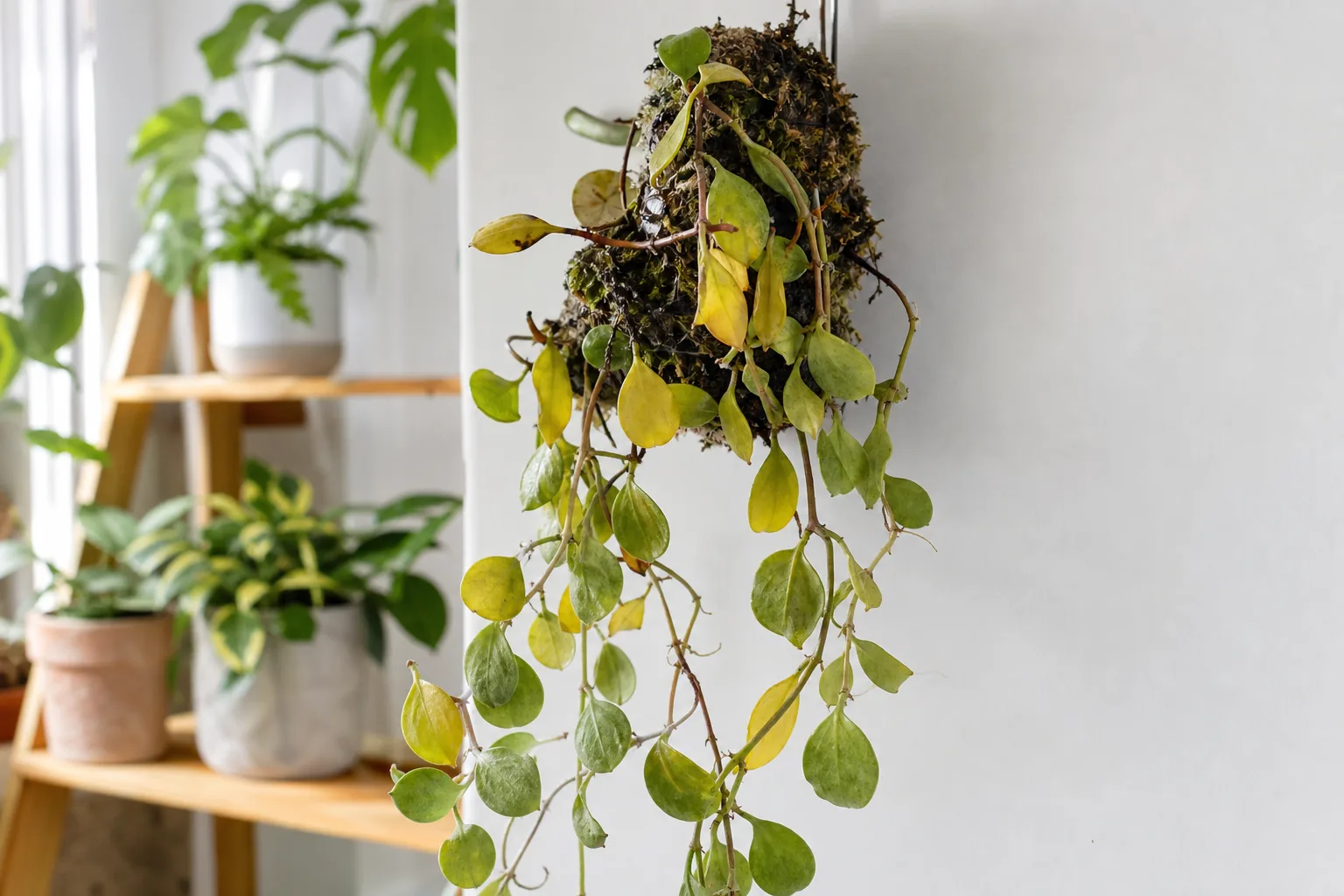
Root Rot on Dischidia: Causes, Checks & Fixes
This guide covers root rot on Dischidia. See also the general Root Rot guide, watering, and light pages for this plant.
Root Rot on Dischidia: Causes, Checks & Fixes
Quick answer
Root rot on Dischidia means epiphytic roots sat wet and oxygen-starved until tissue decayed-not a mysterious airborne disease on a healthy dry pot. These trailing Apocynaceae vines evolved on tree branches where rain drains within hours; indoors, rot almost always traces to dense mix, moss cores that never dry, blocked drainage, or calendar watering through winter slowdown.
The signature trap is limp, yellowing, or soft foliage while the substrate stays wet. Damaged roots cannot absorb water even when surrounded by moisture, so String of Nickels (Dischidia nummularia) and Million Hearts (Dischidia ruscifolia) look thirsty while decay spreads below. On mounts, black slimy aerial roots on trailing stems are often the first visible clue before every leaf yellows.
First step: stop watering immediately and inspect the root zone the same day you suspect rot. Do not add water because leaves wilt on wet moss or bark-that accelerates decay. Healthy roots are firm and pale; rotted roots are brown, black, translucent, or slimy and may smell sour. For early wet-soil triage before you confirm mushy tissue, see overwatering on Dischidia. For drought lookalikes, see underwatering on Dischidia.
What root rot looks like on Dischidia
Dischidia is an epiphytic vine with fine adventitious roots-not a terrestrial rosette that holds moisture evenly in peat. Root rot signs differ between potted bark culture and moss mounts, but the wet-soil wilt paradox is the same across trailing species.
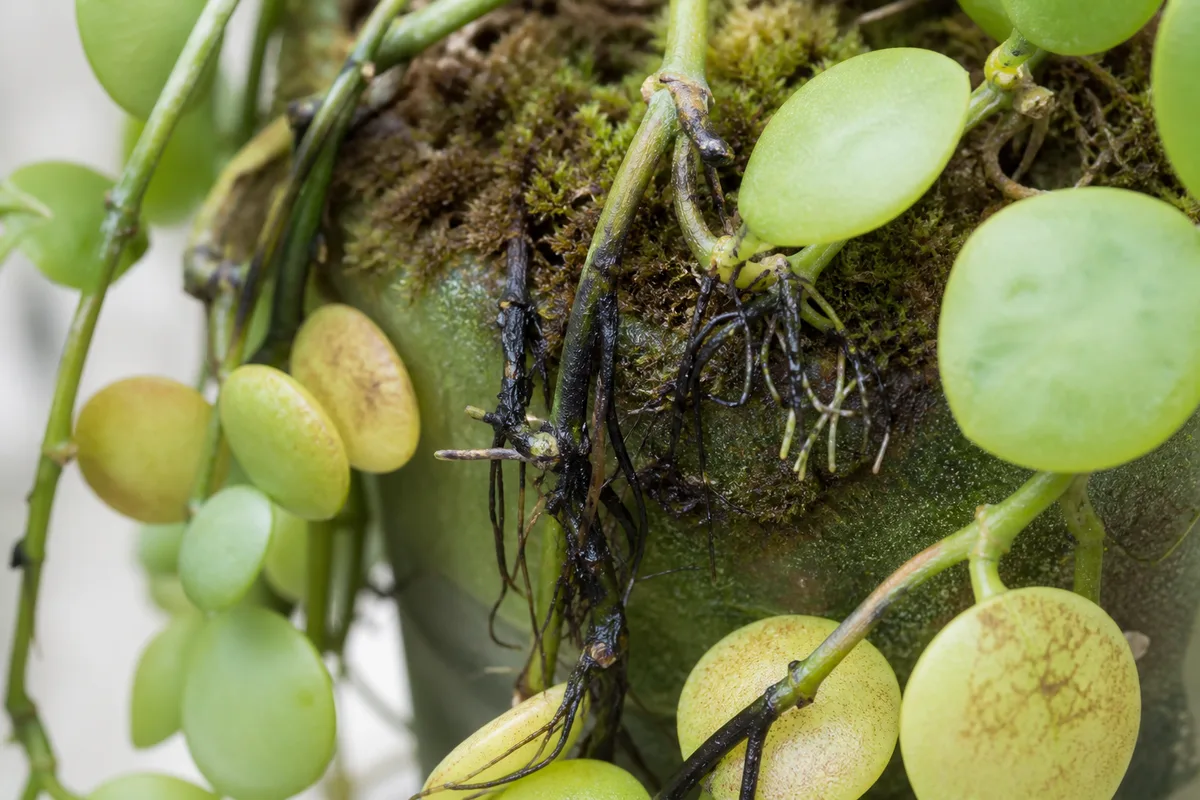
Root Rot symptoms on Dischidia - compare with healthy tissue on the same plant.
Potted Dischidia
Early signs on plants in orchid-bark mix:
- Yellowing lower leaves that feel soft rather than crispy, sometimes dropping with light pressure
- Limp foliage on a heavy pot that stays cool and damp many days after watering
- Sour or swampy smell from the drainage hole or surface bark
- Stalled runners or shriveled new tips despite “adequate” care
- Black slimy roots when you slide the plant out-healthy tissue snaps clean; rot squishes
Advanced potted cases show mushy stems at the soil line, leaves that collapse despite moist bark, and fungus gnats in persistently wet organic mix-a companion signal, not the primary cause. See fungus gnats on Dischidia when gnats appear alongside sour bark.
Mounted Dischidia
Mount culture removes the deepest water pool but introduces a different trap: the moss core stays wet while the surface looks dry.
- Sour smell from the moss pad behind the plant, even when outer moss feels pale
- Softening at the moss line where stems meet the pad-squeeze nodes gently; firm tissue is hope, hollow jelly is not
- Black, slimy aerial roots along trailing stems-plump silvery-green roots mean recent hydration; slimy black threads mean rot already
- Heavy, dark moss that releases water when pinched days after the last soak
- Leaf yellowing from the base up on shingling species while the mount surface appears merely “damp”
What root rot usually is not on Dischidia:
- Firm, thin, wrinkled coin leaves on a light, dry pot or feather-light mount-underwatering
- One or two older yellow leaves on an otherwise firm plant with properly drying media-may be normal senescence
- Temporary wilt five to seven days after Dischidia repotting guide with moderate moisture-transplant adjustment unless smell or mush appears
Why Dischidia gets root rot
Dischidia roots evolved for air, quick dry-down, and intermittent deep soaking-not for sitting in dense, moisture-holding potting soil. In habitat, these epiphytes cling to bark crevices where water passes through and oxygen returns within hours. Indoors, four failure patterns repeat.
Standard nursery potting soil
Retail Dischidia often arrives in peat-heavy mix that compacts around fine aerial roots and holds water in the pot center long after the surface looks dry-regular potting mix can cause epiphyte roots to rot. That mismatch is the fastest route to basal stem rot. The fix is not “water less” alone-it is chunky epiphyte mix sized to the root mass. See Dischidia soil for the 50–60% orchid-bark blend and mount workflow.
Moss mount core staying wet
A mount with no drainage holes depends on gravity and airflow to dry the moss pad. Over-soaking, sealing wet moss in plastic for “humidity,” or packing sphagnum too tight creates an anaerobic core that rots while the outer layer looks acceptable. Surface-dry moss with a sour-smelling center is one of the most common hidden overwatering traps on mounted Dischidia.
Calendar watering vs. real dry-down
Dischidia is not a plant you keep evenly moist like a peace lily. It wants a soak-and-dry cycle: water thoroughly when the mount or bark mix is mostly dry, then let it dry down again before the next drink. Watering every Sunday because the calendar says so-especially in winter when growth slows-stacks suffocation on top of hydration. Cool room plus damp moss is one of the highest-risk combinations for repeat rot.
Terrariums and sealed high-humidity setups
Closed terrariums and humidity boxes slow evaporation so moss stays wet longer. Many Dischidia thrive in high humidity, but rot prevention becomes airflow and restraint, not more water. Condensation that never clears often means the system is too wet overall-even if leaves look green today.
Root rot vs. underwatering vs. overwatering-only
| Pattern | Most likely cause | Pot / mount weight | Media at depth | Leaf feel | First fix |
|---|---|---|---|---|---|
| Limp leaves + dry, light pot or mount | Underwatering | Very light | Dusty dry bark or crisp moss | Thin, firm wrinkle | Confirm dry depth, then one full soak |
| Limp leaves + wet, heavy pot | Root rot / advanced overwatering | Heavy, stays heavy | Cool, clinging bark | Soft, limp | Stop water; unpot and inspect roots |
| Wet media + firm leaves, no mush | Early overwatering habit | Moderate to heavy | Damp but not swampy | Slightly soft, stems firm | Dry-down pause; fix drainage-see overwatering |
| Yellow lower leaves + sour smell | Confirmed root rot | Heavy | Wet, anaerobic | Mushy near base | Trim mush; air-dry; repot or remount |
| Soft stem + black slimy aerial roots | Severe rot | Heavy or moderate | Wet moss or bark | Collapsing | Propagate from highest firm node |
The row that resolves most emergency texts: dry media + soft leaves = drought; wet media + soft leaves = inspect roots before any water.
How to confirm the cause
Work through this inspection checklist before repotting, remounting, or trimming:
- Stop watering - Do not add moisture because leaves wilt; that deepens rot on wet mix or moss.
- Pot or mount weight - A heavy pot that stays heavy many days after soaking confirms excess retention. A feather-light mount points to drought instead.
- Core moisture, not surface color - Push a skewer into the bottom third of a pot or behind the moss pad on a mount. Cool, clinging media that never dries supports rot suspicion; dusty dry bark or crisp moss does not.
- Smell - Sour, swampy odor from the drainage hole, moss pad, or stem base strongly suggests anaerobic root decay.
- Aerial root check - On trailing vines, inspect adventitious roots along the stem. Plump silvery-green roots indicate recent hydration; slimy black threads mean rot-do not mist them and hope.
- Leaf pattern with species context - Yellow mushy lower leaves plus limp upper foliage on damp media fits rot. Wrinkled coin leaves on dry media fit thirst. See wilting on Dischidia when the wilt paradox is your main symptom.
- Node squeeze - Gently pinch the stem at the soil line or moss junction. Firm woody tissue above mushy roots is salvageable; hollow jelly at the base is not.
- Unpot or unwrap and inspect roots - Slide the plant out or peel moss back carefully. Healthy roots are firm and pale; rotted roots are brown, black, slimy, or translucent and may smell musty.
If more than a small fraction of roots are mushy, treat root rot as confirmed and move to the severity branches-not a dry-down pause alone.
Severity ladder
Mild - partial root loss, firm nodes above substrate
Roughly less than one-third of roots are brown and mushy; stems and nodes above the soil line or moss pad feel firm; smell is faint or absent. Trim dead roots, air-dry cut surfaces 24–48 hours, repot or remount into fresh airy epiphyte media in the same or slightly smaller setup, withhold water 3–7 days, then one cautious soak. Recovery often stabilizes within one to two watering cycles if you fix the wet cycle.
Moderate - majority mushy roots, firm upper vine
More than half the root mass is dead, but several inches of firm stem with healthy leaves remain above the rotted zone. Aggressive trim of all mushy tissue back to firm white root or stem, longer air-dry (up to 48 hours in a warm, airy spot out of direct sun), then repot into a downsized pot or remount with fresh thin sphagnum. Expect several weeks before stable new growth; some lower leaves will yellow and drop.
Severe - mushy nodes, hollow stem base, or total root loss
Stem softens at or above the moss line; roots are mostly gone; the vine collapses despite damp media. Do not keep watering. Salvage by stem cuttings from the highest firm tissue with at least one or two nodes-never from below rotted sections. Root cuttings in moist sphagnum or light propagation mix; mount or pot up only after new roots form.
First fix for potted Dischidia
After you stop watering, unpot and look at roots the same day you suspect rot-especially if bark smells sour or stems soften at the base.
When rot is confirmed in a pot, the first corrective action is trim all dead root tissue with clean scissors or pruners-not fertilizer, not misting, not “a little drink to perk it up.”
Step-by-step potted recovery
- Unpot gently - Knock the root ball out or slide the plant free. Brush away wet bark so you can see root color and texture clearly.
- Trim all mush - Cut brown, black, slimy, or hollow roots back to firm white tissue. If stem base is affected, cut back to firm green stem. Sterilize blades between cuts on badly infected plants.
- Air-dry - Let trimmed roots and stem cuts sit in a warm, airy spot out of direct sun for 24–48 hours so wounds callus.
- Repot into fresh chunky mix - Use roughly 50–60% coarse orchid bark with perlite and a small fraction of sphagnum in a pot sized to the remaining root mass with open drainage holes-epiphytes need porous, bark-based media. See Dischidia soil for mix ratios.
- Withhold water initially - Wait 3–7 days after repot so fresh cuts are not plunged into saturation.
- First cautious soak - Bottom-soak or top-water until excess drains freely; empty saucer and cachepot within 30 minutes. Never leave the pot sitting in runoff.
- Resume soak-and-dry rhythm - Let the bark mix approach dry throughout before the next drink-see watering Dischidia for pot-weight checks and seasonal intervals.
First fix for mounted Dischidia
Mounted rot rescue follows the same stop → inspect → trim → air-dry → fresh media logic, but you remount instead of repotting into bark.
- Remove the mount from its hook and unwrap or soak the moss pad just enough to expose roots-do not leave it submerged for hours.
- Trim all black, slimy, or hollow roots and any mushy stem tissue back to firm white roots or green stem.
- Discard compacted, sour-smelling moss entirely-reusing the old pad reintroduces pathogens and anaerobic pockets.
- Air-dry trimmed roots 24–48 hours in a warm, airy spot; keep the vine out of direct sun while cuts callus.
- Remount on clean cork or hardwood with a thin pad of fresh long-fiber sphagnum (about one inch)-not a dense wet plug. Secure nodes against the moss with clear fishing line.
- Hang at an angle so water runs off after the first cautious soak; wait until the moss pad feels light before soaking again.
- Never seal wet moss in plastic immediately after soaking-that recreates the anaerobic core that caused rot.
Recovery timeline
Mild rot after proper trim and repot or remount - The plant may stabilize within one to two watering cycles (often two to four weeks indoors) once the wet cycle stops and remaining roots breathe in airy media. Lower leaves may still yellow and drop as the plant rebalances.
Moderate rot with major root loss - Expect several weeks to a few months before consistent new runners appear. Some yellow or limp leaves never recover cosmetically; new firm leaves and plump aerial roots are the success markers-not old tissue re-greening.
Severe crown involvement - When nodes at the base are hollow and the vine collapses despite corrective care, the original plant may not be saveable. Propagation from firm upper cuttings is the practical path; judge those cuttings by new root formation over four to eight weeks.
Worsening signs after intervention - Stem softening spreads upward, smell intensifies, or leaves collapse on still-wet media after trim and repot. Stop soaking, re-inspect for missed mushy tissue, and take cuttings from any remaining firm nodes before total collapse.
Propagation backup when the crown fails
When the base is mushy but firm nodes with healthy leaves remain higher on the vine, take stem cuttings before the whole plant dies-not after every leaf collapses.
- Choose segments with at least one or two nodes and firm stem tissue; avoid any segment below rotted or slimy zones.
- Cut with sterile pruners; let cut ends air-dry 24 hours.
- Root in moist long-fiber sphagnum, a light bark-perlite mix, or water changed weekly-Dischidia roots readily from nodes when tissue is healthy.
- Mount or pot up only after new white roots are several centimeters long; keep fresh media on the dry side of moist during establishment.
- Lower leaves on the cutting may drop during rooting-that is normal if new growth and roots are forming.
Cuttings taken from tissue that was already rotting internally will fail. When in doubt, cut higher on the vine than you think necessary.
What not to do
Do not keep watering because leaves look wilted when moss or bark is already wet-that is the dehydration paradox of root failure, not thirst.
Do not repot into dense garden soil or standard peat potting mix because the plant “needs moisture.” That trades one rot vector for another.
Do not use hydrogen peroxide drench or cinnamon as a substitute for trimming mushy tissue-surface treatments do not restore dead roots, and soaking rotted media keeps it anaerobic.
Do not seal wet mounts in plastic bags immediately after soaking to “boost humidity”-that recreates the moss-core rot trap.
Do not fertilize a rotted plant before new growth resumes on corrected watering and fresh media.
Do not assume surface-dry moss means the mount is safe to soak again-always check the core behind the plant.
How to prevent root rot next time
Prevention on Dischidia is soak-and-dry discipline plus the right media, not sterile conditions:
- Use chunky epiphyte mix in pots - roughly 50–60% orchid bark with perlite; never standard potting soil as the main ingredient. See Dischidia soil.
- Keep moss pads thin on mounts and hang them where airflow completes dry-down after each soak.
- Lift the pot or mount twice weekly and compare weight to post-soak baseline-not a calendar alarm.
- Skewer the bottom third of pots or press behind the moss pad on mounts; surface color alone misleads on both culture styles.
- Empty saucers and cachepots within minutes of every soak; never let potted Dischidia sit in runoff.
- Scale back watering in winter when growth slows, but still confirm dryness-cold wet roots fail faster than cold dry roots.
- Refresh decomposed bark every 18–30 months or when mix smells sour, drains poorly, or stays heavy for weeks.
Dischidia tolerates brief drought far better than chronic sogginess. The prevention goal is mostly dry between full soaks, not permanently wet roots.
Conclusion
Root rot on Dischidia is a wet-root oxygen failure in epiphytic culture-not a mystery disease. Limp leaves on heavy wet bark or sour moss, black slimy aerial roots on trailing stems, and mushy tissue at the soil line or moss pad tell you to stop watering and inspect immediately-not to soak again because foliage looks thirsty. Confirm with weight, core moisture checks, smell, and root texture; trim all mush; air-dry; then repot into chunky bark or remount with fresh thin sphagnum. Recovery shows in firm new growth and plump roots within weeks, not in old yellow leaves re-greening. When the crown fails, propagate from firm upper nodes before total collapse. Match the soak-and-dry rhythm in the Dischidia watering guide and keep media airy in the soil guide-that pair prevents most repeat rot indoors.
Related Dischidia problems
- Dischidia care overview - epiphytic culture hub
- Overwatering on Dischidia - wet-soil habit before confirmed rot
- Underwatering on Dischidia - dry pot lookalike
- Wilting on Dischidia - wilt paradox on wet media
- Yellow leaves on Dischidia - overlapping stress signals
- Fungus gnats on Dischidia - wet media early warning
- Watering Dischidia - soak-and-dry prevention
- Dischidia soil and mounts - bark mix ratios and remount workflow
When to use this page vs other Dischidia guides
- Dischidia watering guide - Use for routine moisture checks before assuming root rot is the main issue.
- Dischidia problems hub - Browse all 16 common issues on this species.
- Overwatering on Dischidia - Different entry point when symptoms overlap with root rot.
- Yellow Leaves on Dischidia - Different entry point when symptoms overlap with root rot.
- Wilting on Dischidia - Different entry point when symptoms overlap with root rot.