Dischidia Repotting: When, How, and Mistakes to Avoid
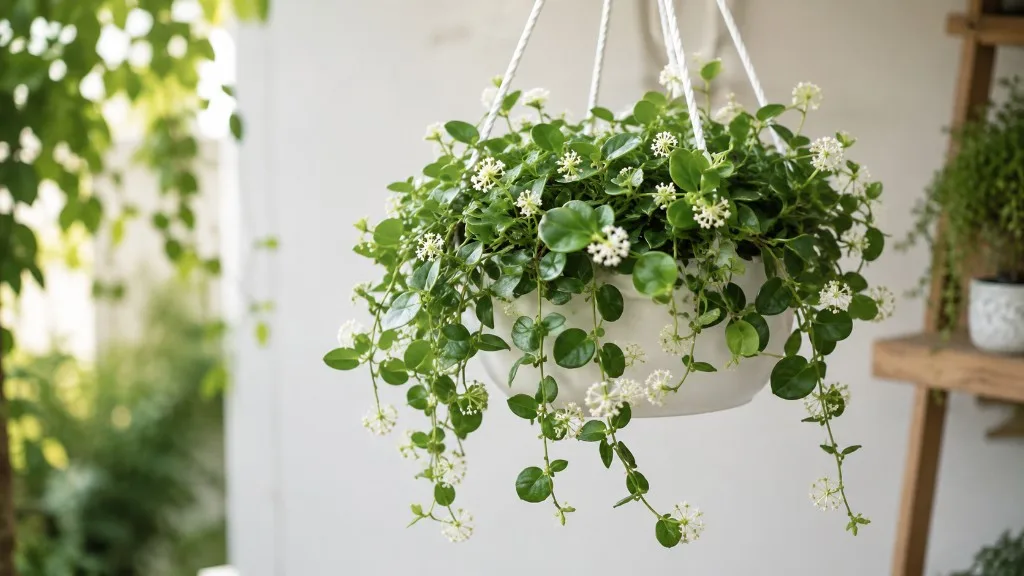
Dischidia Repotting: When, How, and Mistakes to Avoid
Dischidia Repotting: When, How, and Mistakes to Avoid
Dischidia (Dischidia spp.) is not waiting for a bigger pot of potting soil. It is an epiphytic vine in Apocynaceae - closely related to Hoya - that climbs tree branches in tropical Asia and Oceania by anchoring with adventitious roots into bark, leaf litter, and thin pockets of moss. Indoors, that biology translates into a different maintenance job than repotting a pothos or philodendron. You are usually refreshing an airy epiphytic medium, moving the plant to a shallow basket or bulb pan, or remounting on cork with a fresh layer of long-fiber sphagnum - not upgrading to a deep container of dense indoor mix.
Done well, Dischidia repotting is quiet: the same shallow footprint or mount size, new bark and moss where the old material has broken down, and minimal root disturbance so the vine keeps trailing within a few weeks. Done poorly - bare-rooting the plant, jumping to a deep pot, reusing sour sphagnum, or soaking a fresh mount like a terrestrial houseplant - the same species pauses growth for weeks, shrivels along the stems, or rots at nodes you cannot see until damage spreads. This guide covers when to repot or remount, why shallow baskets and cork mounts suit the root zone, when to refresh sphagnum, and how to handle roots gently enough that recovery stays boring.
Why Dischidia Repotting Follows Different Rules
Repotting Dischidia solves problems that show up as watering failures long before you think about containers. Orchid bark, perlite, and sphagnum decompose over years - bark fines into waterlogged dust, sphagnum compacts and stops drying evenly, and salts accumulate in thin root zones. Even slow-growing trailing species eventually fill a shallow basket, reducing the air pockets the mix needs.
Flora of China describes Dischidia as herbs epiphytic or epilithic, with fleshy stems that climb by adventitious roots. That is why all-purpose potting soil fails: it retains too much water and compacts around fine roots. Epiphytic culture uses coconut husk, bark, and damp sphagnum moss rather than soil, with moss kept damp and the plant allowed to dry slightly between waterings. Repotting is medium renewal and gentle repositioning, not a deep transplant into peat-heavy mix.
Epiphytic roots and the shallow root zone
Most Dischidia species grown indoors - including string of nickels (D. nummularia) and million hearts (D. ruscifolia) - keep the bulk of their functional roots in a shallow zone, rarely deeper than 7–10 cm (3–4 inches) even when stems trail half a meter. Aerial roots along the stems attach to whatever surface they touch; the primary water-uptake zone sits near the mount face or the top of a basket liner. A deep standard pot adds volume below that zone that stays wet for days while the roots never reach it. That unused wet layer is where root rot on Dischidia starts on a plant that looks like it should handle moisture because the leaves are succulent.
Dischidia also tolerates being slightly root-bound better than fast-growing tropicals. Tight quarters in a shallow basket mimic the thin substrate pockets epiphytes occupy in nature. That tolerance is not permission to ignore medium breakdown - compacted moss and fine bark still suffocate roots - but it does mean you should repot for clear signals, not because a calendar says so. When roots are healthy, mix drains in seconds after watering, and new pairs of leaves keep opening along the stems, leaving the plant alone is often the best care.
When refresh fixes problems vs creates new ones
Repot or remount when medium has decomposed, water runs through without wetting the center, roots circle a wire basket liner, moss smells sour or stays wet for a week, or you find brown, mushy roots at the core of a mount. Refresh when the problem is structural - the substrate, not a recent light change or a single shriveled leaf at the tip of a long strand.
Avoid routine disturbance when the plant is otherwise stable. Unnecessary remounting triggers multi-week dormancy on some species because root disturbance interrupts the slow rhythm epiphytes use to colonize new surfaces. Flora of China places the genus in tropical and subtropical Asia and Oceania, underscoring that Dischidia does not tolerate cold; adding root shock on top of a dim winter window is a reliable way to lose trailing length. When in doubt, top-dress or replace only the outer moss layer in early spring rather than stripping the entire root mat - especially on a mount where the plant has already fused roots into cork.
Signs Your Dischidia Needs a Refresh or Remount
The clearest sign is structural: sphagnum that crumbles to powder, bark that looks like dark mud, or a basket that lifts out as one solid root-and-moss cake. Also watch for water channeling down the pot wall in seconds, stems shriveling along the whole length despite normal soak intervals, and new leaves arriving smaller or farther apart when light has not changed. When two or more signals appear during active growth, plan a refresh - not a single-leaf drop at the end of an old strand, which is normal on trailing species.
Do not remount because aerial roots look fuzzy along stems. Adventitious roots are part of the climbing habit; visible roots on a trailing vine often signal health, not overcrowding. Confirm that medium structure or root health at the anchor point is the bottleneck before disturbing a plant adjusting to a new room.
Medium breakdown and sphagnum aging
Lift the basket or tilt the mount and inspect the back and bottom first - those zones age fastest because they stay damp longest. Fresh long-fiber sphagnum feels springy, holds a pale green or tan colour, and dries within a few days in typical indoor humidity. Aged sphagnum turns dark brown to black, compacts into a felt-like mat, and may smell earthy-sour if oxygen has been limited for months. On cork mounts, the problem often starts in the inner moss layer against the bark while the surface still looks acceptable from the front, which is why partial replacement sometimes fails: the rotten core remains hidden.
Orchid bark follows a similar decay curve. After two to three years of regular watering, ¼–½ inch chips break down into fine particles - when RHS notes bark substrates lose air space over time that behave like peat - holding water without the air channels bark originally provided. RHS epiphyte guidance recommends repotting every few years when bark-based mix disintegrates - a useful two-to-three-year check-in for trailing Dischidia in spring, or sooner if breakdown is obvious. Treat that interval as a check-in, not a command: a plant in a very airy, bright setup may run longer; one in a closed terrarium may need moss refresh sooner because humidity keeps the medium wetter.
Root-bound baskets and stalled trailing growth
In wire baskets lined with sphagnum or kokedama-style netted baskets, roots eventually fill the liner and push through the mesh. That is not automatically an emergency - a full liner with healthy white or tan roots and moss that still dries evenly can wait until spring. Plan a remount when roots have no fresh moss to grow into, when the basket cannot be watered without flooding stems sitting below the rim, or when the entire assembly lifts as one rigid block you cannot flex without cracking roots.
Stalled trailing growth is a later signal. Dischidia normally adds new leaf pairs along stems during warm, bright months. When internodes stretch without new pairs for several months despite appropriate light, depleted or compacted medium at the anchor point is a prime suspect. White mineral crust on moss or bark supports salt buildup as a contributing factor. A gentle refresh with new epiphytic mix - or a remount with fresh sphagnum on cork - often restores normal leaf spacing within one or two new growth cycles, provided you are not simultaneously moving the plant into harsh direct sun or cold drafts.
Best Time of Year to Repot or Remount Dischidia
Timing matters because Dischidia recovers fastest when stems are already pushing growth. Spring through early summer is the safest window for most indoor growers in the Northern Hemisphere. Rising temperatures and lengthening days coincide with root activity on epiphytes in cultivation, so fresh moss and bark are colonized before short days return. Hodgkiss notes that Dischidia requires constant warmth and will not tolerate cold or frost; repotting into that constraint means keeping night temperatures above roughly 18°C (65°F) during recovery, not only choosing a calendar month.
Avoid remounting during the hottest week of summer if your Dischidia sits in a sun-heated window without air movement. Heat plus freshly disturbed roots plus wet moss is a combination that invites rot even on a cork slab. If you must work in midsummer, keep the plant in Dischidia light guide, increase air circulation slightly, and water more cautiously than you would in spring - mist or soak mounts only when moss is genuinely dry, not on a fixed daily schedule.
Spring and early summer windows
During active growth, Dischidia can resume visible new leaf pairs within two to four weeks after a well-executed refresh, though full re-establishment on a new cork mount may take longer. Spring is the best time to move from basket to cork or vice versa. Early summer remains workable if temperatures stay in the 18–27°C (65–80°F) range and humidity near 50–70% for remounted specimens. Resume feeding only after new growth appears.
When emergency remounting is justified
Winter remounting is a backup plan, not a default. Growth slows, days are short, and disturbed roots sit in moss longer because the plant is not pulling water actively. That combination increases rot risk for any epiphyte, including Dischidia. Skip winter work if the plant is merely slightly tight but still opening new leaf pairs and drying on a normal schedule.
Remount in winter only when delay would clearly harm the plant: active root rot requiring trimmed roots and fresh dry moss, severe medium breakdown with sour smell and persistent wetness, or a basket or mount that has collapsed structurally. If you must work then, use the same size or only slightly larger shallow container, keep temperatures above 18°C, provide bright indirect light, and water sparingly - for mounts, a brief soak only when moss is crisp, never a prolonged dunk. Avoid splitting long trailing strands in winter unless rot forces division; rooting stress is slower when the plant is not in active growth.
Choosing Shallow Baskets and Pots for Dischidia
The most important container decision for potted Dischidia is depth, not decoration. Trailing species want a wide, shallow footprint - often called a bulb pan - or a hanging wire basket lined with sphagnum, not a deep nursery pot meant for tree roots. Jumping from a 15 cm shallow basket to a 20 cm deep pot feels generous, but the lower volume of unused mix or moss stays wet for days while the functional root mass never reaches it. That wet zone is where roots rot, and the plant shows the problem as soft, shriveled stems along the whole vine - not just the oldest strand - even when you believe you are watering lightly.
Measure the current inner width and choose a new container 2–5 cm (about 1–2 inches) wider, keeping depth similar to or slightly less than the previous setup. For a Dischidia in a 15 cm wide shallow basket, a 17–18 cm wide shallow basket is appropriate. From 18 cm, move to 20–21 cm. Repeat the one-size-up rule each time rather than skipping sizes to reduce future work - oversized jumps cause more trouble than repeated modest upgrades on a slow epiphyte.
Why shallow beats deep for epiphytes
Dischidia root systems are predominantly shallow and spreading, evolved to capture sparse moisture and nutrients in thin canopy substrates. A deep pot concentrates moisture below the zone where the plant actually absorbs water, extending drying time and encouraging rot at the anchor crown. Houseplant references for string of nickels explicitly recommend shallow bulb pans or small hanging baskets because roots rarely go deeper than three or four inches - any deeper soil or moss is risk without benefit.
Even species with thicker stems or imbricate shingle leaves - such as D. platyphylla or ant-associated pitcher forms like D. major - still anchor in shallow pockets on bark in nature. Depth should follow observed root mass, not leaf display size. When in doubt, err shallow, observe drying speed for one full watering cycle after refresh, and adjust at the next remount if roots visibly fill the bottom mesh or pan. Terracotta bulb pans with drainage holes wick moisture from the mix faster than plastic; that can help if you tend to keep moss too wet, but trailing Dischidia in open baskets often dries quickly enough that plastic-lined wire baskets are equally common in collector setups.
Wire baskets, bulb pans, and drainage
Every potted Dischidia setup needs a path for water to leave the root zone. Wire baskets lined with a thin sheet of sphagnum or open orchid basket setups work well because the entire assembly breathes from the sides, not only from a single bottom hole. Bulb pans - wide, low pots - suit species you want to sit on a shelf while stems trail over the edge; they must still have drainage holes, and saucers must be emptied after every watering so the pan is not sitting in runoff.
Avoid glazed pots without drainage and deep cache pots that trap moisture around a nursery liner. Kokedama-style netted baskets filled with bark, perlite, and charcoal can work for display-focused growers who accept more frequent moss checks at the surface. Material choice interacts with shallow geometry: a wide open basket dries faster than a tall plastic cylinder even when both hold similar moss volume, because lateral air movement matters as much as bottom drainage for epiphytes.
Cork Mounts and Remounting Dischidia
Cork bark slabs are the standard mount because cork is lightweight, porous, and rot-resistant. Remounting rebuilds a thin living substrate the plant fuses to: pre-soak sphagnum, clear old degraded substrate gently, lay ½–1 inch of long-fiber moss on cork, spread roots across it, cover the root zone with a thin moss layer without burying the crown, and secure with nylon twine or fishing line until adventitious roots attach, following the same open, bark-based mount culture used for epiphytic orchids on cork or baskets.
Choose untreated horticultural cork, not sealed decorative bark. Slabs roughly 15–20 cm wide suit a single trailing Dischidia. Attach a hanging wire before mounting if the piece will hang on a wall.
Moss layers, securing the plant, and mount watering
Pre-soak long-fiber sphagnum for at least 30 minutes so the moss is evenly hydrated before you wrap roots; dry moss in the center of a mount can repel water for weeks after remounting. Clear old sphagnum and broken bark from the root zone without scrubbing roots bare - damaged adventitious roots take weeks to regrow, and Dischidia has little spare root mass compared to a terrestrial houseplant. Lay the plant so nodes with active roots contact moss, not only the stem tips; trailing species often root from multiple points along the vine.
Secure with fishing line, nylon twine, or plastic-coated wire - not plain cotton string that rots and constricts, and not copper wire that can react with moisture and bark. Wrap firmly enough that the plant does not slide, loosely enough that new growth is not girdled. Remove ties gradually after six to ten weeks when roots hold the mount on their own, checking that stems have not swollen against a tight loop.
Water mounted Dischidia by misting the moss face in humid setups, or by briefly soaking the mount - submerging only the moss zone, not the whole cork - for 5–20 minutes when moss feels light and crisp. Let excess water drain completely before rehanging; a dripping mount in still air invites fungal issues on leaves pressed against a wall. Mounted plants often need more frequent checks than basket specimens because the moss volume is smaller and dries faster in bright light.
When to Refresh Sphagnum Without Full Remount
Not every aging mount requires stripping the plant to bare cork. Partial sphagnum refresh - removing the outer 1–2 cm of degraded moss, replacing it with pre-soaked new fiber, and leaving the inner root mat intact - is appropriate when the core moss still dries on schedule, roots are white or tan and firm, and only the surface has darkened from algae or slow compaction. This is the lowest-disturbance option for a plant that is otherwise healthy but looks tired cosmetically.
Plan a full remount when moss smells sour, stays wet more than five to seven days after a normal soak in your home, or pulls away in black soggy sheets when you probe with a finger. Full remount is also warranted when you are changing display format - basket to cork or cork to basket - because partial layers rarely bridge the structural difference. If rot was present, do not reuse any old moss; sterilize cork with a 10% hydrogen peroxide soak for ten minutes, rinse thoroughly, and start with entirely fresh sphagnum. Grower references warn that old moss and bark can harbor latent fungal spores; fresh material after rot is simpler than gambling on partial salvage.
Partial replacement vs complete remount
Partial replacement works best in spring, when you can tuck new moss under existing strands without breaking aerial attachments. Moisten new moss, pack it around the root zone edge, and secure lightly with twine for two to three weeks until new roots explore the fresh layer. Do not build a thick moss pillow - more than about 2.5 cm (1 inch) total depth holds water without air and recreates the breakdown you were fixing.
Complete remount is the right call when inner moss has failed even if stems look fine, when roots circling inside a basket liner have no path outward without lifting the whole plant, or when you have repotted on a two-to-three-year schedule and inspection shows uniform decomposition. Complete remount costs more recovery time but resets the substrate clock cleanly. After either approach, hold fertilizer for at least four weeks and judge success by new leaf pairs along stems, not by immediate turgor on every old strand - outer leaves on long trailers may stay slightly soft until new roots fully activate.
Step-by-Step: Repot or Remount With Minimal Root Disturbance
Repotting or remounting Dischidia is straightforward if you prepare materials first and minimize the time roots spend exposed. Gather pre-soaked sphagnum, fresh orchid bark and perlite (for baskets), a new shallow basket or cork slab, fishing line or nylon twine, clean scissors, and a bowl for soaking mounts. Work when moss is slightly dry but not desiccated - fully crisp moss crumbles roots; soggy moss tears when handled. If you are moving from a pot with bark mix, let the assembly dry down for two to three days unless you are rescuing rot.
Step 1: Confirm the plant is ready - medium breakdown, drainage failure, or scheduled refresh - not a single shriveled tip on an otherwise firm vine.
Step 2: For basket repotting, line the new shallow basket with a thin sheet of pre-soaked sphagnum. Add a loose mound of epiphytic mix (see below) only deep enough to seat the root ball - not a deep column.
Step 3: Support the plant with one hand and slide or cut the old liner free with minimal pulling. If roots cling to old moss, leave that moss attached to roots rather than stripping to bare strands.
Step 4: Inspect the anchor zone. Trim brown, mushy tissue with clean scissors. Do not tease healthy roots apart aggressively; redirect only obvious circling roots at the basket edge.
Step 5: For cork remount, lay ½–1 inch pre-soaked sphagnum on the slab, place the root zone on the moss, add a thin cover layer, and secure with line. Keep the crown and primary nodes above the moss pack, not buried.
Step 6: For basket repotting, set the plant so the previous anchor depth matches the new liner, backfill with fresh epiphytic mix between roots using a chopstick, and firm lightly.
Step 7: Hang or place the plant in bright indirect light, out of direct sun, for 7–14 days.
Step 8: First water - for baskets, water lightly until a little excess drains; for mounts, mist or brief-soak moss only when it feels crisp, not on a calendar.
Step 9: Hold fertilizer for at least four weeks until new leaf pairs appear along stems.
A reliable epiphytic mix for basket repotting:
- 3 parts coarse orchid bark (¼–½ inch chips)
- 2 parts long-fiber sphagnum, loosely fluffed
- 1 part perlite or pumice
- Optional: ¼ part horticultural charcoal for odor control in closed rooms
Commercial orchid bark mixes amended with extra perlite work if they drain in seconds when you test-water a handful in a cup. Avoid unamended peat-heavy indoor potting soil and pure sphagnum fills in deep pots - pure moss holds too much water for long-term basket culture unless you are expert at drying cycles.
First watering and the recovery window
The first post-remount watering settles moss and closes small air gaps without drowning roots. For baskets, if the mix level drops after watering, top up lightly before roots grow into empty space. For mounts, a five-minute soak when moss is dry is enough; longer soaks are for established mounts in summer heat, not fresh remounts in the first two weeks. Err on the dry side initially - Dischidia tolerates short dry spells far better than wet moss against cork.
Mild transplant pause on Dischidia usually means no new leaf pairs for one to three weeks, not dramatic wilting like a thirsty fern. Full re-establishment after a complete remount often takes four to eight weeks, sometimes longer on a large trailing specimen or a cold room. New firm leaf pairs along stems are the clearest success signal. Older shriveled strands may not fully plump until new roots activate; do not repeatedly remount because old leaves look tired while the anchor zone is already firm.
The mistakes that undo an otherwise careful remount are predictable: deep or oversized pots, bare-rooting healthy roots, reusing sour moss, fertilizing immediately, over-soaking fresh mounts, and winter work on a cold sill. If recovery stalls beyond eight weeks with a firm anchor but no new leaves, check for a buried crown, a container still too deep, hidden node rot, or insufficient light on a new wall placement. Dischidia is in Apocynaceae; treat sap with general pet caution and keep remount debris out of reach during the session.
Conclusion
Dischidia repotting is substrate refresh and gentle repositioning - not a deep upgrade into potting soil. Read the shallow root zone, choose spring or early summer when you can, move the plant to a slightly wider shallow basket or fresh cork mount with new long-fiber sphagnum and airy bark, and handle roots knowing that unnecessary disturbance costs weeks of growth. The genus often runs two to three years between full refreshes, but never ignore moss breakdown, sour smell, or circling roots - Dischidia tolerates snug quarters better than wet, airless medium.
Get depth, moss freshness, and root handling right and the vine keeps trailing with quiet new leaf pairs. Jump to a deep pot, strip roots bare, or reuse degraded sphagnum and the same plant shrivels along its length despite its succulent look. Watch how the moss dries, not just leaf curl, and treat remounting as a targeted refresh rather than a reflex.
When to use this page vs other Dischidia guides
- Dischidia overview - Start here for whole-plant context before deep-diving this topic.
- Dischidia problems hub - Jump to symptom-specific fix guides when this care topic does not resolve the issue.
- Root Rot on Dischidia - Escalate here when repotting adjustments are not enough.
Related Dischidia guides
- Dischidia overview
- Dischidia watering
- Dischidia light
- Dischidia soil
- Dischidia propagation
- Dischidia fertilizer
- Root Rot on Dischidia
- Dischidia problems
Related tool
Try the Pot Size Calculator with dischidia pre-selected to estimate needs for your setup.