How to Propagate Dischidia: Stem Cuttings Guide
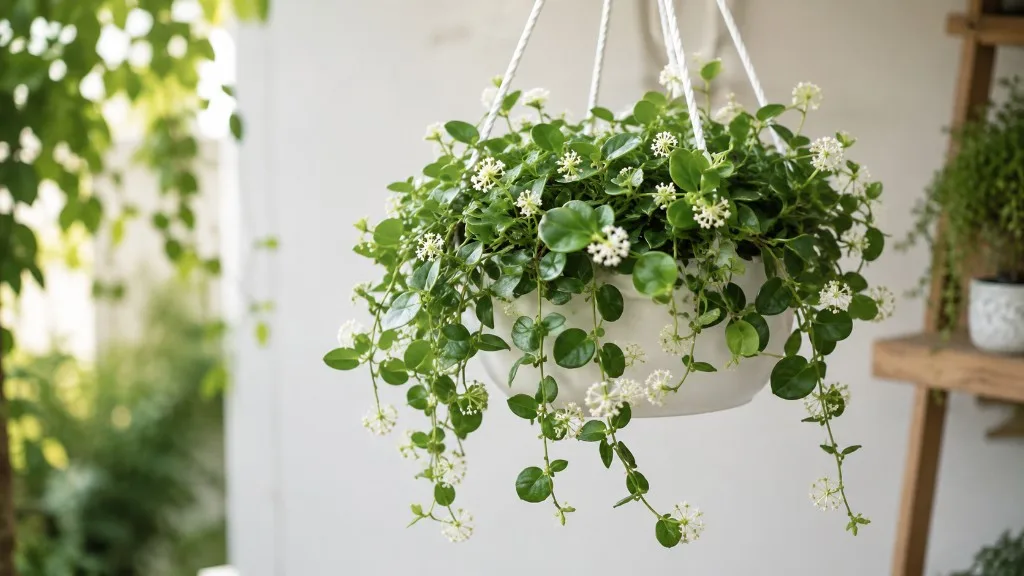
How to Propagate Dischidia: Stem Cuttings Guide
How to Propagate Dischidia: Stem Cuttings Guide
What Dischidia Is and How It Spreads in Nature
Dischidia (Dischidia spp.) is a genus of tropical epiphytes in the Apocynaceae family - the same botanical family as Hoya, milkweeds, and oleanders. In the wild, Dischidia species grow attached to tree trunks and branches across Southeast Asia, northern Australia, and the Philippines, anchoring themselves with aerial roots that emerge from stem nodes and absorb moisture from rain, humidity, and the thin layer of organic debris that collects in bark crevices. They do not grow in conventional soil in nature, and that growth habit shapes every propagation decision you make indoors.
The trailing string of nickels (Dischidia nummularia) and the compact million hearts (D. ruscifolia) are the species most collectors encounter first, but the genus also includes pouch-leaved climbers like D. vidalii and D. major, plus the shingle-forming D. imbricata, whose leaves press flat against a mount like overlapping tiles. What they share is a reliance on stem tissue with living meristem cells to produce new shoots. Dischidia does not behave like a succulent you can restart from a detached leaf pad, and it does not divide cleanly from a central crown the way a peace lily does. Propagation success comes down to giving a node-bearing stem segment the humidity, airflow, and tactile contact it needs to form roots - then letting that rooted segment become the foundation for new vine growth.
Understanding this epiphytic habit prevents the two most common propagation failures: treating Dischidia like a terrestrial houseplant buried in dense potting soil, and buying or gifting a single-leaf cutting that roots beautifully and never produces a vine. The methods below - stem cuttings pressed onto sphagnum moss and layering onto sphagnum or orchid bark - mirror what the plant does on a rainforest branch. They work because they keep nodes in contact with a moist, airy surface while the rest of the stem stays exposed to air.
Why a Single Leaf Will Never Become a Plant
If you have ever seen a heart-shaped Hoya kerrii leaf rooted in a tiny pot, you already understand the trap that catches Dischidia growers. A leaf - even a healthy, firm, rooted leaf - is often a blind cutting: tissue that can form adventitious roots but lacks the axillary meristem required to generate a new shoot. NC State Extension explains this distinction: because leaf cuttings do not include an axillary bud, they usually cannot generate a new plant unless the species can form adventitious buds from leaf tissue alone. The axillary meristem - the growing point that produces the next vine segment - sits at the node, the junction where a leaf meets the stem, as with other vines such as Monstera deliciosa that require a node on every cutting. Sever the leaf at the petiole with no stem segment included, and you remove the only tissue capable of shoot organogenesis.
Dischidia follows the same rule as Hoya and most Apocynaceae vines. A single detached leaf may callus, may even produce roots that keep it alive for months, but it will not sprout the stem and leaves that make a complete plant. Retailers sometimes sell single-leaf Dischidia or Hoya starts precisely because the leaves look charming and root easily - which creates a long wait for growth that never arrives. If your cutting has no node, you are not propagating; you are preserving a leaf cutting. The honest test is simple: can you point to at least one node on the cutting - a slightly swollen stem joint, often with a tiny aerial root nub or leaf scar - where new growth could emerge? If not, start over with stem tissue.
This is not a failure of technique, humidity dome, or rooting hormone. No amount of fertilizer, grow light, or moss adjustment can create a meristem that was cut away. Save your effort for stem segments that include one to three nodes and at least one pair of healthy leaves at the growing tip.
Stem Cuttings vs. Layering: Picking Your Method
Dischidia propagates reliably through two approaches that both depend on nodes contacting a moist, airy surface: stem cuttings and layering. Stem cuttings are the default choice for most growers because they let you take material from a healthy parent, root it separately, and pot or mount the new plant without disturbing the original vine. Layering - leaving a stem attached to the parent while roots form at a node pressed against sphagnum or bark - makes sense when you want zero transplant shock, when the parent plant is large enough to spare a long trailing section, or when you are working with species that root slowly from severed cuttings.
Stem cuttings work best when you have clean, actively growing vine tips or mid-stem sections with visible nodes and firm leaves. Cut below a node, expose one or two nodes by removing lower leaves, and press those nodes into moist long-fiber sphagnum moss or lay the stem across a bark surface. Roots typically emerge from the buried or contacted nodes within two to three weeks under warm, bright conditions - within the 10 to 21 day range common for stem cuttings with nodes on active houseplants. Once you see one inch (2.5 cm) of root growth and possibly a new leaf bud at the tip, the cutting is ready to move to a permanent home.
Layering keeps the stem connected to the parent plant’s vascular system while roots form, which supplies water and sugars during the rooting phase and can improve success on reluctant species. Surface layering suits trailing types like D. nummularia: pin a node-bearing section of vine onto a moss-wrapped mount or a shallow tray of damp sphagnum without cutting it free. Air layering - wrapping a node on an upright or climbing stem with damp sphagnum and plastic - works well for pouch-leaved species like D. major and D. vidalii where you want roots to form at a specific point along a mature vine before you sever and pot it.
Neither method involves leaf cuttings alone. Both require nodes. If you are starting from scratch with a small plant, stem cuttings are almost always faster and simpler than layering.
Best Timing for Dischidia Propagation
Dischidia roots most actively during warm, bright growth periods - typically late spring through early fall in temperate homes, whenever your plant is pushing visible new leaves and the internodes look firm rather than woody and stalled. You can propagate year-round indoors, but cuttings taken during low-light winter months root more slowly, sit wet longer in the propagation medium, and rot more easily. If your only option is a dim, cool season, compensate with a propagation dome, a heat mat set to around 72°F (22°C), and extra patience - but expect timelines to stretch from two weeks toward four or five.
Avoid propagating from a parent that is actively stressed. A Dischidia recovering from root rot on Dischidia, recent shipping shock, pest damage, or severe underwatering on Dischidia will yield weak cuttings even if the visible leaves look acceptable. Stabilize the parent first: confirm the mix is draining, light is adequate, and any pest issue is resolved. Then take cuttings from the healthiest, most recently grown section of vine - usually the last 4 to 6 inches (10 to 15 cm) of active tip growth or a firm mid-stem section with plump leaves and no yellowing.
Timing also matters at the daily level. Take cuttings in the morning when tissue is fully hydrated, use sterilized tools, and allow a brief callus period of two to four hours before inserting nodes into moss. That small pause lets the cut surface seal and reduces the chance of bacterial entry - a meaningful advantage on succulent-stemmed Apocynaceae vines that otherwise rot quickly in enclosed humidity.
Tools and Rooting Media You Actually Need
You do not need a propagation station full of gadgets. Dischidia roots readily without rooting hormone in most home setups, though a light dip in powdered or gel IBA hormone can speed root initiation on slow species if you already own it. Skip hormone if you do not - it is optional, not essential.
Tools worth having:
- Sharp bypass pruners or scissors, wiped with 70% isopropyl alcohol before each cut
- A clear plastic propagation dome, bag, or clamshell container with a vent opening
- Long-fiber sphagnum moss (New Zealand or Chilean - not fine peat moss)
- Orchid bark in ½-inch (1 cm) chunks for layering and final potting
- Perlite or LECA as an optional airy component
- Small nursery pots (2–3 inches / 5–8 cm), a saucer, or a cork bark mount for the finished plant
- Biodegradable twine or twist ties for securing stems during layering
Rooting media options ranked by reliability for Dischidia:
- 100% moist long-fiber sphagnum moss - the most forgiving choice for stem cuttings; holds moisture evenly while staying open enough for airflow at the stem surface
- Equal parts sphagnum moss and perlite - slightly faster drying, good if you tend to overwater propagation setups
- Orchid bark with a sphagnum lining - excellent for layering and for species that will eventually mount on bark anyway
- LECA (expanded clay) - workable for experienced propagators who monitor moisture precisely; less beginner-friendly than moss
Avoid standard peat-heavy potting soil for the rooting phase; RHS notes that epiphytes need open, airy substrates rather than dense peat. It compacts, stays wet at the center, and suffocates the fine adventitious roots Dischidia produces from nodes. Your finished plant will eventually live in an orchid bark-based epiphytic mix, but during propagation the priority is moist contact at the node plus air around the stem.
Propagating Dischidia from Stem Cuttings
Stem cuttings are the method I recommend first for almost every Dischidia species. The process is straightforward, the materials are cheap, and you can produce multiple new plants from a single healthy parent vine in one session.
How to Choose a Cutting with Viable Nodes
A node is the slightly thickened joint on the stem where a leaf attaches - and where Dischidia produces aerial roots in nature. Look for nodes that show a small root initials bump, a leaf scar from a removed leaf, or a pair of leaves flanking the joint. Select a stem section 4 to 6 inches (10 to 15 cm) long with at least two nodes and two to four healthy leaves at the tip end. The leaves should be firm, fully colored, and free of pest damage, edema, or yellowing.
Pass over flowering sections if you can. A vine actively producing blooms divides its energy, and cuttings from those stems sometimes root more slowly. Pass over woody, bare stem with no active growth as well - those segments may still root, but they take longer and fail more often. The best cutting material feels flexible but not mushy, with short internodes indicating recent growth in adequate light.
Make your cut ¼ inch (6 mm) below the lowest node you plan to bury or contact with moss, using a clean 45-degree angle. Remove the lowest one or two leaves to expose bare nodes - these exposed joints are where roots will emerge. Leave at least one pair of leaves at the top so the cutting can photosynthesize while rooting.
Step-by-Step Stem Cutting on Sphagnum Moss
- Hydrate the moss. Soak long-fiber sphagnum in water for five minutes, then squeeze until damp like a wrung-out sponge - moist throughout, not dripping.
- Callus the cutting. Lay the cut stem on a dry surface for two to four hours at room temperature. Do not skip this on Apocynaceae vines; it measurably reduces basal rot.
- Prepare the container. Fill a small pot or shallow tray with the damp moss, or make a small moss pad on a saucer. If using a pot, a 2-inch (5 cm) nursery pot is enough.
- Insert or anchor the cutting. Press the exposed nodes into the moss so they make firm contact. You can bury nodes ½ to 1 inch (1 to 2 cm) deep or lay the stem horizontally with nodes pressed into the surface - both work, but horizontal laying with a node contact point is especially reliable for trailing D. nummularia.
- Optional hormone. Dip the cut end and lowest node in rooting hormone if desired. Shake off excess powder on gel formulations so clumps do not hold too much moisture against the stem.
- Enclose with ventilation. Cover the setup with a clear plastic bag or dome, propping the plastic off the leaves with stakes or chopsticks so it does not touch foliage. Leave a ½-inch (1 cm) vent or open corner - airtight enclosures cause mold and stem rot within days.
- Place in Dischidia light guide. An east window or a few feet back from a south window works. Direct sun inside a sealed bag cooks cuttings.
- Monitor weekly. Moss should feel cool and damp, never soggy. Mist only if the moss lightens in color and feels dry to the touch. Expect roots in 10 to 21 days; new leaf growth may follow one to two weeks later.
When roots are at least 1 inch (2.5 cm) long and hold the moss gently when you tug the stem, the cutting is ready to transplant.
Humidity, Light, and Ventilation During Rooting
Dischidia cuttings root fastest at 50 to 70 percent relative humidity and 65 to 80°F (18 to 27°C). You do not need a laboratory - a loosely sealed bag or dome on a warm windowsill usually delivers enough humidity. The critical detail is daily or every-other-day ventilation: open the bag for 30 seconds to exchange stale air. Trapped ethylene and excess moisture are what turn a healthy stem soft and brown at the base.
Light quality matters as much as humidity. Cuttings need bright indirect light to fuel photosynthesis, but sealed plastic magnifies direct sun into a greenhouse hot spot. If leaves look bleached or collapsed, move the setup farther from the window or diffuse the light with a sheer curtain. If internodes stretch and leaves pale, the cutting wants more light - but still not direct midday sun inside a closed bag.
Layering Dischidia onto Sphagnum Moss or Orchid Bark
Layering is propagation without separation. The stem stays attached to the parent plant while you encourage roots at a node in contact with moss or bark. Because the parent vine continues supplying water and sugars, layered sections often root with less wilting than severed cuttings - especially on mature, long vines you would rather not cut back hard.
Surface Layering for Trailing Vines
Surface layering suits trailing species like string of nickels (D. nummularia) and million hearts (D. ruscifolia). Choose a healthy section of vine with at least one node that can reach a moist surface.
- Soak sphagnum moss and squeeze to damp. Place a handful on a cork bark mount, a shallow tray, or directly on top of a pot of orchid bark.
- Identify a node on the trailing vine - ideally one that already shows a small aerial root bump.
- Press the node into the damp moss. Secure the stem loosely with twist ties or jute twine so the node maintains contact without being crushed.
- Keep the moss consistently damp and the surrounding air humid. A loose plastic cover over the tray helps, ventilated daily.
- Wait two to four weeks. When roots anchor visibly into the moss and a new shoot emerges near the node, sever the vine below the rooted section with sterilized pruners.
- Pot or mount the rooted segment in an epiphytic mix without disturbing the fragile new roots.
You can layer multiple nodes along one long vine simultaneously, producing several plants from a single strand - a practical way to fill out a mount or share cuttings with other collectors.
Air Layering for Pouch-Leaved and Climbing Species
Air layering works well for upright and pouch-leaved Dischidia like D. major and D. vidalii, where you want roots to form on a specific stem section before you cut it free. The technique wraps a node in moist sphagnum while the stem remains on the parent plant.
- Select a firm stem with a healthy node 6 to 12 inches (15 to 30 cm) below the growing tip.
- Optionally make a shallow upward-slanting nick one-third through the stem just below the node to stimulate rooting - not always necessary, but it can help on slow species.
- Soak sphagnum, squeeze to damp, and wrap a generous handful around the node. Cover the moss with clear plastic wrap and secure above and below with twist ties, creating a tight but not strangulating seal.
- Poke two to three small holes in the plastic for airflow. Open the wrap briefly every few days to check moisture.
- Keep moss damp, not saturated. Roots typically fill the moss in three to five weeks depending on warmth and species.
- When roots are visible through the moss and resist gentle pressure, cut the stem below the rooted zone and pot immediately.
Air layering adds steps compared to a simple stem cutting, but it nearly eliminates the wilting risk on thick-stemmed sections and gives you a well-rooted piece ready for a mount.
Water Propagation: Why Most Growers Should Skip It
Water propagation is popular on social media because visible roots in a glass jar make satisfying progress photos. For Dischidia, water rooting is possible but unreliable. Nodes submerged in standing water often rot before they root, especially if the water is changed infrequently or the cutting lacks a proper callus. The stems are semi-succulent Apocynaceae tissue - they tolerate humidity, not saturation.
If you experiment with water, use a small vessel, submerge only the lowest node, keep leaves above the waterline, change the water every two to three days, and move the cutting to moss or bark the moment roots reach ½ inch (1 cm). Even then, roots formed in water are adapted to aquatic conditions and can struggle when transferred to an airy epiphytic mix unless you keep humidity high during the transition.
For most growers, sphagnum moss produces stronger roots faster with less rot risk. Treat water propagation as a curiosity, not the default.
Species-Specific Notes for Common Dischidia
Dischidia nummularia (string of nickels): Trailing, coin-shaped leaves, prolific aerial roots at nodes. Stem cuttings and surface layering on sphagnum both work excellently. Horizontal stem placement with nodes pressed into moss is often faster than vertical insertion. Roots in as little as 10 to 14 days in warm conditions.
Dischidia ruscifolia (million hearts): Compact, heart-shaped leaves on fine trailing stems. Take shorter cuttings 3 to 4 inches (8 to 10 cm) with two nodes. Sensitive to overwatering on Dischidia during rooting - prefer a moss-perlite blend if you tend to keep propagation media too wet.
Dischidia vidalii and D. major (pouch-leaved types): Climbing habit with modified pouch leaves. Air layering on moss produces consistent results on mature stems. Stem cuttings root but may take three to four weeks; patience and stable humidity matter more than hormone dips.
Dischidia imbricata (shingle plant): Grows leaves flat against a mount. Propagate from stem sections with nodes, then mount the rooted cutting onto a vertical cork or bark plaque early so new growth can shingle correctly. Horizontal orientation against the mount should begin as soon as roots anchor.
Dischidia oiantha and rarer species: Follow the same node-based rules. When in doubt, layer first rather than severing a rare vine before roots confirm.
Potting Up and First-Month Aftercare
Rooted cuttings are not finished plants - they are fragile epiphytes transitioning from a humid nursery environment to normal home conditions. Rush this step and you lose weeks of progress to transplant shock or rot.
Transitioning to a Permanent Mount or Pot
Use a 2- to 3-inch (5 to 8 cm) pot with a drainage hole, or a cork bark mount if you want the plant to grow as nature intended. Fill pots with an orchid bark-based epiphytic mix: roughly two parts orchid bark, one part perlite, and one part sphagnum moss - the same open, fast-draining structure Dischidia needs long term. For mounts, tie the rooted stem gently against damp sphagnum layered on cork with jute twine until aerial roots grip the surface on their own.
Remove the cutting from the propagation moss carefully. Do not shake every root bare - hold the root ball intact and nestle it into the new mix or against the mount so nodes sit at the mix surface, not buried deep. Deep burial suffocates the stem and invites rot. Water lightly to settle the mix, then place the plant in bright indirect light with humidity still elevated for the first week.
Acclimate humidity gradually over five to seven days if the plant was under a dome. Crack the cover, then remove it, then move the plant to its permanent spot. Sudden drops from propagation-tent humidity to dry air above a heating vent cause leaf drop and stalled roots.
Hold fertilizer until you see new active growth - a fresh leaf pair or visible vine extension. Then feed at quarter to half strength of a balanced liquid fertilizer monthly during the growing season. The first month is about root establishment, not pushing size.
Water the newly potted Dischidia when the top of the mix approaches dry, using the same sparing rhythm the species prefers: allow the mix to dry almost completely between waterings, then soak thoroughly. Mist foliage lightly between waterings if your home air is dry, but do not substitute misting for proper root-zone moisture.
Propagation Mistakes That Cause Rot
Most Dischidia propagation failures are environmental, not genetic. The stem was viable; the setup was too wet, too airtight, or too dim.
Sealing cuttings airtight is the number one mistake. A bag with no vent traps condensation, encourages mold, and softens the stem base. Always ventilate.
Skipping the callus step sends a fresh open wound directly into damp moss. Two to four hours of air drying prevents a surprising amount of basal rot.
Using dense potting soil suffocates adventitious roots and holds water against the stem. Moss or bark-perlite blends exist for a reason.
Taking cuttings without nodes produces a rooted leaf or a dead stick - never a vine. Inspect for nodes before you cut.
Overwatering the propagation medium is as harmful as underwatering. Moss should feel damp, not drip when squeezed.
Propagating from a sick parent imports pests and weakness. Mealybugs and scale travel on cuttings. Inspect leaf undersides and stem joints before you snip.
Moving to full sun too early scorches leaves rooted under plastic. Acclimate light gradually after the dome comes off.
What to Do When Cuttings Stall or Fail
If a cutting looks unchanged after three weeks, check the node contact first. Gently lift one corner of the moss - if the node is dry and shriveled, mist the moss and confirm the node is pressed in firmly. If the node is brown and mushy, discard that section and take a fresh cutting from healthier tissue after reviewing your ventilation and moisture balance.
If roots formed but no new leaves appear after another month, the cutting may need more light or a slight uptick in nutrition. Move it closer to a bright window - still indirect - and confirm temperatures are above 65°F (18°C). Some slow species simply take longer; D. major and thick-stemmed clones can sit apparently dormant for weeks before a new tip emerges.
If the parent vine yellows after you take many cuttings, it is responding to volume loss, not necessarily disease. Reduce the harvest, let it recover, and avoid fertilizing until new growth resumes. If yellowing concentrates at the base with mushy stems, that is rot on the parent - address watering and airflow before taking more material.
When a leaf cutting roots but never vines, classify it honestly as a blind cutting and restart with stem tissue. Keeping a rooted leaf on a windowsill for a year hoping for a miracle shoot wastes space and teaches the wrong lesson about how Dischidia actually grows.
Conclusion
Dischidia propagation is not complicated once you respect the plant’s epiphytic biology. Stem cuttings with nodes pressed into moist sphagnum moss or orchid bark are the reliable path to new vines. Layering - surface or air - offers a low-stress alternative when you want roots to form before separation. Single leaf cuttings, no matter how cheerfully they root, will not produce a plant because they lack the axillary meristem that only exists at nodes on the stem.
Take material from healthy active growth during warm months, callus your cuts, keep humidity high with daily ventilation, and transplant into an airy bark-based mix once roots hold the moss. That rhythm mirrors what Dischidia does on a rainforest branch - and it is the reason collectors can trade cuttings, fill mounts, and recover a struggling plant by restarting from a single good stem section. Master node identification and moisture discipline, and you will propagate Dischidia more reliably than most generic houseplant guides suggest.
When to use this page vs other Dischidia guides
- Dischidia overview - Start here for whole-plant context before deep-diving this topic.
- Dischidia problems hub - Jump to symptom-specific fix guides when this care topic does not resolve the issue.
Related Dischidia guides
- Dischidia overview
- Dischidia watering
- Dischidia light
- Dischidia soil
- Dischidia fertilizer
- Dischidia repotting
- Dischidia problems
Related tool
Try the Propagation Success Calculator with dischidia pre-selected to estimate needs for your setup.