Dischidia Light Needs: Bright Indirect Light and Grow Lights
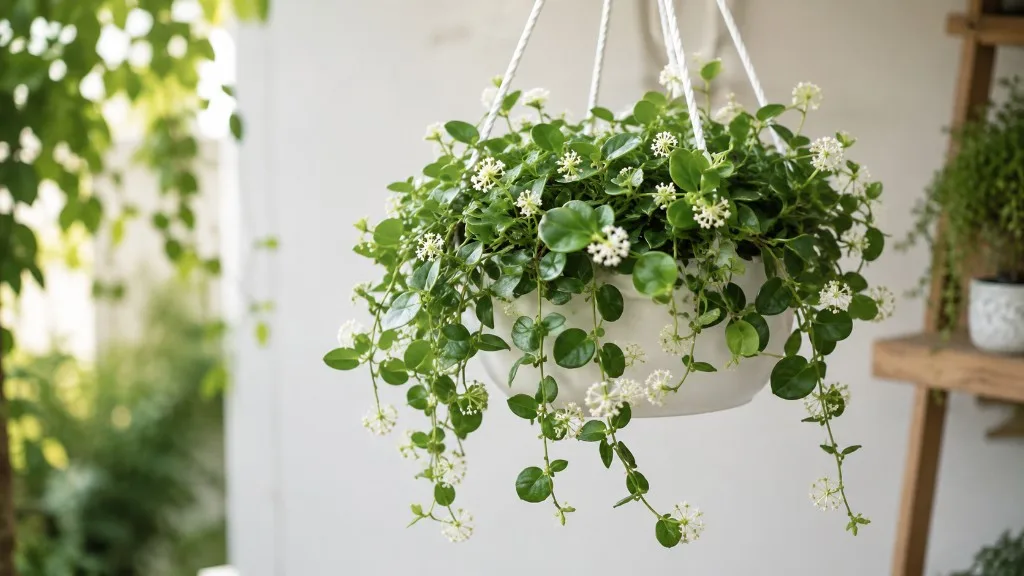
Dischidia Light Needs: Bright Indirect Light and Grow Lights
Dischidia Light Needs: Bright Indirect Light and Grow Lights
Dischidia is an epiphytic trailing and climbing genus in Apocynaceae - the same family as Hoya - native to tropical forests across Asia, Australia, and Oceania. In habitat, these plants root on bark and branches under open canopy, receiving bright, filtered light for much of the day: strong ambient brightness without the full force of tropical midday sun beating directly on tender succulent leaves. That origin is the entire light story indoors. Dischidia is not a deep-shade fern and not a full-sun cactus. It wants the bright middle band - bright indirect light or dappled filtered sun - with harsh direct midday exposure avoided, matching RHS guidance that direct sunlight through glass can scorch epiphytic leaves.
Flora of China describes Dischidia as herbs epiphytic or epilithic that climb by adventitious roots - a profile that explains why window placement, sheer diffusion, and canopy-style filtering matter more than how bright the room feels to your eyes. When light is right, Dischidia produces firm new leaves at short intervals, maintains glossy or appropriately colored foliage depending on species, and - on some types in steady bright conditions - may produce small flowers. When light is wrong, you get leggy stretching, slow growth, bleached or crispy sun-facing tissue, or a plant that survives but never fills out the way photos on plant tags suggest.
This guide focuses on practical placement: how much light Dischidia actually needs, why epiphytic biology changes the usual houseplant advice, where to put pots and hangers by window direction, how much direct sun is tolerable, when to add grow lights, and how to read warning signs before damage becomes habit.
How Much Light Dischidia Actually Needs
Dischidia needs bright indirect light for most of the day - roughly the equivalent of six to eight hours of strong, plant-facing brightness without prolonged harsh direct rays on the leaf surface. “Bright indirect” means the plant can see open sky from its position, receives high ambient light, and is not sitting in a sunbeam that casts a hard shadow with crisp edges at midday. Filtered light - through a sheer curtain, frosted glass, tree canopy outdoors, or the slatted shade of a bright porch - is equally valid and often safer in hot climates.
The genus includes about 80 species with different leaf sizes and habits - trailing String of Nickels (Dischidia oiantha), coin-leaf Dischidia nummularia, compact Million Hearts (Dischidia ruscifolia), and shingle types like Dischidia pectinoides that press leaves flat against a mount - but they share the same forest-canopy light logic. None of them evolved for all-day unfiltered equatorial sun on exposed rock. All of them suffer when kept in dim interior corners with no sky view.
Low light is a short-term survival exposure, not a thriving one. Dischidia may hang on in a north room or far shelf for months, but internodes lengthen, leaves shrink, new growth slows, and the plant becomes easier to overwater because it uses less water while the mix stays wet longer. Too much direct sun produces a different failure: photobleaching - pale translucent patches - followed by crisp brown edges and sometimes sudden leaf drop after a hot afternoon move. The usable band is wide enough for most homes if you prioritize window proximity and diffusion over guessing from room brightness.
Light also sets the pace for the rest of care. A Dischidia in correct bright light dries its epiphytic mix faster, grows steadily through warm months, and tolerates the “dry almost completely between waterings” rhythm these plants prefer. A dim plant in the same pot and mix stays wet longer, which is one of the fastest routes to root stress in an epiphyte that expects airy roots. Treat light as the throttle for watering, not an isolated aesthetic choice.
The Short Answer for Busy Growers
If you only remember four rules, use these. Default placement: within 12 inches (30 cm) of an east-facing window, or a filtered south or west window where the plant receives bright ambient light without hot midday sunbeams on the leaves. Direct sun: gentle morning sun is acceptable for many acclimated plants; avoid harsh direct midday and afternoon sun through unfiltered glass or on outdoor patios without shade. Test with new growth: firm, normally sized new leaves at short internodes mean the light works; stretching, tiny pale leaves, or bleached patches mean adjust before changing water or fertilizer. Winter and dim rooms: add a full-spectrum LED grow light 12 to 18 inches (30 to 45 cm) above the canopy for 10 to 14 hours daily on a timer when windows cannot deliver enough brightness.
Give any placement change 10 to 14 days before calling it a failure. Old scorched or stretched leaves do not repair themselves - only new growth tells the truth.
Why Dischidia Light Looks Different From Typical Houseplants
Dischidia is often sold beside pothos and philodendrons, which leads growers to copy “medium indirect light” rules meant for shade-tolerant aroids. That mismatch causes two opposite failures: keeping Dischidia too dim because “succulent” was misread as “low water therefore low light,” or blasting it with direct afternoon sun because “succulent” was misread as “desert sun lover.” Dischidia leaves store some water - they are succulent epiphytes - but they are forest epiphytes, not desert succulents. Their leaves are adapted to bright canopy edges with rapid drying air and filtered radiation, not to open desert plains or to deep understory gloom - the same epiphytic habit that keeps roots in open, airy substrates rather than dense soil.
Another confusion comes from human eye adaptation. A living room that feels adequately bright to you after five minutes indoors may still deliver too few photons at the leaf surface, especially if the pot sits more than a few feet from the window or below the sill line where sidewalls block sky view. Dischidia on a hook in the center of a bright room often receives a fraction of the light the same room delivers at the glass. Always judge from the plant’s position, not from where you sit on the sofa.
Epiphytic Canopy Light and What It Means Indoors
In tropical forest canopy, Dischidia receives variable but generally high daily light totals filtered through leaves, mist, and angle of sun. Periods of direct morning sun may hit the host tree while midday intensity is broken by overhead foliage. Wind and air movement dry leaf surfaces quickly after rain - important because wet leaves in stagnant dim corners invite fungal issues, but that is a ventilation topic; the light takeaway is bright plus airy, not dark plus humid.
Indoors, replicate canopy light by placing the plant where it sees sky from the leaf level: on a sill, on a shelf at window height, or under a grow light with open room air around it. A spot that receives a gray daylight glow but no direct sky view behaves like understory shade - fine for short holding, poor for long-term shape. For mounted shingle Dischidia pressed against cork or bark, aim the mount at the same bright filtered window; the flat leaf orientation can heat quickly if a sunbeam tracks across it, so diffusion matters even more than for trailing pots.
Bright Indirect vs Filtered Light Explained
Bright indirect light is high-intensity ambient light without the plant sitting in a direct sunbeam for extended periods. Think east window glow, bright room with white walls reflecting light onto the plant, or several feet back from a south window where the sun patch falls on the floor but the plant is in the bright halo around it.
Filtered light adds a diffusion layer: sheer curtain, frosted bathroom glass, greenhouse shade cloth, or outdoor placement under open-branched trees. Filtered light is often the safest way to give Dischidia high daily totals in summer because it cuts the heat load that makes leaf tissue hit scorch temperature even when photon count alone seems tolerable.
Both exposures can work. The failure mode to avoid is unfiltered midday sun - especially south and west glass in summer - where magnification and heat spike faster than the plant can acclimate. If you must use a strong south or west window, pull the pot slightly back from the pane, add a sheer curtain during peak hours, or accept morning-only direct sun and bright indirect the rest of the day.
Species and Cultivar Light Tolerance
Dischidia species differ in leaf thickness, size, and display habit, but none are true low-light plants and none are full-sun desert types. Trailing species with small, thick coin leaves - D. nummularia, D. oiantha - tolerate slightly brighter exposures when acclimated because individual leaves are small and heat dissipates faster than on broad-leaf houseplants. Shingle species - D. pectinoides, D. major - hold leaves flat against a surface; a sunbeam that sweeps the mount can scorch the entire visible leaf face in one afternoon. D. ruscifolia and its variegated forms sit in the middle: compact growth that needs steady brightness to stay dense.
When species is unknown, use the conservative baseline: bright indirect light with optional morning sun, then adjust based on new growth over two weeks.
Common Varieties and Their Light Preferences
Dischidia oiantha (String of Nickels) trails with small, round, succulent leaves. It is often grown in hangers and terrariums. It wants bright indirect light and tolerates gentle morning direct sun when acclimated. In too little light, the string thins and gaps between leaves widen noticeably within a few weeks. In too much afternoon sun, leaves bleach and feel papery on the sun-facing side.
Dischidia nummularia (Button Orchid) behaves similarly - compact coin foliage on thin stems. Bright east or filtered south/west windows suit it well. It is a useful reference species: if your unknown Dischidia looks like this, assume canopy-bright, not shade-dim.
Dischidia ruscifolia (Million Hearts) forms dense chains of heart-shaped leaves. It rewards consistent bright indirect light with tight spacing. Dim light produces sparse, stretched chains that lose the “million” effect. Variegated forms need slightly more total light than all-green plants to maintain cream margins - see below.
Dischidia pectinoides (Ant Plant / shingle plant) is often mounted vertically. Light should be bright and filtered; direct tracking sun on a vertical mount scorches fast because the leaf cannot rotate away. These plants are frequently shown in bright terrarium photos - note that professional setups combine strong overhead grow lights with ventilation, not sealed dim jars.
Variegated Dischidia and Higher Light Needs
Variegated leaves contain zones with less chlorophyll - cream, white, or yellow sectors that cannot photosynthesize at the same rate as green tissue. The plant compensates by needing slightly higher total light to produce the same energy, but those pale zones also lack pigment protection against excess UV and heat. The result is a narrower safe band: variegated Dischidia often needs brighter indirect light than an all-green sibling to avoid reversion (new solid-green leaves) yet burns sooner in harsh direct sun.
If variegated margins shrink or new leaves emerge mostly green, increase brightness gradually - closer to the window with a sheer curtain, or an hour of morning sun - rather than jumping to unfiltered west exposure. If pale zones turn tan and crisp while green zones remain fine, reduce intensity before reducing hours: move back from glass, add diffusion, or shift to east. Reversion on a single leaf is permanent for that leaf; improved light can restore variegation on subsequent new growth if caught early.
Best Window and Room Placement for Dischidia
Compass direction is a starting guess, not a verdict. A labeled “south window” blocked by a neighbor’s wall may lose to an open east window. Dischidia placement succeeds when leaf-level light stays in the bright indirect band for enough hours daily and when heat at the leaf stays below scorch threshold in summer.
Put the pot or mount within 12 inches (30 cm) of the glass on the chosen exposure - not on a distant table where the plant sees room brightness but receives little usable flux. Rotate hanging baskets a quarter turn every week so one side does not dominate growth toward the window. Keep leaves from touching hot glass in summer; contact points scorch even when ambient light would otherwise be fine.
East, South, West, and North Windows Compared
An east-facing window is the most reliable Dischidia default indoors. Morning sun is bright but cooler than late-day sun, delivering high photon counts without the heat spike that west and south glass produce in afternoon. Many growers keep Dischidia on east sills year-round with no supplemental light except in deep winter at high latitudes.
A south-facing window delivers the strongest winter sun in the northern hemisphere and can be excellent for Dischidia close to the pane from fall through spring. In summer, south glass can overheat leaves and magnify rays. Use a sheer curtain at peak hours, pull the pot back slightly, or limit direct sun to morning if the exposure receives afternoon beams. South is ideal when combined with a small overhead LED in winter.
A west-facing window provides strong afternoon rays - the highest scorch risk for Dischidia unless filtered. If west is your only bright option, treat it as filtered-bright mandatory: sheer curtain, frosted film, or placement back from the sill so the plant sits in bright halo light without sitting in the sun patch. Watch for one-sided bleaching on leaves facing the glass.
A north-facing window rarely supplies enough brightness for compact, dense Dischidia long-term in the northern hemisphere. North may maintain slow survival growth for shade-tolerant-looking species in summer at high latitudes, but expect stretching, smaller new leaves, and reduced vigor unless you add a grow light. Treat north as supplemental-light territory for display-quality plants.
Filtered Sun Through Sheer Curtains and Canopy Shade
Sheer white or linen curtains transform harsh window sun into high-quality filtered light - exactly the kind of exposure Dischidia evolved under. You keep high daily totals while cutting the heat and UV peak that causes bleaching. Outdoors, the equivalent is open shade under trees, the east side of a pergola, or a bright porch with shade cloth during midday.
For hangers in front of south or west windows, curtains also prevent heat buildup between glass and foliage - a microclimate that dries soil unevenly and stresses leaves even before visible scorch. If you dislike curtains for aesthetics, frosted window film on the lower pane or moving the plant to the bright zone just outside the direct sun patch on the floor achieves a similar effect.
Direct Sun: Morning Tolerance and Midday Limits
Dischidia can handle some direct sun when acclimated and when exposure is limited to gentle morning hours or heavily filtered beams. What it cannot tolerate is sudden, unfiltered midday or afternoon sun - especially through south or west glass or on a patio with no overhead shade - on plants grown in lower light at the nursery or in your home.
Direct sun damage is irreversible on affected tissue. Bleached zones do not re-green; crisp edges do not soften. The plant must grow new leaves to look healthy again. That is why prevention and gradual acclimation matter more than for many foliage houseplants.
Signs you crossed the direct-sun line include pale translucent patches on sun-facing leaves, papery brown tips appearing within days of a move, curling or folding during peak hours, and sudden leaf drop after a hot afternoon. If you see these, move the plant to bright indirect light immediately, do not fertilize, and water cautiously until new growth resumes - root stress from panic overwatering on Dischidia after sun shock is a common secondary mistake.
How to Acclimate Dischidia to Brighter Light
Increase exposure gradually over 7 to 14 days, not in one jump from a dim shelf to a west sill at noon. Start in bright indirect only for several days so the plant adjusts enzyme and pigment levels to current flux. Add 30 to 60 minutes of early direct sun - east window only - for three to four days while checking new leaves each morning. Extend morning direct by another hour every few days if no bleaching appears.
Outdoor summer moves follow the same ladder: open shade first, then dappled morning sun, then brighter filtered patio - never straight from indoor north room to uncovered south patio. Wind and faster dry-down outdoors also change water needs; light acclimation and watering adjustments should happen together.
If bleaching appears at any step, hold at the previous level for a week before retrying a smaller increment. Plants that leaf-drop after shock often recover in stable bright indirect conditions if overwatering does not follow.
Indoor Light vs Outdoor Filtered Sun
Outdoor filtered sun often delivers higher total daily photons than indoor glass, with natural air movement that reduces heat stress on leaves. A Dischidia that thrives on a bright shaded patio in June may slow and stretch when brought indoors to the “same” south window because glass cuts intensity, direction is single-sided, and photoperiod drops in winter. That response is normal - it signals you need brighter window position or supplemental LED, not emergency Dischidia repotting guide.
Indoor advantages are stability: no hail, no sudden hail of direct sun when a tree is pruned, no all-night cold snap after a warm day. Use indoor placement when you want steady trailing growth year-round. Use outdoor bright shade during frost-free months when you can monitor dry-down and sun angle daily.
Terrarium, Hanger, and Shelf Light Traps
Terrariums and enclosed glass cases create three light traps for Dischidia. First, condensation and glass curvature can scatter light unevenly so the plant looks well-lit in photos but receives less usable flux at the leaf. Second, direct sun on a sealed or semi-sealed container overheats air quickly - far faster than open air on a sill - and cooks leaves even when the same sun would be tolerable on an open pot. Third, top-down viewing setups often place soil and stems below the light line while the human eye sees brightness at the glass top; trailing stems hang in shade beneath their own canopy.
Open dish terrariums with bright overhead grow lights and air exchange work; sealed fairy-garden jars in a south window do not. If you grow Dischidia in a case, prioritize overhead full-spectrum LED and avoid direct sun on the glass.
Hangers look perfect in bright rooms but often sit too far from windows. Lower the hook until the top of the cascade is within the bright zone, or accept that the upper stems get light while lower strands thin - then rotate or trim. Wall shelves above window height can receive strong sideways light; shelves below the sill often fail the sky-view test entirely.
Grow Lights When Natural Light Is Insufficient
When windows cannot deliver enough brightness for compact growth - north rooms, winter at high latitudes, office desks with distant windows, or interior bathrooms with frosted glass only - a full-spectrum LED grow light is the most reliable upgrade. Dischidia responds well to artificial light because its natural habitat already includes variable canopy brightness; what it needs is adequate daily total, not a magic window direction.
Skip standard room bulbs optimized for human lumens. Choose a horticultural full-spectrum white LED in the 5000 to 6500 K range with good color rendering so you can see leaf health accurately, following the same bright-filtered-light logic Missouri Botanical Garden recommends for indoor epiphytes such as jewel orchids. Red-heavy “bloom” spectra are unnecessary for foliage Dischidia and can encourage stretching without balanced leaf development.
Fixture Distance, Hours, and Spectrum for Dischidia
A workable starting setup:
- Position the fixture 12 to 18 inches (30 to 45 cm) above the top of the trailing or mounted canopy - close enough for intensity, far enough to avoid hot spots on small leaves.
- Run the light 10 to 14 hours daily on a timer to maintain consistent photoperiod; irregular manual on/off produces uneven growth.
- Combine overhead LED with a bright window when possible so growth is not one-sided toward a single bulb.
- Rotate the pot or hanger weekly under artificial light, same as with window light.
Adjust using new-growth signals after two weeks. If stems still stretch and new leaves stay small and pale, lower the fixture 2 inches (5 cm) or add one hour to the timer - not both at once. If leaf edges bleach or feel warm to the touch at midday lamp-on, raise the fixture 2 to 3 inches (5 to 8 cm) or reduce hours slightly. Small enclosed shelves heat faster than open rooms; place your hand at leaf level under the lamp during peak on-hours as a simple heat check.
Winter supplementation should aim to hold compact healthy growth, not force summer-speed elongation in December. Match watering to slower winter metabolism even when the lamp runs 12 hours - more light without overwatering prevents the classic dim-winter rot cycle.
Warning Signs Your Dischidia Has the Wrong Light
Dischidia reports light problems on new tissue first. Old bleached or stretched leaves will not revert; watch the youngest leaves and the next node after a trim. Make one light change, then wait 10 to 14 days before also changing water, fertilizer, or mount - overlapping stressors make diagnosis guesswork because wilt, fade, and edge crisping overlap across causes.
Too little light shows as long internodes and visible stretching toward the window or bulb, smaller thinner new leaves, loss of gloss or variegation contrast, slow or stalled new growth despite otherwise stable care, sparse trailing strands with gaps between leaf pairs, and yellowing lower leaves on moist soil in cool dim rooms - often coupled to overwatering because the plant uses less water in low flux. Fixes: move closer to glass, remove obstructions, shift to east or filtered south/west, add or lower a grow light, extend photoperiod on the timer, and trim leggy tips after light improves so new branching emerges compact.
Too much light shows as white or tan bleached patches on sun-facing zones, crisp dry leaf margins appearing suddenly after a move, downward curling during peak sun hours, sudden leaf drop after relocation to harsh exposure without acclimation, and wilting on moist soil at midday in hot direct sun - sometimes root-zone heat in dark containers near glass, not drought. Fixes: pull back from glass, add sheer diffusion, shift to east or open shade, acclimate gradually over 7–14 days, and avoid placing sealed terrariums in direct sun. For plants that still bleach in your brightest filtered spot, accept that afternoon protection is part of the requirement, not a failure of care.
Flowering indoors - small blooms on some species - generally requires steady bright light plus stable warmth and humidity; light is usually the limiting factor when everything else is adequate. Chasing flowers should not push you into direct scorch exposure; compact healthy foliage in bright indirect is the sustainable target.
Conclusion
Dischidia light needs boil down to forest-canopy logic indoors: bright indirect or filtered light for most of the day, gentle morning direct sun only when acclimated, and harsh unfiltered midday sun avoided on tender epiphytic leaves. East windows and filtered south or west exposures are the practical sweet spots; north rooms and distant hangers usually need full-spectrum LED supplementation at 12 to 18 inches (30 to 45 cm) for 10 to 14 hours daily.
Read new growth, not damaged old leaves. Move exposure in steps over 7 to 14 days, pair brighter light with adjusted watering so airy mix does not stay wet, and watch for terrarium and room-brightness traps where the plant sees less light than you do. Variegated forms need slightly more brightness to hold pattern but burn faster in direct rays. Get the light band right and Dischidia becomes a low-drama trailing or shingle display plant; miss it and even perfect bark mix and careful watering produce a thin, pale string that never matches the photo that made you buy it.
When to use this page vs other Dischidia guides
- Dischidia overview - Start here for whole-plant context before deep-diving this topic.
- Dischidia problems hub - Jump to symptom-specific fix guides when this care topic does not resolve the issue.
- Not Enough Light on Dischidia - Escalate here when light adjustments are not enough.
- Leggy Growth on Dischidia - Escalate here when light adjustments are not enough.
Related Dischidia guides
- Dischidia overview
- Dischidia watering
- Dischidia soil
- Dischidia propagation
- Dischidia fertilizer
- Dischidia repotting
- Not Enough Light on Dischidia
- Leggy Growth on Dischidia
- Dischidia problems
Related tool
Try the Plant Problem Diagnosis Tool with dischidia pre-selected to estimate needs for your setup.