Best Dischidia Growing Medium: Mix, Mounts & Pots
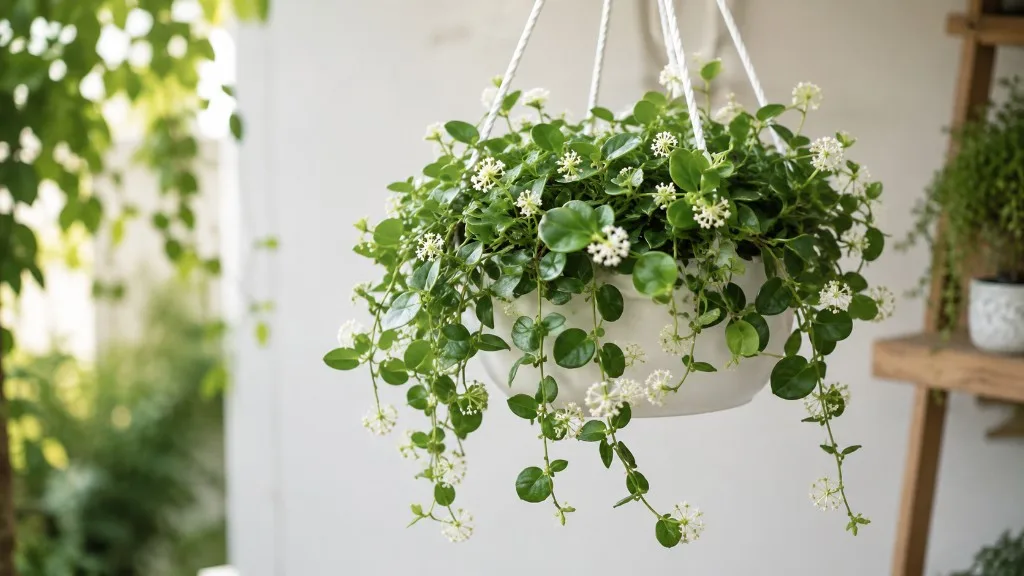
Best Dischidia Growing Medium: Mix, Mounts & Pots
Best Dischidia Growing Medium: Mix, Mounts & Pots
Author: sai-ananth · Reviewed by: LeafyPixels Review Board (2026-06-17) · Methodology: Botanical and extension references plus practical indoor growing constraints before publication.
What Dischidia Growing Medium Needs to Do
The best growing medium for Dischidia is not soil in the conventional sense. Dischidia species - trailing types like Dischidia nummularia (String of Nickels), shingling vines like D. imbricata, and compact forms like D. ruscifolia (Million Hearts) - are epiphytes in the Apocynaceae family, closely related to Hoya. In the wild they anchor to tree bark, rock faces, and mossy branches across tropical Asia and northern Australia, drawing moisture from thin pockets of organic debris and rain that passes through quickly. Their roots are built for grip, gas exchange, and brief moisture contact, not for sitting in a deep column of wet peat.
That biology changes every practical decision indoors. A good Dischidia growing medium must do four jobs at once. It must hold the plant upright or give aerial roots something rough to cling to. It must drain fast enough that the root zone never turns anaerobic between waterings. It must retain a thin moisture buffer so fine adventitious roots do not desiccate in dry home air. And it must stay structurally open for months or years without compacting into a dense plug the way standard houseplant mix does. When any one of those jobs fails, you see the same above-ground symptoms - yellowing leaves, basal stem softness, stalled trailing growth - and the fix is almost always at the root zone, not the fertilizer bottle.
Most growers encounter Dischidia in one of two setups: a shallow pot filled with chunky epiphyte mix, or a mounted display on cork or wood wrapped in long-fiber sphagnum moss. Both are valid. Both outperform standard potting soil by a wide margin. For watering rhythm and mount soak schedules, see the Dischidia watering guide. For full repot steps, see Dischidia repotting. If roots fail despite good mix, read root rot on Dischidia. The sections below walk through DIY mix recipes, a full mounting workflow, container rules for shallow root zones, and an honest comparison so you can pick the culture style that fits your home, not just your Pinterest board.
Grower note: rescuing nursery peat
A trailing Dischidia nummularia in a 4-inch peat plug often yellows at the base within six weeks even when the owner waters “correctly.” The fix is not more misting - it is moving the root zone into 60% coarse orchid bark, 20% perlite, and 20% rinsed coir in a shallow pot with a drainage hole. In one typical rescue, the plant firmed up after ten to fourteen days once the inner plug dried between soaks instead of staying wet for a week at a time. That pattern - surface dry, core soggy - is the signature of wrong medium, not wrong personality.
Why Epiphytes Cannot Use Standard Potting Soil
Standard indoor potting soil is engineered for terrestrial plants with fibrous root systems that spread through a deep, nutrient-rich column. It is typically peat-heavy, fine-textured, and designed to hold moisture evenly from top to bottom. For a philodendron in a six-inch pot, that structure is a feature. For Dischidia, it is a slow-motion suffocation.
Epiphytic roots behave differently. They emerge from nodes along trailing or climbing stems, attach to rough surfaces, and absorb water during brief wet periods before drying again. They expect high oxygen at all times. When you plant Dischidia in dense potting soil - even “well-draining” blends from a bag - three problems appear quickly. The fine particles settle around delicate aerial roots and eliminate air pockets. The peat holds water in the center of the pot long after the surface looks dry, which tricks growers into watering again too soon. And the organic matter compacts with each watering cycle, shrinking the drainage paths that epiphyte roots depend on.
The failure pattern is predictable. New growth looks fine for a few weeks while roots explore the upper layer. Then lower stems soften at the soil line, leaves turn yellow from the base up, and the plant stalls despite “proper” care. The grower adds water because the top inch feels dry, not realizing the core of the pot has been wet for ten days. Basal rot follows. This is why experienced Dischidia growers treat orchid bark, coconut husk, perlite, and sphagnum as the real vocabulary - not “soil” at all.
Pure sphagnum moss alone is not a free pass either. Long-fiber sphagnum is excellent as a thin moisture pad on a mount or as a small fraction in a chunky blend, but a pot filled entirely with loose sphagnum can hold too much water in a cool, dim room. It also acidifies as it ages, sometimes dropping below the 5.5–6.5 pH range most epiphytic orchids tolerate in bark-based mixes. The goal is a medium that mimics a mossy bark crevice in a tropical canopy - airy, briefly damp, never swampy - not a bog.
The Quick Answer: Chunky Bark Mix or a Sphagnum Mount
If you want the short version before the full breakdown, here it is. For potted Dischidia, use a chunky epiphyte mix built around coarse orchid bark: roughly 50–60% bark (¼-inch to ½-inch chunks), 20–25% perlite or pumice, 10–15% coconut husk chips or rinsed coir, and a small handful of long-fiber sphagnum moss per quart of mix for humidity buffering. Blend thoroughly, moisten lightly, and pot in a shallow container with a drainage hole. Water when the mix is approaching dry throughout - not when only the surface has dried.
For mounted Dischidia, wrap a thin pad of damp long-fiber sphagnum moss (about one inch thick) around untreated cork bark or hardwood, press the plant’s nodes against the moss, and secure with clear fishing line or plastic-coated wire. Hang or lean the mount in bright indirect light and water by misting the moss or briefly soaking the mount until the moss is saturated, then let it dry until it feels feather-light. Mounted plants dry faster than potted ones; plan on more frequent attention, especially in warm, bright conditions.
In both setups, never use standard potting soil as the main ingredient. Bagged orchid mix can work as a starting base if it is genuinely chunky, but test drainage: pour a cup of water into a four-inch pot of mix and confirm most of it exits within fifteen seconds - the same free-draining, bark-based standard used for epiphytic orchids. If runoff is sluggish, add more perlite or bark before you pot a plant. If you remember only one rule, remember this: Dischidia roots want air first, moisture second.
Best DIY Epiphyte Mix for Potted Dischidia
You can build an excellent Dischidia mix from components at any garden center with an orchid section. None require a specialty supplier unless you want premium New Zealand sphagnum or specific cork slab sizes. The art is in the ratios and in adjusting for how fast your room dries pots.
The Standard Orchid-Bark Blend
The most reliable DIY blend for hanging baskets, shallow terracotta pots, and standard indoor culture, by volume:
- 3 parts coarse orchid bark (¼-inch to ½-inch chunks; fir or pine)
- 1 part perlite or pumice (coarse grade)
- 1 part coconut husk chips or rinsed coco coir (coir holds slightly more moisture than husk)
- Optional: ¼ part horticultural charcoal for odor control and microbial balance in warm, humid rooms
- Optional: a loose handful of long-fiber sphagnum moss per quart of finished mix, teased apart so it does not form wet clumps
Measure by volume in a bucket or on a tarp. Mix until the white perlite and dark bark are evenly distributed and no straight piles of single ingredients remain. The finished blend should look visibly chunky - you should be able to see individual bark pieces and feel open structure when you squeeze a moist handful. It should hold together loosely and crumble when poked, not form a mud ball.
This recipe tracks what commercial epiphyte growers describe for Dischidia: bark-based, medium-chunky, with a light moisture buffer. A practical variation for dry homes that run air conditioning: reduce perlite slightly and add a little more coir (try 2 parts bark, 1 part coir, 1 part perlite). A variation for humid terrariums or dim winter rooms where pots stay wet too long: push toward 4 parts bark, 2 parts perlite, 1 part charcoal and skip extra coir entirely. After repotting, watch dry-down speed for two weeks before you declare the ratio perfect.
Fine-Grade Mix for Terrariums and Small Pots
Trailing Dischidia in glass terrariums or two-inch starter pots need the same drainage principle with smaller particle size so shallow roots can explore crevices without gaps too large to bridge. Build a fine-grade epiphyte blend:
- 2 parts fine orchid bark or fir bark fines
- 1 part perlite
- 1 part rinsed coco coir (fluffed, not compressed brick used dry)
- A small amount of long-fiber sphagnum, shredded and distributed - never a solid moss plug
Terrarium culture adds a constraint: reduced evaporation. Even a perfect mix can stay wet longer when enclosed. Layer the bottom with charcoal and coarse bark before adding the fine mix if you are building a permanent terrarium substrate. Ventilate daily. If condensation coats the glass continuously and the mix never dries, the problem is enclosure humidity, not the plant’s thirst - open the terrarium or move the Dischidia to an open hanging pot until conditions stabilize.
Mounting Dischidia on Cork, Bark, and Wood
Mounting is the most natural way to grow Dischidia because it removes the deepest part of the pot - the zone where water pools and bark decomposes slowest. A well-made mount mimics the tree trunk crevice where the plant would root in habitat. String of Nickels, shingle plants, and Million Hearts all look more at home on bark than in plastic, and mounted culture often reduces basal rot because excess water simply drips away.
Choose untreated cork bark slabs (roughly two inches thick for stability), cedar, grapewood, or clean driftwood. Avoid pressure-treated lumber, painted craft wood, and chemically sealed boards from hardware stores - those products can leach compounds toxic to thin epiphytic roots. Cork is the gold standard because it is porous, rot-resistant, and lightweight. Hardwood lasts years if kept in bright, airy conditions.
Sphagnum Moss Mount Step by Step
A basic mount takes twenty minutes and requires no specialty tools beyond scissors and clear fishing line or green floral wire.
First, hydrate long-fiber sphagnum moss in clean water for ten minutes, then squeeze out excess so it is damp but not dripping. Lay a pad about one inch thick on the face of the cork where you want the plant. Second, position the Dischidia so at least two or three nodes with aerial roots press directly into the moss. Remove any leaves that would bury under the moss and rot. Third, secure the stems with fishing line or wire, wrapping gently around the cork and stems without crushing tissue. Knot the line on the back of the slab. Fourth, hang or display the mount in bright indirect light with humidity above fifty percent if possible. Fifth, establish a watering rhythm: mist the moss until it darkens fully, or soak the entire mount in a bowl of water for two to three minutes, then let it drain and dry until the mount feels noticeably light and the moss crinkles slightly.
Mounted Dischidia dry faster than potted specimens - sometimes in two to four days in warm, bright conditions. That is normal. Do not compensate by packing more moss into a thicker pad; a thick wet moss blanket is how mounted plants rot at the stem base. Keep the pad thin, refresh the moss annually if it breaks down, and upgrade the mount when the plant outgrows the slab. Propagation on mounts works the same way: press a rooted or rooting cutting into fresh damp moss and secure until adventitious roots grip the cork.
Mounting Culture vs Pot Culture: Which to Choose
Neither method is universally better. They trade watering frequency, display style, and beginner forgiveness differently. Use this comparison to decide what fits your home.
Mounting culture wins on aesthetics and rot prevention. Water drains away completely, aerial roots attach to rough bark naturally, and shingling species like D. imbricata display their overlapping leaf pattern beautifully flat against the slab. The cost is attention: mounts dry quickly and need consistent humidity or frequent soaking. They are less forgiving if you travel often or keep a dry, air-conditioned apartment below forty percent humidity.
Pot culture wins on stability and moisture buffering. A shallow pot of chunky bark mix holds a little more water than a thin moss pad, which buys you an extra day or two between waterings. Trailing D. nummularia in a hanging basket is easier to manage for beginners than a wall mount that dries unevenly. The cost is vigilance against overpotting, dense mix, and cachepots that trap runoff - any of which recreate the anaerobic conditions standard soil would.
A practical rule: choose pot culture if you are new to epiphytes, if your home is dry, or if you want a hanging basket display. Choose mounting if you maintain humidity above fifty-five percent, enjoy hands-on watering, and want the most habitat-authentic presentation. Many collectors use both - pots for propagation and backup plants, mounts for show specimens.
Core Ingredients and What Each One Does
Stop thinking in brand names and start thinking in functions. Each ingredient in a Dischidia growing medium should have a clear job. When you know the job, adjusting the mix for your room becomes logical instead of guesswork.
Orchid Bark, Coconut Husk, and Horticultural Charcoal
Coarse orchid bark is the skeleton of any potted epiphyte mix. The large chunks create permanent air pockets, give aerial roots rough surfaces to grip, and resist compaction longer than peat. Fir and pine bark are standard; chunk size matters more than species. Quarter-inch to half-inch pieces suit most Dischidia. Dusty fines alone behave like peat and should be avoided as the primary fraction.
Coconut husk chips and rinsed coco coir add a modest moisture buffer without the water-holding density of peat. Coir rewets easily and tends toward neutral pH, which suits Apocynaceae epiphytes. Rinse coir three times if it arrives compressed with salt residue from processing - salt buildup shows up as brown leaf tips long before you suspect the medium.
Horticultural charcoal is optional but useful in warm, humid setups, terrariums, and baskets where organic matter decomposes quickly. It absorbs impurities, reduces sour odors from stale wet zones, and keeps the mix feeling fresh longer. Keep charcoal below twenty-five percent of total volume; it contributes no nutrients and adds no moisture retention.
Perlite and pumice deserve mention alongside bark because they prevent the entire structure from collapsing as bark slowly breaks down over eighteen to thirty months. Perlite is lightweight and ideal for hanging baskets. Pumice is heavier and stabilizes shallow pots that tip easily. Either works; do not omit both bark and perlite in favor of only one.
Long-fiber sphagnum moss is a moisture moderator, not a soil replacement. Teased into a chunky blend in small amounts, it keeps humidity at the root surface during dry spells. Used alone in deep pots, it becomes a water sponge. On mounts, it is the primary moisture pad - but keep the pad thin.
Can You Use Cactus Soil, Orchid Mix, or Regular Potting Soil?
Regular potting soil: No as a primary medium. Even quality indoor mixes are too fine and too peat-heavy for Dischidia aerial roots. If you have nothing else available for an emergency repot, use at most one part potting mix to three or four parts orchid bark and perlite - treat the potting soil as a minor additive, not the base.
Bagged cactus or succulent mix: Better than standard potting soil, but still often too dense. Most commercial succulent blends target ground-dwelling desert plants, not canopy epiphytes. They may lack the large bark chunks Dischidia roots need for grip and airflow. If you use succulent mix, amend aggressively with equal volume coarse orchid bark and test drainage before planting.
Bagged orchid mix: Often the best shortcut. Read the label: you want visible chunks, not a peat slurry with bark dust. Phalaenopsis-grade mixes with large fir bark work well for Dischidia with a handful of added perlite. Fine orchid mixes meant for seedlings can work in terrariums but may stay too wet in open pots.
LECA / semi-hydro is possible with careful tuning, but most home growers get stronger aerial root growth from bark-based mix or sphagnum mounts. Transition water-rooted cuttings to bark or a mount once roots reach one to two inches.
pH, Salt Buildup, and How Long Your Mix Lasts
Dischidia tolerates a slightly acidic epiphyte range, roughly pH 5.5 to 6.5, consistent with open orchid bark mixes that stay moisture-retentive but never waterlogged. Most bark-based mixes start in that window without adjustment. Problems appear when pure sphagnum dominates and ages, pulling pH below 5.0, or when hard tap water and fertilizer salts accumulate in a mix that never flushes clean.
Salt buildup shows as crust on bark surfaces, brown leaf tips, and stunted new growth. Flush potted mix with clean water or soak and drain mounts without fertilizer. If salts persist, refresh the medium at the next repot.
Bark and coir decompose over time. As they break down, particle size shrinks, air space collapses, and drainage slows even if your watering habits have not changed. Expect to refresh or repot every eighteen to thirty months for actively growing Dischidia in bark mix - or sooner when mix breaks down and loses air space, as RHS notes for bark substrates - longer for slow growers in cool conditions, shorter for fast trailers in warm, bright baskets. Mounted sphagnum should be replaced when it turns dark, dense, and waterlogged, typically once a year in humid setups.
Do not repot on a calendar alone. Repot when roots circle the pot interior, when water runs straight down the sides without wetting the core (hydrophobic aged bark), when the mix smells sour, or when new growth stalls despite good light and sensible watering. Avoid repotting a stressed plant unless the medium itself is clearly failing - changing mix, pot, light, and watering simultaneously hides which variable actually caused the problem.
Container Choice for Shallow Epiphytic Roots
Dischidia root zones are shallow and spreading, not deep and diving. Match the container to that habit and you eliminate a large class of watering errors before they start.
Shallow pots and hanging baskets outperform deep nursery pots. A three-inch-deep basket suits a trailing String of Nickels better than a five-inch-tall plastic pot with three inches of unused wet mix below the roots. Unglazed terracotta wicks moisture from the sides and helps bark dry evenly; it is excellent in humid rooms where plastic stays wet too long. Plastic hanging baskets with open mesh sides maximize airflow around the entire root ball - ideal for epiphyte mixes that depend on evaporation from multiple surfaces.
Mesh wire baskets with coco or sphagnum liners suit Dischidia well because air moves through the sides while the liner holds chunky mix in place.
Why Drainage Holes and Pot Depth Matter
A drainage hole is non-negotiable for long-term potted Dischidia indoors. Without an exit path, water pools at the bottom of even the chunkiest mix, creating the anaerobic zone epiphyte roots cannot survive. Decorative pots without holes are cachepots only - keep the plant in a functional inner pot and empty runoff after every watering.
Pot depth matters as much as drainage. Deep wet columns below the root zone are wasted space that only holds stale water. Choose a pot one to two inches wider than the root mass and no deeper than necessary to cover the roots with a half-inch to one inch of mix on top. Dischidia often prefers being slightly snug; overpotting into a large container is one of the most common reasons a healthy-looking plant slowly declines without an obvious pest or light problem.
Never rely on a gravel layer at the bottom to fix poor drainage; RHS growing-media guidance stresses aerators such as bark and perlite instead of perched water layers. Gravel creates a perched water table where fine mix above meets coarse gravel below, sometimes keeping the root zone wetter, not drier. Fix drainage with better mix and a hole, not with rocks.
How to Tell Whether Your Growing Medium Is Working
Your mix is working if the plant tells you through growth habit, not just survival. Healthy Dischidia in the right medium produces firm new leaves, active stem extension during warm months, and adventitious roots that visibly explore bark or moss without browning. Trailing types lengthen strands evenly; shingling types hold flat overlapping leaves against their support.
Run three practical checks. The one-minute drainage test: water should exit freely within seconds after a full watering. The weight test: a pot approaching dryness feels noticeably lighter than when fully wet. The root-zone smell test: sour or swampy odors mean oxygen is gone even if leaves still look green.
Visual warning signs that the medium is wrong include yellowing from the base up, soft blackened stems at the soil or moss line, leaves that shrivel despite damp-looking surface mix, and white healthy roots turning brown and mushy when you inspect the edge of the pot. A single dry episode causes temporary wrinkling; chronic damp causes basal collapse. If several warning signs appear together, pause watering, inspect roots at the pot edge, and plan a repot into fresh chunky mix or a new thin moss mount rather than adding fertilizer.
When to Repot, Refresh, or Replace the Mix
Repot Dischidia in spring or early summer when active growth resumes, not in the middle of a cool dormant stretch unless the medium is actively rotting. The plant recovers faster when temperatures and light support new root production.
Repot when: roots circle the inside of the pot or emerge heavily from drainage holes; the bark has broken down into fine, dusty particles; water runs down the pot sides without absorbing (hydrophobic aged mix); or the plant dries so fast you water every two days because the root mass has outgrown the container. Move up only one pot size - for example, from a four-inch to a five-inch basket. Overpotting a Dischidia to “give it room” is how growers accidentally give it a bathtub of wet bark instead.
To repot, remove the plant gently and shake off old mix without tearing healthy aerial roots. Trim only soft, brown, mushy roots with clean scissors. Set the plant in the new shallow container so nodes sit at or just above the mix line - never bury trailing stems deep enough to rot leaf joints. Fill around the roots with pre-moistened epiphyte blend, tamp lightly to stabilize, and wait five to seven days before resuming normal watering so broken roots callus.
For mounts, refresh sphagnum when it compacts, greens with algae, or stays wet for days without drying. Untie the plant, replace the moss pad, and resecure. If the Dischidia has gripped the cork directly with adventitious roots, leave those attached and only replace moss around them.
Common Growing Medium Mistakes with Dischidia
The same errors appear repeatedly across forums and plant shops. Avoiding them is faster than rescuing a rotting specimen.
Using standard potting soil because the tag said “houseplant.” This is the number-one killer. If you bought a Dischidia in dense peat, repot into bark mix within the first month at home.
Overpotting into a deep, wide container so you do not have to repot often. Unused wet bark below the root zone is a rot reservoir.
Filling pots entirely with loose sphagnum moss because epiphytes “like moss.” They like brief moss contact, not a deep sphagnum well.
Mounting on treated or painted wood because it was convenient. Chemical leachates damage thin roots slowly and are hard to diagnose.
Adding a gravel drainage layer, buying peat-heavy “orchid mix”, ignoring cachepots that trap runoff, changing several care variables at once after purchase, or using unamended succulent mix - all recreate the dense, wet conditions Dischidia cannot tolerate.
Conclusion
Dischidia does not want standard potting soil. It wants what its epiphytic roots evolved for: rough, open, fast-draining structure with a thin moisture buffer - whether that arrives as a chunky orchid-bark blend in a shallow pot or a slim pad of long-fiber sphagnum on untreated cork. Build potted mix from roughly three parts coarse bark, one part perlite, and one part coconut husk or coir, adjust for your room’s dry-down speed, and always use a drainage hole in a container sized to the root mass, not the leaf span. If you prefer the display and have the humidity, mount on cork with a one-inch moss pad and water when the mount feels light.
Test your setup with drainage speed, pot weight, and honest smell checks at the root zone. Refresh bark mix every eighteen to thirty months, replace moss on mounts when it compacts, and repot one size up only when roots - not ambition - demand it. Get the growing medium right and Dischidia becomes a low-drama, high-reward plant: trailing coins, shingling leaves, or million-heart cascades that look like they belong in a canopy, not a peat bog. Everything else in care - light, water, humidity - becomes easier when the roots can breathe.
When to use this page vs other Dischidia guides
- Dischidia overview - Start here for whole-plant context before deep-diving this topic.
- Dischidia problems hub - Jump to symptom-specific fix guides when this care topic does not resolve the issue.
- Root Rot on Dischidia - Escalate here when soil adjustments are not enough.
- Mold on Soil on Dischidia - Escalate here when soil adjustments are not enough.
Related Dischidia guides
- Dischidia overview
- Dischidia watering
- Dischidia light
- Dischidia propagation
- Dischidia fertilizer
- Dischidia repotting
- Root Rot on Dischidia
- Mold on Soil on Dischidia
- Dischidia problems
How this guide was reviewed: Recommendations were checked against RHS houseplant growing media, eFloras Apocynaceae, and LeafyPixels Dischidia overview, watering, and repotting guides. Methodology: botanical and extension references plus practical indoor growing constraints before publication.
Related tool
Try the Soil Mix Calculator with dischidia pre-selected to estimate needs for your setup.