Not Enough Light on Dischidia: Causes, Checks & Fixes
Quick answer
Dischidia needs bright indirect light to stay compact and use water properly. First step: move the pot to the brightest safe spot within one to three feet of an east-facing window, or add a full-spectrum grow light 12 inches above the foliage.
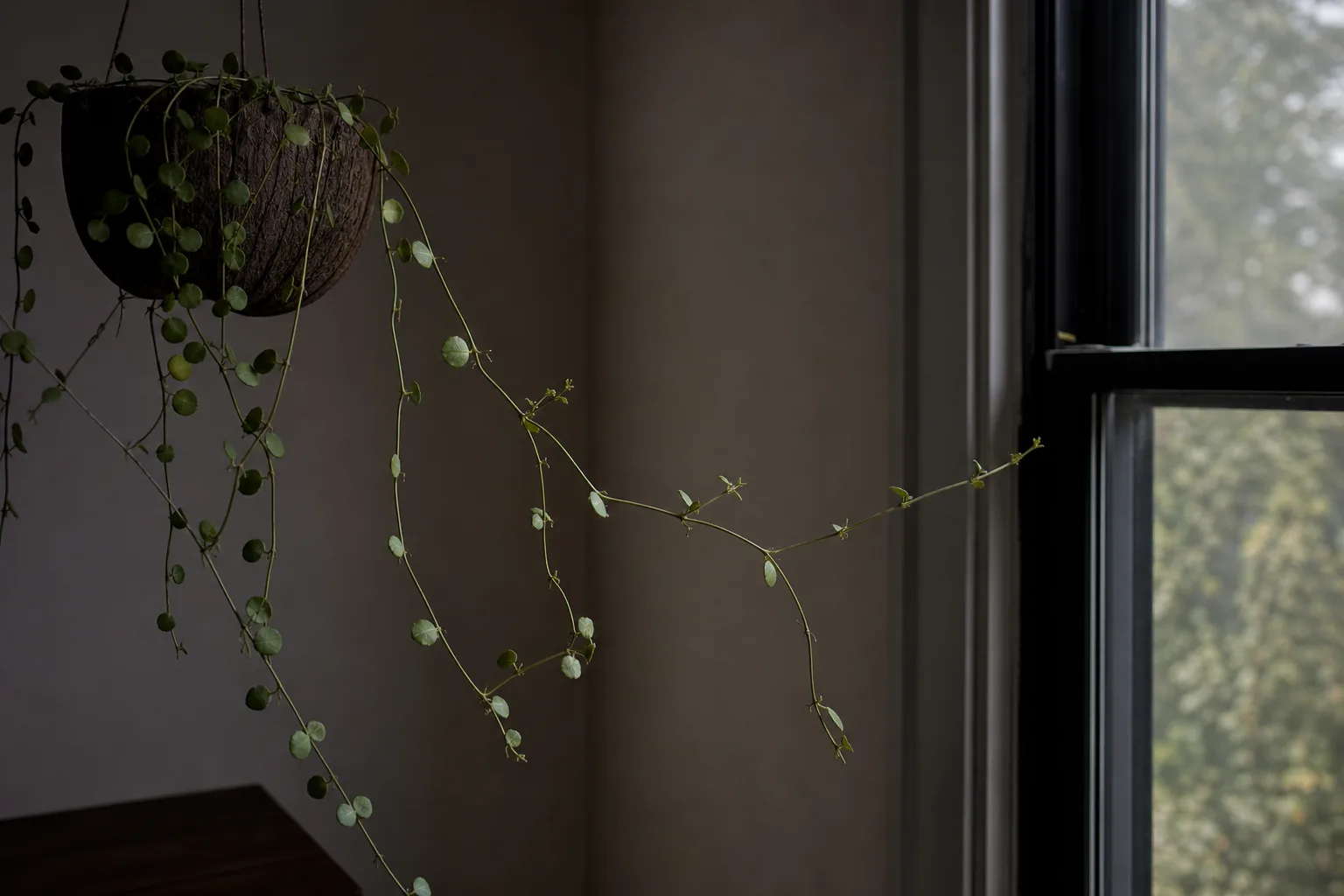
Not Enough Light on Dischidia: Causes, Checks & Fixes
This guide covers not enough light on Dischidia. See also the general Not Enough Light guide, watering, and light pages for this plant.
Not Enough Light on Dischidia: Causes, Checks & Fixes
Quick answer
Dischidia is an epiphytic vine in the dogbane family (Dischidia spp.) that climbs and trails in tropical forest canopy-not on a dim bookshelf. In too little light it stretches between nodes, shrinks new leaves, stalls growth, and often sits in wet bark longer because photosynthesis and water use drop together.
First step: move the pot today to the brightest safe indirect spot in your home-typically within one to three feet of an east-facing window, or several feet back from a south- or west-facing window with sheer curtains. If no window gives enough brightness, add a full-spectrum LED grow light about 12 inches above the leaves for 12–14 hours daily. Do not repot, fertilize, or water more until you have corrected light and watched new growth for two weeks.
What not enough light looks like on Dischidia
Low light shows up in vine habit and leaf quality before the plant collapses. Common signs include:
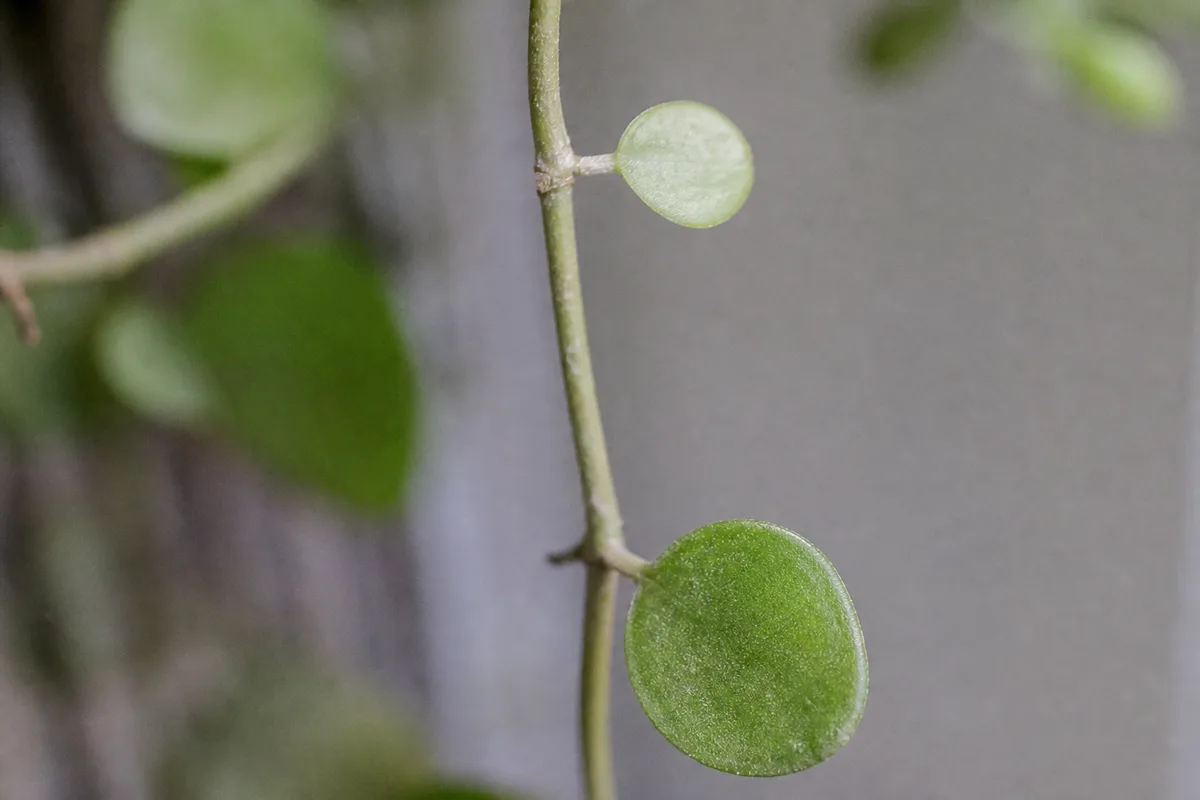
Long gaps between leaf pairs and a smaller pale new leaf on a wiry Dischidia stem - leggy stretch toward the brightest direction in the room.
- Long internodes-visible gaps between leaf pairs along wiry stems
- Smaller new leaves compared with older ones from when the plant had better light
- Lean or one-sided growth as stems reach toward the brightest direction
- Dark, dull green foliage that loses the waxy gloss Dischidia usually carries in good light
- Slow or stalled growth even when watering and humidity seem unchanged
- Few or no flowers on species that bloom indoors when well lit
- Shingle types failing to lay flat-Dischidia species with imbricate leaves may not attach properly when energy is low
Because Dischidia stores water in thick, succulent-like leaves, weak light can mimic thirst: leaves may soften or wrinkle while bark mix below stays damp. That overlap confuses many growers into watering again-which makes epiphytic root problems worse.
Normal winter behavior: Growth naturally slows when daylight shortens. Seasonal rest is different from year-round legginess on a permanently dark hanging basket. A resting plant should still have firm leaves and bark that dries within your normal cycle-not continuous stretch toward a distant window while mix stays wet for weeks.
Why Dischidia gets not enough light
Dischidia evolved as an epiphyte on trees and rocks in humid tropical Asia and the Pacific. “Shaded” in nature still means bright filtered daylight through canopy-not the back of a hallway. Indoors, usable light drops sharply with distance from glass, dirty panes, tinted windows, and short winter days.
Dischidia prefers bright, indirect light and direct sunlight will scorch its leaves. It needs more brightness than low-light survivors like snake plants, but less harsh sun than many succulents. A decorative spot that feels “fine” to you may be too dim for a vine that should grow steadily in orchid bark mix.
Common triggers in real homes:
- Hanging baskets placed for looks in interior rooms, bathrooms, or north corners
- Terrariums or cabinets with pretty placement but insufficient lamp output
- North-only exposure in winter, when daylight hours are shortest
- Obstructed glass-sheers, frosted film, overhangs, or neighboring buildings
- Seasonal fade-same summer placement becomes too dark after clocks change
- Competition-larger plants shading a trailing Dischidia on a shared shelf
There is a compounding risk specific to this genus: Dischidia roots need moist, well-drained, porous mix with good air circulation and are very sensitive to overwatering. When light is too low, transpiration drops, so bark stays wet longer. Weak light plus wet epiphytic roots invites rot-so “not enough light” and “too much water” often overlap on the same plant.
How to confirm the cause
Work through these checks before changing fertilizer or Dischidia repotting guide:
- Window distance and direction - Stand where the pot sits. Can you see sky from plant height? East windows usually give the best gentle brightness; deep north corners often need supplemental light in winter.
- Lean test - If vines consistently face one direction and new nodes emerge toward the glass, the plant is searching for light.
- New vs. old leaf size - Compare the smallest emerging leaf to one from several months ago. Shrinking new foliage strongly suggests light limitation.
- Internode spacing - Measure the gap between two recent leaf pairs. Widening gaps on new growth point to current stress, not old damage alone.
- Bark dry-down speed - Dischidia is normally watered every 10–14 days when mix dries almost completely. If bark stays damp for two weeks or more while growth is weak, low light may be slowing water use-do not solve that by watering less alone without adding brightness.
- Leaf and root check - Press a leaf: firm and slightly plump is healthy. Soft, yellowing leaves with sour-smelling wet bark suggest rot-stop watering and inspect roots through drainage holes.
- Two-week trial move - Shift the pot to a brighter indirect location (or add a grow light) without changing anything else. Shorter internodes on the next leaves confirm the diagnosis.
Lookalikes to rule out
| What you see | More likely cause if… |
|---|---|
| Soft wrinkled leaves with very dry, light pot | underwatering on Dischidia-bark pulls away from pot sides and feels dusty deep down |
| Yellow leaves with wet bark and sour smell | Overwatering or root rot on Dischidia-inspect roots; may be worsened by low light but water is the immediate trigger |
| Brown crispy patches on sun-facing leaves | Too much direct sun-move back from harsh afternoon rays |
| Sticky residue, webbing, or white cottony clusters | Pests-inspect leaf joints and undersides |
| Sudden leaf drop after a cold draft | Temperature stress-Dischidia dislikes cold air below about 18°C (65°F) |
If stretch, stall, and lean appear without scorch, pests, or mushy roots, insufficient light is the leading explanation. Leggy growth occurs from inadequate light on Dischidia specifically, according to NC State Extension.
First fix for Dischidia
Move the plant to bright, indirect light-or add a grow light if windows are inadequate.
Practical placement:
- East window: Often ideal; morning sun is gentle, afternoon is indirect.
- West or south window: Set the pot two to four feet back from the glass, or use a sheer curtain so hot midday rays do not scorch waxy leaves.
- North window: Usually insufficient alone; plan on supplemental lighting from autumn through spring.
If natural light cannot reach roughly medium to bright indirect levels at the leaf surface, use a full-spectrum LED positioned 12–18 inches above the foliage for 12–14 hours per day. Keep total daily light (sun plus lamp) at or below about 16 hours so the plant still gets a dark period.
After moving, rotate the pot or hanging orientation a quarter turn weekly so both sides receive light and the vine does not grow lopsided.
Do not jump straight to direct hot afternoon sun on a plant that has lived in shade-acclimate over one to two weeks by moving a foot closer every few days, or filter with sheer fabric.
Do not increase watering because leaves look soft while bark is already wet. Fix light first; then adjust water to match the new dry-down speed.
Step-by-step recovery
Once light is corrected, support recovery in this order:
- Hold watering steady - Keep your normal sparing rhythm until bark near the bottom feels almost dry. Brighter light will speed dry-down; recheck before the next soak.
- Watch new nodes - The next two or three leaf pairs tell you whether placement is working. Shorter spacing and fuller leaves mean success.
- Trim stretched vines (optional) - After new compact growth appears, cut back the longest bare sections to a healthy node with clean scissors. Dischidia roots easily from stem cuttings on moist sphagnum if you want to restart compact sections.
- Hold fertilizer - Skip feed until new growth looks stable for two weeks. Salt on stressed epiphytic roots adds little value while light was the limiter.
- Maintain humidity - Dischidia prefers roughly 50–70% humidity in most homes; 60 to 80% supports healthy epiphytic growth. Light correction matters more than misting alone, but dry forced-air heat can slow recovery-group with other plants or use a pebble tray if leaf edges crisp.
Recovery timeline
Two to three weeks after a meaningful light increase, you should see shorter internodes on new growth-that is the earliest reliable sign the fix is working.
Four to eight weeks of warm active growth typically brings noticeably fuller leaves and faster vine extension at compact spacing. Old stretched sections will not shorten; judge success only on fresh nodes.
Several months may pass before a severely leggy plant looks dense again-even with good light, you may need selective pruning to remove bare wiry runs.
Worsening signs: continued stretch despite brighter placement (lamp too far or too weak), yellowing spread with wet bark and sour smell, or vines that produce no new nodes through a full warm season-those point toward rot, pests, or a placement that still falls short of usable brightness.
Dischidia care cross-check
While correcting light, confirm the rest of the routine matches how Dischidia actually grows:
- Mix: Orchid bark-based epiphytic blend with perlite and a little sphagnum-not standard potting soil that stays wet in dim rooms
- Water: Sparingly every 10–14 days when mix dries almost completely; mist foliage between waterings if air is dry
- Temperature: Roughly 18–27°C (65–80°F); avoid cold drafts below about 18°C (65°F)
- Drainage: Pot must drain freely; never let a hanging basket drip tray hold standing water
Low light slows the whole system. A plant in a dark corner with dense mix and a calendar Dischidia watering guide is set up to stall, stretch, and eventually rot-not because Dischidia is fragile, but because light drives water use.
What not to do
Do not water more because vines look limp while bark is already damp-that accelerates epiphytic root failure. Avoid standard peat-heavy potting mix that holds moisture in low-light rooms. Do not feed a stretched, stalled plant before fixing brightness.
Skip repotting on day one unless roots are clearly rotting-transplant shock stacks on light stress. Do not move instantly into harsh south-window sun; scorched leaves do not recover, and Dischidia burns in direct sunlight.
Do not assume a terrarium alone fixes low light unless a properly sized grow lamp delivers usable intensity to the leaf surface. Glass looks bright to human eyes while plants still become spindly and lean when intensity is too low.
When trimming or handling sap, wear gloves-Dischidia sap may irritate skin and reported ingestion can upset pets. Keep vines out of reach.
How to prevent not enough light next time
Choose placement by light first, décor second. Dischidia rewards the brightest indirect spot you can offer without scorch. Before buying, identify where medium-to-bright filtered light actually exists-often an east windowsill, a filtered south bay, or a shelf with a clip-on grow lamp.
Rotate hanging baskets weekly, clean windows seasonally, and add supplemental lighting when daylight drops and plants stretch. Match watering to bark dry-down in that light level-not a fixed calendar that ignores how fast the plant is working.
Inspect new growth monthly. Early stretch is easier to fix with a small move than a full vine reset after a year in a dark corner.
When to worry
Escalate immediately if bark stays soggy for weeks in a dim room while leaves yellow and roots smell sour-that is rot risk, not cosmetic low light alone. Also act if stretch continues after a genuine brightness upgrade-your lamp may be too distant or too dim.
Cosmetic legginess on an otherwise firm plant can wait for a planned move or prune. A vine that produces no new nodes through a warm growing season while leaning hard toward glass needs light correction now, not later.
Conclusion
Dischidia needs Dischidia light guide to stay compact, dry its bark predictably, and grow like the epiphyte it is. Not enough light shows up as stretched stems, small new leaves, and stalled vines-often alongside wet mix that invites root trouble. Move to the brightest safe window or add a grow light first, then adjust water to match the new dry-down speed. Old stretched tissue will not shrink back; new leaf spacing tells you the truth. Match placement to light year-round, not only where the hanging basket looks best.
When to use this page vs other Dischidia guides
- Dischidia watering guide - Use for routine moisture checks before assuming not enough light is the main issue.
- Dischidia problems hub - Browse all 16 common issues on this species.
- Leggy Growth on Dischidia - Different entry point when symptoms overlap with not enough light.
- Slow Growth on Dischidia - Different entry point when symptoms overlap with not enough light.
- Yellow Leaves on Dischidia - Different entry point when symptoms overlap with not enough light.