Yellow Leaves on Dischidia: Causes, Checks & Fixes
Quick answer
Yellow leaves on Dischidia most often mean the roots are staying wet too long, especially in low light or tired media. First step: check the root zone several centimeters down before you water again.
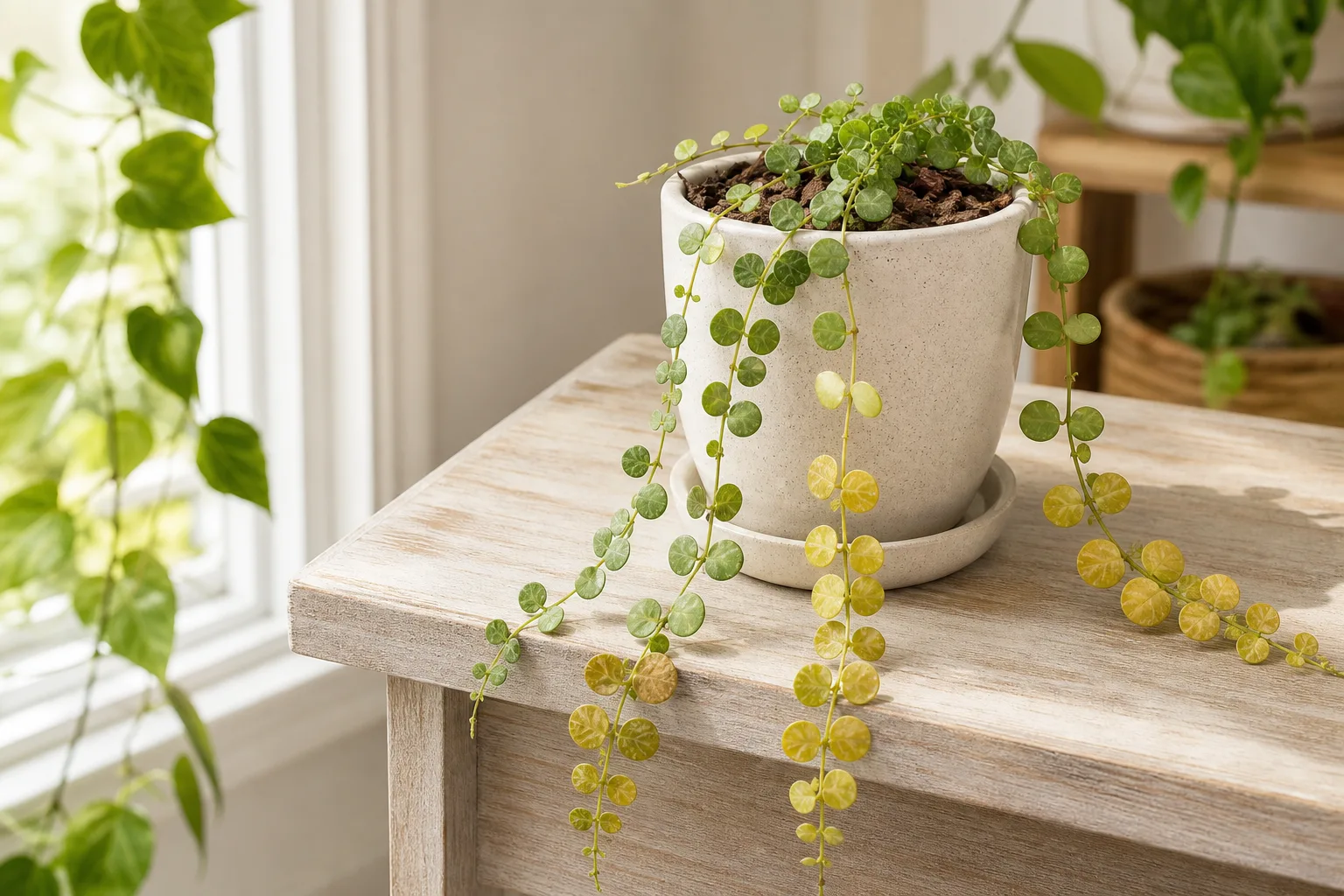
Yellow Leaves on Dischidia: Causes, Checks & Fixes
This guide covers yellow leaves on Dischidia. See also the general Yellow Leaves guide, watering, and light pages for this plant.
Yellow Leaves on Dischidia: Causes, Checks & Fixes
Quick answer
Yellow leaves on Dischidia are usually a root-zone warning, not a fertilizer emergency. On this genus, the most common pattern is simple: the mix or moss stayed wet too long, roots lost oxygen, and older leaves started to yellow first.
First step: check the root zone before you water again. A heavy pot, damp bark several centimeters down, and soft yellowing leaves usually mean wet-root stress. A light pot with wrinkled foliage points more toward drought.
What yellowing usually looks like on Dischidia
Dischidia often starts yellowing from older leaves on the inner or lower part of a stem rather than from every leaf at once.
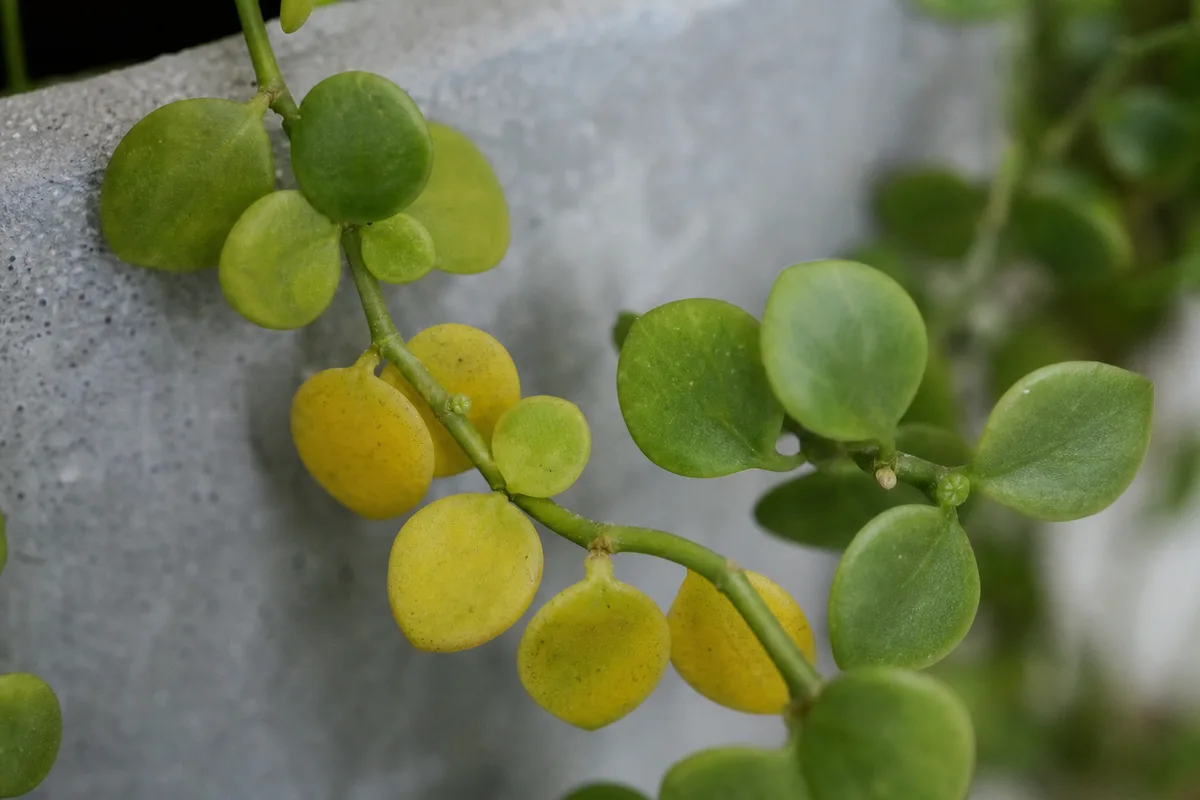
Yellowing that begins on older foliage while newer tips stay greener usually points to root or light stress before it points to nutrition.
The main patterns worth separating are:
- Wet-root stress: lower leaves yellow while the pot still feels heavy and the media stays cool inside
- Low light plus slow drying: pale yellowing with stretched growth and a pot that never seems to dry on schedule
- Underwatering: lighter pot, wrinkled leaves, and yellowing that comes with obvious loss of firmness
- Normal aging: one or two older leaves fade slowly while the rest of the plant stays firm and active
Why Dischidia yellows so easily when roots stay wet
Dischidia is an epiphyte. The roots are built for short wet periods followed by air, not for a dense, always-moist column of media. When that pattern breaks, yellowing often shows up before the root problem is obvious from the surface.
Common triggers:
- bark or moss breaking down and holding too much water
- oversized pots
- low light that slows water use
- frequent watering without checking the center of the root zone
- mounted plants kept constantly damp in stagnant air
This is why overwatering on Dischidia and root rot on Dischidia overlap so heavily with yellow-leaf complaints.
Low light can create the same symptom through a different path
A dim plant uses water slowly. The grower may keep the same watering routine, but the roots stay wet much longer than they did in brighter conditions. The result is still yellowing, even though the real first mistake was light, not water volume.
Look for these clues together:
- smaller new leaves
- longer spaces between leaves
- slower growth
- a pot that stays wet longer than it used to
If that pattern fits, read Dischidia light and not enough light on Dischidia alongside this page.
When yellowing is probably not an emergency
One old leaf yellowing every now and then is not the same as systemic decline. If the plant is still:
- putting out healthy new growth
- drying on a normal rhythm
- holding firm stems
then you are probably looking at normal turnover rather than a major root failure.
The problem becomes urgent when multiple leaves yellow at once while the media remains damp.
How to confirm the cause
Work through these checks in order:
- Lift the pot or mount. Heavy usually means moisture remains.
- Check deeper than the surface. Bark can look dry on top while the center stays wet.
- Read the leaves with the media. Wrinkled leaves on dry media mean one thing; soft yellow leaves on damp media mean another.
- Look at the growth pattern. Stretched pale growth points toward low light.
- Inspect the stem base and smell the media. Sour smell or soft tissue pushes the diagnosis toward rot.
If you are still unsure, gently inspect the roots. Healthy roots should feel firm rather than mushy or hollow.
First fix
If the media is still damp, stop watering and let the root zone dry properly.
That sounds simple, but it is the step growers skip most often because yellow leaves get misread as thirst. On Dischidia, another watering on already damp media usually makes the situation worse.
If the media is genuinely dry and the plant feels light, give one thorough watering and let it drain completely.
Recovery steps for wet-root stress
- Hold water until the root zone is no longer damp inside.
- Move the plant into brighter filtered light if it has been too dim.
- Improve airflow around the plant.
- Inspect roots if yellowing keeps spreading.
- Repot or remount only if the media has clearly failed or roots are already damaged.
Do not fertilize during this stage. A plant with stressed roots does not need added salts.
Recovery steps for underwatering
If the plant is dry all the way through:
- soak or water thoroughly
- let the excess drain away
- resume checking the root zone before each later watering
Do not overcorrect into daily light watering. Dischidia still wants a soak-and-dry rhythm even after a drought episode.
What not to do
- Do not feed a yellowing plant before checking the roots.
- Do not repot immediately just because a leaf turned yellow.
- Do not keep watering because the foliage looks soft if the medium is still damp.
- Do not treat one old yellow leaf the same way you treat a whole stem yellowing on a wet pot.
Also avoid strong pet-safety claims based on weak evidence. Dischidia is not a genus with clean universal pet-safe documentation, so keep yellow fallen leaves and pruned pieces away from pets anyway.
When to worry
Act quickly if:
- yellowing reaches new growth
- stems soften near the base
- most of the root mass is mushy
- the media smells sour
At that point, the issue is no longer just cosmetic yellowing. It is a root-health problem.
Conclusion
Yellow leaves on Dischidia usually mean the plant is getting the wrong root-zone rhythm, not the wrong fertilizer. Check the moisture deeper in the mix, stop watering if the center is still damp, and fix light or media problems before you change anything else. On this genus, healthy roots solve more yellow-leaf complaints than any bottle ever will.
Related Dischidia guides
- Dischidia overview for the epiphytic care model behind the diagnosis
- Dischidia watering for dry-down checks and seasonal rhythm
- Dischidia light when dim placement is slowing the dry cycle
- Overwatering on Dischidia when the media is clearly staying wet too long
- Root Rot on Dischidia when roots or stems are already failing
- Underwatering on Dischidia when the pot is actually drying too far
Related tool
Use the Yellow Leaves Diagnosis Tool to narrow causes for yellow leaves on this plant before changing multiple variables at once.