Underwatering on Dischidia: Causes, Checks & Fixes
Quick answer
Underwatering on Dischidia shows as a very light pot, soft or wrinkled leaves, and dry bark mix at depth. First step: bottom-soak the pot until the mix fully charges, then drain completely before adjusting your check routine.
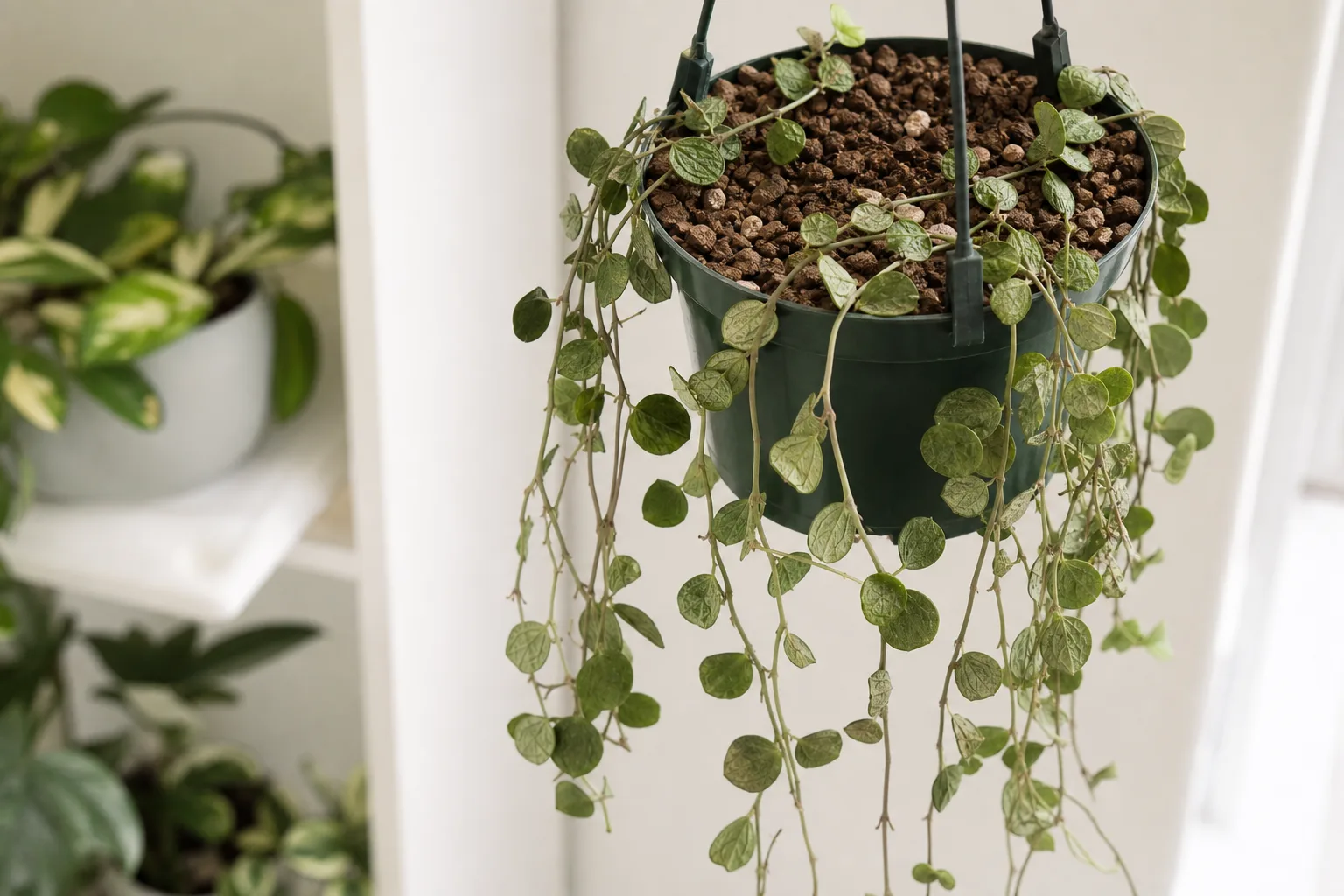
Underwatering on Dischidia: Causes, Checks & Fixes
This guide covers underwatering on Dischidia. See also the general Underwatering guide, watering, and light pages for this plant.
Underwatering on Dischidia: Causes, Checks & Fixes
Quick answer
Underwatering on Dischidia means the epiphytic root zone stayed dry too long-often because an airy orchid-bark mix released moisture faster than you expected, or because water ran through without wetting a bone-dry core. The plant looks thirsty: light pot, soft or wrinkled foliage, shriveled aerial roots, and bark that feels dusty at depth.
First step: bottom-soak the container until the mix fully charges, then drain completely. Do not give repeated small sips from the top on dry bark; one thorough soak rehydrates fine roots faster and more evenly than daily misting. Only after the plant drinks should you adjust how often you check dryness.
This page is the drought deep-dive-confirm thirst, rehydrate safely, and tell drought apart from rot. For day-to-day soak-and-dry rhythm and seasonal intervals, use the Dischidia watering guide. If leaves are limp on wet media instead of a light dry pot, start with overwatering on Dischidia or root rot on Dischidia before you soak again.
Underwatering vs. overwatering: A light, dry pot with firm pale roots points here. A heavy, wet pot with limp leaves and sour smell points to overwatering or root rot-soaking wet damaged roots makes decay worse. When the wilt paradox is your main symptom, read wilting on Dischidia after you run the checks below.
What underwatering looks like on Dischidia
Dischidia is an epiphytic vine in the Apocynaceae family-roots evolved for quick rain and fast drainage, not a permanently moist peat ball. That does not mean it tolerates weeks of drought indoors. When the root zone dries out, leaves lose turgor first.
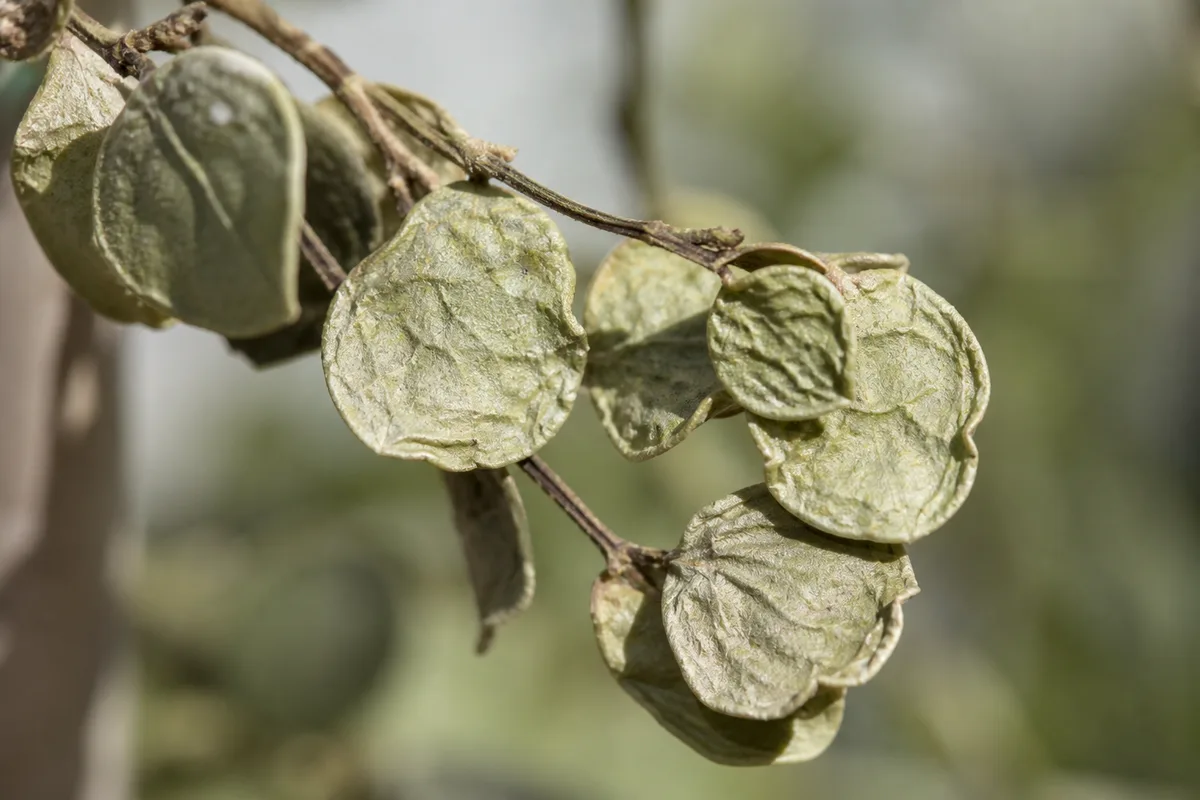
Underwatering symptoms on Dischidia - compare with healthy tissue on the same plant.
Common above-soil signs:
- Wrinkled or deflated leaves on String of Nickels (Dischidia nummularia)-coin foliage looks thin and puckered instead of plump; thin coin leaves show drought faster than thicker-leaved epiphytes like Hoya in the same window
- Soft, limp stems on Million Hearts (Dischidia ruscifolia), Watermelon Dischidia (Dischidia ovata), and other trailing species
- Shriveled aerial roots turning gray or papery on mounts; plump silvery-green roots mean recent hydration
- Dry, papery leaf edges that progress to brown crisp margins on older leaves
- Stalled runners and smaller new leaves during an otherwise bright growing season
- Very light pot compared with how it feels an hour after a proper soak
Below the surface, underwatered Dischidia usually has firm, pale roots-not brown mush. The bark or moss mix feels light and dry at depth, and may even pull slightly away from the pot wall when drought has gone on for weeks.
Important distinction: Dischidia wilts when roots cannot move water. That happens from dry roots and from rotten roots that cannot absorb water even in wet mix. Thirst shows a light, dry pot; rot shows heaviness, sour smell, or black slimy roots. Treating rot like drought by soaking again makes decay worse-see root rot on Dischidia when inspection finds mush.
| What you see | Pot / mount | Media at depth | Likely cause | First fix |
|---|---|---|---|---|
| Wrinkled coin leaves, firm stems | Very light | Dusty dry bark or crisp moss | Underwatering | One full bottom-soak or mount dunk |
| Limp leaves, no smell | Heavy, stays heavy | Cool, clinging bark | Root rot / advanced overwatering | Stop water; inspect roots |
| Wilting after quick top pour | Still light | Surface damp, core dry | Hydrophobic dry bark | Repeat bottom-soak until weight gains |
| Crispy tips only, leaves plump | Moderate weight | Skewer reads damp | Low humidity alone | Raise humidity; do not double soak frequency |
| Rapid drying near vent | Light within 2–3 days | Dry throughout | Heat + airflow stress | Move slightly; soak when dry |
Why Dischidia gets underwatered
Dischidia fails from chronic drought less often than from overwatering-but when it happens, the cause is usually a mismatch between fast-draining epiphyte media and how the plant is checked.
Airy bark mix dries quickly. Orchid bark, perlite, and thin sphagnum release water fast in bright windows, near heating vents, or in small terracotta pots. Terracotta breathes and wicks moisture faster than plastic; a mix that saved the plant from rot in summer can leave roots dry in three days if light and airflow increase.
Calendar watering without checks. Dischidia has no fixed weekly schedule. Growth phase, mount thickness, pot size, and room humidity all shift dry-down time. Watering “every two weeks” because that worked in winter often leaves the plant dry all through a hot July. The watering guide covers seasonal rhythm; this page covers rescue when you already missed the window.
Surface-only watering on dry bark. When bark gets very dry, water can run between the mix and pot wall without saturating the root ball. You see runoff and assume the plant drank; the center stays dry and leaves keep wilting.
Misting instead of soaking. Fine spray on leaves changes humidity briefly. Misting leaves does not replace thorough watering of the root zone. It does not reliably replace a full soak for roots inside a pot. Many growers mist daily while bark inside stays drought-stressed.
Fear of overwatering after past rot. If a Dischidia previously rotted in heavy soil, the fix is better drainage-not withholding water until leaves shrivel. Epiphytic roots still need periodic full hydration; they just need dry intervals between soaks. When rot fear is the driver, read overwatering on Dischidia for the dry-down pause that prevents repeat decay.
Mounted plants drying unevenly. Moss on cork can look dry on the surface while holding moisture inside-or the opposite, with a dry core hidden under a pale outer layer. Thin moss pads on small mounts dry in two to four days in bright heat; thick cork slabs with deep sphagnum cushions can hold water longer at the core. Mounts skipped during travel or busy weeks dry faster than deep pots.
Cachepots and decorative sleeves. A nursery pot inside a sealed outer sleeve hides how fast bark dries and traps runoff after you soak. Lift the inner pot every check; never let houseplants sit in standing water in a saucer or cachepot-empty trapped water within minutes or roots suffocate as surely as drought stresses them.
Seasonal demand changes. Active spring and summer growth pulls more water. Continuing sparse winter checks into a bright growing season starves runners and new leaves even though the plant is not dormant like a deciduous outdoor plant.
How to confirm the cause
Work through these checks before you soak. The goal is to separate true drought from root failure and from normal post-soak dry-down.
-
Pot weight - Lift the container. A noticeably light pot signals the mix has dried out. Compare to how it felt right after your last thorough soak. Very light means soak soon; still heavy means wait.
-
Depth moisture, not surface color - Insert a dry wooden skewer into the bottom third. If it emerges clean and dusty, the root zone is dry. Cool, damp, or particle-coated skewer means the plant is not thirsty yet-even if the top bark looks pale.
-
Leaf feel with species context - Wrinkled coin leaves or soft foliage support drought only if the mix confirms dry. Limp leaves on wet, heavy media point to damaged roots, not underwatering-see wilting on Dischidia for the dehydration paradox.
-
Aerial root condition - Plump, silvery-green aerial roots indicate recent hydration. Shriveled gray roots on an otherwise dry mount support drought. Slimy black roots mean rot-do not soak harder; open root rot on Dischidia.
-
Recent care history - Has the plant gone two or more weeks without a full soak in bright heat? Did you only mist? Did water run through in seconds without the pot gaining weight? Those patterns fit underwatering.
-
Root inspection if unsure - Slide the plant out gently. Firm pale roots with dry bark confirm drought. Brown mushy roots with wet moss confirm rot. This single check prevents the most expensive mistake on epiphytes: drowning a plant that cannot drink.
If the pot is light, skewer is dry at depth, roots are firm, and leaves are wrinkled, underwatering is confirmed. Proceed to one full rehydration-not a series of partial top splashes.
First fix for Dischidia
Bottom-soak the pot until the bark mix fully charges, then drain completely.
Set the container in a bowl or sink with room-temperature water halfway up the pot sides. Let it absorb until bubbling slows-often 10 to 20 minutes for a 4-inch pot, longer if the mix was bone dry. Lift the pot, let it drain until dripping stops, and empty any saucer within minutes. If the plant sits in a cachepot, remove the nursery liner, soak, drain fully, then return it-never let runoff pool in the decorative sleeve.
For mounted Dischidia, dunk the moss root pad until it darkens throughout, then hang the mount at an angle so water runs off. Do not seal wet moss in plastic immediately after.
This one deliberate soak is the first fix. Do not follow with fertilizer, Dischidia repotting guide, or daily drenching. Wait until the mix returns to its normal mostly-dry state before the next drink.
Step-by-step recovery
After the first soak, support recovery in this order:
-
Drain fully - Never return the pot to a cachepot holding runoff. Standing water suffocates epiphytic roots as surely as drought stresses them.
-
Place in stable bright indirect light - Dischidia in too-dark corners dry unevenly and grow too slowly to recover leaf mass. Avoid moving it to harsh midday sun on the same day as a heavy soak. See light requirements if recovery stalls despite correct watering.
-
Wait 24 hours before judging leaves - Wilting from short drought often resolves once roots recharge. Coin leaves should start to plump; stems should feel firmer.
-
If water ran through without weight gain - Repeat bottom-soak once, or submerge the whole pot briefly until air bubbles stop. Hydrophobic dry bark needs saturation, not another surface splash.
-
Trim only fully dead tissue - Snip crispy brown leaf tips or desiccated stems that feel dry and brittle. Do not mass-prune healthy but soft foliage-it can recover turgor.
-
Hold fertilizer - Rehydrate first. Feeding drought-stressed roots adds salt stress before the plant is moving water normally again.
-
Reset checks, not calendar - Note how many days until the pot feels light again. That interval becomes your personal rhythm until season or placement changes-then align with the watering guide for maintenance.
For mounts that dried out during travel, one full dunk plus good airflow usually restores aerial roots within a week. Potted plants with repeated drought cycles may need several stable soak-and-dry rounds before new runners appear.
Recovery case (observed)
String of Nickels (D. nummularia) in a 4-inch bark-perlite mix, south-facing window, missed checks during a two-week trip (May 2026). Pot feather-light; coin leaves fully deflated; aerial roots gray and papery. Bottom-soak 15 minutes until pot weight matched post-soak baseline; drained 20 minutes. Coin leaves visibly plumper at 36 hours; first new runner node at week 3 with twice-weekly weight checks. Crispy margins on two oldest leaves did not re-green-recovery judged by new growth, not old tissue.
Recovery timeline
Hours 0–24: Leaves and stems often show the first firmness after a proper soak if roots are healthy. String of Nickels coins should look less puckered. Million Hearts stems stop feeling floppy.
Days 2–7: Aerial roots plump and regain color. New growth may not appear yet-that is normal. Old crispy margins stay brown; scorched or browned leaf tissue does not green up again.
Weeks 2–4: With consistent soak-and-dry rhythm, expect new runners, nodes, or slightly larger leaves as the plant re-enters active growth. This is the reliable recovery signal-not the cosmetic repair of old tissue.
Long drought damage: If the plant was bone dry for many weeks in heat, fine root tips may have died back. Recovery takes longer and may require trimming dead roots during the next repot. If no new growth appears after four to six weeks of correct watering in warm bright conditions, inspect roots again for hidden rot or cold damage.
Worsening signs after soak: Leaves stay limp on a heavy pot, stems soften at the base, or roots turn mushy-those mean rot or cold injury, not ongoing drought. Stop soaking and inspect immediately; pivot to root rot protocol.
Lookalike symptoms
| Pattern | Most likely cause | Key check | First fix |
|---|---|---|---|
| Dry light pot + wrinkled coin leaves | Underwatering | Skewer dry at depth; firm pale roots | One full bottom-soak or mount dunk |
| Heavy wet pot + limp leaves | Root rot | Mushy roots; sour smell | Stop water; trim and repot airy |
| Wet media + firm leaves | Early overwatering | Damp but not swampy core | Dry-down pause; fix drainage |
| Crispy tips + plump leaves | Low humidity | Skewer reads damp | Humidity fix; do not over-soak |
| Wilting after top pour, light pot | Hydrophobic bark | No weight gain after pour | Bottom-soak until mix charges |
| Thin pale growth post-soak | Not enough light | Moisture rhythm correct | Improve light; see light guide |
The row that resolves most emergency texts: dry media + soft leaves = drought; wet media + soft leaves = inspect roots before any water.
What not to do
Do not mist daily instead of soaking-roots in bark need full saturation events, not surface humidity alone.
Do not pour small top splashes on hydrophobic dry mix and assume the plant is watered. Runoff without weight gain means the core is still dry.
Do not soak repeatedly every day after one dry spell. Swinging from drought to constant wetness invites rot in epiphytic roots.
Do not seal wet moss in plastic immediately after a mount dunk to “boost humidity”-that recreates the anaerobic trap that leads to root rot.
Do not fertilize a wilted plant before confirming hydration and stable new growth.
Do not repot into heavy peat soil because the plant “needs more moisture retention.” That trades underwatering for root rot-see Dischidia soil for chunky epiphyte mix instead.
Do not ignore limp leaves without checking pot weight. Heavy and wet means rot protocol; light and dry means soak.
How to prevent underwatering
Build a check habit, not a calendar alarm:
- Lift the pot twice weekly and compare weight to post-soak baseline. Periodically lifting containers is one of the most reliable indoor watering guides.
- Skewer the bottom third when learning a new setup or after repotting.
- Soak thoroughly when mostly dry, then drain-match the soak-and-dry rhythm recommended for indoor plants that should dry between waterings and detailed in the Dischidia watering guide.
- Scale up checks in summer and stretch intervals in winter, but still confirm dryness-never assume dormancy means zero water for months in a heated room.
- Use room-temperature water and flush occasionally if you fertilize lightly, so salt crust does not make bark repel moisture.
- For mounts, soak when the moss pad feels light; verify the core, not just the outer surface.
- Empty cachepots within minutes of every soak; never trap runoff in a decorative sleeve.
Dischidia rewards disciplined dryness between drinks-not permanent drought. The prevention goal is catching “mostly dry” before leaves wrinkle, not waiting for deflated coin foliage to remind you.
Related Dischidia problems
- Dischidia care overview - epiphytic culture hub
- Watering Dischidia - ongoing soak-and-dry rhythm (use after drought rescue)
- Overwatering on Dischidia - wet-soil habit and rot early warning
- Root rot on Dischidia - mushy roots branch
- Wilting on Dischidia - wilt paradox on wet media
- Drooping leaves on Dischidia - overlapping limp-foliage signals
- Low humidity on Dischidia - crispy tips with moist bark
- Dischidia soil and mounts - bark mix ratios and mount workflow
When to use this page vs other Dischidia guides
- Dischidia watering guide - Use for routine moisture checks before assuming underwatering is the main issue.
- Dischidia problems hub - Browse all 16 common issues on this species.
- Wilting on Dischidia - Different entry point when symptoms overlap with underwatering.
- Brown Tips on Dischidia - Different entry point when symptoms overlap with underwatering.
- Yellow Leaves on Dischidia - Different entry point when symptoms overlap with underwatering.