Brown Tips on Dischidia: Causes, Checks & Fixes
Quick answer
Brown tips on Dischidia usually trace to fertilizer or salt buildup in a small epiphytic root zone, sudden sun scorch on coin-shaped leaves, underwatering crisp margins, or dry air on thin-leaved types-not a mystery nutrient crisis. First step: probe bark or mount moss at depth, note any recent fertilizer or light move, and hold feeding before stacking fixes.
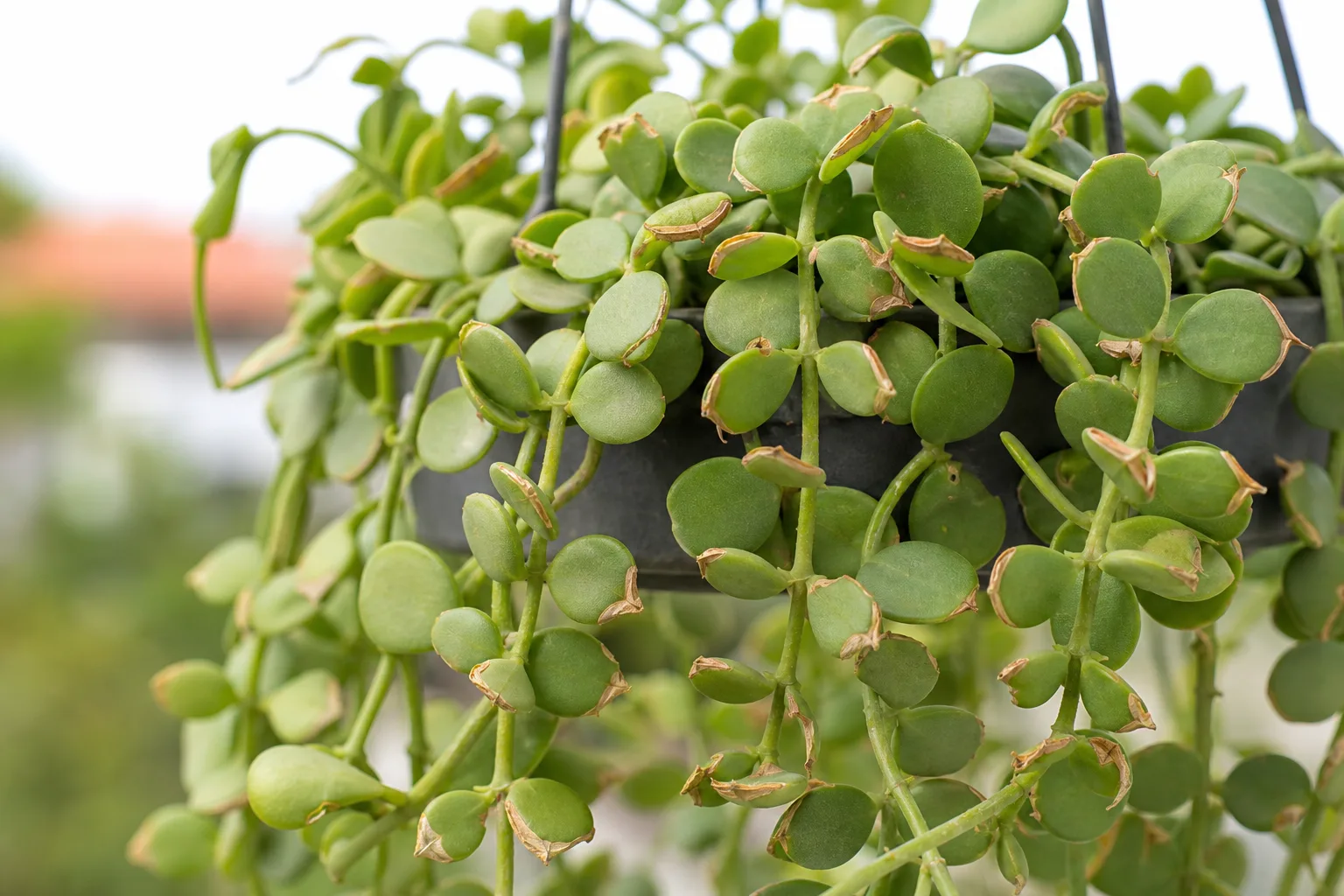
Brown Tips on Dischidia: Causes, Checks & Fixes
This guide covers brown tips on Dischidia. See also the general Brown Tips guide, watering, and light pages for this plant.
Brown Tips on Dischidia: Causes, Checks & Fixes
Quick answer
Brown tips on Dischidia are a margin-specific stress signal on an epiphytic trailing vine-not a random houseplant mystery. The leaf tip is the farthest point from fine bark roots, so it dries or burns first when water delivery, salt load, or light intensity goes wrong.
On String of Nickels (Dischidia nummularia), Million Hearts (Dischidia ruscifolia), and related trailing types, the usual triggers are fertilizer or salt buildup in a tiny root zone, sudden sun scorch after a window move, underwatering crisp margins on thick coin leaves, low humidity on thin-leaved shinglers or pouch forms, and uneven mount moss drying where wet cores and dry trailing tips coexist.
First step: probe moisture at depth-not the bark surface alone. Lift the pot or mount, push a dry skewer several centimeters into the mix or inner moss, and note whether media is damp while tips crisp. At the same time, recall whether you fertilized recently or moved the plant to stronger sun in the past two weeks. Hold fertilizer until you identify the pattern; salts worsen tip burn on stressed epiphytic roots.
What brown tips look like on Dischidia
Dischidia leaves are small-often coin-shaped or heart-shaped-with waxy or slightly succulent tissue. Tip browning usually starts at the outer margin or very tip, not as random spots across the whole leaf center.
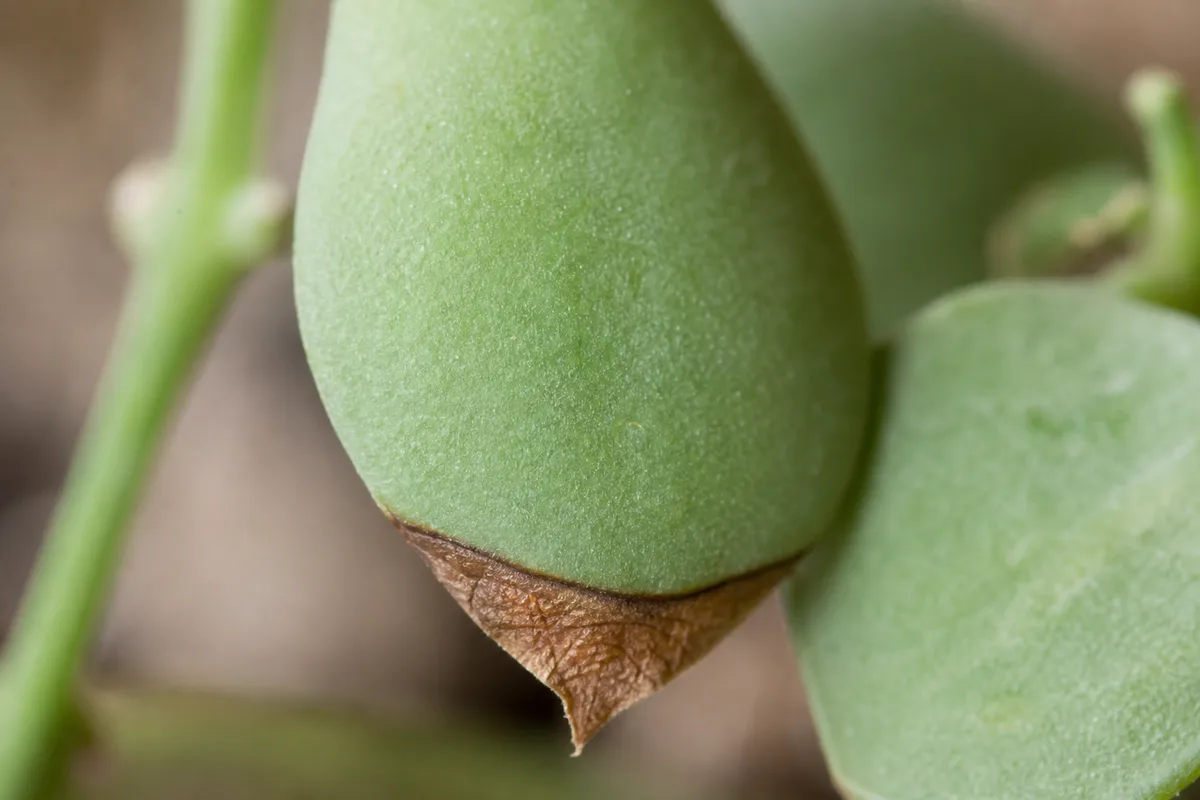
Brown Tips symptoms on Dischidia - compare with healthy tissue on the same plant.
Diagnostic photos: Compare fertilizer tip burn (uniform crispy brown tips on several leaves after feeding), sun scorch (bleached or tan patches on sun-facing coin leaves after a window move), and underwatering margins (crisp tips on wrinkled deflated leaves with a light dry pot). Original symptom photos will be added to this guide in a future update.
Salt or fertilizer burn pattern: Dry, uniform brown or tan tips on multiple leaves, often newest foliage included. You may see white mineral crust on pot rims, mount wire, or bark surface. Mix or moss may still feel appropriately moist-this is chemistry stress, not thirst.
Sun scorch pattern: Bleached, papery, or reddish-tan patches on leaves facing the window, with crisp brown margins on exposed coin leaves. Often appears within days of moving to harsh afternoon sun or an uncovered south or west sill. Direct sunlight scorches epiphytic Dischidia leaves.
Underwatering margin pattern: Crispy brown tips or edges on wrinkled, dull, or deflated coin leaves. Pot or mount feels very light; skewer from depth comes out clean and dry. Stems stay firm-this is drought at the root zone, not rot.
Low humidity pattern: Crisp margins on otherwise slightly plump leaves while bark at depth is still moderately moist. Common on trailing stems hanging in the path of a heat vent or above a radiator. Overlaps with low humidity on Dischidia-measure RH before watering more.
Mount uneven-drying pattern: Outer trailing leaves show dry tip burn while inner moss feels cool and damp when you probe under the stem base. Soaking again because tips look dry worsens core rot risk.
Normal aging: One or two oldest leaves at the end of a long trailing segment brown slowly at the tip over weeks while new growth at the stem tip stays plump and green. No care overhaul needed-snip the spent leaf when it bothers you.
Why Dischidia gets brown tips
Dischidia evolved clinging to bark in humid Southeast Asian forests. Rain drenches roots briefly; air returns fast. Indoors, tip browning almost always means culture drifted from that soak-and-dry, low-salt, filtered-light rhythm-not that the plant suddenly needs a nutrient boost.
Fertilizer and salt buildup top the list for epiphytic Dischidia. Fine roots occupy a small volume of airy bark or moss. Excessive fertilizer causes salt buildup and weak growth in confined indoor pots; on Dischidia, that salt load shows at leaf margins and tips first because the farthest leaf tissue loses water to concentrated root-zone salts. Heavy feeding, slow-release pellets in a tiny pot, or fertilizing dry roots compounds the burn.
Sun scorch hits small succulent leaves hard. Dischidia tolerates bright indirect light and gentle morning sun when acclimated-but direct sunlight scorches leaves when a trailing basket moves suddenly to harsh midday rays through glass. Coin-shaped leaves bleach and crisp at exposed edges before the whole plant fails.
Underwatering on thick-leaved String of Nickels produces crisp tips on deflated foliage. Epiphytic roots die back when bark stays bone-dry too long; remaining roots cannot hydrate margins even though the plant still looks mostly green.
Low humidity and mount culture stress thin-leaved shinglers and ant-plant forms faster than thick coin types. Dry forced-air heat pulls moisture from exposed leaf tips while you maintain a correct soak-and-dry root rhythm-two separate problems. Pouch leaves may shrivel while trailing segments on the same mount show only tip crisping.
Hard-water minerals can leave white deposits and contribute to edge necrosis over months, especially if you fertilize on top of hard tap water without occasional flushing.
Physical damage from trailing stems rubbing against basket wires, shelf edges, or tight terrarium glass can snap and brown tips on one side of the plant-always check whether damage is mechanical before assuming disease.
Less common: root stress from overwatering can impair water delivery and mimic tip burn; yellow lower leaves and wet heavy mix point to overwatering or root rot rather than primary tip drought.
Lookalike symptoms to rule out
| What you see | Likely cause | First check |
|---|---|---|
| Crisp tips on wrinkled leaves, very light pot, dry skewer | Underwatering | One thorough soak, then dry-down rhythm |
| Yellow lower leaves, heavy wet pot, sour smell | Overwatering / root rot | Stop watering; inspect roots |
| Crisp margins, plump leaves, RH below 40% | Low humidity | Hygrometer + humidifier |
| Bleached patches after window move | Sun scorch | Filter light; slow acclimation |
| White crust + tip burn after feeding | Salt / fertilizer burn | Hold feed; flush bark |
| Whole-leaf yellowing, wet mix | Yellow leaves overlap | Moisture at depth first |
| Stippling, webbing on undersides | Spider mites | Tap test; treat pests |
| One old tip on a long bare stem | Normal aging | No rescue needed |
How to confirm the cause
Work through these checks in order:
- Recent care history - Did you fertilize, repot with slow-release food, or move to a brighter sill in the past two weeks? Salt burn and scorch often have a clear timeline.
- Pot or mount weight and depth moisture - Lift the container. Push a skewer 5 cm into bark or inner moss. Damp core + crisp tips on plump leaves = humidity or salt. Very light + dry skewer = drought. Heavy + damp + yellowing lower leaves = wet-root stress (watering guide).
- Which leaves are affected - Sun-facing patches on one side = light. Uniform tips on many leaves after feeding = salt. Wrinkled leaves throughout = thirst. One old tip on a trailing segment = aging.
- Mineral crust - White residue on pot rim, mount wire, or bark surface supports salt buildup; flush before resuming feed.
- Light exposure - Compare to Dischidia light needs: harsh afternoon sun through glass without acclimation scorches coin leaves.
- Ambient humidity - Place a hygrometer near the plant for 24 hours. RH below 40–50% with crisp margins on otherwise hydrated plants supports dry-air stress.
- Pest check - Hold white paper under a stem and tap. Moving specks plus stippling mean mites, not primary tip burn.
- Stem firmness - Mushy base with wet moss = rot escalation, not cosmetic tip trim.
First fix for Dischidia
Match the first action to what you confirmed-one change at a time.
If you recently fertilized or see salt crust: stop all fertilizer immediately. Run clean room-temperature water through the bark mix until it drains freely two to three times pot volume, or soak and drain a mount twice in succession. Let the media dry almost completely before the next soak. Do not feed again until new growth looks healthy for two weeks.
If sun scorch after a light move: move to bright indirect light now. Add sheer curtain diffusion on south or west windows. Do not return to harsh direct rays until you acclimate over 7–14 days in small steps. Trim only fully dead scorched tissue once the plant stabilizes.
If underwatering (light pot, dry skewer, wrinkled leaves): one thorough soak after your dryness check. Let excess drain; empty saucers. Resume normal soak-and-dry per the Dischidia watering guide-do not switch to daily misting.
If low humidity (plump leaves, crisp margins, low RH): run a cool-mist humidifier 2–4 feet away until RH stays above 50%-not extra water in the pot. See low humidity on Dischidia for species-specific RH targets.
If mount uneven drying: probe inner moss before soaking. Soak only when the pad feels light; improve airflow around the mount so outer stems do not desiccate while the core stays wet.
Do not repot on day one unless roots are mushy or mix has clearly failed. Stabilize the confirmed stressor first.
Step-by-step recovery
After salt or fertilizer burn
- Hold fertilizer for at least four to six weeks in active growth-or until winter if growth has slowed.
- Flush salts - Run clean water through bark until drainage runs clear; repeat once if crust was heavy.
- Resume soak-and-dry - Water when the plant needs it, not on a fixed calendar, after the mix dries at depth.
- Trim irreversible tips - Cut along the leaf shape; leave a thin brown margin to avoid wounding green tissue.
- Reintroduce feed at quarter strength only after two weeks of stable new growth-never on dry roots.
After sun scorch
- Relocate to filtered bright indirect light immediately.
- Acclimate gradually if you need more brightness later-move closer to the window by inches over two weeks.
- Remove fully dead scorched leaves once stems are firm and new growth appears clean.
- Adjust watering - Brighter recovery growth may dry bark faster; recheck weight before each soak.
After underwatering margins
- Soak thoroughly once - Run water through until it drains, or bottom-soak 10–20 minutes, then drain completely.
- Establish dry-down checks - Skewer, pot weight, and leaf turgor before the next drink.
- Hold fertilizer until leaves plump and new tips look firm.
After low-humidity tip crisping
- Raise ambient RH with a humidifier; avoid misting as the main strategy.
- Move off vent paths - Trailing baskets above radiators crisp fastest at exposed tips.
- Keep normal watering rhythm - Dry air is not fixed by wet bark.
Recovery timeline
Stabilization often takes one to two weeks after the correct fix-tip browning should not spread to every new leaf, and the soak-and-dry rhythm should feel predictable again.
Clean new growth at stem tips is the best success marker; expect visible improvement in two to four weeks during warm active growth. Damaged tip tissue does not re-green; old brown tips remain until you trim them or they age off.
Salt-flush recovery may take a full growing season if feeding was heavy-new leaves should emerge without marginal burn before you increase fertilizer strength.
Worsening signs: Browning climbs into every new leaf despite fixes, stems soften at the mount base or soil line, or tips brown while mix stays sour and wet-escalate to root inspection and sibling guides for yellow leaves or root rot.
What not to do
Do not fertilize brown tips hoping for quick green-up-excessive fertilizer worsens salt buildup on stressed epiphytic roots.
Do not water more because tips look dry while bark at depth is already damp-that deepens rot and does not fix salt or scorch.
Do not mist heavily twice daily as your humidity fix-wet foliage in stagnant air invites spotting on epiphytic stems.
Do not move a scorched plant into deep shade to recover-Dischidia needs bright indirect light for healthy regrowth; filter harsh sun instead.
Do not stack Dischidia repotting guide, flushing, pruning, and pesticide on the same day-make one care correction at a time so you can read the plant’s response.
When trimming browned leaves, wear gloves and keep cuttings away from pets-Dischidia belongs to Apocynaceae and sap may irritate skin or cause mild upset if chewed.
How to prevent brown tips next time
- Feed lightly - Quarter-strength balanced fertilizer monthly in active growth only; skip fall and winter. Never fertilize dry bark.
- Flush salts every two to three months if you feed regularly-especially with hard tap water.
- Acclimate light changes over 7–14 days before exposing coin leaves to stronger direct sun; follow the Dischidia light guide.
- Water by bark dry-down per the overview and watering guide-not surface appearance alone.
- Match humidity to species - String of Nickels tolerates average RH; thin shinglers and pouch forms want steadier 50–70% (NC State notes 60–80% for strong epiphytic growth).
- Inspect mounts at depth before re-soaking-uneven drying causes tip burn and core rot in the same week.
- Keep trailing stems off heat vents and rotate hanging baskets weekly for even light.
When to worry
Act quickly if every new leaf emerges with burned tips despite holding fertilizer, if stems go mushy at the base while moss stays wet, or if tip browning spreads up the plant within a week alongside yellow lower leaves and sour bark-that pattern points to advancing root failure, not cosmetic edge burn.
Slow browning of one or two tips on old trailing segments in autumn can wait for a moisture, light, and RH check.
If more than half the root mass is mushy after inspection, take firm cuttings from healthy green sections as backup while you address rot.
Conclusion
Brown tips on Dischidia are usually salt, light, water, or air moisture showing up at the leaf margin first on an epiphytic trailing vine. Probe bark or mount moss at depth, review recent fertilizer and window moves, and apply one matched fix-flush and hold feed for salt burn, filter light for scorch, soak once for true drought, humidify for dry-air crisping. Tips will not re-green; judge recovery by clean new coin leaves and a stable soak-and-dry rhythm. Epiphytic roots want air between drinks and low salt in a small root zone; give them that and marginal burn typically stops before whole leaves yellow.
Related Dischidia problems
- Dischidia care overview - epiphytic culture hub
- Watering Dischidia - soak-and-dry prevention
- Dischidia light needs - sun scorch prevention
- Yellow leaves on Dischidia - whole-leaf stress overlap
- Overwatering on Dischidia - wet-root tip dieback lookalike
- Low humidity on Dischidia - margin burn in dry air
- Underwatering on Dischidia - crisp margin lookalike
- Not enough light - when slow growth compounds moisture mistakes
When to use this page vs other Dischidia guides
- Dischidia watering guide - Use for routine moisture checks before assuming brown tips is the main issue.
- Dischidia problems hub - Browse all 16 common issues on this species.
- Low Humidity on Dischidia - Different entry point when symptoms overlap with brown tips.
- Underwatering on Dischidia - Different entry point when symptoms overlap with brown tips.
- Overwatering on Dischidia - Different entry point when symptoms overlap with brown tips.