Low Humidity on Dischidia: Causes, Checks & Fixes
Quick answer
Low humidity on Dischidia shows as crisp leaf margins, dull foliage, or shriveled pouch leaves while bark or moss stays adequately moist. Aim for 50–70% RH for most trailing types; pouch-form ant plants want steadier moisture. First step: place a hygrometer near the plant and run a cool-mist humidifier 2–4 feet away until RH stays above 50%-do not compensate with extra watering.
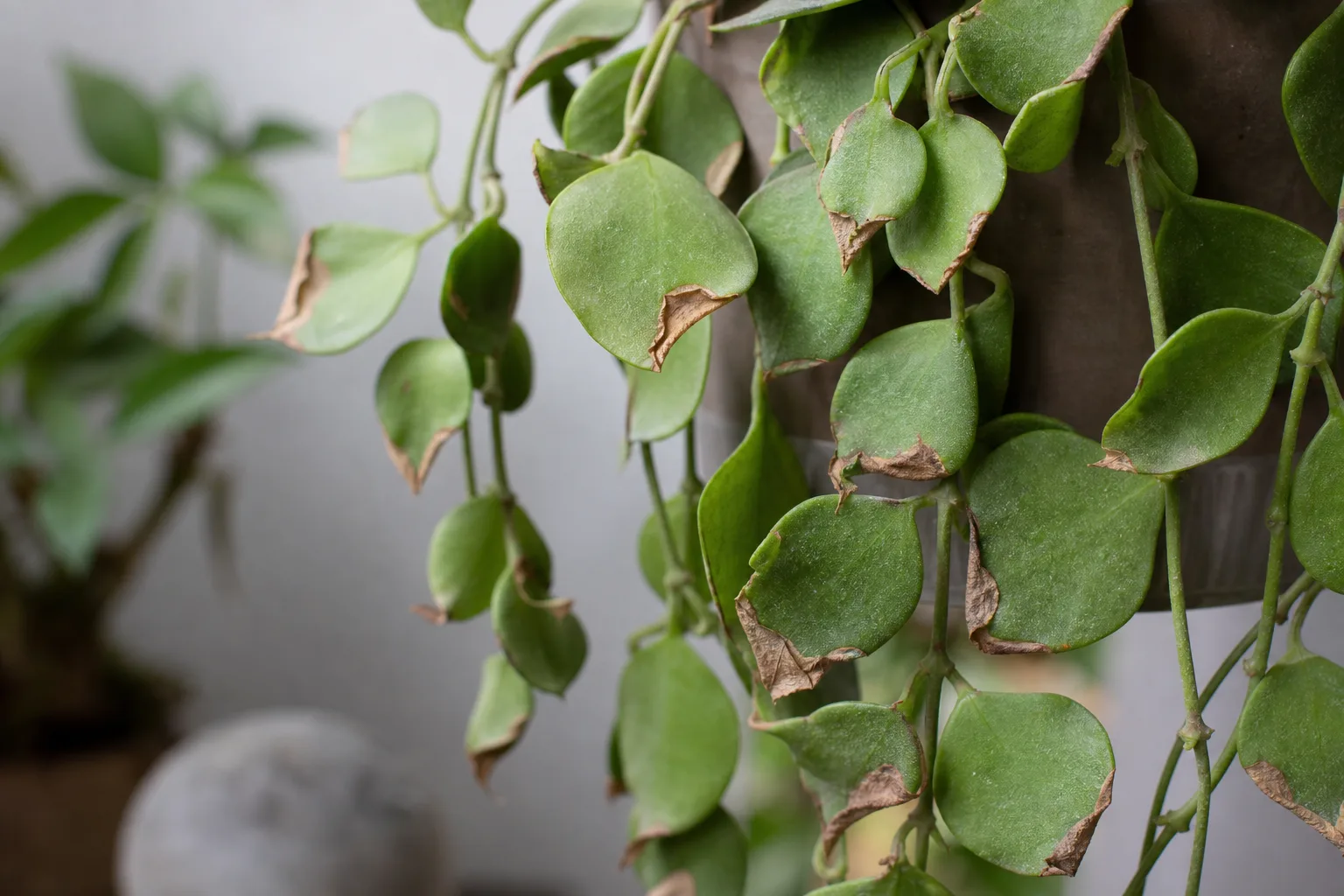
Low Humidity on Dischidia: Causes, Checks & Fixes
This guide covers low humidity on Dischidia. See also the general Low Humidity guide, watering, and light pages for this plant.
Low Humidity on Dischidia: Causes, Checks & Fixes
Quick answer
Dischidia is an epiphytic trailing vine in the dogbane family that evolved in humid Southeast Asian forest canopy-not above a winter heat vent. Low humidity means the air around the leaves stays too dry for too long, even when your soak-and-dry watering rhythm is correct.
Typical signs include crisp brown leaf margins, dull or thin-looking foliage, slow or small new growth, and on pouch-form species deflated hollow leaves. Trailing String of Nickels (Dischidia nummularia) may cope in average home humidity near 40–50% when light and drainage are good; thin-leaved shinglers and ant-plant types need steadier moisture in the 50–70% range, with 60 to 80% supporting the strongest epiphytic growth.
First step: measure before guessing. Place a digital hygrometer within a few feet of the plant for 24 hours. If readings stay below about 50% while leaf edges crisp, run a cool-mist humidifier 2–4 feet away until RH stabilizes-not extra water in the pot. Dry air and dry roots are different problems; stacking both fixes causes rot.
What low humidity looks like on Dischidia
Dry-air stress hits leaf tissue and aerial roots first on this epiphyte. The root zone can still hold appropriate moisture from your last soak while the surrounding air pulls water from exposed surfaces faster than the plant replaces it.
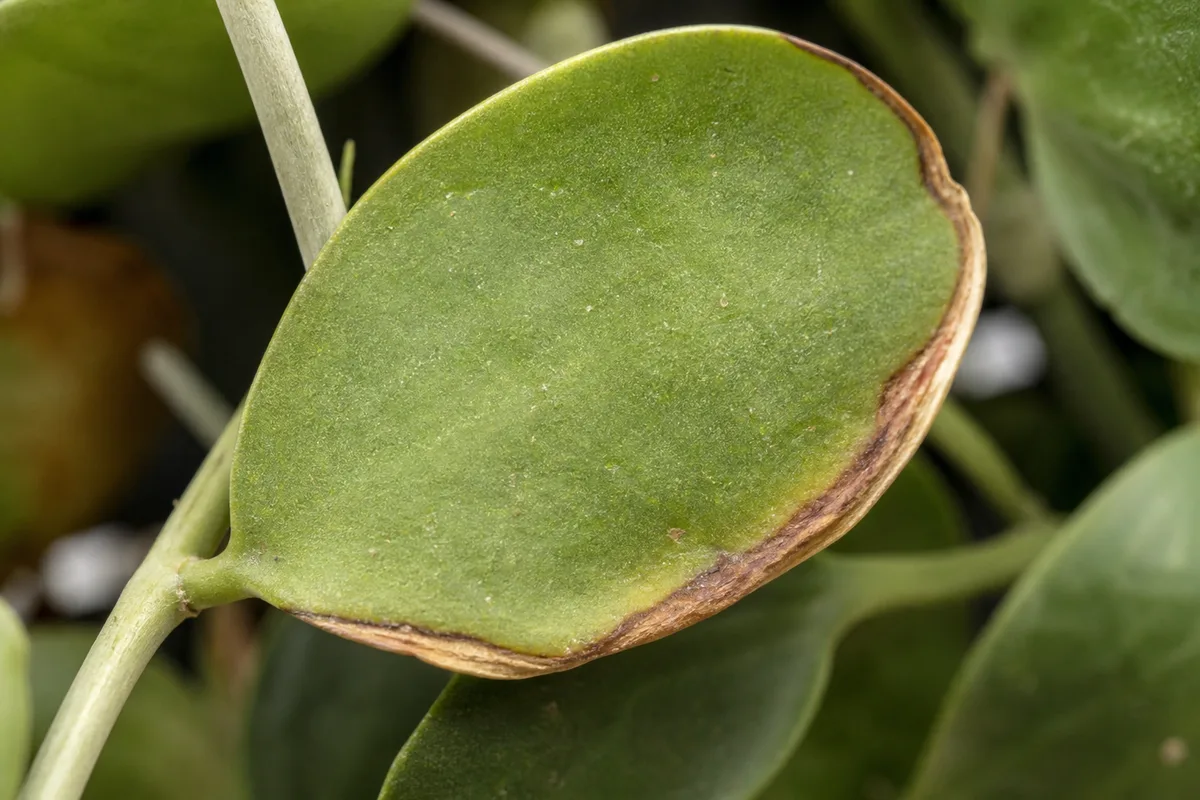
Low Humidity symptoms on Dischidia - compare with healthy tissue on the same plant.
Common patterns by growth form:
Trailing types (String of Nickels, Million Hearts):
- Crisp brown tips or margins on coin-shaped or heart-shaped leaves, often on the oldest foliage facing a heat vent
- Dull, less waxy leaves that look thin but may still feel slightly plump-not fully deflated
- Slow runners or smaller new leaves during an otherwise warm, bright season
- Fine stippling or webbing on leaf undersides when spider mites exploit hot, dry indoor air
Pouch-form ant plants (Dischidia major and relatives):
- Shriveled or collapsed hollow pouch leaves while stems remain firm
- Thin, papery new pouches that fail to inflate
- Faster decline than thick-leaved trailing species in the same dry room
Mounted Dischidia on cork:
- Gray, shriveled aerial roots on an outer stem while inner moss still holds some moisture
- Crisp leaf edges on vines hanging in the direct path of AC or forced-air heat
What low humidity usually does not look like: fully wrinkled, deflated coin leaves on a very light pot with dry bark at depth-that pattern fits underwatering on Dischidia better. Yellow lower leaves with wet, heavy mix point to overwatering or root stress, not dry air alone.
Why Dischidia is sensitive to dry air
Dischidia evolved as an epiphyte on trees and rocks where rain arrives in bursts and humid air returns quickly between showers. Indoors, winter heating, air conditioning, and open terrarium vents can hold RH below 30% for weeks-far below what most tropical trailing epiphytes prefer.
Species biology matters on this genus:
- Thick-leaved trailing types store some water in foliage and tolerate brief dry-air spells better than pouch plants or thin shinglers
- Pouch-form ant plants depend on steady ambient moisture; their specialized leaves lose turgor fast when RH crashes
- Aerial roots on mounts absorb humidity from air as well as from soaked moss-when air is desert-dry, outer roots desiccate even if you watered yesterday
Dry air also invites spider mites. Mites multiply rapidly when humidity drops below about 50% in warm rooms-a common winter combo on trailing stems crowded near a sunny window. See spider mites on Dischidia if you find stippling or fine webbing.
Finally, do not confuse humidity with watering. Dischidia roots want soak-and-dry cycles in airy bark; they do not want permanently wet mix because the air feels dry. Increasing water frequency to “compensate” for dry air is a leading cause of epiphytic root failure.
How to confirm the cause
Work through these checks in order:
- Hygrometer reading - Place a digital hygrometer near the plant at leaf height for a full day. RH consistently below 40–50% with crisping margins supports low humidity. RH above 55% with widespread wrinkling suggests thirst or root problems instead.
- Root-zone moisture - Lift the pot or probe mount moss at depth. Damp bark with plump-ish leaves and crispy tips = humidity. Very light pot and dry skewer = underwatering.
- Leaf turgor vs. edge damage - Press a coin leaf: slight softness before a scheduled soak can be normal. Puckered, thin, deflated leaves across the stem mean water stress, not humidity alone.
- Environmental triggers - Note heat vents, radiator shelves, AC blow, open terrarium lids, or a plant moved from a humid greenhouse to a dry living room. Symptoms that appeared within days of a heating season change strongly implicate dry air.
- Species type - Pouch collapse on D. major in average RH confirms higher humidity need. String of Nickels with only tip crisping in the same room may need localized humidifier placement, not a culture overhaul.
- Pest check - Hold a white paper under a stem and tap. Specks that move, plus stippling, mean spider mites-often worsened by dry air but requiring separate treatment.
- Light cross-check - Stalled growth with wet bark and no crisp edges may be not enough light slowing water use. Low light plus dry air can stack; fix brightness and humidity together if both checks fail.
Lookalike symptoms
| What you see | More likely cause if… |
|---|---|
| Crisp tips, plump leaves, moist bark, RH below 45% | Low humidity - edges dry while stem turgor stays fair |
| Wrinkled deflated leaves, very light pot, dry skewer | Underwatering - root zone dry at depth |
| Yellow lower leaves, heavy wet pot, sour smell | Overwatering / root rot - do not add water for “dry air” |
| Brown tips only on sun-facing leaves | Too much direct sun - move back from harsh afternoon rays |
| Stippling, webbing, moving specks on tap test | Spider mites - treat pests; raise RH to slow recurrence |
| Long internodes, pale small new leaves | Not enough light - humidity fix alone will not compact growth |
Overlap is common: a Dischidia above a heat vent may show crisp tips (humidity), rapid pot drying (underwatering risk), and mite stippling at once. Confirm RH and pot weight before changing watering.
First fix for Dischidia
Run a cool-mist humidifier near the plant until RH stays above 50% for most of the day.
Practical setup:
- Place an ultrasonic or cool-mist humidifier 2–4 feet from the hanging basket or mount-not blasting directly onto leaves
- Target 50–70% RH for trailing species; 60–80% if you grow pouch-form types or shinglers in the same zone per NC State epiphytic guidance
- Use a hygrometer to confirm improvement; winter rooms often jump from the high 20s to the mid-50s with one small unit
- Keep air moving with gentle fan circulation-stagnant saturated air above 80% invites fungal issues on epiphytic stems
Do not increase watering frequency as the primary fix. Do not rely on daily misting-misting raises humidity only briefly and leaves wet foliage without drying time. Do not seal a wet mount in plastic to “trap humidity”; that suffocates roots.
If the mount moss is dry, soak it on its normal schedule while the humidifier handles ambient air. Two separate moisture systems-root pad and room air-both matter on epiphytes.
Step-by-step recovery
After the humidifier is running, support recovery in this order:
- Relocate away from dry-air sources - Move the pot or mount off the radiator ledge, out of the AC vent path, and away from a constantly open terrarium vent. Even a good humidifier struggles against a direct heat blast.
- Hold watering steady - Keep your normal soak-and-dry rhythm from the Dischidia watering guide. Brighter recovery growth may dry bark faster; recheck weight before the next soak.
- Group plants modestly - Clustering humidity-loving epiphytes and ferns raises local RH slightly, but grouping alone rarely fixes a 25% winter room-humidifier first, grouping second.
- Add a pebble tray if needed - A tray of stones with water below pot level gives a small boost near one basket; it is weaker than a humidifier but helps trailing types on open shelves.
- Trim irreversible damage - Snip fully crispy leaf tips or collapsed pouches that feel papery and dead. Wear gloves-Dischidia sap may irritate skin.
- Treat spider mites if present - Rinse stems and apply appropriate control per the spider mite guide; raising RH slows mite buildup but does not replace removal of active infestations.
- Hold fertilizer - Skip feed until new growth looks plump for two weeks. Stressed epiphytic roots take up salts poorly.
For terrarium culture, partially close vents or run a small fogger during heating season rather than misting leaves hourly. Mounted shinglers need both humid air and periodic moss soaks-one without the other fails on long mounts.
Recovery timeline
Days 3–7: With RH above 50%, crisping should stop spreading to new leaves. Existing brown margins stay brown.
Weeks 2–3: Look for plumper new leaves, reinflated pouch tissue on ant-plant forms, and silvery-green aerial roots regaining turgor on mounts. Spider mite activity often slows when humidity rises above their preferred dry conditions.
Weeks 4–8: Trailing species should resume normal runner extension in warm bright conditions. Old damaged edges remain cosmetic until you trim them.
Worsening signs: Pouch leaves stay collapsed despite RH above 60%, wrinkling spreads while the pot is light (thirst-not humidity), yellowing with wet bark (rot protocol), or mites cover new growth despite humidity-escalate to watering, root, or pest guides respectively.
What not to do
Do not water more often because leaf edges look dry while bark is already moist-that invites overwatering on epiphytic roots.
Do not mist heavily twice daily as your main humidity strategy-brief humidity spikes do not replace ambient RH, and wet leaves in stagnant air promote fungal spotting.
Do not seal a dripping mount in a plastic bag for humidity-that blocks airflow epiphytic roots require.
Do not assume a terrarium fixes dry air without measuring RH near the plant-open-top glass often reads bright to your eyes while RH stays low at the leaf surface.
Do not fertilize crispy foliage hoping for quick recovery.
When trimming damaged tissue, keep cuttings away from pets-Dischidia belongs to Apocynaceae and sap may cause mild irritation if chewed.
How to prevent low humidity next time
- Measure RH seasonally - Winter heating and summer AC both crash humidity; a $10 hygrometer prevents guesswork
- Run a humidifier October through March in dry climates, sized for the room or plant cluster
- Keep trailing baskets off vent paths and away from open fireplace drafts
- Match species to your room - String of Nickels suits average homes; pouch ant plants belong in cabinets, terrariums, or humidifier zones
- Maintain soak-and-dry watering per the overview humidity section-good humidity does not replace proper mount and bark hydration
- Inspect weekly in dry months for tip crisping before mites establish-early humidifier use beats rescue mode
For overlapping symptoms, bookmark the related guides: brown tips for marginal browning with multiple causes, underwatering for deflated leaves on dry bark, and not enough light when growth stalls despite adequate RH.
When to worry
Act quickly if pouch leaves collapse entirely on ant-plant forms while RH stays below 40%, if mite webbing covers most trailing stems, or if you raised humidity but leaves keep wrinkling on a light, dry pot-that is thirst or root damage, not air moisture alone.
Cosmetic tip crisping on an otherwise plump String of Nickels can wait for a humidifier upgrade. Widespread deflation with wet, sour bark needs rot inspection, not more humidity.
Conclusion
Low humidity on Dischidia is an ambient air problem on a trailing epiphyte-not a call to water more. Crisp margins, dull foliage, and shriveled pouch leaves in dry forced-air rooms tell you RH fell below what this genus prefers, especially for thin-leaved and ant-plant forms. Measure with a hygrometer, run a humidifier 2–4 feet away, and keep your normal soak-and-dry root routine. Old crispy tissue will not heal; plump new growth and stable pouches prove the fix worked. Tell humidity stress from thirst with pot weight and skewer checks, and link dry-air prevention to steady winter RH-not daily misting that evaporates in minutes.
When to use this page vs other Dischidia guides
- Dischidia watering guide - Use for routine moisture checks before assuming low humidity is the main issue.
- Dischidia problems hub - Browse all 16 common issues on this species.
- Brown Tips on Dischidia - Different entry point when symptoms overlap with low humidity.