Slow Growth on Dischidia: Causes, Checks & Fixes
Quick answer
Dischidia is naturally moderate-paced, not pothos-fast. Worry when no new nodes appear through a warm bright season, bark stays wet for weeks in a dim corner, or new leaves shrink while stems stay firm. First step: count new node pairs over the past month and check how fast your orchid bark mix dries at the pot bottom.
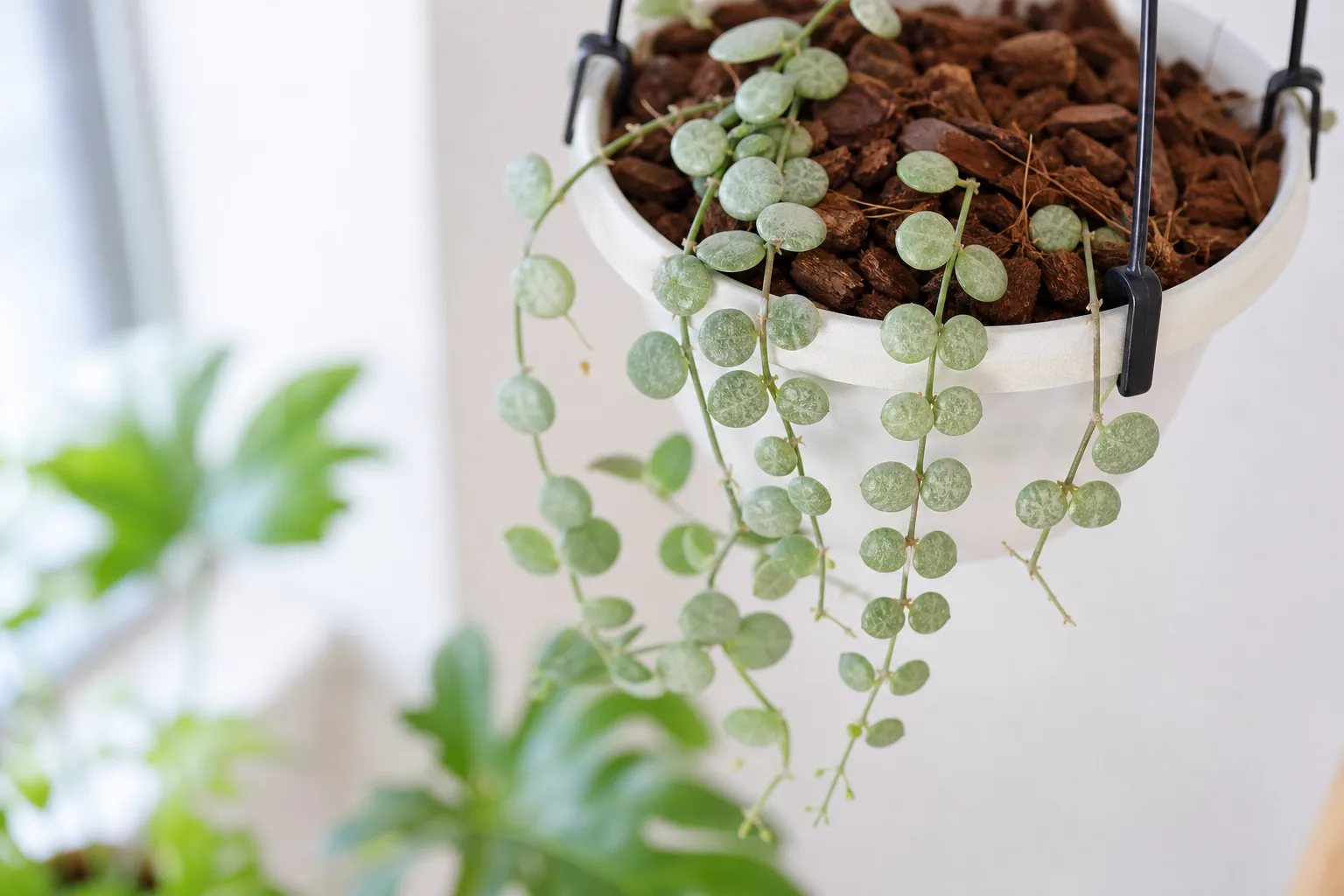
Slow Growth on Dischidia: Causes, Checks & Fixes
This guide covers slow growth on Dischidia. See also the general Slow Growth guide, watering, and light pages for this plant.
Slow Growth on Dischidia: Causes, Checks & Fixes
Quick answer
Dischidia is a moderate-paced epiphytic vine, not a racehorse like pothos. In warm rooms with bright indirect light, healthy trailing types such as String of Nickels (Dischidia nummularia) and Million Hearts (Dischidia ruscifolia) often add one compact node pair every two to four weeks-enough steady extension to fill a hanging basket over a season without dramatic weekly leaps.
Slow becomes a problem when the plant produces no new nodes through an entire warm growing season, when orchid bark mix stays wet for weeks in a dim corner while growth stalls, or when new leaves keep shrinking even though stems feel firm. Those patterns point to light limitation, broken-down media, root stress, cold, or root-bound conditions-not a nutrient shortage.
First step: count new node pairs from the past month and check bark dry-down speed at the pot bottom. If spacing between recent leaves is stable and firm-not wildly stretched-and bark dries on your normal rhythm, your Dischidia may simply be growing at a healthy epiphyte pace. If nodes stopped while bark stays damp in shade, stop watering and read the confirmation checklist below before fertilizing or repotting.
What normal slow growth looks like on Dischidia
Many owners worry because Dischidia trails quietly compared to faster vines. That is expected biology, not failure.
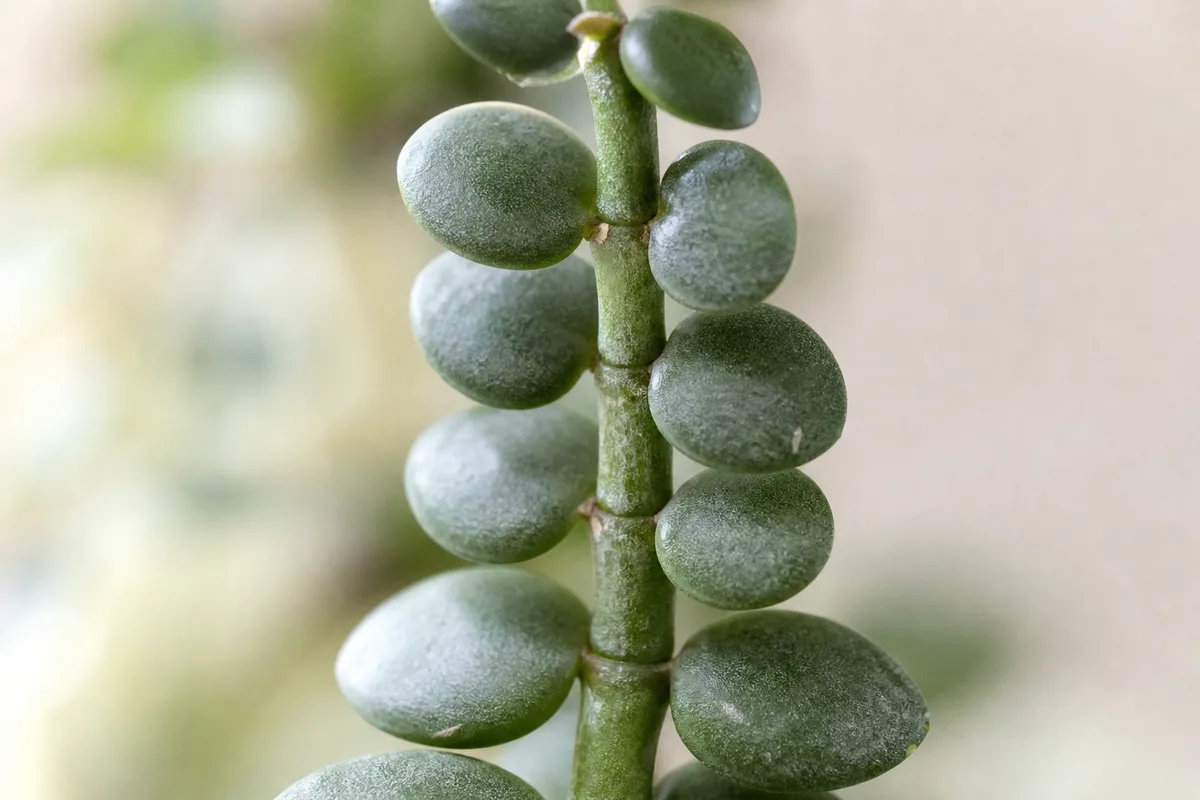
Slow Growth symptoms on Dischidia - compare with healthy tissue on the same plant.
Expected pace indoors
Dischidia evolved clinging to tropical tree bark, extending stems in short bursts between rains rather than racing upward. Indoors, moderate growth means:
- Compact internodes-leaf pairs sit close together without long bare gaps
- Steady but modest vine length-perhaps a few inches of new trailing stem per month in bright warm conditions, not daily visible leaps
- Firm, waxy leaves at the growing tip with normal gloss in good light
- Predictable bark dry-down-media dries almost completely on a 10–14 day rhythm in active growth, faster in bright rooms, slower in winter
Species matter slightly. Thick-leaved String of Nickels stores more water and may look almost static between node pairs; thinner-leaved watermelon dischidia (D. ovata) can show a bit more visible extension when well lit. Both should still produce visible new nodes across a warm season.
Seasonal winter slowdown
Growth naturally slows when daylight shortens and room temperatures dip. A Dischidia in firm condition with bark that still dries on a longer winter cycle-often every 14–21 days-is usually resting, not dying.
Healthy winter rest looks like: leaves stay plump, no sour smell from media, spacing on existing stems unchanged, and perhaps one slow node pair over several cold months.
Unhealthy year-round stall looks like: the same basket in a permanently dim north bathroom produces zero nodes from spring through autumn while bark stays cool and damp for weeks after each watering.
Signs Dischidia is healthy despite moderate pace
You likely do not need intervention when:
- New nodes appear at a slow but regular rhythm in bright months
- Internode spacing is tight, not wiry and stretched
- Leaves at the tip are full-sized compared with slightly older pairs
- Bark mix dries almost completely between your normal waterings
- The plant does not lean desperately toward one window
If that matches your vine, compare it to pothos on the shelf and relax-Dischidia is doing what epiphytes do.
When slow growth is actually a problem
Abnormal stall deserves action. Red flags include:
| Pattern | What it often means |
|---|---|
| No new nodes for six+ weeks during warm months with adequate humidity | Light floor, root stress, or failed media-not normal pace |
| Wet bark for two+ weeks in a dim room while growth stopped | Low light slowing transpiration plus overwatering risk; see root rot overlap |
| Shrinking new leaves on firm stems | Energy limitation-usually light, sometimes root damage |
| Yellow lower leaves with a heavy, cool pot | Wet-root stress; see yellow leaves on Dischidia |
| Long bare gaps on new growth | Etiolation-this is leggy growth, not simple slow pace |
| Soft, wrinkled leaves with dusty dry bark | Underwatering stall; see underwatering |
| Cold drafts below ~18°C (65°F) with stalled tips | Temperature stress slowing metabolism |
Escalate immediately if bark smells sour, stems soften at the base, or many leaves yellow within a week while media stays wet-that is advancing root failure, not a pace question.
Why Dischidia grows slowly or stalls
Understanding epiphyte biology separates healthy moderation from pathological stall.
Naturally moderate epiphyte biology
Dischidia is an epiphytic and lithophytic vine in the dogbane family. It anchors to bark and rock in humid tropical forests, where resources arrive in pulses. The genus is built for efficient water storage in thick leaves and patient trailing extension-not explosive terrestrial spread.
Compared to pothos or heart-leaf philodendron, Dischidia will always look slower even in perfect care. Misreading that difference drives unnecessary repotting, fertilizer, and watering that create real problems.
Insufficient light and slow transpiration
Dischidia prefers bright, indirect light. When intensity falls too low, photosynthesis drops, transpiration slows, and orchid bark stays wet longer after each drink. The plant may produce few or no new nodes while media remains damp-a stall that feels like “it just won’t grow” but is really the vine not using water fast enough.
This compounding pattern overlaps with not enough light on Dischidia, but slow-growth diagnosis starts with pace and bark dry-down, not stretch alone. A plant can stall without obvious legginess if internodes were already short.
Too-dense or broken-down bark mix
Dischidia roots need moist, well-drained, porous media with good air circulation. Fresh chunky orchid bark, perlite, and a little sphagnum mimic canopy conditions. Standard peat-heavy potting soil, fine decomposed bark dust, or years-old mix that has collapsed all hold water at the core and starve fine epiphytic roots of oxygen.
Broken-down media mimics overwatering even when you water carefully: top bark looks dry while the center stays soggy, and growth stalls. Remounting guidance lives on the Dischidia soil guide.
Root rot from wet media in low light
Dischidia is very sensitive to overwatering. Wet bark in a dim corner is the classic stall-plus-rot setup: roots stop functioning, the plant stops extending nodes, and lower leaves may yellow. The stall is a symptom; the wet cycle is the mechanism. Full rot recovery steps are on root rot on Dischidia.
Cold and root-bound stress
Temperatures between roughly 65 and 85°F suit active growth. Sustained cold below about 18°C (65°F) slows metabolism-winter near drafty glass can pause nodes even when light is acceptable.
Shallow-rooted epiphytes also stall when a small pot is fully root-wrapped with no room for new absorbing roots, especially if the outer root mass is circling dry bark while the core holds old wet fines. Root-bound stall is less common than light or media failure but worth checking on plants that have not been remounted in three or more years.
How to confirm the cause
Work through this seven-step checklist before changing fertilizer, repotting, or stacking treatments:
- Node count - Mark a stem tip today. How many new leaf pairs appeared in the last 30 days during warm months? Zero nodes in bright season is abnormal; one slow pair may be fine.
- Internode spacing on new growth - Tight spacing means moderate healthy pace or seasonal rest. Widening gaps point to leggy etiolation from low light, not this page’s main topic.
- New vs. old leaf size - Compare the smallest emerging leaf to one from several months ago. Shrinking new foliage suggests light or root limitation.
- Bark dry-down speed - Press a dry skewer to the pot bottom. If bark stays cool and damp for two weeks or more while growth is weak, low light may be slowing water use-or media may be too fine. Do not solve that by watering less alone without addressing brightness or mix texture.
- Light exposure - Note window direction, distance from glass, and whether a grow light runs in winter. Dischidia in interior rooms or north corners often needs supplemental light for active node production.
- Pot weight and root sniff test - A heavy, cool pot with sour smell suggests wet-root stress. Gently inspect through drainage holes: firm pale roots are healthy; brown mush means rot.
- Season and temperature - Confirm whether daylight and room warmth support growth. A firm plant with one slow node through winter differs from zero nodes all summer.
Lookalikes to rule out
| What you see | More likely cause if… |
|---|---|
| Long gaps on new stems, lean toward window | Leggy growth from inadequate light-not simple moderate pace |
| Yellow lower leaves, heavy wet pot | Yellow leaves / root stress from overwatering |
| Firm plant, dry bark, wrinkled leaves | Underwatering |
| Zero nodes only in winter, firm leaves, normal dry-down | Seasonal rest-usually healthy |
| Zero nodes all warm season, wet bark, dim placement | Abnormal stall-light plus moisture cycle |
Make one care correction at a time so you can read the plant’s response over the next two to three weeks.
First fix for Dischidia
If bark mix is damp at depth while growth has stalled in a dim spot, stop watering immediately.
That single pause breaks the wet cycle that keeps epiphytic roots oxygen-starved. Move the pot to the brightest safe indirect location you can offer-typically within one to three feet of an east window, or several feet back from filtered south or west glass-without repotting, fertilizing, or pruning on the same day.
If bark is dry throughout, leaves are firm, light is already bright, and nodes still will not form, inspect whether media has broken down into fine mush or roots have filled a shallow pot. The first fix then is remounting into fresh chunky orchid bark after a gentle root check-not fertilizer.
If the checklist shows tight internodes, firm leaves, and regular slow nodes, your first action is none-adjust expectations and keep consistent soak-and-dry rhythm. Dischidia may simply be growing normally.
Window and grow-light placement detail: Dischidia light guide.
Step-by-step recovery
Once you have identified abnormal stall, work in this order:
- Hold water until bark near the bottom feels almost dry if media was wet during the stall.
- Correct light - Brighter indirect window or full-spectrum LED about 12–18 inches above foliage for 12–14 hours daily when natural light is inadequate.
- Watch the next two node pairs - Shorter spacing and fuller new leaves mean the fix is working; continued shrinkage means roots or media still need attention.
- Refresh media only if needed - Repot into fresh airy bark blend if mix is decomposed, sour, or roots were trimmed for rot. Use a shallow pot sized to roots, not a deep wet reservoir.
- Hold fertilizer - Skip feed until new growth looks stable for two weeks. Salt on stressed epiphytic roots adds little while light or moisture was the limiter.
- Trim only after stability - Remove fully yellow leaves or dead sections once the stall breaks; avoid heavy pruning during active stress.
Recovery timeline
Two to three weeks after correcting light and moisture, you should see the first new node pair on a previously stalled vine in warm conditions-that is the earliest reliable sign recovery started.
Four to eight weeks of stable bright warmth typically brings a return to the plant’s normal moderate rhythm-perhaps one node pair every two to four weeks on trailing types. Judge success by new node production and firm leaf quality, not by how fast old stems lengthen.
Several months may pass before a root-damaged or long-stalled plant looks full again. Old leaves that yellowed during stress will not re-green; new compact growth tells the truth.
Worsening signs: continued zero nodes despite brighter placement and proper dry-down, spreading yellow with wet sour bark, or shrinking tips through a full warm season-escalate to root inspection and possible remount.
Dischidia care cross-check
While correcting a stall, confirm the baseline routine matches epiphyte culture:
- Mix: Chunky orchid-bark epiphyte blend-not standard potting soil
- Water: When media dries almost completely; rhythm follows light level and season
- Light: Bright indirect-see light guide
- Temperature: Roughly 18–27°C (65–80°F); avoid sustained cold below about 18°C (65°F)
- Humidity: Many homes suffice; 60 to 80% supports healthy epiphytic growth when air is very dry indoors
Low light slows the whole system. A Dischidia in a dark corner with fine broken-down bark and calendar watering is set up to stall-not because the genus is fragile, but because pace follows photosynthesis and root oxygen.
What not to do
Do not fertilize a stalled Dischidia before confirming light and bark condition-nutrients cannot replace insufficient brightness, and fertilizer on wet stressed roots burns fine epiphytic tissue.
Do not water more because the vine looks static while bark is already damp. Avoid standard peat-heavy mix in dim rooms. Do not stack repotting, pruning, fertilizer, and a light move on the same day-transplant shock plus multiple changes hide which fix helped.
Skip repotting on day one unless roots are clearly rotting or media is sour mush. Do not compare pace to pothos and assume failure. Do not mist heavily as a growth hack while bark stays wet at the core.
When handling sap during pruning, wear gloves-Dischidia sap may irritate skin.
How to prevent abnormal slow growth next time
Choose placement by light first, décor second. Dischidia rewards the brightest indirect spot you can sustain year-round-not only where a hanging basket looks best in summer.
Match watering to bark dry-down in that light level, not a fixed calendar. Refresh decomposed bark every two to three years or when dry-down becomes unpredictable. Add supplemental lighting when winter daylight drops.
Inspect new nodes monthly. One slow pair in bright warmth is fine; six weeks with zero nodes in a warm season is a prompt to run the checklist before problems compound.
Watering rhythm detail: Dischidia watering guide.
When to worry
Act now if bark stays soggy for weeks in a dim room while leaves yellow and roots smell sour-that is rot risk, not cosmetic slow pace.
Also act if no new nodes appear through an entire warm growing season while you have been waiting for “it to take off,” or if new leaves keep shrinking despite what you believe is adequate light-your placement or lamp may still fall short of usable intensity.
Cosmetic patience is fine for a firm plant with steady compact nodes. A vine that produces nothing new all summer while leaning toward glass or sitting in wet bark needs intervention today.
Conclusion
Dischidia grows at a healthy moderate epiphyte pace-compact node pairs on a predictable rhythm in bright warm conditions-not the sprint of faster vines. Worry when nodes stop entirely through a warm season, bark stays wet in dim corners, or new leaves shrink while media fails. Count recent nodes, check bark dry-down, and correct light and moisture before fertilizer or repotting. Old yellow leaves will not re-green; new firm growth at the tip proves recovery.
Related Dischidia guides
- Dischidia care overview - epiphytic culture hub and moderate growth expectations
- Dischidia light guide - windows, grow lights, and brightness targets
- Not enough light on Dischidia - stretch, stall, and wet-bark overlap from low light
- Leggy growth on Dischidia - long internodes and etiolation lookalike
- Yellow leaves on Dischidia - lower-leaf yellow plus stall
- Root rot on Dischidia - wet-bark stall advancing to failure
- Dischidia soil guide - bark mix and remounting
- Dischidia watering guide - soak-and-dry rhythm by season
Related tool
Use the Plant Problem Diagnosis Tool to narrow causes for slow growth on this plant before changing multiple variables at once.