Drooping Leaves on Dischidia: Causes, Checks & Fixes
Quick answer
Drooping leaves on Dischidia mean stems and foliage lost turgor because water is not reaching them-or roots failed in wet bark or moss. First step: lift the pot or mount and probe moisture 5 cm deep. A light, dry container with wrinkled coin leaves needs a soak; a heavy, damp pot with limp stems needs water held back.
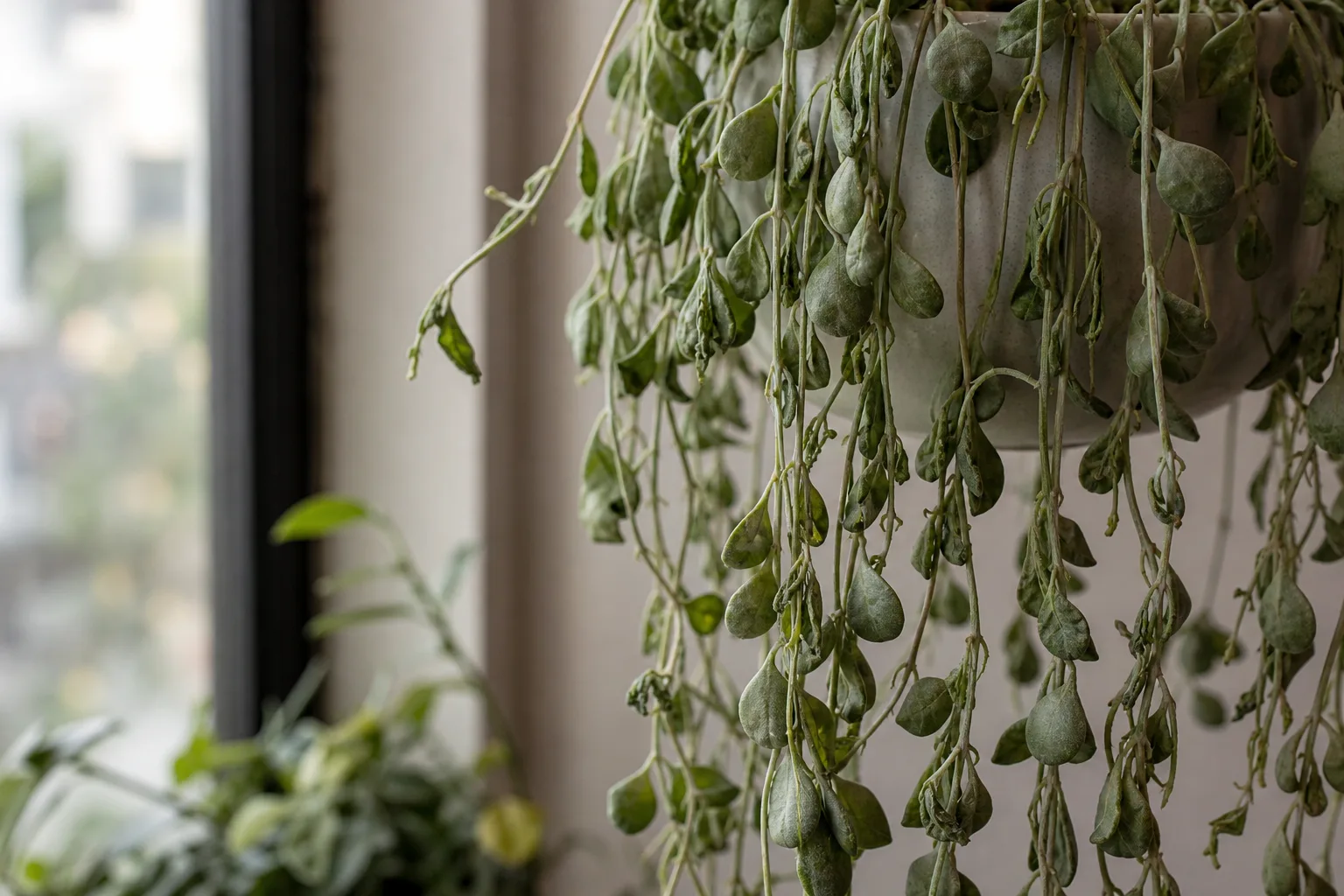
Drooping Leaves on Dischidia: Causes, Checks & Fixes
This guide covers drooping leaves on Dischidia. See also the general Drooping Leaves guide, watering, and light pages for this plant.
Drooping Leaves on Dischidia: Causes, Checks & Fixes
Quick answer
Drooping leaves on Dischidia mean trailing stems and small leaves have lost turgor-water is not reaching foliage, or roots have failed in wet epiphytic media. On this climbing epiphytic vine, the two most common triggers are underwatering (dry bark, wrinkled succulent leaves) and overwatering or root stress (heavy damp mix, limp stems that stay soft even after recent watering).
First step: before misting, fertilizing, or Dischidia repotting guide, lift the pot or mount and check moisture at depth. A feather-light container with a dry skewer 5 cm down and wrinkled coin leaves calls for one thorough soak. A heavy, cool pot with damp bark and limp trailing stems means hold all water until the mix dries almost completely-that single pause prevents thirst misreads from becoming root rot.
What drooping leaves look like on Dischidia
Dischidia leaves are small, often thick and succulent-String of Nickels (Dischidia nummularia) and Million Hearts (Dischidia ruscifolia) are common examples. Drooping shows up as hanging trails, soft limp stems, and leaves that no longer feel plump when you pinch them. The whole plant may look deflated rather than crisp.
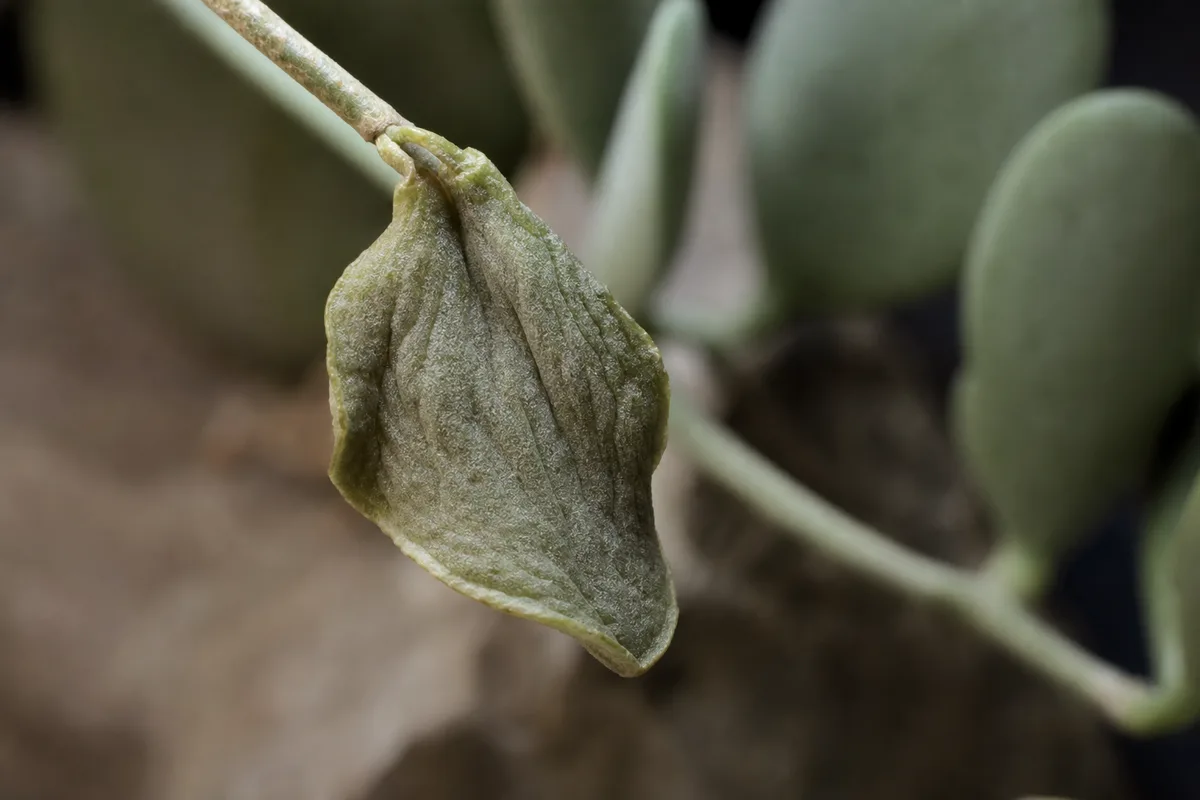
Drooping Leaves symptoms on Dischidia - compare with healthy tissue on the same plant.
Thirst droop pattern: Coin leaves look wrinkled, thin, or slightly shriveled; stems hang but stay firm, not mushy. The pot or mount feels very light. A skewer pulled from depth comes out clean and dry. On D. nummularia, leaves may feel softly less turgid before each watering-that is normal; chronic wrinkling that does not plump after a soak is not.
Wet-root droop pattern: Stems and leaves hang limp and soft while the pot feels heavy and bark or moss stays cool and damp for many days. Leaves may look slightly dull but not deeply wrinkled. You watered recently, yet the plant looks worse-because rotting roots cannot take up water even when media is wet.
Low-light droop pattern: Trailing stems sag gradually over weeks; internodes stretch and new leaves look smaller. Mix dries slowly because the plant is not using water, so the same watering rhythm that worked in summer leaves roots wet too long-mimicking overwatering droop.
Cold-draft or repot shock: Sudden limp collapse after moving near an AC vent, a cold window, or right after remounting. Drafts and sudden temperature changes can cause leaf drop on tropical epiphytes; stems may firm again once warmth and stable humidity return if roots were healthy before the shock.
Mount-specific droop: On cork mounts, outer moss looks dry while the core stays waterlogged-limp stems with no wrinkling on the leaves. Lift the mount; a heavy soggy feel confirms saturated moss, not surface dryness.
Why Dischidia gets drooping leaves
Dischidia evolved as an epiphytic vine clinging to branches in humid Southeast Asian forests. Rain arrives in bursts, drains immediately, and air returns to fine roots within hours. Indoors, drooping almost always means culture drifted from that rhythm-not that the plant suddenly needs fertilizer.
Underwatering and turgor loss top the thirst branch. Epiphytic roots in chunky bark dry fast in bright, warm rooms. When the root zone goes too dry for too long, leaves lose stored water first-coin leaves wrinkle, trails hang. Dischidia forgives brief drought better than chronic wet feet, but repeated dry cycles damage fine roots and prolong droop even after you water.
Overwatering and root failure cause the opposite-looking droop: wet mix, limp foliage. Dense peat-based mix, saucers left full, broken-down bark, or moss cores that never dry keep roots oxygen-starved. When roots cannot function, the plant cannot move water to leaves-so stems go limp on saturated media. This is the classic misread: owners see droop and add more water.
Insufficient light slows photosynthesis and water use. In dim conditions, bark stays damp longer after each soak; leggy growth and weak stems follow. The plant droops from weak tissue and wet-root stress combined-not from thirst alone.
Cold drafts and temperature shock below about 50°F (10°C) stress tropical epiphytes quickly. Dischidia near winter windows, AC vents, or unheated porches can collapse overnight while moisture levels were fine.
Repotting or remount stress disturbs adventitious roots. A freshly pinned shingling stem or a plant moved from mount to pot may droop for one to two weeks while new root contact forms-different from rot, which worsens on wet media.
Less common: pests such as mealybugs sap strength from stems; chronic low humidity on thin-leaved pouch types can soften foliage-but confirm pot weight and bark moisture before assuming insects or humidity alone.
How drooping differs from wilting and yellow leaves on Dischidia
These three problem pages overlap, but the primary symptom and first check differ:
| Symptom focus | What you see first | Best first check |
|---|---|---|
| Drooping leaves (this page) | Hanging trails, soft limp stems, loss of leaf plumpness-wrinkled or not | Pot/mount weight + moisture 5 cm deep |
| Wilting | Acute collapse, whole plant flops fast-often sudden | Same moisture check; wilting emphasizes emergency timing |
| Yellow leaves | Color change to chartreuse or yellow, often lower leaves first | Wet vs. dry mix while noting which leaves yellow |
Thirst droop and dry wilt both improve after one soak. Wet-root droop and wet wilt both need a dry-down cycle. Yellow lower leaves on damp bark often arrive after limp droop if overwatering continues-see yellow leaves on Dischidia when color change dominates.
How to confirm the cause
Work through these checks in order:
- Pot or mount weight - Feather-light with dry skewer = thirst. Heavy and cool = wet-root stress.
- Moisture at depth - Push a dry skewer 5 cm into bark mix or inner mount moss. Surface dryness with a wet core means hold water, not soak.
- Leaf texture - Wrinkled, thin coin leaves = dehydration. Soft limp leaves without wrinkling on wet media = uptake failure.
- Light exposure - Leggy stretched stems in a dim corner? Move toward bright indirect light before increasing water.
- Stem firmness - Press stems near soil line or mount base. Mushy black tissue = rot, not simple droop.
- Recent changes - Repot, remount, new window, or AC season? Shock droop improves with stability; rot worsens on wet mix.
- Roots (if wet + spreading droop) - Slide plant out gently. Healthy epiphytic roots are firm and pale; rotted roots are brown, slimy, or hollow.
Quick pattern guide
| Pattern | Likely cause | First fix |
|---|---|---|
| Light pot, dry skewer, wrinkled leaves | Underwatering | One thorough soak, drain fully |
| Heavy pot, damp bark, limp soft stems | Overwatering / early root stress | Stop watering until dry at depth |
| Gradual sag, leggy growth, slow dry-down | Not enough light | Brighter indirect light |
| Sudden flop after cold vent or window | Temperature shock | Warm stable spot away from drafts |
| Droop right after remount/repot | Transplant stress | Stable humidity; avoid extra soaks |
| Heavy wet mount, dry surface moss | Saturated moss core | Dry-down before next soak |
First fix for Dischidia
If the mix or inner moss is dry at depth and the pot is light, give one thorough soak-run water through until it drains freely, or bottom-soak 10–20 minutes, then empty saucers. Do not mist lightly instead of soaking; epiphytic roots want a full drink, then air.
If the mix is damp while stems droop, stop watering immediately. Do not pour “a little” to perk leaves. Move to brighter indirect light if the plant sits in shade-better light speeds future dry-down-but the urgent action is breaking the wet cycle.
Do not repot on day one unless roots are visibly mushy or moss is sour. Stabilize moisture first; remount or refresh bark only after you know roots are intact. See the Dischidia watering guide for soak-and-dry rhythm after the first correction.
Step-by-step recovery
When thirst droop is confirmed
- Soak once thoroughly - Water until drainage runs freely from the pot bottom, or submerge a light mount briefly, then drain completely.
- Wait for turgor return - Coin leaves often plump within hours to a day; stems may take longer if drought was prolonged.
- Resume dry-down checks - Lift the pot before every future soak; calendar watering causes repeat droop.
- Adjust light if needed - Brighter indirect light uses water faster; dim winter rooms need longer gaps between soaks.
When wet-root droop is confirmed
- Hold all water until bark or moss dries almost completely-pot light, skewer dry, no cool damp core.
- Improve airflow and light - Avoid sealing a wet mount in plastic. Gentle morning sun helps dry-down when acclimated.
- Inspect roots if droop spreads - Trim brown mushy roots with clean scissors. Let cut surfaces air-dry several hours. Wear gloves-Dischidia belongs to Apocynaceae and sap may irritate skin; keep trimmings from pets.
- Repot or remount only if needed - Fresh chunky epiphyte mix (orchid bark, perlite, minimal sphagnum) in a shallow pot with drainage-not a deep wet reservoir.
- First drink only when dry - Many Dischidia recover on a 10–14 day dry window in active growth.
When post-repot droop is confirmed
- Keep humidity steady around 50–60% without soaking roots daily.
- Avoid fertilizer and extra handling for two weeks.
- Water sparingly - Slight moisture at nodes on a mount is enough until new root grip forms.
When mount-specific droop is confirmed
- Lift and weigh the mount - Heavy = hold soaks until inner moss feels airy.
- Improve mount drainage - Rehang at an angle so water does not pool in moss pockets; consider remounting with fresh long-fiber sphagnum if the core is sour.
- Soak briefly when truly dry - Dunk only until moss darkens, then drain before rehanging.
Hold fertilizer until new growth looks healthy for two weeks. Stressed roots take up salts poorly.
Recovery timeline
Thirst droop: Leaves often re-plump within hours to one day after a proper soak. Stems firm over the next few days.
Wet-root droop: Stabilization takes one to two weeks after the wet cycle stops-drooping should not spread to new growth, and the pot should dry on a normal schedule.
New firm growth at stem tips is the best success marker; expect visible improvement in two to four weeks during warm active growth, longer in a cool dim winter room. Old limp leaves may not fully recover-trim spent foliage once the plant is stable.
Worsening signs: Stems soften at the base, drooping climbs into new growth each week despite dry mix, or roots stay mushy after trimming-those point toward root rot that may not fully recover.
What not to do
Do not water more because leaves look limp while bark is already damp-that deepens root damage. Avoid standard potting soil or repotting into a much larger pot “to help drying”; extra wet volume slows recovery.
Do not fertilize drooping foliage hoping for a quick perk-up-stressed roots take up salts poorly. Skip daily misting as a substitute for proper soaking; wet moss cores on mounts rot while surface leaves look fine.
When pruning limp leaves or inspecting roots, wear gloves and wash hands-Dischidia belongs to Apocynaceae and sap may irritate skin; keep cuttings away from pets. Do not stack repotting, heavy pruning, and pesticide on the same day.
How to prevent drooping leaves next time
Match watering to dry-down, not the calendar. Water when the plant needs it, not on a fixed schedule-many Dischidia need soaking every 10–14 days in active growth only when bark has dried almost completely; winter often needs longer gaps. Lift the pot or mount before every soak.
Use orchid bark-based epiphyte mix with perlite and minimal sphagnum, or well-drained mount moss per the Dischidia soil guide. Repot or refresh moss every two to three years before the core turns into a wet sponge.
Keep bright indirect light as the baseline per Dischidia light needs. A plant in adequate light dries predictably and holds stem firmness. Empty saucers within 30 minutes of soaking.
Avoid cold drafts below 65°F (18°C) for best growth; Dischidia prefers 65 to 85°F with stable humidity. Check pot weight weekly during the growing season-early droop on wet mix is far easier to fix than a collapsed trailing stem.
When to worry
Escalate immediately if stems go mushy at the soil line or mount base, drooping affects most of the plant within a week on wet media, or inspection shows mostly rotted roots. Slow droop on one trailing section with dry mix can wait for a soak and light tweak.
If more than half the root mass is mushy after trimming, survival odds drop-take firm stem cuttings from healthy sections while tissue is still green, pinned onto moist sphagnum, as backup per the Dischidia propagation guide.
Conclusion
Drooping leaves on Dischidia are usually a water-and-light problem dressed up as a mystery. Confirm whether bark is wet or dry at depth, soak if it is dry and light, and stop watering if it is damp and heavy. Fully limp old leaves may not re-firm-judge recovery by plump new growth and a stable soak-and-dry rhythm. Epiphytic roots want air between drinks; give them that and drooping typically stops before it becomes yellow leaves or rot.
For broader culture context, see the Dischidia overview, watering, overwatering, underwatering, yellow leaves, wilting, and root rot guides.
When to use this page vs other Dischidia guides
- Dischidia watering guide - Use for routine moisture checks before assuming drooping leaves is the main issue.
- Dischidia problems hub - Browse all 16 common issues on this species.
- Underwatering on Dischidia - Different entry point when symptoms overlap with drooping leaves.
- Overwatering on Dischidia - Different entry point when symptoms overlap with drooping leaves.
- Root Rot on Dischidia - Different entry point when symptoms overlap with drooping leaves.