Fittonia Plant Care: Light, Water & Humidity
Fittonia albivenis
Fittonia wilts dramatically when thirsty but recovers quickly. Keep humidity high - dry air causes permanent leaf margin browning. Prefers lower light than most houseplants. Excellent terrarium plant.
Fittonia Plant Care: Light, Water & Humidity
Start with wateringThe most common care mistake for FittoniaWatering guide →Fittonia care essentials
Light
low to medium indirect light
Water
Water when top inch dries - before dramatic wilt stage. Every 4–7 days depending on humidity and temperature.
Soil
Moist, well-draining potting mix. Slight moisture retention acceptable.
Humidity
60–90%
Temperature
18–27°C (65–80°F)
Fertilizer
Use diluted balanced liquid fertilizer at quarter strength and stop if the plant is stressed, newly repotted, or not actively growing.
About Fittonia
Fittonia is native to Peru and Colombia (tropical rainforest floor, high-humidity environments), typically reaches 3–6 inches tall; low-spreading mat; oval leaves 1–3 inches indoors, with moderate growth. Fittonia has a bushy growth habit and part of the Acanthaceae family. It is also known as Nerve Plant, Mosaic Plant, Net Plant, and Painted Net Leaf.
| Detail | Information |
|---|---|
| Also known as | Nerve Plant, Mosaic Plant, Net Plant, Painted Net Leaf |
| Native region | Peru and Colombia (tropical rainforest floor, high-humidity environments) |
| Mature size | 3–6 inches tall; low-spreading mat; oval leaves 1–3 inches |
| Growth rate | Moderate |
| Growth habit | Bushy |
| Scientific name | Fittonia albivenis |
| Family | Acanthaceae |
Fittonia Plant Care: Light, Water & Humidity
What Is Fittonia?
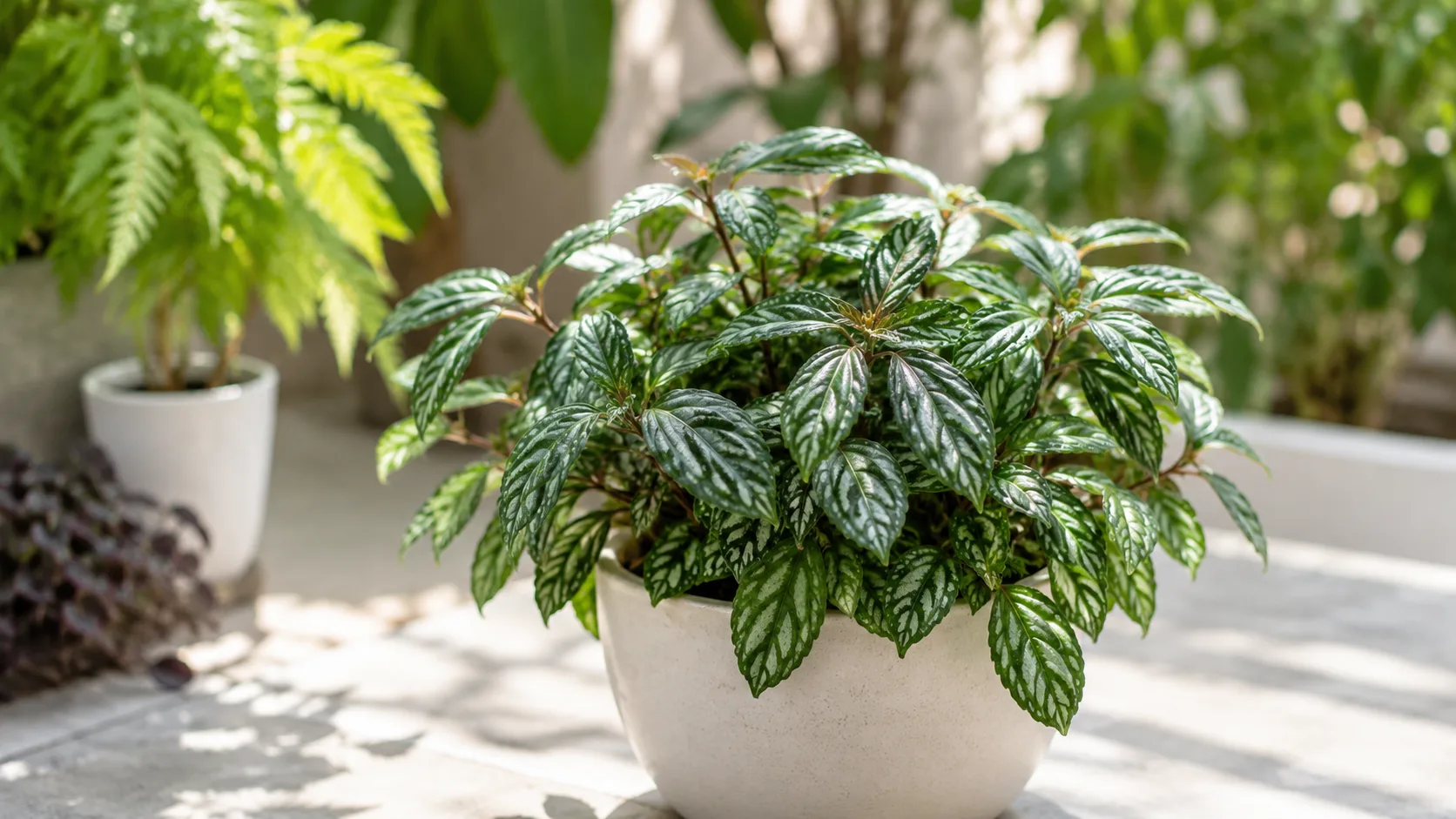
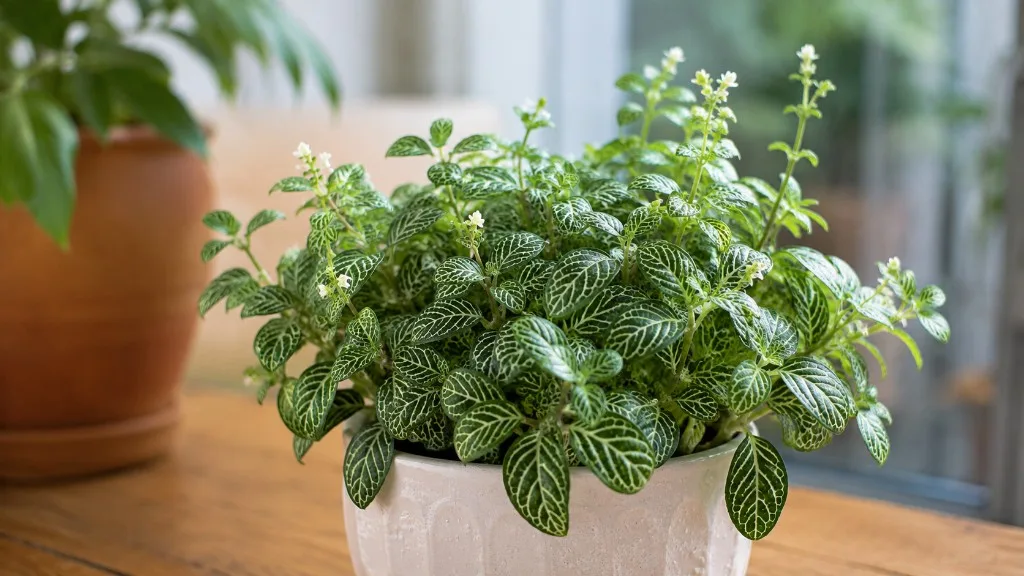
Fittonia - commonly called the nerve plant, mosaic plant, or jewel plant - is a small tropical foliage species grown almost entirely for its leaves. Deep green blades are traced with contrasting veins in white, silver, pink, or red, depending on cultivar, giving the plant a stitched, almost embroidered look at close range. The most widely sold species is Fittonia albivenis, though tags and poison-control databases sometimes list Fittonia verschaffeltii; for home care purposes, treat them as the same moisture- and humidity-loving plant regardless of which Latin name appears on the label.
Indoors, fittonia typically stays 3 to 6 inches (7 to 15 cm) tall and spreads outward in a low, mat-forming habit rather than climbing or branching into a tall shrub. Individual leaves are oval, 1 to 3 inches (2.5 to 7.5 cm) long, and growth is slow to moderate in average home conditions - faster in warm, humid terrariums, slower in dry open pots on sunny windowsills. The plant’s signature behavior is its dramatic wilt: let the root zone dry even slightly past its comfort zone and the entire plant collapses as if dead, then springs back within hours after a thorough watering. That theatrical response is not a flaw; it is the most reliable moisture gauge you will ever get from a houseplant.
If you are deciding whether fittonia belongs in your home, the honest summary is this: fittonia rewards high humidity, Fittonia light guide, and consistently moist - but never soggy - soil. It is an excellent fit for terrariums, steamy bathrooms, and plant shelves near a humidifier, and a poor fit for dry living rooms, forgetful watering schedules, and hot south-facing sills with direct afternoon sun. Unlike many tropicals that sulk quietly for weeks before showing stress, fittonia tells you immediately when it is thirsty. The trade-off is that it also browns leaf edges quickly when humidity drops, and it is more sensitive to cold drafts than a pothos or snake plant. One major advantage for pet owners: fittonia is non-toxic to cats and dogs according to the ASPCA, making it one of the few vividly patterned tropicals you can place within reach of curious animals without chemical toxicity concerns.
Botanical Background and Native Habitat
Fittonia belongs to the family Acanthaceae, a group that includes other moisture-sensitive tropicals such as polka dot plant and some prayer-plant relatives. Acanthaceae species share a few baseline patterns worth remembering: they prefer steady moisture with good drainage, they dislike sudden temperature drops, and most problems begin at the roots long before the whole plant looks obviously sick. Knowing the family helps you predict behavior faster than any single care tag on a nursery pot.
The species is native to the tropical rainforests of Peru and Colombia, where it grows on the shaded forest floor under a bright but filtered canopy. In that environment, the plant receives no direct sun, experiences warm stable temperatures, and lives in air that stays consistently humid. Soil on the forest floor stays moist without being waterlogged because drainage through leaf litter and organic matter is constant. Your job indoors is not to copy a rainforest literally - it is to approximate the humidity, light quality, and moisture rhythm that the plant evolved around.
The RHS Growing Guide for fittonia describes the plant as small and slow-growing, ideal for bottle gardens, terrariums, and bathrooms where humidity stays elevated without daily intervention. That native-context framing matters because fittonia is often sold as a generic desk plant in dry shops, then fails within weeks in a heated apartment. Treating it as a humidity plant first and a windowsill plant second prevents most early losses.
Commercial fittonia is sold mostly by vein color - white-vein, pink-vein, and red-vein types, sometimes labeled ‘Argyroneura’ or ‘Verschaffeltii’ - rather than strict cultivar name. All share the same core care; brighter indirect light keeps vein contrast sharp, while dim corners produce greener, less vivid patterning. Choose plants with firm leaves and no brown edge burn at purchase.
Best Growing Conditions for Fittonia
Fittonia does best when your space approximates the warm, humid, shaded rhythm of its native range. The four variables that decide almost every outcome are light, water, soil, and humidity - with humidity weighted more heavily here than for most houseplants. Get those aligned and feeding, Fittonia repotting guide, and propagation become routine. Get one badly wrong - especially humidity or moisture - and the plant declines faster than its tough-looking veins suggest.
Light Requirements
Fittonia needs bright, indirect light - the kind of exposure you would find on a rainforest floor beneath a bright canopy, not in direct sunbeams. A north- or east-facing window is often ideal indoors: gentle morning light, then bright ambient daylight without harsh midday rays on the leaves. Fittonia can tolerate lower light better than many sun-loving tropicals, which is why it survives in some bathrooms with frosted glass, but vein color fades and growth slows when light is genuinely dim for long periods.
Direct sun is the fastest way to damage fittonia. Afternoon sun through a south or west window scorches leaves into bleached patches and crisp brown edges within days, especially if the plant was grown in a shaded greenhouse and has not been acclimated. If you only have bright south exposure, set the plant several feet back from the glass or filter the window with a sheer curtain. The diagnostic for too much light is sun-facing bleaching and dry brown scorch; the diagnostic for too little is larger, greener leaves with weak vein contrast and slightly elongated stems.
Fittonia also performs well under fluorescent or LED grow lights in terrariums and offices. Position lights 6 to 12 inches above the canopy on a 10–12 hour day-length. When moving from a dim shop to a brighter spot, acclimate over one to two weeks to prevent leaf burn.
Temperature and Humidity
Fittonia prefers stable warmth between 60 and 80°F (15 and 27°C) during active growth. The RHS recommends keeping temperatures at or above 60°F (15°C) and avoiding cold drafts. Brief dips toward 55°F (13°C) may cause leaf drop on sensitive specimens; sustained cold air from an AC vent or winter window ledge produces limp, darkened foliage that does not recover even after watering corrects. Treat 60°F as the practical floor and keep the plant away from heating vents, radiators, and exterior doors that blast dry or cold air across the leaves.
Humidity is the variable that separates thriving fittonia from constantly crispy fittonia. The plant wants high humidity - the RHS notes that dry air causes brown leaf edges, and Missouri Botanical Garden recommends high humidity with humidifiers or pebble trays. In a closed or semi-closed terrarium, humidity often sits at 70–90% without any extra equipment, which is why terrarium culture is the most reliable way to grow nerve plants in dry-climate homes. Very dry winter air - below about 30% - pulls moisture from leaf edges faster than roots can replace it, producing brown tips and margins even when the soil moisture is technically correct.
Practical humidity tools ranked by effectiveness: a closed terrarium or steam-heavy bathroom with decent light works best; a small humidifier near the plant is second; a wide pebble tray with the pot elevated above the water line helps modestly. Misting raises humidity only briefly and can invite fungal spotting without airflow. If you will not add humidity, fittonia is the wrong plant for that spot.
Soil and Drainage
Use a moisture-retentive but well-draining potting mix. The principle matters more than a single branded recipe: the mix should hold water in the root zone like a well-wrung sponge, drain freely enough that roots never sit in stagnant water for days, and retain enough air space for oxygen exchange. A workable home blend is roughly two parts quality peat-free or peat-based houseplant mix, one part perlite, and one part fine orchid bark or coco coir - increase perlite slightly if you tend to overwater, and add a little extra organic matter if you struggle to keep moisture even in small terrarium pots.
Use a peaty or soil-based potting mixture indoors, with target pH roughly 6.0–7.0 for most peat- or coir-based houseplant mixes. Hobbyists rarely need to meter pH precisely; the bigger practical issues are compaction, salt buildup, and pots that dry unevenly. Always plant in a container with a drainage hole for open-pot culture. In terrariums, drainage layers of gravel, leca, or charcoal beneath the soil prevent the root zone from becoming a stagnant bog when condensation recycles water back into the substrate.
Terracotta pots dry faster than plastic or glazed ceramic, which can be helpful for heavy-handed waterers in open rooms but stressful for fittonia in dry homes. Plastic nursery pots or glazed ceramics lose less moisture through the walls and pair better with pebble trays or humidifiers when you are not growing in a sealed jar. Repot into fresh mix every one to two years in open culture, or when terrarium soil breaks down and smells sour.
How to Water Fittonia
The general rule for fittonia is keep the soil consistently moist but never waterlogged. Water when the top 1 to 2 cm (about half an inch) of mix feels dry to the touch but before the plant collapses - or, if you missed that window, water immediately when dramatic wilt appears. In warm, humid conditions that often works out to roughly every 4 to 7 days for small open pots, but your calendar should be a reminder to check, not a rule to follow blindly. Terrarium specimens may need water far less often because condensation returns moisture to the substrate.
Water thoroughly with room-temperature water until a small amount runs from the drainage hole in open pots, then empty the saucer so roots are not standing in stale water. Check moisture with a finger, a wooden skewer, or by lifting the pot - a very light pot means the root zone has dried more than fittonia tolerates, while a heavy pot with wet surface crust usually means wait. The soil should feel like a wrung-out sponge through most of the root zone: damp throughout, not muddy and not dusty dry.
The Dramatic Wilt-and-Recover Cycle
Fittonia’s famous faint is a drought signal, not a death sentence. When the root zone dries past its comfort band, the plant loses turgor pressure and the stems and leaves flop over completely - sometimes within hours on a hot day. Given a thorough drink, most specimens recover within 30 minutes to a few hours, standing upright as if nothing happened. The RHS and multiple horticultural references note this rebound as a normal feature of the species, not a sign of disease.
Use wilt as a backup alarm, not a lifestyle. Repeated drought cycles stress fine roots, reduce growth, and make the plant more susceptible to spider mites and edge burn even when it appears to recover visually. The better habit is to water just before collapse, when the top layer is dry but the plant still looks firm. If you arrive to a flattened fittonia, water deeply once, wait, and watch. If it does not perk up within half a day, the problem is likely root rot on Fittonia or cold damage, not simple thirst - investigate roots and temperature before watering again.
In terrariums, wilt still happens but less frequently. Condensation on glass is a clue that humidity is high; a wilted plant in a sealed jar usually means the substrate dried while the air stayed humid. Mist the soil surface lightly or add a small amount of water at the edge of the pot, then reseal. Avoid flooding a terrarium; excess standing water promotes Botrytis gray mold.
In cooler, dimmer months, growth slows and open pots dry more slowly - stretch watering intervals and pause fertilizer until spring. The common winter failure is continuing a midsummer schedule in lower light, causing yellow leaves, fungus gnats, and root rot. In summer, dry air dries open pots faster; check before assuming the old interval still applies.
Common Watering Mistakes
The single most damaging mistake is watering on a fixed schedule without checking the pot. The second is letting the plant sit in a full saucer or cachepot, which suffocates roots within days even if the top of the mix looks fine. The third is giving tiny daily sips instead of a full soak when the plant is dry - that wets only the surface while the center stays parched, producing repeated wilt cycles that weaken roots over time.
People also misread fittonia wilt. A thirsty plant recovers after a thorough watering; a rotting plant may wilt while the mix stays wet and then decline despite more water. Always pair wilt with a moisture check at depth before adding another drink. If stems are mushy at the base and the mix smells sour, stop watering, inspect roots, trim brown soft tissue, and repot into fresh mix. Yellow limp leaves on wet soil point to overwatering on Fittonia, not underwatering on Fittonia - the opposite of the dramatic dry wilt most beginners expect.
Using cold tap water straight from a winter pipe can shock roots in small pots. Let water sit to room temperature, or use lukewarm water in terrariums where temperature swings are buffered less than in large open containers. If your tap water is very hard, occasional flushing with plain water prevents salt crust on the soil surface that shows up as brown leaf tips mistaken for low humidity alone.
How to Feed Fittonia
Fittonia is a light feeder. A balanced water-soluble fertilizer diluted to one-quarter to one-half of the label rate applied to moist soil every four to six weeks from spring through early fall is sufficient. Pause feeding in winter, after repotting, and during recovery from root stress. Overfeeding causes salt buildup and brown margins - flush with plain water and pause feeding if that appears. In closed terrariums, feed sparingly or not at all; nutrients recycle and excess salts have nowhere to leach.
Growing Fittonia in Terrariums
If open-room fittonia feels like a constant humidity battle, a terrarium is the most reliable solution - not a decorative bonus. The RHS specifically recommends fittonia for bottle gardens and terrariums because the enclosed atmosphere prevents the rapid moisture loss that defeats the plant on dry desks. Fittonia is among the most commonly used closed-jar plants for exactly this reason: it stays small, roots shallowly, and shows visible feedback when water is needed.
Build with a drainage layer first - gravel, leca, or aquarium charcoal - then a thin barrier mesh or sphagnum to keep soil from sifting down. Add moisture-retentive but airy soil as described above, plant fittonia slightly proud of surrounding groundcover if you are mixing with moss or baby tears, and water lightly to settle roots. Place the finished terrarium in bright indirect light; direct sun through glass cooks the interior and scorches leaves within hours.
Closed vs. Open Terrarium Setups
Closed terrariums - jars with lids, bell cloches, or minimal ventilation - hold 70–90% humidity with little effort. Watering needs drop to every few weeks or months, depending on seal quality and room temperature. Watch for fogged glass, mold on hardscape, or soft brown patches on leaves, which signal stagnant air or overwatering. Crack the lid for a few hours weekly to exchange air and prevent Botrytis gray mold, which the RHS lists as a risk for fittonia in humid environments. Remove affected leaves immediately and reduce soil moisture.
Open terrariums - bowls without lids - behave like humidity-boosted open pots. They help somewhat but will not match closed-jar moisture; you still water on fittonia’s rhythm and may need a humidifier in winter. Mixed planting with peperomia, polka dot plant, or true ferns works when companions share similar moisture needs. For pet owners, verify each species by Latin name against the ASPCA list before building a pet-accessible display.
Repotting and Root Health
Repot fittonia roughly every one to two years in open culture, or whenever roots circle drainage holes, the plant dries out within a day of watering, or water runs straight through without soaking in. Fittonia is slow-growing and can stay in the same pot several years if humidity and feeding are moderate, which is why many terrarium specimens rarely need repotting at all - you refresh the whole substrate when the display matures. The best timing for open pots is early spring as active growth resumes.
Choose a pot only one size larger than the current root ball - typically 1 to 2 inches (2.5 to 5 cm) wider. Oversized pots hold excess wet mix around a small root system, the most common trigger for rot after repotting. Use fresh, well-draining mix, plant at the same depth as before, and water lightly for the first week while cut roots heal. Keep humidity high and light bright but indirect during recovery.
Signs It Is Time to Repot
Physical signs include roots emerging from drainage holes, a top-heavy plant that wilts despite moisture, or mix that has broken down into fine, water-retentive mud. Performance signs include stalled growth for months during warm weather despite adequate light and feeding, or chronic edge burn that persists after you have corrected humidity - sometimes indicating mineral-loaded old mix rather than current care errors.
Do not repot a plant that is actively collapsing from overwatering until you have inspected roots and trimmed rot. Moving a failing root ball into fresh mix without fixing the underlying moisture problem rarely saves fittonia. In terrariums, repotting usually means rebuilding the entire scene - plan to do that when soil smells sour, mold persists after airflow adjustments, or roots have filled the container and pushed the plant against the glass.
Propagation Methods for Fittonia
The standard home propagation methods for fittonia are stem cuttings and division. Seed is uncommon in hobby culture because named vein selections do not come true from seed and seedlings grow slowly. Stem cuttings are fast, free, and the easiest way to duplicate a cultivar you already grow well - especially from a healthy terrarium mother plant.
Take a 2- to 4-inch cutting below a leaf node, remove lower leaves, and root in moist mix or water - Missouri Botanical Garden lists stem cuttings as the standard propagation method. Cover with a humidity dome in bright indirect light near 70°F; roots form in two to four weeks. Division works when a mat has multiple rooted crowns - tease apart during repotting. Do not propagate stressed or pest-infested plants.
Common Fittonia Problems
Most fittonia problems are environmental, not mysterious diseases. The plant communicates through wilt timing, leaf edge color, and vein contrast long before the entire mat collapses. The useful habit is to check humidity, moisture, and light in that order before reaching for pesticide or extra fertilizer.
Yellow Leaves, Brown Tips, and Pests
Yellow leaves can mean overwatering, underwatering, low light, cold stress, or natural aging of older leaves. If yellow leaves are soft and the mix is wet, suspect overwatering and inspect roots for brown mushy tissue. If yellow leaves appear on a dry, wilted plant, drought stress is more likely. The RHS notes that yellowing often indicates insufficient light - move the plant to a brighter indirect spot and watch new growth before changing watering.
Brown leaf tips and margins usually point to low humidity, drought stress, salt buildup, or fluoride/chlorine sensitivity in tap water. Raise humidity first because that is the most common indoor cause. Flush the pot with plain water if salts are suspected, and review whether the Fittonia watering guide matches how fast the plant dries in its current light. Tips that are already brown will not turn green again; judge success by undamaged new leaves.
Shriveled, crispy leaves combine underwatering and low humidity signals - especially if the plant wilted repeatedly without recovery between cycles. Bleached patches on sun-facing leaves mean too much direct light. Move the plant or filter the window, then wait for new growth to assess recovery.
Watch for spider mites in dry indoor air - fine webbing and stippled leaves are the tell. Mealybugs hide in leaf axils as white cottony clusters. Scale appears as immobile bumps along stems. Fungus gnats indicate overly wet surface mix in open pots; let the top layer dry slightly between waterings while keeping deeper moisture appropriate for fittonia. Catch pests early with weekly inspection. A strong shower (for open pots), manual removal, and insecticidal soap applied per label directions handle most infestations if you act before the population spreads.
Grey mould (Botrytis) appears as fuzzy brown patches on leaves in sealed terrariums with poor airflow. Remove affected tissue, crack the lid for ventilation, and reduce soil moisture. Prevention beats cure: brief weekly airing and avoiding waterlogged substrate keep mold rare.
Is Fittonia Safe for Pets?
Fittonia is non-toxic to cats, dogs, and horses according to the ASPCA nerve plant listing. The database also lists common names including jewel plant, mosaic plant, silver nerve, and silver threads, and notes non-toxic principles with no expected poisoning syndrome from foliage ingestion. That makes fittonia a strong choice for households with curious pets that chew leaves - unlike many similarly colorful tropicals such as polka dot plant (also non-toxic) versus caladium or dieffenbachia (toxic).
Non-toxic does not mean problem-free with pets. Cats may show mild stomach upset from fiber or soil, not fittonia toxins. Confirm identification by Latin name when possible. If an unknown plant was eaten, contact your veterinarian or ASPCA Animal Poison Control at (888) 426-4435.
Conclusion
Fittonia (Fittonia albivenis) is a small South American rainforest floor plant grown for boldly veined foliage that stays compact when humidity, light, and moisture align. Give it bright indirect light, consistently moist well-draining soil, warm stable temperatures above 60°F, and humidity at or above 50% - ideally higher, and it rewards you with one of the most intricate leaf patterns available in a 3- to 6-inch package. Let humidity drop or roots dry too far and the plant faints dramatically; water thoroughly and it usually stands back up within hours, which is your clearest care signal.
Terrariums are not a gimmick for Fittonia overview - they are often the most reliable way to keep nerve plants healthy in average dry homes. Open-pot culture works too, but only if you commit to a humidifier, bathroom placement, or pebble tray strategy rather than hoping misting will suffice. Propagate from stem cuttings when you find a setup that works; repot gently when roots outpace the container; feed lightly during active growth; and fix humidity and moisture before pests or fertilizer. When something looks wrong, read the plant in context: dramatic wilt on a dry pot means water; wilt on wet soil means roots; brown edges mean humidity or salts; faded veins mean light. Do that, and fittonia becomes a low-maintenance jewel in the right environment - and a honest teacher about humidity everywhere else.
When to use this page vs other Fittonia guides
- Fittonia overview - Canonical hub for this species - care topics and problems branch from here.
- Fittonia problems - Symptom-first path when you already know something is wrong.
Related Fittonia guides
How to care for Fittonia?
How much light does Fittonia need?
low to medium indirect light
- low to medium indirect light - low to medium indirect light.
When should you water Fittonia?
Water when top inch dries - before dramatic wilt stage. Every 4–7 days depending on humidity and temperature.
- Check the top 1/2 inch; water when the surface just begins to dry - Water when top inch dries - before dramatic wilt stage.
- Drain excess water - Water when top inch dries - before dramatic wilt stage.
What soil works best for Fittonia?
Moist, well-draining potting mix. Slight moisture retention acceptable.
- peat-free potting mix - Moist, well-draining potting mix.
- perlite (15–20%) - Light white granules that keep soil airy and help prevent compaction.
- coconut coir
Grower notes for Fittonia
What matters most with Fittonia
Fittonia is easiest to grow when you judge the whole plant: new growth, root-zone moisture, light exposure, and how quickly the pot dries after watering. In practice, the care checkpoint is simple: low to medium indirect light. Pair that with moist, well-draining potting mix. Slight moisture retention acceptable, and avoid changing water, pot size, and placement all at once.
Best placement in a real home
Fittonia belongs where low to medium indirect light is realistic for most of the day, not only where the pot looks good. Water when top inch dries - before dramatic wilt stage. Every 4–7 days depending on humidity and temperature. If the pot stays wet longer than expected, move the plant into better light or reassess the mix before watering again. Humidity target: 60–90%. Temperature comfort zone: 18–27°C (65–80°F).
Before you buy this plant
Choose Fittonia with firm new growth, clean leaf undersides, and soil that does not smell sour or feel compacted. Be cautious if you see wilting, sticky residue, collapsed crowns, or a pot that is wet in poor light. Cosmetic old-leaf damage is less worrying than weak roots or active pests.
First month after bringing it home
Do not repot Fittonia on day one unless the mix is failing or pests are obvious. Quarantine it, learn how fast the pot dries, and keep care boring while it adjusts. Watch especially for wilting, brown-tips, and yellow-leaves. If problems appear, correct the condition first rather than stacking fertilizer, repotting, and pruning together.
Pet-aware note for Fittonia
Fittonia is a better choice for pet-aware homes than toxic ornamentals, but pet safe does not mean the plant should be chewed. Use hanging, shelf, or room placement if pets dig in soil or shred leaves, and choose sturdier plants for high-traffic pet zones.
How to tell Fittonia is settling in
Also sold as Nerve Plant, Mosaic Plant, and Net Plant, this plant should be judged by stable new growth rather than label names alone. If you plan to multiply it later, common methods include Stem cuttings and Division. Repot only when you see Roots emerging from drainage holes and plant becoming very dense. If brown-tips shows up early, inspect light, watering, and roots before assuming the plant is permanently weak.
Is it pet safe?
Fittonia is generally considered non-toxic to cats and dogs.
Non-toxic to cats and dogs per ASPCA.
Watering Fittonia
For Fittonia, check the top 1/2 inch; water when the surface just begins to dry and water every 4–7 days; check frequently as this plant hates drought. Slightly less water in winter but never allow to dry out.
| Detail | Information |
|---|---|
| How often | Every 4–7 days; check frequently as this plant hates drought |
| How to check | Check the top 1/2 inch; water when the surface just begins to dry |
| Seasonal changes | Slightly less water in winter but never allow to dry out |
Signs of overwatering
- Yellow leaves
- root rot
- stems rotting at soil level
Signs of underwatering
- Dramatic, sudden whole-plant collapse (but it recovers quickly when watered)
- crispy leaf edges
Soil & potting for Fittonia
Use a mix of peat-free potting mix, perlite (15–20%), coconut coir for Fittonia. Good drainage while retaining some moisture. Target soil pH around 6.0–7.0. Repot every 1–2 years, ideally in spring.
| Detail | Information |
|---|---|
| Recommended mix | peat-free potting mix, perlite (15–20%), coconut coir |
| Drainage | Good drainage while retaining some moisture |
| Soil pH | 6.0–7.0 |
| Repotting frequency | Every 1–2 years |
| Best season to repot | Spring |
Signs it needs repotting
- Roots emerging from drainage holes
- plant becoming very dense
Humidity & temperature for Fittonia
Fittonia prefers 60–90%, though normal home humidity is usually fine. Keep temperatures around 18–27°C (65–80°F).
| Detail | Information |
|---|---|
| Humidity | 60–90% - normal home humidity is fine. |
| Ideal temperature | 18–27°C (65–80°F) |
Fertilizer & pruning for Fittonia
Use use diluted balanced liquid fertilizer at quarter strength and stop if the plant is stressed, newly repotted, or not actively growing. for Fittonia.
| Detail | Information |
|---|---|
| Fertilizer type | Use diluted balanced liquid fertilizer at quarter strength and stop if the plant is stressed, newly repotted, or not actively growing. |
Common problems on Fittonia
Wilting
LowLikely cause: Fittonia wilts dramatically when thirsty - a normal communication mechanism that recovers rapidly after watering
Quick fix: Water thoroughly; plant recovers in 30–60 minutes; if not, check for root rot
Full fix guide →Brown Tips
HighLikely cause: Low humidity causes irreversible browning of leaf margins - the most serious ongoing fittonia problem
Quick fix: Raise humidity above 60%; terrarium; pebble tray; humidifier; avoid heat sources
Full fix guide →Yellow Leaves
MediumLikely cause: Overwatering or excessive direct light causes yellowing
Quick fix: Allow top inch to dry before watering; move away from direct sun
Full fix guide →Root Rot
MediumLikely cause: Common on this plant type; confirm with recent watering, light, and root checks.
Quick fix: Inspect the plant and correct the most likely care stressor before stacking treatments.
Full fix guide →Overwatering
MediumLikely cause: Common on this plant type; confirm with recent watering, light, and root checks.
Quick fix: Inspect the plant and correct the most likely care stressor before stacking treatments.
Full fix guide →Underwatering
MediumLikely cause: Common on this plant type; confirm with recent watering, light, and root checks.
Quick fix: Inspect the plant and correct the most likely care stressor before stacking treatments.
Full fix guide →Spider Mites
MediumLikely cause: Common on this plant type; confirm with recent watering, light, and root checks.
Quick fix: Inspect the plant and correct the most likely care stressor before stacking treatments.
Full fix guide →Mealybugs
MediumLikely cause: Common on this plant type; confirm with recent watering, light, and root checks.
Quick fix: Inspect the plant and correct the most likely care stressor before stacking treatments.
Full fix guide →Aphids
MediumLikely cause: Common on this plant type; confirm with recent watering, light, and root checks.
Quick fix: Inspect the plant and correct the most likely care stressor before stacking treatments.
Full fix guide →Leggy Growth
MediumLikely cause: Common on this plant type; confirm with recent watering, light, and root checks.
Quick fix: Inspect the plant and correct the most likely care stressor before stacking treatments.
Full fix guide →Slow Growth
MediumLikely cause: Common on this plant type; confirm with recent watering, light, and root checks.
Quick fix: Inspect the plant and correct the most likely care stressor before stacking treatments.
Full fix guide →Drooping Leaves
MediumLikely cause: Common on this plant type; confirm with recent watering, light, and root checks.
Quick fix: Inspect the plant and correct the most likely care stressor before stacking treatments.
Full fix guide →Low Humidity
MediumLikely cause: Common on this plant type; confirm with recent watering, light, and root checks.
Quick fix: Inspect the plant and correct the most likely care stressor before stacking treatments.
Full fix guide →Not Enough Light
MediumLikely cause: Common on this plant type; confirm with recent watering, light, and root checks.
Quick fix: Inspect the plant and correct the most likely care stressor before stacking treatments.
Full fix guide →Fungus Gnats
MediumLikely cause: Common on this plant type; confirm with recent watering, light, and root checks.
Quick fix: Inspect the plant and correct the most likely care stressor before stacking treatments.
Full fix guide →Mold on Soil
MediumLikely cause: Common on this plant type; confirm with recent watering, light, and root checks.
Quick fix: Inspect the plant and correct the most likely care stressor before stacking treatments.
Full fix guide →