Leggy Growth on Fittonia: Causes, Checks & Fixes
Quick answer
Leggy Fittonia means long internodes and a sparse creeping mat from etiolation-stems stretching toward brighter light, not a fertilizer shortage. First step: move the pot within bright indirect reach of an east window or add a grow light, then judge recovery on compact new nodes over two weeks before pinching.
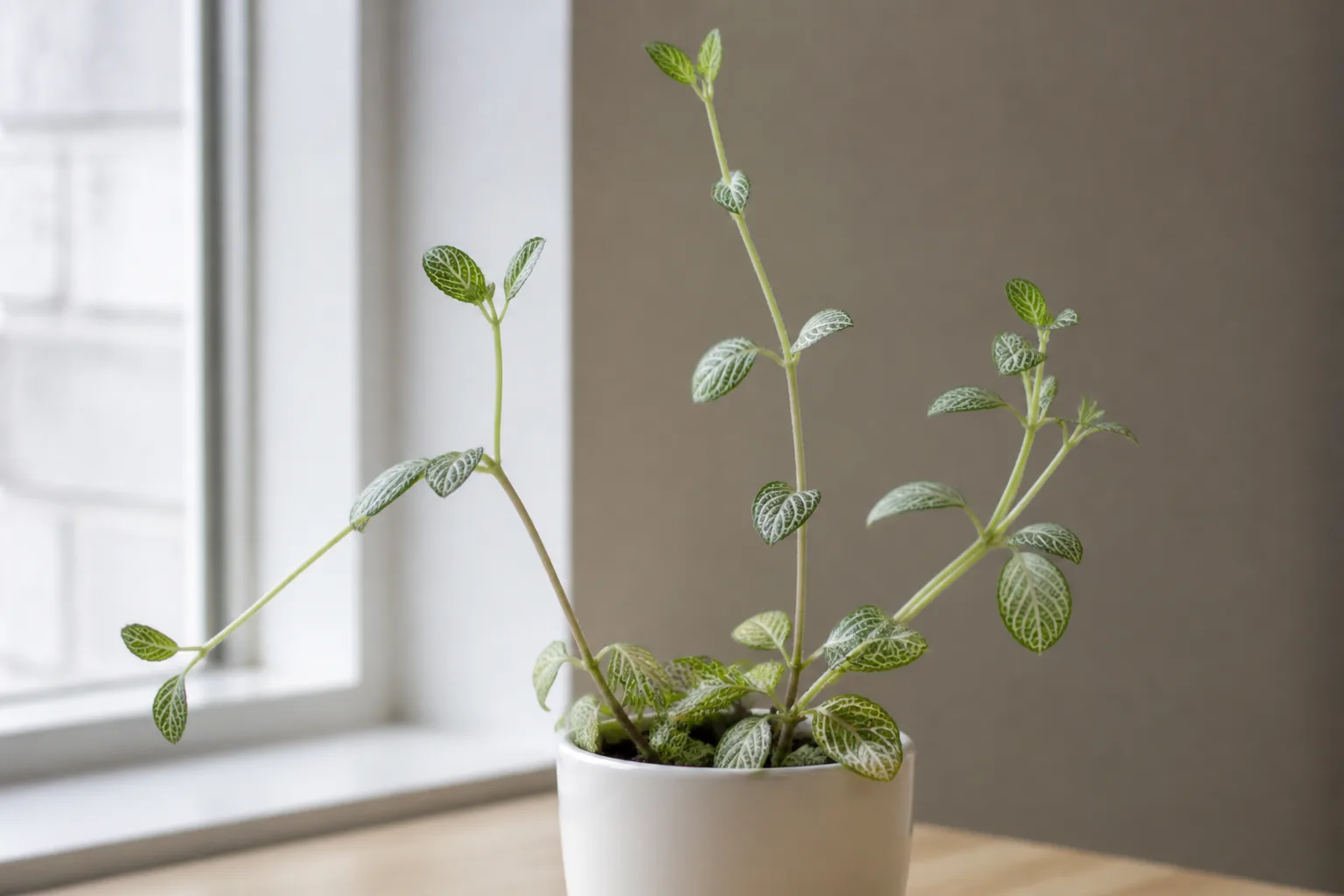
Leggy Growth on Fittonia: Causes, Checks & Fixes
This guide covers leggy growth on Fittonia. See also the general Leggy Growth guide, watering, and light pages for this plant.
Leggy Growth on Fittonia: Causes, Checks & Fixes
Quick answer
Leggy growth on Fittonia (Fittonia albivenis) is almost always etiolation-the nerve plant stretching internodes toward brighter photons when usable light stays too low. Stems lengthen between leaf pairs, the low creeping mat looks sparse, and new leaves stay small and thin even when humidity and watering look fine. Many growers mistake rapid stem extension for vigor when the tissue is actually weak.
First step: move the pot into bright indirect light within about 12 inches (30 cm) of an east window, or add a full-spectrum grow light 18 to 24 inches above the canopy for 10 to 12 hours daily. Hold fertilizer, Fittonia repotting guide, and hard pruning until you see whether new nodes come in tighter over the next two weeks.
If veins are dull but stems are not yet long, read not enough light on Fittonia for the broader low-light symptom picture-including vein fade before full stretch. This page focuses on confirmed stretch: what it looks like, how to fix light first, and when to pinch.
What leggy growth looks like on Fittonia
Healthy Fittonia forms a low, spreading mat of leaves traced with bold white, pink, or lime veins. Leggy growth breaks that compact habit:
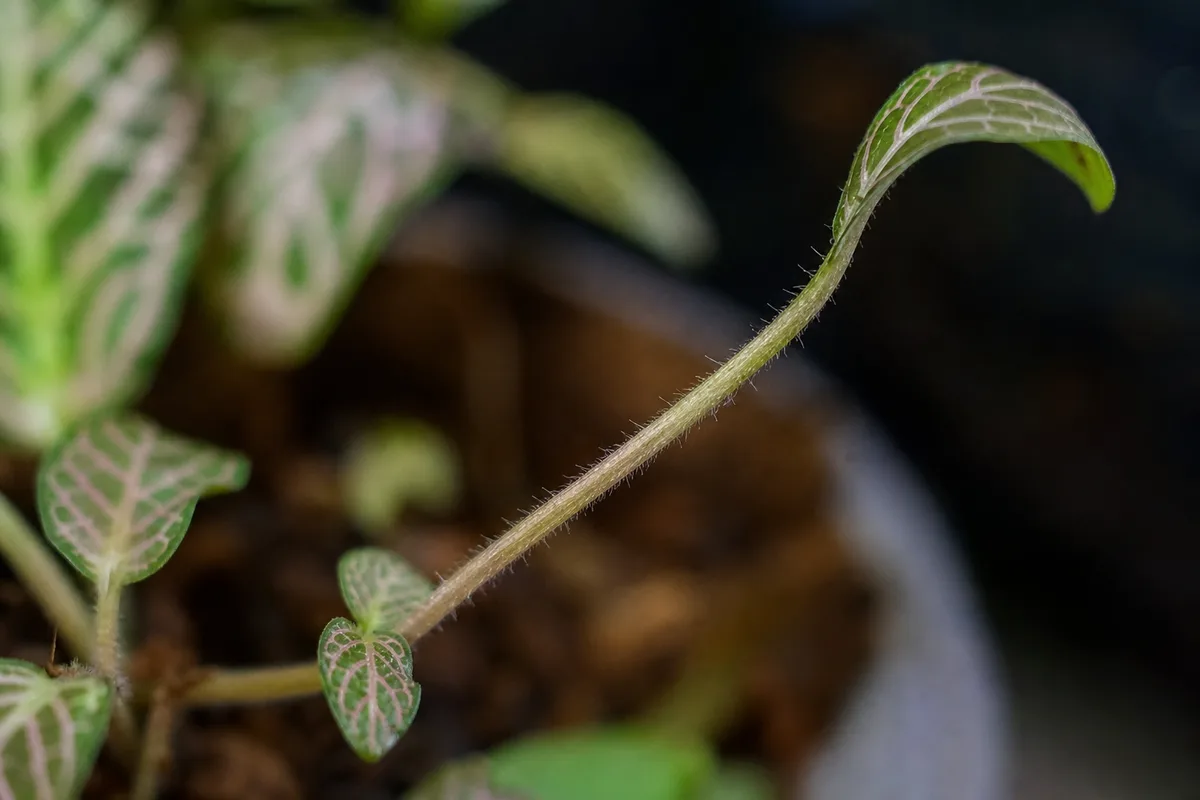
Leggy Growth symptoms on Fittonia - compare with healthy tissue on the same plant.
- Long internodes - gaps between leaf pairs on recent stems are noticeably longer than on older compact sections lower on the plant
- Sparse creeping mat - the plant spreads slowly or looks threadbare despite ongoing stem extension
- Small, thin new leaves - fresh foliage at stem tips stays smaller than mature leaves grown under better light
- Directional lean - the whole pot or individual stems tilt toward the brightest window, lamp, or architectural opening
- Vein fade on pale cultivars - White Anne and Skeleton types show dull veins alongside stretch sooner than darker-leaved forms, though all cultivars elongate when searching for flux
- Slow water use - the pot stays heavy for days because photosynthesis drops in dim light
Leggy Fittonia can still look green and alive. Indoor plants become spindly or leggy as they stretch to reach for more light, and mats grown where light arrives from one direction often develop a persistent lean.
What leggy growth does not look like: dramatic whole-plant flop that recovers within an hour of watering-that is wilting or underwatering. Crisp brown scorch on the window-facing leaf half-that is too much direct sun, covered in the Fittonia light guide. Dry, papery leaf margins-that is low humidity or brown tips, not etiolation alone.
Leggy growth vs. not enough light on Fittonia
These two problems share the same root cause-insufficient usable light-but search intent differs.
| Signal | Leggy growth (this page) | Not enough light |
|---|---|---|
| Primary symptom | Long internodes, sparse mat, stretch toward light | Vein dulling, yellow lower leaves, general dim-corner decline |
| Best for readers who | Already see stretched stems and want pinching and recovery steps | Want to confirm whether light is the limiter before stretch dominates |
| First fix | Bright indirect placement or grow lamp; pinch after two weeks of tighter new growth | Same light move; broader symptom checklist and terrarium trap context |
Both pages point to the same first action: bright indirect light within reach of an east window or supplemental LED. Use not enough light on Fittonia when vein fade or yellow lower leaves on wet soil appear before obvious stretch. Stay on this page when internodes have already lengthened and you need pinching timing and stretch-specific recovery limits.
Why Fittonia gets leggy
Insufficient usable light (most common)
Fittonia albivenis grows on the tropical forest floor in Peru and Colombia-bright ambient sky filtered through canopy shade, not a dark interior shelf. Indoors that means filtered bright light, not deep shade. The Royal Horticultural Society places Fittonia in a bright spot away from direct sunlight, ideally near a north- or east-facing window.
Fittonia tolerates dim corners better than many tropicals, but tolerance is not preference. In genuinely low light, stems elongate to capture more photons. Missouri Botanical Garden recommends bright indirect light with direct sun avoided because thin foliage scorches-so the fix for stretch is brighter indirect exposure, not a hot south sill.
Distance and winter light drop
Light drops fast with distance from the window. A pot on a table six feet from glass may look “near the window” while receiving low intensity at the leaf surface. Short winter days reduce flux even when placement stays fixed-mats that looked compact in summer may push pale shoots from November through February.
Terrarium on a dark shelf trap
Marketing pushes Fittonia into terrariums because humidity helps-but a sealed jar on an interior bookshelf still etiolates. Humidity without brightness produces a damp, stretched mat. An open terrarium on an east sill often thrives because light and moisture work together.
Dim placement plus slow water use
Low light slows metabolism. A dim nerve plant drinks less than one in correct brightness. If you keep a bright-window watering rhythm, soil stays wet, lower leaves yellow, and many growers chase overwatering fixes when photons, not drainage, are the bottleneck. Wet soil plus stretch in shade is a common misread pair.
Over-fertilizing in low light
Excess nitrogen in dim conditions can push soft elongated shoots that cannot support dense foliage. This is less common than pure etiolation but appears when growers feed heavily hoping to “green up” a dark-corner Fittonia. Light must rise before fertilizer helps structure.
How to confirm the cause
Work through these checks before pinching, repotting, or feeding:
- Internode pattern - Measure gap length between recent leaves. Etiolation shows progressive lengthening on new growth, not random bare patches scattered on old stems.
- Lean direction - Strong tilt toward glass or a lamp confirms directional stretch. Rotate the pot and watch whether new tips reorient within days.
- Placement audit - Note distance from the nearest window and whether direct sunbeams hit leaves for more than a few minutes of cool morning exposure. Compare to Fittonia light placement guidance.
- Newest-leaf test - Compare vein sharpness and leaf size on the top quarter-inch of growth to older foliage. Stretch with dull new tips confirms current light is insufficient.
- Soil dry-down speed - Push a finger into the top half inch. Chronic wetness in a dim spot means the plant is not using water-often paired with low light, not independent overwatering.
- Two-week trial move - Shift the pot to an east window or filtered bright spot without changing anything else. Compact new nodes after 10 to 14 days confirm etiolation was the limiter.
- Rule out lookalikes - Water thoroughly once; if the plant stands upright within an hour with no internode change, drought was not the main issue. Check leaf undersides for spider mites or mealybugs-pests leave residue, not uniform internode stretch.
If internodes are long, leaves pale at the tips, and the mat leans toward light with firm stems and no mushy crown, etiolation is confirmed.
First fix for Fittonia
Move the pot to bright indirect light within about 12 inches of an east-facing window, or install a full-spectrum LED grow light 18 to 24 inches above the plant on a 10- to 12-hour daily timer.
That single change addresses the root cause without the stress of repotting or feeding a plant that cannot use nutrients efficiently in shade. East exposure delivers cool morning brightness that supports compact growth without the scorch risk of unfiltered south or west glass. If east is unavailable, use a sheer curtain on a brighter window or place the pot in the brightest zone of the room that still avoids direct midday beams on leaves.
Acclimate gradually if jumping from a very dark spot-shift closer over 7 to 10 days so thin leaves do not bleach. Do not prune heavily on day one. Do not fertilize a stretched mat before light improves. Do not repot unless root rot is confirmed-legginess rarely requires a new container.
Step-by-step recovery
After the initial light move or lamp setup:
- Hold other variables steady - One care change at a time lets you read the plant’s response. Do not stack repot, feed, and hard prune on the same day.
- Adjust watering as photosynthesis picks up. A brighter Fittonia dries the mix faster; recheck the top half inch every few days instead of copying an old dim-corner calendar. See the Fittonia watering guide for rhythm.
- Rotate the pot a quarter turn every three to four days so the mat grows evenly instead of leaning hard to one side.
- Pinch leggy stem tips only after two weeks of improved light, when new nodes are visibly tighter. Pinching in still-dim conditions produces more weak stretch-the RHS notes that stem-tip cuttings root easily and pinching redirects growth when light already supports compact tissue.
- Trim cosmetically - Old elongated internodes will not revert; remove only if they crowd airflow or look unsightly once replacement foliage appears. Full Fittonia pruning guidance covers clean cuts above nodes.
- Add winter supplementation if natural light fades seasonally. University of Maryland Extension notes that supplemental lighting helps houseplants when day length and window intensity drop.
Terrarium growers: move the container to a bright sill or add a lamp above the jar-humidity alone does not stop stretch.
Recovery timeline
Expect the first signs of improvement on new growth within two to three weeks after stable bright indirect light or consistent grow-lamp hours. Vein contrast may sharpen on fresh leaves before older faded foliage changes at all.
Stretched internodes on mature stems do not shorten-judge success by compact nodes and firm leaf size on new tips, not by old bare stem length. A full bushy mat may take four to six weeks to look even again after a corrective pinch.
If two weeks pass with no tighter new leaves, the spot is still too dim-move closer to glass, extend lamp hours by one to two, or raise fixture intensity slightly while watching for pale dry spotting that signals LED burn.
Winter recovery is slower under naturally short days even after a light move.
Lookalike symptoms to rule out
Underwatering wilt - Fittonia collapses dramatically when dry but recovers within 30 to 60 minutes after a thorough drink. Leggy internodes persist through a good watering; wilt collapses the whole mat flat.
Overwatering and root rot - Yellow leaves plus sour soil smell, soft stems at the soil line, and wet mix that never dries point to root failure. Fixing light helps dry-down but rotted roots need inspection-not just a brighter window.
Low humidity - Dry air causes crispy brown leaf margins that feel dry, distinct from soft internode lengthening. Humidity fixes do not restore etiolated stems.
Too much direct sun - Bleached patches and crisp scorch on the pane-facing side mean excess light-the opposite problem. Pull back from glass or diffuse with sheers per the light guide.
Slow growth without stretch - If internodes stay normal but the plant barely grows, read slow growth on Fittonia for nutrient, temperature, and root-bound angles distinct from pure etiolation.
Mistakes to avoid
Do not assume “low-light houseplant” means a hallway with no window-Fittonia survives shade but displays only with usable brightness.
Do not blast a dim plant with unfiltered south sun to “fix” stretch-that trades etiolation for scorch within days on pale cultivars.
Do not increase watering or fertilizer to compensate for dim placement-extra water in low light keeps roots wet; extra feed pushes soft tissue without fixing photosynthesis.
Do not pinch before light improves-trimming stretched tips in shade often produces more weak elongation.
Do not judge recovery on old stretched leaves-only new growth tells you the current spot works.
Do not repot on day one unless roots are clearly rotting. Light correction is lower stress and often sufficient.
How to prevent leggy growth next time
Place new Fittonia within a foot of an east window or behind a sheer on a bright exposure before choosing décor spots. Clemson HGIC groups most foliage houseplants in high-light indoor locations near windows that receive bright indirect light-Fittonia fits that band even though it burns in direct beams.
Use a timer-driven full-spectrum LED from late fall through early spring in north rooms or office desks. Start at 10 to 12 hours and adjust by new-growth response.
Clean window glass seasonally and avoid blocking sills with opaque objects that cut winter light further.
Match watering to how fast the pot dries in the actual spot, not how a sunnier neighbor plant drinks.
Scout weekly during short-day months-catch dull new tips and lengthening internodes early before the mat becomes sparse and wet-rooted in shade.
When to worry
Gradual internode lengthening with firm stems and even moisture is a correctable placement issue, not an emergency.
Treat as urgent when yellow leaves accumulate on constantly wet soil in a dark room-that combination invites root rot. Soft stems, sour-smelling mix, and collapse that does not recover after watering need root inspection, not just a lamp.
Replace or propagate from healthy tips if the crown stays mushy after rot in shade-Fittonia recovers well from cuttings when a parent plant is too far gone.
Simple winter stretch on an otherwise healthy mat is normal; supplement light rather than panic.
Related Fittonia problems
Leggy stretch overlaps with several other nerve-plant issues:
- Not enough light - vein fade, yellow lower leaves, and broader dim-corner diagnosis before stretch dominates
- Fittonia light needs - east window placement, grow-light distance, and sunburn vs. etiolation
- Wilting - dramatic collapse that recovers after water, unlike persistent internode stretch
- Brown tips and low humidity - dry crispy margins vs. elongated stems
- Overwatering and root rot - wet soil in dim corners paired with stretch
- Fittonia pruning - pinching and stem-tip cuts after light correction
When to use this page vs other Fittonia guides
- Fittonia watering guide - Use for routine moisture checks before assuming leggy growth is the main issue.
- Fittonia problems hub - Browse all 16 common issues on this species.
- Not Enough Light on Fittonia - Different entry point when symptoms overlap with leggy growth.
- Slow Growth on Fittonia - Different entry point when symptoms overlap with leggy growth.
- Yellow Leaves on Fittonia - Different entry point when symptoms overlap with leggy growth.