Root Rot on Fittonia: Causes, Checks & Fixes
Quick answer
Root rot on Fittonia usually starts when a creeping nerve plant sits in soggy mix - often after watering a dramatic wilt on already-wet soil. First step: stop watering, check the top 1/2 inch and pot weight, then inspect roots before repotting.
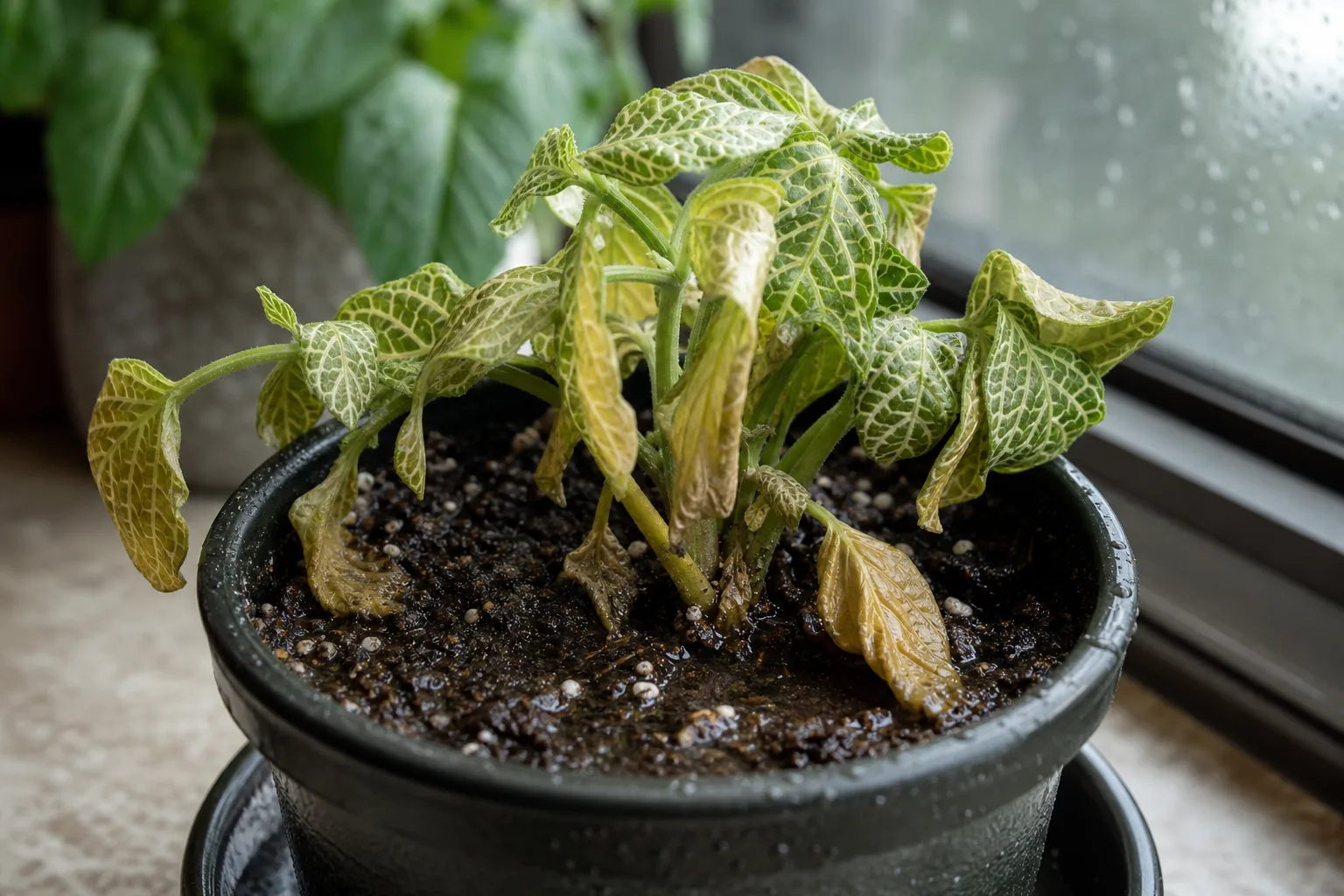
Root Rot on Fittonia: Causes, Checks & Fixes
This guide covers root rot on Fittonia. See also the general Root Rot guide, watering, and light pages for this plant.
Root Rot on Fittonia: Causes, Checks & Fixes
Quick answer
Root rot on Fittonia (Fittonia albivenis, the nerve plant or mosaic plant) almost always starts when fine roots sit in soggy, oxygen-poor mix - not from a mysterious disease attacking healthy drainage. Fittonia is a low-spreading tropical ground cover from humid forest floors; indoors it wants consistently moist soil, never stagnant water.
First step: stop watering and read the pot before you touch roots. Push your finger into the top 1/2 inch of mix and lift the pot. If the surface is wet, the pot feels heavy, and leaves stay limp, you are in the wet-soil collapse branch - not thirst. Unpot only after you confirm that mismatch. If the mix is bone-dry and the pot is light, see the wilting guide for the dry-collapse recovery test instead.
Root rot vs. dramatic thirst wilt - why wet-soil collapse matters
Few houseplants perform wilt as convincingly as Fittonia. Stems that were upright in the morning lie flat by afternoon - which trains owners to reach for the watering can. That reflex works when the root zone has dried out. It backfires when roots are already rotting in wet mix and cannot transport water even though the soil is saturated.
The diagnostic fork that saves nerve plants:
| Pattern | Soil / pot | Leaf feel | First action |
|---|---|---|---|
| Dry-soil collapse (thirst) | Light pot; top 1/2 inch dry; skewer dry at mid-depth | Papery, thin; full mat flop | Water thoroughly once, drain completely, wait 30–60 minutes |
| Moist-soil collapse (root rot) | Heavy pot; mix wet at depth; sour smell possible | Soft, limp; lower leaves yellow | Stop watering; inspect roots; trim and repot if mushy |
| Humidity limpness | Moisture OK at roots; dry air below ~40% RH | Limp with crispy brown edges | Raise humidity - not more water (low-humidity guide) |
Lack of water causes fittonias to droop or wilt, but they soon recover once watered thoroughly - usually within 30 minutes to a few hours on healthy roots. Moist-soil wilt does not follow that timeline. Watering a collapsed Fittonia that is already drowning finishes what soggy soil started.
What root rot looks like on Fittonia
Healthy Fittonia spreads as a mat of short stems with crisp veined leaves. Root rot changes the whole plant’s posture while the mix stays wet.
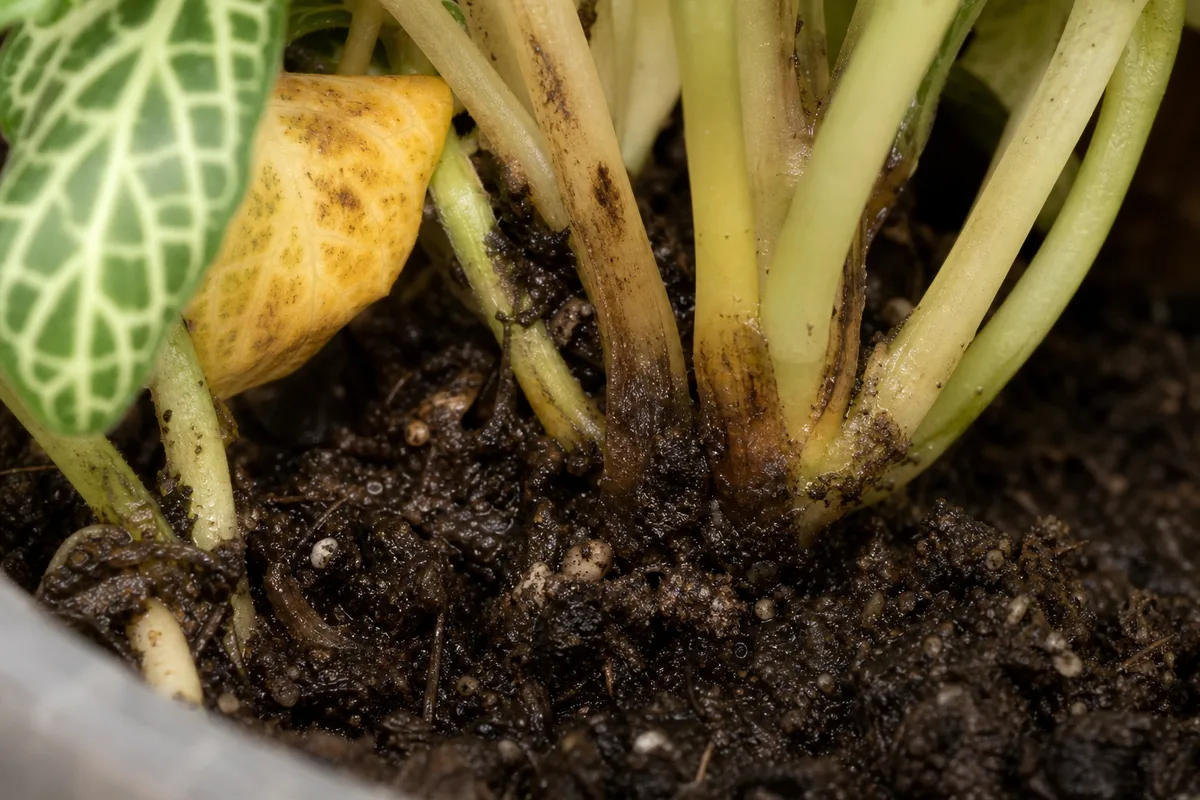
Root Rot symptoms on Fittonia - compare with healthy tissue on the same plant.
Early signs
- Theatrical wilt on heavy wet pot - leaves limp despite dark, cool surface soil
- Yellow lower leaves while upper patterned foliage still looks colored - yellowing of leaves may indicate overwatering on Fittonia
- Sour or musty smell when you lift the pot or slide a skewer through the mix
- Slow rebound failure - plant stays limp hours after the last watering
- Fungus gnats hovering over constantly wet surface - larvae damage fine roots in soggy organic mix (fungus-gnat guide)
Advanced signs
- Soft, mushy stems at the soil line - crown tissue breaking down
- White mold or algae on the surface in low light
- Brown translucent roots that pull away when rinsed - healthy Fittonia roots are firm and pale tan or white
- Complete collapse with no perk-up after a careful drink on already-wet mix
Compare with underwatering: a lightweight pot, dusty dry top 1/2 inch, and dramatic flop that stands back up within an hour after one thorough watering points to thirst, not rot. See underwatering when dry-soil collapse repeats on a healthy schedule.
Why Fittonia gets root rot
Fittonia evolved as a creeping evergreen ground cover on tropical rainforest floors in Peru and Colombia. Forest litter stays damp with air still reaching roots. Indoors, that biology collides with pots that drain poorly, calendars that ignore soil checks, and the plant’s own dramatic wilt habit.
Overwatering after dramatic wilt
The most common owner-driven trigger: Fittonia collapses, soil already feels moist, and another drink gets poured because the plant “looks thirsty.” Rots may occur if plants are overwatered. Saturated mix pushes oxygen out; pathogens spread; fine feeder roots die first - which makes the plant look more dehydrated even while sitting in water.
Poor drainage and standing water
Blocked drainage holes, dense garden soil, oversized pots that stay wet for weeks, and cachepots holding runoff are structural rot triggers. Bottom-watering works only when you lift, drain, and empty saucers afterward - never return a dripping nursery pot to a sealed outer shell. Full drainage protocol lives in the watering guide.
Terrariums and high-humidity rooms
RHS notes fittonias in terrariums need less frequent watering because humidity slows dry-down - but the same sealed environment traps moisture at the root zone if drainage is poor. Condensation on glass does not mean roots are safe. A terrarium Fittonia can rot while foliage looks humid and green.
Low light and cool rooms slowing dry-down
Dim corners and winter cool rooms slow evaporation. A watering rhythm that worked in summer keeps mix soggy for days in January. Pair light level with pot weight - not calendar habit alone. See light requirements when the pot stays heavy without obvious overwatering intent.
Heavy mix and repot shock
Pure peat or compacted old mix loses air pockets. Roots suffocate even when you water “correctly” by volume. Fresh repotting into a much larger container also holds excess moisture around shallow roots until the plant re-establishes - check more often for three weeks after any repot (repotting guide).
How to confirm the cause
Do not repot on guesswork alone. Run these checks in order before you cut roots.
Top 1/2 inch, pot weight, and the 30-minute recovery test
- Finger test - Insert a finger to the first knuckle. Cool, clinging top mix on a heavy pot with limp leaves = stop watering.
- Pot weight - Lift after your last full drain cycle; note the heft. Still heavy days later with limp foliage = wet-soil problem, not thirst.
- Skewer test - Push a wooden skewer to the bottom; persistent wetness at depth without recent watering points to drainage failure or chronic overwatering.
- 30-minute recovery test (dry branch only) - If top 1/2 inch is dry and pot is light, water once, drain fully, wait 30–60 minutes. Perk-up confirms thirst. No change on wet soil confirms root failure - do not water again.
Root and stem inspection
Knock the plant gently from its pot. Rinse roots under lukewarm water if needed.
- Healthy: firm, pale tan or white, no foul odor
- Rotting: brown, black, translucent, slimy; smell sour; outer cortex slips off
Check stem firmness at the soil line. Soft mush climbing upward means crown involvement - salvage shifts to stem-tip cuttings rather than saving the whole mat.
Lookalike symptoms on Fittonia
| What you see | Likely cause | Key differentiator |
|---|---|---|
| Full flop, light pot, dry 1/2 inch, fast perk-up | Underwatering | Recovery within 30–60 minutes after one drink |
| Limp leaves, heavy wet pot, yellow lower leaves, sour smell | Root rot | No rebound while mix stays wet |
| Limp leaves, moist OK roots, crispy brown edges | Low humidity | Soil checks pass; air dry below ~40% RH |
| Tiny flies, wet surface, slow decline | Fungus gnats + wet mix | Adults on soil; may co-occur with rot |
| Limpness 1–2 weeks after repot only | Repot shock | Crown firm; roots disturbed, not mushy |
If more than one-third of roots are mushy on inspection, treat as urgent. Mild cases with mostly firm roots and soft stems only at tips often recover after trim and repot.
First fix for Fittonia
One clear first action: stop watering and unpot for inspection. Do not fertilize, mist heavily, or repot into fresh mix until you know how much root tissue is salvageable.
Numbered rescue workflow
- Stop all watering and move the plant out of sealed terrarium glass if condensation is constant.
- Unpot gently on a clean surface; rinse roots to see color and texture.
- Trim mush with clean, alcohol-wiped scissors - remove brown, slimy, or hollow roots back to firm tissue. Trim soft lower stems if they feel waterlogged.
- Air-dry the root ball and cut surfaces 30–60 minutes in shade - do not bake in direct sun.
- Repot into fresh airy mix (soil guide) in a pot sized to the remaining root mass with open drainage - one size up at most.
- Water lightly once if remaining roots were mostly dry after trim; if roots were soggy, wait 2–3 days before the first small drink.
- Hold fertilizer until you see firm new growth at stem tips.
When to try stem-tip propagation salvage
If the base is mushy but 2–4 inch green stem tips with nodes stay firm, cut them for backup propagation while you attempt to save the trimmed parent. Missouri Botanical Garden lists stem cuttings as standard Fittonia propagation. Root tips in water or moist mix under a humidity dome per the propagation guide. Discard the rotted base if crown tissue is fully soft - it will not regenerate.
Recovery timeline
Damaged leaves rarely re-green. Yellow or limp old foliage may hang on for weeks; judge success by new firm leaves emerging from stem tips, not by saving every patterned leaf.
- Mild rot (mostly firm roots after trim): stabilization often within 1–2 weeks once wet cycles stop and humidity stays high without saturating mix
- Moderate rot (major trim, small root ball): 3–6 weeks before consistent new tip growth
- Severe crown mush: often fatal on the original plant - stem-tip cuttings become the primary recovery path
Signs of improvement: firm stem bases, no spreading softness, new upright tips, neutral-smelling mix, pot weight dropping on a normal dry-down schedule.
Signs of decline: spreading stem mush, persistent wilt on wet mix, foul odor returning, cuttings collapsing in dome.
What not to do
- Do not water because leaves look wilted when soil is already wet - watering a plant with failing roots worsens oxygen loss in saturated mix
- Do not repot into garden soil, a cachepot without holes, or an oversized decorative pot
- Do not fertilize a stressed rot-recovery plant - salts on damaged roots add injury
- Do not leave saucer water “for later” after bottom-watering
- Do not assume high humidity replaces drainage in terrariums
- Do not stack heavy pruning, repot, and pesticide on the same day
How to prevent root rot next time
Prevention is structural and habitual for this moisture-loving creeper:
- Drainage holes in every long-term pot - non-negotiable
- Water when the top 1/2 inch begins to dry and the pot is not still heavy - aligned with the watering guide, not a fixed weekly calendar
- Keep compost moist by watering frequently - but drain fully after each session; moist means damp throughout, not a saucer puddle
- Empty saucers and cachepots within 30 minutes of every watering
- Airy peat- or coir-based mix with perlite - not heavy garden soil
- Right-sized pots - Fittonia spreads slowly; oversized containers stay wet too long
- Check before watering any wilt - dry collapse and wet-soil rot look similar from across the room
Weekly finger-and-weight checks while the plant looks healthy catch drift before the mat collapses on soggy mix.
Practical checks
Urgency check
Same-day root inspection when:
- Stems feel soft at the soil line on wet mix
- Sour smell from drain holes
- Wilt persists on heavy wet pot after prior watering
- More than one-third of roots are mushy on a quick peek
Stem-tip propagation backup is wise when crown tissue is involved but green tips remain.
Best inspection order
- Pot weight and top 1/2 inch moisture
- 30-minute recovery test only if dry
- Soil smell and fungus-gnat presence
- Stem firmness at soil line
- Root color and texture after unpotting
Fittonia care cross-check
| Variable | Target to avoid rot |
|---|---|
| Water | Top 1/2 inch dry-down before next drink; never sit in runoff |
| Light | Bright indirect; dim rooms slow dry-down - adjust interval |
| Humidity | High for foliage; does not replace soil drainage |
| Soil | Moisture-retentive, well-draining - see soil guide |
| Pot | Drainage hole; size matched to root mass |
| Terrarium | Drainage layer; vent after watering; less frequent drinks |
Related Fittonia guides
- Watering - moist-not-soggy rhythm, dry vs wet wilt, saucer protocol
- Overwatering - chronic wet mix before roots fail
- Wilting - dramatic thirst collapse and recovery test
- Fungus gnats - larvae in constantly wet mix
- Soil · Repotting · Propagation
- Fittonia overview - full care hub
Related tool
Use the Root Rot Risk Checker to narrow causes for root rot on this plant before changing multiple variables at once.