Low Humidity on Fittonia: Causes, Checks & Fixes
Quick answer
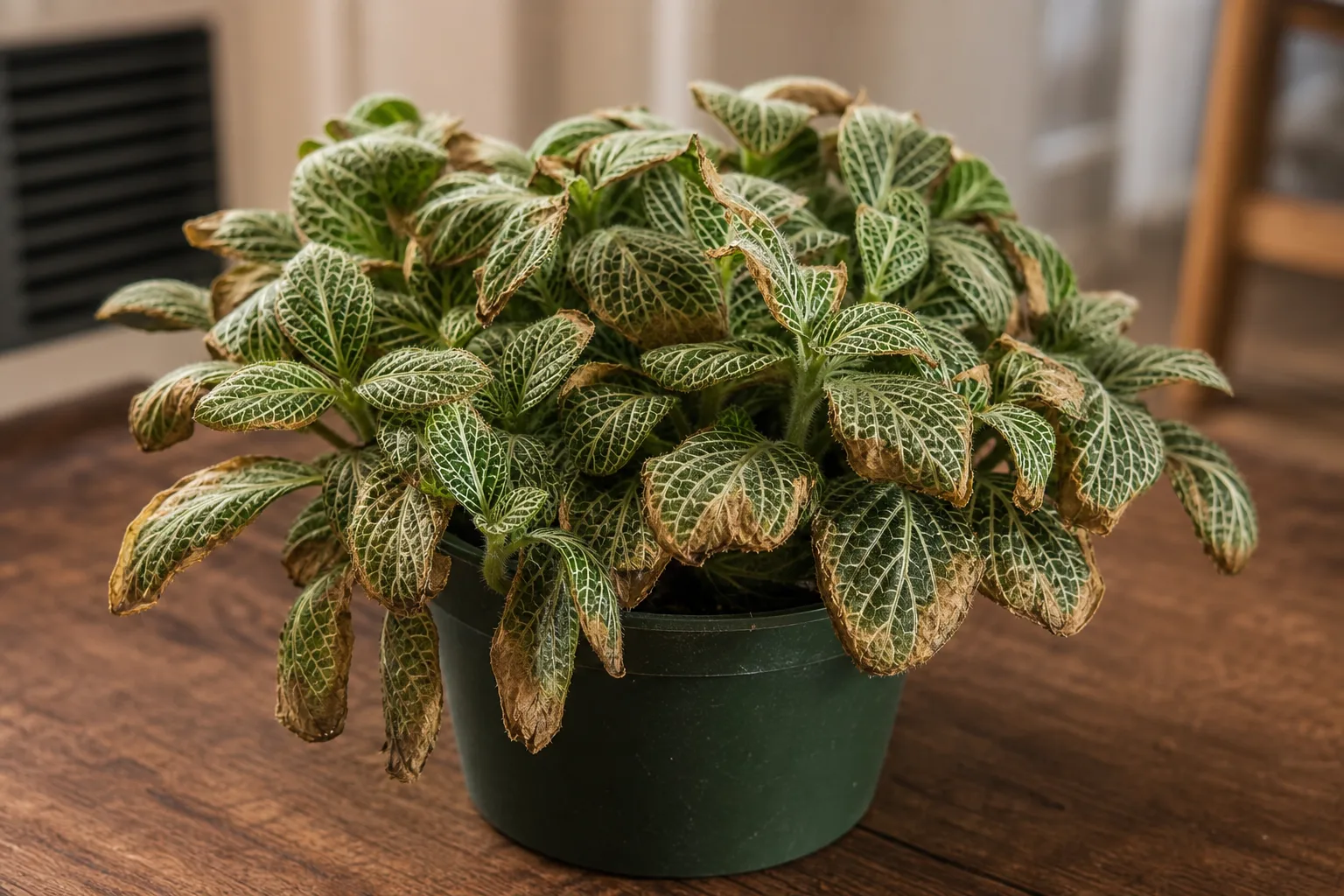
Low humidity on Fittonia shows as crisp brown leaf margins and faded vein contrast while soil stays moist-common when winter heating drops room air below 30% RH. Target 60%+ at leaf height (70–90% in terrariums). First step: move the pot off heating vents and run a small humidifier until a hygrometer reads at least 50% near the leaves.
Low Humidity on Fittonia: Causes, Checks & Fixes
This guide covers low humidity on Fittonia. See also the general Low Humidity guide, watering, and light pages for this plant.
Low Humidity on Fittonia: Causes, Checks & Fixes
Quick answer
Low humidity on Fittonia (Fittonia albivenis, the nerve plant or mosaic plant) shows up as crisp brown leaf margins and tips, dull vein contrast on pink- or white-veined cultivars, and slow or stunted new growth-often while the soil moisture is still correct. Winter central heating, forced-air vents, and open pots on sunny desks in dry apartments are the usual triggers indoors.
First step: move the pot off the vent path and run a humidifier until a hygrometer at leaf height reads at least 50% RH - 60%+ is the practical target for clean growth on this humidity-loving rainforest-floor species. Do not increase watering when the mix is already wet; dry-air edge burn and soggy roots need opposite fixes.
What low humidity looks like on Fittonia
On nerve plants, thin leaf margins are the first tissue to desiccate. You may see:
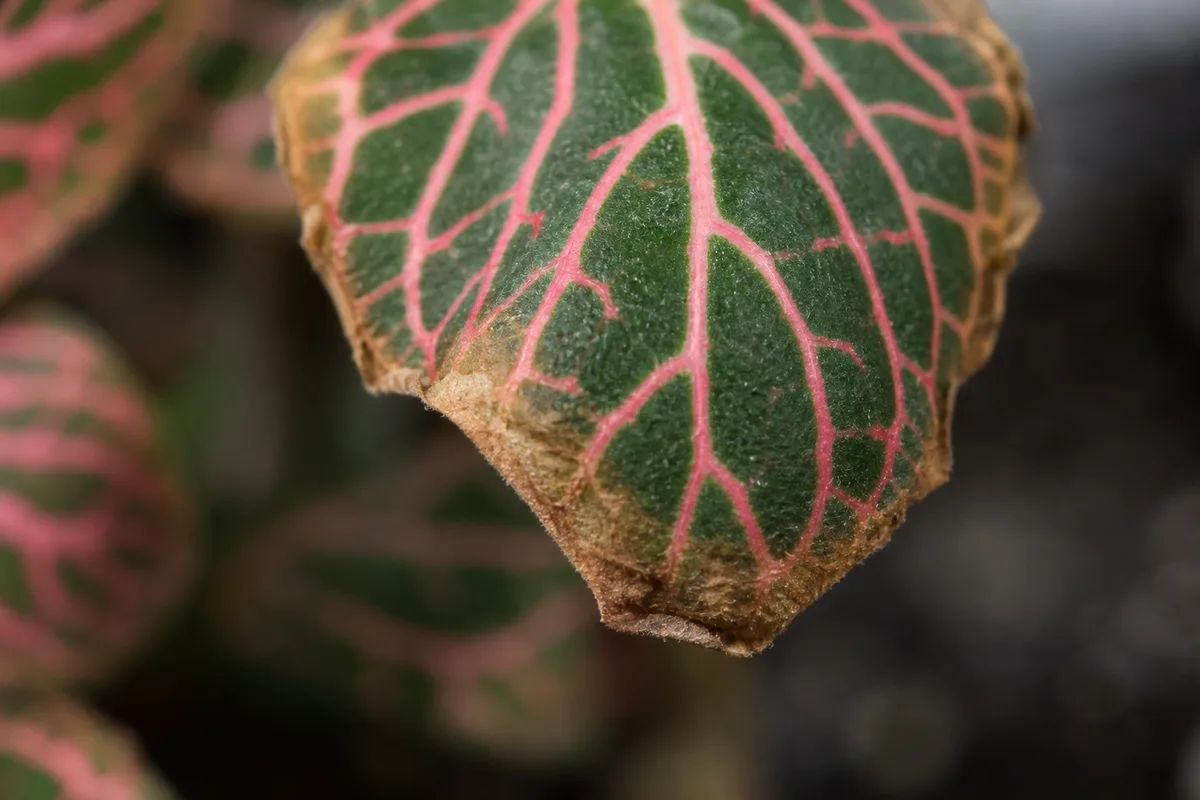
Low Humidity symptoms on Fittonia - compare with healthy tissue on the same plant.
Brown leaf margins and tips
Brown or papery edges on otherwise green, pink-, or white-veined leaves, often starting at the margin and tip while the center stays firm. Damage is dry and crispy, not soft and yellow. Outer leaves near a heat source or draft show it first. This pattern overlaps with brown tips from salt buildup or tap water-humidity and water quality can both contribute.
Faded vein contrast
The ornamental value is contrasting vein networks on dark green leaf fields. When air is chronically dry, white veins wash to cream, pink veins dull to faint rose, and the leaf reads flat even though it is not wilted. This can overlap with not enough light-humidity fixes restore crisp margins; light fixes restore vivid vein color.
Slow or stunted new growth
New leaves may stay small, pale, or slow to expand when ambient RH is too low during the push. Active spring and summer growth is most sensitive; a flush that opens cleanly in a terrarium may stall in a dry room even with correct watering.
Full mat collapse (usually thirst-not humidity alone)
Fittonia’s famous dramatic wilt-the whole mat flopping flat-is normally a drought signal, not dry air alone. If the plant collapses and the pot is light with dry soil, read underwatering or wilting first. Low humidity more often browns edges before the entire plant faints.
Spider mite risk in dry heat
Warm, dry indoor air favors spider mites. Fine stippling, webbing on leaf undersides, and accelerating edge browning in heated winter rooms often mean mites-not humidity alone-need treatment after you raise RH.
Why Fittonia is so sensitive to dry air
Rainforest-floor biology
Fittonia evolved on the humid rainforest floor of Peru and Colombia, where leaf litter stays damp and ambient humidity rarely dips. The plant has thin, soft leaves with little water storage-nothing like a succulent. When air is desert-dry, transpiration pulls moisture from leaf edges faster than roots can replace it, even when the mix is moist.
Open pot vs terrarium context
The RHS recommends Fittonia for bottle gardens, terrariums, and bathrooms because enclosed or steamy spaces hold moisture the plant cannot maintain on an open desk. In a closed terrarium, humidity often sits at 70–90% without extra equipment. Very dry winter room air-below about 30% RH-produces brown tips and margins even when you water correctly, as described in the Fittonia overview humidity section.
Heating vents and draft lines
Hot, dry air from heat vents, radiators, and forced-air registers creates a microclimate far drier than the rest of the room. Pots within a few feet of a vent lose edge moisture within days. Cold winter glass behind the foliage adds localized dryness at night.
How to confirm low humidity (ordered checklist)
Work through these checks before treating leaf damage alone:
- Hygrometer at canopy level - Place a digital hygrometer beside the leaves, not on a distant shelf. Readings below 45–50% during active growth support low humidity as a primary cause. Target 50% minimum; 60%+ for recovery in open pots.
- Placement audit - Is the pot within 3–4 feet of a heating vent, radiator, fireplace, or AC blow? Does cold winter glass sit behind the foliage at night? Move off the draft line and re-check RH in 24 hours.
- Soil moisture cross-check - Press a finger into the top inch of mix. Dry, light pot with crisp margins may combine underwatering and dry air. Wet, heavy pot with crisp margins points to dry-air transpiration stress, not thirst-do not add water.
- Wilt vs edge pattern - Whole-plant flop on dry soil that recovers within an hour after watering is thirst, not humidity alone. Firm plant with only brown margins fits dry air better.
- Pest inspection - Tap a leaf over white paper; orange specks or webbing mean spider mites-common when RH stays low for weeks.
- Season and heat timeline - Symptoms appearing weeks after heating season starts fit environmental RH drop better than sudden root failure.
First fix for Fittonia
Move the pot away from heating vents, radiators, and AC drafts, then run a cool-mist humidifier until RH at leaf height holds at least 50% (aim for 55–60% in recovery).
Position the humidifier 3–6 feet from the plant so foliage does not stay constantly wet. Empty and clean the reservoir regularly to avoid mineral dust on veined leaves. This single environmental correction addresses the most common Fittonia-specific cause-dry microclimate-without stacking Fittonia repotting guide, fertilizer, or extra watering on a stressed plant.
If RH was below 40% for a long period, add a pebble tray (water below pot bottom) or group nearby tropicals as secondary support after the humidifier stabilizes readings. For chronic dry-room failure, a closed or semi-closed terrarium is the most reliable long-term fix-the RHS specifically recommends terrarium culture for this species.
Step-by-step recovery
After the initial move and humidifier:
- Hold watering steady - Follow the Fittonia watering guide: water when the top inch begins to dry, never on a calendar alone. Do not compensate for crispy leaves by watering wet soil.
- Run the humidifier daily through the heating season; grouping plants, pebble trays, and terrariums supplement but rarely replace a humidifier in dry winters.
- Consider terrarium transfer if open-room humidity cannot stay above 50% despite a humidifier-Fittonia is among the best closed-jar candidates because it stays small and roots shallowly.
- Inspect undersides every few days for two weeks; treat active mites before they spread-raising humidity helps prevention but does not erase an established infestation.
- Trim fully brown, papery margins with clean scissors once conditions stabilize; leave partially damaged green tissue until new growth confirms recovery.
- Crack terrarium lids briefly weekly if condensation runs constantly-stagnant ultra-humid air can invite grey mould on leaves; balance moisture with gentle air exchange.
Recovery timeline
Stabilization often appears within one to two weeks once RH stays above 50% and drafts are removed-new tips may stay green before old margins change. New leaves opening without crisp edges is the best success signal; expect 2–4 weeks for the first clean flush after a dry winter.
Old crispy margin tissue does not revert to green-judge progress by new growth, firm stems, and stable RH readings, not by old leaf appearance. Severe mite damage or combined root rot on Fittonia may need several weeks and targeted treatment beyond humidity alone.
Lookalike symptoms to rule out
Low humidity overlaps with several other Fittonia problems:
| Symptom pattern | Soil / placement clue | Likely cause | First direction |
|---|---|---|---|
| Crisp brown margins only, hygrometer low, near vent | Moist or normal soil | Low humidity | Humidifier + move off draft |
| Whole plant flat, light dry pot, recovers after soak | Top inch dry | Underwatering / wilting | Thorough soak + drain |
| Yellow lower leaves, wet soil, sour smell | Stays wet days | Overwatering / root rot | Stop water; inspect roots |
| Bleached patches on sun-facing leaves | South or west glass | Sun scorch | Move to Fittonia light guide |
| Fine webbing, stippling, warm dry sill | Any moisture | Spider mites | Raise RH + treat pests |
| Veins dull, stretched stems, far from window | Normal moisture | Not enough light | Brighter indirect spot |
What not to do
Do not increase watering because leaf edges look dry while soil is wet-that deepens overwatering risk on this moisture-sensitive species. Do not rely on misting alone as your humidity strategy; mist is short-lived and can leave foliage wet too long without airflow.
Do not fertilize a humidity-stressed Fittonia before RH and placement are corrected-salts can add brown margins mistaken for dry air. Do not stack repotting, heavy pruning, and pesticide on the same day after you start a humidifier; change one variable at a time so you can read the plant’s response.
Avoid sealing a saturated pot inside glass without drainage-excess standing water promotes rot even when air humidity is high.
Fittonia humidity care cross-check
Stable nerve plants combine bright indirect light, consistent root-zone moisture, and adequate ambient humidity. The overview guide targets 60–90% RH for best growth; 50% is a workable floor in average homes if edges are monitored. Terracotta dries faster than plastic-humidity matters even when you water correctly.
In winter, heating dries air faster than the plant slows water use early in the season-start the humidifier when the furnace kicks on, not after margins crisp. In summer, AC vents replace radiators as the draft source-re-map placement when seasons change.
How to prevent low humidity next time
Keep a hygrometer at leaf height year-round; log readings when heat or AC runs. Run a right-sized humidifier in the plant room from fall through spring. Group tropical houseplants to share transpiration, and use pebble trays as backup in borderline rooms per winter houseplant humidity guidance.
Scout weekly for mites and edge browning during dry months. Review the watering guide seasonally-dry-air stress tempts extra water that Fittonia cannot safely absorb when soil is already moist. When buying from a humid greenhouse, acclimate gradually rather than placing directly above a heating vent.
When to worry
Escalate if RH stays above 55% for two weeks yet margins keep spreading, webbing and stippling multiply (mites need direct treatment), or soft stem bases and sour soil appear alongside crisp tips-that is likely root failure, not air alone. Crown softness or collapse needs immediate root inspection regardless of humidity fixes.
Firm stems, clean new growth at tips, and stable RH after vent removal are low-urgency positive signs. Cosmetic edge damage on old leaves is acceptable if new growth arrives healthy.
Conclusion
Low humidity on Fittonia is an environmental problem with a clear fix path: confirm RH at the leaves, remove vent and radiator drafts, and sustain 50–60%+ with a humidifier or terrarium before you change watering or feed. Crisp margins, faded veins, and winter mite flare-ups all improve when air moisture matches this rainforest-floor species’ biology. Use new clean growth-not old browned edges-as your recovery benchmark, and cross-check soil moisture so dry air does not push you into overwatering a plant that already has enough water in the pot.
When to use this page vs other Fittonia guides
- Fittonia watering guide - Use for routine moisture checks before assuming low humidity is the main issue.
- Fittonia problems hub - Browse all 16 common issues on this species.
- Brown Tips on Fittonia - Different entry point when symptoms overlap with low humidity.