Wilting on Fittonia: Causes, Checks & Fixes
Quick answer
Fittonia wilts faster than almost any houseplant-usually from dry soil, but also from root rot on wet mix or low humidity. First step: lift the pot; if light and dry, bottom-water thoroughly and watch for recovery within 30–60 minutes. If heavy and wet, stop watering and inspect roots.
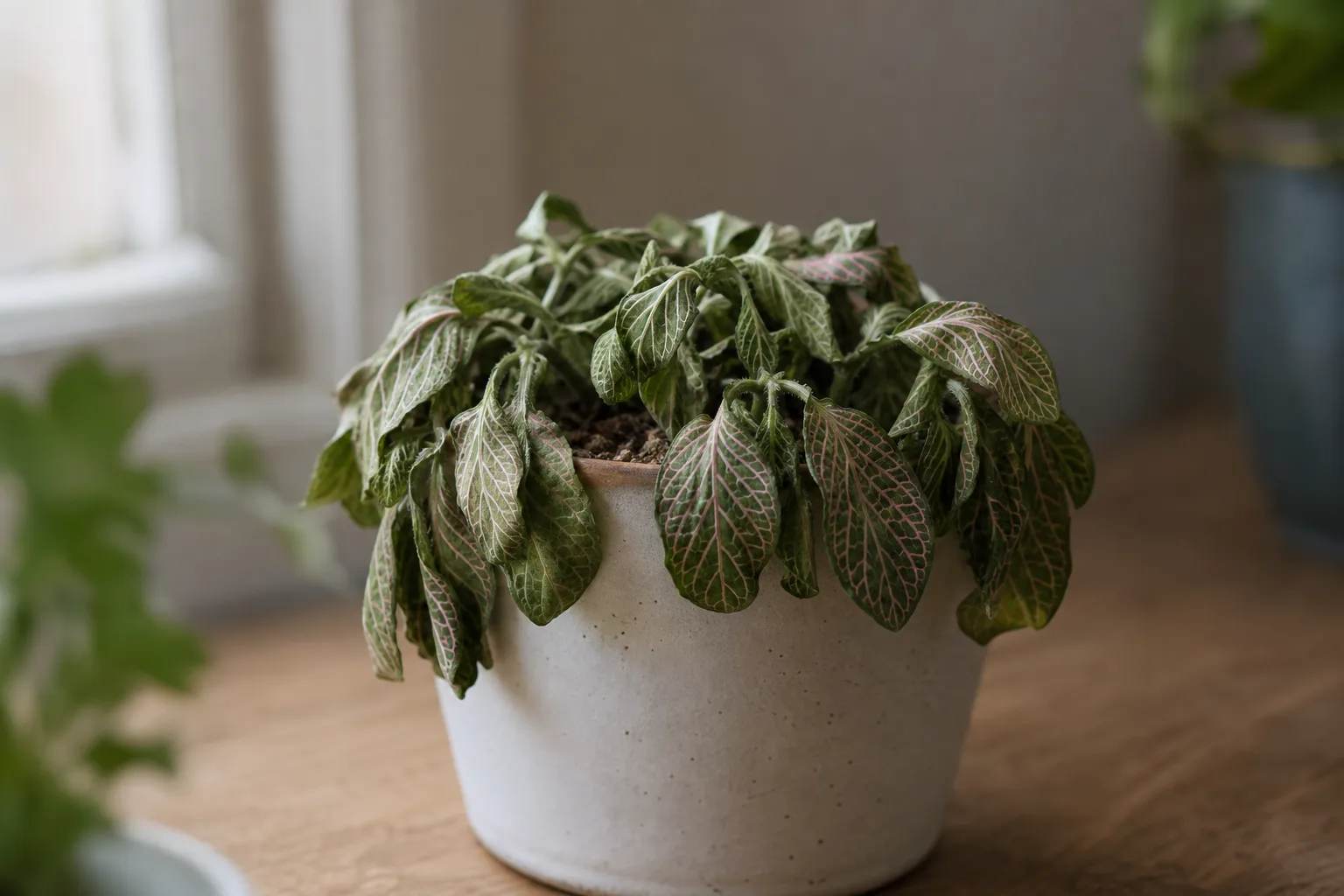
Wilting on Fittonia: Causes, Checks & Fixes
This guide covers wilting on Fittonia. See also the general Wilting guide, watering, and light pages for this plant.
Wilting on Fittonia: Causes, Checks & Fixes
Quick answer
Fittonia (Fittonia albivenis, nerve plant) is famous for dramatic collapse-stems and veined leaves flop flat as if the plant died. In most homes this means dry soil, and the plant bounces back quickly when provided with moisture. But Fittonia also wilts on wet rotting roots and in dry winter air, so do not water automatically.
First step: lift the pot and press your finger into the top inch of mix. A light dry pot gets a thorough bottom-water until the surface moistens, then full drainage. Wait 30–60 minutes. If a heavy wet pot wilts without recovery, stop watering and inspect roots-see overwatering and root rot. Full species context: Fittonia overview.
What wilting looks like on Fittonia
Fittonia communicates stress through the entire mat of foliage at once, not one leaf at a time. That whole-plant flop is the signature nerve-plant tell-unlike a peace lily that droops leaf by leaf, or a pothos that softens gradually, Fittonia often looks dead within an afternoon.
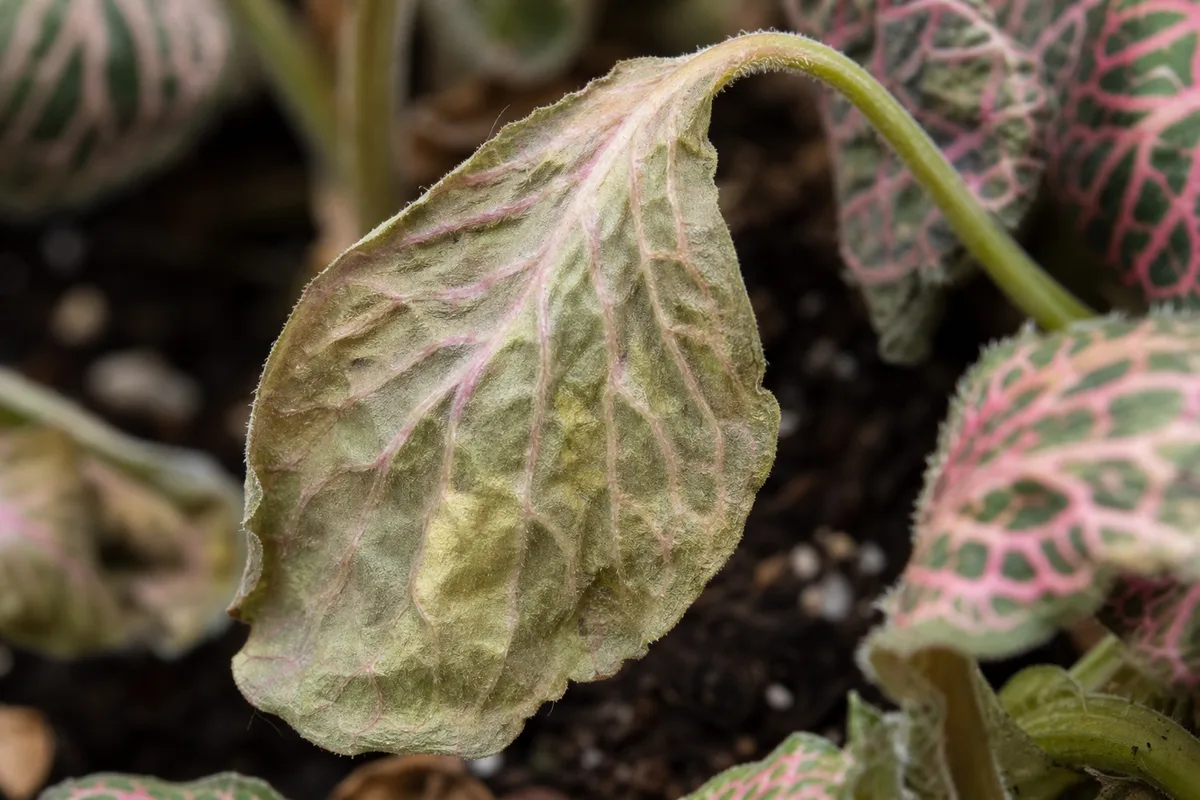
Wilting symptoms on Fittonia - compare with healthy tissue on the same plant.
Classic thirst wilt (most common):
- Whole plant collapsed-stems and leaves lie flat against the pot rim
- Pot feels light; top inch of mix is dusty dry
- Leaf tissue feels thin and papery; vein color looks dull
- Often after a hot windowsill day, missed watering, or terrarium left open too long
Wilt on wet soil (root failure):
- Same dramatic collapse but pot feels heavy and mix clings when probed
- Sour smell when you lift the pot; stems stay limp hours after you watered
- Overwatering can cause wilting mistaken for underwatering-roots cannot absorb water even when mix is saturated
Low humidity wilt:
- Edges crisp or whole stems droop while mix is moderately moist
- Common above radiators, AC vents, or in winter rooms below 40% RH
- Fittonias need moist air and high humidity; thin leaves lose turgor fast in dry air
Heat stress:
- Wilt in afternoon on a south-facing sill even when soil was moist that morning
- Paired with faded vein color and warm pot surface
Wilting vs. other Fittonia problems
| Pattern | Pot weight | Top inch of mix | Recovery after water | Likely cause |
|---|---|---|---|---|
| Flat collapse | Light | Dry | Perks in 30–60 min | Underwatering / thirst |
| Flat collapse | Heavy | Wet, clings | No recovery in hours | Root rot / overwatering |
| Limp edges, firm center | Normal | Moist | Partial; humidity helps | Low humidity |
| Afternoon flop | Normal | Moist | Recovers overnight | Heat + transpiration |
| Slow limp new growth | Normal | On schedule | N/A | Low light (see not enough light) |
For the dry-pot branch in detail, see underwatering on Fittonia. For wet-soil rescue, see overwatering.
Lookalike symptoms to rule out
Underwatering - The most common wilt mimic on Fittonia because the collapse looks identical from across the room. Confirm with pot weight and a dry top inch before you soak. Thirst wilt perks up within an hour of a thorough drink when roots are still healthy.
Overwatering and root rot - Limp leaves on wet, heavy soil; yellowing lower leaves; sour smell from the mix; fungus gnats hovering at the surface. If the potting medium is moist but the plant is wilted, inspect the roots-rotted roots cannot move water upward.
Low humidity alone - Firm, well-watered plants with brown leaf edges but no dramatic whole-plant flop. Humidity below 50% causes margin browning even when soil moisture is fine. Underwatering and low humidity often overlap on Fittonia; see low humidity.
Not enough light - Slow, gradual limpness in new growth at stem tips rather than instant mat collapse. Leaves may look pale or stretched. Wilt from thirst hits the whole plant at once; light stress builds over weeks.
Direct sun scorch - Bleached or burned patches on leaves exposed to afternoon sun. Fittonia needs bright indirect light; direct rays increase water loss and damage tissue.
Drooping vs. wilting - Drooping leaves on Fittonia often describe the same collapse with slightly less panic. If stems are soft but soil is on schedule, check humidity and heat before assuming thirst.
Why Fittonia wilts so easily
Fittonia evolved on the tropical rainforest floor of Peru and Colombia with consistently damp leaf litter and high ambient humidity. It has thin leaves with minimal water storage-nothing like a succulent. When roots lag behind transpiration, turgor collapses within hours.
Missed watering windows. Small terrarium pots in bright light can go from moist to bone dry in two days when indoor humidity drops. Calendar watering ignores how fast your room dries the mix.
Fear of overwatering. Because Fittonia is sensitive to soggy soil, many growers wait too long between drinks. The dramatic wilt triggers panic watering daily-which swings into root rot.
Low humidity in heated rooms. Winter forced-air heat pulls moisture from large leaf surfaces faster than shallow roots can replace it, even when mix feels adequate.
Root rot from chronic wetness. Dense peat, closed terrariums without airflow, and saucers left full keep roots anaerobic. Wilt on wet soil is the classic failed-root paradox.
Terrarium open-lid dry-down. Opening a sealed jar for maintenance or pruning vents humidity fast. The surface can go from steamy to dusty within a day while glass walls still look foggy-always probe the mix, not the glass.
How to confirm the cause
- Lift the pot before you pour water. A light pot indicates dry soil; heavy means wet-soil branch.
- Probe the top inch. Dusty dry throughout means underwatering. Wet clinging soil means do not add water.
- Run the recovery test. Water thoroughly only if dry; wait 30–60 minutes. Perked stems confirm thirst. No change on wet mix means inspect roots.
- Check humidity and placement. Hygrometer near the plant; note heating vents, open terrarium lids, and hot window exposure.
- Smell the soil when lifting the pot. Sour odor on wet mix escalates to root inspection.
- Inspect new growth at the center. Firm emerging leaves after rehydration mean roots still function.
The first fix to try
If the pot is light and dry: bottom-water in a tray until the surface feels evenly moist, then lift out and drain completely. Use room-temperature water. Do not repot or fertilize before the recovery test.
If the pot is heavy and wet: stop watering. Move to bright indirect light with airflow. Unpot only if stems stay limp more than half a day on damp mix-trim mushy roots and repot into fresh airy mix per the root rot guide.
If mix is moist but air is dry: raise humidity above 60% with a pebble tray, terrarium cover, or humidifier; move away from vents. Water only if the top inch actually dries.
Step-by-step recovery
After you confirm the cause and apply the first fix:
- Bottom-water if dry - Set the pot in a tray of room-temperature water until the surface moistens, then lift and drain fully. Hydrophobic old peat may need a second soak the same day.
- Start the 30–60 minute clock - Note the time. Thirst wilt should show upright stems within that window in a warm room. Cool rooms may take a few hours.
- Move off heat sources temporarily - Shift away from radiators, sunny south glass, and AC vents while the plant rehydrates. Heat pulls moisture from leaves faster than roots can replace it.
- Raise humidity for 48 hours - A clear bag tent, pebble tray, or terrarium lid helps reduce further edge crisping while roots recover. Remove cover once stems stand upright.
- Trim only after firming - Wait until leaves re-turgidify before snipping crispy margins. Green tissue will not turn brown back to green.
- Inspect roots only if wilt persists - Slide the plant out if it stays limp on moist soil after 12–24 hours. Firm, pale roots mean keep diagnosing humidity or heat. Mushy brown roots mean rot treatment, not more water.
- Adjust your check routine - Mark how many days until the top inch dries again. That interval becomes your personal watering cue, aligned with the watering guide.
Recovery timeline and what to watch
Thirst wilt usually resolves within 30–60 minutes after proper rehydration in a warm room; cool conditions may take a few hours. Crispy brown margins from repeated dry spells are permanent-trim after new growth looks firm.
Improvement: stems stand upright; vein color brightens; new center leaves emerge firm within a week.
Worsening: limp stems past 12 hours on wet soil; soft crown tissue; sour smell intensifies; repeated daily collapse even with consistent watering-often root damage or chronic low humidity.
Repeated fainting weakens long-term vigor even when the plant recovers each time. Adjust rhythm in the watering guide so the top inch never goes fully dry for days during active growth.
When to worry
Treat as urgent when the plant is fully collapsed, soil is dusty dry several inches down, and the pot sits in hot direct sun or above a heat register. Severe dehydration combined with heat can desiccate fine roots beyond recovery.
Same-day root inspection when stems feel soft at the soil line on wet mix, the soil smells sour, or wilt persists more than half a day on a heavy wet pot after prior watering.
Moderate concern: once-daily wilt that recovers after each watering. Manageable thirst-not an emergency-but your check routine is too reactive. Shift to watering before collapse, not after.
Lower concern: one missed watering on an otherwise healthy pot with firm roots. A single bottom-water and humidity bump usually suffice.
Replace or propagate from healthy stem tips if the base is bare, stems are shriveled, and no new growth appears after two weeks of corrected watering and humidity. Fittonia roots easily from cuttings when tissue is still firm.
Mistakes to avoid
- Do not water automatically when you see collapse-confirm dry vs wet first
- Do not add more water when wilt persists on a heavy wet pot
- Do not fertilize a collapsed plant before confirming root health
- Do not stack repot, prune, and pesticide on the same day as a wilt crisis
- Do not ignore low humidity when mix is moist but stems keep drooping
- Do not rely on misting to fix dry soil-a few minutes of leaf moisture does not replace root-zone water
How to prevent wilting next time
Keep the compost moist by watering frequently-water when the top inch just begins to dry, not on a fixed weekly calendar. Maintain ambient humidity at 60% or higher for terrarium and open-pot culture.
Use pots with drainage sized to the shallow root mass. Avoid hot direct sun that spikes transpiration. Check mix every few days during spring and summer growth; slow down in winter but never let the root ball go bone dry for extended periods.
Group Fittonia with other humidity-loving plants to create a slightly moister microclimate, but do not crowd pots so tightly that airflow stalls.
Conclusion
Wilting on Fittonia looks terrifying and usually is not fatal. The nerve plant’s dramatic flop is a moisture alarm, not a death sentence, when soil is dry and roots are sound. Lift the pot, run the 30–60 minute recovery test, and branch to root inspection only when the mix is wet and limp. That single diagnostic fork saves healthy Fittonias from drowning and dying ones from one more mistaken drink.