Drooping Leaves on Fittonia: Causes, Checks & Fixes
Quick answer
Drooping leaves on Fittonia usually mean thirst collapse on dry mix, limp foliage on wet soil from root stress, low humidity, or cold air - not one generic watering mistake. First step: push your finger into the top 1–2 cm of mix and lift the pot before you water.
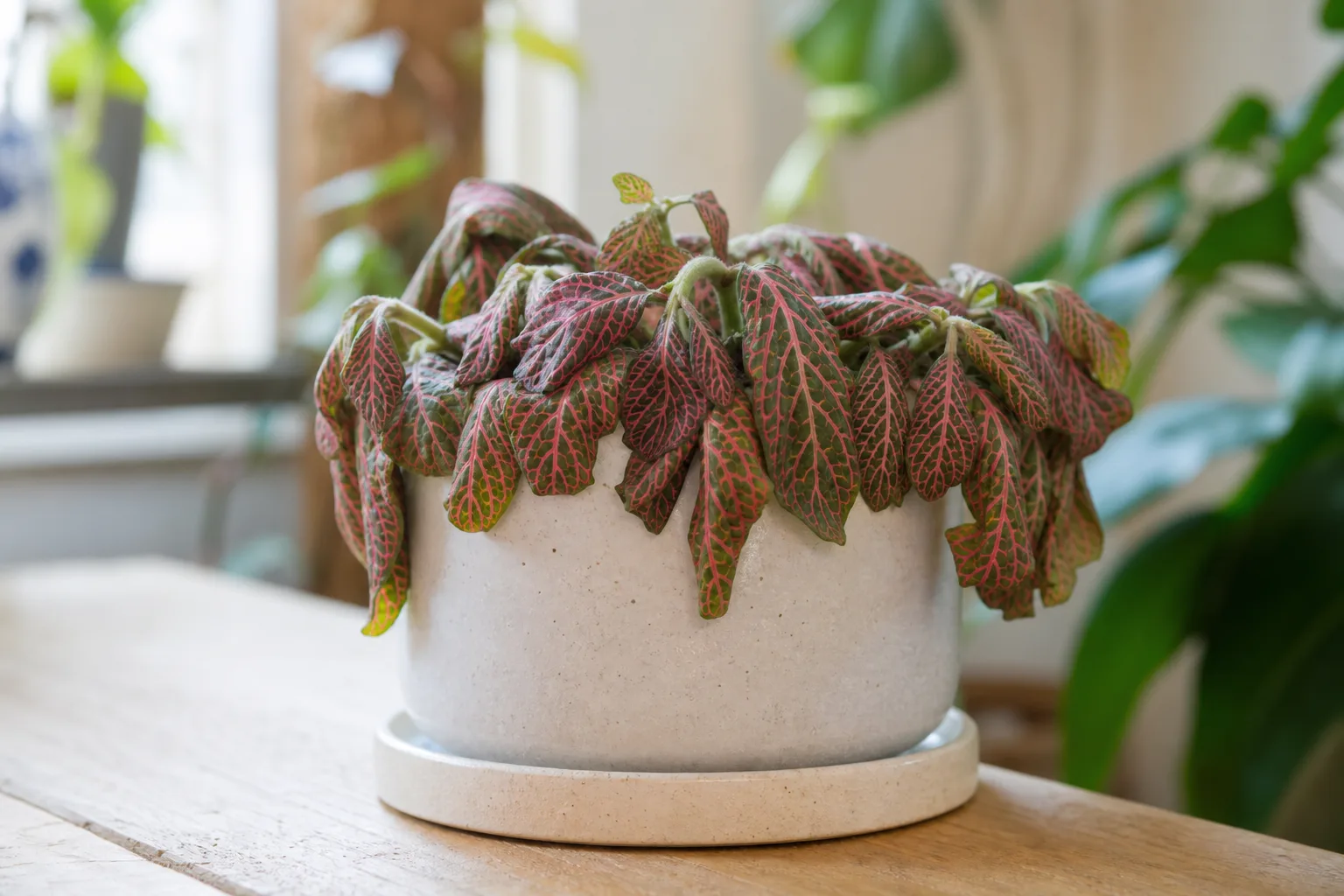
Drooping Leaves on Fittonia: Causes, Checks & Fixes
This guide covers drooping leaves on Fittonia. See also the general Drooping Leaves guide, watering, and light pages for this plant.
Drooping Leaves on Fittonia: Causes, Checks & Fixes
Quick answer
Drooping leaves on Fittonia (Fittonia albivenis, the nerve plant or mosaic plant) almost always trace to one of four branches: thirst collapse on dry mix, limp foliage on wet soil from root stress, low-humidity limpness with brown edges, or cold-draft damage. Fittonia is famous for theatrical drought signals, but drooping is a broader symptom - partial limpness, slow sagging, or leaves that hang without the full mat collapse.
First step: push your finger into the top 1–2 cm of mix and lift the pot. A light, dry pot with a flattened plant needs one thorough drink. A heavy, wet pot with limp leaves needs you to stop watering and check roots - not another soak. If soil moisture looks fine but leaves hang with crispy brown margins, check humidity at leaf height before you touch the watering can.
What drooping looks like on Fittonia
Healthy Fittonia holds small oval leaves upright on short stems, vein pattern crisp against deep green. Drooping changes that posture - but the pattern tells you which branch to follow.
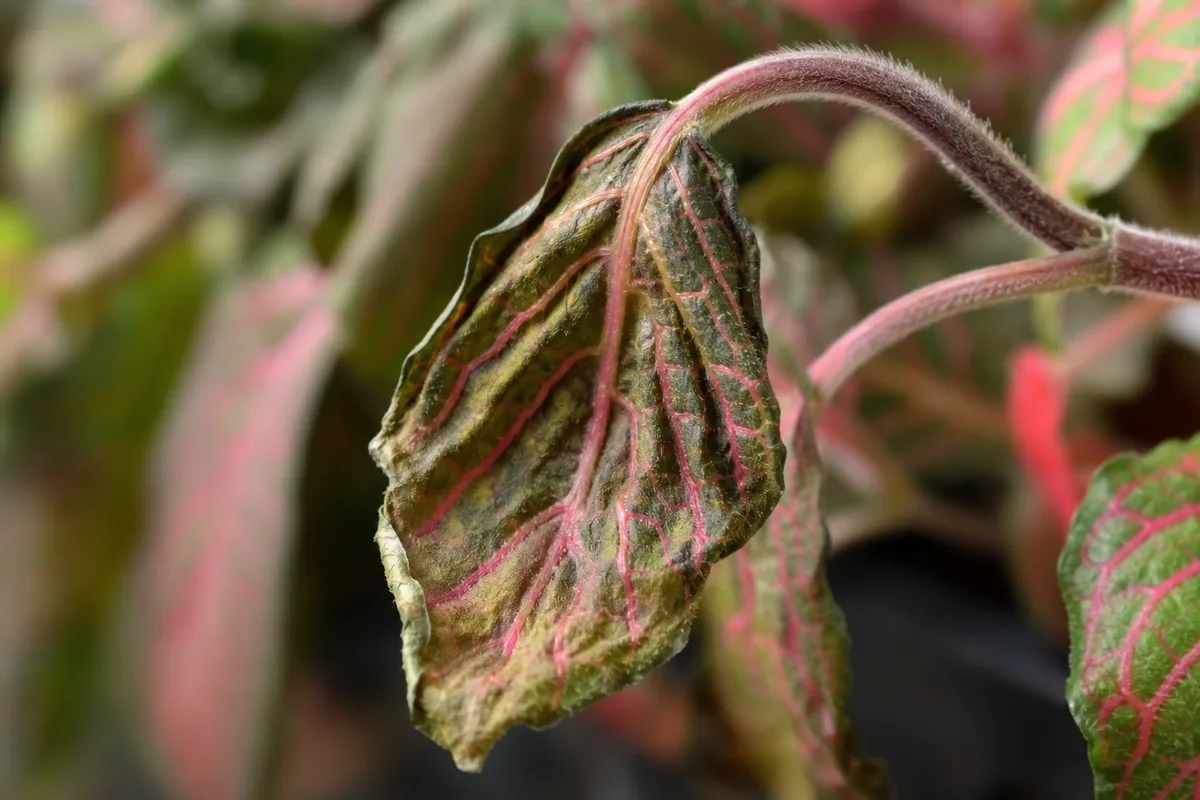
Drooping Leaves symptoms on Fittonia - compare with healthy tissue on the same plant.
Dramatic full collapse on dry mix (thirst)
The entire mat flops flat as if dead - sometimes within hours on a warm day. Leaves feel thin and papery; the soil surface is pale, cracked, or pulls away from the pot edge. The pot feels very light when lifted. This is Fittonia’s signature drought alarm. After a thorough watering, most specimens stand back up within 30 minutes to a few hours - provided roots are still healthy. Lack of water causes fittonias to droop or wilt, but they soon recover once watered thoroughly.
Limp leaves on wet soil (overwatering / root failure)
Leaves hang limp while the mix stays dark, cool, and heavy. Lower leaves may yellow before the whole plant sags. There is no crisp dry edge - foliage feels soft or cool, not papery. Watering again does not perk the plant; it often worsens decline. A wilted appearance with moist soil can indicate damaged roots. A faint sour smell from drain holes or fungus gnats near the surface strengthens the overwatering diagnosis. See the overwatering guide and root-rot guide for wet-soil branches.
Limp foliage with brown edges in dry air (low humidity)
Leaves droop or curl slightly while soil moisture is technically correct - the top layer may feel like a wrung-out sponge, not dust. Brown tips and margins appear on the same limp leaves, especially in heated winter rooms. Fittonias need moist air, otherwise their leaves turn brown. The plant is losing water from foliage faster than roots can supply it. More watering does not fix this; it risks wet-soil rot. Cross-check the low-humidity guide.
Darkened limp leaves after cold draft or AC blast
Fittonia collapses or droops after a night near a cold window, an AC vent, or an exterior door in winter. Foliage may look darkened or dull, not papery-dry. Watering does not restore firmness if the tissue was chilled below the species’ comfort band. Keep fittonias at 15°C (60°F) or higher, and out of cold draughts. Warmth away from the draft is the first fix - not a deep soak on already-moist soil.
Partial droop after repotting or a move
Only outer stems sag while the crown still looks firm - common for one to two weeks after repotting, division, or a move from a humid shop to a dry desk. Roots were disturbed or ambient humidity dropped. Keep humidity high and avoid stacking extra stressors.
Drooping vs. wilting on Fittonia - when to use this page
These terms overlap, but search intent differs.
| Term | What owners usually mean on Fittonia | Best page |
|---|---|---|
| Wilting | Sudden full collapse; “my nerve plant died overnight” | Wilting guide - dramatic thirst rebound and wet-soil false wilt |
| Drooping | Leaves hang limp without full collapse; slow sag; wet-soil limpness; humidity limpness | This page - broader limp-leaf diagnosis |
| Underwatering | Confirmed dry root zone, repeated collapse cycles | Underwatering guide |
| Overwatering | Chronic wet mix, yellow lower leaves, gnats | Overwatering guide |
If your plant fully flattened on bone-dry mix and you need the 30–60 minute recovery test spelled out, start with wilting. If leaves hang limp on wet soil or droop with brown edges despite moist mix, stay on this page.
Why Fittonia leaves droop
Fittonia evolved on the humid rainforest floor of Peru and Colombia, where moisture, warmth, and filtered light stay steady. Its shallow root system and thin leaves lack drought reserves - the plant communicates stress through turgor loss (limp tissue) faster than many houseplants.
Underwatering removes turgor when fine roots cannot supply water. Fittonia responds with complete collapse rather than gradual yellowing.
Overwatering kills roots in saturated mix. The plant wilts while soil stays wet because roots in saturated soil lose oxygen and function - the opposite of thirst.
Low humidity pulls moisture from leaf margins in dry heated air. Roots may keep soil moist while foliage still droops and browns at edges.
Cold drafts damage cell function below about 60°F (15°C). Limp darkened leaves after a chill do not respond to watering alone.
Repot shock interrupts water uptake temporarily. Outer leaves droop even when you water correctly.
Terrarium overwatering produces limp leaves in a sealed jar where condensation hides how saturated the substrate became - fittonias in terrariums need less frequent watering, but standing water at the bottom still rots roots.
The Fittonia overview covers normal moisture rhythm, terrarium culture, and dramatic wilt-and-recover behavior in depth.
Lookalike symptoms to rule out
Leggy stretch vs. droop - Stems reaching toward a window with faded vein color and only slight limpness often mean not enough light, not drought. Move to brighter indirect light before increasing water.
Brown tips without droop - Edge burn alone may be fertilizer salt or low humidity without full limpness. See brown tips if margins crisp while leaves stay mostly firm.
Yellow lower leaves only - Senescence of old leaves at the mat edge is normal. If the crown is firm and only bottom leaves hang, you may not have a crisis. Widespread limpness with yellowing on wet soil is different - investigate roots.
Pest-related limpness - Spider mites or mealybugs on creeping stems can weaken foliage before obvious webbing or cottony clusters appear. Check leaf undersides and axils if droop persists despite correct moisture and humidity.
How to confirm the cause
Work through these checks in order. One clear branch should emerge before you change care.
- Top 1–2 cm moisture - Dry, dusty surface with light pot confirms thirst. Damp or wet surface with limp leaves suggests root failure, not underwatering.
- Pot weight - Lift before and after your last watering memory. Light plus droop equals dry. Heavy, cool pot plus droop equals oversaturated mix or dead roots.
- Recovery test (dry branch only) - If mix is dry and plant collapsed, water thoroughly once and wait 30–60 minutes. Perk-up confirms thirst. No perk-up on wet soil means stop watering and inspect roots.
- Leaf texture - Papery, crisp edges on dry mix = drought. Soft, cool, yellowing leaves on wet mix = rot habitat. Brown margins with moist soil = humidity branch.
- Humidity at leaf height - Below about 40% RH in a heated room with limp leaves and brown edges points to dry air - even when soil is correct.
- Temperature and placement - AC vent, winter window ledge, or radiator blast in the last 24–48 hours explains cold-draft droop.
- Terrarium context - Fogged glass with limp leaves often means substrate stayed wet while air looked humid. Crack lid for airflow; check drainage layer.
- Recent repot or move - Droop starting within days of transplant narrows to shock or humidity drop, not mystery disease.
- Smell and crown feel - Sour odor, mushy stem base, or soft crown on wet soil = urgent root-rot escalation.
Dry-soil vs. wet-soil droop matrix
| Signal | Dry mix (thirst) | Wet mix (root stress) | Low humidity | Cold draft |
|---|---|---|---|---|
| Pot weight | Light | Heavy | Normal | Normal |
| Surface mix | Pale, dusty | Dark, cool, damp | Moist | Moist |
| Leaf feel | Papery, thin | Soft, may yellow | Limp + brown edges | Darkened, limp |
| After one deep water | Perks in 30 min–few hrs | Stays limp or worsens | Slow improvement | No perk until warm |
| First fix | Thorough watering | Stop water; check roots | Raise humidity | Move off draft |
First fix for Fittonia
Do not water until you know which branch you are on. Adding water to a drooping Fittonia on wet soil is the most common mistake - it accelerates root rot while mimicking a helpful response.
If soil is dry and the plant collapsed completely
Water thoroughly with room-temperature water until a little runs from the drainage hole in open pots, then empty the saucer. Wait 30–60 minutes and watch for firm stems. One deep drink fixes thirst collapse; repeated tiny sips that wet only the surface prolong stress.
If the plant perks up, adjust your rhythm: water when the top 1–2 cm dries, not only when collapse appears. See underwatering if drought cycles repeat weekly.
If soil is wet and leaves stay limp
Stop watering. Move to brighter indirect light if the plant sits in deep shade - slow evaporation worsens wet soil. Let the top inch dry before any next drink. If leaves keep declining after the mix dries, slide the plant out and inspect roots: firm white roots are salvageable; brown mushy roots need trimming and repot into fresh airy mix per the root-rot guide.
If humidity is low with brown edge burn
Raise ambient moisture before you change watering. Run a humidifier near the canopy, move to a closed terrarium or steamy bathroom with decent light, or use a wide pebble tray with the pot elevated above the water line. Target at least 50% RH at leaf height for open pots; 60%+ is better in dry-climate homes.
If the plant sits in a cold draft
Move off the AC vent, winter window ledge, or exterior door. Keep temperatures at or above 60°F (15°C) during recovery. Do not compensate with extra water on already-moist chilled roots.
If the plant was recently repotted or moved
Hold humidity high, keep bright indirect light stable, and make one care change at a time. Skip fertilizer and avoid repotting again for several weeks. Outer droop often resolves as new root hairs form.
Step-by-step recovery by cause
Thirst recovery: Water deeply once → wait for perk-up → shift to checking top soil before collapse → reduce repeated drought cycles that stress fine roots.
Wet-soil recovery: Stop watering → let top inch dry → improve drainage and empty saucers → inspect roots if decline continues → repot only into a same-size or one-step-larger pot with fresh mix, never oversized.
Humidity recovery: Add humidifier or terrarium → trim badly burned margins if fungal risk is low → judge by new leaves with clean edges, not old damaged tissue.
Cold recovery: Warm stable spot → remove badly damaged leaves if mushy → wait for new growth before fertilizing.
Repot shock recovery: High humidity dome or bag for a week (vent daily) → consistent moisture without sogginess → no fertilizer until new leaf pairs appear.
Recovery timeline
Thirst collapse: Visible firming often within 30 minutes to a few hours after proper watering. Old leaves may stay slightly creased; new growth proves success.
Overwatering / early root stress: Leaves may firm within several days to two weeks once soil oxygen returns - if roots are still mostly intact. Severe rot can take four to six weeks before clean new leaves emerge after repot and trim.
Low humidity: Edge burn stops spreading within one to two weeks after humidity rises; existing brown tissue rarely greens up.
Cold draft: Recovery depends on damage depth - mild chill may resolve in days; frozen or mushy tissue will not recover.
Repot shock: Outer droop often clears in one to three weeks when humidity stays high and watering is consistent.
Judge recovery by new leaf pairs with crisp vein color and a firm crown, not by old limp leaves re-firming perfectly.
What not to do
Do not water a drooping Fittonia when the mix is already wet - overwatering wet soil is a common mistake when leaves look tired.
Do not fertilize a stressed nerve plant to ” perk it up.” Salt buildup browns margins further.
Do not stack repotting, heavy pruning, and pesticide on the same day as droop diagnosis.
Do not rely on calendar watering. Fittonia in a terrarium needs far less frequent drinks than an open pot on a sunny desk - check the pot, not the date.
Do not mist as your only humidity fix in a dry heated room. Brief misting does not sustain the moisture Fittonia needs at the leaf surface.
How to prevent drooping leaves on Fittonia
Match everyday care to how nerve plants actually behave indoors:
- Water when the top 1–2 cm dries in open pots - before collapse when possible.
- Keep high humidity - terrarium, humidifier, or bathroom with good light beats a dry living-room shelf.
- Use bright indirect light - appropriate light supports healthy foliage growth indoors; avoid hot afternoon sun.
- Stay above 60°F (15°C) and away from AC vents and winter window ledges.
- Plant in well-draining mix with a drainage hole; empty saucers after watering.
- In terrariums, water sparingly and maintain a drainage layer so condensation does not create a bog.
Weekly finger checks while the plant looks healthy catch drift before the mat collapses. The watering guide and overview cover rhythm details for open pots vs. sealed jars.
When to worry
Treat drooping as urgent when:
- The crown feels soft or mushy on wet soil
- Roots are brown, slimy, or foul-smelling on inspection
- Leaves stay limp after correct watering on dry mix - failure to perk suggests dead roots, not thirst
- Grey mould (Botrytis) appears on limp leaves in a sealed terrarium
- Pests coat new growth alongside rapid decline
Those patterns need root inspection, possible repot with trim, and isolation from healthy plants - not another watering cycle.
Fittonia care cross-check
| Variable | Target for firm leaves |
|---|---|
| Light | Bright indirect; no direct afternoon sun |
| Water | Moist but not soggy; top 1–2 cm dry before next drink in open pots |
| Humidity | High - terrarium ideal; 50–60%+ RH for open culture |
| Temperature | 60–80°F (15–27°C); no cold drafts |
| Soil | Moisture-retentive, well-draining peat- or coir-based mix |
| Pot | Drainage hole; avoid oversized containers |
Related Fittonia problems
- Wilting - dramatic thirst collapse and recovery test
- Overwatering - limp leaves on wet mix
- Underwatering - repeated drought cycles
- Low humidity - limp leaves with brown edges
- Root rot - wet-soil escalation
- Fittonia overview - full care hub
Related tool
Use the Plant Problem Diagnosis Tool to narrow causes for drooping leaves on this plant before changing multiple variables at once.