Brown Tips on Fittonia: Causes, Checks & Fixes
Quick answer
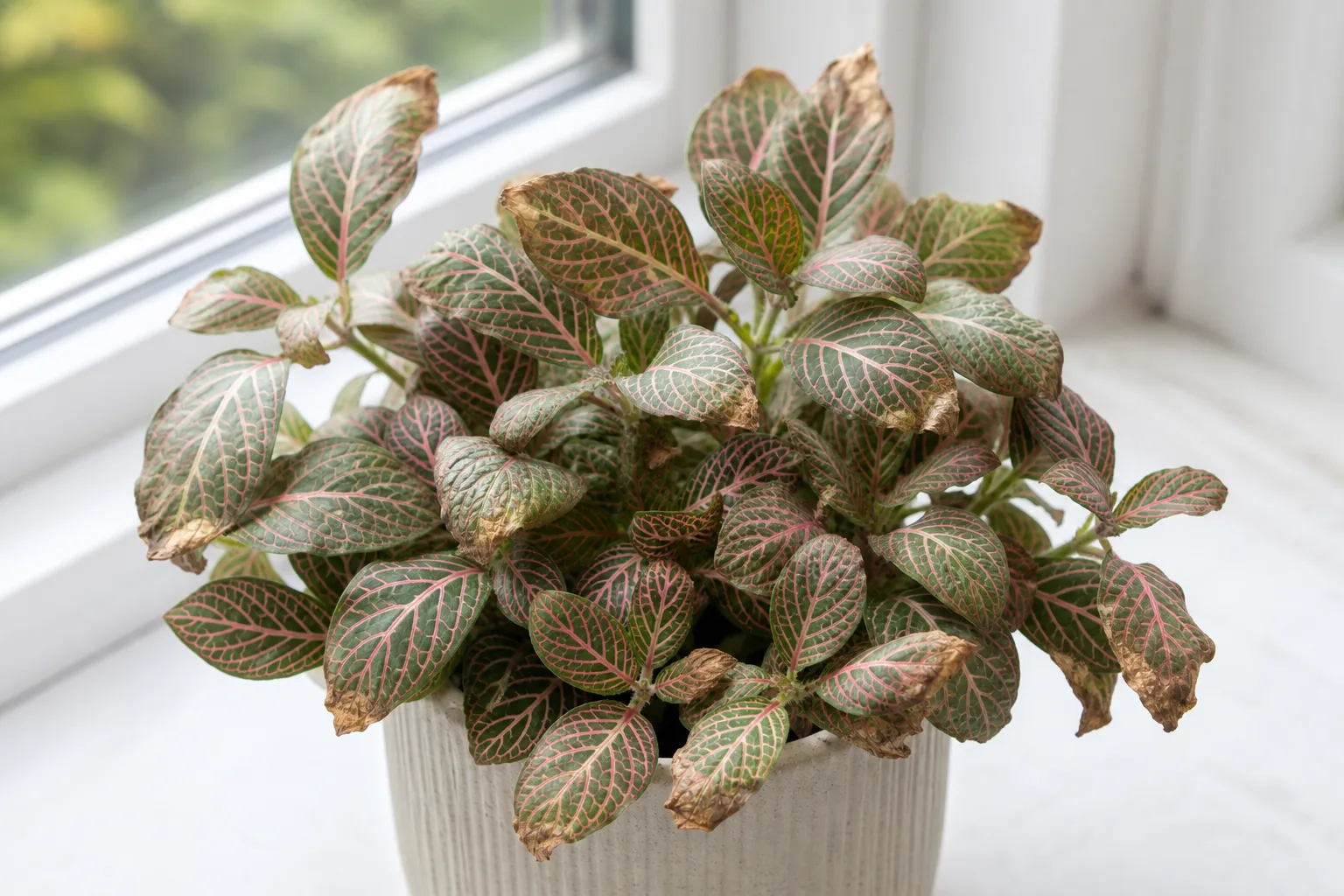
Brown tips on Fittonia usually mean dry air is pulling moisture from thin leaf edges faster than roots replace it-often below 60% humidity, sometimes worsened by missed watering or a heat vent. First step: place a hygrometer beside the pot and move the plant away from heating registers before you trim or repot.
Brown Tips on Fittonia: Causes, Checks & Fixes
This guide covers brown tips on Fittonia. See also the general Brown Tips guide, watering, and light pages for this plant.
Brown Tips on Fittonia: Causes, Checks & Fixes
Quick answer
Brown tips and crispy margins on Fittonia (nerve plant) almost always mean the leaf edges are drying out faster than roots can resupply them. On this species, that usually traces to ambient humidity below about 60%, often compounded by heat vents, missed watering cycles, or direct sun on a window-facing leaf.
First step: place a digital hygrometer within 12 inches of the canopy and scan for heat registers, radiators, and sunny glass above or beside the pot. If the plant is otherwise firm-not dramatically collapsed-and the hygrometer reads below 60%, raise humidity before you trim, repot, or fertilize.
Brown tissue on existing leaves is permanent. Success means new growth opens with clean edges, not old margins turning green again.
For related Fittonia care, see Fittonia soil, Yellow Leaves on Fittonia, Fittonia problems.
What brown tips look like on Fittonia
Fittonia’s thin, veined leaves show edge damage before many thicker houseplants would. Learn these patterns so you do not treat thirst collapse or root rot on Fittonia as a humidity-only cosmetic issue.
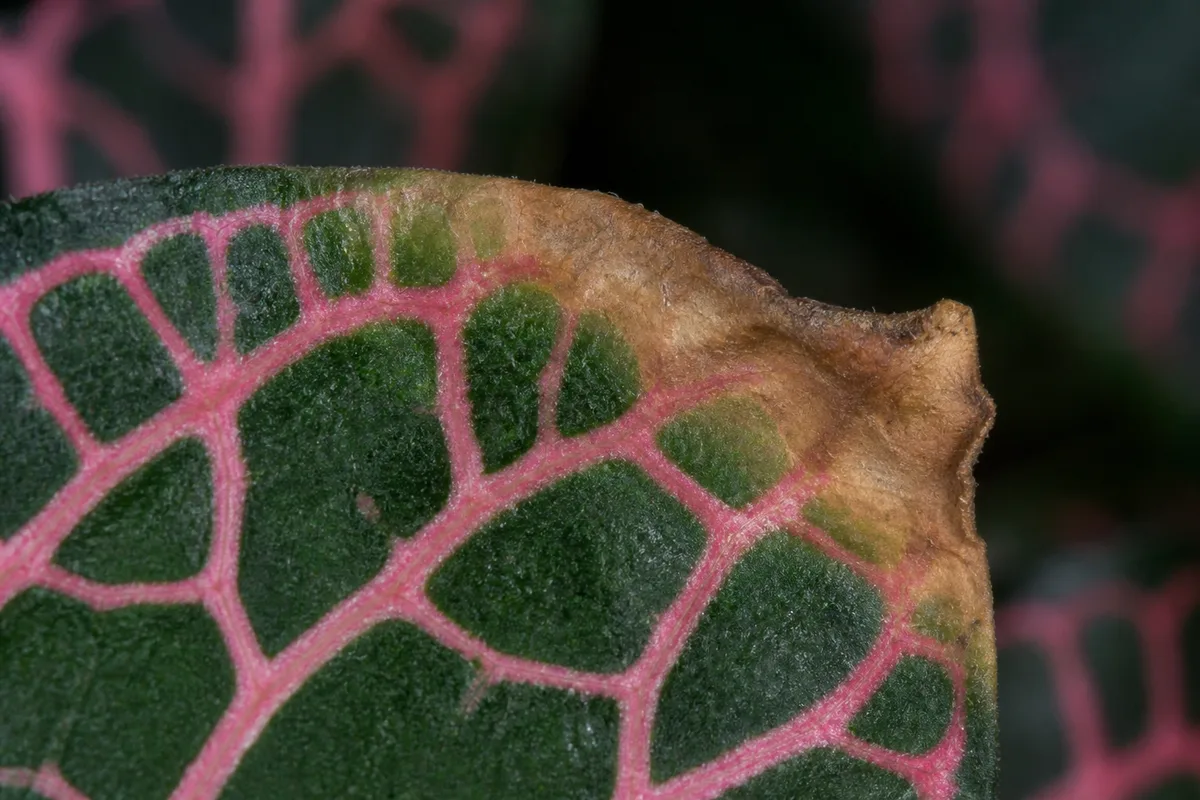
Brown Tips symptoms on Fittonia - compare with healthy tissue on the same plant.
Humidity-only brown margins (most common):
- Crispy tan-to-dark-brown band along leaf edges, sometimes the tip only
- Leaves feel firm and turgid; stems stand upright
- Soil moisture feels normal; pot weight unchanged from your usual rhythm
- Often worse on leaves nearest a heat vent, AC draft, or open terrarium lid
- Worsens in late fall through early spring when indoor humidity drops
Drought-compounded margins:
- Brown edges on leaves that also went limp during recent dry spells
- Mix was dusty dry before the last soak; plant may have dramatically wilted first
- Margins stay brown even after the plant re-turgidifies within an hour of watering
- See the Fittonia underwatering guide for the full thirst-vs-humidity fork
Direct sun scorch:
- Bleached or tan patches on the side facing a south or west window-not just a thin margin band
- Damage appears on newest leaves pushed toward glass
- Fittonia needs Fittonia light guide; direct sun scorches foliage
Salt or fertilizer burn:
- Brown tips with white crust on soil surface or pot rim
- Follows heavy or frequent feeding without flushing
- Often paired with slow new growth despite otherwise good humidity
What brown tips are not: whole-plant flop on wet, heavy soil (overwatering or root rot); uniform yellowing with soggy mix; fine webbing on leaf undersides (spider mites). For broader humidity stress beyond margin bands alone, also read low humidity on Fittonia.
Why Fittonia browns at the margins first
Fittonia albivenis evolved on the humid rainforest floor of Peru and Colombia, where thin leaves lose little moisture to dry air. Indoors, the plant has almost no leaf water storage-unlike a succulent-so transpiration through leaf edges outpaces root uptake when humidity falls.
Several home conditions push Fittonia toward margin browning:
- Winter room air at 30–40% RH - Central heating pulls humidity far below what the RHS describes as essential moist air for Fittonias.
- Open pots above heat registers - Warm, dry air accelerates edge drying even when soil moisture is correct.
- Repeated drought cycles - Each wilt episode stresses leaf tissue; brown margins persist after rehydration when dry air also ran low.
- Terrarium lid left open - A sealed setup holds 70–90% humidity; cracking the lid or moving the plant to an open desk drops humidity fast.
- Hard or chlorinated tap water - Extended use of tap water can produce brown leaf tips on sensitive plants; damaged leaves do not recover.
- Direct sun through glass - Increases water loss and scorches tissue on the exposed side.
Fittonia often shows brown edges before dramatic wilt. That makes margin browning an early humidity warning-not proof that watering is wrong, but a signal to measure air moisture before the next collapse.
Brown tips vs. low humidity on Fittonia - when to use this page
Both URLs address dry-air stress, but they serve slightly different reader questions:
| Your situation | Start here |
|---|---|
| Crispy margins or tips on firm, well-watered leaves | This brown-tips guide |
| Whole-plant crisping, dull veins, constant edge damage in a dry room | Low humidity on Fittonia |
| Dramatic wilt on dry soil that recovers after soaking | Underwatering on Fittonia |
| Yellow leaves on wet soil | Overwatering on Fittonia |
Many winter Fittonia problems involve two causes at once-dry air plus a missed watering. Fix humidity and confirm soil moisture; do not assume one diagnosis excludes the other.
Lookalike symptoms to rule out
| Pattern | Likely cause | First direction |
|---|---|---|
| Crispy margins only; firm stems; moist soil | Low humidity or hard water | Hygrometer + humidifier |
| Margins plus recent dramatic wilt on dry soil | Drought + dry air overlap | Soak first; then raise humidity |
| Whole-plant collapse; dusty dry mix | Underwatering | Underwatering guide |
| Yellow lower leaves; wet heavy pot | Overwatering | Stop watering; check roots |
| Bleached patch on window side | Direct sun scorch | Move to bright indirect light |
| Tips after heavy feeding; white soil crust | Salt burn | Flush pot; pause fertilizer |
| Wilt on wet soil that will not resolve | Root rot | Inspect roots; do not add water |
How to confirm the cause
Work through these checks in order. Change one major variable at a time so you can read the plant’s response over the next one to two weeks.
-
Hygrometer at canopy height - Place a digital hygrometer within 12 inches of the top leaves. Readings below 50–60% with firm, moist-soil plants strongly support humidity-driven margin browning. Target 60% or higher for recovery-the RHS notes Fittonias need moist air or leaves turn brown.
-
Pot weight and finger probe - Lift the pot and press into the top inch of mix. A light pot with dry crumbly soil means drought may be compounding edge damage-water thoroughly once, then reassess margins over the next week. A heavy pot with moist soil points away from thirst alone.
-
Heat and draft scan - Note radiators, forced-air vents, fireplace drafts, and single-pane winter glass within three feet of the plant. Position plants away from heating and AC vents; warm dry air browns Fittonia edges fast.
-
Light direction check - Identify whether damaged leaves face afternoon sun. Fittonia wants bright indirect light-a north- or east-facing window or filtered south exposure.
-
Water and feeding history - Note whether you use straight tap on a sensitive specimen, softened water, or recent full-strength fertilizer. White crust on the soil surface suggests salt buildup.
-
New-growth watch - The decisive test is the next leaf or two at stem tips. Clean margins on fresh growth confirm your fix; repeated crisping on new tissue means another cause is still active.
You have likely confirmed humidity stress when the hygrometer reads below 60%, soil moisture is appropriate, stems are firm, and no heat blast hits the canopy-especially in a heated winter room.
First fix for Fittonia
Your first action depends on what the checks showed. Do one primary fix before stacking others.
If humidity is below 60% and leaves are otherwise firm:
Move the plant at least 3–4 feet from heat registers and start raising canopy-level humidity. Best to good options ranked by reliability:
- Small humidifier running near the plant until the hygrometer holds 60%+
- Closed or partially sealed terrarium - the RHS recommends terrariums and bottle gardens where humidity stays high
- Wide pebble tray with the pot elevated above the water line; keep water topped up
- Steam-heavy bathroom with adequate indirect light
Do not repot, fertilize, or aggressively prune on day one.
If drought and dry air overlap:
Bottom-water or top-water thoroughly once, drain completely, then raise humidity for 48 hours. Fittonia recovers from wilt quickly when roots are sound-but crispy margins from repeated dry cycles do not green up. Fix thirst first so you are not raising humidity on a plant that still cannot pull water.
If the plant sits in direct afternoon sun:
Move it to bright indirect light immediately-several feet back from south or west glass or behind a sheer curtain. Scorch damage on exposed leaves is permanent; new growth should open clean once light is corrected.
If fertilizer or salt buildup is suspected:
Stop feeding. Flush the pot with room-temperature water until drain runs clear from the bottom. Resume diluted feeding only after new growth looks healthy for two weeks.
Step-by-step recovery by cause
After the first fix:
- Run the humidifier or terrarium setup for one full week before judging failure. Overnight humidity swings are normal; average canopy RH matters more than a single reading.
- Switch to rainwater, distilled, or filtered water if tips persist despite good humidity-especially if you see white mineral crust. Damaged leaves will not recover, but new edges should stay clean.
- Group with other humidity lovers to create a slightly moister microclimate, but leave air space between pots.
- Adjust Fittonia watering guide after humidity improves-moist soil plus dry air still browns edges. Check the top inch every two to three days during active growth.
- Trim brown margins only after firm new growth appears - see below.
When to trim brown tissue
Brown Fittonia margins are cosmetic dead tissue, not an infection to cut away urgently.
- Wait until stems stand firm and you have held humidity at 60%+ (or corrected watering/light) for at least one week
- Snip along the natural leaf contour with clean scissors; remove only the crispy brown band
- Do not strip half the leaf while the plant is still stressed-each cut is another wound during recovery
- Judge success by clean edges on new leaves, not by old blades repairing themselves
If every new leaf opens with crisp edges despite a humidifier, revisit water quality, light direction, and draft sources before trimming again.
Recovery timeline
Humidity correction alone: New leaves pushed after one to two weeks at 60%+ humidity often open with clean margins. Old brown edges remain unchanged permanently.
Drought-compounded damage: After a proper soak, stems usually firm within 30–60 minutes-Fittonias recover quickly once watered thoroughly. Existing brown margins may stay crisp for the life of that leaf; watch the next growth flush for improvement.
Sun scorch or salt burn: Recovery depends on how much tissue was damaged. One clean new leaf within two to three weeks is a realistic positive sign.
When improvement stalls: If margins keep crisping on new growth after three weeks of verified 60%+ humidity, correct watering, and good light, inspect roots for rot or consider whether hard tap water needs switching-not another humidity boost alone.
What not to do
Do not mist once a day and assume humidity is fixed. Brief leaf wetting does not sustain the moist air Fittonias require.
Do not fertilize a margin-browned plant to “push new growth.” Salts stress roots already coping with environmental stress.
Do not repot on day one unless soil is clearly failing (sour smell, fungus gnats, waterlogged center). Transplant shock plus dry air worsens edge browning.
Do not confuse firm-leaf margin browning with thirst collapse. A dramatic flop on dry soil needs water first-see underwatering-not only a humidifier.
Do not stack Fittonia repotting guide, heavy pruning, fertilizer, and pesticide on the same day. Fittonia responds better to one care correction at a time.
How to prevent brown tips on Fittonia
- Keep canopy humidity at 60% or higher with a humidifier, terrarium, or consistently steamy bathroom-especially October through March when heating runs.
- Check the top inch of mix every two to three days; water when it just begins to dry. Dry air plus drought compounds margin damage faster than either alone.
- Keep pots away from heat registers and cold window glass. Fittonia prefers temperatures at or above 60°F (15°C) without cold drafts.
- Use bright indirect light-never unfiltered afternoon sun on a windowsill.
- Flush the pot with plain water every few months if you feed regularly, to prevent salt crust.
- For open-desk culture in dry climates, accept that Fittonia is a humidity-first plant-see the Fittonia overview for terrarium and bathroom placement ideas.
When to worry
Treat as urgent if brown margins spread rapidly on every new leaf while the crown softens, soil smells sour, or fine webbing appears on undersides-those patterns point past cosmetic edge burn toward rot or pests.
Worry but not emergency if only older leaves show crisp margins while new growth stays clean after humidity correction-that is manageable cosmetic damage.
Consider propagating if the base is bare, stems are shriveled, and no clean new growth appears after three weeks of corrected humidity, watering, and light. Fittonia roots easily from firm stem tips when conditions stabilize.
Fittonia care cross-check
| Variable | Fittonia target | Brown-tip connection |
|---|---|---|
| Humidity | 60%+ at canopy | Primary driver of edge crisping |
| Watering | Top inch dry before soak | Drought overlap worsens margins |
| Light | Bright indirect | Direct sun scorches and dries edges |
| Temperature | Above 60°F (15°C) | Cold drafts brown margins |
| Pot / mix | Well-draining, moisture-retentive | Soggy soil causes different symptoms |
Conclusion
Brown tips on Fittonia look alarming but are usually an environmental signal, not a death sentence. Thin rainforest-floor leaves lose moisture at the margins first when room air drops below 60%, when a heat vent blows across the pot, or when repeated drought cycles stack on dry winter air. Measure humidity, move the plant off heat sources, and fix watering if soil was dry-then judge recovery by new growth, not old brown edges. Trim only after the plant firms up; browned tissue never re-greens. If new leaves keep crisping despite verified humidity and sound roots, switch water quality or light before you repot. For dramatic wilt on dry soil, read underwatering; for whole-plant dry-air stress, see low humidity and the Fittonia overview.