Yellow Leaves on Fittonia: Causes, Checks & Fixes
Quick answer
Yellow leaves on Fittonia usually mean overwatering, underwatering, low humidity, or too much direct sun-not one disease. First step: lift the pot and check soil moisture-heavy wet mix with limp yellow leaves calls for dry-down; a light dry pot with collapsed foliage calls for a deep soak and humidity boost.
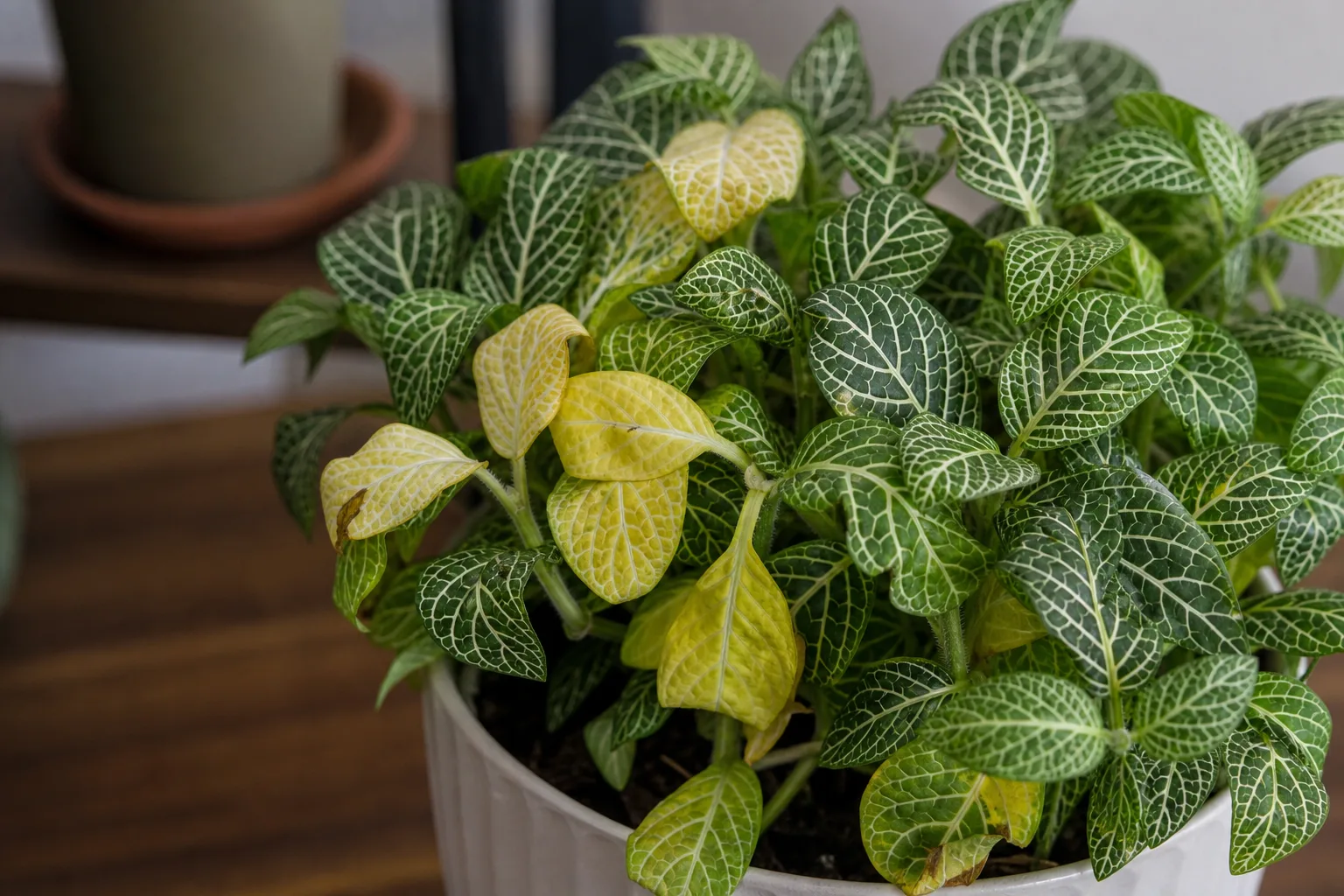
Yellow Leaves on Fittonia: Causes, Checks & Fixes
This guide covers yellow leaves on Fittonia. See also the general Yellow Leaves guide, watering, and light pages for this plant.
Yellow Leaves on Fittonia: Causes, Checks & Fixes
Quick answer
Fittonia (nerve plant) is a low-growing tropical ground cover prized for vivid leaf veins. It has thin leaves, shallow roots, and zero drought tolerance-yellow leaves on Fittonia almost always trace to water rhythm (too wet or too dry), low humidity, direct sun bleach, or normal lower-leaf aging in dense clumps.
Fittonia’s famous faint-when-dry habit tricks growers both ways: collapse looks like overwatering need, but soaking an already wet pot makes rot worse.
First step: lift the pot and probe the top inch of mix. Heavy, cool, wet soil with yellow lower leaves means stop watering until the surface dries. A light, dry pot with collapsed stems means soak until runoff, drain, and raise humidity. If soil is fine but leaves facing the window show bleached yellow patches, move out of direct sun before changing water.
What yellow leaves look like on Fittonia
Nerve plant yellows through texture, placement, and environment together.
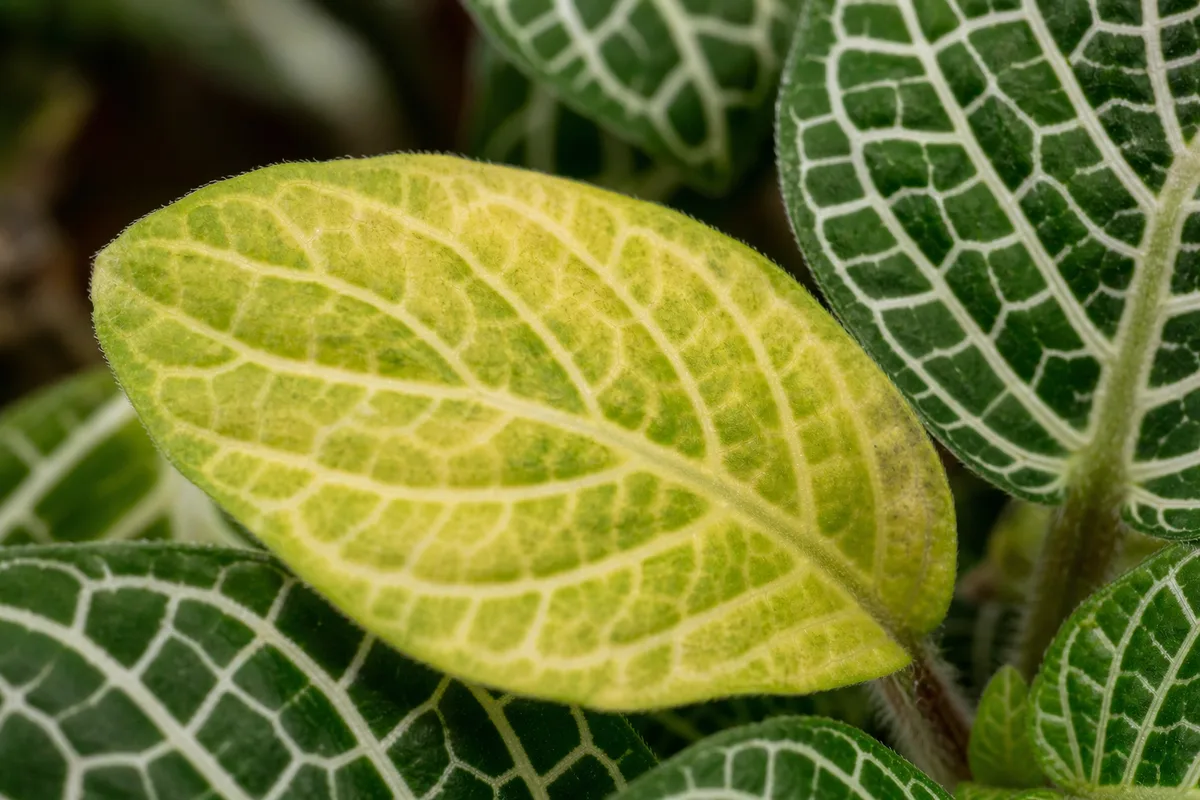
Yellow Leaves symptoms on Fittonia - compare with healthy tissue on the same plant.
Overwatering pattern:
- Yellow lower leaves on constantly damp mix
- Limp, mushy stems at the base despite moisture
- Sour smell or fungus gnats on wet surface
- Whole clump stays wet while outer leaves yellow-see overwatering and root rot
Underwatering / low humidity pattern:
- Dramatic collapse-Fittonia lies flat when dry
- Crisp yellow-brown margins on outer leaves
- Light pot, dry mix pulled from edges
- Perk-up within hours after soak if rot has not started-see underwatering and wilting
Direct sun pattern:
- Bleached yellow-white patches on leaves facing the window
- Affects exposed leaf faces, not just bottom leaves
- Firm stems; soil moisture may be normal
- Distinct from not enough light, which fades vein contrast to dull green-yellow overall
Normal aging:
- One or two oldest leaves at the clump edge yellow while center stays vivid
- No collapse, no wet soil smell
Why Fittonia gets yellow leaves
Shallow roots in small pots. Fittonia dries fast near heat vents and under grow lights. Miss one watering cycle and outer leaves crisp yellow before you notice.
Overwatering in dim terrariums. Closed jars and deep shade slow evaporation. Soggy soil deprives roots of oxygen while leaves still look green briefly-then yellow from the base.
Humidity crashes. Fittonia needs high humidity-below 40% relative humidity, leaf edges yellow and crisp even when soil holds moisture. Winter heating dries air faster than roots dry out.
Direct sun exposure. Nerve plant leaves scorch in hot afternoon sun. Variegated cultivars bleach faster than solid green forms.
Dense clump senescence. Older leaves at the outer edge naturally yellow as new center growth pushes up.
How to confirm the cause
- Pot weight and moisture at one inch - Heavy and damp vs. light and dusty.
- Collapse test - Flat wilt on dry mix fits drought; limp on wet mix fits rot.
- Humidity check - Dry air plus crisp edges despite moist soil fits humidity stress.
- Window direction - Bleached patches on sun-facing leaves fit scorch, not roots.
- Vein contrast - Vivid nerves on new center leaves mean isolated bottom aging is likely.
| Pattern | Pot weight | Soil at 1 inch | Leaf location | Likely cause |
|---|---|---|---|---|
| Lower yellow, limp | Heavy | Wet, cool | Base of clump | Overwatering |
| Collapse, crisp edges | Light | Dry | Outer leaves | Underwatering |
| Crisp tips, moist soil | Medium | Damp | Leaf margins | Low humidity |
| Bleached patches | Normal | Normal | Sun-facing | Direct sun |
| 1–2 edge leaves | Normal | Normal schedule | Clump edge | Aging |
First fix for Fittonia
Match one action to the diagnosis.
- Wet heavy pot: Stop watering until the top inch dries. Improve airflow; do not mist a rotting clump.
- Light dry pot: Soak until runoff, drain, then place on a pebble tray or near a humidifier.
- Sun bleach: Move to Fittonia light guide; trim fully bleached leaves.
- Low humidity only: Humidifier or terrarium with ventilation-not more water if soil is already wet.
Step-by-step recovery
Overwatering
- Dry-down until top inch is crumbly.
- Remove mushy yellow leaves.
- Repot into fresh airy mix if stems stay soft after dry-down.
Underwatering / humidity
- Deep soak; drain fully.
- Raise humidity to 50% or higher.
- Trim fully crisp leaves.
Sun scorch
- Relocate out of direct beams.
- Remove bleached tissue; new leaves carry normal vein pattern in one to two weeks.
Recovery timeline
- Underwatering: Perk-up within hours; new leaves in one to two weeks.
- Overwatering (mild): Yellowing stops in one to two weeks after dry-down.
- Humidity: Edge crisping halts in days once air moisture rises.
- Sun scorch: New clean leaves in two to three weeks.
Judge success by vivid vein contrast on new center growth.
Mistakes to avoid
- Do not soak a collapsed Fittonia without checking soil first-it may already be wet.
- Do not place nerve plant in south window afternoon sun.
- Do not fertilize yellow clumps before fixing water and humidity.
- Do not assume terrariums prevent all problems-closed jars can stay too wet.
How to prevent yellow leaves next time
Keep mix evenly moist but never soggy. Maintain humidity above 50%. Give bright indirect light without direct sun. Water when the top inch begins to dry-not on a fixed calendar. See the Fittonia overview and watering guide.
When to use this page vs other Fittonia guides
- Fittonia watering guide - Use for routine moisture checks before assuming yellow leaves is the main issue.
- Fittonia problems hub - Browse all 16 common issues on this species.
- Overwatering on Fittonia - Different entry point when symptoms overlap with yellow leaves.
- Underwatering on Fittonia - Different entry point when symptoms overlap with yellow leaves.
- Not Enough Light on Fittonia - Different entry point when symptoms overlap with yellow leaves.