Slow Growth on Fittonia: Causes, Checks & Fixes
Quick answer
Fittonia is naturally slow-growing - a low mat that spreads outward, not upward. Stall is the problem when no new leaf pairs appear for months in a warm humid terrarium during spring. First step: check humidity at leaf height and vein color on the newest leaves before fertilizing or repotting.
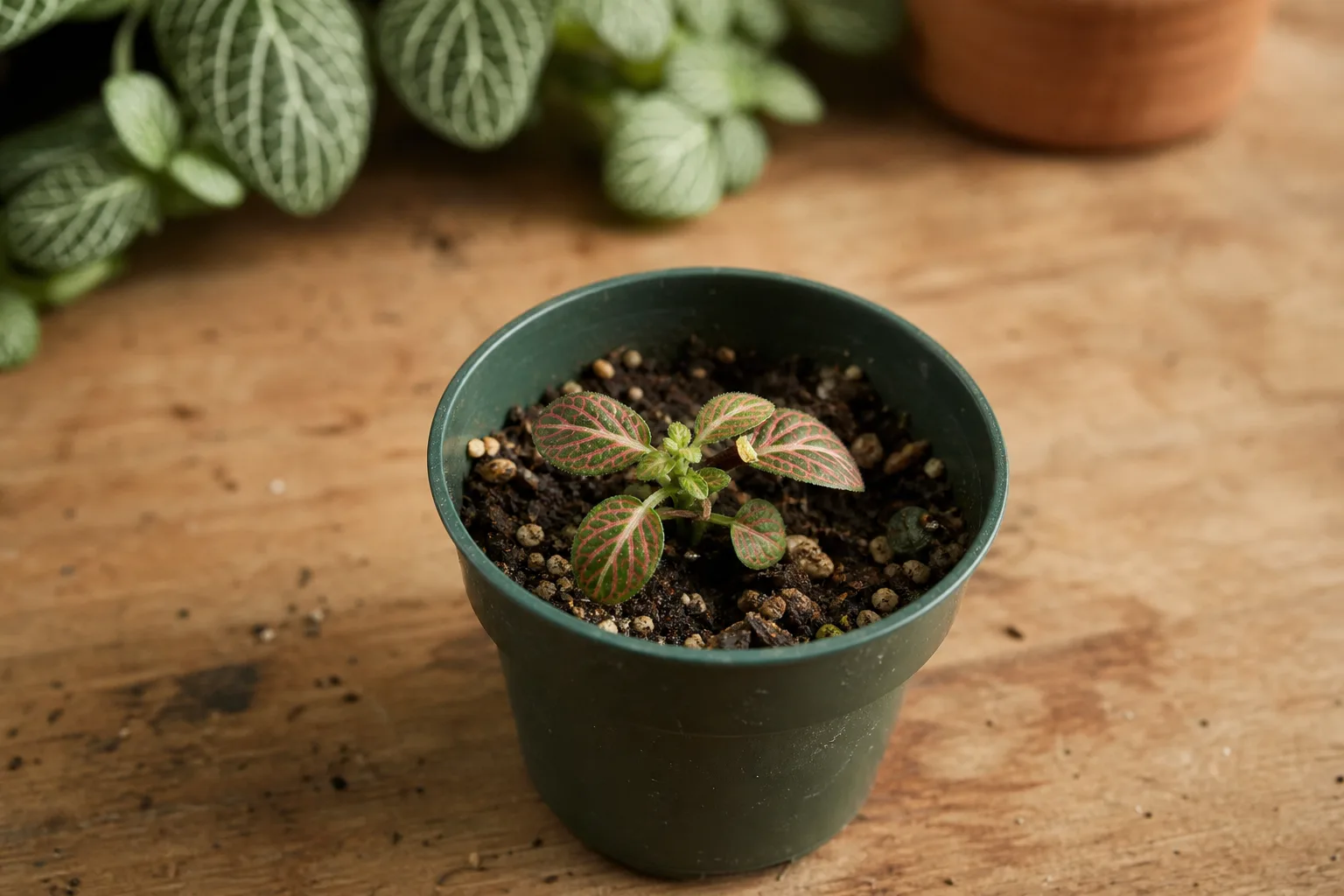
Slow Growth on Fittonia: Causes, Checks & Fixes
This guide covers slow growth on Fittonia. See also the general Slow Growth guide, watering, and light pages for this plant.
Slow Growth on Fittonia: Causes, Checks & Fixes
Quick answer
Slow growth on Fittonia (Fittonia albivenis, the nerve plant or mosaic plant) is often normal, not a crisis. Fittonia is a small, slow-growing mat-forming creeper that spreads outward rather than upward - the RHS notes it can stay in its original container for several years. Most owners searching this topic are really asking: Is my nerve plant supposed to move this slowly, or is something wrong?
A true stall means no new leaf pairs for months during warm spring or summer in a humid setup where growth should be active - often with faded vein contrast, brown leaf margins, or limp foliage on wet soil. Normal slow pace means steady small outward spread, firm leaves, and occasional new pairs even if the mat only adds a few centimetres per season.
First step: check humidity at leaf height and vein color on the newest leaves - before fertilizing, Fittonia repotting guide, or stacking other fixes. Dry air below about 40% RH slows Fittonia to a crawl with crisp brown edges even when soil is moist. Low light fades vein contrast before stems stretch. See the low-humidity guide and light guide for cause-specific branches.
What slow growth looks like on Fittonia
Healthy Fittonia forms a low creeping mat of oval leaves with bold contrasting veins - white on Argyroneura cultivars, pink or red on Verschaffeltii types. Mature plants typically reach 3 to 6 inches (7 to 15 cm) tall and spread outward to fill a dish or terrarium floor. Missouri Botanical Garden describes mature specimens up to 8 inches tall spreading to about 1.5 feet over time - but that timeline is measured in seasons, not weeks.
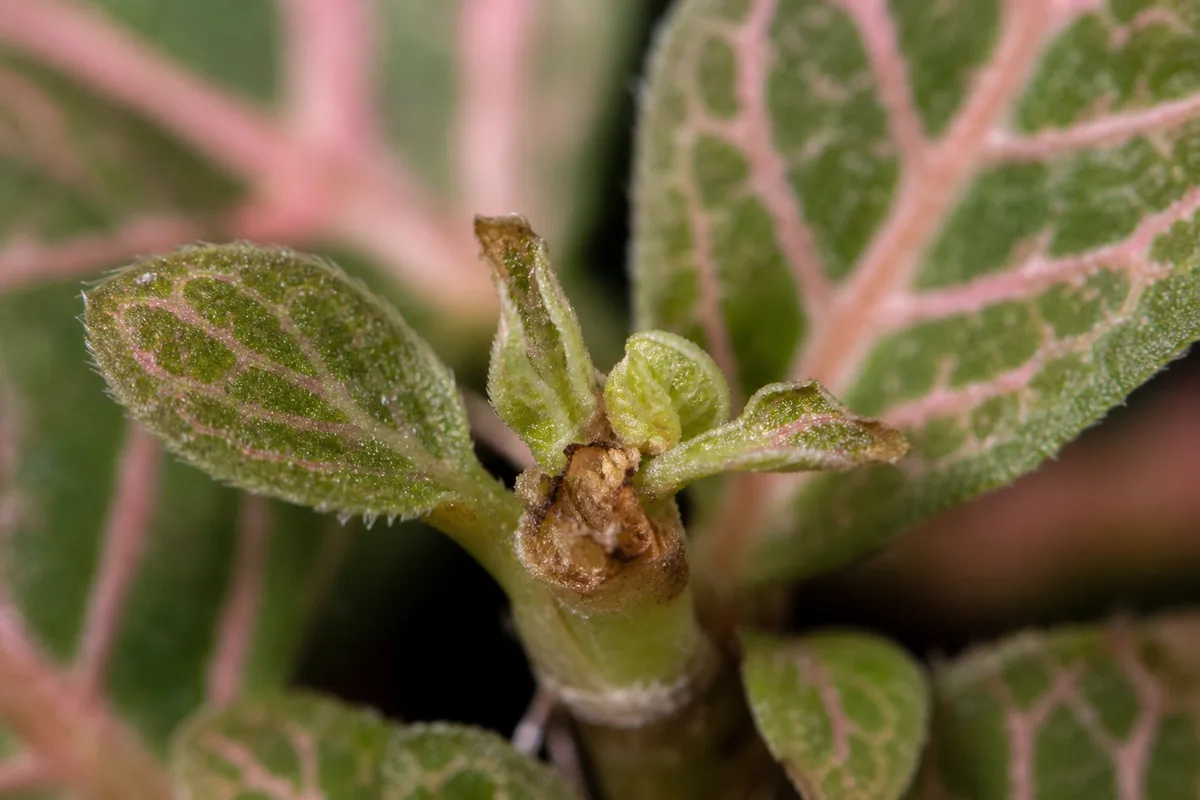
Slow Growth symptoms on Fittonia - compare with healthy tissue on the same plant.
Signs of normal slow growth:
- Steady outward creep of stems with occasional new leaf pairs at nodes
- Newest leaves match cultivar vein color - crisp white, pink, or red against deep green
- Plant stays low and compact; height barely changes while spread slowly widens
- Winter months show minimal new output in dim rooms - expected seasonal pause
- Terrarium specimens add visible runners every one to three weeks in spring
Signs of a problematic stall:
- No new leaf pairs for two or more months during warm humid spring or summer
- New leaves emerge smaller, paler, or with washed-out vein contrast
- Brown crispy margins on otherwise moist-soil plants - dry-air crawl
- Greener new leaves with weak veins and slightly longer internodes - light starvation beginning
- Limp lower leaves on wet soil with yellowing - root stress, not drought
- White cottony clusters in leaf axils with dull, sticky foliage - pest drain on vigor
Slow growth on Fittonia rarely shows as obvious “damage.” The symptom is absence or weakness of new tissue - smaller blades, faded patterning, or a mat that has not spread since last season.
Normal slow pace vs. a true stall
| Signal | Normal slow pace | True stall |
|---|---|---|
| New leaf pairs in warm humid spring | Every 1–3 weeks in terrarium; every 2–4 weeks in good open-pot setup | None for 8+ weeks despite warm humid conditions |
| Vein color on newest leaves | Crisp, cultivar-true contrast | Faded, cream, or muddy patterning |
| Leaf edges | Clean or occasional winter crisp in dry rooms | Persistent brown margins while soil is moist |
| Stem habit | Low, creeping, short internodes | Elongating stems reaching toward window (early legginess) |
| Winter in dim room | Minimal spread; plant stays firm | Same - winter pause alone is not a stall |
| Soil and wilt pattern | Firm plant; dramatic wilt only when dry | Limp on wet soil, or chronic edge burn without wilt |
If your Fittonia matches the left column in a closed terrarium during April or May, you likely have a naturally slow species doing what it evolved to do. If it matches the right column in that same season, work through the confirmation steps below.
Expected growth rate for Fittonia
Fittonia is not a fast houseplant. NC State Extension lists its growth rate as slow, with a creeping, spreading, weeping habit. The RHS describes low, compact plants that spread slowly outwards rather than upward - ideal for tight spaces, bottle gardens, and terrariums.
In average home conditions, expect:
- Height: mostly stable at 3–6 inches; Fittonia does not become a tall foliage plant
- Spread: outward creep of a few inches per growing season in a well-run open pot; faster in terrariums
- New leaves: leaf pairs at stem nodes during spring and summer when humidity and light align
- Container life: can remain in the same pot for several years per RHS guidance before rootbound limits apply
Gardener’s Path notes a moderate growth rate indoors with mature spread of 6–18 inches over time - but emphasizes that dry air causes growth to slow to a crawl and that repeated drought wilt episodes stunt growth even when the plant appears to recover visually.
Terrarium vs. open-pot growth differences
Closed terrariums (70–90% humidity) are the most reliable way to see steady Fittonia spread in dry-climate homes. The RHS specifically recommends fittonia for bottle gardens and terrariums where humidity stays elevated. Condensation recycles moisture; leaves stay firm; photosynthesis proceeds without the transpiration penalty of dry room air. Watering intervals stretch to weeks or months. Growth often looks “fast” compared to the same cultivar on an open desk - but it is still a slow species by houseplant standards.
Open pots in living rooms, offices, and bedrooms depend on ambient humidity. Below 50% RH, spread slows and edge burn appears even with correct watering. A nerve plant on a humidifier-backed shelf may match terrarium pace; one above a heating vent in January may produce almost no new leaves until spring - and that winter pause can be normal, not a care failure.
The Fittonia overview covers terrarium setup and humidity targets in depth. If open-pot growth disappoints you every winter, a closed jar or bathroom relocation is often the fix - not more fertilizer.
Why Fittonia slows down
Normal winter slowdown (not a problem)
Fittonia does not go fully dormant like a deciduous outdoor plant, but growth slows sharply in short-day, cool, dry winter rooms. New leaf output may drop to near zero from late fall through February even when old foliage stays green. Reduce watering frequency and pause fertilizer during this window - feeding a plant that is not building new tissue invites salt buildup on delicate leaf margins.
Do not interpret a quiet winter mat as a stall requiring repot and feed on the same day. Fittonia wilts dramatically when several variables change at once. Wait for spring warmth and longer days, then judge by new leaf pairs.
Low humidity
Fittonia evolved on the humid rainforest floor of Peru and Colombia. Missouri Botanical Garden recommends high humidity with humidifiers or pebble trays; the RHS warns that without moist air, leaves turn brown. Gardener’s Path states directly that dry air causes leaf edges to turn brown and growth slows to a crawl.
Unlike thirst wilt - where the whole plant collapses and recovers within an hour of watering - humidity-linked slowdown shows as crisp brown margins on firm leaves with soil still moist. The plant is not asking for water; it is losing moisture from leaf edges faster than roots can supply in dry air.
Cross-check the low-humidity guide if edges are crispy.
Insufficient light
Fittonia tolerates lower light better than many tropicals, but chronic dim conditions reduce vein contrast, shrink new leaves, and slow spread. Gardener’s Path notes that too little light makes nerve plants grow slower and look less vibrant; low light eventually produces leggy growth with spaces between leaves.
On Fittonia, light starvation often appears on new growth first: greener leaves with weak vein patterning before stems elongate obviously. Faded veins on the newest pair while older leaves still show good contrast is a light flag - not a nutrient problem.
See not enough light and leggy growth for overlapping symptoms.
overwatering on Fittonia and root stress
Chronically wet soil suffocates Fittonia’s fine roots. Missouri Botanical Garden notes yellowing leaves may indicate overwatering. A plant with damaged roots cannot support new leaf production even when humidity and light are adequate - growth stalls while lower leaves yellow and stems soften at the base.
The tell is limp foliage on wet, heavy soil without the dramatic dry wilt Fittonia is famous for. If wilt appears on soggy mix, investigate roots before watering again. The watering guide covers moist-not-soggy rhythm.
Rootbound small pot
Fittonia’s shallow roots can live in a small pot for years - but eventually a dense root ball caps new growth. Signs include roots circling drainage holes, mix drying within a day of watering, and months of zero new leaves in warm weather despite good humidity and light. The RHS allows several years in one container; repot when performance stalls, not on a calendar.
Repot in early spring one size up only - oversized pots stay wet and stall growth differently.
Nutrient depletion or salt buildup
Fittonia is a light feeder. After a year or more in the same mix without feeding, actively growing plants may produce pale small new leaves with dull veins. Underfeeding in depleted mix is a real but less common stall cause than humidity or light.
Overfeeding is more frequent: salt crust on soil, brown tips, and stalled new growth on moist soil after heavy fertilizer. Gardener’s Path warns that overfertilization causes salt buildup leading to brown tips and edges. Never fertilize a humidity-stressed or winter-dormant plant to “jump-start” it.
The fertilizer guide covers half-strength spring feeding and winter pause.
Cold drafts below 60°F
The RHS recommends keeping Fittonia at 15°C (60°F) or higher and out of cold draughts. Gardener’s Path notes brief dips toward 55°F may cause leaf drop. Sustained cold air from AC vents or winter window ledges produces darkened limp foliage and complete growth shutdown until warmth returns.
Pest stress
Mealybugs, spider mites, and scale drain sap from leaf axils and creeping stems. Light infestations slow new leaf output before obvious collapse. White cottony clusters, sticky honeydew, or fine stippling on undersides alongside stalled growth warrant pest treatment - not more fertilizer.
How to confirm the cause
Work through these checks in order. One variable at a time - Fittonia responds poorly when humidity, light, water, and feed all change on the same day.
- Season and setup - Is it winter in a dim room? Slow spread may be normal. Is it warm humid spring in a terrarium with zero new leaves for two months? That is a true stall.
- Humidity at leaf height - Use a hygrometer. Below 40% RH with brown margins on moist soil points to dry air. Target 50–60%+ in open pots; 70–90% in closed terrariums.
- Newest leaf vein color - Faded or muddy veins on the latest pair suggest insufficient light before fertilizer deficiency. Compare against the light guide.
- Soil moisture and wilt type - Dry, light pot with dramatic wilt = thirst. Wet, heavy pot with limp yellow lower leaves = root stress. Firm plant, moist soil, brown edges only = humidity.
- Root and pot check - Slip the plant out gently. White firm roots and moderate fill = OK. Dense circling roots, sour smell, or brown mush = repot after correcting water habit.
- Pest scan - Inspect leaf axils, crown, and creeping stem nodes for cottony wax, scale bumps, or mite stippling.
- Fertilizer history - White crust on soil surface or recent full-strength feeds on a stalled plant suggest salt stress, not hunger.
Match the dominant pattern, then apply the first fix below - not every fix at once.
First fix for Fittonia
If humidity is below 50% at leaf height and newest leaves show brown margins or dull veins: raise ambient humidity before any other change.
Move the pot off heating vents and radiators. Run a small humidifier until readings hold at least 50% RH near the canopy - 60%+ is better for open-pot culture per the overview guide. In dry-climate homes where open-pot nerve plants never thrive, a closed terrarium is the most reliable long-term solution - the RHS recommends terrarium culture specifically for this species.
Do not increase watering when soil is already moist and only edges are brown - that deepens root problems. Do not fertilize until humidity and light are adequate and new growth should be active.
Cause-specific branches after humidity is ruled in or corrected:
| Likely cause | First fix |
|---|---|
| Low humidity | Humidifier or terrarium move; see low-humidity |
| Insufficient light | Move to bright indirect east window or add grow light 10–12 h daily; see light |
| underwatering on Fittonia stress | Water when top inch dries; stop repeated wilt cycles per watering |
| root rot on Fittonia / overwatering | Stop watering; inspect roots; trim rot; repot into fresh airy mix |
| Rootbound | Repot one size up in early spring |
| Nutrient depletion | Half-strength feed on moist soil monthly in active growth; see fertilizer |
| Salt buildup | Flush pot; pause feed 4–6 weeks |
| Cold exposure | Move above 60°F away from drafts |
| Pests | Isolate; treat per mealybugs or mite protocol |
Recovery timeline
Judge recovery by new leaf pairs and vein contrast on the freshest foliage - not by old leaf size. Existing small or edged leaves do not enlarge or re-green; new growth tells the story.
- Humidity correction: new firm leaf pairs often appear within 2–4 weeks in warm spring conditions once RH stays above 50–60%
- Light improvement: vein contrast on new leaves may sharpen within 10–14 days; spread rate picks up over 4–6 weeks
- Watering stabilization: after ending wilt cycles or fixing rot, first clean new growth may take 4–6 weeks
- Repot recovery: expect 2–3 weeks of pause, then new pairs as roots establish
- Winter corrections: visible spread may not resume until March–April even after fixes - seasonal lag is normal
If no new leaves appear 8 weeks after correcting humidity and light in a warm spring terrarium, re-inspect roots and pests before escalating feed or repotting again.
Lookalike symptoms to rule out
Normal winter pause - firm leaves, vivid veins on old growth, zero spread in dim February. Resumes in spring without intervention.
Thirst wilt - whole plant collapses on dry soil; recovers within 30–60 minutes of watering. Not a growth-rate problem unless repeated cycles have already stunted the mat.
Leggy growth - stems stretch with wide internodes toward a window. That is etiolation from low light, often preceding a full stall. See leggy growth.
Low humidity alone - brown edges on moist soil without whole-plant wilt. See low-humidity.
Mealybug drain - white wax in axils, honeydew, sticky leaves. Growth stalls with pest load. See mealybugs.
What not to do
Do not fertilize a stalled Fittonia before checking humidity, light, and roots. Salt burn on thin leaves worsens stall symptoms.
Do not repot and fertilize on the same day to “jump-start” growth - Fittonia wilts dramatically when multiple variables shift at once.
Do not interpret natural slow mat spread as failure. A nerve plant adding a few inches of creep per year in a small pot may be healthy.
Do not increase watering because growth is slow while soil stays wet - that invites root rot.
Do not expect winter growth rates in summer conditions, or summer pace in a dim dry January room.
How to prevent slow growth next time
Know Fittonia’s baseline: small, slow, outward-spreading mat - not a fast upright foliage plant. Match expectations to species biology before diagnosing a problem.
Maintain 50–70%+ humidity for open-pot culture; use a terrarium if your home stays below 40% RH in winter. The overview and low-humidity guides set RH targets.
Place in bright indirect light - east window or filtered brightness - so newest leaves keep cultivar-true vein contrast. Review the light guide seasonally as sun angle shifts.
Water when the top inch begins to dry per the watering guide; avoid repeated drought wilt that stunts roots.
Feed lightly in spring and summer only per the fertilizer guide; pause in winter.
Scout pests at leaf axils during weekly checks - mealybugs slow vigor before obvious collapse.
Fittonia is non-toxic to cats and dogs per the ASPCA, so corrective repotting near pets is chemically safe - though keep soil and fertilizer away from curious animals to avoid mild GI upset from non-plant material.
Conclusion
Slow growth on Fittonia is often the species doing what it evolved to do - creeping slowly outward in a low mat. The diagnostic question is whether you are seeing normal slow pace or a true stall: no new leaf pairs for months in warm humid spring, faded veins, brown edges on moist soil, or limp yellow growth on wet mix. Check humidity and newest-leaf vein color first; fix light and watering before fertilizer; use terrarium culture when open-pot dry air wins every winter. Judge success by fresh leaf pairs with crisp patterning - not by how fast a pothos would grow in the same spot.
Recommendations were cross-checked against the RHS Fittonia growing guide, Missouri Botanical Garden Plant Finder entry for Fittonia albivenis, NC State Extension nerve plant profile, and Gardener’s Path Fittonia care guide, plus LeafyPixels Fittonia overview and linked care guides.
When to use this page vs other Fittonia guides
- Fittonia watering guide - Use for routine moisture checks before assuming slow growth is the main issue.
- Fittonia problems hub - Browse all 16 common issues on this species.
- Not Enough Light on Fittonia - Different entry point when symptoms overlap with slow growth.
- Leggy Growth on Fittonia - Different entry point when symptoms overlap with slow growth.
- Yellow Leaves on Fittonia - Different entry point when symptoms overlap with slow growth.