Mold on Soil on Fittonia: Causes, Checks & Fixes
Quick answer
Fluffy white or gray fuzz on Fittonia's soil means the surface has stayed damp-often from frequent top watering in a humid room or terrarium. First step: pause watering and let the top half-inch dry completely before you scrape the mold or pour again.
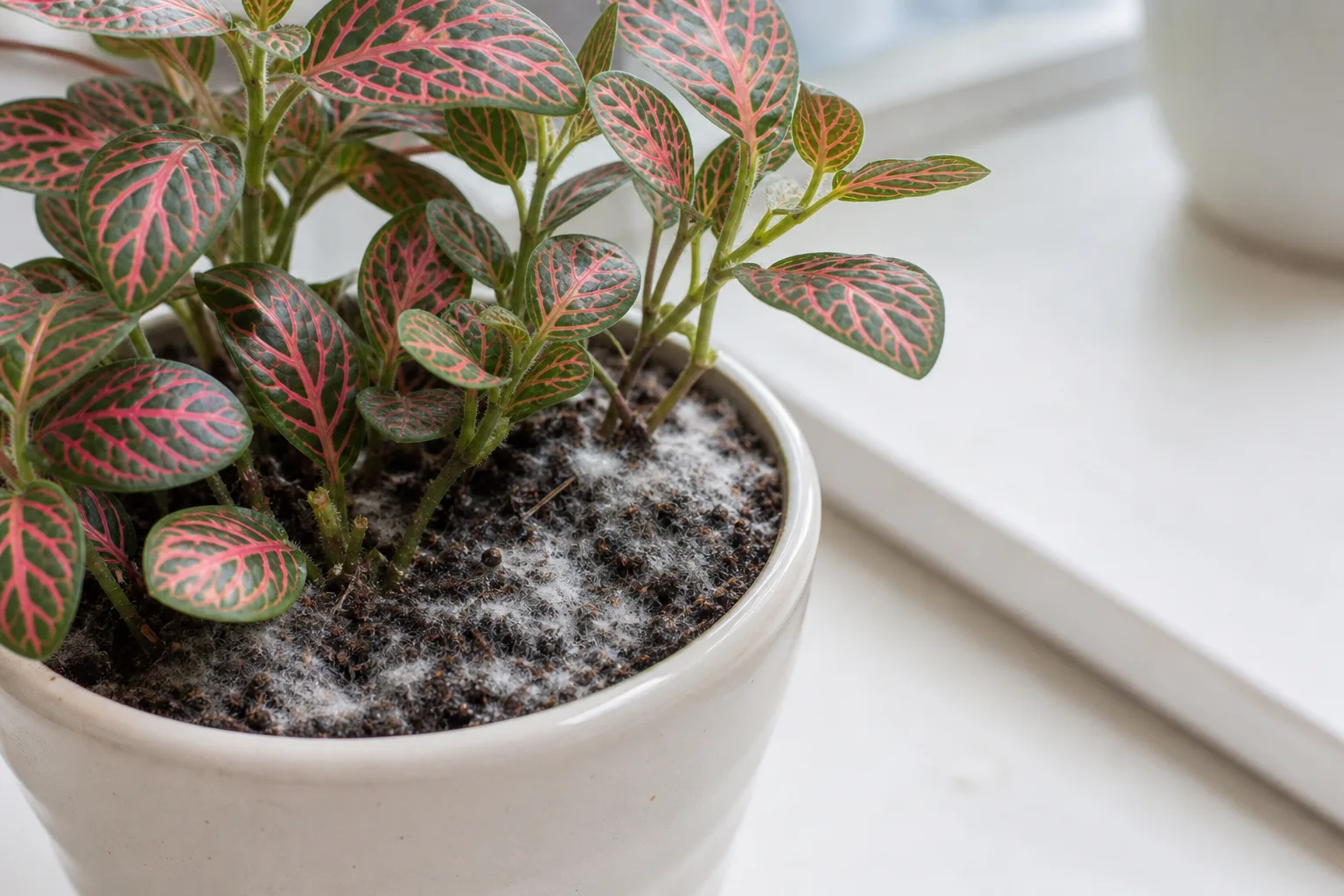
Mold on Soil on Fittonia: Causes, Checks & Fixes
This guide covers mold on soil on Fittonia. See also the general Mold on Soil guide, watering, and light pages for this plant.
Mold on Soil on Fittonia: Causes, Checks & Fixes
Quick answer
White or gray fuzz on your Fittonia’s potting mix almost always means the soil surface has stayed damp too long. Fittonia albivenis-the nerve plant or mosaic plant-wants evenly moist roots but not a soggy crust that never dries between drinks. Saprophytic fungi colonize organic matter on wet growing media and are usually harmless to the plant itself. On Fittonia, the real risk is the chronic surface wetness that grows the mold: fine shallow roots, peaty mix, and humid terrarium air can keep the top layer fungus-friendly even when you are trying to meet Fittonia overview’ moisture needs.
First fix: stop watering and let the top half-inch of mix dry completely before you scrape the mold or water again. Do not repot, spray fungicide, or drench cinnamon on day one.
What mold on soil looks like on Fittonia
On Fittonia pots and terrariums, mold most often appears as a thin white, gray, or occasionally yellowish fuzzy film across the soil surface. It may show up in patches between the creeping stems or blanket the entire top of a small pot. You might notice it after several days of misting, after heavy top watering that splashed mix onto leaves, or when a closed terrarium has not been vented.
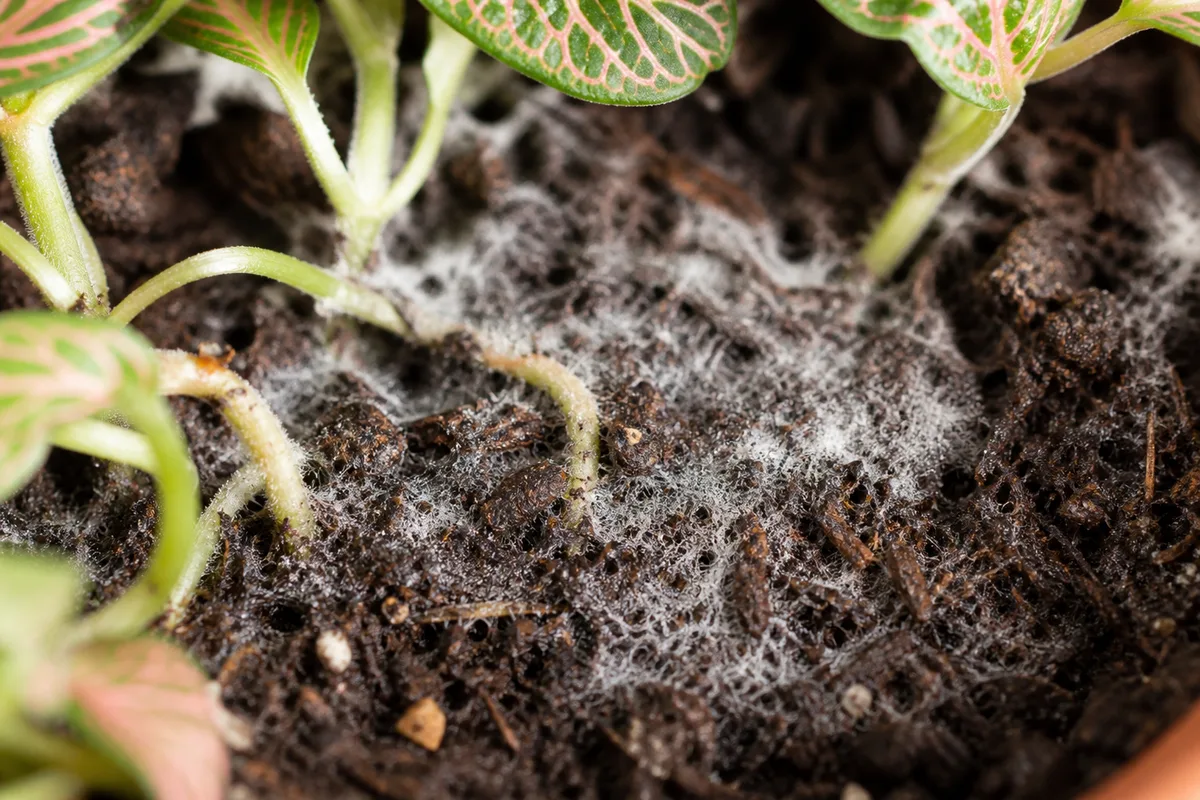
Mold on Soil symptoms on Fittonia - compare with healthy tissue on the same plant.
Healthy Fittonia should have a soil surface that loses its wet sheen within a few days of watering in an open pot. In sealed glass, the surface may stay damp longer-that is normal for terrarium culture, but persistent fuzz still signals excess moisture or decaying debris.
Watch for these patterns:
- Surface fuzz only - White or gray film on damp topsoil; leaves firm with crisp vein color; stems springy when pressed
- Mat-adjacent mold - Fuzz where fallen Fittonia leaves have decayed on the spreading soil mat
- Companion signs - Fungus gnats hovering at soil level, green algae on the pot rim, musty smell from organic mix
- Advanced trouble - Yellow lower leaves, soft black tissue at stem bases, sour-smelling mix (these mean rot, not just cosmetic mold)
Mold on the soil is different from problems on leaves. Grey mould (Botrytis) can affect Fittonia foliage in humid stagnant air-that shows as fuzzy gray patches on plant tissue, not a uniform film across the mix. Mealybugs leave cottony clusters in stem joints; mineral crust feels hard, not fluffy.
Why Fittonia gets mold on soil
Fittonia evolved on the humid rainforest floor of Peru and Colombia, where leaf litter holds moisture in a loose organic layer. Indoors, that translates to moist, well-draining mix in Fittonia light guide-not a surface that stays slick for a week. Several care patterns push Fittonia toward surface mold more than many houseplants:
Frequent top watering on a shallow root mat. Fittonia’s fine roots explore the top few inches. Watering from above every few days-especially into a dense mat of stems-keeps the surface wet even when deeper mix has not fully used the last drink. Excessively moist growing media favors fungus gnats and surface fungi.
High humidity without airflow. Fittonia prefers high humidity and warm stable rooms-typically 60–90% in home terrarium culture. Steamy bathrooms and closed terrariums slow evaporation from the pot surface. Humidity helps leaves; it does not replace the need for the top layer to dry occasionally in open containers.
Terrarium and bottle-garden setups. Fittonias in sealed containers need less frequent watering because humidity slows drying-but organic debris and overwatering on Fittonia at setup can still fuel mold before the system balances. Closed jars without brief venting trap moisture at the soil line.
Fallen leaves on the mat. Low creeping stems shed older leaves onto the mix. That debris is food for saprophytic fungi when moisture stays high.
Peat-heavy or aged mix. Old potting media breaks down and holds more surface moisture-exactly what attracts fungus gnat adults to lay eggs. Fittonia needs retention, but compacted peat without perlite crusts wet at the top.
Low light corners. Fittonia tolerates lower light than sun-loving houseplants, which slows transpiration and pot drying. A dim shelf keeps the mix damp longer after each watering.
Overwatering after dramatic wilt. Fittonia collapses within hours when thirsty-a normal communication trick. Many growers pour again at the first limp leaf. If the soil was already wet, that extra water extends surface dampness and invites mold while yellowing leaves may already signal overwatering.
How to confirm the cause
Work through these checks before Fittonia repotting guide or spraying:
- Stem firmness at soil line. Pinch the lowest stems where they meet the mix. Springy green tissue is reassuring. Soft, mushy, or black bases suggest crown or root trouble-not harmless surface fungus alone.
- Surface moisture. Press a finger into the top half-inch. Clinging wet mix with a heavy pot means pause irrigation. Dry or just-cool surface with dramatic wilt means thirst, not mold prevention through more water.
- Skewer depth test. Slide a bamboo skewer to the pot bottom. Dark clinging mix throughout means chronic wetness. Dry at depth with only surface fuzz suggests top-layer issue from watering style or debris.
- Wilt context. If the plant wilted, note whether you watered recently. Fittonia perks up within 30–60 minutes after a thorough drink when roots are healthy. Wilting with wet mix points to damaged roots.
- Companion pests. Small flies when you disturb soil, or a thick fungal mat, share the same wet-surface habitat.
- Smell. Sour or swampy odor from drainage holes suggests anaerobic soil and possible root decline.
If leaves look normal, stems are firm, and only the top centimeter is fuzzy after one heavy watering episode, you likely caught it early. Soft stems plus wet deep soil means escalate to root-rot checks, not just scraping.
The first fix to try
Stop watering and let the top half-inch of mix dry completely.
Do not scrape, repot, or spray on day one. Pausing irrigation clarifies whether the surface was simply over-saturated. In a warm humid room, a small Fittonia pot often dries at the surface in four to seven days. In a closed terrarium, open the lid for a few hours daily until the fuzz stops spreading.
Once the surface is dry:
- Scrape off the top quarter-inch of fuzzy soil with a spoon and discard it in the trash.
- Pull decaying leaves off the soil mat and pinch any spent growth resting on the mix.
- Move open pots to brighter indirect light with space around them for airflow-not direct sun, which scorches Fittonia foliage.
- Resume watering only when the top half-inch loses its wet sheen-then water thoroughly until runoff exits drainage holes, and empty the saucer.
That single dry-down cycle resolves most first-time mold cases on Fittonia.
Step-by-step recovery if mold returns
Recurring fuzz means the environment still favors fungus:
- Bottom-water one cycle after the surface dries-roots absorb from below while the top stays drier, which reduces attractiveness to fungus gnats.
- Top-dress with a thin layer of dry peat-free mix plus perlite to replace the scraped surface.
- Vent terrariums briefly each day until condensation stabilizes; remove any rotting moss or leaf litter.
- Yellow sticky traps if adult gnats persist-they share the wet-soil problem but need drying plus traps, not fungicide on leaves.
- Repot in spring if mix smells sour, stays wet more than a week after watering in warm light, or rots have already appeared from overwatering. Use moist-retentive but chunky blend with 15–20% perlite and a pot only slightly larger than the root ball.
Repotting is a second-step fix, not day-one treatment for cosmetic fuzz on a healthy plant.
Lookalike symptoms
Green algae on the pot rim or soil surface signals constant surface moisture and often low light-not a different Fittonia disease.
Fungus gnats share wet organic soil. Adults are mostly a nuisance; larvae feed in damp top layers. Drying the growing medium between waterings treats both gnats and mold pressure.
Botrytis grey mould on leaves appears on humid stagnant foliage in terrariums. Remove affected plant parts; improve airflow. Soil-surface fuzz without leaf patches points to watering and debris, not leaf botrytis.
Salt crust feels hard and gritty, not fluffy. Chronic over-fertilizing in a wet pot can yellow margins-different from saprophytic mold.
root rot on Fittonia wilting mimics thirst. Confirm soil moisture before pouring again after a Fittonia collapse.
Mistakes to avoid
Do not drench fungicide or heavy cinnamon washes across fuzzy Fittonia leaves-water spots and wet treatments stress delicate foliage.
Do not keep pouring because the plant wilted without checking whether mix is already wet. That deepens the moisture problem that grows mold.
Do not leave spent leaves piled on the creeping mat-they decay into fungal food.
Do not assume mold is harmless and ignore softening stems at the base. Surface saprophytes and rots from overwatering share the same cause: too much moisture for too long.
Do not seal a terrarium permanently after setup without monitoring soil moisture at the surface.
Recovery timeline and warning signs
With firm stems and corrected watering, new tips should look crisp within one to two weeks. Surface mold should not return once the top dries between drinks.
Watch for:
- Good - Firm stems, dry surface before each watering, no new fuzz, perky leaves after the dry-down resume
- Bad - Yellow lower leaves on wet mix, mushy stem bases, sour smell, mold returning within days of scraping, wilt that does not recover after a careful drink
Old yellow leaves rarely re-green. Judge success by new growth and stable roots, not by reversing every discolored lower leaf.
How to prevent mold next time
Match watering to how fast this pot dries: check the top half-inch before every major drink, not a fixed calendar. Keep compost moist for Fittonia while still letting the surface lose its wet sheen between waterings in open pots.
Remove fallen leaves promptly. Give pots airflow-especially grouped terrariums and bathroom shelves. Use drainage holes and empty saucers. Refresh top layer or repot when peat-heavy mix never crusts over. In terrariums, water lightly at setup and vent until the condensation cycle balances.
Treat the first white fuzz patch as a moisture alarm. On Fittonia, fixing wet surface soil early keeps nerve-plant leaves vivid, fungus gnats rare, and root rot out of the picture.
When to worry
Treat as urgent when stems go soft at soil level, the mix smells sour, yellow leaves spread while soil stays wet, or a sealed terrarium shows spreading mold on wood and glass-not just a thin soil film. Those patterns suggest rot or a failing closed system, not a one-time overwater.
Cosmetic surface fuzz on a firm, colorful plant after a single heavy drink is a warning-act with dry-down and scraping, not panic.
Conclusion
Mold on Fittonia soil is usually a moisture and airflow signal, not a leaf disease. Let the surface dry, remove debris, scrape the fuzz, then adjust how you water this humidity-loving but oxygen-sensitive root mat. Confirm stem firmness before you stack treatments. That path clears harmless saprophytes and catches the overwatering problems that actually threaten nerve plants.
When to use this page vs other Fittonia guides
- Fittonia watering guide - Use for routine moisture checks before assuming mold on soil is the main issue.
- Fittonia problems hub - Browse all 16 common issues on this species.
- Fungus Gnats on Fittonia - Different entry point when symptoms overlap with mold on soil.
- Overwatering on Fittonia - Different entry point when symptoms overlap with mold on soil.
- Root Rot on Fittonia - Different entry point when symptoms overlap with mold on soil.