Aphids on Fittonia: Causes, Checks & Fixes
Quick answer
Aphids on Fittonia are soft-bodied sap feeders that gather on new leaf tips, crown shoots, and flower spikes. First step: move the plant away from neighbors and rinse every leaf surface under lukewarm water, especially undersides and stem joints, before applying any spray.
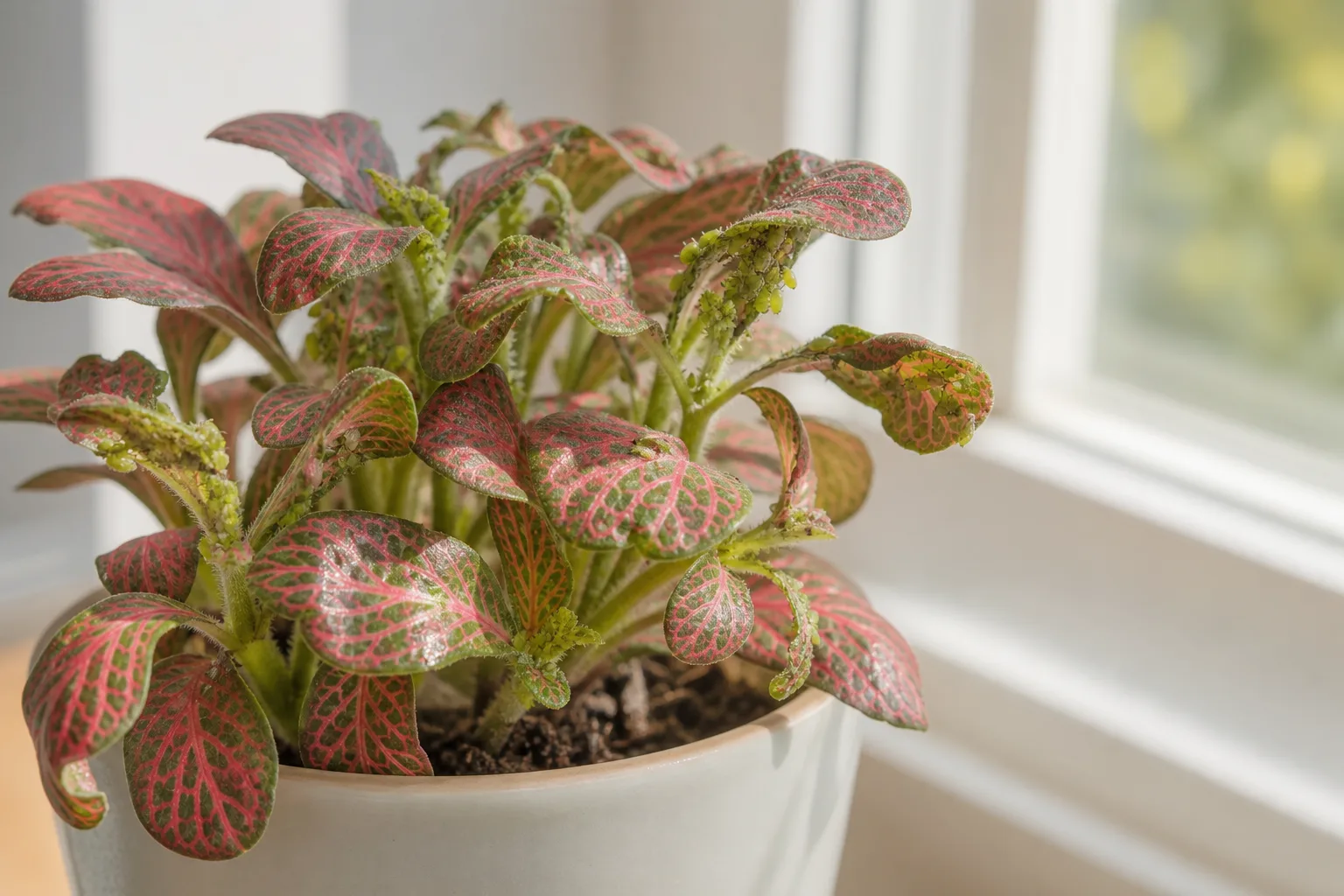
Aphids on Fittonia: Causes, Checks & Fixes
This guide covers aphids on Fittonia. See also the general Aphids guide, watering, and light pages for this plant.
Aphids on Fittonia: Causes, Checks & Fixes
Quick answer
Aphids on Fittonia are small soft-bodied insects that pierce tender tissue and drain sap from the plant. On nerve plants they show up most often on new leaf tips, the crown center, and any flower spikes you leave in place-exactly where Fittonia concentrates its softest growth after pinching or seasonal flush.
First step: isolate the plant and rinse every leaf surface under lukewarm water, targeting undersides and stem joints. Hold the pot at an angle in the sink and use gentle but thorough water pressure to knock aphids off before you reach for soap or oil. Confirm live insects are present; do not treat a plant that only looks stressed from underwatering on Fittonia or low humidity.
Why Fittonia gets aphids
Fittonia is a creeping tropical ground cover native to humid rainforest floors, and indoors it stays low, dense, and constantly pushing soft new shoots at stem tips. Aphids prefer feeding on new plant growth, which makes freshly pinched Fittonia crowns and trailing stem nodes prime real estate.
Most infestations start from hitchhikers, not from bad care alone. New nursery plants, open windows in warm weather, or contact with an infested neighbor are common entry routes. UMN Extension recommends examining plants before bringing them home and isolating anything suspicious-especially important when you keep Fittonia in terrariums where leaves touch and pests walk between pots without flying.
High humidity does not repel aphids. Fittonia’s preferred 60–90% humidity keeps leaves supple, but it also supports the lush tender shoots aphids target. Over-fertilized or nitrogen-heavy feeding pushes even softer growth, which UC IPM notes can increase aphid pressure on many ornamentals. Stressed plants-too dry between waterings, recently moved, or recovering from root issues-also attract pests faster than stable specimens.
Terrarium culture adds a wrinkle. Shared humid enclosures make isolation harder once aphids appear. A single infested nerve plant can seed colonies on moss, ferns, or peperomias sharing the same glass box within days because aphid populations can multiply rapidly in warm conditions.
What aphids look like on Fittonia
On Fittonia’s small oval leaves, aphids are easier to see than on large foliage-but they still hide where leaves overlap in the crown.
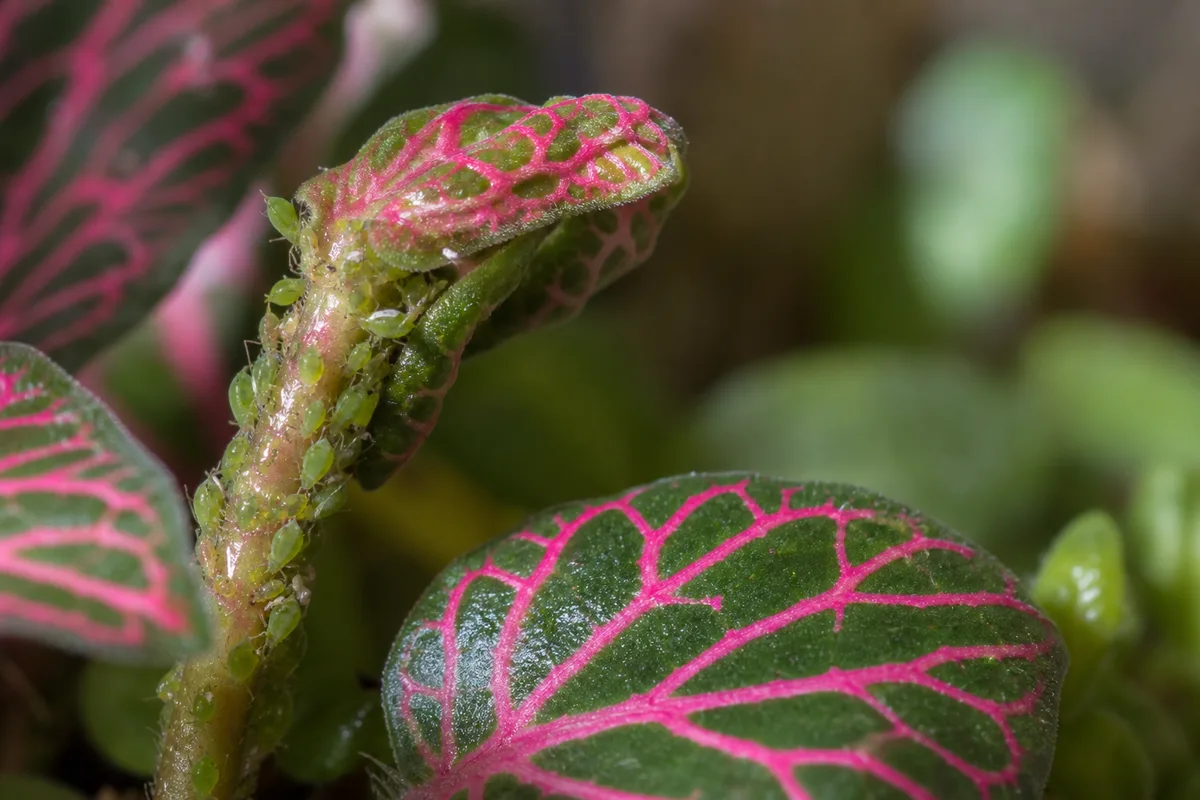
Aphids symptoms on Fittonia - compare with healthy tissue on the same plant.
Typical signs:
- Clusters of tiny pear-shaped insects on new tips, petiole bases, and flower bracts
- Green, yellow-green, black, or brown bodies roughly 1/16 to 1/8 inch long with visible legs and antennae
- Sticky honeydew on upper leaf surfaces or terrarium glass below feeding sites
- Black sooty mold growing on dried honeydew
- Young leaves curling, puckering, or staying smaller than neighboring clean growth
- Whitish cast skins shed by growing nymphs on leaf surfaces
- Ants on pot rims or terrarium edges farming honeydew below the plant
Fittonia’s dramatic wilt when thirsty can overlap with aphid stress-collapsed leaves from drought recover within 30–60 minutes after watering and show no insects or stickiness. Aphid-hit plants stay distorted or sticky even after the soil is moist.
How to confirm the cause
Work through these checks in order before treating:
- New growth first - Lift trailing stems and inspect the crown center with a hand lens. Aphids cluster on stems just below opening buds and on the undersides of the youngest leaves.
- Movement test - Touch a cluster gently. Aphids move slowly compared with thrips or springtails. If nothing moves and the spot smears pink when crushed, you may have mealybugs instead.
- Honeydew check - Rub a finger on a shiny leaf patch above a growing tip. Tackiness that transfers to your skin confirms sap-feeder honeydew, not normal leaf texture.
- Water-stress rule-out - Check soil moisture and recent wilt history. If the whole plant collapsed and perked up after watering with no sticky residue, aphids are unlikely the main issue.
- Neighbor scan - Examine plants touching the same Fittonia in a terrarium or shelf grouping. Aphids often appear on multiple soft-leaved companions before you notice the nerve plant.
- Lookalike exclusion - Confirm you do not see white cottony masses (mealybugs), fine webbing (spider mites), or flat pale scales along veins (scale crawlers).
If you find live aphids and honeydew, the diagnosis is confirmed. Proceed to treatment without waiting for leaf damage to spread.
First fix for Fittonia
Move the plant away from all others, then rinse it thoroughly in the sink with lukewarm water.
Hold stems and spray from below so water hits leaf undersides and crown crevices directly. A strong stream of water knocks aphids off sturdy plants and works well on Fittonia when pressure stays moderate-nerve plant leaves are thin but not as fragile as maidenhair fern fronds. Let foliage drain completely before returning the pot to its usual spot.
Do not apply insecticidal soap or neem on day one if you have not confirmed insects. Do not repot, fertilize, or heavily prune while colonies are active-that stress can drop more leaves than the aphids themselves. Do not spray a wilted drought-stressed Fittonia; water it first and rinse pests once turgor returns.
Step-by-step recovery
After the initial isolation rinse:
- Repeat water rinses every two to three days for two weeks, inspecting the crown after each session. Newly hatched nymphs appear within days, so one rinse rarely clears an infestation.
- Apply insecticidal soap if live aphids remain after several rinses. Use a product labeled for houseplants, cover all surfaces including undersides, and repeat every four to seven days through at least three applications. Test one leaf first and wait 24 hours-Fittonia can be sensitive to sprays in hot, direct light.
- Touch-kill isolated clusters with a cotton swab dipped in 70% isopropyl alcohol when colonies are small and confined to one stem tip. Avoid soaking the crown center repeatedly; alcohol can burn tender tissue if overused.
- Remove heavily infested flower spikes or stems you cannot rinse clean. Fittonia flowers are often pinched anyway; sacrificing one sticky spike protects the rest of the mat.
- Manage ants if they appear on terrarium edges or pot saucers. Ants protect aphids from predators and make biological control harder indoors.
- Wash sooty mold off leaves with plain water once honeydew production stops. Mold is cosmetic and clears when the food source is gone.
For terrarium outbreaks, treat every plant in the enclosure-not just the Fittonia-or reinfestation returns within a week.
Recovery timeline
Light infestations often decline within three to five days of consistent rinsing. A full soap course may take two to three weeks with label-interval repeats because insecticidal soaps work only on contact and leave no residual protection.
Judge success by clean new growth at the crown, not by old curled leaves. Fittonia can push fresh tips within one to two weeks once feeding stops. Sticky honeydew should dry up within days of effective control; sooty mold fades over one to three weeks as surfaces are rinsed.
If live aphids persist after three weekly soap cycles, reassess whether curled leaves are sheltering insects sprays cannot reach-prune those sections and restart treatment on the remaining clean growth.
Lookalike symptoms to rule out
Mealybugs form white cottony clusters in leaf axils and crown centers, not loose groups of pear-shaped crawlers. Alcohol on a swab smears pink when crushed.
Spider mites cause stippling and fine webbing, usually in hot dry air-not Fittonia’s preferred humid setup, but possible near heat vents. Confirm with a white-paper tap test under leaves.
Thrips scrape leaf surfaces leaving silvery streaks and move quickly when disturbed. They are less likely to produce heavy honeydew than aphids.
Underwatering wilt collapses the whole plant uniformly; watering restores turgidity within an hour with no sticky residue or insect clusters.
Fungus gnats hover over moist soil and rarely distort leaves. They signal overwatering on Fittonia, not sap feeding on new tips.
Mistakes to avoid
Do not treat with homemade dish soap. UMN Extension warns that non-labeled soap mixtures can burn leaves; use commercial insecticidal soap instead.
Do not spray Fittonia in direct sun or when room temperatures exceed 90°F. Clemson HGIC notes heat increases phytotoxicity risk on sensitive foliage.
Do not return an isolated plant to a terrarium or mixed shelf after a single rinse. Hold it apart until you see no live aphids for at least seven to ten days.
Do not fertilize during active infestation. Soft nitrogen-rich new growth gives aphids more feeding sites.
Do not confuse dramatic Fittonia wilt with pest damage. Water first when soil is dry; diagnose insects only after turgor normalizes.
Do not compost infested clippings indoors where crawlers can reinfest clean pots.
How to prevent aphids next time
Quarantine new nerve plants for two weeks before adding them to terrariums or grouped displays. Inspect tops and undersides of leaves at purchase and again after the first week home.
Scout tender crown growth weekly during spring and summer when Fittonia pushes shoots fastest. Pinching for density creates fresh aphid-friendly tips-check those cuts within days.
Keep even moisture without over-fertilizing. Stable, moderately fed plants produce less of the ultra-soft tissue aphids prefer.
Maintain reasonable airflow even in humid setups. Dense overlapping leaves in closed terrariums hide colonies until honeydew appears on glass.
Wash leaf surfaces occasionally with a damp cloth during routine care. Dusty, neglected foliage is easier for pests to colonize undetected on low-growing mats.
When to worry
Treat as urgent when honeydew and sooty mold coat most of the crown, ants swarm the pot or terrarium, or the same aphid species appears on multiple plants in one enclosure. Shared terrarium outbreaks need collection-wide action, not spot treatment on a single Fittonia.
Replace severely debilitated specimens-stems rotting at the base, crown collapsed with live aphids throughout, or no clean growth after three weeks of consistent control-rather than risking spread to a whole display. Fittonia propagates easily from clean stem cuttings if you salvage uninfected tips before discarding the parent.
A few aphids on one new shoot after isolation and rinsing is not an emergency. Confirm, treat early, and monitor weekly.
Conclusion
Aphids on Fittonia target the soft new growth that makes nerve plants attractive-crown tips, fresh pinches, and flower spikes. Isolation and thorough rinsing come first; soap follows only when live insects remain. In terrariums, treat the whole group and judge recovery by clean new leaves, not old curl damage. Catching colonies early keeps a low, lush Fittonia mat healthy without harsh chemicals or repeated Fittonia repotting guide.
When to use this page vs other Fittonia guides
- Fittonia watering guide - Use for routine moisture checks before assuming aphids is the main issue.
- Fittonia problems hub - Browse all 16 common issues on this species.
- Mealybugs on Fittonia - Different entry point when symptoms overlap with aphids.
- Spider Mites on Fittonia - Different entry point when symptoms overlap with aphids.
- Yellow Leaves on Fittonia - Different entry point when symptoms overlap with aphids.