ZZ Plant Problems: Causes & Quick Fixes
Quick answer
ZZ Plant is prone to 42 common issues - each link below is a plant-specific fix guide.
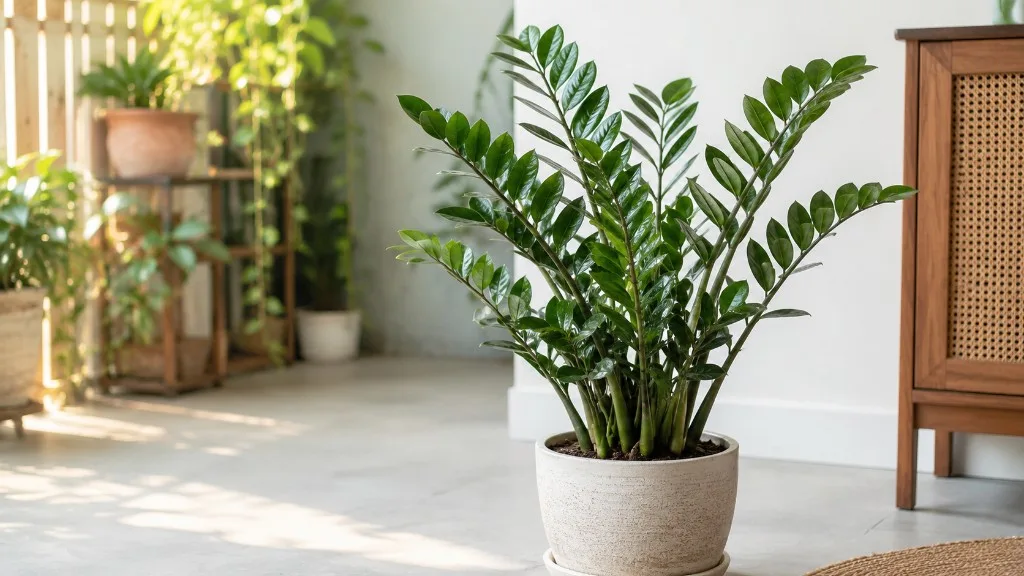
ZZ Plant problems
Use the guides below to diagnose and fix common issues on ZZ Plant. Each problem page explains why it happens on this species and what to do first.
Or use our problem diagnosis tool to narrow down symptoms.
Common problems on ZZ Plant
Aphids
MediumLikely cause: Aphids feed on ZZ leaf sap, causing sticky honeydew and distorted new leaflets.
Quick fix: Wash leaves with water or spray insecticidal soap on new growth every 4–5 days.
Full fix guide →Brown Tips
LowLikely cause: Fluoride in tap water, low humidity, or over-fertilizing scorch ZZ leaflet edges.
Quick fix: Switch to filtered water; dilute fertilizer to quarter strength once per season.
Full fix guide →Damaged Roots
HighLikely cause: Rhizome rot from overwatering destroys storage roots, leaving black mushy tissue.
Quick fix: Unpot, cut away all soft rhizomes, air-dry one day, repot in gritty dry mix.
Full fix guide →Drooping Leaves
MediumLikely cause: Stems bend above the soil when rhizomes rot from waterlogged mix.
Quick fix: Check rhizome firmness; repot in dry cactus mix and withhold water two weeks.
Full fix guide →Fertilizer Burn
MediumLikely cause: Concentrated fertilizer scorches ZZ leaflet margins because the plant needs minimal feeding.
Quick fix: Flush soil and skip fertilizer until new growth is healthy; use quarter-strength feed only.
Full fix guide →Fungus Gnats
LowLikely cause: Fungus gnat larvae thrive in wet ZZ soil when pots stay moist too long indoors.
Quick fix: Let soil dry completely between waterings; use yellow sticky traps and Bti drenches.
Full fix guide →Leaf Spot Disease
MediumLikely cause: Fungal leaf spots appear on ZZ leaflets when overwatered plants sit in stagnant air.
Quick fix: Remove spotted leaflets; improve airflow and let soil dry between waterings.
Full fix guide →Leggy Growth
LowLikely cause: Very low light stretches ZZ stems and spaces leaflets farther apart.
Quick fix: Move to brighter indirect light; ZZ tolerates low light but grows fuller with more brightness.
Full fix guide →Low Humidity
LowLikely cause: Dry office air can brown ZZ leaflet tips though the plant tolerates 30–50% humidity.
Quick fix: Use filtered water and avoid placing near heating vents; misting is unnecessary.
Full fix guide →Mealybugs
MediumLikely cause: Mealybugs cluster in ZZ leaf joints and along arching stems as white cottony masses.
Quick fix: Dab colonies with 70% isopropyl alcohol; follow with weekly neem oil for one month.
Full fix guide →Mold on Soil
LowLikely cause: Surface mold appears on chronically wet ZZ potting mix lacking drainage.
Quick fix: Scrape mold, let soil dry fully, and reduce watering to monthly or less.
Full fix guide →No Drainage Hole
HighLikely cause: Pots without drainage trap water around ZZ rhizomes, causing rapid rot.
Quick fix: Drill drainage holes or repot into a container with open drainage immediately.
Full fix guide →Likely cause: Deep shade slows ZZ rhizome growth and produces thin arching stems with sparse leaflets.
Quick fix: Relocate to medium indirect or office fluorescent light for fuller new growth.
Full fix guide →Overfertilization
MediumLikely cause: Heavy feeding burns ZZ leaflet edges because rhizomes store excess salts.
Quick fix: Flush soil with water once; feed only once or twice at quarter strength in spring.
Full fix guide →Overwatering
HighLikely cause: ZZ rhizomes rot in wet soil, causing yellow stems and mushy bases despite moist soil.
Quick fix: Stop watering until soil is bone dry; unpot and remove soft rhizomes if stems yellow.
Full fix guide →Poor Drainage
HighLikely cause: Standard potting mix without grit keeps ZZ rhizomes waterlogged and prone to rot.
Quick fix: Repot in cactus mix blended with 40% bark or perlite; confirm drainage holes are open.
Full fix guide →Pot Too Large
MediumLikely cause: Oversized pots hold excess moisture that ZZ rhizomes cannot tolerate.
Quick fix: Repot into a snug container only slightly wider than the rhizome clump.
Full fix guide →Root Rot
HighLikely cause: Overwatering causes rhizome and root rot that collapses ZZ stems before visible leaf damage.
Quick fix: Unpot, remove all mushy rhizomes, dust cuts with cinnamon, repot in dry gritty mix.
Full fix guide →Likely cause: Fertilizer salts accumulate on ZZ soil surface, browning leaflet tips from root burn.
Quick fix: Scrape top inch of soil; flush pot with water; switch to quarter-strength feed once yearly.
Full fix guide →Scale Insects
MediumLikely cause: Scale insects attach along ZZ stems as hard brown bumps, weakening arching growth.
Quick fix: Scrape scales with alcohol-soaked cotton; spray horticultural oil on stems weekly.
Full fix guide →Slow Growth
LowLikely cause: ZZ plants grow slowly by nature; low light and cool temperatures further reduce new stems.
Quick fix: Move to brighter spot; apply diluted balanced fertilizer once in spring.
Full fix guide →Spider Mites
MediumLikely cause: Spider mites stipple glossy ZZ leaflets in dry heated rooms, leaving fine webbing.
Quick fix: Rinse leaflets and apply insecticidal soap; increase humidity around the plant.
Full fix guide →Stem Rot
HighLikely cause: Soft mushy ZZ stems at the base indicate rhizome rot spreading upward from wet soil.
Quick fix: Cut away soft stem sections; repot remaining firm rhizomes in dry cactus mix.
Full fix guide →Likely cause: Extended drought shrivels ZZ leaflets though rhizomes store water for weeks.
Quick fix: Water deeply when soil is completely dry; leaflets plump within days.
Full fix guide →Wilting
MediumLikely cause: ZZ stems wilt when roots rot from overwatering despite wet soil in the pot.
Quick fix: Inspect rhizomes immediately; repot firm tissue in dry mix and withhold water.
Full fix guide →Wrong Soil Mix
HighLikely cause: Rich moisture-retentive mix suffocates drought-adapted ZZ rhizomes.
Quick fix: Repot in very well-draining low-nutrient cactus or succulent blend.
Full fix guide →Yellow Leaves
MediumLikely cause: Yellow ZZ stems and leaflets almost always indicate overwatering and rhizome rot.
Quick fix: Allow soil to dry completely; unpot and remove soft rhizomes before repotting dry.
Full fix guide →Curling Leaves
MediumLikely cause: Common curling leaves pattern on ZZ Plant under indoor care stress.
Quick fix: Inspect roots, watering, light, and pests; adjust one variable and monitor new growth.
Full fix guide →Brown Leaves
MediumLikely cause: Common brown leaves pattern on ZZ Plant under indoor care stress.
Quick fix: Inspect roots, watering, light, and pests; adjust one variable and monitor new growth.
Full fix guide →Black Spots
MediumLikely cause: Common black spots pattern on ZZ Plant under indoor care stress.
Quick fix: Inspect roots, watering, light, and pests; adjust one variable and monitor new growth.
Full fix guide →Holes in Leaves
MediumLikely cause: Common holes in leaves pattern on ZZ Plant under indoor care stress.
Quick fix: Inspect roots, watering, light, and pests; adjust one variable and monitor new growth.
Full fix guide →Pale Leaves
MediumLikely cause: Common pale leaves pattern on ZZ Plant under indoor care stress.
Quick fix: Inspect roots, watering, light, and pests; adjust one variable and monitor new growth.
Full fix guide →Distorted Leaves
MediumLikely cause: Common distorted leaves pattern on ZZ Plant under indoor care stress.
Quick fix: Inspect roots, watering, light, and pests; adjust one variable and monitor new growth.
Full fix guide →Thrips
MediumLikely cause: Common thrips pattern on ZZ Plant under indoor care stress.
Quick fix: Inspect roots, watering, light, and pests; adjust one variable and monitor new growth.
Full fix guide →Whiteflies
MediumLikely cause: Common whiteflies pattern on ZZ Plant under indoor care stress.
Quick fix: Inspect roots, watering, light, and pests; adjust one variable and monitor new growth.
Full fix guide →Leaf Miners
MediumLikely cause: Common leaf miners pattern on ZZ Plant under indoor care stress.
Quick fix: Inspect roots, watering, light, and pests; adjust one variable and monitor new growth.
Full fix guide →Caterpillars
MediumLikely cause: Common caterpillars pattern on ZZ Plant under indoor care stress.
Quick fix: Inspect roots, watering, light, and pests; adjust one variable and monitor new growth.
Full fix guide →Nitrogen Deficiency
MediumLikely cause: Common nitrogen deficiency pattern on ZZ Plant under indoor care stress.
Quick fix: Inspect roots, watering, light, and pests; adjust one variable and monitor new growth.
Full fix guide →Iron Deficiency
MediumLikely cause: Common iron deficiency pattern on ZZ Plant under indoor care stress.
Quick fix: Inspect roots, watering, light, and pests; adjust one variable and monitor new growth.
Full fix guide →Magnesium Deficiency
MediumLikely cause: Common magnesium deficiency pattern on ZZ Plant under indoor care stress.
Quick fix: Inspect roots, watering, light, and pests; adjust one variable and monitor new growth.
Full fix guide →Potassium Deficiency
MediumLikely cause: Common potassium deficiency pattern on ZZ Plant under indoor care stress.
Quick fix: Inspect roots, watering, light, and pests; adjust one variable and monitor new growth.
Full fix guide →Calcium Deficiency
MediumLikely cause: Common calcium deficiency pattern on ZZ Plant under indoor care stress.
Quick fix: Inspect roots, watering, light, and pests; adjust one variable and monitor new growth.
Full fix guide →