Salt Build-Up on ZZ Plant: Causes, Checks & Fixes
Quick answer
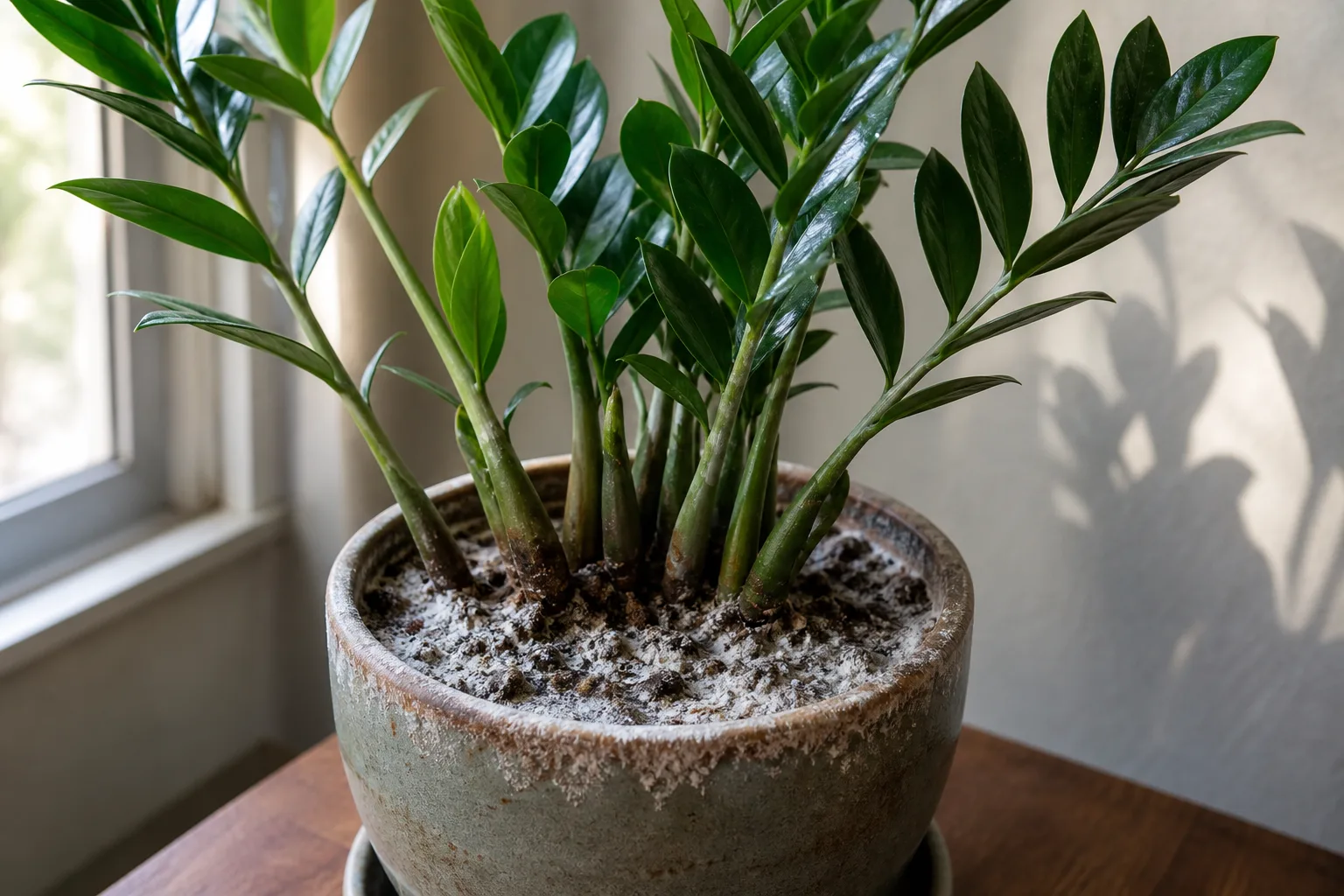
Salt build-up on ZZ Plant shows as white crust on the soil surface and brown crispy leaflet tips from accumulated fertilizer and tap-water minerals. First step: scrape the top crust, then flush the pot with plain water until excess drains freely-before adding fertilizer or repotting.
Salt Build-Up on ZZ Plant: Causes, Checks & Fixes
This guide covers salt build-up on ZZ Plant. See also the general Salt Build-up guide, watering, and light pages for this plant.
Salt Build-Up on ZZ Plant: Causes, Checks & Fixes
Quick answer
Salt build-up on ZZ Plant (Zamioculcas zamiifolia) appears as a white or tan crust on the soil surface and brown crispy tips on glossy leaflets-typical symptoms of high soluble salts in indoor plants. The salts come from fertilizer, hard tap water, and minerals left behind each time the pot dries-concentrated because ZZ is watered infrequently and grows slowly.
First step: scrape off the visible crust on the top inch of soil, then flush the pot with plain water until a volume equal to the pot size drains freely from the bottom. Empty the saucer so salts are not reabsorbed. Do not fertilize again until new leaflets open with clean edges.
What salt build-up looks like on ZZ Plant
On ZZ, soluble salts rarely announce themselves on the leaflets first. The clearest early sign is usually at the soil line:
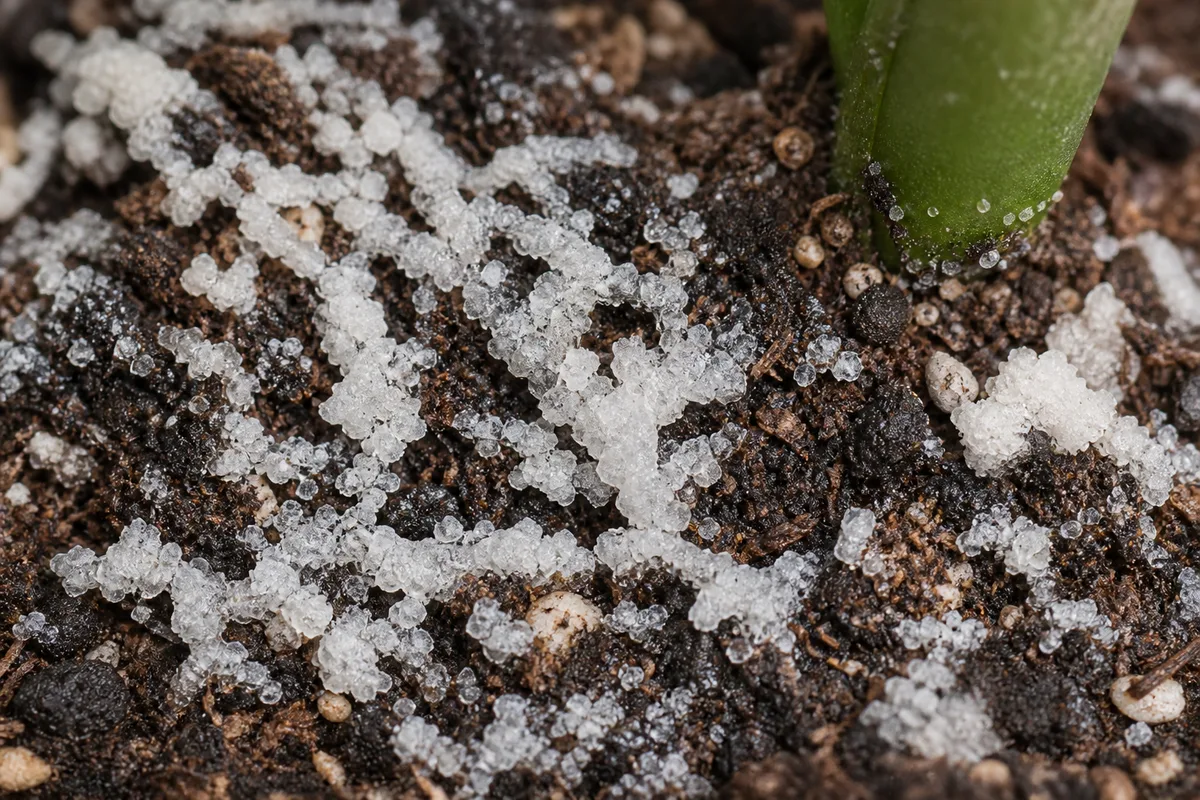
Salt Build-up symptoms on ZZ Plant - compare with healthy tissue on the same plant.
- White, tan, or yellowish crystalline crust on the soil surface, sometimes climbing the inner pot wall-a buildup of soluble salts from fertilizer or hard water
- Mineral deposits on the outside of unglazed clay pots or around drainage holes
- Brown, dry, papery tips on scattered leaflets while the rest of each compound leaf stays glossy green
- Water beading or sitting on crusty soil instead of soaking in evenly
The leaflet damage looks like isolated tip necrosis-crispy brown at the very end of individual oval segments along each arching stem. Unlike overwatering on ZZ Plant, salt-stressed ZZ leaflets stay firm, not yellow or translucent. Stems remain upright and waxy.
Because ZZ leaflets are thick and slow to replace, you may notice crust on soil weeks before tip browning spreads to more than a few outer leaflets. New shoots emerging from rhizomes should still open green unless salt levels are very high.
Why ZZ Plant gets salt build-up
ZZ evolved in dry African woodland with seasonal drought. Its bulbous rhizomes store water, leaflets transpire slowly, and the plant uses far less water and fertilizer than fast-growing tropical foliage plants. That slow metabolism is exactly why salts accumulate.
Infrequent watering concentrates minerals
NC State recommends watering ZZ only once a month in winter and twice monthly in summer-only when soil has dried completely. Each time you water with tap water, dissolved calcium, sodium, and other minerals enter the mix. When water evaporates from the surface between sparse drinks, those minerals stay behind and rise through capillary action, forming the crust you see.
A fast-draining pothos watered weekly flushes salts more often. A ZZ watered monthly in the same hard water lets minerals stack up layer by layer at the soil surface.
Light feeding still adds up
ZZ needs minimal fertilizer-Clemson Extension and NC State both recommend once or twice during the growing season with a balanced product. Owners who feed monthly at full label strength, use slow-release pellets every season, or fertilize dormant winter plants push far more soluble salts into mix than this slow species can use.
Unused fertilizer ions join tap-water minerals in the root zone. High soluble salt levels make it harder for roots to take up water-ironically browning leaflet tips on a plant that stores water in rhizomes below.
Saucers and bottom watering trap salts
If the pot sits in a saucer of drained water, the mix reabsorbs the salty runoff. Salt deposits also wick back up through unglazed clay. Colorado State Extension notes that excess salts cannot drain when saucers keep water under the container because the water-and its dissolved minerals-gets pulled back into the root zone.
Low-nutrient mix does not prevent crust
ZZ belongs in coarse, well-draining, relatively low-nutrient mix-similar to cactus soil. That mix protects rhizomes from rot but does not stop salt accumulation. In fact, a plant that rarely gets repotted may sit in the same peat-based medium for years while salts build on top.
How to confirm salt build-up on ZZ
Work through these checks before ZZ Plant repotting guide or cutting back water:
-
Crust test - Scrape a fingernail across the soil surface. A gritty white or tan layer that crumbles off confirms mineral or fertilizer salt deposits-not mold (which is usually fuzzy and gray or green).
-
Timing with feeding - Did tips worsen within one to three weeks of your last fertilizer application? Did crust appear after months of feeding without flushing? Both point to salts.
-
Rhizome firmness - Gently tip the pot and peek at rhizomes near the drainage hole or slide the root ball up slightly. Firm, pale, potato-like rhizomes support a salt diagnosis. Soft, black, or mushy tissue means rot-and that needs a different fix first.
-
Soil moisture pattern - Salt-stressed ZZ in otherwise appropriate mix should still dry fully between waterings. Sour-smelling soil that stays wet for weeks suggests overwatering compounding the salt problem, not salts alone.
-
Water quality - White crust forming quickly after switching to a new water source, or heavy crust in homes with known hard tap water, supports mineral buildup.
-
Leaflet pattern - Scattered brown tips on older outer leaflets with firm green tissue between = environmental salt stress. Whole stems yellowing from the base with soft tissue = overwatering or rot.
If crust, tip burn, and firm rhizomes align-and no pests or rot signs appear-you have enough to treat salt build-up without guessing.
First fix for ZZ Plant
Scrape the visible salt crust from the top inch of soil, then leach the pot with plain water.
This single action addresses the concentrated salts at the root zone without the risk of repotting a healthy ZZ on day one.
Step-by-step flush
-
Remove the crust - Scrape white or tan deposits off the soil surface with a spoon or fork. Take care not to remove more than one inch of mix-you want the crust gone, not half the root zone.
-
Water once to dissolve - Use room-temperature plain water (filtered, rainwater, or tap is fine for this step). Water until excess runs from drainage holes. Wait five minutes.
-
Water again to leach - Repeat with a volume at least equal to the pot size, letting water flow freely out the bottom. University of Maryland Extension recommends several irrigations with clear water for pots with excessive salts.
-
Empty the saucer completely - Do not let the pot sit in drained water. Oregon State Extension notes that reabsorbed runoff puts washed-out salts right back into the soil.
-
Stop fertilizer - Hold all feeding until at least one new leaflet opens with an unburned tip.
-
Resume normal dry-down watering - Let the pot go fully dry before the next drink. ZZ recovers best when you return to its usual sparse schedule, not when you compensate with extra water.
Do not repot, prune heavily, or move to direct sun on the same day as flushing. Give the plant one simple intervention and watch new growth.
Recovery timeline and what to expect
Salt damage on existing ZZ leaflets is permanent-brown tips will not revert to green. Judge recovery by what emerges next:
- Within 2–3 weeks: No new tip burn on the newest leaflets; crust does not reappear immediately after flushing
- Within 4–8 weeks: Fresh leaflets along arching stems open with clean edges (ZZ is a slow grower, so patience matters)
- Within 3–6 months: Overall plant looks fuller if it was actively growing in spring or summer; little visible change in deep winter dormancy is normal
Signs the flush worked:
- New leaflets emerge green-tipped
- Soil absorbs water evenly without beading on the surface
- Rhizomes stay firm when you check monthly
Signs you need a second flush or repot:
- Crust returns within four weeks
- Tip burn spreads to newly opened leaflets despite no feeding
- Water runs straight through without moistening the center of the root ball (hydrophobic, salt-damaged mix)
If two thorough flushes fail and crust keeps returning, repot into fresh coarse mix and trim only leaflets that are more than half brown-cosmetic damage, not a survival threat.
Lookalike symptoms on ZZ Plant
Brown tips from fluoride or dry air - Can mimic salt burn on leaflet edges. Usually no white soil crust, and damage may appear in winter near heating vents. Filtered water and reduced feeding help both; flushing addresses the salt component specifically.
Overfertilization (acute) - Recent heavy feeding can scorch tips within days, often with visible crust. Treatment overlaps with salt build-up: stop feed, flush, wait. Chronic salt build-up is the long-term version of the same problem.
Overwatering and root rot on ZZ Plant - Yellowing whole stems, soft mushy rhizomes, sour wet soil. Not the same as scattered crispy tips on firm leaves. If rhizomes are soft, address rot before flushing salts.
Low humidity tip browning - ZZ tolerates average indoor humidity, but very dry winter air can crisp edges without much soil crust. Check for crust and feeding history to separate humidity from salts.
Normal stem markings - ZZ stems develop natural dark spots that are not disease. Do not confuse these with salt damage on leaflets or soil.
Mistakes to avoid
-
Adding more fertilizer to “green up” browned tips - Stressed ZZ cannot use extra nutrients; you will add more salts to an already concentrated root zone.
-
Watering more often to fix tip burn - Brown tips from salts are not a thirst signal. Extra water without flushing leaves minerals in place and risks rhizome rot.
-
Bottom watering exclusively - Concentrates salts at the soil surface and prevents proper leaching from the top.
-
Scraping deep into the root zone - Removing more than one inch of mix damages fine roots and exposes rhizomes unnecessarily.
-
Repotting immediately without flushing - Fresh mix helps severe cases, but a simple leach fixes most moderate salt build-up without transplant stress.
-
Feeding on dry soil - Fertilizer applied to bone-dry mix can shock root hairs. Always water plain first, then feed lightly on moist soil-weeks after a salt flush, not the same day.
How to prevent salt build-up on ZZ Plant
Match feeding and flushing to how slowly ZZ Plant overview actually grows:
- Feed once or twice per year during spring and summer at quarter to half strength-aligned with Clemson and NC State guidance for slow-growing ZZ
- Flush with plain water every four to six months even when you are not fertilizing, especially if you use hard tap water-University of Maryland Extension recommends periodic leaching for houseplants on tap water
- Empty saucers after every watering so salty runoff is not reabsorbed
- Use filtered or rainwater if white crust returns quickly after flushes
- Repot every two to three years into fresh coarse mix if the plant has not been disturbed and crust keeps recurring
- Skip winter fertilizer entirely when growth stalls in lower light
ZZ rewards boring care: dry-down watering, light feeding, occasional leaching. That rhythm keeps rhizomes healthy and leaflet tips clean better than any calendar-based feeding schedule copied from faster houseplants.
When to worry
Salt build-up alone is low urgency on ZZ when rhizomes are firm and only leaflet tips are affected. Escalate when:
- Whole stems yellow and feel soft at the soil line-possible rot layered on salt stress
- Crust is thick enough that water pools on the surface and will not penetrate-mix may need replacing
- New leaflets open already burned after two flushes and months without fertilizer-test water hardness or repot
- Stem collapse at the soil line with white crust-University of Maryland Extension lists this as a severe salt symptom requiring media replacement
For cosmetic tip burn with firm rhizomes and no spreading yellowing, slow down feeding, flush once or twice a year, and wait for clean new growth. ZZ is resilient when salts are leached and watering returns to its drought-adapted rhythm.
When to use this page vs other ZZ Plant guides
- ZZ Plant watering guide - Use for routine moisture checks before assuming salt build-up is the main issue.
- ZZ Plant problems hub - Browse all 27 common issues on this species.
- Overfertilization on ZZ Plant - Different entry point when symptoms overlap with salt build-up.
- Fertilizer Burn on ZZ Plant - Different entry point when symptoms overlap with salt build-up.
- Brown Tips on ZZ Plant - Different entry point when symptoms overlap with salt build-up.