ZZ Plant Watering: Soak-and-Dry Method, Frequency
ZZ Plant Watering: Soak-and-Dry Method, Frequency, and Mistakes
ZZ Plant Watering: Soak-and-Dry Method, Frequency, and Mistakes
What ZZ Plant Actually Needs From Water
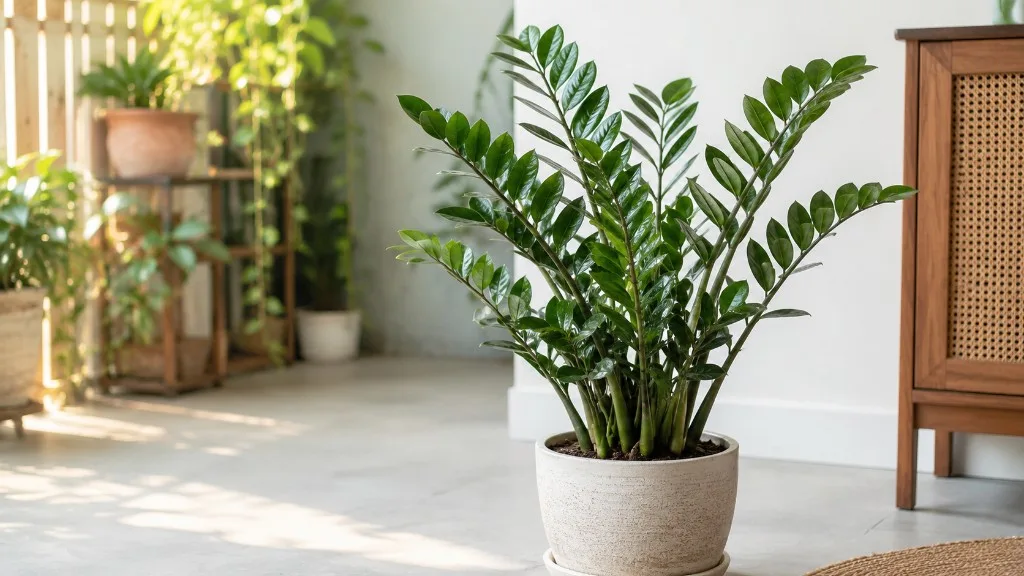
ZZ plant (Zamioculcas zamiifolia) is one of the most drought-tolerant houseplants you can grow indoors, and that fact should govern every watering decision you make. Native to dry forests and grasslands in East Africa, the species evolved to survive long stretches between rainfall by storing water in thick underground rhizomes and in its glossy, succulent leaves. The Missouri Botanical Garden describes the plant as one that should be regularly watered but only with the soil allowed to dry between applications, and it explicitly warns growers to avoid wet soils. That combination - water deeply, then wait - is the entire game.
The trouble is that ZZ plants look lush. The waxy green stems and polished leaves suggest a tropical plant that wants steady moisture, and new owners often respond by watering on a weekly habit. That is almost always the wrong move. ZZ plant watering is closer to succulent care than to fern care. The plant is not asking for frequent sips. It is waiting out a long dry spell between drinks, absorbing water efficiently when the soil is finally wet, and then tolerating weeks of bone-dry mix without complaint. Your job is not to keep the soil “a little moist.” Your job is to let it dry completely from top to bottom, soak the root zone thoroughly, and then leave the plant alone until the mix is dry again.
Why Rhizomes Change Everything
Beneath the soil, ZZ plants carry potato-like rhizomes - swollen underground stems that function as water and starch reservoirs. When rainfall arrives in the wild, the rhizomes absorb and store moisture. When the soil dries out for weeks, the plant draws on those reserves to keep stems firm and leaves green. Clemson HGIC notes that these rhizomes store water and make ZZ plants drought resistant, and that overwatering on ZZ Plant can lead to root rot on ZZ Plant - the single most common cause of failure indoors.
This storage system is why a missed watering rarely kills a ZZ plant, but a single week of soggy soil can start rhizome rot that spreads before the leaves show obvious damage. The rhizomes are the plant’s insurance policy against drought. They are also its weakest point when soil stays wet. Rot does not usually begin in the fine feeder roots alone. It often starts in a rhizome that has been sitting in damp, airless mix for too long, then moves up the stem and down into remaining roots. By the time lower leaves yellow or stems feel soft, the problem may already be well established underground.
The practical consequence is simple: more often is almost never the right answer to a struggling ZZ plant. If you are watering more than once every two weeks in an average indoor pot, you are probably overdoing it. The right answer is almost always more patience, better drainage, or both.
The Soak-and-Dry Rule for ZZ Plants
The soak-and-dry method is a two-step routine: water the plant deeply so the entire root ball and rhizome zone get wet, then wait until the soil dries all the way through before watering again. In practice, that means pouring room-temperature water slowly and evenly over the surface of the mix until it runs out of the drainage hole, letting the pot finish draining, emptying the saucer, and then not touching the watering can until the soil is completely dry from top to bottom.
This works because ZZ roots are adapted to a wet-dry cycle. They take up water efficiently during a sudden drink, then tolerate dry air in the soil between sessions. What they cannot tolerate is constantly damp soil, because wet mix with limited air suffocates roots and creates the anaerobic conditions where rot pathogens thrive. The Missouri Botanical Garden’s “allow the soils to dry between applications” guidance is the botanical version of the same rule. If you remember only one sentence about ZZ plant watering, make it that one.
How Often to Water ZZ Plant Indoors
There is no single correct calendar answer, because frequency depends on pot size, pot material, light, temperature, humidity, and whether the plant is actively growing. The honest range for most indoor ZZ plants is roughly every 2 to 3 weeks during the warm, bright months of spring and summer, and roughly every 4 to 8 weeks during the cooler, dimmer months of fall and winter. Some plants in small terracotta pots under ZZ Plant light guide will dry in 14 days. The same plant in a large plastic pot in a fluorescent-lit office may stay moist for more than a month. The schedule is a starting point. The soil is the authority.
This is the only realistic way to talk about ZZ plant watering, because anyone who promises a fixed weekly interval is setting the plant up for rhizome rot. Use the range above, then trust your finger, your skewer, and the weight of the pot. If you are unsure whether the plant is dry enough, wait another week. ZZ plants have months of stored water in their rhizomes. They will survive your caution far better than your enthusiasm.
Realistic Summer and Winter Intervals
In spring and summer, an indoor ZZ plant in a typical 6-inch pot in medium to bright indirect light usually needs water every 14 to 21 days. The plant is in its active growth phase, temperatures are higher, and the mix dries faster. Check the pot every week or so, water only when the soil is fully dry, and expect to water roughly twice a month in most homes. Plants in strong light, small pots, or warm rooms may need water closer to every 2 weeks. Plants in low light or large containers may stretch toward 3 or even 4 weeks.
In fall and winter, the same plant slows down sharply. Growth nearly stops, light levels drop, and cool indoor air reduces evaporation from the soil. Most ZZ plants need water only every 4 to 8 weeks during this period, and some in dim offices or cool rooms can go 2 months between drinks without harm. A weekly schedule that felt reasonable in July becomes a slow drowning routine by December. The winter reduction is not optional. It is the difference between a plant that thrives for years and one that develops mushy rhizomes by February.
Why the Calendar Is a Clue, Not a Rule
The most common ZZ plant watering mistake is treating Tuesday as watering day because the calendar says so. ZZ plants in different homes, different pots, and different light conditions dry at very different rates, so a fixed schedule will overwater one plant and underwater another. The cleaner habit is to use the calendar as a reminder to check, then let the soil and the pot weight make the actual decision. If the mix is dry two inches down and the pot feels light, water. If not, wait - even if it has been four weeks.
How to Tell If Your ZZ Plant Needs Water
The fastest way to read a ZZ plant’s thirst is to look at the soil, not the stems. A mix that is fully dry from top to bottom is a green light. Anything else means wait. The three most reliable tests are the finger test, the skewer test, and the pot weight test. Use at least two of them. They take ten seconds and they prevent the vast majority of ZZ watering mistakes.
Finger Test, Skewer Test, and Pot Weight
Push a clean finger into the potting mix to the second knuckle, roughly 2 inches down. If the soil feels cool, damp, or has any cling to it, the plant is not ready for water. If it feels completely dry and your finger comes out clean, it is time. For deeper pots or when you want a more precise read, a wooden skewer or chopstick works even better. Push it 2 to 3 inches into the mix, leave it for a minute, and pull it out. Damp soil sticks to the wood and darkens it. Dry soil leaves the skewer clean.
The pot weight test is especially useful with ZZ plants because their firm stems do not wilt dramatically when the soil is still damp. Lift the pot right after a thorough watering and feel how heavy it is. Lift it again every few days. As the soil dries, the pot loses noticeable weight. Within a couple of weeks, you will learn the difference between “wet pot” and “dry pot” for that specific container. From then on, you can water by feel alone, which is faster and more reliable than most moisture meters.
If the surface looks dry but the pot still feels heavy and cool at the base, the root zone is not ready. Surface dryness is not enough for a drought-adapted plant with underground storage. You need the full profile dry, not just the top inch.
How to Water ZZ Plant the Right Way
A good ZZ plant watering is a deep, even drink that wets the entire root ball and rhizome zone, followed by a complete drain. Anything less leaves dry pockets in the soil where roots cannot access moisture. Anything more leaves the pot sitting in runoff, which is functionally the same as overwatering.
Place the pot in a sink or over a saucer. Pour room-temperature water slowly and evenly over the surface of the mix, moving around the inner edge of the pot so the water soaks in rather than running straight down the side. Keep pouring until water runs freely from the drainage hole. Let the pot rest and drain for several minutes. Empty the saucer or cachepot completely. Do not let the pot sit in standing water for more than a few minutes.
Keep water off the crown of the plant when you can. ZZ stems emerge from the soil in a cluster, and while they are less prone to crown rot than rosette succulents, constantly wet stems in a cool room can still encourage fungal problems. Pour onto the mix around the inside of the pot, not directly over the stems. A long-spout watering can gives you more control than a large jug. After watering, tip the pot slightly to confirm no water is pooling at the base of the stems.
Bottom watering - setting the pot in a shallow tray of water and letting the mix absorb moisture upward - can help when the soil has become so dry that it repels water from the top. If you use this method, limit the soak to 20 to 30 minutes, then drain thoroughly. Do not leave a ZZ plant sitting in a water tray for hours. That is how rhizome rot starts in an otherwise careful routine.
ZZ Plant Watering in Summer vs Winter
The seasonal shift with ZZ plants is not subtle. In summer, the plant may push out new stems, the soil dries faster, and the ZZ can use water at roughly twice the winter rate. In winter, growth slows or stops, the soil stays damp longer, and the same pot that needed water every 2 weeks in July may not need it for 6 or 8 weeks in January. Ignoring that shift is one of the fastest paths to root rot.
| Season | Typical frequency (indoor ZZ plant) | What to watch for |
|---|---|---|
| Spring | Every 14 to 21 days | New stem growth, soil drying faster than winter |
| Summer | Every 14 to 21 days | Bright windowsills, air conditioning, active growth |
| Fall | Every 21 to 35 days | Growth slowing, soil staying damp longer |
| Winter | Every 28 to 56 days | Dormancy, dim rooms, cool windowsills, very slow dry-down |
Reduce fertilizer and watering together in fall and winter. A plant that is not actively growing does not need the same moisture load as one pushing new stems in June.
Pot, Soil, and Drainage
Even a perfect watering schedule fails in the wrong pot or the wrong soil. With ZZ plants, drainage is not a nice-to-have. It is the foundation of the entire care routine. Three decisions make the difference between a plant that thrives for a decade and one that slowly rots: pot material, pot size, and soil mix.
Unglazed terracotta is the safest default for ZZ plants. The porous walls let moisture evaporate from the sides, which speeds the dry-down cycle and gives roots more air. Glazed ceramic and plastic hold moisture longer and are fine for disciplined waterers, but they punish the casual weekly habit. Whatever the material, the pot must have a functional drainage hole. A beautiful decorative pot without drainage is a slow trap. Water collects at the bottom, the lowest rhizomes rot, and the damage stays invisible until stems yellow or feel soft.
Pot size matters more than most people expect. A pot that is too large holds a big volume of soil that the roots cannot use, and that extra soil stays wet long after the root zone has dried. The result is functionally the same as overwatering. Choose a pot only 1 to 2 inches wider than the current root ball. ZZ plants tolerate being slightly snug, and they are safer in a modest container than in an oversized one that holds damp soil for weeks.
Soil mix should drain quickly. A commercial cactus and succulent mix is the easiest starting point, and amending it with 25% to 50% perlite, pumice, or coarse horticultural sand makes it drain even faster. Regular peat-heavy indoor potting soil is too dense and too moisture-retentive for a rhizome-storing plant. It holds water around the underground stems for too long, which is the textbook setup for rot. When in doubt, the mix should feel gritty in the hand, not spongy, and a pour of water on the surface should run through within a second or two.
If your ZZ plant sits inside a decorative cachepot, treat that outer container as a display sleeve, not as a second pot. After every watering, lift the nursery pot out and pour away any accumulated runoff. A cachepot that holds an inch of stale water at the bottom is doing the same damage as a pot with no drainage hole.
Signs of an Overwatered ZZ Plant
Overwatering is the most common way indoor ZZ plants die, and the symptoms follow a predictable pattern once you know what to look for. The plant is not drowning because the stems look lush. The rhizomes are suffocating in wet soil, and the above-ground parts are showing the result.
Watch for these signs together, not in isolation:
- Yellowing leaves, often starting at the bottom. Color change usually begins on the lower, older leaflets and works upward. Individual leaflets may drop while stems still look green.
- Soft or mushy stems. Healthy ZZ stems are firm and upright. Overwatered stems feel squishy when pressed, especially near the soil line, and may collapse or bend without drying out.
- Wilting despite wet soil. on ZZ Plant If stems droop while the mix is still damp and the pot feels heavy, roots and rhizomes are likely failing to take up water because they are rotting.
- A sour or musty smell from the soil. That odor is the signature of anaerobic decomposition - the same process that turns healthy rhizomes into mush.
- Brown or black, soft rhizomes and roots. Healthy rhizomes are firm, pale tan to light brown, and feel solid like a potato. Rotted rhizomes are dark, slimy, and may pull apart when touched.
- Mold or fungus on the soil surface. Persistent white or green growth on top of the mix often means the soil has been wet too long.
If the soil is wet, the pot is heavy, and lower leaves are yellowing, treat the situation as rhizome rot until proven otherwise. Stop watering, move the plant to bright indirect light, and inspect the underground stems.
Signs of an underwatering on ZZ Plant ZZ Plant
Underwatering is less common with ZZ plants because the rhizomes carry substantial reserves, but it happens - especially in very small pots on hot windowsills in summer, or when a plant has been left bone dry for months and has exhausted its underground stores. The symptoms are essentially the opposite of overwatering, with one important exception: underwatered stems are usually still firm, just thinner or slightly wrinkled.
The clearest signs are:
- Wrinkled or shriveled stems. When rhizome reserves run low, stems lose their plump, glossy look and may show fine longitudinal wrinkles.
- Dry, crispy leaf tips or margins. Leaflets at the ends of stems may turn brown and papery while the rest of the plant still looks green.
- Soil pulling away from the pot. Severely dry mix shrinks and creates a visible gap at the edge of the container. Water poured on top in this state can run straight down the sides and out the bottom without wetting the root ball.
- Slow or stopped growth over many months. A chronically dry ZZ plant may sit without producing new stems even when light and temperature are fine.
- Extremely light pot weight. If the container feels almost hollow and the skewer comes out powder-dry several inches down, the plant has been dry for a long time.
Overwatered vs Underwatered: Quick Comparison
| Clue | Overwatered ZZ plant | Underwatered ZZ plant |
|---|---|---|
| Stem texture | Soft, mushy, may collapse near the base | Firm but thin or slightly wrinkled |
| Leaf color and texture | Yellowing, sometimes with brown spots and yellow halos | Brown, dry, papery tips; otherwise green |
| Soil condition | Wet or persistently damp, may smell sour | Bone dry, may have pulled away from the pot edge |
| Pot weight | Heavy | Very light |
| Rhizomes and roots | Dark brown or black, soft, slimy | Pale tan and firm, sometimes shriveled but not mushy |
| Recent care history | Watered on a schedule, left in standing water, or overpotted | Skipped waterings for months, very small pot in strong sun |
| What to do | Stop watering, unpot, trim rotted rhizomes, repot in dry mix | Rehydrate thoroughly, then resume soak-and-dry |
How to Save an Overwatered ZZ Plant With Rhizome Rot
Rhizome rot is not always a death sentence, but it is a time-sensitive problem. The pathogens that cause rot - often oomycetes such as Pythium or Phytophthora - need saturated soil to spread. Cut off the wet environment and you cut off the disease. Clemson HGIC lists overwatering as the primary route to root rot on ZZ plants. The work is straightforward, but it has to be done with clean tools, dry mix, and patience.
Step-by-Step Recovery From Root Rot
- Stop watering and unpot the plant. Slide the ZZ plant out of its container and gently brush away the old mix so you can see the rhizomes and roots. Healthy rhizomes are firm, pale tan to light brown, and feel solid. Rotted rhizomes are dark, soft, and may smell sour.
- Trim away every soft, dark, or slimy rhizome and root. Use a clean, sharp knife or pruning shears. Cut back to firm, healthy tissue. If rot has climbed into the base of a stem, cut the stem back to firm green tissue or remove it entirely. Sterilize the blade with rubbing alcohol between cuts.
- Inspect what remains. A ZZ plant can recover from losing several rhizomes as long as healthy firm tissue remains. If every rhizome is mushy, propagation from healthy leaf cuttings or stem sections may be the better path than trying to save the original root system.
- Let the plant callous. Place the trimmed plant in a dry, shaded, well-ventilated spot for 3 to 7 days so cut surfaces dry and form a callus. Skipping this step invites fresh rot because wet tissue against moist mix recreates the exact environment pathogens need.
- Repot in dry, fast-draining mix. Use a clean pot with a drainage hole, ideally unglazed terracotta. Fill it with fresh cactus and succulent mix amended with perlite or pumice. Set the plant in place and backfill without packing the mix down hard. Do not water.
- Wait before watering. Hold off for 7 to 14 days after ZZ Plant repotting guide, longer if you removed a large portion of the root system. The first watering should be moderate, not a flood. After that, return to the normal soak-and-dry routine and do not water again until the soil is completely dry.
How to Revive a Dehydrated ZZ Plant
Underwatered ZZ plants are usually easier to rescue than overwatered ones, because the species is built for drought and recovers quickly when moisture returns. The key is to rehydrate the root ball fully without leaving the plant in soggy soil afterward.
If the soil has pulled away from the pot edges, a top watering may channel straight down the side of the root ball and out the drainage hole without actually wetting the mix. The reliable fix is bottom watering. Set the pot in a shallow tray of room-temperature water and let it soak for 20 to 45 minutes, until the surface of the mix feels slightly moist. Lift the pot, let it drain completely, and return it to its normal spot.
Trim off any leaflets that are mostly brown, dry, and crispy. That tissue is dead and will not green up again. Wait for the soil to dry fully - which may take two to three weeks even after a deep soak - then resume the normal soak-and-dry schedule. Improvement usually shows within a few weeks as stems regain their glossy plumpness and new growth appears.
Common ZZ Plant Watering Mistakes to Avoid
- Watering on a fixed weekly schedule. A calendar cannot see the soil. Use the schedule as a reminder to check, not as permission to water.
- Assuming glossy stems mean the plant is thirsty. ZZ plants look lush when they are perfectly dry. Soil moisture, not stem shine, is the signal.
- Leaving the pot in a full saucer or cachepot. Standing water at the bottom keeps rhizomes wet and airless. Empty saucers within 15 to 30 minutes of every watering.
- Using a pot without a drainage hole. No exceptions for ZZ plants. Decorative outer pots are fine only if the plant sits in a draining inner container.
- Overpotting after purchase. Moving a new ZZ plant into a much larger decorative pot is one of the fastest ways to rot healthy rhizomes. Size up only 1 to 2 inches at a time.
- Watering before rhizomes callous after repotting or rot surgery. Fresh cuts against wet mix invite new rot. Give the plant a dry rest before its next drink.
- Keeping the same summer frequency in winter. Cooler, dimmer months demand a longer dry-down. Stretch the interval even if the plant still looks fine.
- Using dense, moisture-retentive potting soil. Peat-heavy indoor mix holds water too long for rhizome-storing plants. Use cactus mix amended with perlite or pumice.
- Misting the leaves for humidity. ZZ plants tolerate average indoor humidity. Misting keeps stems wet without helping the roots and can encourage fungal spotting.
Conclusion
ZZ plant watering is a simple routine once you stop fighting the plant’s biology. The species stores water in underground rhizomes and succulent leaves, drinks deeply when soil moisture is available, and prefers to dry out completely between drinks. The right rhythm is the soak-and-dry method: water thoroughly until it drains, let the pot finish draining, empty the saucer, and then leave the plant alone until the soil is bone dry from top to bottom. That usually means every 2 to 3 weeks in spring and summer and every 4 to 8 weeks in fall and winter, with the soil, the pot weight, and the season adjusting the interval in either direction.
If something goes wrong, read the soil before reacting to the stems. Soft, mushy stems with yellowing leaves in wet soil mean overwatering, and the plant needs a faster dry-down, an unpotting, a trim of any rotted rhizomes, and a fresh start in fast-draining mix. Thin, wrinkled stems with brown leaf tips in dry soil mean the plant has exhausted its reserves and needs a slow, even rehydration followed by a return to a normal soak-and-dry cycle. Use a pot with a drainage hole, prefer gritty cactus mix over heavy peat soil, and never let the container sit in standing water.
A healthy ZZ plant is one of the most forgiving houseplants you can own, but only if the watering respects what the plant actually is. Less is more. Drier is safer. The rhizomes will carry the plant through your hesitation. They cannot carry it through your excess.
When to use this page vs other ZZ Plant guides
- ZZ Plant overview - Start here for whole-plant context before deep-diving this topic.
- ZZ Plant problems hub - Jump to symptom-specific fix guides when this care topic does not resolve the issue.
- Overwatering on ZZ Plant - Escalate here when watering adjustments are not enough.
- Underwatering on ZZ Plant - Escalate here when watering adjustments are not enough.
- Root Rot on ZZ Plant - Escalate here when watering adjustments are not enough.
Related ZZ Plant guides
- ZZ Plant overview
- ZZ Plant light
- ZZ Plant soil
- ZZ Plant propagation
- ZZ Plant fertilizer
- ZZ Plant repotting
- Overwatering on ZZ Plant
- Underwatering on ZZ Plant
- Root Rot on ZZ Plant
- Wilting on ZZ Plant
- Drooping Leaves on ZZ Plant
- Mold on Soil on ZZ Plant
Related tool
Try the Plant Watering Calculator with zz-plant pre-selected to estimate needs for your setup.