Underwatering on ZZ Plant: Causes, Checks & Fixes
Quick answer
Underwatering on ZZ Plant shows as a very light pot, dusty dry mix throughout, and wrinkled or crispy leaflets while rhizomes stay firm. Water thoroughly once until excess drains, then return to the dry-down rhythm-do not water daily.
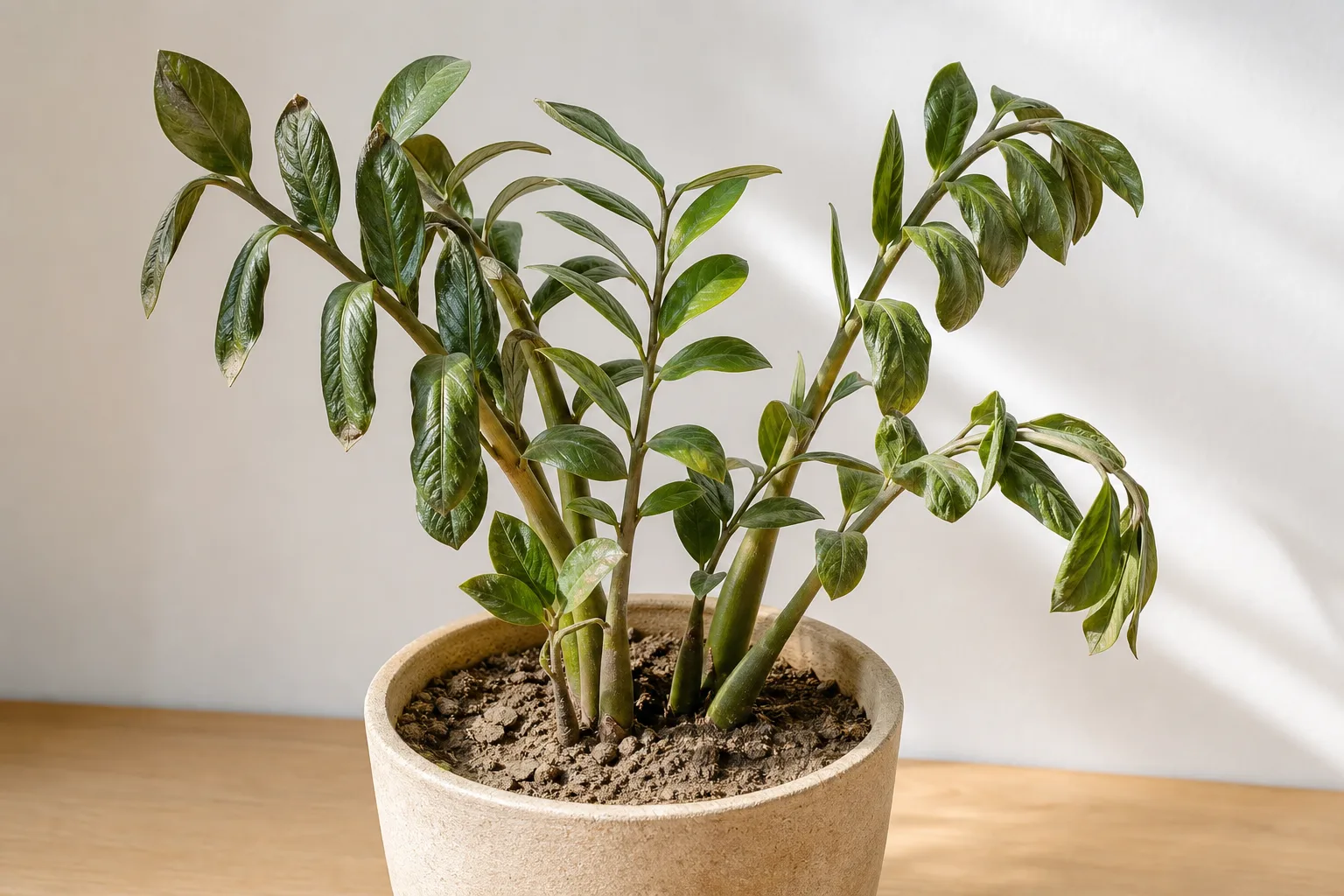
Underwatering on ZZ Plant: Causes, Checks & Fixes
This guide covers underwatering on ZZ Plant. See also the general Underwatering guide, watering, and light pages for this plant.
Underwatering on ZZ Plant: Causes, Checks & Fixes
Quick answer
Your ZZ plant leaflets look wrinkled, the pot feels hollow when you lift it, and you are scared to water because someone told you wet soil kills ZZ plants. That hesitation is common-and usually backwards for this symptom set. Zamioculcas zamiifolia stores water in thick underground rhizomes native to eastern Africa, so it can go weeks between thorough drinks. UF/IFAS notes ZZ is very drought tolerant, although leaf drop may occur after prolonged dryness. Underwatering becomes visible when the pot feels feather-light, mix is dusty dry to the bottom, and individual leaflets wrinkle or brown at tips while rhizomes stay firm.
First fix: give one deep watering until excess drains from the holes, then wait for full dry-down before the next drink. Do not switch to daily small amounts-that keeps the surface damp while the center stays dry and invites rot risk on a plant that hates wet feet.
When to use this page vs. other ZZ guides
This page is the acute drought diagnosis entry-use it when leaflets wrinkle, the pot feels feather-light, and you need to confirm thirst before you pour water.
- Watering guide - go here for long-term soak-and-dry rhythm, seasonal frequency tables, and routine care after rehydration
- Overwatering - go here when soil stays wet, stems soften, or you are unsure whether rot-not thirst-is the problem
- Root rot - go here when rhizomes are mushy, soil smells sour, or you need trim-and-repot surgery steps
- Wilting - go here when petioles collapse or arch; rot wilt with wet soil is far more common than drought wilt on ZZ
- Drooping leaves - go here when multiple stems lose rigidity at once and you need wet-vs-dry stem-collapse checks first
What underwatering looks like on ZZ Plant
Underwatering on Zamioculcas zamiifolia looks different from the dramatic wilt you see on a peace lily. Glossy leaflets often stay upright long after the mix has gone bone dry because the plant pulls moisture from potato-like rhizomes first.
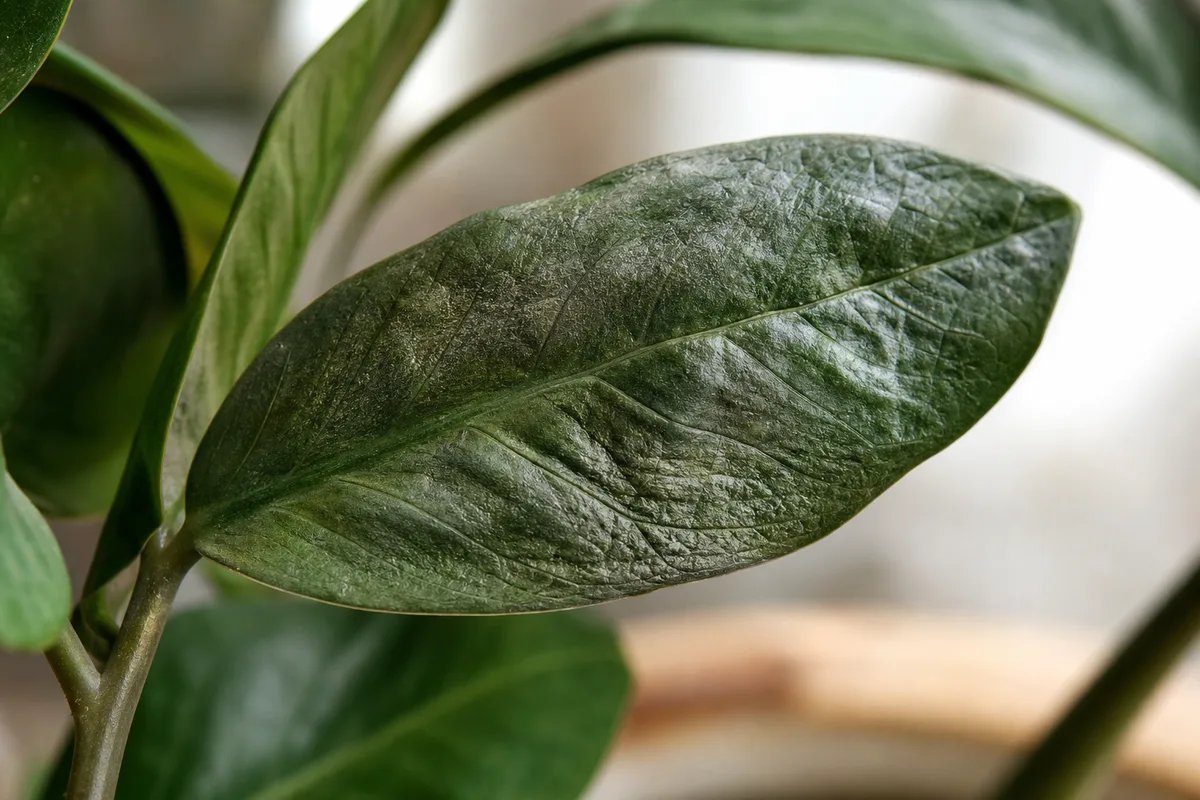
Underwatering symptoms on ZZ Plant - compare with healthy tissue on the same plant.
Stem vs. leaflet wrinkle - the ZZ signature: Early drought usually hits individual leaflets before petioles fail. Leaflets look thinner, slightly folded along the midrib, or develop crisp brown tips while arching stems still feel firm and waxy. As reserves drain further, petioles themselves may show fine longitudinal wrinkles and lose their usual plump gloss-the progression described in the watering guide underwatering section. If stems are soft and collapsing with wet soil, that is not underwatering-see overwatering instead.
Typical underwatering signs:
- Pot feels unusually light when lifted
- Soil is dry well below the surface and may pull slightly away from the pot edge
- Individual leaflets look thinner, wrinkled, or slightly folded along the midrib
- Brown, crispy tips on older leaflets, especially in heated dry rooms
- Slow or stalled new stem emergence during active growth season
- Occasional leaflet drop after very long drought-during drought conditions, leaflets and the upper portion of the petiole fall off as the plant sheds foliage to conserve stored water
What firm rhizomes tell you: If you slide the plant out and rhizomes feel plump and firm-not black and mushy-you are dealing with drought stress, not rot. That distinction matters because the fix is water, not surgery. Mushy tissue means root rot from excess moisture.
Recovery example: office ZZ after eight weeks without water
A 6-inch ZZ in a south-facing office window went roughly eight weeks without a drink during a busy summer. The owner noticed only when leaflet tips wrinkled and the 4-inch plastic pot felt nearly weightless. Deep skewer tests showed powder-dry mix throughout; rhizomes were firm and pale tan when tipped out. One 25-minute bottom soak in a basin until the surface felt slightly moist, full drain, and return to bright indirect light produced visibly plumper leaflets by day four. A new petiole emerged at week six. Crispy brown tips on older leaflets never re-greened-that tissue was dead. The takeaway: ZZ can look fine for months, then change quickly once rhizome reserves empty.
Why ZZ Plant gets underwatered
ZZ’s reputation as unkillable leads many owners to forget it entirely. That works for months, then bright summer light, a small pot, or a heating vent accelerates dry-down beyond what rhizome reserves can cover.
Common causes on this species:
- Calendar neglect - Because ZZ survives long dry spells, owners stop checking altogether until leaflets shrivel.
- Bright light or warm placement - More light and heat increase evaporation. A plant that thrived on monthly water near a north window may need more frequent checks in a south-facing office.
- Small or crowded pots - Tight root balls in small containers dry in days during active growth, especially when new stems push in spring.
- Hydrophobic old mix - Peat-heavy soil that has gone completely dry can repel water. Surface looks briefly damp while the root ball stays dry inside.
- Winter confusion - Growth slows in cool, short-day months, so ZZ needs less water-once a month in winter when not actively growing may suffice-but bone-dry mix for many weeks in a warm, bright room still counts as underwatering.
- Fear of overwatering - After reading that wet soil kills ZZ, some owners wait too long between drinks. The species tolerates drought better than flood, but chronic dehydration still stresses leaflets and slows new stems.
Rhizome storage explains the delay between cause and visible symptoms. The plant looks fine while reserves last, then changes appear quickly once stores run low-a pattern tied to its East African savanna adaptation.
How to confirm underwatering
Work through these checks before you pour water:
- Pot weight test - Lift the container. A very light pot with a mature plant strongly suggests dry mix throughout.
- Deep moisture check - Push a skewer or your finger several inches down. Dusty, crumbly mix at depth confirms drought. Surface crust alone is unreliable.
- Rhizome firmness - If symptoms are advanced, unpot gently. Firm, pale rhizomes with dry but healthy roots support an underwatering diagnosis. Mushy brown tissue means overwatering-stop and treat rot instead.
- Leaflet vs. stem pattern - Wrinkled or crispy tips scattered on older leaflets with firm petioles fit drought. Uniform yellowing with wet soil does not.
- Water behavior - If water runs straight through and out the bottom in seconds, mix may be hydrophobic. That is both a symptom and a reason prior watering failed.
- Environment cross-check - Note bright light, heat vents, or recent repot into a smaller cache pot. All speed dry-down on ZZ.
If the pot is light, mix is dry throughout, and rhizomes are firm, underwatering is confirmed.
Underwatering vs overwatering on ZZ Plant
This pair confuses ZZ owners because both can involve drooping or discolored foliage. The soil and rhizomes tell them apart. For stem-collapse framing, see wilting and drooping leaves.
| Clue | Underwatering | Overwatering |
|---|---|---|
| Pot weight | Very light | Heavy days after watering |
| Soil moisture | Dry throughout | Wet or damp deep in pot |
| Rhizome feel | Firm, may look slightly shrunken | Soft, mushy, brown or black |
| Soil smell | Neutral, dusty | Sour or musty |
| Leaflet color | Crisp brown tips, wrinkled texture | Yellowing, dull green, widespread drop |
| Stem base | Dry and firm | Soft, collapsing |
Root rot may occur if ZZ plants are grown in poorly drained soil with excessive water-wilting with wet soil is a rot emergency, not thirst. Never assume drooping always means “needs water” on ZZ-check moisture and rhizomes first.
First fix for ZZ Plant
Water thoroughly until excess runs from drainage holes, then empty the saucer completely.
Use room-temperature water and wet the entire root zone slowly. For a standard indoor pot, pour until you see steady drainage, wait a few minutes, then pour once more if the first pass ran through too fast on hydrophobic mix.
Do not:
- Switch to daily small sips
- Fertilize a drought-stressed plant
- Repot on day one unless mix is completely broken down
One deep drink recharges rhizome reserves. After that, resume the normal rhythm: water only after the potting medium has completely dried before watering again.
If water runs straight through
Set the pot in a basin of water so the mix wicks moisture from the bottom for 20 to 45 minutes, until the surface feels slightly moist-the same window used in the watering guide revival section. Let it drain fully afterward. Do not leave the pot sitting in water overnight; ZZ should not sit in standing water. This fixes hydrophobic dry pockets without keeping rhizomes anaerobic long term.
Step-by-step recovery
After the initial deep watering:
- Move to appropriate light - Bright indirect light helps the plant use water for new growth without scorching leaflets. Very dark corners slow recovery and extend time between needed drinks unpredictably.
- Wait for full dry-down - Before the next watering, confirm the pot is light and a deep skewer test shows dry mix. ZZ prefers drought cycles over constant moisture.
- Trim only fully dead tissue - Crispy brown leaflet tips will not green up. Snip tips for appearance if you wish, but leave partially green leaflets in place.
- Adjust seasonal rhythm - In active growth with bright light, check every one to two weeks. In cool winter when growth pauses, checks can stretch longer-but do not ignore a feather-light pot for months in a warm room.
- Monitor new stems - Recovery success shows as firm new petioles emerging from the soil line, not as old damaged leaflets reverting.
Hold fertilizer until the plant has had at least one full wet-dry cycle and looks stable. Stressed rhizomes do not need feeding to recover from thirst.
Recovery timeline
Mild underwatering often shows improvement within two to five days as leaflets re-plump after one thorough drink. Crispy brown tips remain brown-they are dead tissue.
New stem growth may take several weeks to months because ZZ is inherently slow-growing even when well watered. Judge recovery by firm rhizomes, stable existing stems, and eventual new shoots-not by instant lushness.
If leaflets continue shriveling after a confirmed deep watering and firm rhizomes, recheck that water actually reached the root ball. Hydrophobic mix or a blocked drainage hole can leave the center dry despite wet surface crust. If symptoms persist more than seven days after a proper soak and drain, contact your local cooperative extension office with photos and a soil-moisture description for hands-on diagnosis.
Lookalike symptoms to rule out
Brown tips from fluoride or salts - ZZ leaflet edges can brown in low humidity or from accumulated fertilizer salts even when soil moisture is adequate. Check whether tips are the only symptom and soil is not bone dry. See brown tips for water-quality fixes.
Low humidity - Dry heated air browns leaflet margins without full drought. The pot may still feel moderately heavy. Misting is unnecessary; consistent soil moisture matters more for ZZ.
Normal aging - Lower leaflets yellow and drop one at a time on an otherwise healthy plant. Widespread wrinkling with a light pot points to underwatering instead.
Overwatering and root rot - Yellow stems, mushy rhizomes, and sour soil with a heavy pot require drying out and possible rhizome trimming-not more water. Follow root rot steps.
Not enough light - Deep shade slows growth and can mimic stalled recovery, but it does not make the pot feather-light. Combine light improvement with correct watering rather than blaming thirst alone.
Mistakes to avoid
Do not panic-water daily after noticing wrinkles. Do not allow ZZ to sit in water-it rots in constantly moist soil. One thorough drink, then dry-down.
Do not judge moisture by surface color alone. Mix can look settled on top while the root ball is parched.
Do not fertilize to “perk up” a dry plant. Rehydrate first.
Do not repot into a much larger container to “help” watering. Oversized pots stay wet too long and increase rot risk.
Do not confuse ZZ’s natural drought tolerance with invincibility. Months without any water in a bright, warm room can still desiccate rhizomes.
How to prevent underwatering next time
Build a check habit rather than a rigid calendar. Lift the pot monthly-or weekly in bright, warm spots-and probe deep with a skewer before you assume ZZ is fine.
Match pot size to the rhizome clump. Snug containers dry predictably; oversized pots stay wet dangerously long.
Use gritty, well-draining mix so when you do water, excess drains quickly and the next dry cycle can start on schedule. Allow soils to dry between waterings, and treat ZZ much the same way as cactus and other succulent plants.
Refresh peat-heavy soil that has gone hydrophobic. Top-dressing alone rarely fixes a root ball that repels water.
Track seasonal shifts. Summer brightness and indoor heating in winter both change how fast your specific pot dries even when the plant’s reputation says “low maintenance.” The watering guide covers seasonal frequency after you establish a baseline.
When to worry
Underwatering on ZZ is usually low urgency compared with rot-but act promptly if:
- Rhizomes feel shriveled and soft yet not mushy, suggesting advanced desiccation
- Most leaflets drop within a short window after extreme drought
- After a proper deep watering and drain, stems collapse further-recheck for hidden rot or broken roots
- Soil stays impossible to re-wet despite bottom soaking; mix may need replacement
If rhizomes are firm and you have rehydrated the root zone, patience is appropriate. ZZ recovers slowly by nature.
Mushy rhizomes, foul soil, and yellowing with wet mix are not underwatering-treat as overwatering or root rot immediately.
Related ZZ Plant guides
- ZZ Plant overview - care basics and growth habits
- Watering - long-term soak-and-dry rhythm and seasonal frequency
- Overwatering - wet soil, soft stems, and dry-down rescue
- Root rot - mushy rhizome surgery and dry repot
- Wilting - wet-vs-dry wilt checks when petioles collapse
- Drooping leaves - stem rigidity loss and rhizome stress
- Brown tips - fluoride and salt tip burn vs. drought
- All ZZ Plant problems
Conclusion
Use this page when wrinkled leaflets and a feather-light pot make you wonder whether your ZZ is thirsty-not when soil is wet and rhizomes feel mushy. Confirm firm storage tissue, rehydrate once with a deep top-water or bottom soak, then return to the dry-down rhythm in the watering guide. Crispy tips stay brown; judge recovery by plumper leaflets and new petioles, not by instant lushness.