Wilting on ZZ Plant: Causes, Checks & Fixes
Quick answer
Wilting on ZZ Plant usually signals overwatering and rhizome rot, not drought. If soil is wet and stems flop, stop watering and inspect rhizomes before adding more water. If the pot is bone dry and rhizomes are firm, water thoroughly once and let the mix dry fully again.
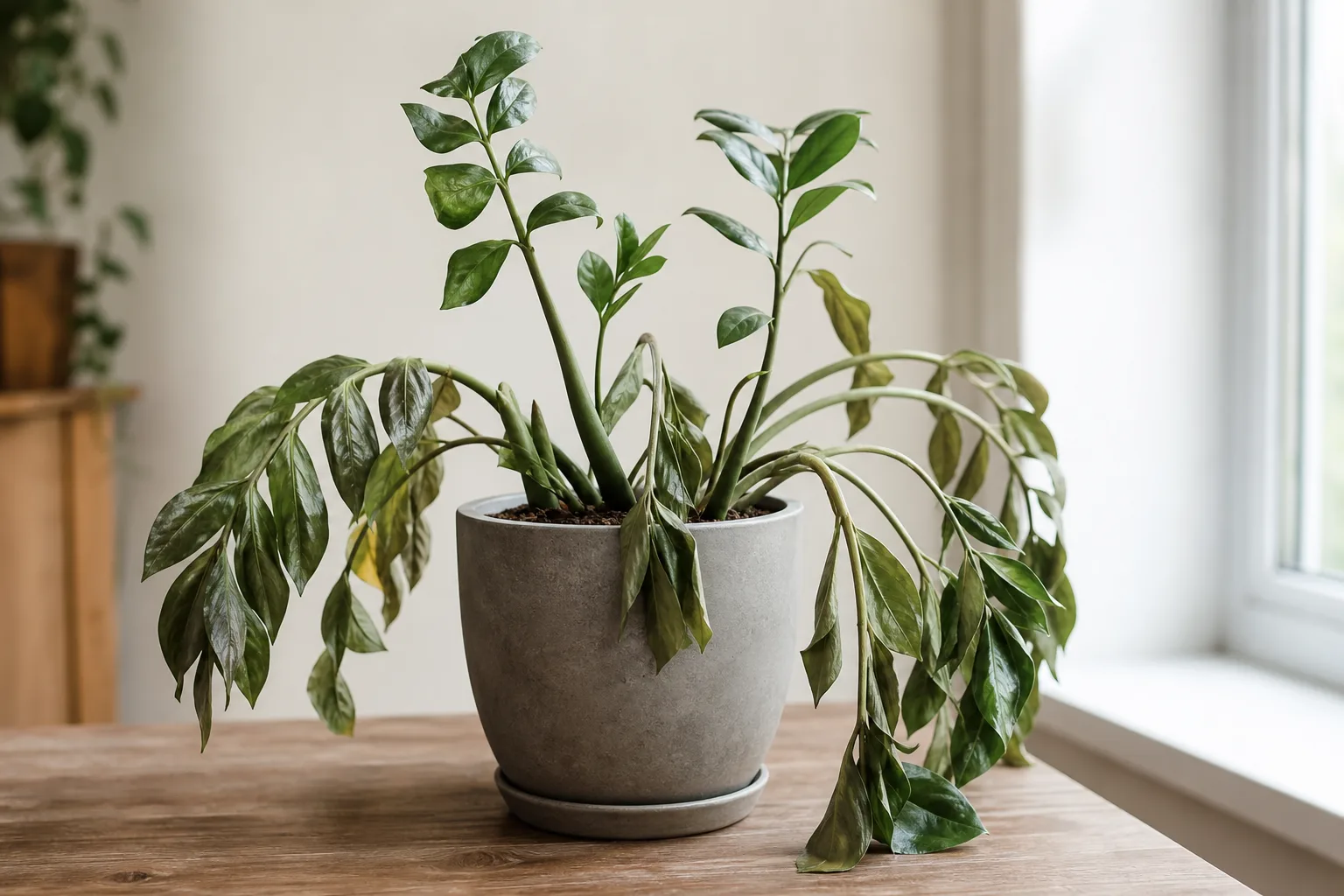
Wilting on ZZ Plant: Causes, Checks & Fixes
This guide covers wilting on ZZ Plant. See also the general Wilting guide, watering, and light pages for this plant.
Wilting on ZZ Plant: Causes, Checks & Fixes
Quick answer
Wilting on ZZ Plant trips up owners because the obvious fix-more water-is often wrong. Zamioculcas zamiifolia stores water in thick underground rhizomes, so it tolerates drought far better than saturation. When stems arch and leaflets lose firmness, the cause is usually too much moisture rotting roots and rhizomes, not a dry pot.
First step: check pot weight and deep soil moisture before you water. Heavy wet soil with flopping petioles means stop watering and inspect rhizomes. A feather-light pot with dry mix throughout and firm rhizomes means one thorough watering, then wait for full dry-down again.
What wilting looks like on ZZ Plant
ZZ wilting shows up on the arching petioles-the leaf-bearing stems that rise from rhizomes at the soil surface. Healthy ZZ petioles hold leaflets upright with a slight curve. Wilted ones droop so glossy leaflets hang lower and may feel soft rather than springy.
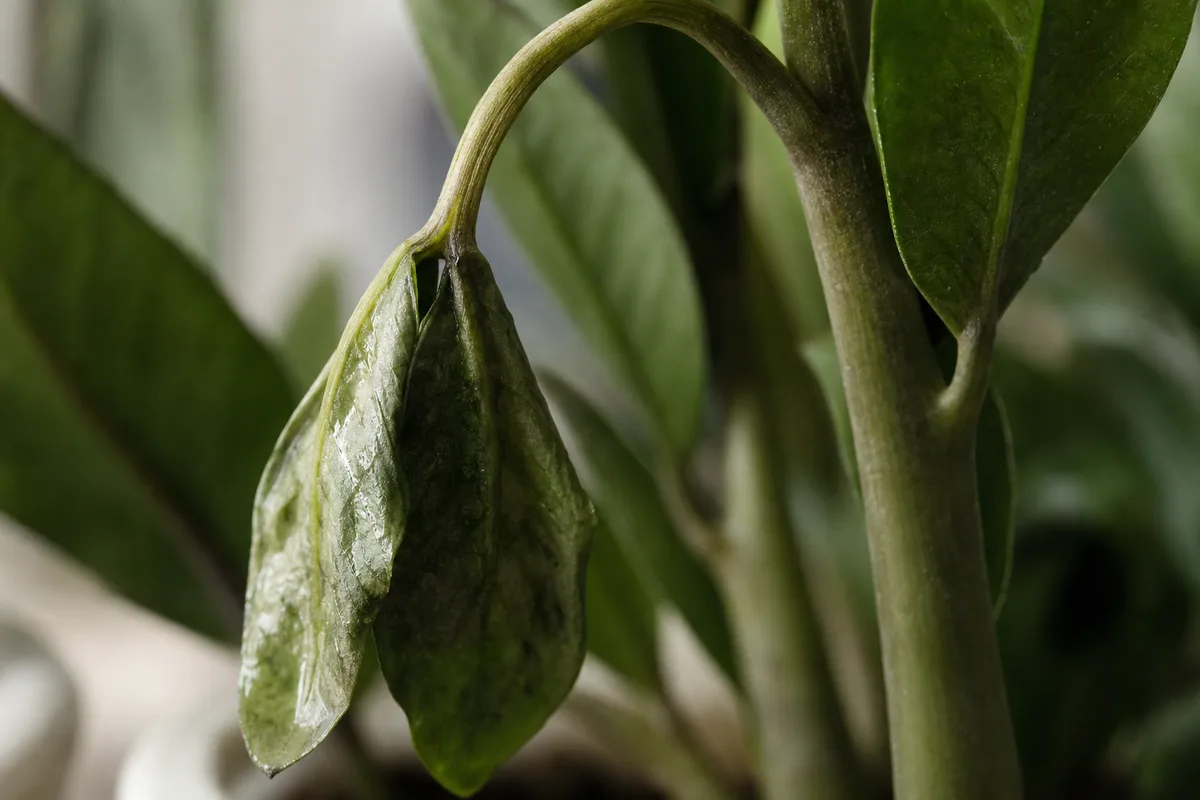
Wilting symptoms on ZZ Plant - compare with healthy tissue on the same plant.
overwatering on ZZ Plant / rot wilt (most common indoors):
- Petioles bend or collapse, sometimes just above the soil line
- Soil feels wet or heavy days after the last watering
- Yellowing leaflets, especially lower ones, may appear alongside wilt
- Stem bases feel squishy when pressed
- Sour or musty odor from the potting mix
- Mushy black or brown rhizomes visible after unpotting
underwatering on ZZ Plant wilt (less common but real):
- Pot feels very light; mix is dry several inches deep
- Leaflets look thin, wrinkled, or slightly curled at tips
- Rhizomes remain firm and tan when you check
- Petioles perk within days after a deep watering
ZZ rarely wilts from heat alone indoors, but hot dry air near heating vents can crisp leaflet edges without full petiole collapse. That pattern usually lacks the heavy wet pot or dust-dry mix that defines water-related wilt.
Why ZZ Plant gets wilting
ZZ evolved in seasonally dry African woodlands where rhizomes store water between rains. Like other aroids, it has rhizomatous roots built for periodic drought-not constant damp soil. Saturated mix displaces oxygen; roots fail, and overwatering can lead to root rot as fleshy rhizomes decompose quickly in anaerobic conditions.
That physiology explains the classic trap: wilting with wet soil. Wilted leaves may indicate soil that is too dry or too wet-rotting roots cannot take up water. Rotting tissue cannot move water into petioles even though the pot holds moisture. Owners see limp leaves and add more water, which accelerates rot.
Overwatering habits drive most cases: weekly watering regardless of dryness, pots without drainage, oversized containers that stay wet for weeks, dense peat-heavy mix, or low light that slows evaporation. ZZ in dim offices can look fine for weeks while soil remains damp at depth-rot develops before visible yellowing.
Underwatering wilt happens when rhizomes finally deplete stored water after prolonged neglect-often months without a drink in cool rooms. Because ZZ survives so long dry, owners sometimes forget it entirely until leaflets shrivel. Firm rhizomes and bone-dry mix distinguish this from rot.
Recent ZZ Plant repotting guide into wet mix, or moving a dry plant into a much darker spot right after watering, can trigger temporary wilt as roots adjust-but persistent wilt in wet soil still points to rot, not shock alone.
How to confirm the cause
Work through these checks in order:
- Pot weight - Lift the container. A heavy pot days after watering suggests saturation; a very light pot suggests drought.
- Deep moisture - Probe two to three inches down with a finger or wooden skewer. Surface dryness does not count-ZZ pots often dry on top while staying wet below.
- Stem base test - Gently squeeze petioles where they meet the rhizome. Soft, squishy tissue suggests rot spreading from below.
- Leaflet pattern - Yellowing with wilt in wet soil supports rot. Thin wrinkled leaflets on dry soil support drought.
- Smell check - Sour or musty odor from the mix is a rot warning; neutral dry scent fits drought.
- Rhizome inspection - If soil stays wet, stems feel soft, or wilt worsens over a week, unpot and examine rhizomes. Healthy tissue is firm and tan or white. Rot is black, brown, mushy, or hollow.
If soil is wet and rhizomes are soft, you have rot wilt-do not water. If soil is dry throughout and rhizomes are firm, drought wilt is likely-one deep watering is appropriate.
First fix for ZZ Plant
Stop watering and inspect rhizomes if soil is wet, stems feel soft, or the pot stays heavy.
This single decision prevents the most damaging mistake: adding water to a rotting ZZ. Slide the plant out of the pot. Brush away mix and squeeze each rhizome gently. Trim all mushy tissue with clean scissors. Let trimmed rhizomes air-dry for several hours so cut surfaces callus. Repot only firm rhizomes in dry, gritty mix and withhold water for at least two weeks.
If-and only if-the entire pot is dry deep down and every rhizome feels firm, water thoroughly until excess drains from the bottom, empty the saucer, and do not water again until the mix is completely dry.
Do not water on a schedule because leaves look limp. Do not mist wilted ZZ hoping to revive petioles-that does not rehydrate rotting roots.
Step-by-step recovery
After the first fix:
- Trim collapsed petioles only if bases are mushy or clearly dead. Leave firm wilted leaflets if rhizomes are healthy-they may not recover but do little harm short term.
- Repot into fast-draining mix if original soil stayed wet for weeks. Blend cactus or succulent mix with extra perlite or bark so rhizomes dry quickly between drinks-ZZ can be treated much like cactus and other succulent plants.
- Improve light modestly - Move to brighter indirect light so remaining moisture evaporates faster without scorching glossy leaflets.
- Empty saucers after any future watering. Never let the pot sit in standing water.
- Wait for dry-down - Test deep moisture before every watering. ZZ often needs water every two to four weeks indoors; winter can stretch longer.
- Watch new growth - Recovery shows as new petioles emerging from firm rhizomes, not old leaflets re-firming.
If multiple rhizomes were removed, the plant may look sparse for months. That is normal-ZZ grows slowly and pushes new stems from stored energy in surviving rhizomes.
Recovery timeline
Drought wilt often improves within two to five days after one thorough watering-leaflets plump and petioles lift as rhizomes reabsorb moisture.
Rot recovery is slower. Expect two to four weeks before new petioles appear if rot was caught early and firm rhizome tissue remains. Severe cases with most rhizomes trimmed may need several months before visible new growth. Judge success by firm rhizomes and emerging shoots, not by old wilted leaflets becoming glossy again.
Lookalike symptoms to rule out
Drooping from low light stretches petioles and spaces leaflets apart without mushy bases or wet soil. Stems stay firm; the plant looks sparse rather than collapsed.
Yellow leaves without full wilt often precede or accompany rot but can appear from chronic overwatering before petioles flop. Yellowing alone warrants a moisture check even if stems still feel stiff.
Brown crispy leaflet tips from dry air or fluoride in tap water affect leaflet edges, not whole petiole collapse. Mix is usually dry on top but rot cases show wet depth.
Mealybugs or scale weaken growth over weeks but do not typically cause sudden mass wilt unless infestation is extreme. Check stem joints for cottony masses or hard brown bumps before assuming water failure.
Mistakes to avoid
Do not water a wilting ZZ without checking deep soil moisture and rhizome firmness.
Do not repot into fresh wet mix on day one if rhizomes are mushy-trim, air-dry, and repot dry first.
Do not keep a wilted ZZ in a dark corner hoping it recovers. Low light slows drying and extends rot risk.
Do not fertilize a wilted plant. Stressed roots cannot use feed, and salts worsen damage.
Do not assume ZZ needs weekly water because other houseplants do. Calendar watering is the most common cause of wilt on ZZ Plant overview.
How to prevent wilting next time
Water only when the entire potting mix is completely dry-not when the surface looks dry or leaves seem limp.
Use very well-draining, low-nutrient mix. Allow soils to dry between waterings; dense peat holds water around rhizomes too long.
Choose a pot with drainage holes sized to the rhizome clump, not dramatically larger. Oversized pots stay wet for weeks.
Place ZZ where it gets medium to ZZ Plant light guide or steady office fluorescent light so the mix dries predictably between waterings.
In winter, extend dry periods-cooler rooms and shorter days slow evaporation and rhizome water use.
When to worry
Treat as urgent when multiple petioles collapse within days, soil smells sour, or rhizomes feel soft on inspection. Unpot the same day-rot spreads through stored rhizome tissue fast.
Worry less about slow wilt on a very dry pot with firm rhizomes; one corrected watering usually resolves it.
Consider the plant unlikely to recover when every rhizome is mushy, stems rot from the base up, and no firm tissue remains after trimming. A single firm rhizome can still regenerate, but total rhizome loss is fatal.
Conclusion
Wilting on ZZ Plant is a diagnostic puzzle, not a thirst signal. Wet soil with limp petioles means rot and withheld water; dry soil with firm rhizomes means one deep drink. Check weight, probe deep moisture, and inspect rhizomes before you act. That order saves healthy drought-stressed plants from unnecessary surgery and stops rotting ones from getting another drowning.
When to use this page vs other ZZ Plant guides
- ZZ Plant watering guide - Use for routine moisture checks before assuming wilting is the main issue.
- ZZ Plant problems hub - Browse all 27 common issues on this species.
- Underwatering on ZZ Plant - Different entry point when symptoms overlap with wilting.
- Overwatering on ZZ Plant - Different entry point when symptoms overlap with wilting.
- Root Rot on ZZ Plant - Different entry point when symptoms overlap with wilting.