Yellow Leaves on ZZ Plant: Causes, Checks & Fixes
Quick answer
Yellow leaves on ZZ Plant almost always mean overwatering and rhizome stress-the plant yellows and drops leaves when soil stays too wet. Let the pot dry completely and inspect rhizomes for mushy tissue before watering again.
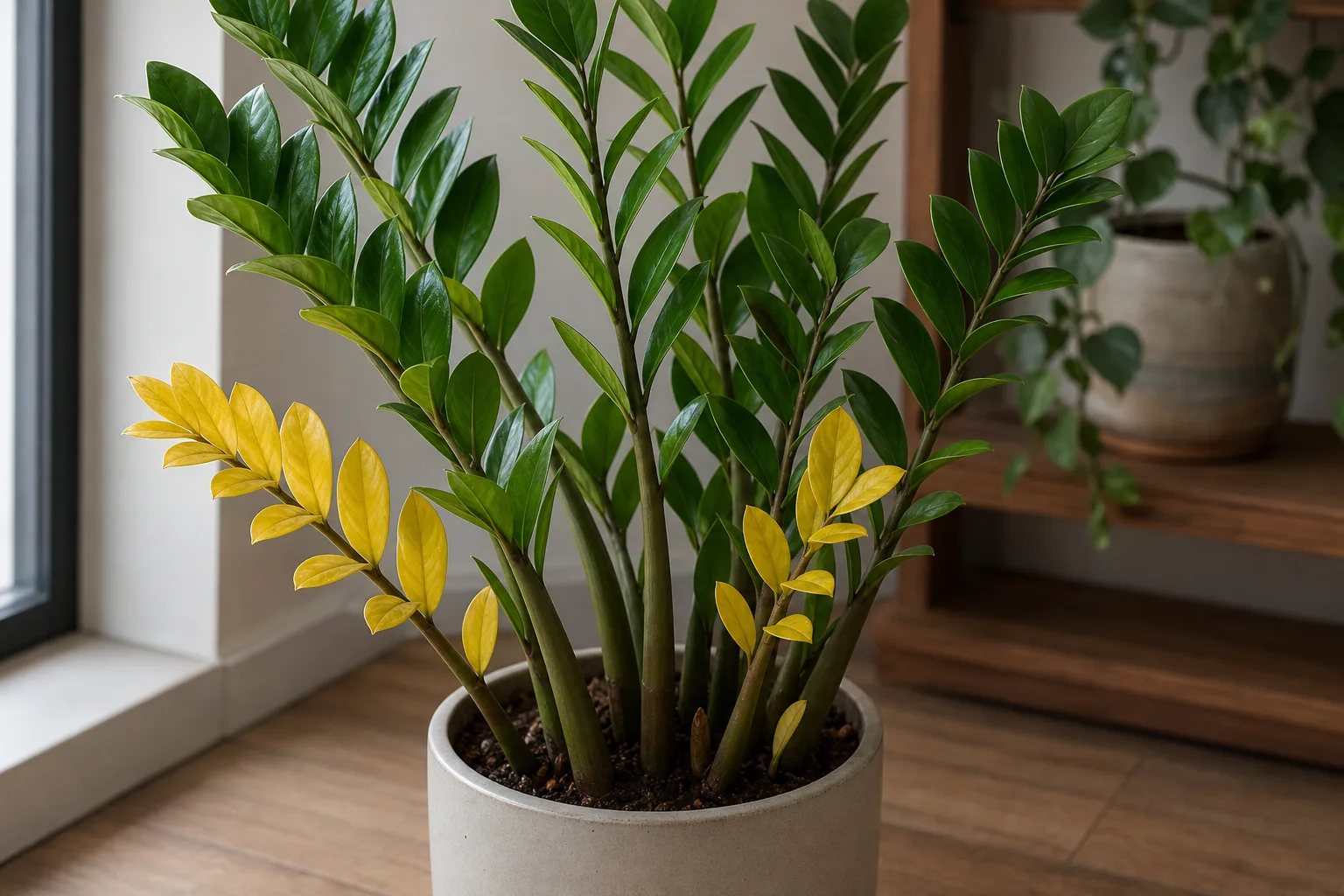
Yellow Leaves on ZZ Plant: Causes, Checks & Fixes
This guide covers yellow leaves on ZZ Plant. See also the general Yellow Leaves guide, watering, and light pages for this plant.
Yellow Leaves on ZZ Plant: Causes, Checks & Fixes
Quick answer
You noticed lower leaflets turning chartreuse on your ZZ plant (Zamioculcas zamiifolia) and panicked about whether to water, repot, or wait. On this species, leaf color is a lagging signal-the rhizomes underground often fail days before yellowing spreads up the petioles.
First step: stop watering and lift the pot. A heavy, damp container means do not add more moisture. Check dryness deep in the mix and rhizome firmness before any other fix. Yellow leaves with wet soil almost always trace to overwatering, not a missing nutrient.
When to use this page vs. other ZZ guides
This page is the symptom-first entry for yellow leaflets. Use it to decide what the color change means and which action comes first.
- Overwatering - go here for the full dry-down rhythm, seasonal watering mistakes, and black stem speckling vs. soft rot
- Root rot - go here when rhizomes are mushy, soil smells sour, or you need trim-and-repot surgery steps
- Drooping leaves - go here when petioles collapse or arch even though leaflets still look glossy
- Watering guide - go here for long-term dry-down schedule after yellowing stops
What yellow leaves look like on ZZ Plant
Healthy ZZ leaflets are deep green, thick, and waxy. Trouble shows in predictable patterns:
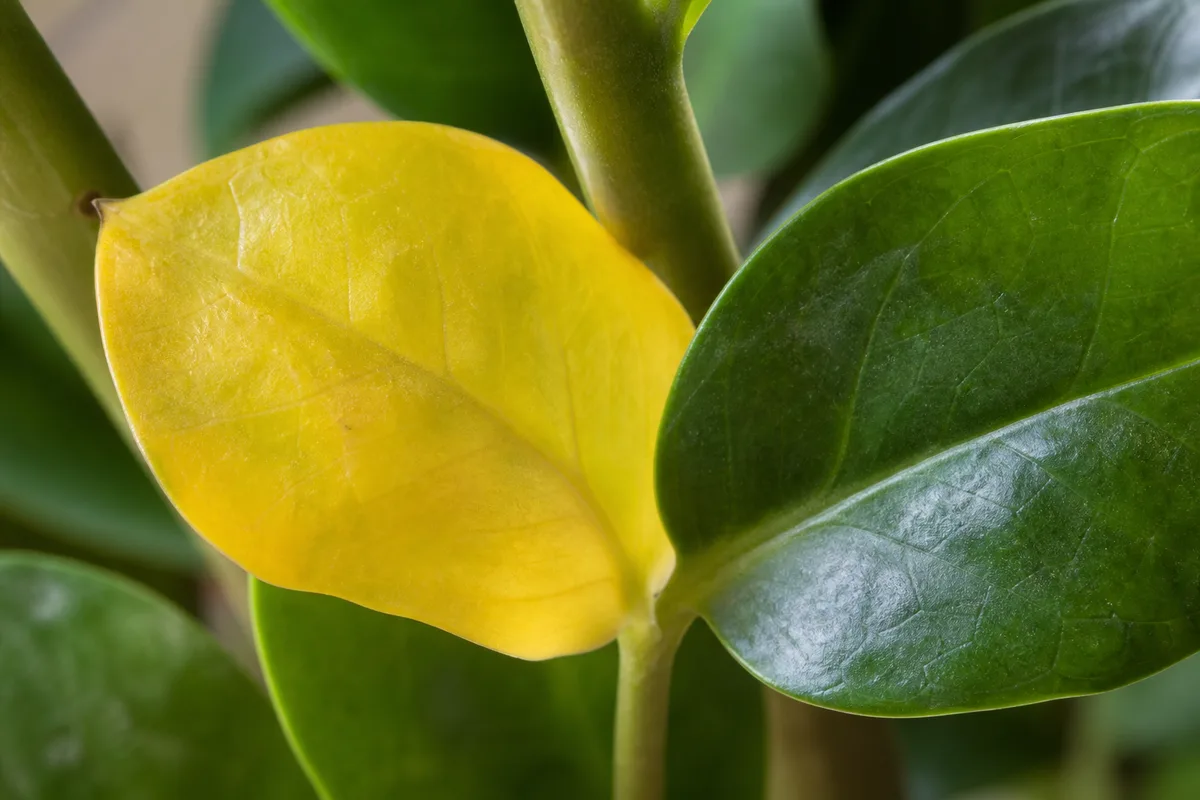
Yellow Leaves symptoms on ZZ Plant - compare with healthy tissue on the same plant.
- Lower leaflets yellow first, often on the oldest outer petioles, while upper growth stays green early in the stress
- Chartreuse or pale green leaflets that feel papery and detach easily when touched
- Whole petioles yellowing from base to tip when rot or severe overwatering advances
- Glossy green leaflets still upright while soil stays wet-a classic ZZ trap where rhizomes are failing underground before stems soften
Because ZZ stores water in rhizomes and thick stems rather than in leaf tissue alone, yellowing develops after the root zone has been stressed for a while. Do not treat leaflet color as a real-time moisture gauge.
Normal vs. alarming:
- One lower leaflet yellowing on an otherwise green plant in a light, dry pot is often natural aging
- Multiple petioles yellowing together while mix feels damp is a red flag
- Yellowing that climbs several stems within a week suggests spreading rhizome damage
Why ZZ Plant gets yellow leaves
Overwatering and rhizome stress (dominant cause)
ZZ evolved for dry spells between rains in eastern Africa. Its bulbous rhizomes hold reserves-but they rot quickly in waterlogged mix. Clemson Extension warns that overwatering can lead to root rot, and NC State notes wet feet are not tolerated on this drought-tolerant species.
When rhizomes decay, they cannot supply the petioles. Leaflets yellow even though soil feels moist-damaged roots cannot move water upward. Missouri Botanical Garden lists stunted slow growth with yellowing leaves as a symptom of over-watering.
Common triggers:
- Watering on a calendar instead of when mix is dry
- Dense peat-heavy soil with no perlite or bark
- Pots without drainage or saucers left full
- Oversized containers that stay wet for weeks
- Low light plus frequent watering-slow growth uses little water
Natural lower-leaflet aging
Large ZZ plants shed the oldest outer leaflets one at a time as petioles age. This looks like yellowing but comes with dry soil throughout, firm rhizomes, and no sour smell. Only one or two leaflets change at a time while new stems emerge elsewhere.
Low light slowing winter dry-down
ZZ tolerates dim offices, but growth slows dramatically in low light. A summer watering habit that worked in brighter months may keep soil wet through a dark winter-yellowing follows even though you have not increased drinks. See the light guide and not enough light page if stems are also stretching.
Less common causes to rule out
- Underwatering - leaflets may yellow after extended drought, but the pot feels very light and rhizomes stay firm, not mushy
- Salt or fluoride burn - usually brown tips first, not whole-leaf yellowing; check fertilizer history
- Physical damage - snapped petioles yellow locally; look for breaks at the base
- Recent repot shock - temporary yellowing on disturbed roots; should stabilize within two weeks if mix drains well
How to confirm the cause
Work through these checks in order:
- Pot weight - Lift the container. Heavy and damp suggests overwatering; light and dusty suggests drought or aging.
- Deep moisture probe - Push a finger or dry skewer to the bottom third. Surface dryness with wet depths still means rot risk if you watered recently.
- Stem firmness at soil line - Press where petioles emerge. Soft, squishy bases point to rot.
- Smell - Sour or fermented odor from drainage holes points to anaerobic, rotting mix.
- Rhizome inspection - If soil is wet and multiple leaflets yellow, unpot. Healthy rhizomes are firm and pale; rot is brown, mushy, and collapses under pressure.
- Pattern and timing - Did yellowing follow a heavy watering week, a move to a dark corner, or months without water?
Wilted or yellow leaves may indicate soil is too dry or too wet-rotting roots cannot take up water, so the visual symptom overlaps. Context from steps 1–5 separates overwatering from aging or thirst.
Overwatering vs. aging vs. underwatering
| Clue | Overwatering / rot | Natural aging | Underwatering |
|---|---|---|---|
| Pot weight | Heavy, damp for days | Normal, cycles dry | Very light |
| Soil smell | Sour or swampy | Neutral | Dry, dusty |
| Rhizome feel | Soft, brown, mushy | Firm, ivory | Firm, slightly shrunken |
| Leaf pattern | Multiple petioles yellow together | One lower leaflet at a time | Lower leaflets papery, may curl |
| Stem bases | Soft or collapsing | Firm | Firm |
| First action | Stop water; inspect rhizomes | None if plant is otherwise healthy | One thorough drink, then dry-down |
First fix for ZZ Plant
Stop watering until the entire pot is dry throughout.
That single pause prevents new damage while you confirm rhizome condition. Move the plant to brighter indirect light if it sits in deep shade-faster evaporation helps remaining moisture leave the mix.
If rhizomes are mushy after unpotting: follow the trim-and-repot branch in the root rot guide-cut decay, air-dry cuts, repot in dry gritty mix.
If rhizomes are firm: simply resume a dry-down rhythm. Water only after the potting medium has completely dried. Make one change at a time so you can read the plant’s response.
Do not fertilize yellow plants in wet soil, repot into fresh wet mix on day one, or prune every yellow leaflet before confirming rhizomes are firm.
Step-by-step recovery
Path A - Wet soil, firm rhizomes, early yellowing
- Withhold water until a skewer comes out clean and dry at depth-often two to three weeks indoors.
- Improve airflow and light slightly so mix dries evenly.
- Remove papery yellow leaflets that detach easily; they will not re-green.
- Test with a small drink only when the entire pot is bone dry. Water lightly until a little runs from drainage holes, then drain fully.
- Watch for new stem tips at soil level over the next several weeks.
Path B - Mushy rhizomes, sour soil, widespread yellowing
- Unpot and gently shake away wet mix.
- Trim all soft, brown, or mushy rhizomes and roots with clean scissors-cut back to firm white tissue.
- Let trimmed rhizomes air-dry on a towel for several hours to overnight.
- Repot remaining firm tissue in dry, gritty mix per the soil guide with open drainage.
- Do not allow the plant to sit in water-wait at least one to two weeks before the first post-rescue drink.
- Resume watering only when the new mix is dry throughout.
Recovery walkthrough
An 8-inch office ZZ in a ceramic cache pot showed three lower leaflets turning yellow while the pot still felt heavy ten days after the last drink. Unpotting revealed firm ivory rhizomes with no sour smell-early overwatering stress, not advanced rot. The owner moved the plant out of the cache pot, let mix dry completely for eighteen days, removed the yellow leaflets, and gave one light drink. Yellowing stopped within ten days; a new stem emerged six weeks later. No repotting was needed because rhizomes stayed solid.
Recovery timeline
| Situation | What to expect |
|---|---|
| Mild overwatering, firm rhizomes | Yellowing stops within 1–2 weeks after full dry-down; new stem tips in 4–8 weeks |
| Corrected watering, no rot surgery | Old yellow leaflets drop; petioles may stay bare until new growth fills in |
| Rhizome trim with partial loss | Slow recovery over 2–3 months; one or two new stems may be all you get |
| All rhizomes mushy | Plant is unlikely to recover-salvage firm leaf cuttings if any tissue remains healthy |
Judge recovery by new firm growth at soil level, not by old leaflets turning green again.
Lookalike symptoms
- Drooping without yellow - may be underwatering or early rot; see drooping leaves
- Brown tips, green bases - often salt or fluoride stress, not whole-leaf chlorosis
- Black speckles on firm stems - normal cosmetic markings, not rot; rot is soft tissue
- Leggy stretch in low light - sparse long petioles over months; leaflets stay green until drought or rot adds yellowing
- Wilting with wet soil - functionally the same as overwatering yellowing; treat as Path B if rhizomes are mushy
What not to do
- Water because leaves look pale without checking whether soil is already wet
- Fertilize a stressed ZZ hoping to green up yellow leaflets-salts on damaged roots worsen the situation
- Repot into a much larger container or standard moisture-retentive mix while rhizomes are still wet
- Leave the plant in a decorative pot that holds standing water-UF researchers note cache pots as a common rot trigger
- Remove every yellow petiole before confirming rhizomes are firm
- Handle trimmed yellow tissue near pets without gloves-ZZ Plant is toxic to dogs and cats and contains calcium oxalate crystals that irritate mouths; wash hands after pruning
How to prevent yellow leaves next time
- Allow soils to dry between waterings-for many homes that means every two to four weeks, less in winter
- Use coarse, well-draining mix; avoid wet soils entirely
- Size pots to the rhizome clump-extra soil holds extra water
- Confirm drainage holes stay open and saucers empty after each drink
- Match watering to light-plants in dim offices dry slower and need fewer drinks
- Follow the watering guide dry-down rhythm rather than a calendar
When to worry
Treat as urgent when:
- Many leaflets yellow within days on multiple petioles
- Soil smells sour or fermented despite no recent watering
- Petiole bases feel soft, oozing, or collapse at the soil line
- Yellowing spreads rapidly while mix stays damp
You can wait and observe when only one or two lower leaflets yellow, the pot is appropriately dry, rhizomes feel firm on a spot-check, and the plant recently received a normal single watering.
If every rhizome is mushy after inspection, recovery is unlikely. Follow the root rot guide for salvage steps rather than continuing to water a collapsing plant.
Related ZZ Plant guides
- ZZ Plant overview - care basics and growth habits
- Watering - dry-down schedule and seasonal adjustments
- Soil - gritty mix for rhizome protection
- Overwatering - full cause depth and black stem vs. rot distinction
- Root rot - rhizome surgery and dry repot
- Drooping leaves - wet-vs-dry stem collapse
- Not enough light - winter dry-down slowdown
Conclusion
Yellow ZZ leaflets look alarming but the diagnosis is straightforward once you read the root zone instead of the leaf color. Wet heavy pots demand a dry rescue and rhizome check; light dry pots with firm storage tissue usually mean aging or thirst, not crisis. Get that moisture read right first, and most ZZ plants recover without a cascade of extra interventions.